Blog

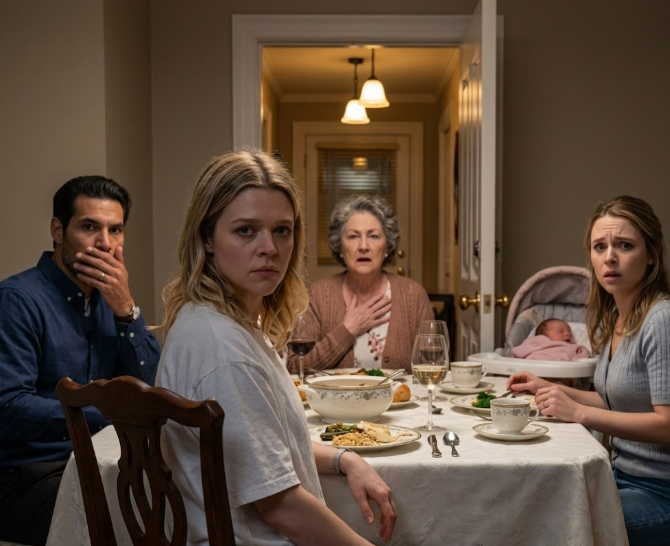
  • I lied to my dad and told him I had failed the entrance exam, even though my score was 98.7. He just replied, “Get out of the house.” I didn’t cry. I didn’t beg. Because I already knew that house was never a home… it was a trap waiting for my signature.

    I lied to my dad and told him I had failed the entrance exam, even though my score was 98.7. He just replied, “Get out of the house.” I didn’t cry. I didn’t beg. Because I already knew that house was never a home… it was a trap waiting for my signature.

    “Because your father just arrived at a notary office with a girl claiming to be you.”

    I felt the ballroom disappear. The music kept playing. The waiters passed by with trays of hors d’oeuvres. Lily laughed beneath a cloud of gold balloons. My dad raised his glass as if he were the proudest man in the world. And meanwhile, someone was trying to steal my mom’s house using my own face.

    “Where?” I asked. “A notary in Downtown L.A. I’m on my way there now. Don’t go into the ballroom, Diane. We need to catch them in the act.” I looked at the envelope in my hands. “No. First, they’re going to see me.” I hung up.

    I walked toward the stage. My dad saw me when I was already ten feet away. His smile dropped instantly. Carol went white. Lily stopped posing for a photo. I walked up the steps without trembling. “Good evening,” I said into the microphone. The band stopped playing. Everyone turned around.

    My dad approached quickly. “Get down from there, Diane.” “Why? Don’t you want to show off your other daughter too?” A murmur rippled through the hall. I pulled out my test result and held it up. “98.7th percentile. I did get in. I lied to see what my father would do when he thought he could no longer use me.”

    Discover more
    Online practice exams
    College admissions counseling
    Entrance exam guide

    Carol clenched her jaw. My dad tried to snatch the paper from me, but I stepped back. “And it worked. He kicked me out of the house. Just as he planned.” Lily’s face changed. “Dad?” He turned to her. “Don’t listen to this nonsense.”

    Then I played the audio. Carol’s voice came through the small Bluetooth speaker I had hidden in my purse. “Diane just turned eighteen, Arthur. You can finally take the house her mother left her.” The entire ballroom froze. Then my dad’s voice played: “When she fails the exam, I’ll kick her out. She’ll realize that she’s worth nothing without me.” Someone gasped, “Oh, no.”

    Carol tried to step forward, but Aunt Susan appeared by my side like a brick wall. “Don’t even think about it.” My dad lowered his voice. “Diane, turn that off. You’re making a fool of yourself.” “No. Making a fool of yourself is sending a stranger to sign for me while you toast to Lily.”

    Lily dropped her glass. It shattered on the floor. “What?” My dad looked at me with pure hatred. The mask was entirely gone. “You don’t know what you’re talking about.” “Yes, I do. And so does Mr. Sanders.”

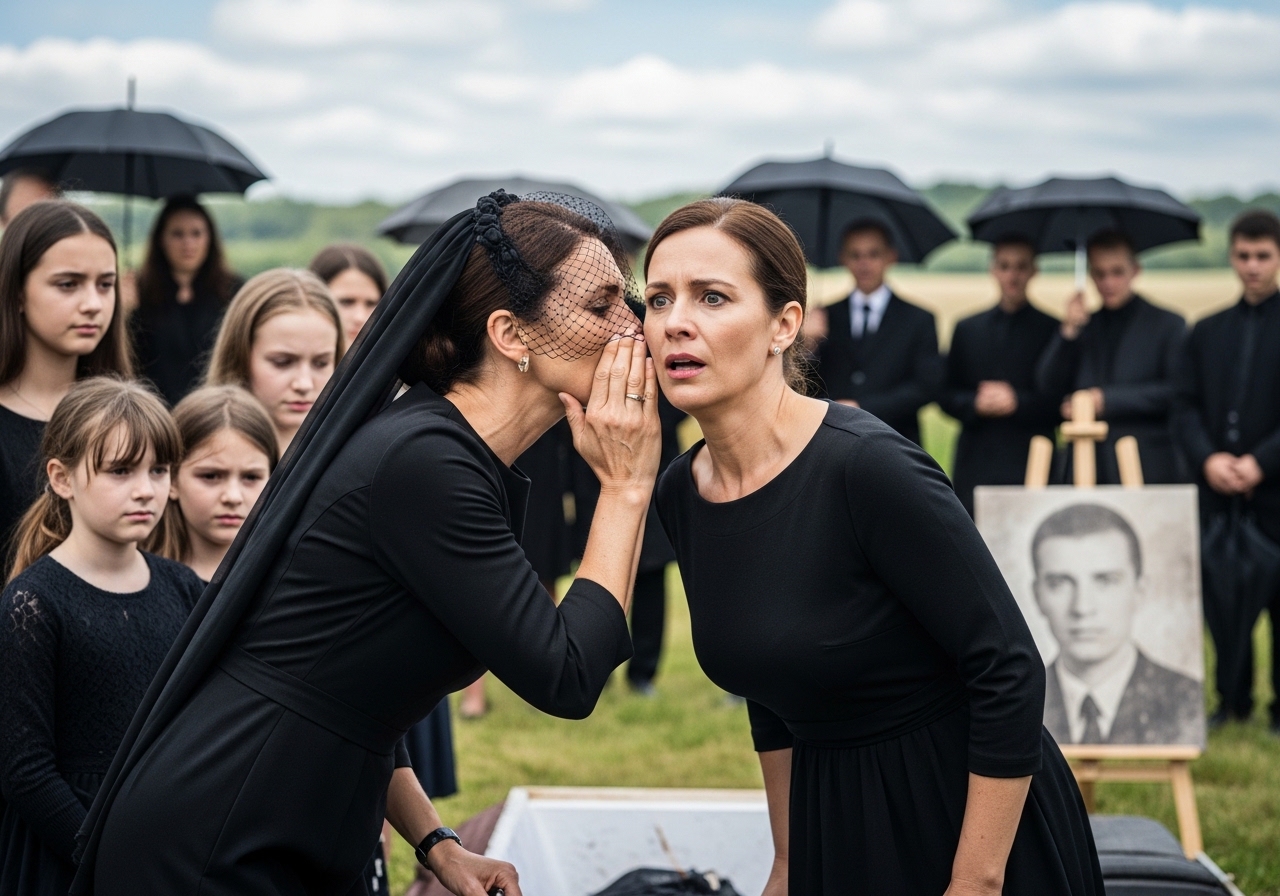
    At that moment, a man in a gray suit rushed into the ballroom, holding his cell phone. It was my mom’s lawyer. Behind him were two police officers and a woman from the District Attorney’s office. The silence turned into fear. “Arthur Reynolds,” the lawyer said, “we need you to come with us.” My dad tried to laugh. “This is a family party.” “No,” I said. “This was a family trap.”

    Discover more
    family
    Tenant rights information
    Family relationship advice

    Carol grabbed Lily’s hand. “Let’s go.” But Lily pulled away. “Did you sell her mom’s house?” Nobody answered. The answer was written all over their faces.

    I stepped down from the stage. The crowd parted as if I were on fire. Outside, Beverly Hills kept shining with its expensive restaurants, black SUVs, and clean sidewalks. But inside that hall, the lie smelled like cold sweat.

    We went to the notary office. The fake Diane was still there. She was a girl my age, with her hair dyed like mine and a fake ID on the desk. When she saw me walk in, she burst into tears. “They paid me,” she said. “I didn’t know.” Carol yelled: “Shut up!”

    The notary was pale. On the desk lay a folder with the supposed transfer of rights for the Pasadena house. That house my mom had left protected. That house near tree-lined streets, bougainvilleas, street food carts, and the weekend farmers’ market where colors, fresh produce, crafts, and Sunday noise all mixed together. The house where my mom taught me how to ride a bike. The house they wanted to turn into a plane ticket for Lily.

    The DA investigator reviewed the documents. Mr. Sanders handed over the will, my real ID, and the recording. He explained that a property transfer deed had to be formalized before a notary and then registered in the County Recorder’s Office; it could not be done with a fake identity and a forged signature.

    Discover more
    Property legal services
    Home security systems
    House ownership guide

    My dad was no longer speaking. Carol was. “That house belongs to the family. She’s just a child.” “I’m eighteen,” I said. “And I have a longer memory than you have shame.” My voice trembled at the end. I hated that it trembled. But I didn’t stay quiet.

    Lily was sitting on a chair in the hallway. She was still wearing her massive, sequined party dress. She looked like an abandoned princess in a public office. She looked at me. “Did I know?” The question wasn’t for me. It was for herself. Carol turned around furiously. “I did it all for you.” Lily cried. “Don’t use me to steal.” That sentence hit Carol harder than any insult.

    My dad was arrested that night for attempted fraud and use of a forged document. Carol also gave a statement. I don’t know how much of what she said was the truth and how much was just to save herself.

    I didn’t feel victorious. I felt nauseous. At three in the morning, Aunt Susan took me to get pancakes at a 24-hour diner near Hollywood Boulevard. The city was cold. Taxis passed by like yellow fish. I held the crumpled envelope against my chest. “Your mom would be proud,” she said. I shook my head. “My mom would be furious.” Susan gave a sad smile. “That too.”

    The next morning, we went to Pasadena. I couldn’t wait any longer. The house was closed, dusty, with peeling paint and the bougainvilleas invading the entrance as if they had been protecting it. On the corner, a woman was selling fresh pastries and coffee. Further away, you could hear street musicians and kids running toward the park.

    Discover more
    Moving services assistance
    Equal opportunity consulting
    Education

    I put the key in. I went inside. It smelled like old wood, dampness, and the past. In the living room, my mom’s bookcase was still there. Her novels. Her mugs. A dried potted plant by the window. I touched the wall as if I were touching her hand.

    And then I cried. Not for my dad. For her. For everything she did to leave me a safe haven and for how close they came to taking it away.

    Aunt Susan let me cry on the floor. Then she pulled my mom’s letter from her purse. “I think you’re ready to read this now.” The envelope had my name written in her handwriting. “Diane.” I opened it carefully.

    Daughter: If you’re reading this, it means you’re of legal age and the house is yours. I’m not leaving it to you because it’s worth money. I’m leaving it to you because a woman needs a place where no one can kick her out. Your father can be charming when he wants to be. He can also be cruel when he doesn’t get his way. Don’t confuse blood with love. Don’t confuse a roof with a home. Study. Leave. Come back. Do whatever you want with this house. But never sign it away out of fear. Mom.

    I read the last line three times. Never sign it away out of fear. I hugged the letter to my chest. That day I understood that my mom hadn’t just left me a property. She left me a way out.

    The investigation continued for months. There were statements, subpoenas, lawyers, and venomous messages from relatives saying that “a father makes mistakes” and “you don’t turn on your family.” I blocked almost all of them. My dad was released on bail with a restraining order, keeping him away from me and the house. Carol disappeared from social media for a while. Then she came back posting motivational quotes and photos of expensive coffee, as if cynicism could be covered with makeup.

    Lily texted me a week later. “Can I see you?” I thought about ignoring her. She hadn’t planned the whole thing. But she had lived off my losses without ever questioning where so much privilege came from.

    We met in Old Pasadena, by the fountains. There were couples eating ice cream, balloon vendors, tourists walking toward the art museums, and the smell of fresh coffee wafting from a cafe. Lily arrived without makeup. She looked younger. “I didn’t know about the notary office,” she said. “But you did know they treated me badly.” She lowered her head. “Yes.” I was glad she didn’t lie. “Why didn’t you ever say anything?” Lily wiped her tears. “Because if you were the burden, I was the promise. And I was afraid of losing that.”

    It hurt. Because I understood her. I didn’t justify it. But I understood.

    “I can’t be your safe haven,” I told her. “I’m not asking you to be.” She pulled a small box out of her backpack. Inside was my mom’s ring. The one Carol sometimes wore “because it matched her outfit.” I felt my heart stop. “I took it from her drawer before I left.” “You left?” She nodded. “I’m staying with my grandma. I don’t want Canada. I don’t want the party. I don’t want anything bought with your house.”

    I took the ring. My hands shook. “Thank you.” “Don’t forgive me yet,” she said. “Just… let me learn how not to be like them.”

    I didn’t answer. But I didn’t leave. We sat there watching people walk by. Pasadena did that: it mixed pain and life on the very same bench. A little girl ran by with a popsicle. A man was selling cotton candy. A couple kissed as if stolen inheritances and fathers capable of selling out their daughters didn’t exist.

    The day of university enrollment, I went alone. I didn’t mind. On the UCLA campus, the sun fell over the brick buildings, the massive trees, and the pathways filled with students carrying binders. I saw Powell Library and felt something inside me open up. It wasn’t just getting into a school. It was stepping into a life that no one else had authorized for me.

    When I handed over my documents, the woman at the counter told me: “Congratulations on your acceptance.” That word broke me. Acceptance. Not a burden. Not a nuisance. Not a bargaining chip. Accepted.

    I walked out with my confirmation receipt in hand and bought a breakfast burrito from a cart outside the Westwood station. The vendor asked if I wanted the spicy salsa. I laughed to myself, because in Los Angeles, even street food can be a fierce debate. “Extra spicy,” I said. “Today I do.”

    That night, I slept in the Pasadena house for the first time. I didn’t have a bed yet. I put an air mattress in the living room. Aunt Susan brought me blankets, a pot, two plates, and a basil plant. “So it smells like a home,” she said. Before going to sleep, I hung the picture of my mom on the wall. “I did it,” I whispered. I didn’t expect an answer. But for the first time in years, the silence didn’t scare me.

    Weeks later, my dad called me from an unknown number. I answered because I was with Mr. Sanders and he put the call on speaker. “Diane,” he said. His voice sounded older. “You can’t destroy me like this.” I looked out the window. The bougainvilleas swayed in the wind. “I didn’t destroy you. I recorded you.” Silence. “I am your father.” “No. You’re the man who waited for me to be desperate so you could rob me.” He breathed heavily. “Your mother filled your head with nonsense.” “My mother left me a house so you couldn’t leave me out on the street.”

    I hung up. I didn’t tremble. That was my first real triumph. Not the police report. Not the house. Not the test score. It was hanging up without feeling like I owed him obedience.

    Over time, the house started to breathe again. I painted the walls white. I cleaned the old tiles. I put up yellow curtains. In the patio, I planted lavender, mint, and a new bougainvillea. On Sundays, I went to the local farmers’ market for fresh fruit and cheap flowers. I walked among artisan stalls and tourists looking for landmarks, carrying bags like someone carrying a future.

    Aunt Susan would come over for lunch. Lily sometimes did too. At first, she would sit rigidly, without touching anything. Then she started washing the dishes without me having to ask. One day she brought pumpkin bread even though it was weeks away from November. “I was craving it,” she said. I didn’t ask questions. We sat on the patio eating it with hot chocolate. She looked at the house. “Your mom had good taste.” “Yeah.” “Do you think she would have hated me?” I thought of my mom. Her laugh. The way she defended even the stray cats. “No. But she would have scolded you.” Lily smiled through tears. “I deserve it.” “Yeah.” And then I passed her another slice of bread. Because setting boundaries doesn’t mean turning into stone. It means deciding who can sit at your table without stealing your chair.

    A year later, I received a notification: the house was fully protected under my name, free of any liens or pending legal processes. The attempted fraudulent transfer had been annulled. The criminal case was still moving forward—slowly, like almost everything in the justice system—but it was active. That same day, I went to campus and sat on the grass among students talking about exams, scholarships, protests, crushes, and tacos.

    I opened my phone. I still had the screenshot of my test results saved. 98.7th percentile. I looked at it one last time and then moved it to an archived folder. I no longer needed to look at it to believe I was capable.

    In the afternoon, I went back home. At the door, I found an envelope with no return address. Inside was a single piece of paper. It was from my dad. “I’m sorry. I didn’t know how to be a father.”

    I read it twice. I didn’t cry. I didn’t run to call him. I didn’t tear it up. I put it in a box along with the other legal papers from the case. Because some apologies arrive late not to heal, but simply to prove that the wound existed.

    That night, I made coffee. I opened the windows. The house smelled like rain, wet earth, and flowers. I sat in the patio where my mom had taken that photo of me when I was six. The same bougainvillea, or maybe its granddaughter, draped over the wall like a pink flame.

    I pulled out her letter. I re-read the last line. Never sign it away out of fear. I smiled. I didn’t sign. I didn’t beg. I didn’t go back.

    And in the end, the trap my father set to break me ended up teaching me something no one could ever take away: A house can be inherited. But a home is defended. And that night, for the first time, I closed my own door without feeling like I was running away. I closed it knowing I was home.

  • At 5:00 a.m., three weak knocks woke me from a dead sleep—and when I opened my door…-lbsuong

    At 5:00 a.m., three weak knocks woke me from a dead sleep—and when I opened my door…-lbsuong

    At five in the morning, panic did not scream.

    It knocked.

    Three weak taps came against my apartment door, so faint I might have missed them if I had not spent the last eleven years answering emergency calls for people who whispered because they were hiding in closets, because smoke had taken their breath, because shock had turned the human voice into something small and far away.

    Có thể là hình ảnh về một hoặc nhiều người và bệnh viện

    I knew loud panic. I knew drunk panic, furious panic, confused panic, the cracked panic of mothers who could not wake their babies, the breathless panic of teenagers trapped in rolled cars, the flat, hollow panic of old men who had found their wives on kitchen floors and did not yet understand that help could not reverse time.

    I thought I understood what fear sounded like.

    I was wrong.

    Those three knocks were worse.

    They came slow and uneven, as if the person on the other side had used up almost everything they had left just reaching my door. I sat up in bed before I was fully awake.

    My bedroom was dark except for the blue glow of the alarm clock, 4:58 a.m., and the little rectangle of streetlight on the wall where the blinds never quite closed.

    Outside, winter pressed against the windows of my one-bedroom apartment outside Milwaukee, the kind of February cold that did not simply enter your lungs but punished them for opening.

    The wind scraped along the brick building, rattling a loose gutter somewhere above me.

    For half a second, I thought I had dreamed the sound.

    Then came another knock.

    One.

    A pause.

    Two.

    I grabbed my phone from the nightstand and opened the porch camera before my feet hit the floor.

    A small figure stood under the yellow security light.

    At first, the camera did not make sense. The porch image was grainy, the boy’s face tilted down, shoulders hunched inside a thin gray hoodie that was dark with damp.

    He swayed once, caught himself against the railing, and lifted one hand toward the door as though he meant to knock again but could not remember how to make his fingers obey.

    Then he looked up.

    Noah.

    My nephew.

    My brother’s ten-year-old son.

    I do not remember crossing the hallway. I remember the cold metal of the deadbolt under my hand, the chain catching because I tried to open the door before sliding it free, the vicious bite of the outside air when I pulled the door open.

    Noah stood there in soaked sneakers, sweatpants stiff with cold, and a hoodie too thin for a grocery store freezer, let alone a Wisconsin predawn.

    His lips were blue. His eyelashes were wet, not from tears at first, but from wind and melted snow.

    His fingers were curled tightly against his chest, the knuckles pale, his whole body shaking in hard, jerking waves he could not control.

    “Aunt Meera,” he whispered.

    Then his knees folded.

    I caught him before he hit the threshold.

    He weighed less than he should have. That was my first thought, absurd and practical. Too light. All elbows and bones and cold.

    I dragged him inside, kicked the door shut, and lowered him onto the couch. His shoes left wet prints across my carpet. The thermostat clicked on as if heat were an apology arriving late.

    “Noah,” I said, keeping my voice low because I had learned on thousands of calls that calm was not a feeling. It was a tool. “Look at me. You’re inside. You’re with me. I’ve got you.”

    His jaw shook so hard the words came out in broken pieces.

    “They left me.”

    I pulled the throw blanket from the chair and wrapped it around him.

    “Who left you?”

    His eyes rolled unfocused toward mine.

    “Dad. Celeste. Grant changed the code.”

    For one second, the room disappeared. The couch. The lamp. The coffee mug still sitting on my little kitchen table from before my night shift. Everything narrowed to my nephew’s blue lips and that sentence.

    Grant changed the code.

    My brother.

    My older brother, Grant Langford, who lived in a three-story house with heated floors, smart cameras, a wine wall, and a kitchen island large enough to land a helicopter on.

    Grant, who wore custom suits and described himself online as a “strategic wealth architect.”

    Grant, who had once told me I lacked ambition because I worked for the county dispatch center instead of “building assets.”

    Grant, who had inherited our father’s investment accounts because Dad had mistaken confidence for character in his last year alive.

    Grant had changed the code.

    Noah was still shaking.

    Training took over because rage would have made me useless.

    I did not rub his hands. People think you should rub cold hands. You don’t, not when the cold has gone deep enough.

    You warm the core first. You remove wet clothing carefully, not all at once if the person is too cold. You call for medical help.


    You monitor breathing, pulse, alertness. You do not let your voice tell the child that the adults have failed him catastrophically, because the child already knows.

    I grabbed the heavy quilt from my bed and wrapped it around his shoulders. Then I called 911 from my personal phone, not because I did not know what to do, but because no amount of experience made me a doctor and no amount of love could raise his body temperature safely on my couch.

    “Milwaukee County emergency services,” the dispatcher answered.

    I recognized the voice. Patrice. She worked days. We had traded shifts twice. I did not say her name.

    “This is Meera Langford,” I said, and heard my work voice come out, steady and exact. “I need EMS at my residence for a ten-year-old male with suspected hypothermia. He arrived on foot in freezing conditions. Wet clothing, blue lips, severe shivering, altered speech.”

    There was a pause. Not long. Long enough for Patrice to understand this was personal.

    “Address?”

    I gave it.

    “Is he conscious?”

    “Yes. Responsive but confused. Pulse rapid. He reports being locked out of his home overnight.”

    Another pause.

    “EMS en route. Police also responding.”

    “Good.”

    Noah grabbed at the blanket with stiff fingers. “Please don’t call Dad.”

    I knelt beside him.

    “I’m calling doctors.”

    “He’ll be mad.”

    That almost broke me.

    Not the cold. Not the blue lips. Not the soaked sneakers. That.

    A child half-frozen on my couch was worried about making his father mad.

    “Noah,” I said, and forced my voice not to crack, “you did the right thing coming here.”

    His eyes filled then.

    Not when I opened the door. Not when I wrapped him in blankets. Not when his feet were burning with the return of circulation. Only when I told him he had done something right.

    My phone buzzed while I checked his pulse again.

    Celeste: Have you seen Noah?

    Another buzz.

    Grant: Did you take my son?

    I looked at the messages.

    Then at the child on my couch.

    I did not answer either of them.

    Instead, I opened the porch camera app, saved the clip of Noah staggering into view at 4:58 a.m., and sent it directly to Officer Nolan Price.

    Nolan and I had known each other for six years, first through dispatch, then through emergencies that made strangers into people you trusted without needing coffee dates. He was a patrol officer with careful eyes and a habit of saying only what he meant. Two winters earlier, I had stayed on the line with him during a domestic standoff until backup arrived. Afterward, he brought my dispatch team donuts and did not make a speech. That was the sort of man he was.

    I sent the file with one message.

    My nephew. Hypothermia. Says Grant changed code and left him. EMS en route.

    The ambulance arrived eight minutes later.

    The paramedics came in with winter air clinging to their jackets, and my apartment suddenly filled with movement: gloves snapping, monitor beeping, questions landing in sequence.

    Noah flinched when one EMT touched his wrist. I told him it was okay. The EMT heard the tremor in my voice and gave me one quick glance, but she did not comment.

    “Core temp?” I asked.

    “Low enough we’re transporting.”

    I rode with him.

    The ambulance smelled like rubber, antiseptic, and winter air trapped inside wet fabric.

    Noah sat wrapped in two thermal blankets, hands shaking so badly the EMT held a warm pack against his chest instead of letting him grip it. His wet sneakers and socks were sealed in a plastic bag.

    His toes looked pale and angry, and when circulation began to return, he gasped in pain but tried not to cry.

    “It’s okay,” I told him. “You can cry.”

    He shook his head.

    “Dad says crying makes things worse.”

    The EMT’s jaw tightened, but she kept working.

    I sat beside Noah, one hand on his shoulder, and listened to the monitor beep while forcing myself to breathe like this was another call.

    Another child. Another family. Another set of facts. But there is no professional distance when the child under the blanket once sat on your kitchen floor building Lego spaceships and asking if whales had belly buttons.

    Officer Nolan Price followed us to St. Agnes Medical Center.

    He waited until the EMT said Noah was stable enough to answer basic questions. Then he crouched near the stretcher, lowering himself so he was not standing over a frightened boy, and spoke softly.

    “Hey, Noah. I’m Officer Price. I know you’re cold and tired. I’m just going to ask a few questions so we can understand what happened.”

    Noah’s eyes flicked to the uniform and away.

    He flinched.

    I touched his shoulder.

    “You’re safe,” I said.

    That was the second time he cried.

    Not loudly. Tears simply filled his eyes and slipped down his face while his body kept shaking under the blankets.

    The nurse cut off his wet socks. Dr. Adrien Cole, the emergency physician, examined him with a focused gentleness that made me grateful.

    He was probably in his forties, with tired eyes and the kind of calm that comes from seeing terrible things and still choosing precision over numbness.

    He ordered warming treatment, blood work, fluids, and a pediatric evaluation. His voice remained steady, but the room shifted when he said the words moderate hypothermia.

    Moderate.

    A word small enough to fit on a form.

    Large enough to mean a child had been in danger for hours.

    When Dr. Cole asked when Noah had last eaten a full meal, Noah looked at me before answering.

    “Yesterday at school.”

    The nurse stopped moving.

    Nolan stopped writing for half a second, then pressed his pen harder into his notebook.

    That answer changed the room.

    I had worked enough emergency calls to recognize the moment when a situation turns from bad to criminal in the minds of trained people.

    It is not always dramatic. Sometimes it is a nurse’s fingers pausing on a blood pressure cuff. A doctor’s eyes sharpening. A police officer changing the pressure of his pen.

    Nolan waited until Noah had warm fluids, a dry hospital gown, and another blanket. Then he asked the timeline.

    Noah told it in pieces.

    Grant and Celeste had left the house at 4:12 the previous afternoon for a corporate Super Bowl retreat in Wisconsin Dells.

    Grant told him there was frozen food in the garage freezer and that they would be back before 10:30.

    Celeste told him not to be dramatic, paused the internet on his tablet, and said ten-year-olds needed to learn independence.

    Noah watched them leave in Grant’s black SUV while the porch light stayed on, “like the house was pretending someone cared.”

    He did not say that last part dramatically.

    That was what made it worse.

    Around 8:30, his stomach started hurting because he had not eaten a real meal all day. He tried the refrigerator.

    There was sparkling water, beer, hard seltzer, a jar of olives, and a takeout container that smelled sour when he opened it.

    He went into the garage to find the freezer meal Grant mentioned. The interior garage door shut behind him.

    When he tried to go back into the house, the smart lock flashed red.

    He entered the code again.

    Red.

    Again.

    Red.

    He called Grant three times and Celeste twice, but nobody answered. Then his phone died. He waited in the garage because he was terrified Grant would come home angry if he called 911.

    At first, he sat on an old moving blanket near the freezer. Later, he curled beside a stack of tires. The cold came through the concrete floor and climbed into his bones. By 4:10 in the morning, he said he could not feel his toes anymore.

    That was when he chose me.

    He walked almost two miles to my apartment through icy sidewalks and a wind strong enough to push him into the street. Every few minutes, he stopped under a porch light because he thought if he fell in the dark, nobody would see him.

    As Noah spoke, I felt my hand tighten around the edge of the hospital chair.

    I answered 911 calls for a living. I had coached strangers through CPR. I had listened to children whisper from closets. I had heard people die and had to keep my voice steady for the people who survived them. I knew how to stay functional in the presence of horror.

    But when Noah whispered, “I stopped where there was light,” I had to look down at the floor until I could trust my face.

    Dr. Cole documented dehydration, exhaustion, early frostnip on Noah’s toes, bruises on his shins that Noah claimed came from bumping into things in the dark, and signs that suggested this was not a one-night lapse. Not enough food. Not enough sleep. Not enough safety.

    My phone kept buzzing.

    Grant: Where is he?

    Grant: Answer me.

    Grant: If you took him this is kidnapping.

    Celeste: We know you have him, Meera. Do not make this ugly.

    I looked at the messages and felt something cold and clear settle over my anger.

    They were not asking if he was alive.

    They were asking who controlled the story.

    Nolan came to stand beside me near the treatment room door.

    “Do you have more video?” he asked quietly.

    “Porch camera, yes. Interior hallway camera only catches the door area inside my apartment. I sent you the porch clip.”

    “I watched the first ten seconds.”

    His face had gone still in that way I recognized from calls where the reported emergency was only the visible tip of something worse.

    “Save everything,” he said.

    “I already am.”

    He looked at me then, not as a dispatcher, not as a coworker, but as an aunt standing beside a child her family had nearly killed through negligence.

    “Good.”

    The automatic hospital doors opened down the hall.

    Grant and Celeste walked in wearing yesterday’s party clothes.

    They looked furious.

    Not terrified. Not frantic. Not sick with relief.

    Furious.

    Grant saw me before he saw Noah’s treatment room. That told me everything I needed to know.

    A father whose child had been found freezing should have run toward the bed. Grant adjusted his expensive coat, scanned the hall for police, and walked straight toward me like I was the emergency he needed to control.

    Celeste came behind him in heeled boots and a cream-colored coat too clean for someone who had supposedly been searching all morning. Her makeup was smudged, but not from crying.

    It looked like the kind of smudging that came from sleeping badly after too many drinks and trying to fix your face in a car mirror.

    Grant lowered his voice when he reached me.

    “What did you tell them?”

    Not Is he okay?

    Not Where is my son?

    What did you tell them?

    I stared at him until the silence made him uncomfortable.

    Celeste stepped around him and pressed one hand to her chest, already performing for the nurses watching from the station.

    “We have been terrified,” she said loudly. “Noah gets confused when he’s upset. He runs away sometimes.”

    That was the first lie.

    Nolan appeared at my side and asked them to come with him to a private consultation room. Grant smiled with all his teeth and said it was a family misunderstanding. Then he turned to the nurse and said Noah had always been sensitive, always looking for attention, always dramatic when told no.

    The nurse’s face hardened.

    Medical staff can smell a lie when it walks in wearing cologne.

    Celeste took out her phone and pretended to text. I saw the red recording circle reflected in the glass behind her.

    She was filming.

    Grant leaned closer to me while Nolan spoke briefly to Dr. Cole.

    “You have no idea what you just started,” he whispered. “You live alone in a one-bedroom apartment and answer phones for a living. You think a judge is going to hand you my son because he threw a tantrum and got cold?”

    My hands wanted to shake, so I folded them behind my back.

    Grant saw the movement and smiled.

    “You were always jealous,” he continued. “Jealous of the house. Jealous of the money. Jealous Dad trusted me with the family investments and not you.”

    I almost laughed.

    Our father had trusted Grant because Grant had learned early that confidence sounds like competence to dying men who want certainty. Dad left him control of the family investment accounts and left me his old guitar, the one thing Grant did not know how to appraise and therefore did not bother stealing.

    Celeste raised her voice near the nurse’s station.

    “I cannot believe a relative would weaponize a child against his own parents.”

    Then she posted the video.

    I knew because my phone started vibrating with notifications from people I had not spoken to in years. Her story showed her tearful face in the hospital hallway with the caption:

    Some people wait for a family crisis so they can steal what they could never build.

    She did not use my full name yet.

    She did not have to.

    Grant saw the notifications and smiled like he had regained control.

    Then Noah’s door opened.

    Dr. Cole stepped out and told them Noah was not ready for visitors until CPS and police completed the first assessment.

    Grant’s mask slipped.

    “CPS?” he said too sharply. “Why is CPS involved?”

    Nolan answered before the doctor could.

    “Because your ten-year-old son was found on a porch at five in the morning showing signs of hypothermia after being locked out of his home for several hours.”

    Grant pointed at me.

    “She took him. She has always wanted to make me look bad. Ask her why she had the camera ready. Ask her why he went to her house instead of a neighbor.”

    I felt every eye turn toward me.

    I did not defend myself.

    Not because I was weak.

    Because I had learned from years of emergency calls that guilty people talk themselves into corners when you let them fill silence.

    Celeste walked to Noah’s door and tried to push past the nurse, calling his name in a syrupy voice that made my skin crawl.

    “Noah, baby, Mommy’s here.”

    Noah heard her.

    From inside the room came a small, broken sound.

    Not a loud cry.

    A scared one.

    Dr. Cole blocked the doorway with his body.

    “Step back.”

    Celeste snapped, “I am his mother.”

    Dr. Cole said, “Then act like it and stop recording in my hallway.”

    Celeste froze.

    Nolan looked at her phone.

    “Are you live streaming or recording this interaction?”

    She denied it too fast.

    He told her to put the phone away.

    Grant’s voice went cold.

    “This is harassment. I know people. I have attorneys.”

    Nolan looked at him and said, “You’re going to need them.”

    That was when Monica Reigns arrived.

    She was from Child Protective Services, and she wore a navy coat, sensible shoes, and the expression of a woman who had learned not to waste softness on adults who might mistake it for weakness. She introduced herself, asked for Grant and Celeste by name, and did not smile at either of them.

    “The hospital report, police report, and child statement are sufficient to trigger an emergency home assessment,” she said.

    Grant’s face changed from anger to calculation.

    Celeste’s changed from performance to panic.

    Monica looked at both of them and said, “We’re going to your house now.”

    Grant tried to stop the home assessment before it began.

    He said the house was private property. He said Noah had exaggerated. He said he wanted his lawyer present. Monica listened with the patience of a woman who had heard every version of the same excuse, then told him emergency protective protocol allowed CPS to evaluate the home environment when a child had been hospitalized after suspected neglect.

    Officer Price stood beside her without blinking.

    Grant finally handed over the address with the stiff movements of a man used to opening doors for guests, not investigators.

    I was not allowed to go inside during the official assessment, so I waited at the hospital with Noah while the people who could change his future walked into the house where he had been taught to feel like a burden.

    Noah slept for a while under warmed blankets, an IV running into his arm. In sleep, he looked younger than ten. His face relaxed into something almost peaceful, but even then his hands stayed clenched near his chest.

    I sat beside him and thought about the first time I held him.

    He had been born during a thunderstorm in May, seven weeks after his mother, Erin, died from complications of an aneurysm no one saw coming.

    Grant had married Erin quickly, loved being admired with her more than he loved being married to her, and seemed genuinely stunned when grief did not make him more interesting.

    Noah came into the world small, screaming, and motherless, and for a short time I thought Grant might rise to it.

    He did not.

    At first, there were nannies. Then daycare. Then Grant’s assistants picking Noah up when meetings ran late. Then Celeste.

    Celeste entered when Noah was four, all lifestyle-blog polish and curated warmth. She called herself a “bonus mom” on Instagram within three months.

    She posted photos of healthy lunchboxes she did not pack, family movie nights where Noah sat too still, and kitchen dances choreographed so the light caught the marble counters.

    She tagged brands. She used captions about blended-family healing. She smiled with her whole mouth and never with her eyes.

    I saw Noah less after Celeste arrived.

    Not by accident.

    Grant said they needed boundaries. Celeste said I was “too emotionally involved.” Holidays became complicated. Pickups were rescheduled. Gifts I sent disappeared or appeared unopened in closets. When I questioned anything, Grant said I was lonely and projecting.

    For a while, I believed maybe I was.

    Loneliness can make you doubt your own eyes if someone rich enough keeps telling you you’re jealous.

    Monica returned just after noon.

    Her face gave away nothing.

    Her file gave away everything.

    Later, the report would describe the house in clean, professional language. Officer Price told me enough to understand.

    From outside, Grant’s house looked perfect. Smart cameras above the garage. Heated driveway. Frost-free windows. A kitchen large enough to host thirty people. A wine wall glowing like a museum display. Custom pantry doors. White stone countertops. Imported fixtures.

    The refrigerator was nearly empty.

    Two bottles of champagne. Six cans of hard seltzer. A jar of olives. Expired creamer. Half a plastic container of noodles so old the lid had bowed.

    The pantry held protein powder, cocktail mixers, stale crackers, and nothing that looked like food for a child.

    Noah’s room was worse because it was not messy in the normal way children’s rooms are messy. It was empty. A mattress on the floor. One thin blanket. A laundry basket with clothes too small for him. No winter coat in his size. No books except school workbooks with blank pages. A cracked lamp. No toys visible except a broken remote-control car and a baseball glove with a split seam.

    Monica photographed everything.

    Then she found the garage.

    No working heat. A space heater unplugged on a shelf, still wrapped in plastic like it had been purchased for appearances.

    The interior door had a smart lock. The side door had a manual bolt mounted too high for Noah to reach without climbing. Near the frame were small scratches at child height, marks like someone had tried to pull it open more than once.

    Officer Price went next door to speak with Arthur Bell, a retired postal worker who had lived on that street long enough to know which family smiled in public and screamed behind glass.

    Mr. Bell had seen Noah alone many nights while Grant and Celeste were out. He had watched the boy drag recycling bags full of bottles to the curb before school.

    Once, he saw Noah sitting on the front steps eating peanut butter from a spoon. When Arthur asked if everything was okay, Noah said Celeste forgot groceries but Dad said delivery was too expensive for lazy people.

    Arthur had reported concerns to the school once, but Grant showed up in a suit and made everyone feel foolish for questioning him.

    The school records matched.

    Missed lunches. Tired in class. No winter gloves. Repeated notes about Noah smelling like smoke after weekends, though Grant insisted nobody smoked in the house. A teacher had once written, Noah appears anxious about asking for food.

    By 1:30, Monica told me Noah would remain under emergency protective custody and that kinship placement would be considered.

    “If your home passes immediate inspection,” she said.

    Immediate meant no time to panic.

    No time to cry.

    No time to wonder if I was ready to become the only safe adult in a child’s life.

    My apartment had one bedroom, a sagging couch, a kitchen table with one chair, and boxes I had never unpacked after my last move. It was clean. It was warm. Warm and clean were not enough for CPS.

    Noah needed a bed. Clothing. Food. Locked medications. Safe storage. School supplies. Proof I could provide stability. Space. A plan.

    I stepped into a quiet corner of the hospital hallway and opened my banking app.

    The number on the screen looked insulting.

    I had savings, but not enough for a lawyer and a child setup and the lost work hours this fight was already creating.

    So I made the list.

    My old Honda first. I could take the bus to work. The camera I used for weekend photography second. The guitar my father left me third.

    That one hurt.

    It had been the only thing of Dad’s that Grant never tried to claim. A sunburst Gibson with a cracked pickguard and strings I changed myself. Dad played it badly but sincerely on Sunday mornings. It was one of the few memories of him not filtered through Grant’s version of inheritance.

    I looked through the hospital room window at Noah asleep.

    A guitar could sit in a closet.

    Noah could not sleep in the cold.

    By 3:00 p.m., I had sold the camera to a coworker, posted the car online, and called Diana Vale.

    People said Diana’s name in low voices because she was expensive and frighteningly good. Family attorney. Former guardian ad litem. Courtroom reputation somewhere between surgeon and executioner. Her receptionist told me the consultation fee alone was more than my rent.

    “I’ll be there before closing,” I said.

    At 5:00 p.m., I walked into Diana’s office with medical notes, screenshots of Celeste’s post, the doorbell video, Monica’s preliminary report, and a promise to pay the retainer by morning.

    Diana was in her late fifties, with silver hair in a neat twist and dark eyes that missed nothing. Her office had no inspirational quotes, no plants, no soft music. Just law books, framed certificates, and a clean desk with one pen placed precisely beside a legal pad.

    She watched the first thirty seconds of the porch footage without moving.

    When Noah’s voice shook through my phone, saying, “Grant changed the code,” Diana paused the video.

    “Get the smart lock logs,” she said.

    “If they exist?”

    “They exist. People buy smart systems because they think control is convenient. They forget control creates records.”

    She looked up.

    “If we can prove remote access, your brother is finished.”

    That night, I assembled a twin bed with blistered hands.

    I stocked my refrigerator until the shelves looked like a promise. Milk. Eggs. Apples. Yogurt. Chicken. Bread. Peanut butter. Pasta. Frozen waffles. Carrots. Cheese sticks. Granola bars.

    Foods Noah liked and foods I imagined he might like because suddenly I needed to learn everything. I placed a blue blanket at the foot of the bed because once, when he was seven, Noah had told me blue made him feel calm.

    I slept thirty minutes on the floor beside the bed.

    Then Diana called.

    Her voice was sharp, alert, almost satisfied.

    “Meera,” she said, “the lock company responded to the emergency subpoena request. You need to hear this.”

    The first thing Diana told me was not to react emotionally when I heard the data.

    That was how I knew it was bad.

    The smart lock company had preserved activity logs before Grant could delete anything from the app.

    At 9:47 p.m., while Grant and Celeste were at the resort bar in Wisconsin Dells, the front door code was changed remotely from Grant’s phone.

    The old code, the one Noah knew, was removed. A new code was created. There was no record of the new code being shared with Noah’s device.

    At 10:11 p.m., the old code was entered at the garage interior door.

    Denied.

    At 10:14, entered again.

    Denied.

    At 10:26, entered again.

    Denied.

    After that, nothing.

    Until 4:58 a.m., when my doorbell camera caught Noah stumbling onto my porch.

    Diana let the silence sit long enough for the facts to settle into my bones.

    “This was not a malfunction,” she said. “This was not a confused child. This was an adult changing access to the home and failing to protect the child inside it.”

    I wanted to throw the phone across the room.

    Instead, I looked at Noah, asleep in his hospital bed, one hand tucked under his cheek.

    No child should have to look relieved in a hospital.

    Officer Price came to collect the formal copy of the logs that afternoon. He watched the timestamped entries, then replayed my doorbell footage. The camera had caught more than I remembered. Noah’s voice was faint but clear.

    They left me.

    Grant changed the code.

    I tried and tried and it would not open.

    The file I sent police was no longer just proof that Noah came to me alone. It was the first honest testimony of a child before adults could scare him into silence.

    Grant and Celeste must have sensed the ground moving under them because Celeste changed tactics by sunset.

    She went live from her mother’s guest room.

    Face pale. Eyes red. Hair arranged to look messy but still perfect. I watched only because Diana told me to record everything.

    Celeste told thousands of followers that her family was being torn apart by a bitter relative who had always hated her marriage.

    She said Noah was a sensitive child being manipulated by a woman desperate to feel important.

    She said Grant was a loving father, a provider, a man being punished because he trusted modern technology, and technology sometimes failed.

    The comments split in real time.

    Some called her brave.

    Some asked why she had been at a resort while her son froze.

    Celeste cried harder when the questions got sharper.

    Then she said my name.

    Full name. Workplace. City.

    She told people to pray that I would develop a conscience and return a child to his real family.

    Within an hour, my work phone started receiving calls.

    People called me a kidnapper, a liar, a lonely woman stealing another woman’s son. One caller said dispatchers like me should not be allowed near children.

    Another asked if I had “failed to find a husband” and decided to take someone else’s family. A third screamed until Rebecca Sloan, my supervisor, took over the line and disconnected.

    Rebecca pulled me into her office before my shift and closed the door.

    I expected fear.

    Distance.

    Administrative caution.

    Instead, she placed a printed copy of Celeste’s post on the desk and said, “Our legal department is preserving this. You are not being suspended. You are being protected.”

    For the first time in two days, I almost cried.

    “I can work,” I said automatically.

    “I know you can,” Rebecca replied. “That is not the question.”

    “I need the hours.”

    “You need a job when this is over. We’re making sure you still have one.”

    That kind of support is hard to accept when you have spent your life bracing for abandonment. I nodded because if I said thank you, I would break, and if I broke before a shift, I might not stop.

    The real turn came from someone I had never met.

    At 11:36 that night, Diana forwarded a voicemail from Trevor Mills, one of Grant’s coworkers who had attended the resort retreat.

    His voice shook.

    He said Grant had been drinking near the bar during the halftime show, laughing about his smart home system.

    Grant bragged that he could change every lock in his house from two hundred miles away. Someone joked that his kid must feel like a prisoner. Grant replied, “Only when he forgets who pays for the house.”

    Then Grant opened the app and changed the code while people watched.

    Trevor said he thought Grant was only showing off. He did not know Noah was home alone. He did not know the child would be locked out of warmth until the story broke.

    Diana moved fast.

    By morning, she had Trevor’s sworn statement, the smart lock logs, my doorbell footage, Dr. Cole’s medical report, Monica’s CPS findings, school notes, Arthur Bell’s statement, and Celeste’s livestream.

    At the emergency hearing, Grant arrived with a lawyer expensive enough to make normal people nervous. Celeste wore a black dress and held tissues like props. They expected a debate.

    Diana gave them a timeline.

    4:12 p.m. Parents leave residence.

    9:47 p.m. Grant changes lock code remotely.

    10:11 p.m. Child attempts old code. Denied.

    10:14 p.m. Denied.

    10:26 p.m. Denied.

    4:58 a.m. Child appears on my porch in medical distress.

    Then she played the video.

    The courtroom went silent at the sound of Noah’s teeth chattering through the speaker.

    Celeste looked down.

    Grant did not.

    He stared at the screen like he hated the camera for telling the truth.

    The judge granted temporary placement with me, barred Grant and Celeste from contacting Noah directly, and ordered them not to discuss him or me publicly.

    Celeste nodded like she understood.

    Three hours later, she posted another video saying corrupt people were stealing her son.

    By dinner, Officer Price called me.

    “Celeste violated the protective order.”

    By midnight, the woman who called me toxic in a hospital hallway was in handcuffs.

    The main hearing happened six weeks later on a morning so cold the courthouse windows looked silver around the edges.

    Noah asked if he had to see Grant.

    I told him no.

    Diana told him the judge had arranged for him to wait in a separate room with a child advocate unless he chose otherwise.

    Noah nodded, holding the blue stress ball Dr. Cole had given him during a follow-up appointment.

    He did not choose to enter the courtroom.

    I was grateful.

    Children should not have to sit in front of adults and prove their pain is real.

    Grant and Celeste were already seated when I walked in. Grant wore a charcoal suit, but the confidence that used to make him look powerful now looked brittle. Celeste wore soft beige and no makeup except mascara, the kind of look designed to whisper innocent without saying it.

    Their lawyer opened by calling the incident a tragic misunderstanding caused by technology, weather, and a frightened child who made a poor decision.

    Diana did not object.

    She simply wrote something on her notepad and waited.

    When it was her turn, she stood with no drama at all.

    That was what made her terrifying.

    She did not raise her voice. She did not insult them. She built a cage out of facts and let Grant walk into it.

    First came Dr. Cole, who explained Noah’s hypothermia, dehydration, exhaustion, and early frostnip.

    He testified that a healthy ten-year-old does not reach that condition from a brief walk in cold weather. The symptoms were consistent with prolonged exposure before the walk began.

    Grant’s lawyer tried to suggest Noah was fragile or unusually sensitive.

    Dr. Cole looked at him and said, “Cold affects children faster than adults, but neglect affects them before weather ever gets the chance.”

    Then came Monica Reigns.

    She described the refrigerator, garage, smart lock, mattress, lack of suitable clothes, school concerns, and neighbor statement.

    Grant stared at the table during most of it. Celeste dabbed her eyes whenever the judge looked her way.

    Monica did not care.

    She said, “The home was financially wealthy and functionally unsafe.”

    That sentence landed harder than any insult could have.

    Arthur Bell testified next.

    His hands shook slightly as he described seeing Noah take bottles to the recycling bin, shovel snow alone before school, and sit outside the grocery store eating cheap sandwiches like he was hiding from shame.

    He said he had heard loud parties, seen Grant’s SUV leave late, and watched Noah become quieter over the years.

    When Grant’s lawyer asked why he had not intervened sooner, Arthur’s voice broke.

    “Because they made me feel like I was imagining it,” he said. “That is what people with nice houses know how to do.”

    The judge wrote that down.

    Then Diana called Trevor Mills.

    Grant’s face changed.

    It was the first time he looked afraid.

    Trevor testified that Grant had changed the smart lock code from the resort bar, showed the app to coworkers, and joked about controlling his house from anywhere.

    Grant’s lawyer tried to frame it as a demonstration unrelated to Noah. Diana displayed the log on the courtroom screen. The timestamp matched Trevor’s statement. The location data matched the resort. The failed attempts matched Noah’s timeline.

    Diana asked Trevor if Grant appeared sober enough to understand what he was doing.

    Trevor hesitated.

    Then said, “He was drunk, but he wasn’t confused. He knew he was changing the code. He just didn’t care what happened.”

    Celeste’s livestream came next.

    The video filled the screen with her tearful face, her accusations, my name, my workplace, and her request that followers pressure the people helping me. Diana paused on the moment Celeste called me unstable.

    Then she displayed the protective order signed three hours before Celeste posted again.

    The judge asked Celeste if she understood the order when she received it.

    Celeste whispered, “Yes.”

    “Then why did you violate it?”

    “I was emotional.”

    The judge said, “Emotion is not an exemption from a court order.”

    Grant finally spoke when the judge asked him directly why Noah had not been given the new code.

    “My son knew better than to go outside,” he said. “He should have stayed where he was.”

    The courtroom seemed to inhale at once.

    Diana looked at him.

    “Where was he supposed to stay, Mr. Langford?”

    Grant’s mouth tightened.

    “In the garage until we got back.”

    Diana waited one perfect second.

    “In an unheated garage in freezing weather from ten p.m. until morning?”

    Grant realized what he had admitted.

    Too late.

    The judge leaned back, eyes cold.

    “Mr. Langford, your defense appears to be that your child should have endured the danger you created more quietly.”

    That was the moment the room shifted.

    Grant’s money, suit, title, and polished voice could not reach him anymore. The truth had come out in front of everyone, and it was uglier than even his lies had suggested.

    The judge ruled that Noah would remain in my custody, that Grant and Celeste would have no unsupervised contact, and that CPS would move toward permanent termination of parental rights pending the criminal case.

    Grant slammed his hand on the table.

    “He is my son.”

    From the side room, through the cracked door, Noah’s small voice answered before anyone could stop him.

    “Then why did you not open the door?”

    No one moved.

    Even Grant looked like the words had hit him physically.

    Celeste started sobbing, but nobody rushed to comfort her.

    Outside the courthouse, reporters waited because Celeste had made the case public herself. Grant tried to hide his face. Celeste tried to speak, but Officer Price stepped between her and the cameras.

    By evening, Grant’s company suspended him. By the end of the week, he was fired for using company-related smart home technology in conduct that endangered a child.

    Celeste lost brand deals one by one. Followers who had once praised her perfect stepmom image dug through old videos and noticed what everyone had missed before:

    Noah in the background making dinner, carrying laundry, flinching when Grant raised his voice, standing too still in bright kitchens full of food he apparently was not being fed.

    Their perfect family brand collapsed because truth did not need to scream.

    It only needed to be played once in court.

    The criminal case took eight months.

    During those eight months, Noah learned how slowly safety becomes believable.

    At first, he slept with his shoes beside the bed. Then under the bed. Then across the room. One night, I found them in the closet where shoes belonged, and I stood in the hallway with tears in my eyes because healing does not always announce itself. Sometimes it looks like a child finally believing he will not have to run before sunrise.

    He hid granola bars in his backpack at first. Then under his pillow. Then behind books on the shelf. I did not scold him when I found them. I simply kept the pantry full and told him food belonged to both of us. It took months for him to believe that.

    He asked questions that broke me in places I did not show him.

    Why did Grant hate me?

    Was Celeste ever really my mom?

    If I had stayed in the garage, would they have come back before I died?

    I never lied.

    I also never gave him cruelty as an answer.

    I told him broken adults sometimes blame children for the emptiness they refuse to fix. I told him none of it was his fault. I told him love is not proven by blood, money, posts, or last names. Love is proven by responsibility.

    Grant took a plea deal after Diana filed a civil claim that would have exposed more financial records, messages, and witness statements. He pleaded guilty to child endangerment, criminal neglect, and witness intimidation. The judge sentenced him to eighteen months in county custody, five years of supervised probation after release, mandatory accountability classes, and no contact with Noah unless a future court approved it.

    Celeste pleaded guilty to child endangerment, violation of a protective order, and civil defamation.

    She received nine months in custody, three years of probation, a public retraction, and a financial judgment for the damage she caused when she sent strangers after my workplace and reputation.

    Both of them lost parental rights permanently.

    Grant’s house was sold. The wine wall, the heated driveway, the smart cameras, the perfect kitchen where no one cooked for Noah—all of it became numbers on legal paperwork.

    A trust was created for Noah’s education, therapy, medical care, and future housing. The same technology Grant bragged about became evidence that helped fund the child he failed.

    I expected victory when the sentence was read.

    I did not feel it.

    What I felt was relief so deep my hands went numb.

    Real revenge was not watching Grant lower his head as the bailiff led him away. It was watching Noah sit beside me without flinching when the courtroom door closed. It was knowing he would never again have to apologize for being hungry, cold, scared, or alive.

    Two months later, I signed the final custody papers.

    My name looked strange beside the word guardian, like the law had finally caught up with what my heart had decided at five in the morning.

    With the settlement and trust structure approved by the court, I moved us into a small two-bedroom house on a quiet street near Noah’s school.

    It was not fancy. The kitchen cabinet stuck in humid weather. The backyard fence needed repair. The porch light flickered if wind hit it wrong.

    But the heat worked.

    The refrigerator stayed full.

    The door opened from the inside.

    Noah chose the smaller bedroom because it faced the backyard and he liked seeing the maple tree. I painted the walls blue. He pretended not to care, then spent twenty minutes deciding exactly where his baseball poster should go.

    Therapy was not easy. Some weeks he barely spoke. Some weeks he cried in the car afterward and said he did not want to go back. I told him healing was work and work was allowed to be hard. He said adults always made things sound like chores. I said sometimes they were.

    He joined a local baseball team and struck out his first three games, then hit a double so clean his coach lifted him off the ground. He stopped hiding food. He started inviting friends over. The first time he asked if we could order pizza just because it was Friday, I said yes so fast he laughed.

    That laugh filled the kitchen better than expensive furniture ever could.

    On the anniversary of that night, I woke before dawn afraid the memory would swallow the whole house.

    Instead, I found Noah in the kitchen making toast.

    He was taller than he had been a year earlier. Still thin, but stronger. His hair stuck up on one side. He wore socks that did not match and the blue hoodie I had bought him the week after he came home from the hospital.

    He looked up and said, “I’m okay, Aunt Meera.”

    Then he corrected himself, almost shyly.

    “I mean, I’m home.”

    I stood in the doorway, one hand pressed to the frame, and let the sentence settle over us.

    Home.

    That was the ending Grant and Celeste never understood.

    They thought family was ownership. They thought a child was someone to control, display, discipline, and silence. They thought a locked door could be a lesson.

    But family is not the person who locks the door and calls it parenting.

    Family is the person who opens it, wraps you in blankets, calls for help, and refuses to let the people who hurt you control the story.

    Years later, when people ask how I knew what to do, I tell them I did not know everything. Nobody does in the moment.

    I knew to open the door. I knew to call the ambulance. I knew to save the video. I knew not to let Grant and Celeste’s money, house, followers, or polished panic make me doubt a freezing child.

    That is the lesson I want people to remember.

    When a child shows signs of neglect, listen.

    When someone uses money, status, or social media to bury the truth, look closer.

    When a scared child knocks softly, open the door like his life depends on it.

    Because sometimes it does.

    THE END.

  • Granddaughter Found A Confession Hidden In A Christmas Crash Report-lbsuong

    Image

    I am seventy years old now, which means people expect me to talk about the past gently.

    They expect soft memories.

    They expect old photographs, Christmas ornaments, folded sweaters, and the kind of sadness that has already learned to sit still.

    But some memories do not grow soft.

    Some wait.

    Twenty years ago, my son, his wife, and their two children came to my house for an early Christmas visit because the forecast looked bad for the actual holiday week.

    My wife had already been gone by then, so I had tried to make the house feel full by doing too much.

    I put a wreath on the front door.

    I made a ham that was too large.

    I bought colored candy canes for the kids and set them in a mug by the sink because that was the kind of thing their grandmother would have done without thinking.

    The house smelled like pine needles, coffee, wet wool, and the chili I had warmed twice even though nobody had asked for it.

    Outside, freezing rain ticked against the windows.

    My son told me not to fuss.

    He was grown, but he still had that same grin he had at sixteen, the one that made me think nothing truly terrible could happen while he was standing in my kitchen.

    His wife gathered the kids’ coats from the back of a chair.

    Their boy complained about leaving.

    Emily, five years old then, wrapped both arms around my leg and told me she wanted one more story.

    I gave her two.

    That is the kind of detail that ruins a man later.

    Not the big things.

    The small ones.

    The extra story.

    The candy cane slipped into her pocket.

    The way my son said, “We’ll call you when we get home,” like the world had signed a contract to let that happen.

    They left after supper, a little before dark.

    The porch boards were slick under my shoes when I walked them out.

    Their family SUV was already fogged inside from the children’s breath and the heater running too high.

    Emily pressed her stuffed rabbit against the window.

    My grandson made a face at me from the other side.

    Their taillights moved down the driveway, past the mailbox and the little American flag my wife had planted there years earlier, then turned onto the rural road.

    I stood there until the red lights disappeared.

    I have asked myself a thousand times whether I felt anything then.

    A warning.

    A chill.

    Some old-man instinct telling me to call them back.

    The truth is uglier.

    I felt cold, tired, and grateful that the dishes could wait until morning.

    The phone rang later that night.

    I remember the sound more clearly than the words.

    It was sharp and ordinary at the same time, which is how life breaks you most efficiently.

    A deputy told me there had been an accident.

    He said the roads were bad.

    He said the car had gone off a rural stretch and hit a stand of trees.

    He said I needed to come to the hospital.

    He did not say everyone’s name at first.

    I knew anyway.

    Hospitals have a particular kind of light at night.

    Too white.

    Too clean.

    Too honest.

    A nurse met me before I reached the desk, and her face had already failed at pretending.

    My son was dead.

    My daughter-in-law was dead.

    My grandson was dead.

    Emily was alive.

    She was in a pediatric room with tubes, bandages, and bruising so dark across her chest that I had to look away before I could look back.

    Her hair had been cut near one temple.

    Her lips were cracked.

    There was a hospital wristband around her tiny wrist, and her stuffed rabbit sat in a plastic belongings bag at the foot of the bed.

    The doctors told me she had a concussion, broken ribs, and deep bruising from the seatbelt.

    They used words like miracle because people in hospitals need words that let them keep walking.

    The police used the same word.

    The pastor used it at the funeral, too, standing in front of three closed caskets while the whole church watched a bandaged little girl sit beside me in a borrowed black dress.

    Miracle.

    It is a strange word to use when three graves are waiting outside.

    After the funeral, a child psychologist told me not to push Emily.

    “She may remember fragments,” the woman said.

    “What kind of fragments?” I asked.

    “Sounds. Lights. Fear. Not always reliable sequence.”

    I nodded because nodding was easier than falling apart in a hallway.

    The short police report said icy conditions, poor visibility, vehicle left roadway, impact with fixed object.

    A neat little row of words.

    A box checked.

    A file closed.

    I did not fight it because I had no fight left.

    I had three death certificates in a folder, one surviving child in my back seat, and a house that suddenly looked too large for both of us.

    So I brought Emily home.

    I learned how to parent again at an age when many men are learning how to become quieter.

    I bought the wrong shampoo.

    I packed lunches badly.

    I forgot picture day once and cried harder than she did.

    At night, she sometimes woke up screaming without words.

    I would sit on the edge of her bed and tell her she was safe until my own voice believed it.

    When she asked where her parents were, I told her the truth in the gentlest shape I could make.

    “They died in the crash, sweetheart.”

    “Why?”

    “It was an accident. A bad storm. Nobody’s fault.”

    She looked at me for a long time.

    Then she asked if her brother was scared.

    I said I hoped not.

    I still do not know whether that was mercy or another lie.

    For twenty years, those words became the floor under our lives.

    Nobody’s fault.

    They were under every Christmas morning.

    They were under Emily’s first school concert, when she stood in the back row and searched the crowd until she found me.

    They were under the night she got her driver’s license and I had to go into the garage because watching her hold car keys made my hands shake.

    They were under her college acceptance letter.

    They were under her decision to move back in after graduation to save money.

    By then she was twenty-five, smart, steady, and kinder than grief had any right to leave her.

    She worked at a small legal research firm downtown.

    It was not glamorous work.

    She read old filings, pulled public records, organized case summaries, and came home smelling faintly of copier toner, cheap coffee, and rain.

    She liked the work because it rewarded patience.

    Emily had always had patience.

    Maybe too much.

    A few weeks before the anniversary, I started noticing the change.

    She got quieter at dinner.

    Not sad exactly.

    Focused.

    Like part of her had turned toward a sound I could not hear.

    One night, while we were eating soup, she asked, “Grandpa, do you remember what time they left your house that night?”

    I said, “A little before dark.”

    “How little?”

    The spoon stopped halfway to my mouth.

    “I don’t know. Maybe around five. Maybe later.”

    She nodded and looked down.

    Two nights after that, she asked, “Did the police ever interview you more than once?”

    “Once at the house,” I said.

    “And after the funeral?”

    “Maybe. I don’t remember clearly.”

    She did not accuse me.

    That almost made it worse.

    She only nodded again, as if she were laying my answers beside something else and seeing whether they fit.

    The next question came while she was rinsing her plate.

    “Do we still have the old folder?”

    “What folder?”

    “The crash folder. Funeral home papers. Hospital papers. Anything from back then.”

    I felt a coldness move through me that had nothing to do with the kitchen.

    “I kept what I had.”

    “Can I see it sometime?”

    I wanted to say no.

    Not because I wanted to hide anything.

    Because some boxes are not storage.

    They are graves with cardboard lids.

    But Emily was not five anymore, and I had no right to guard her from her own life forever.

    The next morning, I opened the closet in my bedroom and took down the file box.

    Inside were death certificates, insurance forms, funeral invoices, a hospital discharge summary, and the brief accident report the deputy had given me.

    Emily sat at the table and went through each page with the care of someone handling evidence, not memories.

    She did not cry.

    That frightened me more than tears would have.

    She photographed the report.

    She wrote down the case number.

    She asked whether I remembered the deputy’s name.

    I did not.

    I remembered his wet coat.

    I remembered his boots squeaking on the hospital floor.

    I remembered hating him for being alive while telling me who was not.

    Grief makes unfair enemies.

    The week passed slowly.

    Emily came home late twice.

    She said work was busy.

    I believed her because I wanted to.

    On Thursday, I saw a folded sheet of paper sticking from her purse when she hung it on the chair.

    The top line had a county case number.

    I looked away.

    A man can live seventy years and still be a coward in one familiar room.

    Last Sunday, the house felt wrong before she opened the door.

    The sky had gone flat and gray.

    I made chili because she used to like it on cold nights, and because feeding someone is sometimes the only prayer an old man remembers.

    The bowls were set.

    The spoons were out.

    The refrigerator hummed.

    At 4:37 p.m., the front door opened.

    Emily stepped inside and did not remove her coat.

    Her cheeks were pale.

    Her hair was tucked behind one ear, but loose strands had fallen across her forehead.

    In her hand was a folded piece of paper.

    Not a file.

    Not a printout.

    A single sheet folded once, held so tightly the edge bent under her fingers.

    “Grandpa,” she said.

    I knew from that one word that our life had reached the place we had been walking toward for twenty years.

    “Bad day at work?” I asked, because denial often comes dressed as ordinary conversation.

    “Can we sit down?”

    We sat across from each other at the kitchen table.

    Steam rose from the chili and disappeared before either of us touched a spoon.

    She placed the folded paper between us.

    Then she slid it toward me.

    Her hand was shaking.

    “I need you to read this,” she said.

    “What is it?”

    Her eyes did not leave mine.

    “I have to make a confession.”

    The word confession did something to the room.

    It took the air out of it.

    I looked at the paper, then at the woman across from me, and for one terrible second I saw her at five years old in a hospital bed, bruised and silent, looking at me as if I were the only safe thing left in the world.

    “Emily,” I said carefully, “you can tell me anything.”

    “I know,” she said.

    But she did not sound relieved.

    She sounded like that was the problem.

    I unfolded the page.

    The handwriting was hers.

    Careful.

    Even.

    The same handwriting she used on grocery lists, birthday cards, and notes she left on the counter when she had to leave early.

    I read the first line.

    I have to make a confession.

    My eyes moved to the next.

    IT WASN’T AN ACCIDENT.

    For a moment, I did not understand the words.

    Not truly.

    The mind protects itself by refusing grammar.

    I read them again.

    IT WASN’T AN ACCIDENT.

    The clock over the stove clicked once.

    Emily pressed both palms flat to the table as if she were trying to hold herself in place.

    “I didn’t remember everything,” she said. “Not for years.”

    My mouth had gone dry.

    “What are you saying?”

    “At first they were just dreams,” she said. “Headlights. Mom crying. Dad yelling something. My brother telling me to stop making noise.”

    I closed my eyes.

    “No.”

    “I thought they were dreams,” she repeated, and now her voice began to shake. “Then last month at work, I was indexing old supplemental reports for another case, and I saw how missing pages get filed. I started wondering why the report you had was so short.”

    She reached into her coat pocket.

    That was when I saw the second page.

    It was folded smaller and clipped to a photocopy with a county case number at the top.

    Not the report I had kept.

    Not the clean version given to a grieving father.

    A supplemental page.

    There are documents that do not look dangerous until you understand what they survived.

    This one had survived twenty years of silence.

    Emily slid it beside the confession.

    “I requested the archived file,” she said. “I used the case number from your folder.”

    “You should have told me.”

    “I was afraid if I told you, you’d tell me not to.”

    She was right.

    That truth hurt almost as much as the paper.

    My hands trembled when I lifted the photocopy.

    The print was faded.

    The margins were dark.

    Near the bottom was a short note written by a hospital intake nurse on the night of the crash.

    Minor patient statement: fragmentary.

    Beneath that were a few lines.

    I could make out only pieces at first.

    Argument.

    Front seat.

    Not road.

    Name repeated.

    My chest tightened so hard I thought it might be my heart.

    Emily covered her mouth with her fingers.

    “I remembered the voice when I read the name,” she whispered.

    “What name?”

    She pointed to the last line.

    The room seemed to lean away from me.

    The chili sat untouched.

    The little American flag outside the window flickered in the cold wind beside the mailbox.

    For twenty years, I had told a little girl that the worst night of her life was nobody’s fault.

    For twenty years, that sentence held our house together.

    Now my granddaughter sat across from me with the truth in her shaking hands, and I understood that the floor under us had never been floor at all.

    It had been paper.

    And paper burns.

    I looked down at the line the nurse had written, the line nobody had ever shown me, and before I could say the name out loud, Emily whispered, “Grandpa, now you know why I came home early.”

  • I came back for my passport and heard my mother scream: “Don’t hit me anymore, please!”. But when I opened the door, I discovered that the angel I was about to marry was the monster living under my own roof.

    I came back for my passport and heard my mother scream: “Don’t hit me anymore, please!”. But when I opened the door, I discovered that the angel I was about to marry was the monster living under my own roof.

    I read the message three times. Valerie read it too, looking over my shoulder. And for the first time, I saw real fear in her eyes. Not fear of losing me. Not fear for having hurt my mother. Fear that her entire plan was collapsing.

    —”Who sent you that?” she asked, her voice dry.

    I didn’t answer her. The 911 dispatcher was already on the line. I gave my address, explained that an elderly woman had been beaten, that there were forged documents, and that I needed an ambulance and a police cruiser.

    Valerie laughed. A tiny, broken laugh. —”You’re going to make a fool of yourself, Daniel. Who is going to believe you? Your old, confused mother, or me?”

    I looked at Mrs. Clara on the floor. My mother had one hand over her chest, breathing with difficulty, and yet she kept looking at me as if she wanted to ask for my forgiveness. Mine. Her blind son’s.

    —”The camera,” I told Valerie. “The camera is going to believe her.”

    Then she ran. Not toward the front door. Toward the kitchen. Straight to the cabinet where the small monitor connected to the security system was located. She managed to rip out one cable, but I caught her by the wrist.

    —”Let go of me,” she spat. —”You are never touching anything in this house again.” —”This house was going to be mine too!”

    There she said it. Without a disguise. Without fake tears. Without the voice of a refined fiancée. It was going to be mine.

    My mother closed her eyes. I lifted her carefully and sat her against the wall, away from the shards of glass. I placed a clean towel over her lip and picked up her blood pressure pills with hands that shook with rage.

    —”Mom, look at me.” She opened her eyes. —”I’m fine, son.” —”No, mami. You don’t have to say that anymore.”

    Valerie tried to walk toward the exit, but just at that moment, Martin, my driver—the same one who had driven me back for the passport—arrived. He came running from the gate.

    —”Sir, what happened?” He saw my mother. He saw the blood. He saw Valerie. And without me saying a word to him, he stood in front of the door. —”The lady isn’t leaving.”

    Valerie lifted her chin. —”Get out of the way, servant.” Martin didn’t even blink. —”Not a servant. A witness.”

    The sirens were heard five minutes later. Five minutes that felt like a lifetime. Valerie stopped crying and started trying to negotiate.

    Discover more
    Emergency exit plans
    Family legal aid
    Home security systems

    —”Daniel, think. We have a wedding in three weeks. The guests, the venue, the plane tickets to New York, the press for your contract—everything is already set. This can be fixed.” —”My mother is bleeding.” —”It was an accident.” —”You called her an old servant.” —”I was angry.” —”You hid her pills.” —”You don’t know what it’s like to live with someone like that.”

    I stepped close to her. I didn’t touch her. I didn’t need to.

    —”Don’t you ever talk about living with someone like that again. That woman washed other people’s clothes so I wouldn’t go to sleep hungry. That woman ate bread with salt so I could wear shoes to school. That woman sold her wedding ring to pay for my college. You walked into this house wearing expensive perfume and thought the marble gave you the right to step on her.”

    Valerie clenched her teeth. —”She was never going to let you go.” —”I never wanted her to let me go.”

    The police car entered first. Then the ambulance. The paramedics checked my mother on the kitchen floor. One of them, a young man, asked me if Mrs. Clara had high blood pressure, if she took medication, or if she had lost consciousness. I answered as best as I could.

    Texas elder protection laws recognize their right to a life of quality, free from violence and discrimination, but that afternoon those words weren’t legal statutes; they were my mother’s fractured face next to a broken mug.

    An officer asked me to explain what happened. I pointed to the camera. The system was still recording. Valerie turned white again. —”That can’t be used,” she said. “I didn’t authorize being recorded.” The officer looked at the kitchen, the blood, the broken cane. —”Ma’am, for now, what you can’t do is leave.”

    My lawyer arrived before they took my mother to the hospital. His name was Steven Robledo, and he had worked with me since my construction company consisted of just two bricklayers, an old truck, and a notebook. He arrived without a tie, his shirt wrinkled, with the face of someone who already understood that the New York contract had just taken a backseat.

    —”Daniel, don’t speak to her anymore,” he whispered in my ear. “Hand over the complete recording. Don’t edit anything.” —”There’s a message.” I showed it to him. His expression shifted. —”Who is this?” —”I don’t know.”

    Steven dialed the number from his own phone. A woman answered. He didn’t put it on speaker, but I managed to catch a trembling voice. —”I’m Sophia Leal,” she said. “I work at the insurance agency. I processed the request. I shouldn’t have called him, but I saw the signature and then saw that the beneficiary was his fiancée. Something didn’t add up.”

    —”Why did you say not to get on the plane?” I asked. There was silence. Then Sophia said: —”Because the policy activated upon international travel. And because yesterday someone called asking if it covered accidental death during transit to the airport.”

    I felt a hollow pit in my stomach. Martin, standing nearby, crossed himself. Valerie blurted out: —”That’s absurd.” But she no longer sounded indignant. She sounded cornered.

    The airport flight status boards still listed my departure to New York as on schedule while I was standing in my kitchen, watching the most important trip of my life turn into the most dangerous alibi.

    —”Who called?” Steven asked. Sophia lowered her voice. —”A man. He claimed to be his legal assistant. He sent a copy of the power of attorney.”

    I looked at the white folder. The fake power of attorney. My fake signature. My fake trust. Everything was a chain. And Valerie hadn’t built it alone.

    The ambulance crew prepared to take my mother. I wanted to climb in with her, but Mrs. Clara took my hand. —”Don’t let her get away,” she whispered. It broke me to hear that. My mother, the same one who used to ask me not to make a scene so as not to ruin my wedding, was now asking me for justice. I kissed her forehead. —”Never again, Mom.”

    The police car took Valerie away. Not in handcuffs at first. She walked upright, trying to maintain the last remnants of her persona. But when she stepped out into the yard and saw the neighbors watching from behind their curtains, she lost control. —”Daniel!” she shrieked. “Tell them it’s a misunderstanding!” I didn’t answer. —”You’re going to destroy me over an old woman?!”

    Then the officer did put the handcuffs on her. My mother wasn’t there to hear it. Thank God.

    That night there was no New York. No contract. No business dinner in Manhattan. There was a local hospital, hard plastic chairs, and vending machine coffee.

    Mrs. Clara was kept under observation for high blood pressure, the blow to her face, and a hairline fracture in her wrist. I stayed right by her bed, my suit jacket stained with coffee, blood, and shame.

    —”I failed you,” I told her. She turned her head slowly. —”No, son.” —”Yes, I did. I brought a monster into our home and called it love.” My mother caressed my hand with her bandaged fingers. —”Monsters don’t enter showing their teeth, son. They enter with flowers.” That sentence stayed buried deep inside me.

    At three in the morning, my sister Lucy arrived from Houston. She came with swollen eyes, carrying a bag full of bread, fruit, and a sweater for my mom. The moment she saw me, she slapped me. Not hard. Just enough. —”That’s for not listening to her.” I didn’t defend myself. Then she hugged me tight. —”And this is because I know you’re dying inside.” I broke down. I sobbed in the hospital hallway like I hadn’t cried since we buried my dad.

    Lucy went in to see my mom. I stayed outside with Steven, reviewing the recording. I couldn’t watch it all the way through. In the video, Valerie shed her skin the second I left. The first day she snatched the TV remote from my mother. The second day she threw away her breakfast because it “smelled like poverty.” The third day she told her that a poor woman never stops being poor even if she sleeps on Italian sheets. Then came the shoves. The insults. The hidden pills. The threats.

    And a phrase that ripped my soul out: —”If you tell Daniel, I will make him believe you’re losing your mind.” Mrs. Clara lowered her gaze in every single video. Not because she was weak. Out of love. To protect me from a truth I refused to see.

    By dawn, my lawyer confirmed the worst. Valerie had initiated paperwork with a private facility hours away from the city, far from my company, far from anyone who could visit my mother unannounced. She had also sent documents to the insurance company, changed beneficiaries, and requested access to medical decisions using the forged power of attorney.

    The financial district where my construction firm had its offices among glass towers and boardrooms suddenly felt like a mockery. I knew how to erect twenty-story buildings, but I hadn’t seen how my own home was being demolished.

    By mid-morning, I went to the police station. I testified for hours. I handed over videos, documents, messages, call logs, the nursing home folder, insurance copies, and Martin’s testimony. Sophia, the insurance agency employee, also gave her statement. She arrived pale, clutching a folder against her chest. —”They’re going to fire me,” she told me. —”Not if I can prevent it.” —”I didn’t do it for you,” she replied. “I did it for your mom. Mine died in a home where nobody believed her.” I didn’t know what to say. I just thanked her. She cried. I did too.

    Valerie didn’t stay silent for long. At first, she denied everything. Then she claimed my mother was self-harming. Then that I was manipulating her. Later, when the videos surfaced one by one, she changed her story. —”Daniel neglected me,” she stated on the record. “I was under severe emotional distress.” My lawyer read that phrase to me, and I almost smashed the desk. —”Emotional distress?!” —”Don’t take the bait,” Steven told me. “She wants to provoke you.” But I did break inside. Because I understood that there are people capable of turning their crimes into exhaustion, their cruelty into stress, and their victims into obstacles.

    Valerie’s father arrived two days later. Mr. Ernest Altamirano. A wealthy businessman. Dark suit, expensive watch, a polite voice, and the face of a man accustomed to buying silence. He asked to meet me at a high-end restaurant downtown. I accepted. Not to negotiate. To hear exactly how much my mother was worth to them.

    The restaurant had white tablecloths, quiet servers, and a view of a city that never stops moving. Mr. Altamirano ordered mineral water. I didn’t order anything. —”Daniel,” he began, “this is unfortunate.” —”Don’t use small words for large atrocities.” He sighed. —”My daughter made mistakes.” —”My mother has a fractured wrist.” —”Valerie is sick.” —”Then you should have treated her before she beat an elderly woman.” His jaw tightened. —”It doesn’t benefit anyone to make this public. Your company is about to close an international contract. Scandals damage reputations.”

    Right then, I understood that Valerie had learned everything at home. Cruelty is sometimes inherited just like land. —”How much?” I asked. Mr. Altamirano pretended not to understand. —”Excuse me?” —”How much do you think my mother’s split lip is worth?” He sat perfectly still. —”I didn’t mean it that way.” —”Yes, you did. You just said it prettier.”

    I pulled a copy of the photo of Mrs. Clara in the hospital from my briefcase and placed it on the table. —”Look at her.” He didn’t want to. I forced him with my silence. —”That woman sold food outside an elementary school so I could study. That woman slept sitting up when I had a fever. That woman buried my dad without missing a single day of work. Your daughter called her an old servant in the house I bought so she could rest.” Mr. Altamirano looked away. —”Daniel…” —”There is no deal.” I stood up. “And if you try to pressure Sophia, Martin, my lawyer, or any witness, I am going to make sure this scandal is the only thing your family name leaves behind on the internet.” He didn’t stop me.

    I canceled the wedding that very afternoon. I didn’t send a long explanation. Just a brief message to our networks: “The wedding between Valerie Altamirano and Daniel Robles is canceled. The reasons are in the hands of the authorities.”

    Then I turned off my phone. But the quiet didn’t last. Her relatives called me. Mutual friends. Business partners. People who never once asked how my mother was doing, but desperately wanted to know “what had really happened.” Valerie’s version began to circulate: that I was an unhealthily dependent son, that my mother controlled me, that Valerie had suffered psychological abuse, and that the injuries were fabricated.

    So, I did something I never thought I would do. I published a video online. Not the one of the violence—that was for the District Attorney. I published an older clip: Valerie serving coffee to my mother in front of me, kissing her forehead, and saying, “Oh, Mrs. Clara, you’re like a second mother to me.” Then I posted a photo of the broken cane. And I wrote: “Some people are only good when they have an audience. Take care of your elderly.” I didn’t mention her name. I didn’t need to.

    Mrs. Clara was discharged from the hospital on the fourth day. I took her to Lucy’s house, not mine. My mother panicked when I told her. —”Are you throwing me out of my house?” —”No, Mom. I’m extracting the poison first.”

    I ordered the locks changed. The furniture uninstalled. The cameras inspected. Valerie’s clothes thrown out. The photographs removed. The invitations burned. The wedding dress was left in a box that her family sent someone to collect. I found out Valerie had chosen a dress more expensive than the first truck I bought to start my business. It made me laugh. Not because it was funny, but because I had almost traded my mother for a woman dressed in white.

    When Mrs. Clara returned, the house no longer smelled like Valerie’s perfume. It smelled like chicken soup, cinnamon, and freshly scrubbed floors. My mom walked in slowly, leaning on a new cane—a light wooden one Lucy had bought for her, with hand-painted flowers. —”It’s pretty,” I said. —”Too pretty for an old woman.” I knelt in front of her. —”Don’t ever call yourself that again.” Her lip trembled. —”It’s just that she said it to me so much that it stuck.” I felt my chest rip apart. —”Then we are going to unstick it.”

    That night, the three of us had dinner: my mother, Lucy, and me. Simple food that didn’t pretend to be anything else. My mother ate very little, but she ate. Midway through dinner, she said: —”I really did love Valerie.” Lucy tapped the table. —”Mom!” —”I loved her because you loved her, son.” I couldn’t swallow. —”You didn’t have to endure anything for my sake.” —”Mothers do foolish things to avoid taking away their children’s joy.” —”But I wasn’t joyful, Mom. I was deceived.” She looked at me with her tired eyes. —”Then you are finally awake.”

    The legal process was long. Valerie didn’t go to prison immediately like I had imagined during my angry nights. There were hearings, appeals, expert testimonies, expensive corporate lawyers, and delays. I learned that justice doesn’t always arrive with a swift gavel; sometimes it arrives with stamps, copies, filings, and bitter patience.

    But it arrived. She was indicted for domestic violence, assault, forgery, and attempted fraud. The insurance scheme opened another criminal investigation. Mr. Altamirano stopped calling when he realized my legal team didn’t respond to threats wrapped in politeness. Sophia didn’t lose her job; my company retained her. Martin stayed with me. And my New York contract didn’t fall through; it was simply postponed.

    When I finally traveled months later, I brought my mother to the airport with me. She wasn’t getting on the plane; she just wanted to accompany me. At the terminal, while the screens announced flights and people dragged their luggage in a rush, Mrs. Clara adjusted my tie just like that morning. —”Now you can go with peace of mind,” she told me. I took her hands. —”I don’t want to leave you.” —”You aren’t leaving me. You’re returning.” I hugged her gently. —”I promised you that you would never suffer again.” —”Don’t promise the impossible, son. Just promise to believe me.” That stung. Because it was fairer. —”I promise.”

    When I returned from New York, I brought the signed contract. But I didn’t go straight to the office. I went to an old community center where my mother used to prepare meals years ago, under a broken umbrella, to save up for my school registration. The building was still there, with painted walls and children running around. I asked Mrs. Clara to come with me.

    —”Why did you bring me here?” I pointed to the corner. —”This is where my company started.” She laughed. —”You sold snacks here, not houses.” —”Here is where I learned how to build, how to resist, how not to steal, and how to look people in the eye. You taught me all of that.” My mother lowered her gaze, embarrassed. —”Oh, son.” —”I bought a plot of land nearby. We are going to build a day center for senior citizens. With a dining hall, a clinic, workshops, and legal aid. It’s going to be called Clara’s House.”

    She froze. —”No.” —”Yes.” —”Don’t spend that on me.” —”It’s not on you. It’s because of you.”

    She wept. I held her close. The children passed by us, entirely unaware that a short woman with a cane painted with flowers had just become the name of a sanctuary.

    A year later, Clara’s House opened its doors. It didn’t have marble floors. I didn’t want them. It had non-slip mats, ramps, natural sunlight, comfortable chairs, hot coffee, and walls filled with photographs of elderly people smiling without needing permission to exist.

    My mother cut the ribbon. She didn’t want to give a grand speech, but when everyone applauded, she stepped up to the microphone. —”I only want to say one thing,” she murmured. “If an old person tells you they are hurting, believe them. If they tell you they are scared, believe them. And if they stay silent, look at them even closer.”

    No one breathed. Then they applauded again. I cried behind her, without hiding it.

    Valerie sent me a letter from the detention center months later. I didn’t open it. I handed it straight to Steven. —”You don’t want to know what it says?” —”No.” —”She might be asking for forgiveness.” I looked over at my mother, who was teaching a lady how to play a card game at one of the center’s tables. —”Forgiveness doesn’t require a mandatory reply.” Steven smiled. —”You finally learned.”

    Yes, I learned. I learned that love isn’t measured by how beautifully someone speaks to you, but by how they treat someone who cannot defend themselves. I learned that elegance can hide deep rot. I learned that a mother might stay silent out of love, but a son has an absolute obligation to listen to her even in her silences.

    And I learned that that forgotten passport wasn’t a careless mistake. It was a mercy. If I hadn’t returned, I might have boarded that plane believing I was leaving my mother in the best of hands. Perhaps Valerie would have signed papers, collected insurance, buried truths, and worn mourning clothes with the exact same elegance with which she chose her wedding dress.

    But I came back. I opened the door. I saw the monster. And even though it took me far too long, I finally stood on the right side of the house.

    Now, every Tuesday, Mrs. Clara has breakfast with me in the garden. She likes pastries from the bakery down the street and coffee with plenty of cinnamon. Sometimes she looks at the sunlit room I bought for her and tells me: —”My house is beautiful.” I always answer her with the exact same words: —”No, Mom. It is safe.”

    She smiles. And that smile—without fear, without hidden blows, without concealed pills—is worth more than any contract in New York. It is worth more than all the marble in the world.

  • The day my son got married, I kept the most expensive secret of my life: the four-hundred-million-dollar ranch wasn’t his, it was mine. And when his wife sent me to sleep in the stable as if I were an old field hand, I understood why my late Eleanor made me stay quiet. Austin was smiling at the altar in the tuxedo I paid for. Victoria del Bosque looked at me as if I were ruining her photos. I had the keys, the deed, and the truth hidden in my chest.

    The day my son got married, I kept the most expensive secret of my life: the four-hundred-million-dollar ranch wasn’t his, it was mine. And when his wife sent me to sleep in the stable as if I were an old field hand, I understood why my late Eleanor made me stay quiet. Austin was smiling at the altar in the tuxedo I paid for. Victoria del Bosque looked at me as if I were ruining her photos. I had the keys, the deed, and the truth hidden in my chest.

    —”Because they were never yours,” I told him.

    Austin looked up as if I had slapped him.

    His cell phone was trembling in his hand. On the screen, bank notifications kept popping up, one after another, like funeral bells: card declined, line suspended, transaction unauthorized.

    —”What do you mean they weren’t mine?” he asked.

    I kept brushing Lightning.

    The horse snorted, restless, as if he too smelled the storm. Outside, the ranch was waking up with that crisp air of Napa Valley—red soil, smelling of damp alfalfa, manure, and fresh coffee brewing in Sarah’s kitchen.

    —”They were extensions of my accounts,” I said. —”I was paying for them.”

    Austin laughed, but it wasn’t a laugh.

    —”Dad, don’t start. All of this is mine too. It’s the family estate.”

    —”The family’s, yes. Yours, no.”

    He froze.

    For the first time in years, my son didn’t know what to say.

    Victoria appeared behind him, wrapped in a white robe as if she were still posing for wedding photos. But her face no longer matched the silk. It was hard, sharp, with her lips tightly pressed.

    —”What’s going on?” she asked.

    —”My dad canceled my cards,” Austin said, still in disbelief.

    Victoria looked at me.

    She no longer smelled of expensive perfume. She smelled of fear.

    —”Mr. Valdes, this is an insult.”

    I set the brush down on a shelf.

    —”The insult was sending the owner of the house to sleep with the horses.”

    The word owner hung in the air.

    Victoria blinked.

    Austin took a step toward me.

    —”What did you say?”

    I reached into my vest pocket and pulled out the old keychain, the very one Eleanor gave me when we bought the first corrals. Then I pulled out a folded copy of the deed.

    I didn’t hand it to them.

    I just let them see the seal.

    —”The Golden Sun Ranch is in my name. The house, the lands, the wells, the warehouses, the cattle, the export contracts, and even the Western saddle your wife ordered removed because ‘it looked too country.’”

    Victoria turned white.

    Austin shook his head.

    —”No. Mom would never have done that.”

    Right there, it hurt.

    Not because he doubted me.

    But because he was still using Eleanor as a shield after having let them humiliate me in her garden.

    —”Your mother did it precisely because she knew you,” I told him.

    Austin took a step back.

    —”You’re punishing me.”

    —”No, son. I’m stopping the rewards.”

    Victoria reacted first. She always reacted first when she smelled money slipping through her fingers.

    —”This doesn’t change anything,” she said. —”Austin is the heir. You can’t just erase your son over a tantrum.”

    —”It’s not a tantrum,” I replied. —”It’s an inventory.”

    —”An inventory?”

    —”Yes. I’m counting what’s left of the family.”

    She didn’t wait any longer. She yanked Austin by the arm and pulled him out of the stable. Before crossing the doorway, she looked at me the way one looks at an old animal before selling it off.

    —”You don’t know who you’re messing with.”

    I stroked Lightning’s neck.

    —”I do know, Victoria. That’s why I started early.”

    I didn’t go to the main house that day.

    I stayed with the workers.

    Jim, the foreman, arrived with his worn-out hat and dust-covered boots. He brought me coffee in a clay mug—the strong kind, the kind you drink before checking fences.

    —”Is the sky cracking open yet, boss?” he asked.

    —”It already cracked.”

    Jim looked toward the house, where the wedding floral arrangements were wilting under the sun.

    —”Miss Eleanor used to say that one day this was going to happen.”

    —”Eleanor saw more than we did.”

    He nodded.

    In the corral, the boys were separating calves. Beyond them, the rows of vines stretched out in perfect lines, with that ancient patience one learns on the land: planting today to harvest years later, enduring droughts, waiting for rains, trusting the root.

    That was the ranch.

    Not champagne flutes.

    Not contracts in English.

    Not the del Bosque last name.

    In the mid-afternoon, Henry Suarez arrived from San Francisco. He came in a discreet truck, with his sleeves rolled up and a black folder under his arm.

    He didn’t enter through the front door.

    He entered through the stable, like men who know where the truth is kept.

    —”Your daughter-in-law already called two notaries,” he told me without greeting. —”She also asked about a medical evaluation to declare you incompetent.”

    It didn’t surprise me.

    Even so, I felt a pang in my chest.

    —”Austin?”

    Henry lowered his gaze.

    —”He signed as the petitioner.”

    For a moment, the noise of the ranch disappeared.

    No roosters.

    No wind.

    No Lightning stomping the ground.

    I only heard Eleanor’s voice, that night at the clinic, when she asked me to stay quiet.

    “First, let life show you who everyone really is.”

    It had already shown me.

    But it still hurt to see it face-to-face.

    —”Then let’s do it right,” I said.

    Henry opened the folder.

    Inside were the trust papers, the affidavits, the bank statements, Eleanor’s letter, and a video saved on a flash drive. Eleanor had left everything prepared with a precision that broke my heart.

    My wife was dying, and yet she was still protecting me.

    —”The investors are coming on Saturday,” Henry said. —”They want to sign a land-sale agreement for the valley sectors and the water rights. If they manage to make you look incompetent, they’ll try to push it through family legal channels.”

    —”Let them come.”

    —”Ernest…”

    —”Let them all come. Victoria, Austin, the investors, the notaries, and anyone who thinks an old man who smells like a stable no longer knows how to defend his home.”

    Henry looked at me for a long time.

    Then he smirked slightly.

    —”Eleanor would have said that with fewer words.”

    —”Eleanor would have won before breakfast.”

    On Friday night, Austin came looking for me.

    I found him in the small chapel Eleanor had ordered built next to the rosebushes in the south garden. It was a simple chapel, with wooden benches, a small Madonna statue, and a cross carved by a local craftsman.

    Austin was sitting on the front bench.

    Without Victoria.

    Without a suit.

    Without a phone.

    For a second, he looked like my son.

    —”Dad,” he said, —”did Mom really think so poorly of me?”

    I sat beside him.

    The chapel smelled of wax and dried flowers.

    —”Your mother thought well of you. That’s why it hurt her so much to watch you lose yourself.”

    Austin rubbed his face.

    —”I just wanted to make the ranch grow.”

    —”No. You wanted to prove you were bigger than the ranch.”

    He looked at me with red eyes.

    —”Victoria says that if we don’t sign with Green Peaks, they’re going to drown us in debt. That the water is already worth more than the cattle. That the lands can be turned into a hotel, an equestrian club, vineyards, luxury experiences for foreigners…”

    I let out a bitter laugh.

    —”Experiences. That’s what they call selling someone else’s history now.”

    —”It’s not that simple.”

    —”Of course it isn’t. It never is when you want to justify a betrayal.”

    Austin lowered his head.

    —”I’m in debt, Dad.”

    I didn’t say anything.

    —”A lot. Before the wedding. Victoria doesn’t know everything. I thought with this contract we’d get out. I thought I’d explain it to you later.”

    —”And the nursing home was also part of your explanation?”

    His face broke down.

    —”I didn’t want that.”

    —”But you signed.”

    —”Victoria told me it was temporary.”

    —”Victoria told you. Victoria wanted. Victoria decided. And where were you, Austin?”

    He didn’t answer.

    Outside, the distant sound of music began to play. The remaining guests at the ranch kept toasting, as if life were a show where others fall and they applaud from the shadows.

    —”Your mom left you a letter,” I said.

    Austin raised his face.

    —”To me?”

    —”Yes. But I’m not giving it to you yet.”

    —”Why?”

    —”Because a letter from Eleanor isn’t used to quiet your guilt. It’s received when you are ready to change.”

    I stood up slowly.

    Before I left, Austin grabbed my sleeve.

    —”Can I still fix it?”

    I looked at him.

    I was seventy years old, and for the first time, I didn’t know if I wanted to save my son or let him sink so he could learn to swim.

    —”Tomorrow we’ll find out.”

    Saturday dawned clear.

    The sky over the valley was clean, that shade of blue that makes the leaves shine like knives. In the kitchen, Sarah prepared a hot stew for the workers, because out here, even days of war need hot broth, lemon, and fresh tortillas.

    At eleven o’clock, the cars arrived.

    Three black SUVs.

    A sedan with out-of-state plates.

    Two lawyers.

    A notary.

    The men from Green Peaks Group got out smiling, wearing brand-new boots and hats that had never seen sweat. Victoria went out to greet them in a beige dress, a pearl necklace, and a confidence that wasn’t that of a bride, but of a fake boss.

    Austin came behind.

    Pale.

    They looked for me in the main house.

    I wasn’t there.

    I made them walk all the way to the old riding arena, the one Eleanor refused to demolish because that’s where Austin rode his first horse. In the stands were Jim, Sarah, the cowboys, the cooks, the children of the workers, and several local suppliers who had worked with me for decades.

    Victoria stopped when she saw me.

    I was in the middle of the ring, with my hat, a clean shirt, and a cane. Henry was by my side.

    —”What kind of circus is this?” Victoria whispered.

    —”A proper country one,” I said. —”Out here, important things are spoken face-to-face.”

    One of the investors smiled uncomfortably.

    —”Mr. Valdes, perhaps it would be better to handle this in private.”

    —”You wish.”

    Henry pulled out the documents.

    Victoria tried to interrupt, but the notary she had brought stepped closer to look. It took only thirty seconds for his face to change.

    —”The property is locked down,” he murmured.

    —”What?” Victoria said.

    Henry spoke loudly so everyone could hear.

    —”The Golden Sun Ranch legally belongs to Ernest Valdes. Miss Eleanor established an irrevocable trust. No sale, transfer, mortgage, or exploitation of water rights can be carried out without the direct signature of Mr. Ernest and the validation of two witnesses designated by her.”

    Victoria clenched her fists.

    —”This is manipulation. He isn’t well. He doesn’t understand.”

    I raised my hand.

    Jim connected a screen they used for cattle auctions.

    Eleanor’s face appeared.

    Thin.

    Pale.

    Beautiful.

    The murmuring died instantly.

    Austin put his hand over his mouth.

    My wife’s voice came through clearly, though tired.

    “If you are seeing this, it is because someone tried to remove Ernest from his home. Don’t fool yourselves. My husband isn’t stubborn because he’s old. He’s stubborn because he knows how to love what others only know how to sell.”

    I felt my chest open up.

    Eleanor continued:

    “Austin, if you are there, listen to me carefully. A ranch is not inherited by blood. It is earned with loyalty. And you will have a right to this land only when you learn to take care of your father, the workers, and the water the way you take care of a child.”

    Austin started to cry.

    Victoria didn’t.

    Victoria stared at the screen as if she wanted to break it with her eyes.

    “And to anyone who thinks they can use my death to keep what we built, I leave my last will: every single stone will be sold to pay for legal defense before the Golden Sun is handed over to greedy hands.”

    The video ended.

    Nobody applauded.

    There was no need.

    The silence weighed more than any applause.

    Victoria took a step toward Austin.

    —”Say something.”

    Austin didn’t move.

    —”Austin,” she commanded. —”Tell them your father is confused.”

    My son closed his eyes.

    When he opened them, he looked at me.

    —”My father isn’t confused.”

    Victoria stood frozen.

    —”Excuse me?”

    Austin swallowed hard.

    —”I am.”

    That phrase cost him more than any amount of money.

    The primary investor picked up his contract folder.

    —”Mrs. del Bosque, you assured us you had family control and the authorization of the operating heir.”

    Henry stepped in.

    —”We also have copies of emails discussing pressuring a medical evaluation and transferring rights without the owner’s knowledge. I recommend you leave the ranch before this turns into a criminal complaint.”

    Victoria’s notary closed his briefcase.

    —”I’m not signing anything here.”

    Victoria lost her mask.

    —”You ridiculous old man!” she yelled. —”Do you think they love you? Everyone is here for your money. Even your son.”

    The entire arena tensed.

    I walked toward her slowly.

    —”Maybe. But you were the only one who sent me to the stable believing the stable was a punishment.”

    Victoria was breathing heavily.

    —”Austin, let’s go.”

    My son did not follow her.

    Then she understood.

    She hadn’t lost the ranch.

    She had lost control.

    She tore off her ring and threw it to the ground of the arena. Then she walked out between the black SUVs, without looking back, her beige dress kicking up dust from that earth she despised so much.

    Nobody stopped her.

    Sometimes the worst defeat is leaving without anyone begging you to stay.

    When the investors left, Austin remained in the middle of the ring.

    Alone.

    Like a disciplined child.

    I picked up the ring from the ground and placed it in his hand.

    —”This is yours too,” I told him. —”Your decisions.”

    He broke down.

    He knelt before me, right there on the red dirt, in front of everyone.

    —”Forgive me, Dad.”

    I didn’t hug him right away.

    I had too many years inside me of rescuing him from everything—from debts, from embarrassments, from women, from failed ventures. A father also gets tired of being a bridge for a son who insists on burning the other side.

    —”I don’t know if I can today,” I told him.

    Austin nodded, crying.

    —”I understand.”

    —”But you can start tomorrow at five, with Jim, checking the water troughs.”

    He looked at me.

    —”What?”

    —”You wanted a ranch. Start by carrying buckets.”

    Jim let out a laugh.

    Sarah did too.

    Austin cried and laughed at the same time, like when he was a boy and fell off his horse but wanted to get right back on.

    That afternoon, I walked back into my bedroom.

    The master suite.

    My room.

    The bed was covered in new sheets Victoria had chosen. I ripped them off one by one and asked Sarah to bring Eleanor’s embroidered quilts.

    I opened the windows.

    The wind came in smelling of roses.

    On the nightstand, a photo of my wife remained, smiling under the sun of the south garden, her hands full of dirt.

    —”You see, old girl,” I said to her. —”You were right.”

    I didn’t hear her voice, but I felt something like her hand on my shoulder.

    The following dawn, Austin arrived at the corral.

    No blazer.

    No expensive watch.

    Wearing old boots he found in the warehouse.

    Jim put a bucket in each of his hands.

    —”Let’s see, heir,” he said. —”You don’t brag about water. You carry it.”

    Austin didn’t complain.

    I watched him from afar.

    I didn’t feel pride yet.

    I felt a tiny, cautious hope, like a green sprout after a drought.

    The ranch was still standing.

    The vines kept reaching for the sky.

    Lightning neighed in the stable, the roosters crowed, and the kitchen began to smell of fresh coffee.

    Golden Sun hadn’t been saved by deeds.

    Eleanor had saved it.

    With her silence.

    With her last act of love.

    And with me, an old man who finally understood that sometimes staying quiet isn’t cowardice.

    Sometimes it’s waiting for the truth to saddle its horse.

    And when it rides out, there is no fancy last name, million-dollar contract, or greedy heart that can stop it.

  • I am a food delivery driver and I found a gold bracelet inside a bag that a wealthy lady threw away by mistake. That night I didn’t even have enough to buy medicine for my son… but I returned it to her. What she did on Monday in front of my boss left me speechless.

    I am a food delivery driver and I found a gold bracelet inside a bag that a wealthy lady threw away by mistake. That night I didn’t even have enough to buy medicine for my son… but I returned it to her. What she did on Monday in front of my boss left me speechless.

    …sometimes honesty doesn’t pay you back right in the moment.

    Sometimes it takes a whole weekend to cross the city, check cameras, read contracts, and return on Monday with a folder under her arm to change your life.

    Mr. Ramiro tried to laugh.

    —”Ms. Valerie, don’t let yourself be impressed. Julian is a good kid, yes, but irresponsible. He arrives late, asks for advances, brings problems. One has a business to look after around here too.”

    Ms. Valerie didn’t turn to look at him.

    —”Do you have a signed contract?”

    Mr. Ramiro blinked.

    —”A contract for what?”

    —”For employment. For Julian. With salary, hours, benefits, social security.”

    The cooks looked at each other.

    My stomach tightened.

    I had been delivering for that diner for almost three years. I never saw a contract. I never had vacations. I never received a full holiday bonus. If the moped got a flat tire, it was my problem. If I fell, too. If Matthew got sick, I sold something.

    Mr. Ramiro turned red.

    —”Everyone here is on a trust basis, Ms. Valerie. That’s how we work around here.”

    Valerie opened the folder.

    —”No. That’s how some people abuse workers around here.”

    The silence that followed was louder than the pans in the kitchen.

    Lupita the cook, who always arrived before dawn to prepare rice, lowered her gaze. The helper who chopped onions until he cried from real exhaustion set his knife down on the board. Nobody said anything because we all needed the work.

    Valerie pulled out a sheet of paper.

    —”Furthermore, I reviewed the invoices you’ve sent us. You charge for a professional delivery service, transport insurance, thermal packaging, and certified personnel. But Julian delivers on a moped with no maintenance, no insurance, and no enrollment with workers’ comp. Where is that money, Mr. Ramiro?”

    Discover more
    bracelet
    Handbags & Purses
    Luggage

    Mr. Ramiro swallowed hard.

    —”My accountant handles that.”

    —”Then my lawyer will look into it too.”

    That’s when I understood she hadn’t just come to give me a job.

    She had come to open a door that Mr. Ramiro had spent years keeping closed out of fear.

    He tried to change his tone.

    —”Julian, tell the lady that we’ve helped you out here. We give you a break when your kid gets sick.”

    My face burned.

    A break.

    That’s what he called docking my full day’s pay if I arrived twenty minutes late after taking Matthew to the clinic. A break was lending me twenty dollars and then deducting thirty “for the trouble.” A break was making me carry orders all the way downtown in the rain and telling me the tip was for the register.

    Valerie looked at me.

    —”Julian, you don’t have to answer right now. But my offer is real.”

    I squeezed the bag of medicines.

    —”What if Mr. Ramiro fires me?”

    She turned toward him.

    —”That no longer depends on him.”

    Mr. Ramiro let out a dry laugh.

    —”Excuse me?”

    —”The diner operates in a commercial space owned by my company, with a lease conditioned on labor and health compliance. As of today, the renewal is suspended. And if the audit confirms what I’ve already seen, you don’t just lose our catering contract. You lose the space.”

    Mr. Ramiro went totally white.

    Lupita covered her mouth.

    I could barely breathe.

    The lady handed me another card, this time with an address downtown.

    —”Tomorrow at nine. Human resources. Bring your ID, proof of address, tax documents, Matthew’s birth certificate, and any medical prescriptions. The health insurance starts with enrollment, but today my private clinic will check him over at no cost.”

    I didn’t know what to do with so much dignity all at once.

    I felt like telling her no, that it was too much, that I wasn’t someone meant for an office. But then I thought of Matthew coughing in bed, his eyes waiting for me to invent another solution.

    —”I’ll be there,” I said.

    My voice came out broken.

    Mr. Ramiro looked at me as if I had betrayed him.

    He didn’t understand anything.

    I didn’t betray him. I just stopped belonging to him.

    That afternoon I took Matthew to a clinic near the medical center. On the way, we passed the crowded buses, the street food stands, the noise of the avenue, and that sprawling city that seems to never stop even when your soul is exhausted.

    Matthew was holding onto my jacket.

    —”Are they going to charge us a lot, Dad?”

    It hurt me that a seven-year-old child would ask that before asking if he was going to get better.

    —”No, champ. Not today.”

    The doctor checked him over thoroughly. They gave him a nebulizer treatment, the full course of medicine, and a follow-up order. She explained everything to me slowly, without making me feel foolish. Matthew, after breathing easier, looked at me with a tiny smile.

    —”My chest doesn’t whistle anymore.”

    I had to step out into the hallway to cry.

    Not out of sadness.

    Out of relief.

    The next morning I arrived at the downtown address in my best shirt, which wasn’t great, but it was clean. The building had glass elevators, a polite receptionist, and the smell of freshly ground coffee. I carried my papers in a plastic folder, as if they were treasures.

    Valerie received me in a small room.

    —”Before signing, I want you to read everything,” she said.

    She gave me a contract.

    Fixed salary. Set hours. Insurance. Benefits. Holiday bonus. Vacation days. Retirement match. Tuition assistance for children. Fleet driver training.

    My eyes got stuck on one line:

    “Supplemental family medical insurance.”

    —”Does this cover Matthew?”

    —”Yes.”

    —”Even though he’s already sick?”

    —”We’ll review it with the insurance provider, but he won’t be left without care. I promise you that in writing, not just by word of mouth.”

    In writing.

    Nobody in my working life had ever promised me anything in writing.

    I signed with my hand shaking.

    Then they gave me a uniform, a new helmet, and a badge with my full name:

    Julian Mendez Ortiz.

    I stared at it.

    For years I was “the guy on the moped,” “the delivery driver,” “hey, kid,” “you.” On that badge, I was someone.

    That same afternoon Valerie asked for my permission to do something else.

    —”I want you to state what you know about Mr. Ramiro. Not for revenge. So that they pay you and your coworkers what you are owed.”

    I felt afraid.

    —”He knows where I live.”

    —”That’s why we’re going to do it with a lawyer. And that’s why you already have another job.”

    That’s how the second part of the story began.

    Valerie’s lawyer reviewed my WhatsApp messages with Mr. Ramiro: hours, orders, deductions, scoldings, threats. He also found screenshots where he said the tips “were to offset the business’s gas expenses,” even though the gas was paid for by me. Lupita brought notebooks where she logged overtime. The helper showed receipts for incomplete payments.

    Mr. Ramiro had kept money from everyone.

    He wasn’t a tough boss.

    He was a thief in an apron.

    When he received the first legal notice, he came looking for me at my tiny room downtown. I was bathing Matthew in a plastic tub. He banged on the door so hard that my son got scared.

    —”Julian, open up! Don’t be a coward!”

    I didn’t open it.

    I called Valerie.

    Fifteen minutes later, a patrol car arrived. Mrs. Petra, the neighbor from the next room, also showed up with a broomstick in her hand.

    —”You don’t come around here yelling at the boy,” she told Mr. Ramiro. —”You exploited him enough.”

    He left making threats.

    But I was no longer afraid like before.

    Fear changes when you have backing.

    The space inspection finished ruining him. There were inflated invoices, unregistered employees, food purchased cheaper than what he billed, and even a list of “internal fines” that he deducted from us for ridiculous things: showing up sweaty, tearing a bag, taking too long due to traffic, asking for permission to go to the doctor.

    Valerie canceled the lease.

    The diner closed a week later.

    But she didn’t leave the workers stranded. She hired Lupita as a cafeteria supervisor at one of her offices. She got the helper enrollment in an industrial kitchen training program. For others, they helped file wage claims to recover back pay.

    Mr. Ramiro tried to say that Valerie was overreacting over a bracelet.

    Then she showed the video from the camera.

    Everything could be seen.

    Me sitting on the sidewalk with the bag in my hands. Me opening the box. Me staying still for a long time. Me ringing the doorbell to return it.

    It also showed, from another angle, my face when I left without a tip.

    Valerie told me later that that was the part that hit her the most.

    —”I saw a man do the right thing and get back on a moped with almost no gas,” she confessed to me. —”I didn’t sleep that night.”

    I didn’t know what to say.

    She looked out the window of her office, toward the trees downtown and the traffic gleaming under the sun.

    —”My dad started out selling sandwiches outside a factory. He used to say that hunger tests people, but power exposes them. I needed to know what kind of vendor I was supporting with my contracts.”

    Mr. Ramiro exposed himself.

    A month later, my first fixed paycheck arrived.

    It wasn’t a fortune.

    But it was mine, clean, full. I bought groceries at the market, paid the overdue rent, and opened a savings account for Matthew. The bank representative explained how to set aside money for emergencies. I nodded along as if I were learning another language.

    I also bought a new backpack for my son.

    Blue.

    With dinosaurs.

    When I gave it to him, Matthew hugged it as if it were a holiday gift.

    —”Are we rich now?” he asked.

    I laughed.

    —”No, champ. We are organized.”

    He thought for a moment.

    —”Is that better?”

    —”It lasts longer.”

    The days began to change. I no longer left without knowing what time I’d be back. I no longer depended on tips. I no longer pretended my back didn’t hurt. Matthew started his full medical treatment and stopped missing school. His teacher told me she noticed he was calmer.

    So was I.

    But life doesn’t give you nice endings without collecting one last scare.

    One afternoon, leaving the company, I saw Mr. Ramiro waiting for me next to the new fleet moped. His beard was overgrown and his eyes were full of hatred.

    —”Because of you, they shut down my business.”

    I stayed still.

    —”No. Because of you.”

    He stepped closer.

    —”You think you’re something else just because you’re wearing a new helmet? You’re still the same starving wretch.”

    Before, that phrase would have made me hang my head.

    Now I thought of Matthew breathing without whistling. I thought of my contract. Of my savings account. Of my name on a badge.

    —”Yes,” I said. —”I’m the same. That’s why I didn’t keep the bracelet.”

    He tried to push me.

    Security detained him.

    Valerie walked out of the building with two people from the legal department. She didn’t yell. She just handed him another legal notice.

    —”Mr. Ramiro, in addition to the labor claims, an investigation has been opened for threats and for attempting to intimidate a witness.”

    He sneered.

    —”A witness to what? That everyone worked because they wanted to?”

    Valerie pulled out one last sheet of paper.

    —”That you billed my company for a delivery driver accident insurance policy for two years and never actually purchased the policy.”

    Right there, his face went completely blank.

    I felt a chill down my spine.

    —”Accident insurance?”

    She looked at me.

    —”Yes, Julian. If anything had happened to you on that moped, he had already collected the funds for it, but you wouldn’t have received a thing.”

    Mr. Ramiro didn’t say another word.

    Because it’s one thing to exploit poor workers when nobody is checking, and it’s another thing entirely to steal from a company with corporate lawyers, invoices, and a paper trail.

    The process took time, but it moved forward. Mr. Ramiro had to pay back a portion of what he owed. It wasn’t everything we truly deserved, but it was enough for Lupita to cry upon receiving her first back-pay deposit. As for me, I received a settlement for things I barely knew how to name properly.

    Back pay.

    Vacation pay.

    Omitted benefits.

    Overtime.

    I bought Matthew a used desk and a lamp to do his homework.

    —”Did this come out of the bracelet?” he asked.

    I thought about it.

    —”No. It came from returning it.”

    Almost a year passed.

    I was already the manager of internal deliveries. I had three young guys under my supervision, and the first thing I would tell them was:

    —”Nobody pays for gas out of pocket around here without a receipt. Everything gets signed here. Nobody is invisible here.”

    One morning Valerie called me into her office. I thought something bad had happened. It still took me time to believe that big doors could open without a scolding waiting behind them.

    On her desk sat the bracelet.

    The very one.

    It gleamed under the light just like that night.

    —”I want to tell you something,” she said.

    I sat down.

    —”That bracelet belonged to my daughter.”

    I didn’t know she had a daughter.

    Valerie touched the black box gently.

    —”She passed away six years ago. She was nineteen. A drunk driver cut her off on the highway. Since then, I carry this bracelet when I have to make important decisions. That Friday, I lost it right after signing the renewal with Mr. Ramiro.”

    She lowered her gaze.

    —”When you returned it, I thought it was a ridiculous sign. Then I audited who I was paying. And I found everything.”

    I didn’t say anything.

    —”My daughter wanted to study labor law,” she continued. —”She used to say that nobody should get sick with fear just for asking for what’s fair. When you told me about Matthew, I understood that I had been donating to foundations for years while simultaneously contracting a man who left his workers without medicines.”

    Her eyes filled with tears.

    —”So no, Julian. You didn’t just return a bracelet to me. You returned shame. The good kind. The kind that serves to correct things.”

    I felt a knot in my throat.

    —”Your daughter must have been a good person.”

    Valerie smiled sadly.

    —”She was unbearable. But yes.”

    Then she pushed an envelope toward me.

    —”This isn’t a gift. It’s a scholarship. My daughter’s fund will now support the children of delivery drivers and operational staff. Matthew is the first beneficiary, if you accept.”

    I opened the envelope.

    A school scholarship up through high school.

    Supplies.

    Supplemental medical insurance.

    Counseling support.

    They were giving my son a future without asking him to feel like less.

    I covered my face with my hands.

    I couldn’t help it.

    I cried like I hadn’t cried since my mother died.

    Valerie waited in silence.

    Sometimes wealthy people think helping means talking a lot. Not her. She knew how to stay silent.

    That afternoon I picked Matthew up from school. We walked along the sidewalk downtown, past the mechanic shops, the juice stands, the people buying food, and the heavy smells of the street corner. The sky was gray, but to me it looked clean.

    —”Dad, why did you cry?” he asked me when I told him.

    —”Because sometimes you endure so much that when something good arrives, it hurts too.”

    Matthew took my hand.

    —”So you’re not going to work with the bad man anymore?”

    —”Never again.”

    —”And the lady with the bracelet is good?”

    I thought of Valerie, her daughter, the black box, the camera that saw me return something that would have solved one night but destroyed my name.

    —”She’s learning to be just,” I said. —”That’s worth more.”

    Two years later, I’m still working there. Matthew doesn’t get sick like before. He has a clean uniform, a spare inhaler in his backpack, and a notebook where he writes stories about a delivery driver who finds treasures and always returns them.

    The old moped, the one that sounded like a blender, I sold for parts. With my savings, I bought a small used one—legal, with insurance and papers in order. We also moved out of the tiny room. We rent a modest apartment, with two bedrooms and a window where the morning sun comes in.

    The first day Matthew saw his room, he asked me:

    —”Is it mine?”

    —”Yes.”

    —”Can I tape up drawings?”

    —”As many as you want.”

    He taped up one of a golden bracelet next to a dinosaur.

    Beneath it, he wrote:

    “Honesty took time, but it arrived.”

    Mr. Ramiro ended up selling the few things he had left to pay off debts. His diner never reopened. His favorite phrase was “nobody is indispensable.” In the end, he discovered that there was one thing that was indispensable: treating people like human beings.

    Valerie opened a breakroom cafeteria for workers nearby. Lupita manages it. The helper now studies culinary arts on Saturdays. I coordinate deliveries and teach the new guys to keep receipts, read contracts, and never accept “I’ll pay you later” as if it were law.

    The Monday that Valerie arrived in front of my boss, I thought she came to reward me for returning a bracelet.

    I was wrong.

    She came to return something bigger to me.

    My place.

    My name.

    The possibility of looking at my son and not feeling like poverty forced me to fail him.

    And every time Matthew asks me why I didn’t keep that piece of jewelry, I tell him the exact same thing my mother told me once:

    —”Because hunger is cured with food, sweetie. But the shame of selling your soul isn’t cured even with gold.”

  • My late wife’s necklace was the only thing i had left of her. when i couldn’t find it, my daughter said, “the necklace was sold, i needed the money for a vacation!” when i called the pawn shop to try to get the necklace back, they said, “sir, you won’t believe what we found when we opened the medallion on the pendant.” i didn’t know it opened!

    When I was looking for my late wife’s necklace, the only thing I had left of her, my daughter coldly announced, “The necklace has been sold. I needed the money for a vacation.” Shocked by her betrayal, I called the pawn shop to get it back. They said, “Sir, you won’t believe what we found when we opened the locket on the pendant.” This secret revealed the truth about my family.

    I stood in my bedroom, staring at the empty velvet box, my hands trembling against the open drawer. The box sat there like an accusation, its cream satin interior holding nothing but the ghost of what should have been there: Eleanor’s necklace, the gold chain with the heart locket she’d worn every single day for 40 years.

    Gone.

    Downstairs, Jennifer’s voice cut through the morning air, sharp commands about breakfast. Michael’s laughter boomed from the living room, some sports announcer yelling underneath. Amber’s phone conversation drifted up the stairs, complaints about being stuck here, about Phoenix being boring, about wanting to get back to California already.

    Today was Eleanor’s birthday, three years since she’d passed, and I’d planned to spend the morning alone with that necklace, the only piece of her I had left that still felt warm somehow.

    Instead, I faced this hollow box and the chaos of my family treating my home like their personal hotel.

    I pulled the drawer out completely, dumping socks onto the bed.

    Nothing.

    Got on my knees, checked under the dresser.

    Dust and an old receipt.

    My chest tightened. I moved to the closet, patting down coat pockets, checking shoe boxes on the shelf. My breathing came faster. The bathroom next. I yanked open the medicine cabinet, pulled out the drawers beneath the sink. Q-tips scattered across the tile floor.

    Where was it?

    Where was it?

    I checked impossible places. The nightstand drawer I’d already searched twice. Behind the headboard, under the mattress. My hands shook harder now, that steady tremor of panic I hadn’t felt since the hospital, since those last hours with Eleanor, when nothing I did could stop what was coming.

    Forty-two years of marriage.

    And that necklace was all I’d kept.

    Her clothes donated, her books given to the library, her garden tools rusting in the shed because I couldn’t bear to use them. But the necklace, I kept that in its box, safe, untouched, except on days like today when I needed to remember her face.

    I walked downstairs, each step deliberate.

    In the living room, Michael sprawled across my couch, feet up on the armrest, bag of chips balanced on his chest. He didn’t look up. I stepped over Amber’s shopping bags clustered near the stairs, navigated around the coffee table she’d shoved out of place.

    Jennifer stood at the kitchen counter, phone in one hand, knife in the other, chopping vegetables with aggressive precision.

    Thunk.

    Thunk.

    Thunk.

    “Jennifer,” I said. “Have you seen—”

    “I’m busy, Dad.”

    She didn’t look up.

    “It’s important. Eleanor’s necklace is—”

    “Check your room. You probably forgot where you put it.”

    The knife kept hitting the cutting board.

    Thunk.

    Thunk.

    “I did check my room,” I said, working to keep my voice level. “I’ve checked everywhere. The necklace is gone.”

    She sighed, that particular exhale she’d perfected over the past two years since they’d moved in. The one that said I was an inconvenience, a burden she’d graciously agreed to shoulder.

    “No one wants your old stuff, Dad.”

    “It was your mother’s.” My throat felt tight. “The only thing I kept.”

    “Then you should have been more careful with it.”

    I stood there watching her chop celery into violent little pieces, and something in my chest went cold.

    Not hot anger.

    Cold.

    Like the temperature dropping before a storm.

    “Jennifer, please.” I made myself say it quietly. “I need to know what happened to it.”

    She finally stopped, set down the knife, turned to face me, and her eyes held no warmth at all. Hadn’t in years, really. But I’d been fooling myself, hadn’t I? Telling myself this was still my daughter, Eleanor’s daughter, the girl who used to bring us dandelions from the yard.

    “Fine,” she said. “I sold it. Desert something pawn shop over on Thomas Road.”

    The words didn’t make sense at first.

    Sold it.

    My daughter sold Eleanor’s necklace.

    “You what?”

    “We needed $800 for Hawaii. You said no when I asked, so I found another way.”

    Her voice held no apology, no recognition that she’d done anything wrong. She picked up the knife again, resumed chopping.

    From the living room, Michael’s voice drifted over, lazy and satisfied.

    “It was just sitting there, Wilbur. Eleanor’s gone. Dead people don’t need jewelry.”

    He didn’t even sit up to say it. Kept his eyes on the television, scratched his stomach, reached for another handful of chips.

    The casual nature of it somehow made it worse than if he’d been angry, confrontational.

    This was just obvious to him.

    Of course they’d sold it.

    Why wouldn’t they?

    On the stairs, Amber laughed. That bright, empty sound of someone who finds genuine pain hilarious.

    “Grandpa, you’re being dramatic. It’s just a necklace. Mom got us an awesome vacation.”

    I looked at her.

    Really looked.

    Twenty-three years old, Eleanor’s granddaughter, and she had the same empty eyes as her mother.

    When had that happened?

    Or had I just been refusing to see it?

    “Your grandmother wore that every day for 40 years,” I said quietly.

    Amber shrugged, already turning away, phone back to her ear.

    “Well, now someone else gets to wear it. Circle of life or whatever.”

    I stood in my kitchen.

    My kitchen in the house Eleanor and I had bought in 1985. The house we’d filled with 42 years of memories.

    And I looked at these three people: my daughter, her husband, her daughter.

    They stared back with the collective expression of people waiting for an inconvenience to remove itself.

    I turned and walked to my bedroom, closed the door behind me with a soft click, sat on the edge of the bed.

    The empty velvet box sat on the dresser where I had left it.

    I picked it up, opened it, closed it, opened it again, closed it.

    The mechanical motion calmed something in me.

    Or maybe it wasn’t calm.

    Maybe it was something else entirely.

    My hands had stopped trembling.

    I sat there for a long time, the box resting on my knees, and felt something shift inside my chest.

    Not breaking.

    I’d broken three years ago when Eleanor died.

    This was different.

    This was a settling. A hardening. A clarity I hadn’t possessed an hour ago.

    They’d sold Eleanor’s necklace for a vacation.

    Jennifer had gone into my bedroom, into my private drawer, taken the one thing I treasured, and exchanged it for spending money.

    And Michael and Amber saw nothing wrong with that.

    Nothing at all.

    I stood, placed the box carefully back on the dresser, and reached for my phone on the nightstand. My hands stayed steady as I opened the browser and typed pawn shops Phoenix.

    My finger hovered over the phone screen, scrolling through the list of pawn shops scattered across Phoenix. The empty velvet box sat beside me on the bed, a small square witness to what I was about to do.

    My hand didn’t shake anymore.

    That surprised me more than anything else from this morning.

    I started calling.

    The first shop, Lucky Star Pawn, didn’t have it. The woman who answered sounded bored. The second shop, Cash Express, put me on hold for six minutes before telling me no. The third had closed permanently. The fourth didn’t answer.

    I sat on my bed for each call, describing the necklace the same way every time.

    Gold chain.

    Heart locket.

    Inscription inside reads, “Forever W and E.”

    Fourteen karat.

    Bought yesterday, probably.

    Each time I thanked them politely and moved to the next number. Jennifer’s voice occasionally drifted up from downstairs, giving orders to someone. Michael’s sports announcers provided a steady background rumble.

    I ignored it all.

    The sixth call went differently.

    “Desert Gold Pawn, this is Harold.”

    “I’m looking for a gold necklace with a heart locket,” I said. “It was sold to you yesterday.”

    A pause.

    “Oh yes, I remember that piece. Beautiful craftsmanship. Are you the husband?”

    My chest tightened.

    “I am. My wife passed three years ago.”

    “I’m very sorry.” His voice held genuine sympathy. “Sir, there’s something you should know about that locket.”

    I straightened.

    “What do you mean?”

    “When I was examining it, the locket opened. There was a small note inside.”

    The room tilted slightly.

    “A note?”

    “That’s… I didn’t know it opened. I removed it carefully. Didn’t want to damage it. It has numbers written on it. Bank something.”

    Forty years.

    Forty years of marriage, and I’d never known the locket opened.

    Eleanor had worn it against her skin every single day, and I’d never thought to look for a clasp, never tried to open it.

    “Did you tell the woman who sold it?” I asked.

    “She was already gone. Honestly, I’m not sure she knew the locket opened either. She seemed in a hurry.”

    Of course she had.

    Jennifer was racing to convert my wife’s jewelry into vacation money. She probably hadn’t even looked at it closely, just saw gold and dollar signs.

    “I need to buy it back,” I said. “How much?”

    “I gave her $800. Fair value is closer to $1,200. It’s 14-karat gold, and the craftsmanship is exceptional.”

    “I’ll pay the $1,200. Can I get it today?”

    “Come by anytime before six. I’ll hold it for you. And sir,” he paused, “I won’t resell this to anyone else. It’s yours.”

    I thanked him, got the address, and sat for a moment, looking at the phone in my hand.

    Eleanor had hidden something in that locket.

    A note with bank information.

    What else hadn’t she told me?

    I stood, pocketed my wallet and keys, and walked downstairs.

    The family didn’t look up as I passed through the living room. Michael’s feet still claimed the couch. Amber hunched over her phone on the loveseat. Jennifer was somewhere in the back of the house.

    I walked out the front door into the November sunshine.

    The drive to Midtown took 30 minutes. I programmed the address into my phone’s GPS and followed the calm voice through familiar streets turned strange by purpose. Strip malls and auto shops and the occasional palm tree. Phoenix spreading out flat and beige in every direction.

    Desert Gold Pawn occupied a corner storefront between a nail salon and a tax preparation office. Bars on the windows, but clean bars. A neat sign.

    I parked in front and sat for a moment, hands on the steering wheel, preparing myself.

    Inside, the shop smelled like old leather and metal polish. Glass cases lined the walls, filled with jewelry and watches and cameras. A small man in his 50s stood behind the counter, gray hair neatly trimmed, reading glasses perched on his nose.

    “Mr. Davis?” he asked.

    “That’s me.”

    “Harold Chen.” He extended his hand, and I shook it. “Let me get your necklace.”

    He disappeared into a back room and returned carrying a small bundle wrapped in soft cloth. He unfolded it carefully on the counter.

    And there it was.

    Eleanor’s necklace.

    The gold caught the fluorescent light, looking exactly as I remembered it, looking the way it had against her collarbone every morning for four decades.

    “The young woman who sold it,” Harold said quietly, “early 40s, seemed in a hurry. Didn’t want to negotiate. I gave her $800 because that’s fair for the weight, but I knew immediately it was worth more.”

    He paused.

    “She your daughter?”

    I didn’t answer that.

    I just pulled out my wallet and counted out $1,200. Harold had already prepared the paperwork.

    He pushed a small envelope across the counter.

    “The note,” he said. “I put it in here for safekeeping.”

    “Thank you,” I managed.

    “Take care of it this time,” he said gently.

    I drove three blocks before I had to pull over.

    My hands were shaking again, emotion flooding back now that the task was complete and I was alone. I parked in a shopping center lot, truck facing the afternoon sun streaming through the windshield.

    The necklace felt heavier than I remembered.

    I held it up to the light, turning it slowly, looking for the clasp Harold had mentioned.

    There.

    So tiny I’d never noticed it before.

    A small indentation on the side of the heart.

    I pressed it with my thumbnail.

    The locket sprang open.

    Inside, rolled impossibly tight, a piece of paper no bigger than my pinky nail. I used my fingernails to extract it, unrolled it carefully against my thigh.

    Eleanor’s handwriting.

    Microscopic but unmistakable.

    Bank of Arizona.

    Box 4782.

    I sat in my truck staring at those words until the sun shifted and the windshield glare became too much.

    Eleanor had a safety deposit box at Bank of Arizona.

    Box number 4782.

    And she’d never told me.

    I drove home in a daze, parked in the driveway, walked past my family still planted in their same positions like permanent fixtures, and went up to my bedroom.

    I stood at the window, watching the sun sink toward the horizon, the necklace clutched in one hand, the note in the other.

    What had Eleanor hidden from me?

    And why?

    That night, I didn’t sleep.

    I lay in bed, turning the questions over and over, the necklace on my chest where Eleanor used to wear it, feeling the slight weight of the gold, wondering what other secrets she’d kept.

    Morning came slowly.

    I showered, dressed in my good khakis and a button-down shirt, and drove downtown to Bank of Arizona’s main branch on Washington Street.

    The building rose 10 stories, glass and steel, intimidating.

    I walked through the revolving door into a marble lobby that echoed with quiet conversations and clicking heels. A young woman at the information desk looked up with a professional smile. Her name tag read Lisa.

    “I need to access a safety deposit box,” I said.

    “Of course. Do you have the box number and identification?”

    I showed her Eleanor’s death certificate. I’d brought it, some instinct telling me I’d need it. And my driver’s license.

    Lisa examined both carefully.

    “I’ll need to see ID and your wife’s death certificate. You’re listed as surviving spouse.”

    “Yes. Married 42 years.”

    She typed information into her computer, nodding.

    “The box was opened last in 2019. Six years ago. No activity since.”

    Eleanor had been diagnosed in early 2022. She’d set this up three years before she got sick, before either of us knew what was coming.

    “My wife passed in 2022,” I said. “She must have set this up before.”

    Lisa’s professional mask softened slightly.

    “Take all the time you need in the privacy room, Mr. Davis. I’ll walk you through the process.”

    She led me through a heavy door into a vault room, walls of metal drawers, each with two keyholes. Lisa used her key and the box number to slide out a long metal container. She handed it to me, heavier than I expected, and guided me to a small windowless room with a table and chair.

    “I’ll be outside when you’re finished,” she said quietly, and closed the door.

    I sat alone, the metal box on the table in front of me, and couldn’t make myself open it.

    My hands rested on either side of it, feeling the cold metal, and I thought about Eleanor six years ago coming to this same room, putting something inside this box, locking it away without telling me.

    Finally, I lifted the lid.

    Stacks of cash.

    One-hundred-dollar bills in envelopes, organized with rubber bands. I counted quickly, $20,000 at least, maybe more, and underneath it all, a sealed envelope, my name in Eleanor’s careful handwriting.

    Wilbur.

    I picked up the letter, held it against my chest with my eyes closed.

    She’d known.

    Somehow she’d known something was wrong.

    Known I’d need this.

    Known Jennifer would…

    My hands found the envelope seal. I broke it carefully, unfolded the paper inside.

    My fingers broke the seal carefully, the paper crackling in the silence of the privacy room. I unfolded two pages covered in Eleanor’s handwriting, that neat, measured script I’d seen on grocery lists and birthday cards for 42 years.

    My breathing went shallow as I began to read.

    My dearest Wilbur,

    If you’re reading this, I’m gone and you found what I’ve hidden.

    The first line hit me like a physical blow. Her voice came through so clearly I could almost hear it. That slight rasp she’d developed in her 50s, the way she’d paused between thoughts.

    I saved this money over 30 years. Small amounts from each paycheck you never noticed. Don’t be angry with me for the secrecy. I did it because I love you and I know what’s coming.

    I read faster, my hand trembling against the table’s edge.

    Jennifer has always been difficult. Remember when she was 25 and demanded we pay for her wedding, then didn’t invite your brother because he couldn’t give an expensive gift? I saw her true nature then, the way she treats people as transactions, the way nothing is ever enough.

    I did remember.

    Eleanor had been upset for weeks, but I’d dismissed it as normal wedding stress, mother-daughter tension. I’d made excuses for Jennifer.

    After I’m gone, she’ll see you as nothing more than a resource to drain. Michael will encourage it. He’s always been a user. You know that, even if you won’t say it. And Amber learns from her parents. I’m sorry to write these things, but you need to hear them.

    My jaw clenched.

    Eleanor had tried to warn me subtly over the years, little comments I’d brushed aside as overcriticism, as a mother being too hard on her daughter.

    But she’d seen clearly what I’d refused to acknowledge.

    These savings are for you, my dear. $27,000 to protect yourself when you finally see what I saw. Don’t let them turn you into a victim. You’re stronger than you know. Be strong. Live for yourself. The house, the money, everything. It’s yours. You worked for it. Don’t let them take it out of guilt or obligation.

    I stopped reading, pressed the letter against my chest.

    $27,000, plus what was in the box.

    I’d counted quickly, estimated over $20,000 more. Eleanor had saved nearly $50,000 without me knowing.

    How had I not noticed?

    All those years of her working night shifts at the hospital, picking up extra hours, and I’d thought it was just her dedication to nursing.

    The final paragraph:

    I wish I could be there to protect you, but I trust you’ll know what to do when the time comes. You’ve always been thoughtful, methodical, careful. Use those strengths now. Don’t be pushed around. And know that I love you more than anything in this world.

    Forever yours,

    Eleanor.

    I sat in that small room and reread certain passages.

    The wedding incident.

    The warning about Michael.

    The instructions to be strong.

    Every word felt like validation I hadn’t known I desperately needed.

    Eleanor had seen everything, understood everything, and she’d prepared for this moment.

    I folded the letter precisely, placed it in my jacket pocket over my heart.

    The cash stayed in the box, too much to carry safely, and I wasn’t sure yet what I’d do with it.

    I stood, pushed the chair in, opened the door. Lisa looked up from her desk.

    “All finished, Mr. Davis?”

    “Yes. Thank you for your help.”

    “You’re welcome. If you need to access the box again, just call ahead.”

    I walked through the marble lobby, my footsteps echoing.

    Outside, afternoon sunlight hit me like a wall, harsh and unforgiving.

    I sat in my truck for 10 minutes, staring through the windshield at the parking garage’s concrete wall opposite me, not really seeing it.

    Eleanor always having my back.

    Even now.

    Even from beyond.

    I touched the necklace under my shirt, felt the warm metal against my skin.

    The drive home happened on autopilot.

    Traffic lights.

    Turn signals.

    Merging lanes.

    At a red light on Central Avenue, I pressed my palm against the letter in my pocket. A horn blared behind me. The light had turned green.

    I drove forward, my mind processing everything I’d read.

    Home looked different when I pulled into the driveway.

    I sat watching through the front window before I got out.

    Jennifer on the couch, feet tucked under her, phone pressed to her ear, laughing at something. Michael sprawled in my recliner. Eleanor’s 30th anniversary gift to me. The brown leather worn to the shape of my body. Amber at the kitchen table, bottles of nail polish scattered, cotton balls everywhere, painting her nails bright pink.

    My house.

    My space.

    Occupied like conquered territory.

    I walked inside.

    Nobody looked up.

    Jennifer noticed the necklace first. The chain was visible at my collar where I had tucked it inside my shirt. Her eyes fixed on it, and her expression hardened.

    “Is that Mom’s necklace? You got it back.”

    I touched it protectively.

    “Yes.”

    She stood, phone lowered.

    “Hand it over. We sold it. That makes it ours now. You can’t just take it back.”

    “I bought it back. Paid $1,200.”

    Her face flushed.

    “With whose money? You’re living on a fixed income. That’s our inheritance you’re wasting.”

    Our inheritance.

    As if I were already dead.

    As if everything I owned already belonged to them.

    Michael pushed himself up from the recliner, moved closer.

    “Jennifer’s right. You’re spending money that should go to family.”

    “It was my wife’s necklace.”

    “Your dead wife?” He said it casually, like commenting on the weather. “You’ve got to move on, Wilbur. Face reality.”

    “Reality?”

    “Yeah. You’re old. This house is too big for you anyway. Sign it over now. Save everyone the trouble later.”

    I looked at him.

    Really looked.

    Saw the calculation in his eyes, the barely concealed eagerness.

    He wasn’t even pretending anymore.

    None of them were.

    From the table, Amber chimed in without looking up from her nails.

    “Grandpa, you’re being selfish. Mom and Dad need security. They live here rent-free. That’s what family does. We take care of each other.”

    “Is that what this is?” I asked quietly. “Care?”

    Nobody answered that.

    Jennifer crossed her arms. Michael’s jaw worked like he wanted to say more. Amber blew on her wet nails.

    I walked to my bedroom and closed the door.

    The soft click of the latch felt final somehow.

    I sat on the bed, took out Eleanor’s letter, unfolded it, reread the final paragraph.

    Be strong. Live for yourself.

    I placed the letter carefully in my nightstand drawer. From my desk, I retrieved a yellow legal pad and pen. Sat down at the desk Eleanor had bought at an estate sale years ago, the surface scarred and solid.

    At the top of the first page, I wrote:

    March 17th, actions taken.

    Below it, I began a list.

    The first item:

    I woke before dawn on March 18th, the legal pad on my nightstand filled with notes from the previous night. I’d spent hours after the confrontation thinking, planning, writing, my engineering training coming back.

    Identify the problem.

    Gather data.

    Develop solutions.

    Execute systematically.

    I dressed quietly in the dark. The house lay silent around me, my family still sleeping off their late night of television and complaining. I moved through the hallway like a ghost, each footstep deliberate and soft.

    In the living room, I photographed Michael’s belongings spread everywhere. Work boots by the door. He didn’t work. Jacket thrown over the couch arm. Remote controls. Chip bags. Beer cans on the side table. My coffee table shoved three feet from where it should be to accommodate his sprawl.

    The bathroom next.

    Amber’s makeup covered every inch of counter space. Foundation bottles, lipsticks, palettes of eyeshadow, brushes standing in cups.

    I photographed it all.

    The guest room Eleanor had used for her crafts now served as Jennifer’s closet. I opened the door, saw racks of clothes, shoes lined against the wall, photographed that, too.

    In the kitchen, I opened the refrigerator.

    Every item purchased by me.

    I pulled the receipt from my wallet. $243 from three days ago. Photographed the food, then the receipt beside it.

    The electric bill sat on the counter.

    $287.

    My name at the top, never reimbursed.

    I photographed that as well.

    Back in my bedroom by 6:30, I transferred the photos to my laptop, created folders organized by date and category.

    This would be my evidence.

    Undeniable.

    Documented.

    Over the next two weeks, I became methodical about it.

    Went through my filing cabinet, pulled documents I’d kept organized for years. The house deed, purchased in 1985, paid off in 2018. My name alone. Property tax records, all current, all paid by me. Utility bills going back three years, everyone showing zero contribution from Jennifer’s family.

    On March 25th, when everyone left for the day, Jennifer to her part-time job at the dental office, Michael supposedly job hunting, Amber meeting friends, I installed the camera.

    I’d researched Arizona law carefully.

    Single-party consent for recording.

    My house.

    My right to secure it.

    I’d found a camera system online that disguised itself as a smoke detector. Ordered it with two-day shipping.

    The installation took an hour. I watched a tutorial on my laptop twice, then carefully removed the old smoke detector in the living room corner. The new unit looked identical, but contained a wide-angle camera lens barely visible behind the white plastic grating.

    I mounted it, tested the connection on my phone.

    Perfect view of the couch, the kitchen entrance, most of the main floor.

    I felt no guilt.

    This was my home, my property.

    They’d forfeited any expectation of privacy the moment they started plotting how to take everything from me.

    The recordings proved valuable quickly.

    By March 29th, I had hours of footage.

    That evening, I sat at my bedroom desk, door locked, laptop open, watching.

    Jennifer’s voice came through clearly.

    “I can’t believe he spent $1,200 on that necklace. That’s our money.”

    Michael from the couch.

    “He’s being selfish. Old people get like that. When this house is ours, first thing I’m doing is remodeling. This place is stuck in 1985.”

    “Might not have to wait too long. He’s what, 67? How many years he got left, really?”

    I saved the clip, labeled it carefully.

    Evidence 3/29. Inheritance discussion. MP4.

    Another clip from April 1st showed Amber on the phone, sitting on the stairs.

    “My grandpa is such a pain. He got all weird about my mom selling some old necklace.”

    The friend’s voice faint.

    “Why’d she sell it?”

    “We needed Hawaii money. He wouldn’t give it to us, so Mom took care of it herself. Honestly, I’ll be glad when this house is ours and we don’t have to deal with his drama.”

    My face remained impassive as I watched, saved the clip, added it to the growing folder.

    The financial forensics took longer.

    I pulled three years of bank statements, spread them across my desk, created a spreadsheet. Every loan to Michael went into the document with dates and amounts.

    $500 for car repairs in May 2022.

    $1,200 for emergency dental in August 2022.

    $2,000 for an investment opportunity in November 2022.

    On and on, month after month, I added formulas. Watched the total climb. By the time I finished, the number at the bottom read $18,500.

    The actual repayment column contained nothing but zeros.

    I printed the spreadsheet, added it to my evidence folder, found Jennifer’s credit card statements mixed with my mail. She’d been using my address without asking.

    The Hawaii trip itemized clearly.

    $4,200, including flights, hotel, excursions.

    Plus the $800 from selling Eleanor’s necklace.

    By early April, my folder had grown thick with documentation: photographs, videos, financial records, property documents, everything organized with tabs and labels.

    I sat at my desk one evening, the folder opened before me, and knew it was time.

    I picked up my phone, searched Elder Law attorneys Phoenix.

    Patricia Morrison’s practice appeared third in the results.

    Protecting senior rights.

    Experienced elder law attorney.

    I called the next morning. Her receptionist scheduled me for April 3rd at 2:00 in the afternoon.

    The office building downtown rose 12 stories, glass and steel reflecting the desert sky. I parked in the garage, took the elevator to the third floor, Patricia Morrison’s name on a glass door, neat reception area with leather chairs and legal journals on a side table.

    The receptionist showed me to Patricia’s office.

    She stood to greet me, 50-ish, gray-streaked dark hair pulled back, business suit, reading glasses on a chain around her neck. She shook my hand firmly, gestured to a chair across from her organized desk.

    “Mr. Davis, tell me what’s going on.”

    I placed my evidence folder on her desk.

    “My daughter and her family have been living in my house for three years. They don’t pay rent or contribute anything to expenses. They’ve been exploiting me financially, and they’re waiting for me to die so they can take everything.”

    Patricia’s expression didn’t change.

    She opened the folder, began reviewing documents, made notes on her own legal pad, asked questions in a sharp, efficient manner.

    “Do they pay anything toward household expenses?”

    “No.”

    “Have you asked them to leave?”

    “Not formally.”

    “Good. We’ll do this properly.”

    She continued through the folder, watching video clips on my laptop, examining the spreadsheet, reading the property documents. Twenty minutes of silence, except for her occasional questions.

    Finally, she looked up.

    “Mr. Davis, this documentation is excellent. Very thorough. How long has your daughter’s family lived there?”

    “Three years, since my wife passed.”

    “And they’ve never paid rent, utilities, or contributed to household expenses?”

    “Not a dollar. Jennifer says family doesn’t charge family.”

    Patricia nodded, writing.

    “Did you invite them to live there permanently, or was it supposed to be temporary?”

    “Temporary. Just until they found a place. That was three years ago.”

    She set down her pen, folded her hands.

    “Under Arizona law, they’re tenants at will. You can establish rental terms at any time.”

    “What if they refuse to pay?”

    “Then we have grounds for eviction. But we do this by the book. Everything documented, everything legal.”

    “How long does eviction take?”

    “If they contest it, maybe three months. But with your evidence of their behavior, the financial exploitation documented this thoroughly, I don’t think it’ll take that long. Most people leave when they realize you’re serious.”

    I touched the necklace under my shirt. Eleanor’s presence still guiding me, still protecting.

    “My retainer is $3,000,” Patricia said. “That covers initial filings, drafting the rental agreement, and the first phase of eviction proceedings if needed.”

    “That’s fine.”

    She studied me for a moment.

    “You’re certain you want to do this? They’re your family.”

    “My wife warned me this would happen. I should have listened sooner.”

    Patricia pulled a retainer agreement from her drawer, placed it in front of me with a pen.

    “Then let’s get to work.”

    I signed with a steady hand, my signature firm across the bottom line, slid the document back across her desk.

    She took it, placed it in a folder, her movements precise and professional.

    “I’ll have the rental agreement drafted by next week. We’ll serve it formally and see how they respond.”

    I stood, shook her hand again.

    “Thank you.”

    “Don’t thank me yet. This is just beginning.”

    I walked out of her office into the hallway. The door closed behind me with a soft click that felt like something ending and something else beginning.

    The war had officially started.

    A week after signing Patricia’s retainer, I sat at my bedroom desk reviewing the rental agreement she’d emailed. Three pages professionally formatted, dense with legal language.

    I read every clause twice, then a third time.

    Rent: $1,500 monthly, payable by the first of each month.

    Payment of 50% of utility costs.

    Respectful behavior toward the property owner and peaceful enjoyment of the premises.

    Thirty-day notice period if tenant fails to comply with stated terms.

    The market rate for comparable space in Phoenix ran around $2,200.

    Patricia had explained the strategy.

    Make the terms reasonable so no judge could call them punitive.

    This wasn’t about gouging Jennifer.

    This was about establishing my rights as property owner and their status as tenants.

    I touched the necklace under my shirt.

    Eleanor would approve of this methodical approach.

    I clicked reply, typed, “This is perfect. Let’s proceed.”

    Hit send without hesitation.

    Patricia arranged for official service.

    On April 10th, at 2:00 in the afternoon, a woman arrived at my door carrying a leather portfolio, professional attire, all business.

    “Deborah Klein, notary public.”

    Jennifer appeared behind me.

    “Who’s this?”

    I stepped aside, let Deborah enter. She moved to the dining table, opened her portfolio, removed the rental agreement and her notary seal. Jennifer hovered, suspicion radiating from her.

    “Miss Thompson, I’m here to serve you with a rental agreement for this property.” Deborah’s voice carried formal weight. “Please read it and sign acknowledging receipt.”

    Jennifer snatched the document. Her eyes moved rapidly across the first page. Her expression darkened with each line.

    “$1,500 a month, utilities. This is insane.”

    “The document outlines terms of continued residency,” Deborah said calmly. “You’re not required to agree, only to acknowledge you’ve received it.”

    “I’m not signing anything.”

    Deborah made a notation on her form.

    “Noted. Service is complete regardless. You have 30 days to respond.”

    Jennifer whirled on me.

    “What is this? Some kind of joke?”

    “It’s a rental agreement, legally required.”

    “We’re your family. This house belongs to us.”

    “This house belongs to me. The deed is in my name. You’re tenants.”

    “Tenants? Tenants? How dare you?”

    Michael emerged from the living room, took the agreement from Jennifer’s shaking hands, read it quickly, his face reddening.

    “You’re not thinking clearly, Wilbur. Maybe you need a doctor to evaluate your mental state.”

    “My mental state is fine.”

    “We’ll see what a judge says. Competency hearing. We’ll get guardianship.”

    “You’re welcome to try.”

    He stepped closer, using his height advantage.

    “You have no idea what you’re starting, old man.”

    Deborah gathered her materials efficiently, clearly accustomed to hostile situations. She left without ceremony. The door closed behind her with a definitive click.

    “The terms are reasonable,” I said into the silence. “Below market rate for rent in this neighborhood.”

    “We’re not paying you rent,” Jennifer’s voice cracked.

    “Then you need to leave.”

    Michael’s jaw worked.

    “We’re not going anywhere.”

    “You have 30 days. After that, the decision won’t be yours anymore.”

    I walked to my bedroom, closed the door, sat on the bed for a moment, breathing steadily.

    Through the walls, Jennifer’s voice rose in fury. Michael’s deeper rumble responded. Amber’s higher pitch joined the chorus.

    I had other moves to make.

    The bank downtown took 30 minutes to reach. I parked in their garage, took the elevator up, asked for a manager.

    Marcus, early 30s, professional demeanor, led me to his office.

    “How can I help you today, Mr. Davis?”

    I slid Jennifer’s old signature card across his desk.

    “I need her removed from all access to my accounts.”

    Marcus typed on his computer, frowned.

    “She hasn’t accessed the account recently, but there was an attempt last week, April 3rd. We denied it because she didn’t have proper ID, but she claimed to be acting on your behalf.”

    My jaw tightened.

    April 3rd.

    The same day I’d met with Patricia.

    Jennifer had tried to drain my accounts while I was securing legal representation.

    “Remove her completely. New passwords, new security questions.”

    “I’ll flag the account for fraud attempts as well.” Marcus made notes. “Would you like documentation of the attempted access?”

    “Yes. Print the security log.”

    He did.

    I added it to my growing evidence folder.

    The next morning, I met with Andrew Morrison, an estate specialist Patricia had recommended. His office occupied the second floor of a quiet building near Camelback Mountain. Andrew reviewed my existing will, everything to Jennifer, drafted five years ago, and set it aside, pulled out fresh documents.

    “You’re certain about these changes?”

    “Completely certain.”

    I initialed each page.

    Three beneficiaries: the Phoenix Homeless Coalition, the Memory Research Foundation, and the Arizona Elder Rights Advocacy Center. Organizations that did actual good in the world.

    Jennifer would receive nothing.

    Andrew witnessed my signature, applied his notary seal, sealed the document in an envelope, handed me a copy.

    “Effective immediately, Mr. Davis.”

    “Thank you.”

    Back home, I avoided the living room where my family congregated, heard Jennifer on the phone.

    “I know Mom’s lawyer might help.”

    I didn’t know Eleanor’s family attorney, but I doubted he’d take Jennifer’s side once he understood the situation.

    The next few days, I documented everything.

    Michael accidentally blocking me in hallways.

    Jennifer going through my mail. I found several pieces opened and refolded, hidden in the kitchen drawer under dish towels, including Patricia’s letter with detailed legal strategy.

    A federal crime.

    Mail tampering.

    I photographed the violated envelopes, the hiding place, everything.

    April 14th evening, I tried leaving my bedroom for dinner.

    Michael leaned against the wall directly outside my door.

    “Excuse me.”

    He didn’t move.

    “We need to talk about this rental nonsense.”

    “Move, please.”

    He shifted slightly.

    Not enough.

    “What if I don’t?”

    “I’ll call the police.”

    He laughed.

    “For what? I’m standing in a hallway.”

    He eventually moved, but the message was clear.

    The hallway camera captured everything. His deliberate positioning, his refusal to move, his threatening posture.

    That same night, he escalated further.

    I was making tea in the kitchen when he entered, getting too close, invading my space. When I tried to step around him, he shoved me. Not hard enough to knock me down, but enough to make me stumble against the counter.

    “Careful, old man. Accidents happen at your age.”

    The rear camera captured it perfectly. His hand making contact, my body shifting from the force, his satisfied smirk.

    I didn’t respond.

    I took my tea to my bedroom, locked the door.

    At my desk, I compiled everything methodically.

    Video of Michael blocking my door.

    Video of the push, clear assault.

    Photos of intercepted mail.

    Bank notifications about Jennifer’s access attempt.

    I created a folder:

    Emergency eviction evidence.

    Organized subfolders.

    I wrote an email to Patricia detailing each violation. Attached the complete folder.

    Her response came within minutes.

    Call me immediately. This changes everything.

    I called. She answered on the first ring.

    “Wilbur, the push is assault. The mail tampering is federal. The bank fraud attempt is elder exploitation.”

    “What does this mean?”

    “It means we’re not waiting 30 days. I’m filing for emergency eviction based on domestic violence and financial abuse.”

    “How fast?”

    “Court hearing within two weeks. Bring all your evidence. They’re going to regret escalating this.”

    April 15th, another notification from my bank appeared in my inbox.

    Jennifer had made a second attempt to access my account, this time claiming I’d granted her power of attorney. The bank denied it, flagged it as potential elder fraud.

    I forwarded the email to Patricia.

    Subject line: Escalation.

    Message body, one word:

    More ammunition.

    I clicked send, watched the confirmation appear. Closed the laptop slowly.

    Through my bedroom door, Jennifer and Michael’s voices rose in argument, planning their next move, no doubt. Still believing they held some cards.

    They had no idea what was coming.

    The next morning, I walked into my kitchen to find Jennifer sitting at the table with a stranger. A man in a cheap suit, briefcase open, papers spread before him. Jennifer’s eyes were red-rimmed, tissues crumpled in her fist.

    She looked up.

    “Dad, this is my attorney, Mr. Carlson. We need to talk.”

    Robert Carlson stood, extended his hand. I shook it, but remained standing.

    “Mr. Davis, I’ve reviewed the rental agreement you served on my client.”

    He gestured to a chair.

    I didn’t sit.

    “I believe there’s room for negotiation.”

    “The terms stand.”

    Jennifer made pleading gestures from her seat. Carlson glanced at her, then back to me.

    “Sir, may I speak frankly?”

    He didn’t wait for permission.

    “You’re well within your rights. The house is titled in your name alone. The rental terms are reasonable, actually below market rate. My legal advice to my client is to comply with the agreement or relocate.”

    Jennifer’s face crumbled.

    “That can’t be right. Tell him he’s wrong, Dad.”

    “He’s not wrong.”

    Carlson closed his briefcase with a decisive snap.

    “Miss Thompson, your father owns this property outright. You’re not on the deed, not on the mortgage history. There’s no adverse possession claim after only three years. Familial relationship doesn’t create property rights. Legally, you’re a tenant at will, and he’s establishing formal terms.”

    “But I’m his daughter. I have rights.”

    “Not to his property. I’m sorry.”

    Carlson stood.

    “Mr. Davis, if you’ll excuse me.”

    He left quickly, clearly wanting distance from Jennifer’s mounting hysteria.

    The moment the door closed, Jennifer turned on me.

    “I can’t believe you’re doing this. Mom would be devastated.”

    “Your mother left me a letter. She warned me about you.”

    Jennifer froze.

    “What letter? You’re lying.”

    “She knew exactly who you were. She was right about everything.”

    Her tears stopped as if a switch had flipped. Her voice hardened.

    “You’re going to regret this.”

    She stormed to the guest room, slammed the door.

    I heard her on the phone immediately, voice rising and falling in complaint.

    Over the next days, she launched a systematic campaign.

    She knocked on my bedroom door midday, transformed into vulnerability, clutched tissues, eyes swimming with manufactured tears.

    “Dad, please. I’m not sleeping. I’m developing chest pains. The stress is killing me.”

    She reached for my hand.

    I kept mine at my side.

    “I’ve given up so much to be here with you after Mom died. How can you do this to me?”

    I looked at her performance with detachment. Eleanor’s letter had inoculated me against this manipulation.

    “You have 29 days left.”

    I closed the door.

    Her sob sounded fake, even through the wood.

    Michael’s approach was different.

    More direct.

    More physical.

    I tried leaving my bedroom the next morning. He was in the hallway, leaning against the wall, directly in front of my door. Not quite blocking it, but close enough that I’d have to squeeze past him.

    “Excuse me.”

    He didn’t move.

    “We need to talk about this rental nonsense.”

    “Move, please.”

    He shifted his weight.

    Not enough to create passage.

    “What if I don’t?”

    “I’ll call the police.”

    “For what? I’m standing in a hallway.” His smile held no warmth. “Waiting to use the bathroom. That a crime?”

    He eventually moved, but not before making me turn sideways to pass.

    The hallway camera captured his deliberate positioning, his calculated intimidation.

    That afternoon, I found my mail in the kitchen drawer again. Three days’ worth, including another letter from Patricia, already opened.

    My hands shook as I photographed the evidence.

    Federal mail tampering.

    I sent the photos to Patricia immediately.

    The social pressure came from Amber.

    She’d been posting regularly since the rental agreement was served, crafting a narrative of victimhood for her followers.

    My neighbor, Mr. Chen, approached me at the mailbox.

    “Wilbur, I saw some posts online. Your granddaughter said, well, is everything all right?”

    “Everything’s fine, Tom.”

    “She made it sound like you’re having some kind of episode. Memory problems, maybe.”

    “I’m establishing rental terms for my property. That’s all.”

    His expression showed he didn’t quite believe me.

    “Right. Well, if you need anything…”

    He walked away quickly, leaving me standing alone with my mail.

    Across the street, Mrs. Patterson saw me, turned, and went inside without her usual wave.

    Amber’s campaign was working.

    The neighborhood was turning against me based on lies posted to social media.

    April 14th was when Michael crossed the final line.

    I was making tea in the kitchen. He entered, moved too close. When I tried to step around him, he put his hand on my chest and pushed. Not hard enough to knock me down, but enough to make me stumble backward against the counter. Enough that I had to catch myself on the edge.

    “Careful, old man. Accidents happen at your age.”

    I said nothing, took my tea, and left.

    Behind me, Jennifer’s voice:

    “Michael, not in the house.”

    But the camera had captured everything.

    His hand making clear contact.

    My body forced backward.

    His threatening tone.

    In my bedroom, I sat at my laptop and methodically compiled the evidence.

    Video clips organized by date and severity. Photos of tampered mail. Screenshots of bank fraud notifications. Amber’s social media posts archived.

    I created a comprehensive timeline document, cross-referencing each incident with supporting evidence.

    Everything organized.

    Everything documented.

    Everything ready for court.

    I emailed the complete package to Patricia.

    Her response came quickly.

    Perfect timing. Emergency hearing is scheduled for May 2nd, two weeks away. They won’t know what hit them.

    That same afternoon, another notification arrived from my bank.

    Jennifer had attempted to access my account again, claiming I’d granted her power of attorney. The bank denied it, flagged the account, contacted me to verify.

    I called them immediately, confirmed the fraud attempt, requested full documentation.

    They sent it within the hour.

    I forwarded it to Patricia with one word in the message body.

    More ammunition.

    Her reply:

    This is textbook elder financial exploitation. Combined with the assault and mail tampering, we have an overwhelming case. Start packing their belongings mentally. They’re done.

    I stood at my bedroom window, watching the sun sink toward the western mountains.

    Phoenix spread out below in the amber light, the city where Eleanor and I had built our life together, where we’d raised Jennifer, bought this house, worked and saved and planned for a future we’d thought would be peaceful.

    In the living room, I could hear my family arguing.

    Jennifer’s voice sharp with panic.

    Michael’s defensive rumble.

    Amber whining about having to move.

    They still thought they were winning.

    Still believed their tears and threats and social media posts would force me to capitulate.

    They had no idea the trap had already closed around them.

    I touched Eleanor’s necklace through my shirt, felt the warm gold against my skin, and allowed myself the smallest smile.

    Two weeks until the hearing.

    Fourteen days until justice arrived.

    I could wait.

    Two weeks later, I sat in a courtroom watching Judge Margaret Stone review documents at her bench.

    The emergency hearing had arrived.

    Patricia sat beside me, two accordion folders on the table before her. Across the aisle, Jennifer huddled with Carlson and Michael, all three avoiding my gaze.

    Judge Stone looked up, steel-gray hair framing sharp eyes that had clearly seen through countless family disputes.

    “I’ve reviewed the evidence submitted by Ms. Morrison. The videos are particularly disturbing.”

    Carlson stood.

    “Your Honor, this is a family dispute. Emotions are running—”

    “Mr. Carlson, assault is assault regardless of family relationship, and the mail tampering is a federal offense.”

    The judge’s voice cut through his excuse.

    “I’m issuing a temporary restraining order. Mr. Thompson will maintain a distance of at least 10 feet from Mr. Davis at all times within the shared residence. Any violation will result in immediate arrest.”

    Michael nodded reluctantly, jaw tight.

    “The full eviction hearing is scheduled for July 2nd. Mr. Davis is within his rights to establish rental terms or request vacation of his property.”

    Patricia leaned close as we stood.

    “Two months, but we’re winning.”

    The family returned home that afternoon.

    The restraining order changed nothing fundamental. Michael kept his distance physically, but the hostility remained thick as smoke. They refused to pay the $1,500. Ignored every communication from Patricia.

    They were squatting in my house, betting I’d give up.

    Mid-May, I made a decision that surprised even Patricia.

    “I want to sell the house.”

    Silence on the phone.

    Then, “Wilbur, that’s radical. But strategically brilliant. Remove the asset they’re fighting over.”

    “Exactly.”

    She recommended Robert Santos, a real estate agent who handled difficult situations professionally.

    He arrived May 20th at 10:00 in the morning, carrying a leather portfolio and digital camera.

    “Mr. Davis, let’s see what we’re working with.”

    I walked him through.

    He photographed each room. Living room with family clutter pushed aside. Kitchen dated but functional. Bedrooms showing where he measured with a laser device. Made notes on a tablet.

    Jennifer watched from the hallway, arms crossed, suspicious but not yet understanding.

    In the backyard, Robert measured the fence line.

    Jennifer stormed out.

    “Who are you? What are you doing?”

    Robert remained professional.

    “I’m a licensed real estate agent conducting a property assessment.”

    She turned to me on the patio, face draining of color.

    “Dad, what’s going on?”

    “I’m selling the house.”

    “No. No, you can’t.”

    She advanced, then stopped, remembering the restraining order applied to Michael, calculating whether it applied to her.

    “This house is ours. I grew up here. It’s my house.”

    “My name on the deed. My decision.”

    Robert finished his measurements, thanked me quietly, left Jennifer standing in the yard looking stricken.

    The next day, he called with his assessment.

    “The property is in good condition. Some cosmetic updates would help, but it’s marketable as is. I’d list at $385,000. You should expect offers in the $375,000 to $385,000 range within two weeks.”

    “How fast can we move?”

    “List it tomorrow. With the Phoenix market, you’ll have offers by the weekend.”

    “Do it.”

    A week later, Robert returned with a company truck and assistant. They installed a large sign in the front yard, bright red and white, impossible to miss.

    For Sale in bold letters.

    Robert’s photo and phone number below.

    Jennifer watched from the living room window, face twisted with rage and disbelief.

    Within hours, the listing went live online.

    My phone buzzed with a notification.

    “Your property is now active on the MLS.”

    I showed Patricia via video call. She smiled.

    “Perfect.”

    The first showing happened three days later.

    A young couple, Sarah and Marcus Chen, both in their early 30s, walked through awkwardly. I’d retreated to my bedroom, but I could hear them moving through the house.

    Jennifer’s family stayed put, glaring at the intruders. Michael deliberately sprawled on the couch, making them uncomfortable.

    The young woman’s voice drifted down the hall.

    “Are the current occupants included?”

    Robert’s diplomatic response.

    “The property will be vacant at closing.”

    Despite the hostility, they were interested.

    Robert called me that evening.

    “They’re making an offer. $383,000. Two thousand under asking, but they’re preapproved and want a fast close.”

    “Accept it.”
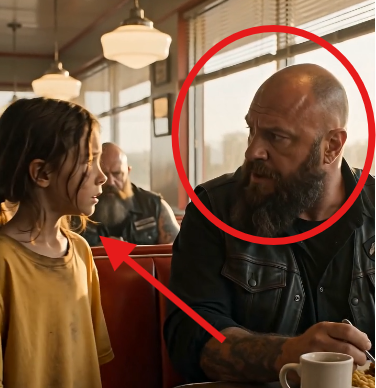
    “You’re sure? You don’t want to counter for the full asking price?”

    “Speed matters more than $2,000. Accept it.”

    Meanwhile, Jennifer made desperate attempts to build a defense.

    I watched from my window as she approached Mrs. Patterson on the sidewalk. Their voices carried across the yard.

    “Mrs. Patterson, I need your help. My father is trying to evict us. Can you testify that I’ve been caring for him?”

    Mrs. Patterson’s discomfort was visible even from a distance.

    “Oh dear. I… I’m not sure I can do that.”

    “You’ve seen me here. You know I take care of him.”

    “Jennifer, honey, I’ve seen you and your family living in his house. I haven’t seen much caring, if I’m honest.”

    “You don’t understand the situation.”

    “I think I understand it just fine.”

    Mrs. Patterson walked away quickly.

    Jennifer tried two more neighbors with similar results.

    Nobody would testify to something they hadn’t witnessed.

    Late May, I met Robert at a coffee shop to finalize the acceptance.

    He spread the purchase offer across the small table. Multiple pages of legal documents pointed to signature lines highlighted in yellow.

    “Initial here, here, and here. Sign at the bottom.”

    I picked up his pen, a heavy silver instrument. Initialed three pages carefully, signed my full name on the acceptance page.

    Wilbur Davis.

    My signature was firm, unhesitating.

    Robert countersigned as agent, slid the documents into his portfolio.

    “I’ll submit this to their agent today. Closing is scheduled for August 15th.”

    We shook hands.

    As I walked out into the bright June sun, my phone buzzed.

    A text from Patricia.

    July 2nd is three weeks away. Are you ready?

    I typed back one word.

    Yes.

    I woke before dawn on July 2nd, dressed in the dark suit I’d worn to Eleanor’s funeral three years earlier, straightened my tie in the mirror, seeing my own face, older now, harder somehow.

    I touched the necklace under my shirt, felt the warm gold through the fabric.

    Today was the day.

    Patricia met me in the courthouse hallway at 9:00. She wore a sharp business suit, carried those same accordion folders, now even thicker, with evidence.

    “We have everything we need,” she said. “Video evidence, financial records, medical documentation, witness statements from neighbors.”

    Jennifer arrived moments later with Carlson, Michael, and Amber.

    We sat on opposite sides of the hallway, not speaking.

    The silence felt appropriate.

    At 10:00, we filed into the courtroom.

    Judge Stone took her bench, reviewed papers briefly, looked up.

    “Ms. Morrison, you may proceed.”

    Patricia stood at the podium. A screen had been set up for video presentation. She played the clip of Michael pushing me against the counter.

    The judge leaned forward, watching intently.

    “This was recorded April 14th, the day before we filed for emergency relief.”

    She switched to the financial spreadsheet.

    “These are documented loans totaling $18,500 over three years. Not one dollar repaid.”

    Next came my medical records.

    Blood pressure 152 over 95.

    Documented stress-related symptoms.

    Physician notes indicate patient reports hostile home environment.

    Each piece built an undeniable narrative.

    Carlson stood when Patricia finished, attempted to humanize Jennifer.

    “Your Honor, my client has been living in her childhood home. There was an understanding.”

    Judge Stone interrupted.

    “Was there a written agreement establishing this understanding?”

    “No, but—”

    “Verbal agreements about property occupation need to be formalized. Mr. Davis attempted to do exactly that with the rental agreement. Your client refused.”

    She gestured for him to sit.

    “I’ve heard enough.”

    The courtroom went still.

    “I’ve reviewed all submitted evidence. The financial exploitation is clear and documented. The video evidence shows a pattern of intimidation and harassment.”

    Judge Stone looked directly at Jennifer.

    “Miss Thompson, you were given reasonable rental terms. You refused. You were given multiple opportunities to vacate voluntarily. You refused.”

    Jennifer’s hands gripped the table edge.

    “I’m granting the eviction. You have 30 days, until August 1st. If you’re not out by then, the sheriff will execute the order.”

    Jennifer started crying.

    Michael stared straight ahead, stunned.

    Amber reached for her phone before the bailiff cleared his throat meaningfully.

    Outside the courtroom, Jennifer approached me in the hallway. Her face was blotchy. Mascara smeared.

    “Dad, please don’t do this. We’ll change. We’ll pay the rent.”

    “It’s too late for that.”

    “Where are we supposed to go?”

    “That’s not my problem anymore.”

    “How can you be so cold? We’re your family.”

    I looked at her.

    Really looked.

    Seeing Eleanor’s features in her face, but none of Eleanor’s warmth.

    “You had three years after your mother died to act like family. You chose to act like parasites instead.”

    She recoiled as if I’d slapped her.

    Patricia touched my arm.

    “Wilbur, we should go.”

    The sale moved forward on its own timeline.

    Mid-July, a home inspector walked through with Sarah and Marcus Chen following. Jennifer’s boxes were already stacked in corners. The reality of departure setting in.

    The inspector checked electrical panels, plumbing, foundation.

    “Water heater is older. Roof has maybe five years left. Nothing major.”

    Sarah asked me quietly, “Have you lived here long?”

    “Forty years. Built most of the deck myself.”

    Marcus smiled.

    “It’s a good house. Solid. It deserves a family that will appreciate it.”

    Sarah understood what I wasn’t saying.

    “We’ll take good care of it.”

    “That’s all I ask.”

    July 19th, one day before the deadline, a rental truck appeared in the driveway.

    I stayed in my bedroom, door closed, listening to the sounds of departure.

    Furniture scraping across floors.

    Boxes thudding.

    Jennifer’s voice giving sharp orders.

    Amber complaining about heavy lifting.

    Neighbors watched from their yards, witnessing the family’s exit.

    A knock on my door.

    I opened it.

    Jennifer stood there exhausted, defeated, covered in sweat and dust.

    “Are you happy now? You got what you wanted.”

    “I didn’t want this. You forced it.”

    “I’ll never forgive you.”

    “I don’t need your forgiveness. I have Eleanor’s approval. That’s enough.”

    Her face hardened.

    “I hope you’re satisfied.”

    “I’m not satisfied. But I’m free.”

    She turned away.

    Minutes later, the truck’s engine roared to life.

    I watched from my window as it pulled out of the driveway, taking my daughter away perhaps for the last time.

    The house felt different immediately.

    Lighter.

    The air moved more freely.

    I walked through the empty rooms as evening light slanted through windows. Every footstep echoed.

    In the living room, deep scratches scored the hardwood where the couch had been dragged. The master bedroom had a fist-sized hole in the wall, Michael’s anger leaving its mark. The kitchen counter was stained. A cabinet door hung crooked.

    I photographed everything with my phone, narrating quietly.

    “July 19th, 6 p.m. Documenting condition after occupants’ departure.”

    I wasn’t planning to pursue them for damages. I’d already won.

    But the documentation felt necessary.

    Final proof of who they really were.

    Standing in the center of the living room, I held my phone displaying the trail of destruction.

    Gouged walls.

    Stained floors.

    Broken fixtures.

    I didn’t feel angry looking at these images.

    I felt validated.

    Eleanor had been right about everything.

    Her letter had prepared me for this moment, for these people wearing familiar faces but empty of love.

    Through the front window, the for sale sign stood in the yard with a red sold rider attached at the top.

    Four weeks until closing.

    Four weeks until I left this house forever.

    I touched the necklace one more time, then walked to my bedroom to begin my own packing.

    The quiet was extraordinary.

    After three years of chaos and voices and demands and hostility, the silence felt like a gift.

    I was free.

    Three days after the family left, I sat at my laptop in the empty house, browsing real estate listings in Scottsdale. The silence echoed around me. Footsteps, breathing, the click of keys, all amplified by absence.

    My packed boxes lined the walls, a lifetime compressed into cardboard.

    I’d set specific search parameters:

    Two-bedroom condo or apartment.

    Safe neighborhood.

    Under $200,000.

    Starting over at 67, entirely on my terms.

    The first property I viewed felt wrong, too modern, all glass and steel, no warmth. The second was ground floor, which made me uneasy after years of feeling vulnerable in my own home.

    Then the realtor showed me a second-floor apartment in a quiet Scottsdale complex.

    “It’s a 55-plus community. Very quiet, very secure.”

    I stepped onto the balcony.

    Mountain views.

    Afternoon breeze.

    Other residents my age, walking dogs below.

    The complex had a security gate, cameras, a community room I’d probably never use.

    “Can we make an offer today?”

    She looked surprised.

    “Of course. What are you thinking?”

    “Full asking price, cash, no contingencies.”

    By early August, the purchase was finalized.

    $195,000.

    I used Eleanor’s hidden money and part of the house proceeds.

    No mortgage.

    The freedom of that felt extraordinary.

    I spent a week transforming the second bedroom into a workshop. Unpacked power tools still wrapped in factory plastic. I’d sold my old equipment years ago when Jennifer’s needs consumed my time and space.

    Now I set up a workbench, installed pegboard for tools, arranged storage bins methodically.

    The table saw whirred when I tested it, deeply satisfying, familiar.

    I selected oak for my first lumber purchase, began cutting pieces for a shadow box for Eleanor’s necklace.

    Sawdust filled the air.

    For the first time in years, I was creating something rather than managing someone else’s chaos.

    August 15th arrived.

    Closing day.

    I met Sarah and Marcus Chen at the title company.

    Bland office.

    Beige walls.

    Stack of documents.

    We sat across from each other at the conference table. The title officer explained each document. I signed page after page, my signature automatic from decades of engineering contracts.

    Sarah slid an envelope across the table.

    “We wrote you a letter for later.”

    I accepted it, tucked it in my jacket.

    Marcus handed over a check for the remaining proceeds. The title officer passed the house keys to the Chens.

    Sarah’s eyes were bright.

    “Thank you for trusting us with your home.”

    “Make it yours now. That’s what it needs.”

    I walked out carrying only a box of photos and Eleanor’s necklace.

    Didn’t look back.

    Drove directly to my new apartment.

    Unpacked my minimal belongings.

    That evening, I sat on my new couch in the quiet space that was entirely mine. Opened Sarah’s envelope, read their letter.

    We want you to know we understand the sacrifice you made. We’ll fill it with love and laughter. You gave us more than a house. You gave us a future.

    I folded it carefully, placed it in my desk drawer beside Eleanor’s letter.

    Two messages of hope from two different sources.

    Meanwhile, I’d opened a new bank account at a different institution, transferred approximately $210,000 after all purchases and expenses, set up automatic payments for utilities, HOA fees, everything organized with the precision I’d once applied to engineering projects.

    For the first time in years, I reviewed my accounts without anxiety, without wondering what Jennifer had taken or Michael had borrowed.

    She tried calling me.

    I watched her name appear on my screen, let it go to voicemail, didn’t listen.

    Another call.

    Another.

    I opened my settings, scrolled to block contact.

    Confirmed.

    A text from a different number.

    Michael’s.

    You owe us. We’re family.

    Block.

    Another from Amber’s number.

    Grandpa, please answer.

    Block.

    I changed my number the next day.

    Gave it only to Patricia, my doctor, and the complex security office.

    Late August, a knock on my apartment door.

    I looked through the peephole.

    Jennifer stood there looking exhausted, desperate.

    “Dad, I know you’re in there. Please, we need to talk. We made mistakes, but we’re family.”

    I backed away silently, sat in my armchair.

    Her voice continued, muffled through the door.

    “We’re struggling. We can’t afford… Please, Dad.”

    More knocking.

    A door opened down the hall.

    A male voice.

    “Ma’am, if you don’t leave, I’m calling security.”

    “Jennifer, this is my father. He’s not answering.”

    “You need to go.”

    Footsteps retreating.

    Finally, silence.

    I felt no guilt.

    I felt free.

    That evening, I stood in my workshop working on the shadow box, oak with dovetail joints, requiring precision and patience. I applied wood glue carefully, fit the pieces together, clamped them to dry.

    When it was finished, I mounted Eleanor’s necklace inside, hung it on my living room wall in a place of honor.

    The gold caught the lamplight, glowing softly.

    I walked to my window, looked out at the Scottsdale Mountains darkening against the orange sky.

    Tomorrow was August 28th, three years since Eleanor passed.

    I had plans for that anniversary.

    Good plans.

    Peaceful plans.

    Two days before Eleanor’s anniversary, I sat in Patricia Morrison’s office one last time. She slid a document across her desk.

    “My newly finalized will.”

    “It’s official. Everything goes to the three charities as you specified. Your daughter is explicitly excluded with an explanation that she’s already received what you consider her fair share during your lifetime.”

    I read the relevant section aloud quietly.

    To my daughter, Jennifer Davis Thompson, I leave nothing, as she has already received substantial financial support during my lifetime and has demonstrated through her actions that she values my assets more than our relationship.

    It fit.

    I initialed each page, signed all three copies. Patricia and her paralegal witnessed. The notary seal was applied.

    “You’re protected,” Patricia said.

    She showed me another document, a medical report from Dr. Sarah Patel, geriatric specialist.

    “Jennifer tried to file for guardianship. Claimed you were mentally incompetent to manage your affairs.”

    I wasn’t surprised.

    “I arranged for a comprehensive evaluation. The results: cognitively sharp, physically healthy, fully competent. Her petition was dismissed immediately.”

    I felt vindicated, but not shocked.

    I’d always known I was fine.

    Jennifer was the one who was broken.

    Patricia handed me another letter.

    “This came from Carlson yesterday, requesting family mediation to repair relationships.”

    I read it once.

    The desperation was transparent.

    Jennifer needed money.

    Hoped reconciliation might lead to some inheritance.

    “No,” I said simply.

    “I’ll draft a response declining.”

    “The matter is closed. Thank you, Patricia. For everything.”

    She smiled.

    “It was my pleasure, Wilbur. You deserve justice.”

    August 28th arrived.

    Three years exactly since Eleanor’s death.

    I woke before dawn in my new apartment. Made coffee in my small kitchen. The familiar ritual felt right.

    I carefully removed Eleanor’s necklace from the shadow box, held it in my palm. The metal was cool, the heart-shaped locket perfect.

    I opened it.

    The tiny space where her note had been hidden was empty now, but I remembered every word.

    I sat in my armchair, necklace in one hand, her letter from my desk drawer in the other.

    Read it again.

    Be strong. Live for yourself.

    “I did it, Eleanor,” I whispered to the quiet room. “I’m free.”

    Tears came.

    Not from sadness.

    But release.

    She’d saved me even after death, given me permission to choose myself over obligation.

    “You were right about everything. Thank you for not giving up on me.”

    I returned the necklace to its place of honor on the wall, where it caught the morning light.

    That afternoon, I met Dennis Morrison at a Starbucks in Scottsdale, an old friend from my engineering days, someone I’d lost touch with when Jennifer’s family consumed my life.

    He was there first, gray hair, warm smile.

    We shook hands, the gesture turning into a brief hug.

    “I tried calling you a few times over the years,” Dennis said as we sat with our coffee. “Always went to voicemail.”

    “I was occupied. My daughter and her family moved in after Eleanor died.”

    Understanding dawned in his expression.

    “Ah, that kind of occupied.”

    We talked for two hours about Eleanor, about engineering projects from decades past, about Dennis’s grandchildren.

    Finally, I said, “I’m living alone now by choice.”

    Dennis grinned.

    “Good for you, Wilbur. That wasn’t living before.”

    “No. But it is now.”

    “How about chess next Thursday?”

    “Prepare to lose.”

    “You’re on.”

    It was the first social engagement I’d made for myself in years.

    That evening, I stood in my workshop working on an oak box, dovetailed joints, requiring precision and patience. I’d built the shadow box for Eleanor’s necklace. This box had no specific purpose yet. Maybe I’d give it to Dennis. Maybe I’d keep it for my own small treasures.

    It didn’t matter.

    What mattered was that I was making it with my own hands, in my own time, for my own reasons.

    I applied glue to the final joint, fitted the pieces together carefully, ran my hand over the smooth wood, feeling the grain.

    The satisfaction was profound.

    As I worked, I thought about the journey.

    Eleanor’s letter hidden in the necklace.

    The discovery of her savings.

    The legal battle.

    Patricia’s expertise.

    The house sale.

    This new beginning.

    I didn’t feel victorious.

    I felt balanced.

    I cleaned my tools methodically, swept the sawdust, examined the completed box in the light.

    The joints were perfect.

    I set it on the workbench, satisfied with my work.

    Turned off the shop light and walked into my living room.

    Eleanor’s necklace glowed softly in the evening light from the window. The gold caught the last rays of sun, throwing tiny reflections across the wall, like stars, like promises kept.

    I walked to the window, looked out at the Scottsdale mountains darkening against the orange sky.

    My phone sat silent on the counter.

    My number.

    My contacts.

    My control.

    Tomorrow, I’d meet Dennis for chess.

    Next week, I’d finish another project in my workshop.

    The month after that, who knew?

    The future was unwritten, and for the first time in years, that felt like freedom rather than fear.

    I touched my shirt where the necklace used to rest against my chest.

    It was on the wall now.

    Visible.

    Honored.

    But no longer armor.

    I didn’t need armor anymore.

    I smiled, a genuine, peaceful smile, and turned toward my kitchen to make dinner just for myself.

    Exactly enough.

  • My Husband Had Two Children With His Secretary Until A Doctor Revealed The Truth He Never Expected

    The first time I saw my husband holding his secretary’s second baby, I smiled so calmly that everyone in that ballroom assumed I had died inside. People watched my face the way you watch a window for weather, looking for a crack, a tremor, the first sign of collapse. They found nothing. I had already made my peace with the wreckage. I was not grieving. I was counting.

    Martin Voss loved applause more than he loved the truth. He loved applause more than he loved me, more than he loved his company, more than he loved anything that required something difficult in return. He was the kind of man who had learned early that beauty and confidence could substitute for honesty indefinitely, and he had spent his adult life testing that hypothesis against every room he entered. He was rarely wrong about rooms. Rooms tended to give Martin Voss what he wanted. At the annual charity gala for Voss Meridian, he swept through the main entrance with Clara Hayes on his arm, a toddler named Liam gripping the hem of his jacket and a newborn sleeping against the lapel of his tailored tuxedo, and the room gave him exactly what it always gave him: attention. Cameras flashed from the press corner. Donors turned. Whispers moved through the gold and ivory space the way whispers always do at events where powerful people are pretending to care about something other than each other. Then Martin lifted the newborn and addressed the nearest cluster of board members and their spouses with his best magnanimous voice, the voice he used for keynote addresses and toast moments and press availability. “My legacy keeps growing,” he said, and he meant it as tenderness, but what he performed was ownership.

    Across the gold and ivory ballroom, Clara turned and found me. She smiled. It was the particular smile of a woman who has been winning for so long she no longer needs to gloat; she only needs to confirm that you are still watching.

    I was watching.

    I was also, if anyone had thought to ask, the woman Martin had spent two years quietly telling people was too fragile to give him children. He never said it loud. He said it the way men like Martin say all damaging things, softly, in sympathy, so that the listening world would think he was protecting me rather than discarding me.

    Nine years of marriage. I had built half of what became Voss Meridian before I believed him when he said that a woman who worked and managed and strategized was less desirable than a woman who simply stood beautifully beside him. I had given up my law practice one file at a time, settling clients, closing cases, letting partners absorb what I had spent twelve years building, because Martin said we needed to focus on family, and family meant that his ambitions would expand while mine contracted until there was nothing left of my professional life but the memory of it.

    When people at the gala came to press my hand and offer their condolences in the language of polite society, I thanked them with warmth I genuinely felt. I bore no anger toward those people. They were not cruel; they were simply reading the room Martin had arranged. When his mother found me near the bar and squeezed my hand and murmured, low and earnest, “Endure quietly, Evelyn. A man needs heirs,” I nodded. I did not tell her what I knew. When Martin appeared at my shoulder and bent close enough that I could smell his cologne and the faint ghost of something harder underneath it, whisky or ambition or the specific anxiety of a man trying to control too many moving pieces at once, and said, “Don’t embarrass me tonight,” I looked at the two children he was parading through the room and said simply, “I wouldn’t dream of it.”

    He understood my quietness as surrender. That was the most important misunderstanding of his life.

    Five years earlier, during a fertility consultation Martin had agreed to attend and then abandoned twenty minutes before it began, he had told the doctor’s receptionist to phone his wife. “She handles unpleasant details,” he said, which was his version of delegation and also, I came to understand, a confession about how he had organized our entire marriage. So the doctor called me. I sat in that clinical office alone, listening to a gentle and professional man explain that the results were unambiguous: permanent non-obstructive azoospermia. Not low odds. Not situational. Not the kind of diagnosis that responds to lifestyle changes or supplements or the passage of time. A surgery Martin had undergone as a child, years before we met, had left him permanently unable to father a biological child.

    I called Martin six times that afternoon. He did not answer. By the time I finally reached the hotel bar where he spent that particular evening, he was three drinks into whatever version of himself he preferred in moments of avoidance, and he was not alone. Clara Hayes had joined him, still his assistant then, laughing at whatever he was saying with the particular attention of a woman who understands exactly what she is building toward.

    I did not confront him that night. I drove home. I sat in the kitchen for an hour before I was capable of crying, and when the crying finally came it was not the operatic kind, not the kind that makes a person feel cleansed or understood. It was the small, exhausting kind that comes from realizing you have been alone in something important for longer than you thought. I cried not because of the diagnosis itself, which I could have carried, but because I had sat alone in a doctor’s office learning something that would restructure the entire architecture of our future, and the man who had put his name on that future had not even glanced at his phone.

    Two years after that evening, Clara announced her first pregnancy. Martin came home that night with a brightness in his face I had not seen in years, a particular quality of illuminated pride that I recognized because I had once worked very hard to put it there. He stood in the kitchen doorway and said, with the absolute confidence of a man who has decided to believe something, “See? The problem was never me.”

    I looked at him. I let the words settle. I said nothing, because I understood in that moment something cold and clarifying: the truth was available to me, but the truth alone would accomplish nothing. If I produced the medical report and said what I knew, Martin would call me vindictive. Clara would call me barren. His family, including the mother who had told me to endure quietly, would call me desperate and small. The board would hear that Martin’s fragile wife had made a scene. The children, who were innocent, would be caught in a war I had not started.

    Silence, I decided, was not weakness. Silence was the room I needed to work in.

    I began to pay attention the way lawyers pay attention, specifically, systematically, and without sentiment. I learned where the money went. I requested access to the household accounts under the pretense of managing our charitable giving, which Martin agreed to without interest because finances, when they were not his to spend, bored him. I found invoices for a luxury apartment in the Meridian District coded as client lodging. I found itemized gifts, jewelry, a vehicle, a full renovation of a second-floor nursery, all booked as marketing or business development expenses. I copied everything. I preserved a chain of emails in which Martin had corresponded with the company attorney about amending the family trust to include, and I remember the exact phrasing because I read it many times, the natural children of the Voss union and their primary guardian.

    He had not written Clara’s name. He had written language that would hold regardless of what happened between them, language designed to protect the children’s claim to company assets in the event of any future dispute.

    What Martin did not know was that the attorney who had originally drafted our prenuptial agreement, the attorney he had dismissed as unnecessary once I left my practice, was me.

    I spent three months drafting and quietly amending a clause in the existing marital trust through proper legal channels, working with outside counsel in a city two hours away where no one knew me as Martin Voss’s wife and everyone knew me as the attorney whose work had once been called meticulous by a federal judge in open court. The clause was precise in the way that only someone who has drafted contracts for a living understands precise to mean: not elaborate, not clever, not designed to impress, but airtight in the specific places where airtight mattered. Any attempt to transfer marital or company assets to a partner of an extramarital relationship, any claim of biological paternity contradicted by medical evidence already in the official record, any misuse of corporate funds exceeding a defined threshold and routed through a vendor not subject to standard audit review, each of these events would trigger an automatic forensic audit and freeze all pending amendments to any associated trust or estate document. I had it drafted, reviewed, notarized, registered, and dated eighteen months before the night Martin came home from the charity gala radiating the satisfaction of a man who believes he has finally arranged the world the way he always deserved.

    But the clause was only infrastructure. The revelation that changed everything arrived not through my work but through accident, the kind of accident that appears in retrospect to have always been inevitable.

    A security photograph. I had hired a private investigator not to expose Martin’s affair, which I already understood in full, but to document the financial irregularities in a way that would be court-admissible. The investigator, doing routine surveillance outside Clara’s building, captured a photograph I had not anticipated. Martin’s younger brother, Adrian Voss, stood on the front steps of Clara’s apartment building, kissing her while she balanced the newborn against his shoulder. On the handle of the stroller beside them, clearly visible in the enlarged image, hung a hospital bracelet. The name printed on it was not Voss. It was Adrian’s surname as registered at birth, which matched the surname he had used professionally before adopting the Voss branding that came with partnership in the family company.

    I sat with that photograph for a long time.

    Martin had not merely been deceived by a woman who wanted financial security and had chosen him as the vehicle. He had been selected because his ego made him easy. His absolute refusal to receive the medical truth about himself, his willingness to see what he wanted to see rather than what was real, had made him the perfect instrument. Clara and Adrian had built their arrangement behind his certainty, and Martin had held those children in front of the entire charitable community of this city and announced his legacy.

    I felt something I had not expected to feel. It was not satisfaction. It was closer to sorrow, the specific grief of watching someone be destroyed by the story they chose to believe about themselves.

    The morning after the gala, Martin informed me over breakfast that he was calling an emergency board meeting to address what he called the family narrative, his words for the business of managing how rich people are perceived by other rich people. He wore his navy suit, reserved for acquisitions and funerals. He did not look at me while he spoke. He told me that I had been under strain and that if I said anything inappropriate to board members he would be forced to involve the company’s legal team. He told me that he and Clara were filing the trust amendment that day, and that I would be asked to sign an acknowledgment.

    He left without finishing his coffee.

    Clara arrived at the Voss Meridian offices an hour after Martin, wearing white the way she had worn it at the gala, which I recognized as a choice. Adrian took his usual seat at the far end of the conference table, which he occupied as a senior partner, and arranged himself with the particular stillness of a man conserving energy for whatever came next.

    I entered last.

    The room was full. Eight board members, two legal representatives, the company’s chief financial officer, and an assistant whose name I had never learned but whose face I recognized because she had watched me with a cautious sympathy for two years. Martin did not look at me when I entered. He was already speaking, something about continuity and stability and the importance of presenting a unified front to institutional investors.

    I set my blue folder on the table.

    Martin stopped. He looked at the folder the way people look at something that should not exist in the room where they expected to have total control.

    “Evelyn,” he said, warning packed into two syllables.

    “I was careful for three years,” I said. I opened the folder. “Today we correct the record.”

    I slid the first document to the board chair, a woman named Patricia Hartley who had known Martin since his first year at the company and who had never been comfortable with his management of personal and professional boundaries, though she had been too measured to say so. The document was Martin’s medical report, certified and already provided to the board through outside counsel with appropriate notice the previous week. Then I produced the expense reports with the apartment lease. Then the itemized gifts and their fraudulent business classifications. Then the email chain about the amended trust.

    Clara stood before I reached the fourth document. “This is harassment,” she said. “I will not sit here while this woman attacks my children’s future.”

    I did not raise my voice. “Harassment is being told by your husband to smile while he parades another woman’s children through a charity gala and announces them as his legacy. What I am doing is presenting evidence.”

    Martin’s hand came down on the table. “Those children are mine. Whatever a piece of paper says about biology, I raised them. I love them. That is the only fact that matters today.”

    Adrian remained still. He looked at the table.

    I turned the last page face-up and slid it slowly to the center of the table where everyone could see it. It was a court-admissible paternity report. Clara had submitted it herself three weeks earlier, believing it was required to activate the children’s educational trust benefits. The form was standard, the processing routine, the result unambiguous. Father: Adrian Voss.

    The room did not go quiet. It went a different kind of silent, the silence of eight people recalculating simultaneously.

    Martin stared at the paper. He looked at it for a long time without speaking. Then he looked at his brother.

    Adrian finally moved. Just a fraction. Just enough.

    “Adrian,” Martin said, and the word carried no question in it. It was already an ending.

    I tapped the folder. “There is more. Adrian approved the vendor payments that covered the apartment. Clara received them. Martin signed the reimbursement forms without reviewing them, which is either negligence or conspiracy, and the audit committee will determine which. The district attorney’s office has already received copies of the relevant materials.”

    Clara’s composure came apart in stages. I watched it happen the way you watch a building’s facade crack from foundation pressure, slowly and then all at once. First her hands, which stopped being still. Then her jaw, which tightened beyond what expression could hide. Then her voice, which came out smaller than I had ever heard it, stripped of the sweetness she deployed the way other people deploy weapons. “Evelyn. The children are innocent. Whatever you think of me, the children are not responsible.”

    “I know that,” I said. “They are the only people in this situation who are not responsible. Which is why they have been protected separately.”

    I produced one final document. It was a court order establishing an irrevocable educational and welfare trust for both children, funded from the recovered assets, overseen by an independent trustee, and entirely separate from any civil or criminal proceedings against their mother or their biological father. I had filed it two weeks earlier. The judge had signed it the previous Thursday.

    Clara stared at it. Whatever she had prepared to say next did not come.

    Martin was removed from his position as Chief Executive Officer that afternoon by a board vote of seven to one. The single dissent was Adrian, whose vote was subsequently voided when his suspension was formalized pending the criminal investigation. Patricia Hartley, the board chair who had accepted the first document I slid across the conference table with a steadiness that told me she had been waiting a long time for something like this, moved the vote herself. She did it without theater, which I respected. The subsequent press release was also hers, businesslike and unsentimentalizing, describing the change in leadership as a governance decision in the best interests of the company’s stakeholders and leaving the specific circumstances to the journalists who would find them in the public filings within the week.

    The forensic audit that followed took eleven weeks. It was conducted by an independent firm with no prior relationship to Voss Meridian, which was one of the conditions the board attached to my interim appointment, a condition I had suggested myself because I wanted no question about the integrity of what the audit found. What it found was two million, three hundred thousand dollars routed through a shell company Clara had incorporated under a name that reversed the letters of her own, a small vanity that might have been arrogance or might simply have been the decision of someone who never genuinely believed the money trail would be followed. Adrian had structured the payments across eighteen months, using vendor approval authority he held as a senior partner. Clara had received them into accounts that were not difficult to find once someone was actually looking. Martin had signed the reimbursement forms without reviewing them, which in the legal framework of corporate governance made him either a participant or a catastrophically negligent fiduciary. Neither option was a position from which a chief executive officer could continue to lead a publicly traded company.

    Adrian was arrested on a Thursday morning. It was quiet. No press outside the building, no dramatic perp walk, just two men in plainclothes at the lobby desk and Adrian walking toward them in his good coat looking like a man who had known this morning was coming and had decided the only remaining dignity was not to run.

    Clara was terminated the same week, named in a civil recovery suit, and ordered by the court to return what she could of the diverted funds. The amount she could return was substantially less than the amount the audit had identified. The gap between those two numbers would follow her through the civil proceedings for years.

    Martin came home to find that the keycard to the building management system, which he had used with the unthinking ease of someone who has never had to think about access, no longer worked. He rang the bell. The building manager, a quiet man named Daniel who had worked the lobby for six years and who had always greeted me by name when I returned from the legal appointments I had started making again, let Martin into the lobby and handed him an envelope. Inside was my petition for divorce, filed that morning through the firm I had rejoined six weeks earlier when it became clear that the proceedings were reaching their resolution and that I would need my name on a letterhead again.

    He found me in the sitting room. I was reading. He stood in the doorway for a long moment with the envelope held loosely in one hand, and he had the look of a man who has run out of the specific kind of forward momentum that had organized his entire life, the momentum that comes from never stopping long enough to reckon with anything.

    “You ruined me,” he said.

    I put down my book.

    I thought about the night I had sat alone in a doctor’s office while he drank in a hotel bar. I thought about the morning he stood in the kitchen and said see, the problem was never me, with that particular brightness in his face, the illumination of a man who has decided to replace an inconvenient truth with a convenient story and found the substitution effortless. I thought about every gala, every charity dinner, every board presentation where I had stood at the appropriate distance and smiled the appropriate smile while he constructed a version of our life that made me smaller each year, not through violence or even conscious cruelty, but through the simple, persistent pressure of a man who needed the room to himself and had found in me someone willing to step back indefinitely.

    I thought about his mother’s hand on mine. Endure quietly. As if endurance without purpose was a kind of virtue, as if the goal was simply to last rather than to matter.

    I thought about the photograph of two children who had nothing to do with any of it, sleeping in a hospital room with a bracelet on their wrist that told a story their mother and their biological father had worked carefully to obscure from the man who had wanted so badly to believe he was at the center of everything important. I thought about how that wanting, that absolute refusal to receive a reality that diminished him, had made Martin Voss the most useful fool in a room full of people who understood exactly what he was.

    “No,” I said. “You built everything you built on what you wanted to believe rather than what was real. I simply waited until the weight of it became unsustainable. Then I removed the floor.”

    He looked at me for a long moment. He was not a man accustomed to being seen clearly, and I think in that moment he understood something about the nine years behind us that he had not understood before. I do not know if it was remorse. I do not know if men like Martin Voss are capable of the specific kind of remorse that requires acknowledging not just what they did but what they chose not to see. What I know is that he left that evening without another word, and the divorce was finalized five months later without contest.

    Six months after the gala, I walked through the main lobby of Voss Meridian’s headquarters on a Tuesday morning and took the elevator to the executive floor. My name was on the glass beside the door at the end of the hall where his used to be. Interim Chairwoman. I had accepted the position not because I wanted Martin’s chair specifically but because I knew the company, had helped build it before I became its most presentable accessory, and because four hundred and sixty employees deserved leadership from someone who understood what the company was actually for rather than what it could be used to display.

    The company survived. The institutional investors, after the initial alarm and the press coverage and the short period of market volatility that follows any executive misconduct story, stayed. The company’s fundamentals were sound. They had always been sound. That was not Martin’s doing; it was the doing of the people who had worked there without drama or performance for years. I thanked them in my first all-staff address, and I meant it without qualification.

    The children’s trust remained fully funded. They would have their education regardless of what happened to their parents in civil court. I had made certain of that before any other document was filed, because they had come into a complicated situation without choosing it, and the least I could do for them was make sure the adults’ failures did not follow them into classrooms.

    Martin lived in a rented apartment across the city. His membership at the club where he had conducted most of his business lunches for a decade was quietly not renewed. He was not destitute; the divorce settlement was fair, drawn up with the specific fairness of someone who wanted it to be unimpeachable rather than punishing. He had enough to live comfortably and rebuild something modest, if he chose to. Whether he chose to was no longer a question I needed to follow.

    Clara sold designer goods online and was appealing the civil judgment. Adrian was awaiting sentencing. His lawyer was working on cooperation arguments that I understood were not proceeding well, because the forensic evidence did not leave much room for minimization.

    I slept well. I had slept well since the Thursday the judge signed the children’s trust, which was the moment I understood that everything I had set in motion had arrived at the place I intended. I slept without the low hum of unfinished calculations that had been the background sound of my life for three years.

    Not because I had been cruel. I had not been cruel. I had been precise.

    Not because I had wanted revenge. What I had wanted, if I am honest, was to be believed, and the evidence had accomplished that without requiring me to perform grief in front of people who would have found it convenient to dismiss.

    What I understood, lying in the quiet of the bedroom that was now entirely mine, was that silence had not been my defeat. Silence had been the condition under which the truth became undeniable. I had not screamed. I had not begged. I had not asked anyone to take my word for anything. I had simply gathered what was real and waited until the room was ready to see it.

    Martin had mistaken my stillness for the absence of motion. He was wrong. Still water runs deep, and I had been running, purposefully and without interruption, for three years.

    The morning after my first full week as interim chairwoman, I arrived early. The building was quiet. The lobby staff nodded. I rode the elevator alone to the executive floor, walked to the corner office, and stood at the window for a few minutes looking at the city coming awake below, the traffic and the light and the ordinary enormity of people moving through their lives.

    I thought about who I had been nine years earlier, the woman who had dissolved her law practice file by file because a man she loved told her that love required contraction. I thought about how long I had believed that quietness and accommodation were the same thing as wisdom.

    They are not the same thing. Wisdom knows what it is waiting for. Accommodation simply waits.

    I had been wise without knowing it, and now I knew it, and the knowing was not triumphant in the way that stories about women like me are sometimes told. It was quieter than that. It was the feeling of occupying space that had always been available to me and choosing, finally, not to make myself smaller than it required.

    I opened my laptop. I had a board call in forty minutes, a review of the recovered asset allocation in the afternoon, and a dinner with the firm’s managing partner in the evening to discuss formally restoring my name to the letterhead.

    There was a great deal of work to do.

    I was ready for all of it.

  • My mother slapped my son over a toy, and the whole family pretended not to see the blood. I didn’t say anything; I carried him to the hospital… and when I returned with the report in my hand, even the favorite grandson stopped smiling.

    The notary opened the envelope with a calmness that was louder than any scream.

    Inside were three pages, a small key, and a photograph of Julian holding a newborn Matthew in front of the hair salon where I worked. Upon seeing it, Valerie brought her hand to her neck, as if the image had squeezed her throat from the inside. My mother tried to snatch the package, but the police officer took a step forward and blocked her path. “Mrs. Theresa, don’t touch anything,” he said, with a voice so calm it sounded worse than a threat.

    The notary adjusted his glasses and read that Julian, before his accident, had secretly bought the mortgage debt on that house and placed it in a trust under Matthew’s name. I felt the room spinning, because for six years I had swept, cooked, and paid bills believing they were doing me a favor by letting me sleep in the coldest bedroom. The notary continued, stating that Julian had allowed my mother to live on the property only if she protected the boy and did not dispose of his assets. As soon as he uttered the word “protected,” the social worker looked at my sleeping son’s swollen cheek.

    My mother pursed her lips, but for the first time, she couldn’t find a cruel phrase to hide behind. “That’s a lie,” Valerie said, though her voice trembled and her eyes darted to the USB drive I held in my hand. Then I remembered Julian’s note and asked for permission to plug the flash drive into the TV. No one moved, not even Damian, who was staring at the red toy car on the floor as if it were suddenly on fire.

    Julian appeared on the screen, skinny from his late nights at the auto shop, wearing his blue shirt and that smile that broke my heart. He said my name with a tenderness that made me feel his grease-stained hands caressing my belly back when Matthew was still kicking inside me. Then he explained that he had discovered my mother and Valerie visited a loan shark to figure out how to take any life insurance payout away from me if he passed away. My brother-in-law looked down, and in that gesture, I knew he had also heard something and chosen silence.

    Julian recounted that he decided to buy the house’s past-due debt because Theresa was going to lose it and because I wouldn’t bear to see her out on the street. But he also said he didn’t trust her, which is why he made everything ironclad so that, upon Matthew turning seven or in the event of any proven abuse, the administration of the estate would pass immediately to me. When the video showed my mother signing a receipt accepting those conditions in exchange for keeping a roof over her head, she let out a small, miserable sound, like a trapped animal.

    The room exploded without a sound; it was an explosion of faces falling, of truths force-swallowed, and of cake turning to dust in their mouths. Valerie tried to say she didn’t know anything, but in the folder were monthly wire transfers Julian had set aside for Matthew that never reached my hands. Each deposit showed as withdrawn the exact same day into a joint account held by my mother and sister.

    I felt like throwing up, not because of the money, but because of all the times Matthew asked me for chocolate milk and I told him we couldn’t afford it. I remembered his torn sneakers, his lunches split in half, and my nights sewing uniforms while Valerie showed off expensive new purses. “We were managing it,” my mother babbled, lifting her chin as if she could still command the air. “You were stealing it,” I replied, and my own voice surprised me because it came out clean, without fear, without asking for permission.

    The social worker took photos of Matthew’s cheek, the medical report, and the bruises described on the hospital intake sheet. The police officer asked everyone for ID, and the notary handed me the small key, explaining that it opened a safe deposit box holding original documents, deeds, and another recording.

    Damian stood up slowly and walked toward my sleeping son, but Valerie yanked him by the arm in desperation. “Don’t go near that boy,” she ordered, repeating without realizing it the same phrase she had spat her entire life. Damian pulled free and started to cry, not with a tantrum, but with a new kind of shame he didn’t know where to put. “I didn’t know it was from his dad,” he said looking at the red toy car, and his childish voice pierced the room deeper than any accusation.

    Valerie tried to silence him, but he kept talking, confessing that his mom used to tell him Matthew didn’t deserve nice things because we were just passing through. My sister turned pale, and my mother glared at her with fury because the favorite grandson had just broken their theater from the inside.

    I picked up the toy car, wiped a stain of gravy off the wheel with my sleeve, and placed it on Matthew’s chest. My son shifted in his sleep and hugged the toy with that sad trust of children who love even after being hit. It was right then, seeing his little closed hand, that I stopped feeling pity for my mother. Pity had been her favorite rope to tie me down, but that night it snapped like an old string.

    “I want it on the record that my son and I are leaving this house, but that no one will ever remove us from what belongs to us again,” I said, and the notary wrote down every word as if laying new bricks beneath my feet. My mother let out a broken laugh and said I wouldn’t last a week on my own, that a woman with a sick child and no husband always ended up coming back. Before, that sentence would have folded me, but now I had a medical report in my hand and Julian’s name on every paper like an invisible pillar.

    The social worker asked to speak with me privately, and in the kitchen where they had humiliated me so many times, she explained the temporary protective measures. She said Matthew shouldn’t stay under the same roof as his abusers and that the police report would allow us to request a restraining order while the investigation moved forward. I nodded, looking at the refrigerator covered in magnets from trips we were never invited to. In one corner, a drawing by Damian was still hung up, framed with gold tape, while Matthew’s had ended up in the trash because, according to my mother, they were in the way.

    I pulled out the only drawing I kept from my purse, folded into quarters, where my son had painted his dad as a sun over a red car. The social worker looked at it and her eyes welled up with tears, but she didn’t say anything, because some tender moments need silence so they don’t break.

    When we returned to the living room, my brother-in-law was no longer defending anyone. He was sitting with his hands clasped, sweating through his Sunday shirt, understanding that his comfort also had blood on its edges. Valerie begged him to do something, to call his lawyer, to not allow this embarrassment. He looked at her as if he finally recognized her and asked how many times she had seen Matthew locked in the laundry room. My sister opened her mouth, but no words came out, and that silence answered for her.

    The police officer announced that my mother had to accompany him to give a statement regarding the assault and that Valerie would also have to answer for the alleged embezzlement and the reported abuse. Theresa straightened up with the pride of women who confuse authority with cruelty. “I did what I could for you,” she said, looking at me as if I were an ingrate rather than the daughter she had left begging for love.

    Then, for the first time in my life, I didn’t argue her version of events. I just stepped close enough for her to hear me without the others breathing down our necks. “No, Mom. You did whatever you wanted, and starting today, you’re going to learn that a child is not disciplined with fear, and a daughter is not kept with chains.” Her eyes filled with tears, but her crying was no longer the key to unlocking my guilt.

    They led her to the patrol car without handcuffs, but with everyone’s eyes on her, which sometimes weighs more than metal. Neighbors peeked through their curtains, and I remembered how many times I had lowered my head so no one would ask why my mother was shouting my name like an insult.

    Valerie tried to follow her, but the social worker asked her to stay, and my sister collapsed onto the couch where Matthew had been sleeping minutes before. That couch, which had always been Damian’s throne, was left empty like a discarded crown.

    Damian gently picked up the red toy car from Matthew’s chest, kissed its plastic roof, and placed it back where it belonged. “I’m sorry,” he whispered, and even though I wasn’t ready to forgive anyone, I understood that he was also a child built on lies. I didn’t hug him, but I didn’t push him away either, because justice shouldn’t become the very same stone they had thrown at us.

    My brother-in-law offered to take us to a hotel, perhaps out of guilt or fear, but I rejected his help. I opened Julian’s box one more time and found, behind the papers, a set of keys to a small storefront in the Maplewood neighborhood. There was a note where he told me he dreamed of seeing me cut hair in my own salon, with a yellow sign and a blue chair for Matthew to do his homework. I cried until my throat hurt, but I cried standing up, not on my knees.

    That early morning, we left with two suitcases, my son’s backpack, and the red toy car safely tucked away like a relic. Matthew woke up in the cab, confused by the city lights and by my jacket draped over his shoulders. Matthew asked with a voice so small it pierced me like a needle if Grandma wasn’t going to hit him anymore. I squeezed him tight and promised him that no one would ever touch him again without the whole world finding out.

    I didn’t promise him that everything would be easy, because wounded children deserve gentle truths, not fake fairytales. I told him we were going to have a home where his drawings would be hung on the wall, where his toys wouldn’t be plunder, and where his name would be spoken in full. Matthew closed his eyes and, for the first time in months, fell asleep without clenching his fists.

    The next morning, when I opened the storefront in Maplewood, the dust sparkled in the sunlight as if Julian had been waiting there all this time. Before rolling up the metal gate, I called the District Attorney’s office, confirmed my appointment, and understood that justice didn’t begin with revenge, but with never disappearing again. I penciled the words “Claire and Matthew’s Salon” on the metal gate, and next to it, I drew a little red car.

    Over the following weeks, I gave statements, cried, signed papers, took Matthew to therapy, and learned that healing is also exhausting, but it isn’t humiliating. The judge upheld the protective order, and my mother, who always flaunted her last name like a shield, had to explain every blow in front of strangers. Valerie returned a portion of the money, and my brother-in-law handed over text messages where she and Theresa mocked my double shifts and Matthew’s torn shoes.

    Damian sent a letter with a new blue plastic toy car, and I put it away without opening the door to the past. I didn’t show it to Matthew to force him to forgive; I saved it for him for when his heart was bigger than his wound.

    On his first day of classes at his new school, Matthew asked to carry the red toy car in his backpack, not to show it off, but to feel like his dad was walking right next to him. That afternoon he drew three people under a yellow sign and wrote “my family” in crooked letters, and right then I understood that Julian hadn’t left us a house or money, but a way out.

  • When my husband texted me from Vegas to tell me he had recently married his coworker and called me pitiful, I said, “Cool,” cancelled his cards, changed the locks on the home, and the cops showed up at my door the following morning.

    When my husband texted me from Vegas to tell me he had recently married his coworker and called me pitiful, I said, “Cool,” cancelled his cards, changed the locks on the home, and the cops showed up at my door the following morning.

    My name is Clara Jensen. I’m thirty-four, and a year ago I would have laughed if someone told me my marriage would end before I even realized it was already dead.

    But at 2:47 a.m. on a Tuesday, laughter no longer existed in me.

    The house was unnaturally quiet. I had fallen asleep on the couch, the TV muted, the screen washing the room in pale light. When my phone vibrated, I reached for it lazily, assuming it was nothing—maybe Ethan texting from his work trip in Vegas.

    Instead, my breath vanished.

    The first thing that loaded was a photo.
    Ethan—my husband of six years—standing beneath the neon glow of a Vegas wedding chapel.
    Beside him was Rebecca, his coworker.

    They were holding marriage certificates.

    Then the message appeared:

    Just married Rebecca. Been sleeping with her for eight months. You’re boring and pathetic. Enjoy your sad little life.

    I stared at the screen until the words lost meaning. No tears. No screaming. Just a deep, frozen calm.

    I replied with one word:

    Cool.

    At that moment, something sharp and steady locked into place inside me. Ethan thought he had destroyed me—but he’d forgotten who managed everything he was walking away from.

    By 3:15 a.m., I moved with ruthless clarity.

    Every credit card in his wallet—canceled.
    Passwords—changed.
    The house deed—mine.
    The accounts—mine.
    His access—revoked.

    At 3:30, I called a locksmith.
    “I’ll pay double,” I said. “Now.”

    By dawn, the locks were changed. The house was sealed.
    Ethan Jensen, newly married, no longer belonged anywhere inside it.

    At 8 a.m., pounding shook the door.

    Two police officers stood outside. Ethan had called them, claiming I’d locked him out of his home.

    I showed them the Vegas message.

    The older officer sighed. “He married someone else. This isn’t a police matter.”

    They left.

    I slept for two hours—deep, dreamless.

    By afternoon, I knew Ethan would return. He always did.

    At 2 p.m., he showed up with Rebecca, his mother Margaret, and his sister Lily.
    His belongings were already boxed and labeled in the garage.

    Margaret screamed. Lily mocked. Ethan tried to posture.

    “This house was mine before I met you,” I said calmly. “Your name was never on it.”

    Their confidence collapsed.

    Rebecca’s credit card declined when she tried to rent a truck.
    Then Ethan’s declined too.

    The Vegas fantasy cracked in real time.

    When Lily sneered that I was alone and bitter, I stepped close and answered quietly:

    “I have my home. My career. My freedom. And I don’t have Ethan. That’s the best part.”

    They packed. They left.

    Then came the smear campaign.

    Ethan, his mother, and his sister flooded social media, painting me as abusive and controlling. People I knew started believing it.

    I called David, my tech-savvy friend.

    Within hours, he uncovered everything—messages between Ethan and Rebecca, bragging about stealing money from my accounts to fund their affair.

    I posted the screenshots. No commentary. Just truth.

    The internet turned on them instantly.

    Next came harassment, false accusations, even an attempted break-in—all documented, all forwarded to my lawyer.

    Finally, Ethan begged through my mother.

    She shut him down.

    Then Rebecca’s mother called, asking me to take Ethan back because her daughter “couldn’t afford him.”

    I laughed and hung up.

    The final act took place in court.

    The judge read the evidence.
    Affair. Theft. Bigamy.

    The verdict was swift.

    The divorce was granted.
    I kept my home and assets.
    Ethan left with nothing but his belongings—and six months of alimony to pay me.

    Outside the courthouse, his family erupted into chaos. Coffee flew. Security intervened. Ethan disappeared without a word.

    Within weeks, both Ethan and Rebecca lost their jobs due to company policy.

    Their entire world collapsed.

    Mine finally opened.

    I sold the house, bought a bright downtown condo, and breathed again.

    At the gym, I met Jacob—kind, steady, uncomplicated. One morning he handed me a coffee with two words written on the cup:

    Not Ethan.

    I laughed harder than I had in years.

    On my wall hangs a framed copy of Ethan’s Vegas marriage certificate—not as pain, but proof.

    Because people like Ethan don’t need revenge.

    They write their own ending.

    All you have to do is step aside and let it happen.

    And this time, I smiled.