Blog

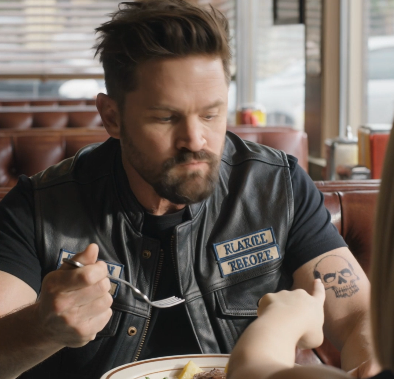
  • Part 2: For a second, the whole diner disappeared around him.

    The clink of silverware.
    The hum of the refrigerator behind the counter.
    The soft scrape of a waitress refilling coffee.

    None of it mattered anymore.

    All he could see was the black key in his hand.

    She’s alive. Don’t trust Knox.

    Not “run.”
    Not “help me.”
    Not “tell the police.”

    Just that.

    Which meant Mara was still thinking like Daniel had taught them all to think:
    say only what matters,
    and say it only once.

    The biker looked back at the little girl.

    “What’s your name?”

    “Ellie.”

    His throat tightened.

    Because Daniel had once told him that if he ever had a daughter, he’d name her Ellie after his mother.

    No one else knew that.
    No one except the three men who had been with him the night he got drunk enough to admit he wanted out of the club someday.

    Out.
    Clean.
    Gone.

    With a woman no one had met.
    And a child no one was supposed to know about.

    The biker sat back down slowly, lowering his voice.

    “Did your dad give you anything else?”

    Ellie nodded and pulled a small folded photo from her pocket.

    It showed Daniel, alive, bearded, smiling faintly, crouched beside a red motorcycle. A much younger Mara stood behind him, one hand on his shoulder.

    And in Daniel’s arms…

    a baby girl wrapped in a pink blanket.

    Ellie.

    The biker shut his eyes for half a second.

    So it was true.

    Daniel hadn’t died childless.

    He had died protecting a family.

    Or pretending to.

    “Where did Mara tell you to go after this?” he asked.

    Ellie looked down at her hands.

    “She said if you believed me, you’d take me somewhere with lots of crosses.”

    The biker went still.

    The cemetery.

    Not Daniel’s grave.
    Too obvious.

    The old churchyard behind Saint Bartholomew, where the club used to stash cash and papers inside hollow angel statues before Knox took over.

    He knew the place.

    And if Mara chose that, it meant she didn’t just have proof.

    She had proof against someone high enough that normal hiding places were already dead.

    He looked toward the window.

    A black truck had just pulled up outside the diner.

    Too clean.
    Too fast.
    Too familiar.

    Ellie saw it too and whispered, “That’s the truck the red-haired lady was scared of.”

    The biker’s whole body went cold.

    Because behind the wheel sat one of Knox’s men.

    He was smiling.

    The biker grabbed the photo, the key, and Ellie’s small hand.

    “Listen to me,” he said. “From now on, you don’t say your father’s name to anyone else.”

    Ellie looked up at him. “Why?”

    He looked at the truck outside, then back at the child Daniel had somehow hidden from an entire violent world.

    “Because if Knox finds out who you are,” he said, “he’ll finish what he started the night your father almost got out alive.”

  • My Husband Abandoned My Father’s Funeral to Run Away With His Mistress—Then at 3 A.M., I Got a Message From My Dead Father Telling Me to Meet Him at the Cemetery in Secret

    My Husband Abandoned My Father’s Funeral to Run Away With His Mistress—Then at 3 A.M., I Got a Message From My Dead Father Telling Me to Meet Him at the Cemetery in Secret

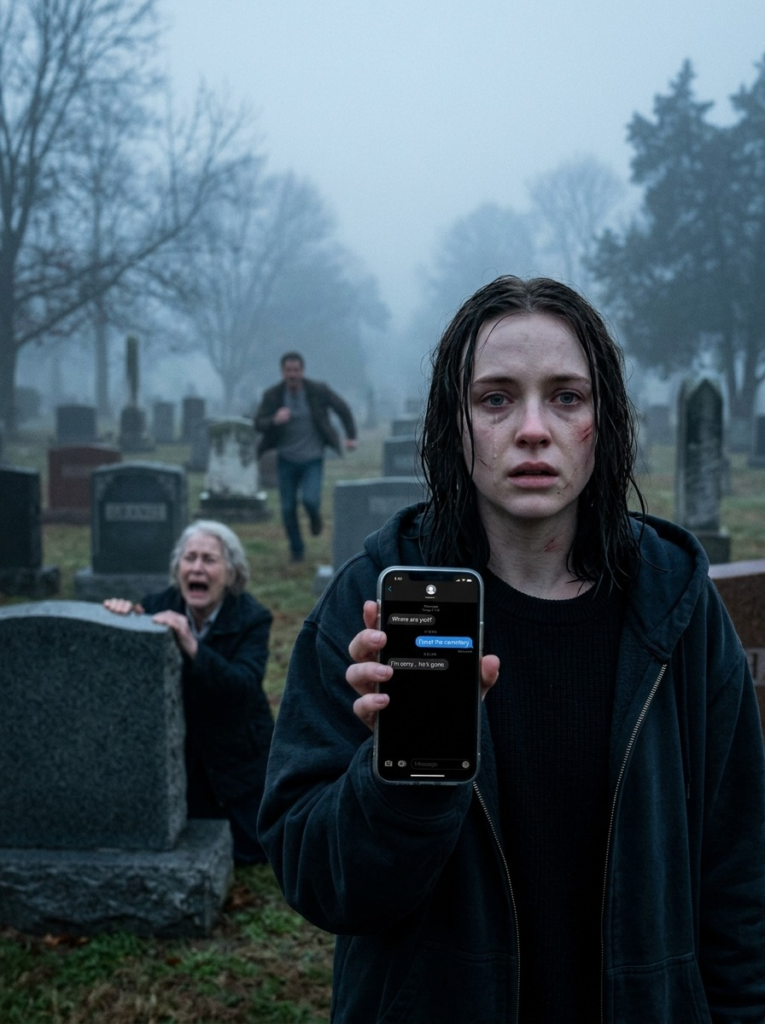
    My husband left my father’s funeral to travel with his mistress.
    But at 3 a.m.
    I received a message from my father: “My daughter, it’s me.
    Dad
    Come to the cemetery immediately and very quietly.”
    Even now, when I replay that night in my head, that is the sentence that still makes my skin go cold.
    My father, Thomas Carter, died on a Thursday afternoon after years of heart failure.
    |Not the dramatic kind people picture in movies.
    His illness was slower, crueler, and somehow more exhausting.
    It took his breath first, then his strength, then his ability to hide how frightened he really was.
    By the time he died, every room in my parents’ house held some trace of the battle: pill organizers on the counter, oxygen tubing by his chair, hospital paperwork stacked in neat piles because my father hated mess even when he was sick.
    I was his only daughter.
    He used to call me Missy when I was little and Melissa whenever he wanted me to know he was being serious.

    He was the one who taught me to change a tire, balance a checkbook, and spot the difference between confidence and charm.
    Looking back, that last lesson might have saved me if I had remembered it sooner.

    My husband, Andrew, had been all charm when we met.
    He knew how to smile at waitresses, how to speak softly to strangers, how to make every selfish instinct sound like ambition.
    For the first two years of our marriage, I mistook calculation for stability.
    By the fourth year, I knew he was colder than he wanted the world to believe, but I kept explaining him away.
    Stress from work.
    Pressure.
    Money worries.
    The usual excuses women make when they are not ready to admit that the person beside them is not confused or damaged or temporarily distant.
    He is simply showing you who he is.
    My father saw Andrew more clearly than I did.
    He never pushed me to leave him.
    That wasn’t his style.
    But during his last month in the hospital, when Andrew thought I was out getting coffee, my father took my hand and asked me a strange question.
    Has he always watched people’s money the way he watches mine?
    I laughed at the time because it sounded petty, almost paranoid.

    Andrew had been handling some of the insurance calls, helping organize bills, talking to doctors with me.
    I thought my father was embarrassed by needing help.
    Now I know he was warning me in the only way he could without starting a war at his bedside.
    At the funeral, Andrew’s mask slipped in a way I could never unsee.
    My father had been buried less than half an hour when Andrew leaned down and murmured that he had business to handle.
    He didn’t squeeze my hand.
    He didn’t ask if I wanted him to stay.
    He simply left.
    That night my cousin Jenna called by accident while trying to reach someone else, and in the middle of apologizing she let something slip.
    She had seen Andrew at the airport with a blonde woman in medical scrubs under a coat.
    Not work clothes, she said.
    More like someone trying to cover what she was wearing.
    I asked her to describe the woman, and by
    the time she mentioned the sharp bob haircut and the silver badge clip on her purse, I felt physically sick.
    Kendra Walsh.
    My father’s hospice nurse.
    I didn’t even cry then.
    I was too stunned.

    I just sat on the edge of my childhood bed in my funeral dress, numb with a kind of humiliation so deep it seemed to hollow out my bones.
    My father was gone.
    My husband had left me hours after the burial.
    And the woman he left with was one of the last people trusted to care for my father.
    My mother, Elaine, finally cried herself to sleep in the next room.
    I stayed awake under the old glow-in-the-dark stars that were still stuck to my ceiling from high school.
    It was almost funny, in a bitter way.
    I was thirty-four years old, grieving like a child, abandoned by my husband, and back in the room where my father once sat beside me after nightmares.
    Then my phone buzzed at 3 a.m.
    The message came from an unknown number.
    My daughter, it’s me.
    Don’t panic.
    Come to the cemetery immediately and very quietly.
    I need you.
    It used my father’s voice so perfectly that it felt like someone had reached into my chest and squeezed.
    Come very quietly was his phrase.
    He had used it for private talks my entire life.
    Only someone close to him would know that.
    I left without waking my mother.
    I did not call the police because I was not thinking like a careful person.
    I was thinking like a daughter whose dead father had just spoken in the language only he used with her.
    The cemetery was almost empty, washed in weak yellow light.

    My father’s phone was propped against his gravestone, screen glowing.
    Fresh footprints marked the wet soil.
    Before I could decide whether to grab the phone or run, Walter Boone, the cemetery caretaker, stepped from the shadows and said my father had asked him to do this.
    Boone handed me an envelope with my name written in my father’s handwriting.
    My father, he explained, had visited the cemetery weeks earlier and left instructions.
    If Andrew abandoned the funeral early, Boone was to place the phone on the grave after midnight and wait nearby in case I came alone.
    Inside the envelope, my father had written: If Andrew leaves before the condolences are over, stop trusting what you think you know.
    Start with the phone.
    Then go to the red toolbox in my workshop.
    Do not tell your mother yet.
    The phone unlocked with my birthday.
    One audio file was waiting.
    My father’s voice was weak but steady.
    He said Andrew was not only unfaithful.
    He was lying about money, pressing him to sign documents, and showing far too much interest in his medications.
    My father had changed his will on Monday.
    Andrew found out.
    That, my father said, was why Andrew had suddenly become desperate.
    He told me there was a key and a memory card hidden in the red toolbox in the workshop and instructed me to get to First National Bank, box 214, as soon as it opened.
    Then came the line that changed everything.
    If the man in the next video is who I think it is, Andrew didn’t do this alone.
    drove back to the house on autopilot, my pulse hammering so hard I could feel it behind my eyes.
    In the workshop, exactly where my father said it would be, I found a brass key, a memory card, and another note: Watch the video before you trust anyone.
    I put the memory card into my laptop.

    The first file showed my father’s bedroom from a hidden angle near the bookshelf.
    The timestamp was two nights before he died.
    Andrew walked in, opened the medication drawer, and switched one pill bottle for another.
    Then he called someone and said, We just need one more day.
    After the funeral, we disappear.
    The second file made my stomach drop.
    Kendra walked in wearing scrubs.
    She went straight to Andrew, took a set of papers from him, and said, He won’t sign anything if Melissa is here.
    You said she’d be gone tonight.
    Andrew answered, She was.
    Her father called, and she ran back.
    She always runs back for him.
    Then he kissed her.
    The third file was audio only, but I knew the male voice within seconds.
    Victor Hale, my father’s attorney.

    If Thomas changed the will, Victor said, we need the original before probate.
    Once Andrew gets Melissa to sign, the house and the business can still be moved.
    I remember staring at the dark laptop screen after the file ended, hearing my own breathing and nothing else.
    My husband.
    My father’s nurse.
    My father’s attorney.
    All working angles around a dying man.
    Then headlights swept across the workshop window.
    I nearly screamed, but it was only my mother’s friend Lorraine dropping off a casserole dish she had forgotten earlier.
    I let her go without opening the door and locked every entrance in the house.
    The fear had changed shape by then.
    It was no longer the wild fear of the cemetery.
    It was focused, intelligent fear.
    The kind my father had meant when he wrote that it could point me toward the truth.
    At 6 a.m., I finally woke my mother.
    I did not show her everything at once.
    I could barely hold myself together, and she had buried her husband the day before.
    I only told her Andrew had lied about where he went and that Dad had left instructions for me because he suspected fraud.

    She looked at me for a long, silent moment and then said something that still hurts to remember.
    Your father told me last week that he was worried you were too loyal to a man who had not earned it.
    She did not cry.
    She only sat down, folded her hands, and said, Then let’s not waste his last good warning.
    My father had anticipated that I would need one person I could trust, so tucked inside the toolbox note was a business card with a name written on the back: Elena Park.
    Elena had been my father’s accountant for years.
    More importantly, she had once been his student employee at the hardware store when she was in college.
    She arrived at the house an hour later, still in sneakers, hair tied up, carrying a legal pad and a look on her face that told me Dad had already prepared her for the possibility that something ugly would surface.
    He called me Monday night,
    she said.
    He told me if you contacted me before the bank opened, I was to go with you and not let you walk into that building alone.
    At 9 a.m., Elena and I opened safe deposit box 214.
    Inside was my father’s real will, stamped and witnessed.
    There was also a thick envelope of documents: bank statements, screenshots, copies of forged signatures, property transfer drafts Andrew had prepared without my knowledge, and printed travel reservations for Andrew and Kendra to leave the country the morning after the funeral.
    My father had even included a written affidavit explaining why he had secretly installed the camera in his bedroom.

    He suspected Andrew and Kendra were manipulating medication times to keep him sedated, then presenting papers when he was confused or exhausted.
    There was one more item in the box: a small digital recorder.
    On it, my father had preserved a conversation with Victor Hale from three days before he died.
    Victor urged him to sign an asset transfer while Andrew waited outside.
    My father refused.
    Victor’s voice, usually polished and warm, turned sharp.
    He warned that delays would create complications for the family.
    My father replied, very clearly, The only complication here is that my son-in-law thinks I’m too weak to notice he’s trying to steal from my daughter.
    We took everything directly to Detective Sofia Ramos, who had handled elder fraud cases before.
    She watched the bedroom footage twice, listened to the recordings, and called in two more officers.
    By noon, the case had gone from family suspicion to formal investigation.
    The hardest part was what Ramos could and could not promise.
    The medical examiner had already certified my father’s death as heart failure.
    Proving that medication tampering caused or hastened it would be complicated.
    But tampering itself, fraud, conspiracy, and attempted theft were still serious.

    Victor could lose everything.

    Kendra could lose her license and face charges.

    Andrew could face prison.

    That should have felt like relief.

    Instead I felt something colder.

    I had married a man who had looked my father in the face while planning to profit from his decline.

    Detective Ramos asked whether Andrew knew I had access to the bank box.

    I shook my head.

    Good, she said.

    Then let’s keep it that way for a few more hours.

    The plan was simple.

    I would text Andrew and say I had found a key in Dad’s workshop and was confused by some paperwork in a bank envelope.

    Nothing more.

    If he was guilty, he would come back for the documents.

    He responded in less than a minute.

    Don’t do anything until I get there.

    He was supposedly in Miami.

    Two hours later, he was in my parents’ driveway.

    That told me all I needed to know about how important whatever he wanted really was.

    Detective Ramos and another officer waited in an unmarked car down the street.

    Elena stayed in the kitchen with my mother.

    I sat alone in the living room where my father used to watch baseball, the envelope of copied documents on the coffee table in front of me.

    When Andrew walked in, he was dressed in the same suit from the funeral, but his tie was gone and his collar was open.

    He looked tired, irritated, and strangely eager.

    He tried

    for concern first.

    Melissa, I heard you were upset.

    I came straight back.

    You came straight back from your mistress? I asked.

    He froze only for a second.

    Then his face hardened.

    This is not the time for drama.

    I almost laughed.

    My father had been buried the day before, and he was lecturing me about timing.

    I picked up the brass key from the table.

    Andrew’s eyes moved to it instantly.

    Dad left this, I said.

    And some papers.

    I don’t understand why your name is on drafts transferring his store shares.

    Andrew sat down slowly.

    I could see him thinking, adjusting, calculating the lie that had the best chance of landing.

    Thomas was confused near the end, he said.

    He wanted help structuring things.

    I was handling it for you.

    For me?

    Yes.

    To protect you.

    I slid a printed still frame from the camera footage across the table.

    It showed him at my father’s medication drawer.

    Protect me from what, Andrew?

    The color left his face.

    He looked toward the hallway, then back at me…

    Where did you get that?
    Another photo.
    Him kissing Kendra in my father’s room.
    Then a transcript of Victor’s audio.
    His voice changed.
    The soft husband tone disappeared, and something impatient and ugly rose up beneath it.
    You don’t understand what you’re looking at.
    Then explain it.
    He stood so quickly the chair legs scraped the floor.
    He pointed at the papers like they offended him.
    Your father was dying anyway.
    He kept delaying everything.
    He said he wanted to review terms, then changed his mind, then changed the will.
    Do you know what that did to the deal?
    The deal.
    That was what he called my father’s life.
    I said, You switched his medication.
    Andrew dragged both hands over his face.
    And that was the moment he made the mistake that finally ended him.
    I didn’t poison him, he snapped.
    I lowered a dose so he’d be awake enough to sign when Victor came back.
    Kendra said it wouldn’t hurt him.
    He was already failing.
    There are confessions that sound loud even when they are spoken in an ordinary voice.
    That was one of them.
    The front door opened behind him.
    Detective Ramos stepped inside and said, Andrew Walker, don’t move.
    He turned so fast I thought he might run, but there was nowhere to go.
    Another officer entered from the back.
    My mother stood at the kitchen doorway, one hand over her mouth, Elena beside her.
    Andrew looked at me as if he still couldn’t believe I had done this.
    You set me up, he said.
    No, I answered.
    My father did.
    Kendra was arrested that evening at an airport hotel.
    Victor Hale was taken from his office before sunset.

    Over the next several weeks, investigators uncovered everything my father had suspected and more.
    Andrew had opened credit lines using my information, moved money from a joint savings account into shell entities Victor helped create, and prepared fraudulent transfer documents tied to my father’s hardware store and the family home.
    Kendra had altered medication logs and accessed my father’s medical chart without authorization.
    Victor had drafted papers meant to survive just long enough to move assets before probate caught them.
    The hardest truth was also the murkiest one.
    The medical
    examiner could not prove beyond doubt that the lowered dose caused my father’s death.
    His heart had been weak for years.
    But the state did not need a murder charge to bury Andrew’s future.
    Fraud, conspiracy, elder exploitation, tampering with medication, attempted theft, identity-related charges, and professional misconduct were enough.
    Victor was disbarred.
    Kendra lost her license and faced criminal charges.

    Andrew’s bail conditions included surrendering his passport.
    The trip he had planned after my father’s funeral ended in a county holding cell.
    I filed for divorce before the month ended.
    Because my father had changed his will and moved key assets into a trust managed independently, Andrew got nothing
    Not the house.
    Not the store.
    Not the investments he had spent months circling like a vulture waiting for the right moment to descend.
    I wish I could say justice felt clean.
    It didn’t.
    It felt necessary.
    My mother carried the guilt of not seeing it sooner.
    I carried the guilt of bringing Andrew into our family at all.
    Elena reminded us, more than once, that predators succeed because they study decency and wear it like a costume.
    My father, even as sick as he was, had seen through the costume before either of us did.
    A few weeks after the arrests, I went back to the cemetery alone in the early evening.
    Walter Boone was trimming hedges near the gate.
    He nodded when he saw me, then gave me privacy.
    The grave still looked too new.

    The grass had not settled.
    The stone felt colder than the air.
    I stood there with my hands in my coat pockets and thought about the last gift my father had given me.
    Not money.
    Not property.
    Not even protection, though he gave me that too.
    He gave me proof.
    He gave me the truth when the lie around me was at its most convincing.
    I read his final letter again, the one found in the bank box after the investigators took what they needed.
    In it he wrote that love without honesty turns into a trap, and that the most dangerous people are often the ones who know exactly how much grace you are willing to extend.
    He ended with a line that broke me all over again.
    You were never too soft, Melissa.
    You were simply loving in the presence of someone who treated love like an opening.
    I cried then, finally and fully, the way I had not allowed myself to cry during the funeral or the night at the cemetery or the arrest.
    When the tears passed, I touched the stone, whispered thank you, and stood there until the sky turned the color of old bruises.
    People later asked me what the biggest red flag had been.
    Andrew leaving the funeral.
    The affair.
    The money.
    The fake concern.
    The answer changed depending on the day.
    But deep down I think the worst part was not the betrayal itself.
    It was realizing how long I had been training myself to explain away the chill in him because admitting the truth would have shattered the life I thought I had.
    My father’s death was the worst thing that ever happened to me.
    But the truth he set in motion before he died saved what was left of my life.
    And even
    now, when I think about forgiveness, I do not wonder whether Andrew deserves it.
    I wonder something harder: how many women mistake endurance for loyalty, and how many signs do they swallow before one terrible night forces them to see exactly who has been standing beside them all along?

    The Woman Who Came After the Arrest

    The first week after Andrew was arrested did not feel like justice.
    It felt like living inside the wreckage after a storm.
    Everyone kept telling me I was safe now.
    Detective Ramos said it.
    Elena said it.
    My mother said it while holding both my hands across the kitchen table.
    Even Walter Boone said it at the cemetery, standing near my father’s grave with his hat pressed against his chest.
    But safety is not a light switch.
    You do not go from terror to peace in one clean motion.
    You carry the fear with you.
    Into the grocery store.
    Into the shower.
    Into bed.
    Into the silence after midnight when every small sound becomes a warning.
    Andrew was in custody.
    Kendra had been arrested at the airport hotel.
    Victor Hale had been dragged out of his polished office before sunset.
    My father’s evidence had worked exactly the way he planned.
    But I still woke every night at 3 a.m.
    The same time the message came.
    The same time my dead father reached through the dark and pulled me toward the truth.
    Sometimes I sat up in bed expecting another text.
    Sometimes I checked the window.
    Sometimes I walked down the hall to my mother’s room just to hear her breathing.
    Grief had made me sad.
    Betrayal had made me alert.
    And the combination was exhausting.
    My mother changed after the arrests.
    Not loudly.
    Not all at once.
    But I saw it.
    She stopped moving through the house like someone half-asleep.
    She opened my father’s drawers.
    She went through his coats.
    She sat in his workshop for hours touching tools she had barely looked at when he was alive.

    One afternoon I found her standing in front of the red toolbox.
    The same toolbox where Dad had hidden the key and memory card.
    She was not crying.
    That frightened me more than tears.
    “Mom?” I said softly.
    She did not turn around.
    “He knew he was dying,” she whispered.
    “Yes.”
    “And he still spent his last strength protecting us.”
    My throat tightened.
    “Yes.”
    She touched the lid of the toolbox.
    “I was sleeping beside him every night, and I still didn’t know how afraid he was.”
    That sentence stayed with me.
    Because it was true.
    My father had protected us so quietly that even love could not hear him doing it.
    The criminal case moved quickly at first.
    That is what happens when there is video, audio, documents, and a recorded confession delivered by a man arrogant enough to believe grief made his wife stupid.
    Andrew’s attorney tried to frame the medication issue as confusion.
    He said Andrew had been “assisting with care.”
    He said my father misunderstood.
    He said I was emotionally unstable after the funeral.
    That last part made Detective Ramos smile in a way that frightened even me.
    Then she played the recording where Andrew said:
    “I didn’t poison him.
    I lowered a dose so he’d be awake enough to sign.”

    After that, his attorney stopped using the word misunderstanding.
    Kendra’s defense was uglier.
    She claimed Andrew manipulated her.
    She claimed she believed my father had consented to adjustments.
    She claimed she was emotionally vulnerable because Andrew had promised to leave me and build a life with her.
    I remember Elena reading that statement across from me at the kitchen table.
    She stopped halfway through and said, “Do you want me to continue?”
    I said yes.
    Not because I wanted pain.
    Because I was done protecting myself from truth in pieces.
    Truth had to be taken whole now.

    Kendra said she loved him.
    Loved him.
    That word sat in my mouth like ash.
    Love had become the excuse everyone used after doing something unforgivable.
    Andrew loved me but betrayed me.
    Kendra loved Andrew but helped him circle my father’s estate.
    Victor loved his reputation but sold his oath for money.
    And I had loved Andrew long enough to make myself blind.
    Three days later, I went back to the cemetery.
    I had started going every morning.
    Not because I believed my father was waiting there.
    Because the cemetery was the last place where he had spoken to me clearly.
    Walter Boone always saw me come through the gate.
    He never hovered.
    He never asked questions.
    He just lifted one hand from a distance and let me have the silence.
    That morning, the sky was low and gray.
    The kind of sky that makes everything feel unfinished.
    I knelt beside my father’s grave and brushed a few leaves from the fresh soil.
    “I don’t know what to do with all of this,” I whispered.
    The wind moved through the trees.
    No answer came.
    Of course it didn’t.
    But for a second, I remembered his voice from the recording.
    Fear is useful when it points you toward the truth.
    I almost laughed through tears.
    “Dad, I’m tired of truth.”
    That was when I heard footsteps behind me.
    Not Walter Boone’s slow careful steps.
    Not my mother’s.
    These were lighter.
    Hesitant.
    A woman’s steps.
    I turned.
    A stranger stood ten feet away near the path.
    She was around my age, maybe a little older, wearing a dark green coat and holding a folder against her chest.
    Her hair was pulled back tightly.
    Her face was pale in a way that made her look as if she had not slept properly in days.
    “Melissa Carter?” she asked.
    I stood slowly.
    “Yes.”
    She looked at my father’s grave, then back at me.
    “My name is Rachel Monroe.”
    The name meant nothing to me.
    Not then.
    “I’m sorry to come here,” she said.
    “I didn’t know where else to find you without going to the house.”
    My body immediately tightened.
    After what happened, unknown people no longer felt neutral.
    They felt like possible threats.
    “What do you want?”
    She swallowed hard.
    “I knew Kendra.”
    That name cut through the air between us.
    I looked toward the cemetery gate automatically.
    “Are you here to defend her?”
    Rachel’s face twisted with something like disgust.
    “No.”
    She stepped closer, then stopped when she saw my expression.
    Smart woman.
    “I worked with her at the hospice agency,” she said.
    “I was assigned to another patient two streets from your father’s house.”
    I said nothing.
    Rachel gripped the folder tighter.
    “I think your father wasn’t the only patient whose medication was tampered with.”
    For a moment, all the sound seemed to leave the cemetery.
    Even the birds.
    Even the wind.
    “What did you say?”
    Rachel looked down at the folder.
    “I didn’t have proof before.
    Only suspicions.
    Patients becoming unusually sedated before paperwork changes.
    Family members suddenly signing transfers.
    Certain nurses always assigned when assets were involved.”
    My stomach turned cold.
    Certain nurses.
    “Kendra?” I asked.
    Rachel nodded.
    “Kendra was one of them.”
    One of them.
    The words opened a new hole beneath my feet.
    I had thought Andrew, Kendra, and Victor formed a triangle of greed around my father.
    But Rachel’s face told me the triangle might be part of something larger.
    Something practiced.
    Something that had happened before.
    “Why didn’t you go to the police?” I asked.
    “I tried.”
    Her voice cracked slightly.
    “Twice.”
    “What happened?”
    “The first time, my supervisor told me I was reading too much into stressful family situations.
    The second time, I was reassigned and warned that making accusations without proof could cost me my license.”
    She opened the folder and pulled out a printed sheet.
    “My patient died two months before your father.
    Her name was Ruth Ellison.
    Her nephew inherited everything after she supposedly changed her documents during hospice care.”
    She handed me a photo.
    An elderly woman smiled from a hospital bed, frail but alert.
    Beside her stood Kendra Walsh.
    Same sharp bob.
    Same pleasant professional smile.
    Same calm face that had stood beside my husband while my father was dying.
    My hand shook.
    Rachel pulled out another page.
    “Ruth had no children.
    Her niece had been caring for her for years.
    But the revised paperwork cut the niece out completely.”
    I stared at the image.
    “What does this have to do with Andrew?”
    Rachel hesitated.
    “That’s why I came.”
    She pulled out one more paper.
    A copied visitor log.
    My father’s name was not on it.
    This was from Ruth Ellison’s hospice file.
    Several visitors had signed in during her final week.
    One signature made my blood run cold.
    Victor Hale.
    My father’s attorney.
    I looked up at Rachel.
    “Victor was her attorney too?”
    “No,” Rachel said quietly.
    “That’s the thing.
    He wasn’t.
    Not officially.”
    The cemetery seemed to tilt around me.
    Victor Hale had not just drafted papers for my father.
    He had appeared near another dying patient whose assets had changed hands suspiciously.
    My father’s case was not isolated.
    It was a pattern.
    I heard myself ask, “How many?”
    Rachel’s eyes filled…

    “I don’t know.
    But I think at least five.”
    Five.
    Five dying people.
    Five families.
    Five sets of documents.
    Five possible crimes hidden under the respectable language of end-of-life planning.
    I looked down at my father’s grave.
    My grief had already been unbearable.
    Now it sharpened into something else.
    Purpose.
    Not peace.
    Not revenge.
    Purpose.

    Rachel said softly, “Your father had proof.
    That’s why they rushed him.”
    I turned back to her.
    “What do you mean?”
    She looked toward the path as if afraid someone might be listening.
    “Thomas Carter called the hospice office the week before he died.
    He asked for copies of every medication log from his last two months.
    He also requested records of staff assignments.”
    My chest tightened.
    “He knew.”
    “I think so.”
    “And Kendra found out.”
    Rachel nodded.
    “I think someone told her.”
    “Who?”
    Rachel’s face went pale again.
    “That’s the part I’m afraid of.”
    She opened the folder one last time and handed me a staff directory from the hospice agency.
    Several names were circled in red.
    Kendra Walsh.
    Marian Bell, hospice supervisor.
    Dr. Paul Reeves, consulting physician.
    And at the bottom, written by hand:
    Victor Hale — legal contact?
    Then Rachel pointed to one name.
    Dr. Paul Reeves.
    “He signed off on medication adjustments in three of the cases I’m worried about.”
    I stared at the name.
    “Was he my father’s doctor?”
    “Not officially.”
    My throat went dry.
    “But he reviewed your father’s file.”
    “When?”
    Rachel looked me in the eyes.
    “Two days before your father died.”
    I nearly dropped the folder.
    Two days before Dad died, Andrew had been switching medication bottles.
    Kendra had been helping him.
    Victor had been pushing papers.
    And a doctor who was not officially my father’s doctor had reviewed his chart.
    Suddenly, the investigation was no longer about my husband’s betrayal.
    It was about a machine.
    A quiet, professional machine built around vulnerable people, legal confusion, family greed, and death.
    Rachel stepped back as if the weight of what she had given me frightened her too.
    “I copied what I could before they locked me out of the system.”
    “You were fired?”
    “Suspended.”
    Her mouth trembled.
    “They said I violated confidentiality.”
    “You were trying to report crimes.”
    “They said I was unstable.”
    Of course they did.
    That was always the first defense.
    Call the woman unstable.
    Call the daughter grieving.
    Call the nurse emotional.
    Call the widow confused.
    Anything but call the crime a crime.
    I tucked the folder under my arm.
    “Come with me.”
    Rachel blinked.
    “Where?”
    “To Detective Ramos.”
    Her eyes widened.
    “I don’t know if they’ll believe me.”
    I looked down at my father’s grave one more time.
    Then back at her.
    “They believed him.”
    On the drive to the station, Rachel sat beside me with both hands clasped tightly in her lap.
    She barely spoke.
    I did not push her.
    I knew what fear looked like when it was trying to remain useful.
    Detective Sofia Ramos was already tired when we arrived.
    She had circles under her eyes and half a sandwich untouched on her desk.
    But when I put Rachel’s folder in front of her and said, “My father may not be the only victim,” every trace of exhaustion left her face.
    She read the first page.
    Then the second.
    Then the visitor log.
    Then the staff directory.
    By the time she reached Dr. Paul Reeves’s name, her jaw had tightened.
    “Where did you get this?” she asked Rachel.
    Rachel’s voice shook, but she answered.
    “From internal records before my access was suspended.”
    Ramos leaned back slowly.
    “Do you understand what you’re alleging?”
    Rachel nodded.
    “Yes.”
    “Medication manipulation, elder exploitation, conspiracy, possible wrongful deaths, professional misconduct across medical and legal channels.”
    “Yes.”
    Ramos studied her carefully.
    “And you came forward now because?”
    Rachel looked at me.
    “Because her father left proof.
    And because I’m tired of wondering whether silence made me part of it.”
    That sentence changed the room.
    Detective Ramos closed the folder and stood.
    “I need to make calls.”
    She looked at me.
    “Melissa, do not discuss this with anyone.
    Not your mother yet.
    Not Elena.
    Not even by text.”
    My stomach tightened.
    “Why?”
    “Because if this is organized, then we don’t know who’s connected.”
    That was the first moment I truly understood danger had moved closer.
    Not Andrew’s desperate danger.
    Not Kendra’s selfish danger.
    Something colder.
    A network protecting itself.
    When I stepped outside the station, my phone buzzed.
    Unknown number.
    For one horrible second, I thought of the cemetery message.
    But this text was not from my father.
    It was short.
    Cruel.
    And terrifying.
    “You should have stopped when your husband was arrested.”
    Underneath was a photo.
    My mother sitting alone at our kitchen table.
    Taken through the window.
    I stopped walking.
    Rachel nearly bumped into me.
    “What is it?”
    I showed her the screen.
    Her face drained of color.
    Then my phone buzzed again.
    Second message.
    “This is bigger than Thomas Carter.”
    And in that moment, I understood something my father had tried to warn me from beyond the grave.
    Andrew was only the doorway.
    What waited behind him was much worse.

    The Photograph Through the Window

    I stared at the photo of my mother so long that my eyes stopped understanding what they were seeing.
    At first it looked ordinary.
    My mother sitting at the kitchen table.
    Her coffee mug beside her.
    Her cardigan draped around her shoulders.
    The late afternoon light coming through the curtains.
    Normal.
    Completely normal.
    Except someone had taken that picture from outside the house.
    Without her knowing.
    Without me knowing.
    And they had sent it to me less than ten minutes after Detective Ramos said:
    “We don’t know who’s connected.”
    A cold pressure settled behind my ribs.
    Not panic.
    Panic is loud.
    This was quieter.
    More dangerous.
    The feeling of suddenly understanding that the walls around your life are thinner than you believed.
    Rachel touched my arm carefully.
    “Melissa?”
    I looked up.
    “We need to get to my mother.”
    We drove back to the house too fast.
    Every red light felt personal.
    Every slow driver felt unbearable.
    I called my mother three times on the way.
    No answer.
    By the fourth call, my hands were shaking hard enough that I nearly dropped the phone.
    Rachel kept looking behind us through the rear window.
    “You think someone’s following us?”
    “I think someone wants me afraid,” I said.
    “And it’s working.”
    When we turned onto my parents’ street, my stomach tightened so violently I thought I might be sick.
    The house looked untouched.
    The porch light was still off.
    The curtains still half-open.
    No broken windows.
    No police cars.
    No movement.
    I parked crookedly in the driveway and ran to the front door.
    “Mom!”
    No answer.
    I unlocked the door so fast the keys scraped the paint.
    The house smelled like coffee and furniture polish and grief.
    Still home.
    Still normal.
    Too normal.
    “Mom?”
    Then I heard her voice from the kitchen.
    “Melissa, honestly, stop shouting like someone died twice.”
    I nearly collapsed with relief.
    She stood by the sink holding a dish towel, looking annoyed and confused.
    I crossed the room in seconds and grabbed her so tightly she lost hold of the towel.
    “Melissa?”
    I didn’t answer immediately.
    I just held her.
    Because for ten full minutes on that drive, I had imagined walking into something irreversible.
    She pulled back slowly.
    “What happened?”
    I showed her the messages.
    Her expression changed instantly.
    Not fear at first.
    Recognition.
    Then anger.
    “Someone took this today?”
    “Yes.”
    She stared at the image again.
    “That curtain was open after lunch.”
    “You were alone?”
    “Yes.”
    “Did you hear anything?”
    “No.”
    She looked toward the window above the sink.
    Then she whispered something that made my skin crawl.
    “Your father heard noises outside three nights before he died.”
    Rachel and I exchanged a look.
    “What kind of noises?”
    “He said someone was walking around near the workshop after midnight.”
    “Why didn’t you tell me?”
    “Because your father convinced me it was probably raccoons.”
    She laughed bitterly.
    “Apparently your father spent his final weeks trying to protect all of us without alarming anyone.”
    I sat down slowly at the kitchen table.
    The same table from the photograph.
    The same angle.
    Whoever sent that picture had stood in the backyard near the hydrangeas.
    I knew because of the reflection in the glass.
    I looked toward the back door.
    Every shadow suddenly seemed intentional.
    Every tree branch looked like cover.
    Rachel spoke quietly.
    “If this really connects multiple cases, then someone may be watching anyone involved.”
    My mother turned sharply.
    “Multiple cases?”
    I realized then that I still had not told her everything.
    Not about Rachel.
    Not about the hospice patients.
    Not about the doctor.
    Not about Victor appearing around another dying woman’s estate.
    I looked at her tired face and understood there was no safe way to tell her anymore.
    Only necessary ways.
    So I told her.
    Everything.
    I watched the color drain from her face piece by piece.
    Not dramatic.
    Not theatrical.
    Just a woman slowly realizing her husband may have uncovered something monstrous while dying in his own bed.
    When I finished, silence settled heavily over the kitchen.
    Finally my mother whispered:
    “Thomas knew.”
    “Yes.”
    “He knew these people were circling him.”
    “Yes.”
    “And he still acted normal every day.”
    I swallowed hard.
    “He was trying to buy time.”
    She covered her mouth with one hand.
    “Oh God.”
    Then suddenly she stood up so quickly her chair scraped backward.
    “The office.”
    I blinked.
    “What?”
    “Your father’s office upstairs.”
    She moved toward the hallway fast.
    “He kept a second filing cabinet nobody was allowed to organize.”
    I followed her upstairs while Rachel stayed in the kitchen watching the windows.
    The office still smelled like Dad.
    Leather.
    Old paper.
    Coffee.
    The ghost of cedar aftershave.
    My mother went straight to the far wall beside the bookshelf.
    There was a narrow metal filing cabinet tucked partially behind an armchair.
    “I thought it was tax paperwork,” she whispered.
    She opened the bottom drawer.
    Inside were folders.
    Dozens of them.
    Not labeled by finances.
    By names.
    People’s names.
    I stared.
    Ruth Ellison.
    Margaret Dane.
    Peter Holloway.
    Luis Ortega.
    Five folders.
    Five possible victims.
    My father had been investigating them.
    My mother looked horrified.
    “How long was he doing this?”
    I pulled out the Ruth Ellison folder first.
    Inside were copies of obituary notices, probate summaries, medication schedules, and handwritten notes from Dad.
    One note read:
    Family isolated before document changes.
    Same hospice rotation involved.
    Another:
    Attorney connection possible.
    Look at Reeves.
    My pulse hammered harder with every page.
    Dad had not simply suspected Andrew.
    He had uncovered a pattern.
    The Peter Holloway file contained a photo of an elderly man beside a younger nephew.
    On the back my father had written:
    Nephew suddenly inherited after medication increase.
    Nurse present at signing.
    I opened another folder.
    Luis Ortega.
    A handwritten note clipped to the front:
    Daughter contested changes but withdrew suddenly.
    Why?
    Then there was Margaret Dane.
    The folder was thicker than the others.
    Inside was a photograph of Margaret beside—
    I froze.
    My mother leaned closer.
    “No.”
    It was Victor Hale.
    Smiling beside another dying client.
    Not legally representing her.
    Just there.
    Like he had been near Ruth Ellison.
    Like he had been near my father.
    A quiet parasite moving from vulnerable family to vulnerable family under the disguise of professionalism.
    Rachel came upstairs suddenly.
    “Melissa.”
    Her face was pale.
    “There’s someone outside.”
    Every muscle in my body tightened.
    We moved carefully toward the office window.
    At the curb across the street sat a black sedan.
    Engine running.
    Lights off.
    Watching the house.
    My mother whispered:
    “Do you recognize it?”
    “No.”
    The car remained still for several seconds.
    Then slowly pulled away.
    Not speeding.
    Not hiding.
    Almost worse.
    Like they wanted us to know they had been there.
    Rachel looked at me.
    “You need police protection.”
    I nodded immediately this time.
    No arguing.
    No pride.
    This was beyond family betrayal now.
    I called Detective Ramos.
    She answered on the second ring.
    Before I could speak she said:
    “Do not leave the house.”
    Ice slid through my chest.
    “Why?”
    “We just executed a search warrant at Dr. Reeves’s private office.”
    Her voice sounded different

    Tighter.
    Controlled.
    “We found patient files connected to three names from Rachel’s list.”
    “Oh my God.”
    “And Melissa?”
    “Yes?”
    “There’s more.”
    I gripped the phone harder.
    “We found your father’s name in a restricted folder.”
    Everything inside me stopped.
    “What kind of folder?”
    Ramos exhaled slowly.
    “One marked pending.”
    The room tilted slightly around me.
    Pending.
    Not completed.
    Not closed.
    Pending.
    As if my father had not been a victim of opportunity.
    As if he had been selected.
    Targeted.
    Prepared.
    I whispered:
    “What does that mean?”
    “It means your father may have been identified before Andrew ever entered the picture.”
    My mother sank slowly into the chair behind her.
    “No.”
    Ramos continued carefully.
    “We believe these people monitored vulnerable patients with significant assets.
    Then they looked for access points.”
    “Access points?”
    “Family conflict.
    Financial stress.
    Caretakers.
    Romantic relationships.
    Anyone who could be manipulated.”
    Andrew.
    Not the mastermind.
    The access point.
    My stomach twisted violently.
    Ramos lowered her voice.
    “We also found something else.”
    I braced myself.
    “A payment ledger.”
    “And?”
    “Andrew’s name appears on it.”
    I closed my eyes.
    Of course it did.
    “He wasn’t just stealing from my father,” I whispered.
    “No.”
    Ramos sounded grim.
    “It looks like he may have been recruited.”
    The office suddenly felt too small.
    Too warm.
    Too full of ghosts.
    My father had been dying while people studied him like a financial opportunity.
    Andrew had not simply betrayed me.
    He had opened the door.
    And now people connected to that network were photographing my mother through windows.
    Rachel sat down heavily beside the filing cabinet.
    “They’ll try to bury this.”
    “Not this time,” I said.
    But even as I spoke, my phone buzzed again.
    Another unknown number.
    Another message.
    This one contained no photograph.
    Only a sentence.
    “You inherited your father’s curiosity.
    That will kill you too.”
    For the first time since the cemetery, real fear entered me completely.
    Not fear for myself.
    Fear that my father’s final warning had not been about Andrew at all.
    It had been about what Andrew was connected to.
    And somewhere out there, people who had already profited from the dying were now watching me read the truth my father left behind.

     The Basement Ledger

    I did not sleep that night.
    None of us did.
    My mother sat in the living room with every light on, clutching one of my father’s old sweaters in her lap like she could still pull warmth from it.
    Rachel stayed in the guest room downstairs, though I heard her pacing most of the night.
    And I sat in my father’s office with the folders spread across the floor around me, reading every note he left behind until dawn painted the windows gray.
    The deeper I looked, the clearer the pattern became.
    These were not random elderly patients.
    Every victim had three things in common:
    significant assets,
    declining health,
    and someone close enough to influence decisions near the end.
    My father had written dates beside medication changes.
    Notes beside legal amendments.
    Names beside suspicious visitors.
    He had connected details most people would never think to compare.
    Because that was who Thomas Carter had always been.
    Quiet.
    Patient.
    Observant.
    The kind of man who noticed the missing screw before the bridge collapsed.
    And once he noticed something wrong, he could not stop pulling at the thread until he saw what was underneath.
    Even dying.
    Even medicated.
    Even exhausted.
    He had kept digging.
    At 4:17 a.m., I found the page that changed everything.
    It was folded inside the Margaret Dane folder.
    A single handwritten sentence:
    “If anything happens to me suddenly, check the basement storage unit at Hale & Mercer Financial.”
    My pulse jumped.
    Hale & Mercer.
    Victor Hale’s investment company.
    I read the sentence again.
    Then again.
    There was no unit number.
    No explanation.
    Just that instruction.
    I immediately called Detective Ramos.
    She answered sounding half-awake but instantly alert when I mentioned the note.
    “You’re sure that’s exactly what it says?”
    “Yes.”
    “Do not go there yourself.”
    “I wasn’t planning to.”
    That was a lie.
    I absolutely was.
    Ramos exhaled sharply.
    “Melissa.”
    “I know.”
    “No, you don’t.
    If your father uncovered evidence tied to financial exploitation across multiple estates, those records could destroy people with money and influence.”
    “I know.”
    “You are not hearing me.”
    Her voice hardened.
    “People panic when they think prison is coming.
    Panicked people become dangerous.”
    I stared at my father’s handwriting.
    “I think they already are.”
    There was silence for a second.
    Then Ramos said:
    “I’ll get a warrant request moving.
    Meet me at the station in an hour.”
    By sunrise the house felt transformed.
    Not home anymore.
    Command center.
    Evidence archive.
    Target.
    My mother looked ten years older pouring coffee that morning.
    Rachel sat beside her quietly twisting a tissue between her fingers.
    I finally asked the question I had been avoiding.
    “Why did you really come to me?”
    Rachel looked up slowly.
    “Because someone already died after trying to report this.”
    The room went completely still.
    “What?”
    She swallowed hard.
    “A nurse named Evelyn Porter.”
    I had never heard the name.
    “She filed internal complaints last year about medication discrepancies tied to Kendra and Dr. Reeves.”
    “What happened to her?”
    Rachel’s eyes filled.
    “She supposedly fell asleep while driving home after a double shift.”
    Something cold spread through my chest.
    “Supposedly?”
    “The police ruled it an accident.”
    “But?”
    Rachel looked at me directly.
    “She told me two days before she died that someone had been following her.”
    My mother whispered:
    “Oh dear God.”
    Rachel nodded weakly.
    “I almost didn’t come to you because I thought the same thing would happen to me.”
    I looked down at my father’s folders again.
    How frightened had he been near the end?
    How much had he hidden behind calm smiles so we would not panic?
    Suddenly I remembered something.
    Three weeks before he died, I found him sitting in the dark kitchen at 2 a.m.
    I asked why he was awake.
    He told me:
    “Sometimes you realize too late that good manners keep dangerous people comfortable.”
    At the time I thought the medication was making him philosophical.
    Now I understood.
    He already knew.
    At 8:30 a.m., Detective Ramos arrived with two officers.
    One remained outside by the patrol car.
    The other walked through the house checking windows and doors while Ramos joined us in the office upstairs.
    I handed her every folder.
    She read quickly, efficiently, occasionally stopping to photograph pages with her phone.
    When she reached the note about Hale & Mercer, her jaw tightened.
    “That company has underground document storage downtown.”
    “You know it?”
    “I know Victor Hale invested heavily into secure archival systems after a data breach lawsuit six years ago.”
    She closed the folder.
    “If your father hid evidence there, he was smarter than I realized.”
    My mother gave a humorless laugh.
    “You have no idea.”
    An hour later we drove downtown in silence.
    Ramos insisted I ride with her.
    Two unmarked police vehicles followed behind us.
    The closer we got to the financial district, the more unreal everything felt.
    Businessmen carrying coffee.
    People rushing to meetings.
    Normal life continuing while I sat surrounded by evidence of organized exploitation and possible murder.
    Hale & Mercer occupied a sleek glass building near the river.
    Victor’s name still gleamed beside the entrance despite his arrest.
    I stared at it with disgust.
    How many grieving families had trusted that name?
    How many dying people had smiled politely at the man helping destroy them?
    The building manager looked terrified when Ramos arrived with the warrant.
    Within minutes we were escorted downstairs beneath the main offices.
    The basement archive smelled like cold paper and recycled air.
    Rows of secure storage cages stretched beneath fluorescent lights.
    Ramos held my father’s note in one hand.
    “No unit number,” she muttered.
    Then suddenly she stopped walking.
    At the far end of the corridor, one storage gate stood slightly open.
    Not wide.
    Just enough to notice.
    Ramos signaled the officers immediately.
    Everything changed at once.
    Hands near holsters.
    Voices lowered.
    One officer moved ahead carefully.
    My heartbeat became deafening.
    The storage gate creaked open wider under the officer’s hand.
    Inside sat dozens of archive boxes.
    Most labeled with financial account numbers.
    Estate files.
    Tax records.
    Nothing unusual.
    Then I saw it.
    One cardboard banker’s box sitting alone on the floor near the back wall.
    Not archived.
    Not labeled professionally.
    Just handwritten black marker:
    CARTER.
    My father’s name.
    Ramos moved toward it slowly.
    The tape sealing the top had already been cut.
    Someone had been here.
    Recently.
    She opened the box carefully.
    Inside were copies of everything.
    Medication schedules.
    Wire transfers.
    Patient files.
    Emails.
    Audio transcripts.
    Photographs.
    And beneath all of it—
    a black leather ledger.
    Ramos lifted it slowly.
    The cover contained no title.
    Only initials embossed faintly in gold.
    P.R.
    Paul Reeves.
    The doctor.
    She opened the first page.
    Then immediately stopped turning.
    Her face changed.
    “What?”
    She looked at me.
    “This is a payment book.”
    I felt sick instantly.
    “What kind of payments?”
    She turned the ledger toward me.
    Names.
    Dates.
    Amounts.
    Beside each patient’s name were coded percentages and notes.
    Ruth Ellison.
    Margaret Dane.
    Peter Holloway.
    Luis Ortega.
    Thomas Carter.
    My father’s name sat there in black ink beside a percentage figure and a single handwritten note:
    Family leverage secured through spouse.
    I stopped breathing for a second.
    Spouse.
    Andrew.
    Not random betrayal.
    Not sudden temptation.
    He had been identified and used.
    My knees nearly buckled.
    Ramos caught my arm.
    “Easy.”
    I looked again at my father’s entry.
    Underneath it was another line.
    Contingency if resistance continues.
    And beside that:
    K.W.
    Kendra Walsh.
    I whispered:
    “Oh my God.”
    Rachel had been right.
    This was organized.
    Systematic.
    Professional.
    The officers began photographing everything immediately.
    One of them opened another archive box nearby.
    Inside were burner phones.
    Cash envelopes.
    Unsigned legal templates.
    My stomach twisted harder with every second.
    This was not one greedy husband and one affair.
    This was an operation.
    A machine built around death.
    Then suddenly one officer shouted from the corridor:
    “Detective!”
    Ramos spun immediately.
    “What?”
    “Someone’s upstairs asking for access to the archive floor.”
    “Who?”
    The officer hesitated.
    “He says he’s corporate legal counsel.”
    Ramos’s expression darkened instantly.
    “What’s his name?”
    The officer checked his notes.
    “Daniel Reeves.”
    Reeves.
    Same last name as the doctor.
    The room went cold around me.
    Ramos swore under her breath.
    “Get everyone upstairs now.”
    Everything exploded into motion.
    Officers grabbing evidence.
    Boxes sealed.
    Photos rushed.
    The tension in the archive shifted from investigation to escape.
    As we moved toward the elevator, I glanced back once at the open storage cage.
    My father had hidden the truth there knowing someone dangerous might eventually come looking for it.
    And he had been right.
    The elevator doors opened upstairs directly into chaos.
    Two officers stood near reception.
    A tall man in a navy coat argued sharply with security near the lobby desk.
    Dark hair…

    Sharp jaw.
    Controlled anger.
    He turned as we emerged.
    And the moment his eyes landed on the black ledger in Ramos’s hands, something flashed across his face.
    Not confusion.
    Recognition.
    Then calculation.
    He recovered quickly.
    Too quickly.
    “Detective,” he said smoothly.
    “I represent Hale & Mercer legal interests.
    I’d like to know why restricted archives are being searched.”
    Ramos stepped forward.
    “I’d like to know why you were trying to access a sealed evidence floor.”
    His eyes flicked toward me.
    Just briefly.
    But I felt it.
    The same feeling I had when the unknown messages arrived.
    Predatory attention disguised as professionalism.
    Then he smiled.
    And somehow that frightened me more.
    “You must be Melissa Carter.”

    Every nerve in my body tightened.
    “How do you know me?”
    His smile never moved.
    “Your father was a very determined man.”
    Ramos immediately stepped between us.
    “You’re done speaking.”
    But Daniel Reeves ignored her completely.
    Still looking at me, he said:
    “Thomas Carter should have accepted the offer when he had the chance.”
    Silence slammed into the lobby.
    My blood went ice cold.
    Offer.
    My father had been approached.
    Maybe threatened.
    Maybe bribed.
    Maybe both.
    Ramos’s voice sharpened instantly.
    “Officer, detain him.”
    But Daniel stepped backward calmly.
    “You don’t understand what you found.”
    Two officers moved toward him.
    He raised both hands slightly.
    “I’m not resisting.”
    Yet even then he looked directly at me and said:
    “Your father believed exposing this would save people.
    He was wrong.”
    I felt something ancient and terrible settle into my stomach.
    Because he said it without fear.
    Without panic.
    Like a man who still believed he would survive this.
    Then he smiled again.
    And whispered:
    “You inherited his stubbornness.
    That means you inherited his danger too.”

    The Offer They Gave My Father

    The police interrogation room was too cold.
    Not dramatically cold like in movies.
    Just enough to make everyone uncomfortable and tired.
    Daniel Reeves sat across from Detective Ramos wearing the same calm expression he had carried through the lobby at Hale & Mercer, like none of this truly applied to him.
    Like arrest was an inconvenience.
    Not a threat.
    I watched through the observation glass beside Rachel and my mother while officers catalogued the evidence recovered from the basement archive downstairs.
    The black ledger sat sealed in an evidence bag on the metal table.
    Every few minutes I found myself staring at my father’s name inside my memory.
    Thomas Carter.
    Family leverage secured through spouse.
    The cruelty of it hollowed me out.
    My father had been dying while strangers reduced him to a strategy.
    And Andrew—
    Andrew had not simply betrayed me for lust or greed.
    He had become part of a system that studied vulnerable families like investment opportunities.
    Ramos entered the room slowly and sat across from Daniel.
    He smiled politely.
    “Am I being charged?”
    “You’re being questioned.”
    “That usually means you don’t have enough yet.”
    Ramos slid the ledger onto the table between them.
    “Funny thing about ledgers.
    People always think coded language protects them.”
    Daniel glanced at the book without concern.
    “I’ve never seen that before.”
    Ramos nodded casually.
    “Good.
    Then you won’t mind explaining why your fingerprints are all over it.”
    That landed.
    Just slightly.
    Not panic.
    Not fear.
    But the first crack.
    Daniel leaned back carefully.
    “I’m legal counsel for Hale & Mercer.
    I’ve handled archive materials for years.”
    “Interesting.”
    Ramos opened the ledger to a marked page.
    “Then perhaps you can explain why your brother’s initials appear beside suspicious medication reviews connected to contested estates.”
    Daniel’s expression hardened at the mention of his brother.
    “There’s no evidence of wrongdoing.”
    “You haven’t seen all the evidence yet.”
    He smiled again.
    Small.
    Cold.
    “You’re assuming these families were innocent.”
    My mother inhaled sharply beside me behind the glass.
    Rachel whispered:
    “Oh my God.”
    Ramos stayed perfectly still.
    “Explain.”
    Daniel folded his hands neatly.
    “You’re investigating emotional end-of-life situations.
    Money makes people ugly.
    Families lie.
    Children manipulate dying parents.
    Relatives pressure the elderly constantly.”
    “You’re describing motives for exploitation.”
    “I’m describing reality.”
    He leaned forward slightly.
    “Your problem, Detective, is that you’re emotionally attached to a grieving daughter.”
    My jaw tightened instantly.
    Ramos didn’t blink.
    “My problem is that elderly patients died after suspicious medication adjustments while legal documents changed hands.”
    Daniel shrugged faintly.
    “And yet people die every day in hospice care.”
    That sentence made something inside me recoil.
    The casualness.
    The exhaustion in his tone.
    As if death itself protected them because eventually every victim stopped speaking.
    Ramos opened another file.
    “This is Evelyn Porter.”
    For the first time, Daniel’s eyes flickered.
    Tiny.
    But real.
    The nurse.
    Rachel stiffened beside me.
    Ramos continued:
    “She filed complaints before dying in what was ruled an accident.”
    Daniel recovered quickly.
    “Tragic.”
    “You knew her.”
    “No.”
    Ramos slid a printed phone log across the table.
    “Then why did she call you three times the week before her death?”
    Silence.
    Not long.
    But enough.
    Daniel finally said:
    “People call attorneys all the time.”
    “She wasn’t your client.”
    “No.”
    “Then why was she calling?”
    He looked toward the observation mirror.
    Not directly at me.
    But close enough to feel deliberate.
    “She was frightened.”
    Rachel made a choking sound beside me.
    Ramos leaned forward.
    “Of what?”
    Daniel smiled again.
    “Of becoming difficult.”
    The room seemed to shrink.
    Difficult.
    Not criminal.
    Not dangerous.
    Difficult.
    Like Evelyn Porter’s death had been a workplace inconvenience.
    I suddenly understood why my father hid evidence instead of confronting them openly.
    These people did not think like normal human beings anymore.
    They thought in risks.
    Variables.
    Containment.
    Even morality sounded administrative in their mouths.
    Ramos changed tactics abruptly.
    “Tell me about Thomas Carter.”
    That finally changed Daniel completely.
    Not fear.
    Recognition.
    He sat back slowly.
    “Your victim had persistence issues.”
    Victim.
    Not patient.
    Not man.
    Victim.
    My stomach turned.
    “What kind of issues?”
    “He asked questions after signing timelines shifted.”
    “So you monitored him?”
    “No.”
    “Did your brother?”
    “No.”
    “Did Andrew Hale?”
    Daniel’s jaw tightened faintly.
    “Andrew was useful.”
    That sentence hit me harder than anything else so far.
    Useful.
    My marriage reduced to usefulness.
    Ramos’s voice sharpened.
    “How was he recruited?”
    Daniel’s gaze drifted briefly downward.
    The first avoidance.
    “He had debts.”
    I closed my eyes.
    Of course he did.
    Andrew always hid financial problems behind confidence.
    Always smiling.
    Always spending.
    Always pretending success came easier than it did.
    Ramos kept pressing.
    “What kind of debts?”
    “Personal.”
    “Gambling?”
    “No.”
    “Affair-related?”
    A pause.
    Then:
    “Lifestyle maintenance.”
    Translation:
    Andrew wanted the image more than the reality.
    The expensive dinners.
    The memberships.
    The tailored suits.
    The illusion of being important.
    And someone like Daniel Reeves knew exactly how to weaponize that hunger.
    Ramos tapped the ledger.
    “So he approached Andrew?”
    Daniel corrected her instantly.
    “Andrew approached opportunity.”
    The phrasing mattered.
    It always mattered to people like him.
    They never forced.
    They enabled.
    They simply left doors open for desperate or ambitious people to walk through willingly.
    That way everyone shared blame.
    Ramos’s expression remained unreadable.
    “What was the offer made to Thomas Carter?”
    For the first time since the questioning began, Daniel stopped smiling entirely.
    I felt my heartbeat rise.
    Because suddenly I knew.
    This was the question.
    The one that mattered most.
    Daniel looked down at the table.
    Then finally said:
    “We offered discretion.”
    My mother whispered:
    “No…”
    Ramos’s eyes narrowed.
    “In exchange for?”
    “Cooperation.”
    “What kind?”
    “Revised estate planning.”
    My father.
    Dying.
    Being approached like a business obstacle.
    Ramos’s voice lowered dangerously.
    “You expected a terminally ill man to surrender his estate quietly?”
    Daniel shrugged faintly.
    “Most people prefer peace at the end.”
    I couldn’t breathe for a second.
    Peace.
    That was the word they used for surrender.
    Ramos leaned closer.
    “And when Thomas Carter refused?”
    Daniel met her eyes calmly.
    “Things became complicated.”
    That sentence terrified me more than a confession would have.
    Because he still spoke like a consultant discussing logistics.
    No remorse.
    No shame.
    Just inconvenience management.
    Ramos opened another file.
    “We recovered messages between Kendra Walsh and Andrew Hale.”
    Daniel’s expression did not move.
    “One message says: ‘He keeps writing things down. Reeves says the old man needs to stop digging.’”
    Silence.
    Then Daniel said softly:
    “Thomas Carter should have let himself die peacefully.”
    My mother burst into tears behind the glass.
    Not loud.
    Not dramatic.
    Just one broken sound that escaped before she covered her mouth.
    Inside the room, Daniel finally looked toward the observation window directly.
    And smiled slightly.
    He knew we were there.
    He knew we were listening.
    And he still wasn’t afraid.
    That realization settled into me like poison.
    Ramos stood abruptly.
    “I think we’re done for now.”
    Daniel remained seated.
    “You don’t understand what you’re uncovering.”
    Ramos ignored him.
    But before officers entered the room, Daniel said one last thing:
    “My brother is not the top of this structure.”
    Every nerve in my body tightened.
    Ramos stopped walking.
    “What does that mean?”
    Daniel tilted his head slightly.
    “You think this begins with hospice care and forged signatures?”
    He almost laughed.
    Then:
    “You’re investigating the visible edge of a much larger system.”
    Ramos stared at him carefully.
    “What system?”
    But Daniel only leaned back again.
    And smiled.
    Outside the interrogation room, the hallway suddenly felt colder than before.
    Rachel sat down hard against the wall looking sick.
    My mother was still crying quietly into both hands.
    I remained standing because I wasn’t sure my legs would support me if I tried to sit.
    Ramos exited the room several minutes later.
    “What did he mean?” I asked immediately.
    She looked exhausted.
    “I don’t know yet.”
    “But you believe him.”
    She hesitated.
    That was enough.
    “He’s protecting someone,” I whispered.
    “Yes.”
    “And he still thinks they can contain this.”
    “Yes.”
    I looked back through the observation glass.
    Daniel sat alone at the table, calm as ever.
    Like a man confident someone bigger would eventually clean up the mess around him.
    Then suddenly Detective Ramos’s phone rang.
    She answered immediately.
    I watched her face change within seconds.
    “What?”
    Silence.
    Then:
    “When?”
    More silence.
    Then her eyes found mine.
    And everything inside me went cold.
    “What happened?” I asked.
    Ramos lowered the phone slowly.
    “There’s been a fire.”
    My stomach dropped.
    “Where?”
    She held my gaze carefully.
    “Your father’s workshop.”
    For a moment the world stopped making sound.
    The workshop.
    The one behind the house.
    The place Dad kept his tools.
    His notes.
    His backups.
    His recordings.
    His life.
    “No.”
    Ramos moved immediately.
    “We need to go.”
    The drive back felt endless.
    Every second stretched thin with dread.
    Smoke was already visible before we reached the neighborhood.
    Dark gray against the afternoon sky.
    Fire trucks blocked half the street.
    Neighbors gathered in clusters on sidewalks whispering and staring.
    And behind my parents’ house—

  • “My daughter-in-law invited me at 8:30 for a dinner that actually started at 6, and when I arrived, only the bill was left; my son mocked me, saying ‘always so lost, Mom,’ but when I called the manager over and they discovered who I was in that restaurant, the color completely drained from their faces.”

    Part 1

    “My daughter-in-law invited me at 8:30 for a dinner that actually started at 6, and when I arrived, only the bill was left; my son mocked me, saying ‘always so lost, Mom,’ but when I called the manager over and they discovered who I was in that restaurant, the color completely drained from their faces.”
    —“You’re late, mother-in-law… but just in time to pay the bill,” my daughter-in-law said, raising her empty glass as if she were raising a toast to my humiliation.
    My son laughed along with her. —“Oh, Mom, always so clueless. How does it even cross your mind to show up when we’re already done?”
    I stood frozen at the entrance of the Ivy Garden restaurant in Brooklyn, my brown purse clutched tightly against my chest, my heart pounding as if it wanted to burst out. It was 8:30 in the evening. Not a minute late. Not a minute early.

    I wasn’t late. I had arrived at the exact time Valerie had sent me over WhatsApp.
    I pulled out my phone with a trembling hand and opened the message. Anniversary dinner, 8:30 p.m., Ivy Garden. Don’t miss it, mother-in-law.”
    There it was. Clear. Cold. Perfectly typed.
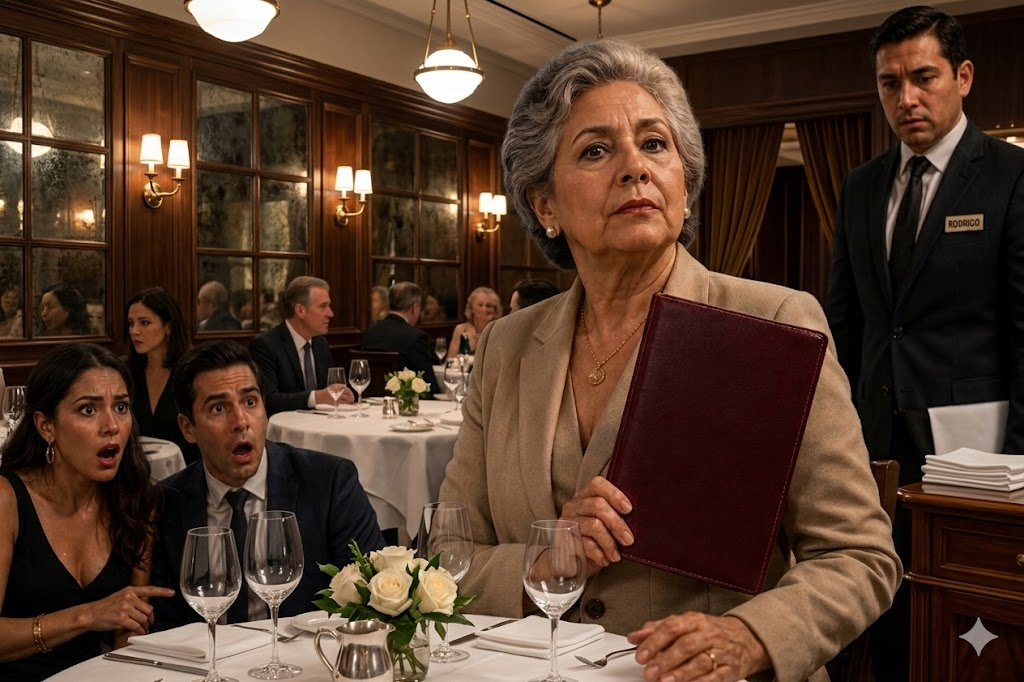
    But the table at the back was already destroyed: empty plates, wine-stained glasses, crumpled napkins, remnants of lobster, steak, expensive desserts, champagne bottles, and 9 people staring at me as if I were the grand finale of the show.

    Valerie was sitting next to my son, Sebastian, wearing a tight black dress, her hair styled in perfect waves. Her mother, Mrs. Patricia, wore fake pearls and an expression of pure triumph. Her sister, Rachel, was there too, along with 2 cousins, an aunt, and 3 people I barely even recognized.
    Nobody stood up. Nobody greeted me. Nobody asked if I wanted dinner.
    The waiter appeared at my side holding a small black folder. —“The bill, ma’am.”

    I opened it. $3,400.
    I felt the air grow heavy. They had ordered the most expensive items on the menu: French champagne, imported cuts of meat, lobster, appetizers I couldn’t even pronounce, berry desserts, and several bottles of wine.
    Valerie watched my face with a tiny, delightful, cruel smile. —“Don’t worry, mother-in-law,” she said. “Sebastian told us you always help out. Besides, that’s what family is for, right?”
    My son lowered his gaze. He said nothing. And that silence hurt far more than the mockery.

    My name is Eleanor Robles. I am 68 years old. I was a senior accountant for nearly 40 years at an auditing firm in Manhattan. I raised Sebastian entirely on my own after my husband, Arthur, died of cancer when our son was 13.
    I paid for his tuition. I paid for his uniforms. I sold my gold earrings when he went to college. I worked weekends so he could complete his graduate specialization. I went without vacations, without new clothes, without a life of my own, because I believed a mother should sustain her son until she saw him standing firmly on his own two feet.

    And that night, sitting across from me, my son was not a man standing on his own feet. He was a man hiding behind his wife’s smile.

    —“Are you going to pay or not?” Valerie asked, feigning sweetness. “Based on the time, we’ve already wrapped up dinner and we have to get going.”

    That was when I understood everything. It hadn’t been a mistake. They had booked the reservation for 6:00. They ate for more than 2 hours. And they invited me for 8:30 so I would arrive when nothing was left but the bill and the shame.

    I took a deep breath. Very deep. And something that had been dormant inside me for years finally woke up.

    I didn’t pull out my credit card. I didn’t open my wallet. I raised my hand and called the manager over. —“Rodrigo, can you come here for a moment?”

    Valerie stopped smiling. Only for a second. But I saw it.

    Rodrigo Santillán, the manager of the Ivy Garden, approached in his sharp navy blue suit, impeccable as always. I had met Rodrigo when he was just a busboy, many years ago. His mother, Mercedes, worked with me at the accounting firm. When she fell ill, I helped Rodrigo organize their accounts, pay off debts, and save the small family restaurant that later turned into one of the most elegant spots in the area.

    —“Good evening, Mrs. Eleanor,” he said, bowing his head with genuine respect.

    The entire table went dead silent. Valerie blinked. —“You two know each other?”

    I didn’t answer her. I looked at Rodrigo. —“Tell me, please, what time was this table reserved for?” —“6:00 p.m., ma’am.”

    The silence fell like a stone. Rachel stopped laughing. Sebastian snapped his head up instantly.

    —“And what time did they tell me to arrive?” I asked, showing him the text message. Rodrigo read the screen. —“8:30 p.m.” —“Thank you.”

    Valerie tried to step in. —“Oh, it was just a misunderstanding, Eleanor. Let’s not make a scene.”

    Rodrigo didn’t budge. —“Furthermore, Mrs. Eleanor, your private table has been ready since 6:00, as always. We were expecting you in the side lounge.”

    Valerie’s mother frowned. —“Her private table?”

    Rodrigo responded with flawless calm: —“Of course. Mrs. Eleanor has been a minority partner in this restaurant for 11 years. She holds an 18% stake in the Ivy Garden.”

    I watched the color completely drain from Valerie’s face. Sebastian sat with his mouth half open. —“A partner?” my son muttered.

    I sat down slowly in the empty chair they had left for me—left more as a mocking throne than an actual place at the table. I opened my purse and pulled out a wine-colored notebook.

    The exact same notebook where, for 3 years, I had written down everything. Every loan. Every promise. Every lie. Every single humilitation I had swallowed just so I wouldn’t lose my son.

    —“I am not paying this bill,” I said.

    Valerie let out a nervous juice. —“What do you mean you’re not?”

    I opened the notebook. —“Because tonight I didn’t come to pay. I came to settle accounts.”

    Sebastian swallowed hard. —“Mom, please…”

    I lifted my eyes. —“No, Sebastian. Tonight, it’s my turn to speak.”

    And as every pair of eyes at that table locked onto that notebook, I realized that for the first time in a very long time, I wasn’t trembling with fear. I was trembling with strength.

    Because what they didn’t know was that this $3,400 bill was a mere crumb compared to what I had already uncovered. They couldn’t possibly imagine what was about to happen next…

    Part 2

    For 3 years, Valerie made me believe I was part of her family, while she slowly drained me dry. First, it was the wedding: “Just help us with a portion, Eleanor, we’ll pay you back later.”

    I paid $16,000 for a venue in Long Island because Sebastian looked at me with those boyish eyes that I still didn’t know how to say no to. Then came the honeymoon to Key West: $3,700 “borrowed” that never returned. After that, Valerie wanted to open an online boutique and asked me for $9,000. She signed a paper with a return date.

    The boutique never existed. Later, she invented a “medical” surgery that turned out to be cosmetic. Then credit cards, trips, supposed emergencies, back rent, a down payment on a car. I wrote it all down. Date, amount, reason, and promise. $32,000 in 36 months. And yet, the money wasn’t the worst part.

    The worst part was when they moved into my house “for two months” because their apartment had water damage. They stayed for a year. Valerie changed my curtains, threw away a tablecloth embroidered by my mother, packed away Arthur’s photos in boxes I never found again, and turned my kitchen into her personal territory. One afternoon, I found the engagement ring Arthur gave me at Central Park in the trash can, covered in food scraps. “I thought it was just old costume jewelry,” Valerie said, without a single shred of remorse. Sebastian merely muttered, “Mom, don’t overreact.” From that moment on, I began to wake up.

    I hired a private investigator, Julian Martinez, a serious and discreet former detective. What he found tore away my last blindfold. Sebastian and Valerie had $20,500 tucked away while they kept begging me for more. She was buying designer bags, jewelry, expensive dinners, spa treatments. I found chats where Rachel wrote: “Your mother-in-law is an ATM with legs.” Valerie replied: “She never says no.” And the worst of it: a written plan to convince me to put my house in Brooklyn under Sebastian’s name “for tax purposes” and then sell it. Estimated value: $700,000.

    The planned distribution: a new apartment, a car, Patricia’s debts, Rachel’s business, and the rest for them. My life was already carved up in their imaginations as if I were already dead. That’s why, when Valerie invited me for 8:30 at the restaurant, I already knew the truth. And that’s why Rodrigo was prepared. Over the table, I opened the notebook and began to read aloud: “May 12th: $16,000 for the wedding. Promise of payment: 18 months. Paid: zero. August 4th: $3,700 for the trip. Paid: zero. November 10th: $9,000 for a nonexistent boutique. Paid: zero.” Valerie’s smile vanished completely. Sebastian turned beet red. I pulled out the printed chats and laid them next to the bill. “ATM with legs,” I read in a clear voice. Rachel looked away. Mrs. Patricia tried to get up, but Rodrigo stepped closer, asserting his presence. “We are not finished,” I said. Then I placed the plan for my house on the table.

    Sebastian turned pale. “Mom, I didn’t know all of this…” I looked at him with sadness. “But you knew enough.” Valerie slammed her hand on the table. “This is an invasion of privacy! We are family!” I leaned toward her. “Family doesn’t invite an elderly woman to the end of a dinner just to humiliate her and hand her the bill. Family doesn’t plot to take away her home. Family doesn’t turn love into a credit card.” Rodrigo placed a card reader in front of them. “The bill must be settled tonight. Mrs. Eleanor did not authorize any charges to her account.” Mrs. Patricia whispered, “Valerie, you said she would pay.” That’s when the real embarrassment began. They had to split the bill across four credit cards. One was declined. Another didn’t have enough limit. Rachel cried from pure frustration. Sebastian couldn’t even look at me. Before leaving, I slid a manila envelope in front of my son. “There is the civil lawsuit for $32,000 plus interest. You have 15 days to sign a payment agreement. Also, tomorrow you move out of my house. If I find a single item of yours after 6:00 p.m., I am calling the police.” Sebastian stood up, crying. “Mom, don’t do this.” “No, son,” I said. “You all did this. I just stopped helping you hide it.” I walked out of the restaurant with my purse in my hand and the notebook pressed against my chest. Outside, the cool New York night air hit my face like a blessing. But while I thought I had seen the worst, I was still waiting for a call the next morning—one that would reveal exactly why Valerie was in such a hurry to sell my house.

    Part 3

    The next morning, they returned to my house with a moving truck. Valerie stormed in, furiously throwing things into boxes, muttering that I was a bitter old woman. Sebastian looked like a man who had just woken up in the middle of a life he no longer recognized. I stayed at the entrance with Carmen, my neighbor, and Andrew Salgado, my lawyer, who already had copies of everything. When Valerie tried to pack away a china set that belonged to my mother, Andrew stopped her: “That is not your property.” She spat out a curse. Sebastian said nothing. For the first time, he didn’t defend her. By 5:40 p.m., they were gone.

    At 6:00 p.m., I locked the door and changed the deadbolts. I walked through my home like someone inspecting a wounded body: scuffed walls, empty drawers, hidden photos, empty spaces where memories used to hang. In the study, I found a notebook Valerie had forgotten under a folder. There lay the reason for her rush: she owed over $45,000 across credit cards, personal loans, and money her mother had demanded for a failed imported clothing business.

    There were also messages from a man named Ethan, whom she had been seeing for months. He wrote to her: “As soon as you sell the old woman’s house, we’re moving to Miami.” I sat on the floor. I didn’t cry. I had no tears left for her. What hurt was Sebastian. My son had lost his mother, his marriage, and his dignity for a woman who didn’t even love him. Even so, I didn’t pick up the phone. A mother’s love doesn’t mean rushing to rescue an adult from the consequences they chose. Twelve days later, Sebastian signed the payment agreement: $1,400 a month for nearly two years.

    He sold his car, canceled his cards, moved into a tiny apartment in Brooklyn, and started therapy. Valerie refused to sign anything at first. She threatened to sue me, to blast me on social media, to claim elder abuse. Andrew responded by sending her legal counsel a complete file of our evidence along with a countersuit ready for filing. She signed the next day. Three months later, Sebastian showed up at my front gate. He was thinner, with dark circles under his eyes, holding a small bag of pastries. “I’m not asking to come in,” he said. “I just wanted to tell you that I’m getting a divorce.” I took a slow breath. “Why?” He let out a broken laugh.

    —“Because when your money ran out, so did her patience. And because I found messages with another man. Everything was true, Mom.” I wanted to unlock the gate and hug him like he was a little boy again. But a part of me—the part that had finally learned to protect itself—held the lock firmly shut. “I’m sorry,” I told him. “Truly. But I still can’t welcome you back just yet.” He nodded, tears streaming down his face. “I understand. I just wanted you to know that I’m paying it back. And for the first time in years, I see what I let myself become.”

    The months passed. Every payment arrived right on time. Sometimes with a brief note attached: “Month 5 paid. Still in therapy.” “Month 11 paid. I’m so sorry for calling you clueless.” “Month 18 paid. I didn’t deserve your patience.” I kept every single note in a box, right next to Arthur’s old letters. With a portion of the recovered money, I remodeled my kitchen.

    I hung the family photos back up. I rescued my plants. I adopted a golden retriever mix named Bella. And, for the first time in my life, I traveled alone to Savannah. I walked through the markets, bought local art, ate fine meals without looking at the price tag, and cried on a park bench because I finally understood that living for yourself isn’t selfish: it’s a resurrection. A year later, Sebastian finished paying off the debt. He texted me: “Mom, I just made the final deposit. I don’t expect things to go back to how they were. I would just love to grab a coffee with you sometime, if you’re open to it.” It took me three days to reply.

    On the fourth day, I sent him an address: a quiet little coffee shop in Brooklyn. We met on a Sunday. There were no hugs at first. Just silence, coffee, and two people trying to figure out how to rebuild something after so much shame. Sebastian asked for my forgiveness without shifting any blame onto Valerie. That was the first thing that made me truly listen to him. “I let it happen,” he said. “I laughed along. I used you. I allowed them to view you as a bank account instead of my mother.” He cried. I did, too.

    I didn’t fully forgive him that day, but I left a window cracked open. Sometimes justice isn’t about destroying someone. Sometimes it’s about forcing them to look at exactly what they did without giving them a place to run. Today, my house is still mine. My study smells of fresh coffee and lavender. Bella sleeps right under my desk. My wine-colored notebook no longer records debts, but ideas for a small video channel where I share stories of women who learned to say enough is enough. Sebastian comes to see me twice a month. Slowly.

    With respect. Without asking for a dime. Without ever bringing up the inheritance. Valerie moved to Miami with Ethan, who later walked out on her when he discovered the depth of her debts. I felt no satisfaction. Nor did I feel pity. Some people only learn when the mirror stops lying to them. I learned something else: boundless generosity eventually becomes a cage, and a love that requires you to erase yourself isn’t love—it’s abuse dressed up in sweet words. That night at the restaurant, they thought I had arrived to pay a bill. But in reality, I arrived to collect the most important one: the bill for my dignity. And that one, at long last, has been paid in full…

    PART 1 — THE MIDNIGHT KNOCK

    Three years after my ex-daughter-in-law tried to sell my house behind my back, someone began pounding on my front door at exactly 2:07 in the morning.
    Not knocking.
    Pounding.
    The kind of desperate pounding that only comes from fear.
    Bella shot upright from the rug beside my bed, growling low in her throat before barking wildly toward the hallway.
    For one confused second, I thought I was dreaming.
    Rain battered the windows of my Brooklyn home hard enough to sound like handfuls of pebbles striking glass. Thunder rolled somewhere far away, deep and angry.
    Then the pounding came again.
    My heart immediately started racing.
    At 71 years old, you learn that phone calls after midnight rarely bring good news. Neither do unexpected visitors.
    I grabbed my robe from the chair beside the bed and slipped it on quickly while Bella paced beside me, barking nonstop.
    —“Alright, alright,” I whispered nervously. “I hear it.”
    The digital clock beside my bed glowed bright red:
    2:07 A.M.
    Nobody decent came to someone’s house at that hour unless something terrible had happened.
    My first thought was Sebastian.
    A car accident.
    A hospital.
    A death.
    Even after everything that had happened between us, a mother’s fear never truly dies.
    I hurried down the hallway, my knees aching slightly against the cold wooden floor. The pounding continued, weaker this time.
    Desperate.

    I stopped beside the security monitor mounted near the kitchen entrance and pressed the button to activate the front camera.
    The moment the screen lit up, my entire body froze.
    Valerie stood on my porch.
    Barefoot.
    Soaked completely through.
    Her mascara had run down her face in gray streaks. Her expensive beauty—the beauty she once weaponized like a queen sitting on a throne—looked shattered now.
    Destroyed.
    One arm wrapped tightly around herself against the cold.
    The other held the hand of a small little girl wearing a pink raincoat two sizes too big for her.
    The child looked half asleep.
    Tiny.
    Fragile.
    Rainwater dripped from the ends of her dark curls.
    Bella’s barking suddenly stopped.
    She whimpered instead.
    I stared at the screen, unable to breathe properly.
    For a moment, old anger surged through me so strongly I actually gripped the kitchen counter to steady myself.
    Images flashed through my mind instantly:
    Valerie laughing in the restaurant.
    Valerie calling me an ATM with legs.
    Valerie planning to steal my house.
    Valerie throwing Arthur’s ring into the trash.
    Three years.
    Three entire years since I had last seen her face.

    And now she stood outside my door looking like life itself had finally collected its debt.
    Another knock.
    Softer this time.
    I should have ignored it.
    God knows I should have.
    But then the little girl lifted her face toward the camera.
    And my heart nearly stopped.
    Her eyes.
    Dear God.
    She had Arthur’s eyes.
    The exact same soft gray-blue eyes my husband had carried until the day cancer took him from me.
    I felt the blood drain from my face.
    No.
    No, that was impossible.
    My fingers trembled against the monitor.
    The little girl shivered violently in the rain.
    Valerie looked up toward the camera then, as if she somehow knew I was watching.
    And for the first time since I had ever known her…

    she looked afraid.
    Not manipulative.
    Not dramatic.
    Not arrogant.
    Afraid.
    Real fear.
    She pressed one shaking hand against the door.
    —“Eleanor…” she whispered weakly. “Please.”
    I didn’t move.
    Every instinct inside me screamed not to open that door.
    People like Valerie only returned when they needed something.
    And Valerie had always needed something.
    Money.
    Control.
    Rescue.
    Someone to blame.
    But the child swayed slightly beside her from exhaustion.
    Rain soaked through her tiny sneakers.
    Bella gave another soft whine.

    My chest tightened painfully.
    I hated that part of myself—the part that still reacted to suffering before anger.
    Slowly, cautiously, I unlocked the deadbolt but kept the chain latched firmly in place.
    When I opened the door a few inches, icy wind immediately rushed inside.
    Valerie looked worse up close.
    Much worse.
    Her cheeks were hollow.
    Her lips pale.
    There was no designer handbag.
    No jewelry.
    No polished perfection.
    Only exhaustion.
    The little girl hid partially behind her leg, staring up at me silently.
    And when those gray-blue eyes met mine again, a chill crawled down my spine.
    —“What are you doing here?” I asked coldly.
    Valerie swallowed hard.
    For once in her life, she seemed unable to find the right words.
    Thunder cracked loudly overhead.
    The little girl jumped.
    Then Valerie finally spoke.
    Very quietly.
    Very broken.
    —“I don’t have anyone else left.”

    PART 2 — THE CHILD

    For several long seconds, I simply stood there gripping the edge of the door while cold rain blew through the narrow opening between us.

    Valerie lowered her eyes first.

    That alone felt unnatural.

    Three years ago, she would have walked into my home like she owned it. She would have spoken loudly, dramatically, confidently—always certain someone else would clean up the disaster she created.

    But the woman standing on my porch now looked like someone who had spent a very long time losing battles.

    The little girl coughed softly beside her.

    A deep, wet cough.

    My eyes immediately moved to the child again despite myself.

    She couldn’t have been older than three.

    Maybe four.

    Her small fingers clutched Valerie’s sleeve tightly. The pink raincoat swallowed her tiny frame completely, and beneath the hood, damp dark curls stuck against her cheeks.

    But it was still the eyes that unnerved me.

    Arthur’s eyes.

    I hated how fast my heart reacted to that.

    —“Who is she?” I asked quietly.

    Valerie looked down at the child, and something in her expression shifted.

    Not manipulation.

    Not performance.

    Something rawer.

    —“Her name is Lily.”

    The little girl stared at me cautiously.

    Bella slowly approached the doorway behind me, no longer growling. Her tail gave one uncertain wag before she sniffed gently toward the child.

    To my surprise, Lily gave the faintest smile.

    A tiny one.

    Careful.

    Like a child who had already learned adults could become dangerous without warning.

    That hurt more than I expected.

    Another gust of icy wind swept through the doorway.

    The child shivered violently.

    I closed my eyes briefly.

    Then I exhaled.

    Deeply.

    The chain lock rattled softly as I removed it.

    —“Get inside before the child freezes.”

    Valerie looked stunned.

    Almost disbelieving.

    I stepped aside without another word.

    The moment they entered, Bella moved directly to Lily and pressed against her little legs warmly. Lily immediately buried both tiny hands into Bella’s fur.

    —“Doggy,” she whispered softly.

    Her voice was hoarse with exhaustion.

    Valerie stood awkwardly near the entrance rug, dripping rainwater onto the hardwood floor. She looked around my house slowly, almost carefully, as if unsure whether she was truly allowed to stand there.

    The house had changed since the last time she saw it.

    Warmer now.

    Softer.

    Peaceful.

    The walls were freshly painted cream instead of gray. Arthur’s photographs had returned to their rightful places. My kitchen smelled faintly of cinnamon and coffee from the pastries I had baked earlier that evening for my community center group.

    No tension.

    No shouting.

    No walking on eggshells.

    I had fought hard for that peace.

    And now Valerie stood inside it again.

    I hated how uneasy that made me feel.

    —“Bathroom’s down the hall,” I said flatly. “There are towels under the sink for the child.”

    Valerie nodded quickly.

    —“Thank you.”

    The words sounded unfamiliar coming from her mouth.

    Lily stayed close to Bella while Valerie disappeared into the hallway. I crouched slowly near the child, my knees protesting immediately.

    Up close, she looked even smaller.

    Tiny freckles dusted her nose.

    Rainwater still clung to her eyelashes.

    And those eyes…

    God.

    Arthur used to look at me that same way whenever I worried too much.

    Gentle.

    Quiet.

    Observant.

    I forced myself to stop thinking about it.

    —“Are you hungry?” I asked.

    Lily nodded almost immediately.

    Not dramatic.

    Not shy.

    Just honest.

    That answer alone told me more than I wanted to know.

    I rose carefully and moved into the kitchen while Bella followed the little girl closely like a bodyguard. From the corner of my eye, I noticed Lily staring at the family photographs lining the hallway wall.

    One picture in particular caught her attention.

    Arthur standing beside Sebastian at age ten, both holding fishing poles and grinning ear to ear at Coney Island.

    Lily stopped walking completely.

    —“Who’s that?” she asked softly.

    I looked toward the photograph.

    For one painful second, my throat tightened.

    —“That was my husband,” I answered quietly. “Arthur.”

    Lily tilted her head slightly.

    —“He looks nice.”

    Before I could respond, Valerie reappeared from the hallway carrying one of my old towels wrapped around Lily’s shoulders.

    Her eyes immediately moved toward the photograph too.

    Then toward me.

    Tension filled the room instantly again.

    I turned away first and focused on preparing food.

    Ten minutes later, the child sat quietly at my kitchen table eating warm chicken soup while Bella rested beneath her chair.

    She ate fast.

    Too fast.

    The kind of fast that comes from uncertainty about when the next meal will arrive.

    Valerie noticed me noticing.

    Shame flashed across her face instantly.

    Good.

    Let her feel it.

    Outside, rain continued hammering the windows while thunder shook the sky above Brooklyn.

    Inside, only the sound of spoons and quiet breathing filled the kitchen.

    Then Lily suddenly looked up at me.

    —“Mommy said you were mad at us.”

    Valerie froze completely.

    I set my teacup down slowly.

    —“Did she?”

    Lily nodded innocently.

    —“But you don’t look scary.”

    A bitter laugh almost escaped my throat.

    If only that child knew how many nights I had spent becoming someone strong enough not to break.

    Valerie rubbed both hands over her face exhaustedly.

    She looked seconds away from collapsing entirely.

    Finally, I asked the question that had been poisoning my mind since I opened the door.

    —“How old is she?”

    Silence.

    Valerie stared down at the table.

    Lily happily fed Bella a tiny piece of carrot beneath her chair.

    Then Valerie answered very quietly.

    —“She turned three last month.”

    Everything inside me went still.

    Three years.

    Exactly three years.

    The timeline slammed into me so hard I actually gripped the edge of the counter.

    Valerie slowly lifted her eyes toward mine.

    And in that horrible silence…

    she didn’t need to say the rest.

    PART 3 — THE TRUTH ABOUT MIAMI

    I didn’t sleep that night.

    Not even for a minute.

    By 4:15 in the morning, Lily was asleep upstairs in the guest room with Bella curled protectively beside the bed, while Valerie sat alone at my kitchen table holding a mug of untouched tea between both trembling hands.

    The storm outside had finally weakened into soft rain.

    But inside my chest, another storm had only begun.

    Three years old.

    Exactly three years.

    I kept replaying the timeline over and over in my mind like an accountant checking figures she already knew were correct.

    The divorce.

    Miami.

    Ethan.

    The disappearing messages.

    The sudden silence from Valerie after the lawsuits ended.

    And now this child sitting in my home with Arthur’s eyes.

    I stood at the kitchen window staring into the dark backyard for a long moment before finally speaking.

    —“Does Sebastian know?”

    Valerie’s grip tightened around the mug instantly.

    Silence answered me first.

    Then came the whisper.

    —“No.”

    Anger rose through me so quickly I actually laughed once in disbelief.

    A sharp, ugly sound.

    —“Of course he doesn’t.”

    Valerie flinched.

    Good.

    For years, she had weaponized other people’s guilt while feeling none herself.

    Now she finally looked like someone discovering consequences had teeth.

    I turned toward her slowly.

    —“You kept a child from her father for three years?”

    Her eyes immediately filled with tears.

    But I didn’t soften.

    Not this time.

    —“Don’t,” I said sharply. “Don’t sit there and cry before answering me honestly for once in your life.”

    Valerie pressed trembling fingers against her forehead.

    She looked exhausted beyond words.

    Not elegant exhaustion.

    Not dramatic exhaustion.

    Real exhaustion.

    The kind that hollows people out from the inside.

    —“I found out I was pregnant two weeks after Ethan and I got to Miami,” she whispered.

    My stomach twisted.

    Ethan.

    Even hearing his name irritated me.

    The man had entered Valerie’s life like gasoline finding fire.

    From what Sebastian later discovered during the divorce, Ethan was charming, flashy, reckless, and permanently searching for shortcuts to wealth. Valerie had mistaken manipulation for excitement.

    By the time she realized the difference, her marriage was already dead.

    I crossed my arms tightly.

    —“And you decided Sebastian didn’t deserve to know?”

    —“It wasn’t like that.”

    —“Then explain it to me.”

    Valerie looked toward the staircase upstairs as if making sure Lily was still asleep.

    Then she finally began speaking.

    Slowly.

    Carefully.

    Like someone reopening wounds stitched badly.

    —“At first… I told myself I needed time. Everything was collapsing already. Sebastian hated me. Your lawsuit destroyed our finances. Ethan kept promising he’d help me start over.” She laughed bitterly through tears. “God, I was stupid.”

    I remained silent.

    She swallowed hard.

    —“Ethan said having Sebastian involved would complicate everything. He said Sebastian would try taking the baby away from me because of the court cases and the debts.”

    My jaw tightened.

    Classic isolation.

    Classic manipulation.

    I had seen men like Ethan during my years in accounting—smooth talkers who built entire lives on convincing desperate people to ignore reality.

    Valerie continued quietly.

    —“Then Lily was born… and every month that passed made it harder to admit what I’d done.”

    Outside, rainwater dripped softly from the gutters.

    The kitchen suddenly felt very small.

    —“So instead,” I said coldly, “you erased him.”

    Valerie’s face crumpled instantly.

    —“No,” she whispered brokenly. “I swear to God, Eleanor, I never wanted to erase him.”

    I stared at her for several seconds.

    Then finally asked the question sitting like poison in my chest.

    —“What happened in Miami?”

    For the first time that night, real fear crossed Valerie’s face.

    Not shame.

    Fear.

    She lowered her eyes.

    —“Ethan stole everything.”

    I said nothing.

    Valerie laughed weakly again, but there was no humor in it.

    —“You know what’s pathetic? You warned Sebastian years ago that people like me eventually attract people even worse.”

    Her voice cracked badly.

    —“You were right.”

    She explained everything piece by piece.

    The apartment in Miami had never truly belonged to her. Ethan convinced her to co-sign loans using fake investment opportunities. Credit cards multiplied. Interest exploded. Patricia demanded money constantly for old debts. Rachel disappeared after borrowing thousands.

    And Ethan?

    He slowly transferred money into separate accounts Valerie couldn’t access.

    By the time she understood what was happening, she was already drowning.

    Then six months ago, Ethan vanished completely.

    Gone.

    No warning.

    No goodbye.

    No money left behind.

    Only debt collectors.

    Eviction notices.

    And a little girl asking why the lights stopped turning on.

    I listened without interrupting.

    Not because I pitied her.

    Because I needed to hear how far the fall had gone.

    Valerie rubbed both hands over her face.

    —“I tried everything after that. Waitressing. Cleaning offices. Selling my jewelry.” She gave a broken little laugh. “Turns out designer bags don’t help much when creditors start calling.”

    For the first time since she arrived, anger flickered through me again.

    Not because she suffered.

    Because of Lily.

    Children should never pay for adult stupidity.

    Never.

    —“And Patricia?” I asked.

    Valerie’s expression darkened immediately.

    —“She said Lily wasn’t her responsibility.”

    That answer told me everything I needed to know.

    People like Patricia loved luxury, appearances, and control.

    But sacrifice?

    Never.

    Valerie’s eyes suddenly filled again.

    —“I went to her apartment two weeks ago after we got evicted. She wouldn’t even open the door.”

    Silence settled heavily between us.

    Upstairs, I faintly heard Bella bark once in her sleep.

    Then Valerie whispered the sentence I think she had been avoiding all night.

    —“I didn’t come here because I wanted money.”

    I looked at her carefully.

    She met my eyes directly for the first time since arriving.

    And for once…

    I didn’t see manipulation there.

    Only defeat.

    Complete defeat.

    Her voice cracked.

    —“I came because I didn’t know where else my daughter would be safe.”

    PART 4 — ELEANOR’S ANGER

    I wish I could say her words softened me.

    They didn’t.

    Because while Valerie sat crying in my kitchen at four-thirty in the morning, all I could think about was the years she spent treating love like weakness.

    The years she spent humiliating people who cared about her.

    The years Sebastian lost because he confused cruelty with affection.

    And now there was a child sleeping upstairs in the middle of all that wreckage.

    A child who had done nothing wrong.

    I slowly sat down across from Valerie at the kitchen table.

    For a long moment, neither of us spoke.

    The ticking wall clock suddenly sounded unbearably loud.

    Finally, I looked directly at her.

    —“Do you want to know the worst part?”

    Valerie wiped at her swollen eyes weakly.

    —“What?”

    My voice came out colder than even I expected.

    —“I believe you.”

    She froze.

    I leaned forward slowly.

    —“I believe Ethan ruined you. I believe your mother abandoned you. I believe your debts buried you alive.” My jaw tightened. “And somehow that makes me even angrier.”

    Valerie stared at me silently.

    Years ago, she would have interrupted me.

    Defended herself.

    Twisted the conversation.

    But not tonight.

    Tonight she looked like someone finally too tired to lie.

    I pointed toward the staircase upstairs.

    —“Because none of that changes what you did to Sebastian.”

    Her breathing became shaky again.

    —“I know.”

    —“No,” I snapped sharply. “I don’t think you do.”

    The force in my own voice startled even me.

    Bella barked once upstairs.

    Then silence returned.

    I stood suddenly from the table and began pacing the kitchen.

    For years I had swallowed anger like poison because I thought keeping peace made me a good mother.

    But peace built on silence isn’t peace.

    It’s surrender.

    And I was done surrendering.

    —“You let that man raise Sebastian’s daughter while her real father had no idea she existed.”

    Valerie covered her mouth with trembling fingers.

    —“Ethan never raised her,” she whispered weakly. “He barely even looked at her after she was born.”

    That somehow made everything worse.

    —“Then why?” I demanded. “Why keep lying?”

    Tears spilled down her face instantly.

    Real tears.

    Ugly tears.

    Not elegant crying.

    Not controlled crying.

    The kind that leaves people gasping for breath.

    —“Because I was ashamed!” she cried.

    The words cracked violently out of her.

    —“Every month that passed made it worse! Every single month!”

    She buried her face in both hands.

    —“I destroyed my marriage… I destroyed Sebastian’s relationship with you… and then I got pregnant while running away with another man like some selfish idiot…”

    Her shoulders shook uncontrollably.

    —“I didn’t know how to come back from that.”

    I crossed my arms tightly against my chest.

    A small part of me understood shame.

    Too well.

    Shame makes people hide long after hiding becomes destruction.

    But understanding pain doesn’t erase damage.

    And there had been so much damage.

    —“So instead,” I said quietly, “you let everyone else pay for your choices.”

    Valerie lowered her hands slowly.

    Her face looked hollow now.

    Defeated.

    —“Yes.”

    The honesty stunned me more than denial would have.

    No excuses.

    No manipulation.

    Just one broken word.

    Yes.

    Outside, dawn was beginning to lighten the edges of the kitchen windows pale gray.

    I suddenly felt exhausted clear through my bones.

    Seventy-one years old.

    And somehow still cleaning up emotional disasters left by people younger than me.

    I laughed once bitterly under my breath.

    Valerie looked up carefully.

    —“What?”

    I shook my head slowly.

    —“Do you know what hurts the most?”

    She said nothing.

    I looked toward the staircase.

    Toward the room where Lily slept peacefully beside my dog.

    —“That little girl upstairs has Sebastian’s smile.”

    Valerie immediately started crying again.

    Harder this time.

    Because she knew.

    God help her, she knew.

    I walked to the sink and gripped its edge tightly while staring out into the wet backyard.

    For a moment, memories hit me so hard I could barely breathe:

    Sebastian at age five chasing pigeons in Central Park.

    Sebastian learning to ride a bicycle.

    Sebastian sleeping beside Arthur in hospital waiting rooms during chemo treatments.

    My son had once been such a gentle little boy.

    And somewhere along the way, pain, weakness, and Valerie’s poison had twisted him into someone neither of us recognized.

    But he had changed after the divorce.

    Therapy changed him.

    Accountability changed him.

    Consequences changed him.

    And now there was a child involved.

    A child who had never even heard her father’s voice.

    I closed my eyes.

    —“Does she know anything about him?”

    Valerie sniffled weakly.

    —“Only his name.”

    I turned slowly.

    —“You told her about him?”

    Valerie nodded.

    —“I told her he was kind.”

    That nearly broke something inside me.

    Because despite everything…

    Sebastian truly was becoming kind again.

    Slowly.

    Painfully.

    One difficult step at a time.

    Upstairs, small footsteps suddenly creaked softly across the hallway floor.

    A second later, Lily appeared at the kitchen entrance rubbing sleepy eyes with one tiny fist while Bella trotted beside her.

    The child looked between us immediately.

    Children always sense tension faster than adults realize.

    —“Mommy?” she whispered nervously.

    Valerie instantly wiped her face.

    Too late.

    Lily had already seen.

    The little girl walked slowly toward the table.

    Then stopped.

    Her lower lip trembled slightly.

    And with complete innocence, she asked the question that shattered the room apart.

    —“Are we getting kicked out again?”

    PART 5 — LILY AND BELLA

    The question hit me harder than any insult Valerie had ever thrown at me.
    Not because of the words themselves.
    Because of how naturally they came out of that child’s mouth.
    As if being unwanted was already familiar to her.
    Valerie looked completely shattered.
    —“No, baby,” she said quickly, kneeling beside Lily’s chair. “No, nobody’s kicking us out.”
    But Lily didn’t look convinced.
    Children learn the truth from tone long before they understand words.
    She stared at Valerie carefully for another moment before slowly climbing into the kitchen chair beside Bella.
    The dog immediately rested her head across Lily’s tiny lap protectively.
    I turned away before either of them could see the expression on my face.
    I suddenly needed coffee stronger than blood.
    The kitchen filled with silence again except for the sound of the old coffee machine sputtering to life.
    Behind me, Lily spoke softly.
    —“Can Bella sleep with me again?”
    Again.
    The word settled strangely in my chest.
    As if Bella had already decided something none of us had.
    Valerie brushed damp curls away from Lily’s forehead.
    —“If Mrs. Eleanor says it’s okay.”
    Lily looked at me immediately.
    Those eyes again.
    Arthur’s eyes.
    I swallowed hard.
    —“Bella seems to have already made her decision.”
    The little girl smiled.
    A real smile this time.
    Small.
    But genuine.

    And for one dangerous second, warmth moved through my chest before I quickly pushed it back down again.
    Careful, Eleanor.
    Very careful.
    I carried my coffee to the table slowly and sat across from them.
    Morning light now filtered softly through the kitchen windows, pale and gray after the storm.
    Lily swung her tiny legs beneath the chair while feeding Bella little pieces of toast.
    Valerie watched nervously every time crumbs fell onto the floor, as if expecting me to explode over the mess.
    That alone told me how unstable her life must have become recently.
    People living in survival mode become afraid of every reaction.

    Finally, Lily looked toward the hallway wall again where several framed family photographs hung.
    Her attention locked immediately onto one picture.
    Sebastian at age seven sitting on Arthur’s shoulders at the Bronx Zoo.
    She pointed.
    —“That’s him.”
    Neither Valerie nor I answered immediately.
    Lily looked between us.
    —“That’s my daddy.”
    The room went completely still.
    Valerie lowered her eyes.
    I stared at the photograph for several long seconds before quietly answering.
    —“Yes.”
    Lily studied the frame carefully.
    Children always search faces for pieces of themselves.
    —“He looks nice.”
    My throat tightened painfully.
    —“He is,” I answered softly before I could stop myself.
    Valerie glanced up at me quickly, surprised.
    I ignored her.

    Because despite everything Sebastian had done years ago…
    the man he was now trying to become deserved truth.|
    Lily slid off the chair unexpectedly and wandered closer to the photographs lining the hallway wall.
    Bella followed immediately.
    I watched the child stop in front of a large family portrait taken almost twenty years ago.
    Arthur sat beside me smiling warmly while teenage Sebastian stood behind us pretending not to hate family pictures.
    Lily tilted her head.
    Then asked quietly:
    —“Was that before he got sad?”
    The question hit so precisely I actually stopped breathing for a second.
    Children notice everything.
    Valerie looked stunned too.
    —“Why would you ask that?” she whispered.
    Lily shrugged softly.
    —“Mommy looks different in old pictures too.”
    Silence spread heavily through the house.
    I suddenly realized something painful:
    This child had grown up surrounded by emotional wreckage so consistently that sadness had become visible to her like weather patterns.
    That realization cracked something inside me.
    Not fully.
    But enough.
    Lily turned toward me carefully.
    —“Did my daddy live here?”
    I nodded once.
    —“A

    PART 6 — VALERIE WITHOUT THE MASK

    —“A long time ago,” I finished quietly.
    Lily nodded as if that answer somehow made perfect sense to her.
    Then she reached up on her tiny toes to touch the corner of the photograph frame gently.
    Not grabbing.
    Not careless.
    Careful.
    Almost respectful.
    Arthur would have loved that about her.
    The thought slipped into my mind before I could stop it.
    And that frightened me.
    Because emotional attachment begins quietly.
    Not with grand moments.
    With tiny ones.
    A child feeding your dog pieces of toast.
    A sleepy voice in the kitchen.
    Small fingers touching old photographs.

    That’s how people enter your heart before you realize the door was unlocked.

    I turned away abruptly.

    —“Lily needs clean clothes,” I said flatly. “There are extra blankets upstairs too.”

    Valerie stood immediately.

    —“I can wash her things by hand.”

    The speed of her response caught my attention.

    Almost instinctive.

    Like someone used to apologizing for existing.

    I looked at her carefully for the first time in proper daylight.

    The transformation was shocking.

    Gone was the polished woman who once spent two hours preparing for brunch.

    Gone were the expensive nails, the perfect hair, the carefully curated elegance.

    Her blond hair now looked brittle and uneven, pulled into a messy knot at the base of her neck. Dark circles shadowed her eyes deeply enough to make her appear older than her thirty-six years.

    And her hands…

    I stared at them for a moment.

    Rough.

    Dry.

    Small healing cuts across her knuckles.

    Working hands now.

    Not decorative ones.

    Valerie noticed where I was looking and immediately tucked them behind her back.

    Shame.

    Again.

    I hated how complicated my emotions suddenly felt.

    Part of me still wanted to throw her out for what she had done.

    Another part saw a woman who had finally collided headfirst with reality.

    Lily wandered into the living room beside Bella while humming softly to herself.

    The sound filled the house strangely.

    This home had been quiet for years.

    Peaceful.

    But quiet.

    I suddenly realized I hadn’t heard childish humming in this house since Sebastian was little.

    The realization hurt more than I expected.

    Valerie shifted awkwardly near the kitchen counter.

    —“She likes your house.”

    I kept my voice neutral.

    —“Most children like places where they feel safe.”

    The words landed harder than I intended.

    Valerie’s eyes dropped instantly.

    Good.

    She should hear it.

    For several seconds, neither of us spoke.

    Then suddenly Valerie swayed slightly where she stood.

    Just enough for me to notice.

    Her hand grabbed the counter edge quickly.

    —“When was the last time you slept properly?” I asked before I could stop myself.

    She gave a weak laugh.

    —“I don’t know anymore.”

    I studied her face carefully.

    The exhaustion wasn’t ordinary tiredness.

    It was survival exhaustion.

    The kind that builds slowly after months of fear.

    Her body looked permanently braced for disaster.

    I recognized that look.

    I had worn it myself after Arthur died.

    After the restaurant humiliation.

    After discovering my son planned to take my home.

    People carry prolonged stress physically. It settles into shoulders, breathing, eyes.

    Valerie suddenly rubbed both hands over her face again.

    Then quietly admitted:

    —“I haven’t slept through a full night in almost a year.”

    I said nothing.

    She laughed bitterly at herself.

    —“Every time my phone rang, I thought it was another debt collector. Every knock on the apartment door made Lily cry because she thought someone was coming to make us leave again.”

    That image twisted painfully inside my chest.

    Lily.

    Afraid of doors.

    Afraid of being unwanted.

    Children should never learn instability that young.

    Never.

    From the living room came Lily’s tiny excited voice.

    —“Bella! Come back!”

    Then laughter.

    Actual laughter.

    Light and bright and innocent.

    Valerie’s face crumpled instantly hearing it.

    She turned away quickly, pretending to adjust her sleeve.

    But not before I saw tears forming again.

    Not dramatic tears.

    Quiet ones.

    The dangerous kind.

    Because quiet crying usually means someone has finally run out of strength to perform.

    I crossed my arms tightly.

    —“Why now?”

    She looked confused.

    —“What?”

    —“Why come here now after three years?”

    Valerie stared toward the living room for a long moment.

    When she answered, her voice sounded almost hollow.

    —“Because two nights ago Lily asked me if people stop loving you when you become poor.”

    The words hit the room like shattered glass.

    My stomach dropped.

    Valerie swallowed hard.

    —“And I realized she learned that from me.”

    Silence.

    Heavy.

    Painful silence.

    Then she whispered something so quietly I barely heard it.

    —“I think I ruined my daughter before she even had a chance to become herself.”

    For the first time since Valerie arrived at my door…

    I saw not a villain.

    Not an enemy.

    Not even Sebastian’s ex-wife.

    I saw a terrified mother standing in the ruins of her own mistakes.

    And somehow…

    that was far more unsettling.

    PART 7 — THE SECRET BOX

    That afternoon, Lily fell asleep on my living room couch with Bella curled tightly against her side.

    Sunlight filtered softly through the windows, warming the faded quilt draped over her tiny legs. One small hand remained tangled in Bella’s fur even in sleep, as if she feared waking up alone.

    Valerie sat silently in the armchair across the room watching her daughter breathe.

    Not scrolling through a phone.

    Not complaining.

    Not performing.

    Just watching.

    Exhausted mothers have a particular kind of stillness about them.

    I recognized it immediately.

    I had worn it myself once.

    The house remained unusually quiet all afternoon. Rainwater still dripped from the gutters outside, but the storm had passed completely now, leaving Brooklyn washed gray and calm.

    I stood in my study pretending to organize paperwork while my mind refused to settle.

    Everything felt dangerous suddenly.

    The child.

    Sebastian.

    Valerie sleeping under my roof again.

    The possibility of reopening wounds that had taken years to close.

    And underneath all of that…

    Arthur’s eyes staring back at me through a three-year-old girl.

    I opened the lower cabinet beside my desk searching for an old property tax file when my fingers brushed against something unexpected.

    A small wooden box.

    Dark cherry wood.

    Arthur’s box.

    I froze immediately.

    For years I had kept it hidden in the back of the cabinet because opening it hurt too much.

    Inside were pieces of our life:

    • old photographs
    • handwritten letters
    • Sebastian’s childhood drawings
    • ticket stubs
    • tiny memories too precious to throw away

    I slowly lifted the lid.

    The familiar scent of old paper and cedar drifted upward instantly.

    And suddenly I could hear Arthur laughing again in my memory so clearly it nearly knocked the breath out of me.

    From the living room came soft footsteps.

    Before I could close the box, Lily appeared quietly at the study doorway with Bella beside her.

    She looked sleepy.

    Curious.

    Her gaze immediately dropped to the photographs inside the box.

    —“What’s that?”

    I hesitated.

    Then answered softly:

    —“Old memories.”

    Lily stepped closer carefully, like someone approaching something sacred.

    Children understand emotional weight instinctively.

    I lifted one photograph from the box.

    Arthur sitting cross-legged on the living room floor helping six-year-old Sebastian build a toy train track.

    Lily’s eyes widened immediately.

    —“That’s my daddy!”

    I smiled faintly despite myself.

    —“Yes. He was missing his two front teeth in that picture because he fell off a skateboard two days earlier.”

    Lily giggled.

    A bright little sound that filled the study completely.

    Then she looked closer at Arthur.

    —“And that’s the nice man again.”

    My throat tightened.

    Nice man.

    That was how children described goodness before adults complicated it.

    I handed her another photograph carefully.

    Sebastian age nine asleep on Arthur’s chest while watching television.

    Lily studied it silently.

    Then whispered:

    —“He looks safe.”

    The words hit me so hard I had to look away.

    Because that was exactly what Arthur had always made people feel.

    Safe.

    Even during chemo treatments, even during pain, even during fear.

    Safe.

    Valerie appeared quietly behind Lily then, stopping at the doorway.

    For a long second, nobody spoke.

    She stared at the photographs like someone looking through a window into a life she had once broken apart with her own hands.

    I expected tension.

    Defensiveness.

    But instead, Valerie whispered something so softly I almost missed it.

    —“I forgot he used to smile like that.”

    My eyes moved toward her slowly.

    She looked devastated.

    Not by me.

    By memory.

    That was different.

    Lily carefully pulled another picture from the box.

    This one showed teenage Sebastian standing beside me at his high school graduation while Arthur held flowers and cried dramatically in the background.

    Lily burst into laughter.

    —“Why’s he crying?”

    A broken smile finally crossed Valerie’s face.

    Tiny.

    Painful.

    —“Because your grandfather cried at everything.”

    I stared at her.

    Grandfather.

    It was the first time she had openly connected Lily to this family out loud.

    The weight of it settled heavily through the room.

    Lily suddenly climbed into my lap without warning to look deeper into the box.

    I stiffened instantly.

    Not from anger.

    From surprise.

    Children trust so recklessly.

    Bella rested her head against my knee while Lily flipped carefully through old birthday cards and photographs.

    Then she paused suddenly.

    Her small fingers touched a picture of Sebastian at around twelve years old holding a baseball glove almost bigger than his head.

    She tilted her face up toward me.

    —“Do you think my daddy would like me?”

    The question shattered something inside the room.

    Valerie made a soft sound behind us like her heart had physically broken.

    And for one terrible second…

    I didn’t know how to answer.

    PART 8 — THE PHONE CALL

    The question stayed suspended in the air like something fragile enough to shatter if handled wrong.

    —“Do you think my daddy would like me?”

    Lily’s gray-blue eyes searched my face so openly that my chest physically hurt.

    Children ask the most dangerous questions so innocently.

    Behind us, Valerie stood completely still near the study doorway, one trembling hand covering her mouth.

    I looked down at the photograph in Lily’s hands.

    Sebastian at twelve years old.

    Gangly arms.

    Crooked grin.

    Arthur’s old baseball glove tucked beneath one arm.

    My son had once loved deeply and easily before life—and his own bad choices—complicated him.

    And suddenly I realized something important:

    Lily’s existence wasn’t the tragedy here.

    The tragedy was that she had spent three years wondering whether she was lovable before even meeting her father.

    I carefully brushed a curl away from her forehead.

    —“Yes,” I said softly. “I think your daddy would love you very much.”

    Lily smiled instantly.

    Completely.

    Like sunlight breaking through clouds.

    And behind us, Valerie quietly began crying again.

    Not loudly.

    Not dramatically.

    Just silent tears running down a face already exhausted from too many mistakes.

    That evening passed strangely.

    Too peaceful for the amount of emotional damage sitting inside my house.

    I made spaghetti because it was the only thing I remembered Sebastian eating happily for nearly fifteen straight years. Lily helped sprinkle parmesan cheese onto plates while Bella followed every step she took through the kitchen.

    At one point Lily laughed so hard after accidentally dropping noodles onto the floor that Bella practically inhaled them whole.

    The sound of a child laughing inside my kitchen again felt unfamiliar.

    But not unpleasant.

    Dangerous.

    That was the problem.

    Because attachment grows quietly before logic can stop it.

    After dinner, Valerie offered to wash dishes three separate times.

    The old Valerie would never have touched a dirty plate voluntarily.

    This Valerie looked grateful simply to stand in warm light without fear.

    At around eight o’clock, Lily fell asleep sideways on my couch with Bella pressed tightly against her stomach.

    I covered her carefully with a blanket.

    Then I stood there watching her for longer than I should have.

    Three years old.

    Three lost years.

    Three birthdays Sebastian never saw.

    My chest tightened painfully.

    Behind me, Valerie spoke quietly.

    —“She likes you.”

    I didn’t turn around.

    —“Children usually like people who make them feel safe.”

    The words carried weight this time.

    Not accusation.

    Truth.

    Valerie lowered her eyes.

    Then after a long silence, she whispered:

    —“I don’t think she’s felt safe in a very long time.”

    That decided it.

    Not forgiveness.

    Not trust.

    But decision.

    I walked slowly toward the hallway table where my phone rested charging beside a lamp.

    Every step felt heavier than the last.

    Valerie immediately stiffened behind me.

    —“Eleanor…”

    I picked up the phone.

    —“He deserves to know.”

    Fear flashed openly across her face.

    Not fear for herself.

    Fear of consequences finally arriving.

    Good.

    Consequences were long overdue in this family.

    My thumb hovered over Sebastian’s contact for several seconds.

    The last few years between us had become careful and fragile in the best possible way.

    Slow rebuilding.

    Boundaries.

    Honesty.

    He came for coffee twice a month now.

    Helped repair things around the house without being asked.

    Never borrowed money.

    Never manipulated.

    Sometimes healing happens so slowly you don’t notice it until suddenly you can breathe beside someone again.

    But this?

    This would crack everything open.

    I pressed call before I could lose courage.

    The phone rang three times.

    Then Sebastian answered groggily.

    —“Mom?”

    Hearing his voice suddenly made my throat tighten.

    Older now.

    Calmer.

    Sadder.

    Human again.

    I looked toward the sleeping child on my couch.

    Then toward Valerie standing frozen beside the dining table.

    Finally I spoke.

    Very carefully.

    —“Sebastian… I need you to come over tomorrow.”

    Instant concern sharpened his voice immediately.

    —“What happened? Are you alright?”

    I closed my eyes briefly.

    How strange life was.

    Years ago I would have hidden pain to protect him.

    Now I was about to hand him a truth capable of changing everything.

    —“I’m fine,” I said quietly. “But there’s… someone here you need to meet.”

    Silence.

    Long silence.

    Then slowly:

    —“Mom… what’s going on?”

    I looked at Lily again.

    At Arthur’s eyes.

    At Bella sleeping protectively beside her.

    At the little girl who had unknowingly walked straight into the ruins and hopes of an entire broken family.

    Then I answered the sentence that changed all our lives forever.

    —“Sebastian,” I whispered, “I think you have a daughter.”

    PART 9 — THE ARRIVAL

    Sebastian arrived the next morning at 8:12 sharp.
    That alone told me how serious he believed the situation was.
    My son had once been chronically late for everything—dentist appointments, birthdays, dinner reservations. But therapy and hardship had changed him into someone more careful with other people’s time.
    Pain matures people when comfort never could.
    I watched his car pull slowly into the driveway through the front window while Bella stood alert beside me.
    Upstairs, Lily still slept.
    Valerie had barely slept at all.
    I could hear her pacing softly across the guest room floor since dawn.
    Sebastian stepped out of the car wearing dark jeans and a navy sweater, his hair still slightly damp from a rushed shower. He looked tired.
    Older than forty.
    But steadier somehow.
    Less arrogant.
    Less careless.
    He spotted my face through the window and immediately frowned.
    Concern.
    Real concern.
    Not obligation.
    I opened the door before he could knock.
    —“Mom.”

    He leaned forward automatically to kiss my cheek, then stopped when he noticed my expression fully.
    —“What happened?”
    I stepped aside slowly.
    —“Come inside.”
    The moment he entered the house, Bella hurried toward him wagging her tail wildly.
    Sebastian knelt automatically to pet her.
    That small familiar movement nearly broke my heart.
    Some things survive damage.
    Even after years.
    —“You’re scaring me,” he admitted quietly while standing again. “Are you sick?”
    I shook my head.
    My throat suddenly felt tight.
    For the first time since making the phone call, panic crept through me.
    How do you tell someone they lost three years of fatherhood overnight?
    There is no gentle way.
    Before I could answer, footsteps sounded softly from the hallway.
    Valerie appeared first.
    Sebastian froze instantly.
    Every bit of color drained from his face.
    For one stunned second, neither of them moved.
    It was like watching two ghosts collide.
    Valerie looked terrified.
    Sebastian looked punched in the chest.
    —“What the hell is she doing here?” he whispered.
    His voice wasn’t angry.
    It was wounded.
    Deeply wounded.

    Valerie opened her mouth, but no sound came out.
    I stepped forward quickly before the situation exploded.
    —“Sebastian—”
    —“No.” His eyes never left Valerie. “No, Mom, I need to hear this from her.”
    The tension inside the room tightened instantly.
    Valerie’s hands trembled visibly at her sides.
    —“Sebastian…”
    He laughed once sharply in disbelief.
    —“Three years.” His voice cracked. “Three years and suddenly you’re standing in my mother’s house?”
    I saw guilt hit Valerie so hard she physically swayed.
    Good.
    But before either of them could continue—
    small footsteps echoed softly from the hallway.
    Every adult in the room went silent.
    Lily appeared clutching Bella’s collar sleepily with one tiny hand while rubbing her eyes with the other.
    She wore one of my oversized T-shirts like a little nightgown.
    For one strange suspended moment…
    nobody breathed.
    Sebastian turned slowly toward the sound.
    Then he saw her.

    And the entire world seemed to stop.
    I watched the exact second recognition slammed into him.
    Not logical recognition.
    Instinctive recognition.
    His eyes locked onto hers immediately.
    Arthur’s eyes.
    His smile.
    His face shape.
    His expression completely collapsed.
    —“Oh my God,” he whispered.
    Lily stared at him curiously.
    Too young to understand why the adults suddenly looked like they were standing inside an earthquake.
    Bella wagged her tail between them nervously.
    Sebastian looked back toward Valerie slowly.
    His face had gone pale enough to frighten me.
    —“Tell me that’s not…”
    Valerie burst into tears immediately.
    And that answer alone said everything.
    Sebastian stumbled backward one step like his knees nearly failed him.
    His breathing became uneven.

    Fast.

    Disbelieving.

    Then Lily tilted her head carefully while studying his face.

    Children recognize resemblance faster than adults do.

    She looked from Sebastian…

    to the photographs on the hallway wall…

    then back to him again.

    And softly—

    with complete innocence—

    she asked the question that shattered him completely.

    —“Are you my daddy?”

    PART 10 — THE TEST

    Nobody moved.

    Nobody spoke.

    The entire room seemed trapped inside that single question.

    —“Are you my daddy?”

    Lily’s small voice hung in the air with terrifying innocence while Sebastian stood frozen near the front hallway like a man whose entire life had just split open beneath his feet.

    I watched his face carefully.

    Shock.

    Fear.

    Confusion.

    Hope.

    Pain.

    All of it collided inside him at once.

    His eyes stayed locked on Lily’s face as if he physically couldn’t look away.

    And honestly?

    Neither could I.

    The resemblance was overwhelming now that they stood near each other.

    The same gray-blue eyes.

    The same crooked expression when nervous.

    Even the slight tilt of the head.

    Arthur’s blood ran through that child so visibly it made my chest ache.

    Sebastian swallowed hard but seemed unable to form words.

    Lily waited patiently for an answer.

    Children always wait honestly.

    Adults are the ones who complicate truth.

    Finally, Valerie stepped forward shakily.

    —“Lily, sweetheart… why don’t you go sit with Bella in the living room for a minute?”

    Lily frowned slightly.

    —“But—”

    —“Please, baby.”

    Something in Valerie’s voice made the child obey immediately.

    Lily slowly disappeared into the living room beside Bella, though I noticed her peeking nervously around the corner afterward.

    She knew something enormous was happening.

    Even if she couldn’t understand it yet.

    The second she was out of direct earshot, Sebastian turned toward Valerie.

    I had never seen my son look at another human being with that level of devastation before.

    Not rage.

    Devastation.

    —“How old is she?” he asked quietly.

    Valerie’s voice barely worked.

    —“Three.”

    His eyes shut immediately.

    Like physical pain.

    I watched him do the math in his head.

    Divorce timeline.

    Miami timeline.

    Everything.

    Then his eyes opened again slowly.

    Wet already.

    —“You knew.”

    It wasn’t really a question.

    Valerie nodded once.

    Tiny.

    Ashamed.

    Sebastian let out a broken laugh that sounded dangerously close to crying.

    —“You knew for three years.”

    Silence.

    Then suddenly he looked at me.

    Not angry.

    Lost.

    Completely lost.

    —“Mom…”

    That single word nearly destroyed me.

    Because underneath the grown man standing in my hallway, I suddenly heard the little boy who once came running to me after nightmares.

    I stepped closer instinctively.

    —“Sit down,” I said softly.

    Sebastian obeyed automatically, collapsing onto the edge of the couch like his legs no longer worked properly.

    He stared toward the living room where Lily quietly played with Bella on the carpet.

    Then whispered:

    —“She looks like Dad.”

    That did it.

    His voice broke completely on the last word.

    Valerie began crying again silently.

    But Sebastian barely seemed to notice anymore.

    He looked hypnotized by the existence of the child.

    As if his brain still couldn’t fully accept reality.

    Then suddenly his expression hardened slightly.

    Not cruelty.

    Self-protection.

    He looked toward Valerie again carefully.

    —“I need a DNA test.”

    The words sliced through the room instantly.

    Valerie physically flinched.

    For a second, hurt flashed across her face.

    Then shame replaced it immediately.

    Because deep down, she knew he had every right to ask.

    Still…

    the request hurt.

    I could see it.

    Her voice trembled badly.

    —“Sebastian…”

    He shook his head quickly.

    —“After everything that happened, I can’t just…” He swallowed hard. “I need certainty.”

    Valerie wiped tears from her cheeks roughly.

    For one brief moment, I thought the old Valerie might reappear—the defensive one, the manipulative one, the woman who weaponized outrage whenever cornered.

    But she only nodded weakly.

    —“Okay.”

    Sebastian looked surprised.

    Honestly, so was I.

    Valerie stared down at the floor while speaking quietly.

    —“You deserve that.”

    Silence settled heavily again.

    Then from the living room came Lily’s tiny laugh after Bella rolled dramatically onto her back for belly rubs.

    The sound shattered something inside Sebastian instantly.

    His entire face crumpled.

    Not because of Valerie.

    Because of time.

    Lost time.

    I saw realization hit him fully then.

    First words.

    First birthdays.

    First steps.

    First nightmares.

    Three entire years stolen from him before he even knew they existed.

    He covered his mouth suddenly with one trembling hand.

    And for the first time since arriving…

    my son began to cry.

    PART 11 — THE COLLAPSE

    I had seen Sebastian cry before.

    As a child after Arthur died.

    At Arthur’s funeral.

    Years later during therapy when he finally admitted what he had allowed Valerie to turn him into.

    But this was different.

    This wasn’t grief alone.

    This was realization.

    The kind that arrives all at once and crushes every excuse beneath it.

    My son sat hunched forward on my couch with one hand covering his mouth while tears slid silently through his fingers.

    Across the room, Lily had stopped laughing.

    Children always notice emotional shifts immediately.

    She sat quietly beside Bella now, watching Sebastian with cautious curiosity.

    Valerie looked completely shattered.

    But for once, she stayed silent.

    No defending herself.

    No redirecting blame.

    Nothing.

    Because there was nothing left to say.

    Finally Sebastian lowered his trembling hand slowly.

    His eyes were red.

    Lost.

    He stared toward Lily again.

    Then whispered hoarsely:

    —“I missed everything.”

    Nobody answered.

    Because it was true.

    His voice cracked harder.

    —“Her first birthday…”

    Another silence.

    —“Her first steps.”

    Valerie closed her eyes tightly.

    Sebastian laughed once bitterly through tears.

    —“Jesus Christ.”

    I moved slowly into the armchair beside him but didn’t touch him yet.

    This pain needed space.

    Real accountability requires feeling the full weight of consequences instead of being rescued from them.

    And my son finally understood the size of what had been taken from him.

    Lily stood carefully from the carpet then.

    Tiny.

    Uncertain.

    She looked toward Valerie first.

    Then toward Sebastian.

    Children constantly search adults for emotional permission.

    Valerie nodded weakly through tears.

    That tiny encouragement was enough.

    Lily slowly walked across the living room toward Sebastian.

    My son looked terrified suddenly.

    Not of her.

    Of failing her.

    That fear alone told me how deeply this moment was reaching inside him.

    Lily stopped directly in front of him.

    Then quietly held out a crayon drawing she had apparently been coloring earlier beside Bella.

    Stick figures.

    A house.

    A giant dog.

    And three smiling people holding hands.

    One figure had blond hair.

    One had brown curls.

    And the third had dark hair beside Bella.

    My chest tightened painfully.

    Sebastian stared at the drawing like it might destroy him entirely.

    —“That’s you,” Lily explained softly, pointing to the dark-haired figure.

    His breathing became uneven again.

    —“Me?”

    She nodded.

    —“Mommy said maybe you’d come someday.”

    The room went dead silent.

    Sebastian looked slowly toward Valerie.

    Not with anger this time.

    With heartbreak.

    Pure heartbreak.

    —“You told her about me?”

    Valerie wiped tears from her face shakily.

    —“Every day.”

    That answer hit differently.

    Because suddenly this wasn’t a story about a woman trying to erase a father.

    It was a story about a broken woman too ashamed to face one.

    That didn’t excuse anything.

    But it changed the shape of the wound.

    Sebastian looked back down at Lily.

    His entire expression softened painfully.

    Carefully—almost fearfully—he reached out and accepted the drawing from her small hands.

    Then his voice broke again.

    —“I’m sorry I wasn’t there.”

    Lily frowned slightly.

    Children don’t measure time the same way adults do.

    —“You’re here now.”

    God.

    The simplicity nearly destroyed all of us.

    I saw Valerie physically turn away because she couldn’t stop crying anymore.

    Sebastian stared at Lily for several long seconds before suddenly asking the question that had probably been haunting him since he walked through the door.

    —“Why didn’t you tell me?”

    The room immediately tightened again.

    Valerie stayed facing the kitchen window.

    Her shoulders trembling.

    Finally she answered quietly:

    —“Because every month I waited made me more ashamed.”

    Sebastian stood abruptly.

    Not violent.

    But overwhelmed.

    He began pacing the living room exactly the way Arthur used to during moments of emotional overload.

    The resemblance hit me so hard I almost cried myself.

    —“You let me believe my entire life was over,” he whispered. “You watched me rebuild myself from the ground up while hiding this from me.”

    Valerie covered her face.

    —“I know.”

    —“No,” he snapped suddenly, voice cracking. “You don’t.”

    Lily instantly stiffened beside Bella.

    Fear flashed across her little face.

    Sebastian saw it immediately.

    And the second he noticed fear in his daughter’s eyes…

    his anger collapsed into guilt.

    Instantly.

    He dropped to one knee in front of her.

    —“Hey, hey… no, sweetheart. I’m not angry at you.”

    Lily stared uncertainly.

    Sebastian’s entire face softened.

    God, he already looked like a father.

    It happened that quickly.

    —“None of this is your fault,” he whispered.

    Lily studied him for another second.

    Then quietly asked:

    —“Are you leaving now?”

    And somehow…

    that question hurt him even more than the first one had.

    PART 12 — LILY’S FEAR

    The question landed softly.

    But it cut deeper than shouting ever could.

    —“Are you leaving now?”

    Sebastian froze on one knee in front of Lily while Bella sat pressed against the child’s side protectively.

    I watched panic flash across my son’s face.

    Not panic about responsibility.

    About hurting her.

    Children who fear abandonment can smell hesitation instantly.

    And Lily had clearly learned that adults disappeared.

    Sebastian swallowed hard before answering.

    —“No,” he said gently. “I’m not leaving right now.”

    Lily studied his face carefully as if checking whether adults’ promises meant anything.

    Then she asked the question no child her age should even know to ask:

    —“Do dads come back after they leave?”

    The room shattered into silence again.

    Valerie quietly broke down behind us.

    Actually broke.

    One hand gripping the kitchen counter while sobs shook through her shoulders.

    Because she knew exactly where Lily learned that fear.

    Not from Sebastian.

    From instability.

    From moving apartments.

    From unpaid bills.

    From disappearing people.

    From watching adults panic in whispers at night.

    Sebastian looked completely devastated.

    He slowly sat cross-legged on the carpet so he wouldn’t tower over Lily anymore.

    A good instinct.

    Arthur used to do the same thing with frightened children.

    —“Sometimes adults make mistakes,” Sebastian said carefully. “Big ones.”

    Lily listened silently.

    —“But if somebody really loves you…” His voice cracked slightly. “They should keep coming back.”

    Lily’s tiny fingers twisted nervously in Bella’s fur.

    Then quietly:

    —“Mommy cries when she thinks I’m sleeping.”

    Valerie covered her mouth with both hands.

    I honestly thought she might collapse.

    Sebastian looked toward her slowly.

    And suddenly his anger shifted shape again.

    Not disappearing.

    But changing.

    Because for the first time, he wasn’t only seeing betrayal.

    He was seeing damage.

    Years of it.

    Damage spreading through every person in the room.

    Lily looked back at Sebastian carefully.

    —“Are you really my daddy?”

    This time Sebastian didn’t hesitate.

    He reached out slowly.

    Very carefully.

    And rested one trembling hand against her tiny curls.

    I saw tears instantly fill his eyes again.

    —“I think I am.”

    Lily stared at him for one long second.

    Then, with the complete trust only children are capable of…

    she climbed directly into his lap.

    Sebastian completely broke.

    I have no other way to describe it.

    The second that child wrapped tiny arms around his neck, years of restraint collapsed inside my son all at once.

    He held her like someone terrified she might disappear if he loosened his grip.

    His shoulders shook violently.

    He buried his face against her hair while crying openly.

    Not embarrassed.

    Not hiding it.

    Just shattered.

    Lily hugged him tighter instinctively.

    —“It’s okay,” she whispered.

    God.

    Even now that sentence hurts my chest to remember.

    Because no three-year-old should know how to comfort grieving adults that well.

    Valerie turned fully away toward the kitchen sink, crying so hard she could barely breathe.

    And standing there watching them all…

    I suddenly understood something painful:

    This family had spent years starving for love while drowning in pride, shame, fear, and silence.

    Bella rested her head across Sebastian’s knee with a deep sigh, as if even the dog understood this moment mattered.

    Eventually Sebastian pulled back just enough to look at Lily properly again.

    He smiled through tears.

    A broken smile.

    But real.

    —“Do you like pancakes?”

    Lily nodded immediately.

    Sebastian laughed weakly.

    —“Good. Because I make amazing pancakes.”

    That tiny joke loosened something in the room for the first time since morning.

    Even Lily smiled.

    Then she tilted her head curiously.

    —“Do you know princess stories?”

    Sebastian blinked once.

    Completely unprepared.

    I almost smiled myself.

    —“Uh… probably terrible ones.”

    Lily giggled softly.

    And just like that, the room shifted.

    Not healed.

    Not fixed.

    But shifted.

    From revelation…

    to possibility.

    Hours later, after Lily finally fell asleep curled beside Bella on the couch, Sebastian stood alone with me near the kitchen doorway while Valerie showered upstairs.

    The house had gone quiet again.

    But not the same quiet as before.

    This quiet felt fragile.

    Like something rebuilding itself carefully after a fire.

    Sebastian stared toward the sleeping child for a long moment.

    Then quietly asked the question I knew had been haunting him all day.

    —“Mom… what do I do now?”

    I looked at my son carefully.

    Really looked at him.

    And for the first time in years…

    I didn’t see the selfish man from the restaurant anymore.

    I saw a frightened father trying not to fail before he had even begun.

    So I answered honestly.

    —“You stay.”

    PART 13 — RULES

    Sebastian stayed.
    Not for an hour.
    Not for dinner.
    He stayed the entire weekend.
    At first, it was awkward.
    Painfully awkward.
    Three adults moving carefully around years of damage while a little girl wandered innocently through the middle of it all asking for apple juice and princess stories.
    But slowly, something unexpected began happening.
    Lily started laughing more.
    Not polite little laughs.
    Real ones.
    The kind children make when their bodies finally stop preparing for danger.
    By Sunday morning, Bella followed her so faithfully around the house that it looked like the dog had unofficially adopted her.
    And Sebastian…
    Sebastian watched Lily constantly.
    Like a man trying to memorize three missing years all at once.
    Every expression fascinated him.
    Every word.
    Every tiny habit.

    At one point I caught him staring silently while Lily sat at the kitchen table concentrating fiercely on coloring a butterfly purple.
    His eyes filled with tears again so suddenly he had to look away.
    Fatherhood had already entered him completely.
    Even before the DNA test.
    But reality still waited for all of us Monday morning.
    At 9:00 a.m., Sebastian and Valerie sat across from each other in a small medical office in downtown Brooklyn while paperwork for the paternity test rested untouched between them.
    I sat beside the window pretending to read a magazine while tension filled the room thick as smoke.
    Valerie looked sick.
    Not physically.
    Emotionally.
    She kept twisting her fingers together nonstop.
    Sebastian sat rigid beside me, jaw tight, eyes hollow from lack of sleep.
    And Lily?

    Lily sat happily on the floor beside Bella’s leash drawing dogs on the back of an insurance form completely unaware that the adults around her felt like their lives were hanging over a cliff.
    The nurse entered finally holding a clipboard.
    —“We’ll just need quick cheek swabs from both father and child.”
    Father.
    The word visibly shook Sebastian.
    Lily tilted her head.
    —“What’s a swab?”
    Sebastian actually smiled faintly.
    A tired smile.
    —“Tiny superhero science stick.”
    Lily gasped dramatically.
    —“Cool.”
    Even Valerie laughed softly through her nerves.
    The sound startled all of us.
    It had been a very long time since laughter existed in the same room as pain without turning cruel.
    The test itself took less than ten minutes.
    The emotional aftermath felt much longer.
    On the drive back to my house, nobody spoke much.
    Lily eventually fell asleep in the backseat holding Bella’s leash like treasure.

    Sebastian stared out the passenger window nearly the entire ride.

    Finally, halfway across the Brooklyn Bridge, he spoke quietly.

    —“I keep trying to remember what I was doing three years ago.”

    I kept my eyes on the road.

    —“Why?”

    He swallowed hard.

    —“Because somewhere during all of that… she was being born.”

    The grief in his voice nearly shattered me.

    When we arrived home, Lily woke slowly and immediately reached for Sebastian’s hand without thinking.

    Pure instinct.

    My son looked down at their joined hands like someone holding something sacred and terrifying at the same time.

    That night, after Lily fell asleep upstairs, I called everyone into the kitchen.

    Enough drifting.

    Enough emotional chaos.

    If this family was going to survive what came next, boundaries had to exist immediately.

    Sebastian sat quietly at the table.

    Valerie looked nervous again.

    Good.

    She needed to understand this clearly.

    I folded both hands together slowly.

    Then spoke.

    —“We are going to establish rules.”

    Nobody interrupted me.

    Years ago, they would have.

    Not anymore.

    I looked directly at Valerie first.

    —“No more lies. About anything. Ever again.”

    She nodded immediately.

    —“Okay.”

    —“No manipulation. No guilt games. No disappearing when things become difficult.”

    Valerie lowered her eyes.

    —“I understand.”

    Then I looked at Sebastian.

    —“And you.”

    He straightened slightly.

    —“You do not get to become reckless emotionally just because you’re grieving lost time. Lily needs stability, not emotional explosions.”

    He nodded slowly.

    —“You’re right.”

    I leaned back slightly.

    —“Both of you will attend therapy. Individually and eventually together if necessary.”

    Neither argued.

    Interesting.

    Pain had finally humbled them enough to listen.

    Then I delivered the final boundary.

    The most important one.

    —“And Lily does not become collateral damage for adult mistakes ever again.”

    The room fell silent.

    Heavy silent.

    Because every person there knew she already had been.

    Valerie’s eyes filled immediately.

    Sebastian looked toward the staircase upstairs.

    Toward the little girl sleeping peacefully after years of instability she never deserved.

    Then quietly—very quietly—he asked:

    —“Mom… do you think we can actually fix this?”

    I looked around my kitchen slowly.

    At the son who had once betrayed me.

    At the woman who had once tried to destroy my life.

    At the sleeping child upstairs somehow tying us all back together again.

    Then I answered honestly.

    —“No.”

    The color drained from both their faces.

    But before panic could spread, I continued.

    —“Not fix it.” I shook my head slowly. “Some things stay broken forever.”

    Silence.

    Then I looked directly at them both.

    —“But broken things can still become something honest.”

    PART 14 — VALERIE WORKS

    The DNA results arrived four days later.

    99.9999% probability.

    Sebastian stared at the paper for a very long time without speaking.

    Not because he doubted it anymore.

    I think part of him had already known the second Lily walked into my house with Arthur’s eyes.

    Still…

    seeing it officially written down made everything irreversible.

    Lily was his daughter.

    No more uncertainty.

    No more distance.

    No more pretending this situation belonged to somebody else.

    I watched him fold the paper carefully and place it back into the envelope like it contained something sacred.

    Then he cried again.

    Quietly this time.

    Different from before.

    Not shock.

    Grief.

    Real grief for years that could never be returned.

    That evening, Lily sat on the kitchen floor beside Bella building crooked towers out of old wooden blocks I found in the attic from Sebastian’s childhood.

    Life is strange.

    One generation leaves toys behind.

    Another unknowingly picks them up years later.

    Sebastian crouched beside her helping balance the blocks while Valerie stood near the sink drying dishes.

    The sight still felt surreal to me.

    Years ago, Valerie would have complained about chipped plates and old furniture.

    Now she handled every dish carefully like someone grateful simply to have a kitchen peaceful enough for silence.

    Pain changes people.

    Not always for the better.

    But sometimes it strips away everything false until only truth remains.

    The next morning Valerie left early wearing plain black pants, worn sneakers, and a discount-store blouse that hung slightly loose against her thinner frame.

    I noticed she had carefully brushed Lily’s curls before leaving.

    A tiny pink bow sat near the child’s ear.

    Sebastian noticed it too.

    His expression softened painfully.

    —“Where is she going?” he asked quietly after Valerie stepped outside.

    I poured coffee slowly.

    —“Job interview.”

    He blinked.

    —“For what?”

    —“Cleaning offices overnight.”

    The shame on his face appeared instantly.

    Not because the work itself was shameful.

    Because three years ago Valerie would have mocked people doing it.

    Sebastian stared toward the front door for several long seconds.

    Then quietly whispered:

    —“She used to refuse walking more than two blocks in heels.”

    I looked directly at him.

    —“Life walked farther than that over her.”

    Silence settled heavily between us.

    Upstairs, Lily sang badly to herself while brushing Bella with one of my old hairbrushes.

    Sebastian smiled faintly hearing it.

    Then suddenly his expression darkened again.

    —“Do you hate her?”

    The question surprised me.

    I thought carefully before answering.

    At seventy-one, I had learned hatred was rarely simple.

    —“I hated what she did,” I admitted quietly. “For a long time.”

    Sebastian nodded slowly.

    I continued:

    —“But hatred becomes exhausting eventually. Carrying it for years feels like drinking poison hoping the other person dies from it.”

    He absorbed that silently.

    Then looked down at his coffee.

    —“I think part of me still wants to punish her.”

    Honest.

    Good.

    Honesty mattered now.

    —“That feeling may never fully disappear,” I said gently. “But punishment and responsibility are not the same thing.”

    He looked at me carefully.

    I leaned back slightly in my chair.

    —“Punishment destroys. Responsibility rebuilds.”

    That sentence stayed with him.

    I could see it.

    Three weeks passed slowly after that.

    Valerie got the job.

    Night cleaning at an office building in Manhattan.

    Low pay.

    Long hours.

    Sore feet.

    No glamour.

    No shortcuts.

    Every morning she returned exhausted just before sunrise while Sebastian prepared breakfast for Lily before work.

    And gradually…

    something strange began happening inside the house.

    Stability.

    Not happiness yet.

    Not forgiveness.

    But rhythm.

    Lily began sleeping through the night without nightmares.

    That mattered more than any apology.

    One afternoon I found Valerie asleep sitting upright at the kitchen table after work, still wearing her cleaning uniform.

    One hand rested near a stack of bills.

    The other loosely held Lily’s crayon drawing of “our family.”

    Dark circles shadowed her face deeply.

    Her fingers looked cracked from cleaning chemicals.

    For several seconds I simply stood there watching her.

    This woman once believed beauty and charm could protect her from consequences forever.

    Now she looked painfully human.

    And somehow…

    that was harder to hate.

    Later that evening, Lily ran into the kitchen waving a paper from preschool excitedly.

    —“Look! Look!”

    Sebastian crouched beside her immediately.

    —“What is it?”

    She proudly held up a worksheet titled:
    “My Family.”

    Crayon stick figures covered the page.

    One was labeled:
    MOMMY.

    Another:
    DADDY.

    Another:
    GRANDMA.

    And beside all three…

    a giant golden dog labeled:
    BELLA.

    My chest tightened instantly.

    Sebastian laughed softly through visible emotion.

    Then Lily pointed toward the corner of the paper proudly.

    There, in crooked uneven letters, she had written one sentence all by herself:

    “Nobody left.”

    PART 15 — FATHER AND DAUGHTER

    The first time Sebastian picked Lily up alone from preschool, he arrived twenty minutes early.

    I know because he called me twice from the parking lot pretending he “just had a quick question.”

    —“Mom, do kids usually need snacks immediately after school?”

    Then five minutes later:

    —“Do you think she likes apple juice more than orange juice?”

    I smiled into the phone despite myself.

    Somewhere between grief and responsibility, my son had transformed into an anxious first-time father overnight.

    And honestly?

    It suited him better than arrogance ever did.

    That afternoon, I stood at my kitchen window watering plants when Sebastian’s car finally pulled into the driveway.

    The passenger door burst open before the engine even fully stopped.

    Lily came flying out wearing a paper crown decorated with glitter and crooked stars.

    —“Grandma!”

    Bella exploded into excited barking beside the front door while Lily sprinted toward the house carrying a construction-paper bag almost bigger than herself.

    Sebastian followed behind her slower, laughing breathlessly.

    Actual laughter.

    Not forced.

    Not careful.

    Real.

    It startled me how long it had been since I’d heard that sound from him.

    Lily burst through the front door dramatically.

    —“Daddy forgot my backpack TWO TIMES.”

    Sebastian groaned behind her.

    —“It was one time.”

    —“Two.”

    —“One and a half.”

    Lily collapsed into giggles instantly.

    The house felt warmer lately.

    Not physically.

    Emotionally.

    Like something frozen for years had finally started thawing.

    Sebastian set Lily’s tiny backpack beside the stairs while Bella sniffed every inch of him dramatically as if personally inspecting his parenting performance.

    —“How was school?” I asked.

    Lily gasped loudly.

    —“Daddy came to art time!”

    Sebastian rubbed the back of his neck awkwardly.

    —“Apparently parents are allowed to visit on Wednesdays.”

    Allowed.

    Not obligated.

    Allowed.

    The wonder in his voice nearly broke my heart.

    Lily dumped papers across the kitchen table enthusiastically:

    • finger paintings
    • badly cut stars
    • crayon drawings of Bella that looked more like potatoes

    Sebastian examined every single one like museum artwork.

    And maybe that’s what fatherhood really is in the beginning:

    Treating tiny things like they matter enormously.

    Because to a child…

    they do.

    While Lily washed paint off her hands upstairs, Sebastian remained standing quietly beside the kitchen counter looking at one particular drawing.

    Three stick figures holding hands beside Bella.

    One figure wore a crown.

    The other had curly hair.

    And the tallest one held both their hands.

    His expression changed slowly while staring at it.

    Softened.

    Then cracked slightly around the edges.

    —“I missed so much,” he whispered.

    I walked beside him slowly.

    At seventy-one, you learn grief arrives in waves instead of storms.

    This was one of his waves.

    —“Yes,” I answered honestly.

    He nodded without looking up.

    No denial.

    No self-pity.

    Just truth.

    That mattered.

    After dinner that night, Lily insisted Sebastian help brush her hair before bed because apparently:

    “Mommy pulls too hard.”

    Valerie rolled her eyes from the kitchen table.

    —“Traitor.”

    Lily giggled loudly while dragging Sebastian upstairs by the wrist.

    I quietly followed a few minutes later after realizing my son had absolutely no idea how to handle curly hair.

    Sure enough, I found him sitting cross-legged on Lily’s bed looking horrified while holding a hairbrush like dangerous medical equipment.

    Lily sat patiently between his knees wearing dinosaur pajamas.

    —“It’s stuck,” Sebastian whispered urgently when he saw me.

    I laughed so suddenly I had to grip the doorway.

    For one perfect unexpected moment…

    the house felt normal.

    Not broken.

    Not tragic.

    Just normal.

    I walked over and gently took the brush.

    —“You start from the bottom,” I explained. “Not the top.”

    Sebastian watched carefully while I slowly untangled Lily’s curls.

    His expression looked intensely focused.

    Like this mattered deeply.

    And maybe it did.

    Because love often rebuilds itself through tiny acts:

    • brushing hair
    • tying shoes
    • bedtime stories
    • remembering favorite snacks

    Small things become sacred after absence.

    Once Lily’s curls were finally brushed, Sebastian attempted a ponytail himself.

    It leaned sideways so badly Lily looked permanently windswept.

    She loved it immediately.

    —“Pretty!”

    Sebastian looked absurdly proud.

    I couldn’t stop smiling.

    Later that night, after Lily finally fell asleep beside Bella, I found Sebastian sitting alone at the kitchen table staring at an old photograph of Arthur teaching him to shave.

    The resemblance between them felt overwhelming suddenly.

    Not physically.

    Emotionally.

    Arthur had loved quietly too.

    Through actions.

    Through consistency.

    Through staying.

    Sebastian looked up when I entered.

    His eyes were tired.

    But lighter somehow.

    —“Mom?”

    —“Hm?”

    He hesitated before speaking.

    Then quietly admitted:

    —“I think I understand Grandpa now.”

    My throat tightened immediately.

    Arthur.

    Even gone all these years, somehow still teaching us things.

    Sebastian looked down at the photograph again.

    Then whispered:

    —“Being needed by someone changes everything.”

    PART 16 — ELEANOR’S CHANNEL GROWS

    Three months later, my small video channel reached fifty thousand subscribers.

    I still didn’t fully understand how it happened.

    One day I was nervously recording short videos at my kitchen table with terrible lighting and Bella snoring loudly in the background…

    and the next, women from all over the country were writing to me every single day.

    Some messages came from widows.

    Some from mothers.

    Some from women barely older than Valerie.

    But almost all carried the same painful sentence hidden beneath different words:

    “I thought love meant sacrificing everything.”

    I used to believe that too.

    Now I knew better.

    The channel started quietly enough. Short videos. Simple stories. Conversations about financial abuse, emotional manipulation, boundaries, and loneliness after sixty.

    I never mentioned Valerie by name.

    Never mentioned Sebastian.

    Never exposed private details.

    Because revenge no longer interested me the way healing did.

    That surprised me more than anyone.

    One rainy Thursday afternoon, I sat at the dining table answering comments while Lily colored beside me and Bella slept across both our feet like an oversized carpet.

    Lily now spent half the week at Sebastian’s apartment and half here with me.

    Routine.

    Stability.

    Children bloom quickly once fear stops watering them.

    —“Grandma?”

    I glanced down from my laptop.

    —“Yes?”

    Lily held up a drawing proudly.

    Stick figures again.

    Only this time there were more details:

    • flowers near the house
    • pancakes on the table
    • Bella wearing what looked suspiciously like a tiara

    I smiled.

    —“Very beautiful.”

    She pointed toward the tallest figure.

    —“That’s you talking on your computer.”

    I laughed softly.

    —“Apparently my online career is now immortalized in crayon.”

    Lily looked serious suddenly.

    —“People on the screen love you.”

    The innocence in her voice nearly hurt.

    Because children always simplify truths adults complicate unnecessarily.

    Before I could answer, the front door opened.

    Sebastian entered carrying grocery bags while Valerie followed behind him looking exhausted from work but calmer than she had months ago.

    Something between them had shifted recently.

    Not romance.

    Not yet.

    Maybe not ever.

    But respect had started growing slowly in the wreckage.

    And honestly, that mattered more.

    Valerie now worked daytime cleaning shifts at a medical office after earning a supervisor recommendation from her overnight manager.

    She still came home tired.

    Still attended therapy twice a week.

    Still flinched occasionally whenever bills arrived.

    But she had stopped running from responsibility.

    That was new.

    Sebastian placed groceries on the counter.

    —“Mom, your latest video hit almost a million views.”

    I groaned immediately.

    —“Please stop reading internet statistics to me like sports scores.”

    He grinned.

    Actually grinned.

    God, I had missed that expression.

    Lily climbed onto a chair dramatically.

    —“Grandma’s famous.”

    Valerie quietly smiled while unpacking vegetables.

    Not jealousy.

    Not bitterness.

    Just quiet observation.

    That change alone still stunned me sometimes.

    A notification sound suddenly chimed from my laptop.

    Another email.

    I opened it absentmindedly.

    Then froze.

    Sebastian noticed immediately.

    —“What happened?”

    I turned the screen slowly toward them.

    The subject line read:

    “Your story helped me leave.”

    The message came from a seventy-four-year-old woman in Chicago whose son had drained her retirement savings for years while emotionally manipulating her into silence.

    At the end she wrote:

    “After watching your videos, I finally changed my bank accounts today. I cried the whole walk home, but for the first time in years, I think I chose myself.”

    Silence settled softly through the kitchen.

    Valerie lowered her eyes first.

    Sebastian looked emotional immediately.

    And suddenly I realized something strange:

    The worst thing that had ever happened to me had somehow become useful to other people.

    Pain transformed into purpose.

    Arthur used to say suffering becomes unbearable only when it means nothing.

    Maybe this was what he meant.

    Lily leaned against my arm sleepily.

    —“Why’re you crying, Grandma?”

    I touched my cheeks.

    I hadn’t even noticed the tears.

    Sebastian moved quietly beside me and squeezed my shoulder gently.

    Not as a child needing rescue anymore.

    As a man offering comfort.

    That difference mattered deeply.

    I smiled softly at Lily.

    Then answered honestly:

    —“Because sometimes people survive hard things… and then help other people survive them too.”

    Lily thought very seriously about that.

    Then nodded once.

    Satisfied.

    Children accept emotional truths much faster than adults.

    Outside, evening sunlight spilled gold across the backyard while Bella snored beneath the table and the kitchen filled with the sound of groceries unpacking, dishes clinking, and Lily humming badly to herself again.

    And standing there in the middle of that ordinary noise…

    I realized peace doesn’t usually arrive dramatically.

    It arrives quietly.

    Then stays…

  • My 11-year-old daughter came home with a broken arm and bruises all over her body. After rushing her to the hospital, I went straight to the school to find the bully—only to discover his parent was my ex. He laughed when he saw me. “Like mother, like daughter. Both failures.”

    PART 1

    Oh god, are you calling the police?” he scoffed. “Go ahead. The Chief of Police is my golf buddy. We play every Sunday. He’ll laugh you out of the station.”

    “I’m not calling the police,” I said. “I’m just checking the time.”

    But I wasn’t. I tapped the screen of my phone. It was recording. It had been recording since I walked in.

    “So,” I said, looking at Richard. “Just so I’m clear. You are admitting that your son pushed Lily? That he caused her bodily harm on purpose?”

    “I’m admitting that my son asserted his dominance,” Richard corrected arrogantly. “It’s a dog-eat-dog world, Elena. If your daughter breaks easily, that’s her fault. Max is a leader. Leaders break things.”

    “And you,” I turned to the Principal. “You are witnessing this? You are hearing a parent confess to his child assaulting a student, and you are doing nothing?”

    Principal Higgins wiped sweat from his forehead with a handkerchief. He looked at Richard, then at the donation plaque on the wall with Richard’s name on it.

    “I… I didn’t see anything,” Higgins stammered. “Kids play rough. It’s… it’s just horseplay. No need to ruin a young man’s future over an accident.”

    “An accident?” I repeated. “Max just said he did it because she was in his way. He just shoved me.”

    “He’s a spirited boy!” Richard yelled. “Stop trying to entrap him! You’re pathetic, Elena. You were pathetic in law school, dropping out to… what? Get knocked up? And you’re pathetic now.”

    “I didn’t drop out, Richard,” I said. “I transferred. To Harvard.”

    Richard paused. He blinked. “What?”

    “And I didn’t get ‘knocked up’. I started a family after I made partner at the firm. But that’s irrelevant.”

    I held up the phone.

    “What is relevant is that I have a confession. From both of you. On record. Admitting to assault, negligence, and—” I looked at Richard “—intimidation.”

    “You can’t record me!” Richard lunged for the phone. “That’s illegal! I didn’t consent!”…

    Chapter 1: The Hospital and the Pain
    The smell of antiseptic is a memory trigger for most people. For me, it usually meant late nights reviewing autopsy reports or visiting crime victims to take depositions. But today, the smell was personal. It smelled like fear.

    “Mommy, it hurts.”

    The whimper came from the hospital bed where my seven-year-old daughter, Lily, lay curled in a fetal position. Her left arm was encased in a fresh, white plaster cast. But it was the purple bruise blossoming across her cheekbone like a dark orchid that made my breath hitch in my throat.

    “I know, baby. I know,” I whispered, brushing a damp strand of hair from her forehead. My hand was steady, but inside, my organs felt like they were twisting into knots. “The doctor gave you medicine. It will stop hurting soon.”

    Lily looked up at me with eyes that were too old for her face. Eyes that had seen violence.

    “I don’t want to go back to school,” she said, her voice trembling. “Please don’t make me go back.”

    “You don’t have to go back until you’re ready,” I promised. “But you need to tell me exactly what happened. The nurse said you fell down the stairs. Did you trip?”

    Lily bit her lip, looking away. “Max said… he said if I told, his dad would get you fired. He said his dad owns the school.”

    I felt a coldness settle in the center of my chest. It wasn’t panic. It was a familiar, icy clarity. It was the feeling I got right before I delivered a verdict.

    “Max pushed you?” I asked, keeping my voice soft, neutral.

    Lily nodded, a tear leaking out. “He wanted my lunch money. I said no. He… he shoved me. And then he laughed when I cried. He said, ‘My dad is rich. I can do whatever I want.’”

    “And the teachers?”

    “They were in the break room. Max told everyone I tripped.”

    I stood up. I adjusted the blanket over her shoulders. I kissed her forehead one more time.

    “Rest now, Lily. Grandma is coming to sit with you.”

    “Where are you going, Mommy?” panic flared in her eyes. “Are you going to get fired?”

    I smiled. It was a small, tight smile that didn’t reach my eyes.

    “No, sweetie. No one can fire Mommy. I’m just going to… clarify some rules at your school.”

    I walked out of the room, my heels clicking rhythmically on the linoleum floor. I passed the nurses’ station without a glance. I pulled my phone from my purse.

    I didn’t dial the school’s main line. I dialed a number saved as “District Clerk – Priority.”

    “This is Vance,” I said when the line picked up. “Pull the file on Richard Sterling. And prepare a writ. I’m heading to Oak Creek Elementary.”

    “Right away, Chief Judge,” the voice on the other end answered.

    I hung up. I walked to the parking lot. The sun was shining, birds were singing, but all I could see was the red haze of my daughter’s pain. They thought they had broken a little girl. They didn’t know they had just woken a dragon.

    Chapter 2: The Reunion of “Failures”
    Oak Creek Elementary was a fortress of privilege. The parking lot looked more like a luxury car dealership than a place of education. Range Rovers, Teslas, and Porsches gleamed in the afternoon sun.

    And there, parked diagonally across two handicap spots right in front of the entrance, was a bright red Ferrari.

    I knew that car. Or rather, I knew the type of man who drove it.

    I walked into the administrative building. The secretary, a young woman who looked terrified, tried to stop me. “Excuse me, Ma’am, do you have an appointment? Principal Higgins is in a meeting with a VIP donor.”

    “I don’t need an appointment,” I said, not breaking stride. I pushed open the double oak doors to the Principal’s office.

    The scene inside was a tableau of arrogance.

    Principal Higgins was practically bowing, pouring coffee into a china cup. Sitting in the leather executive chair behind the Principal’s desk—feet up on the mahogany—was Richard Sterling.

    And sitting on the sofa, playing a Nintendo Switch with the volume turned up loud, was a boy I recognized from Lily’s class photos. Max.

    Richard looked up as I entered. He hadn’t changed much in ten years. He was still handsome in a slick, predatory way. Expensive suit, expensive watch, cheap soul. He was the man who had dated me in law school for a semester before dumping me for a heiress because I “lacked ambition and pedigree.”

    “Elena?” Richard blinked, then a slow, nasty smirk spread across his face. He looked me up and down. I was wearing jeans and a simple blouse—I had rushed to the hospital from my day off. To him, I looked like exactly what he expected: a nobody.

    “Well, well,” Richard chuckled, taking a sip of the Principal’s coffee. “I heard your kid took a tumble. Clumsy. Just like her mother used to be.”

    He turned to the Principal. “See, Higgins? This is what I was talking about. You let in these scholarship cases, these single moms, and all you get is drama. They trip over their own feet and then look for a payout.”

    I felt the anger burn hotter, but my face remained a mask of stone. I didn’t look at Richard. I looked at the boy.

    “Max,” I said clearly. “Did you push Lily down the stairs?”

    Max didn’t pause his game. “So what? She was in my way.”

    “She has a broken arm, Max. And a concussion.”

    “Boo hoo,” Max sneered, mimicking his father’s tone perfectly. “My dad will pay for her band-aid. Now get out, you’re blocking the TV.”

    Richard laughed loudly, slapping his knee. “That’s my boy. A shark in the making.”

    He stood up and walked over to me, looming over my frame. He smelled of expensive cologne and entitlement.

    “Look, Elena,” he said, his voice dropping to a condescending purr. “I know it’s hard. You’re struggling. You see an opportunity to get some cash. Fine. I’ll write you a check for five grand. Consider it a ‘sorry your kid is uncoordinated’ gift. Take it and transfer her to a public school where she belongs. Like mother, like daughter. Both failures.”

    I looked at the checkbook he was pulling out.

    “You think this is about money?” I asked quietly.

    “Everything is about money, darling,” Richard winked. “That’s why I’m sitting in the big chair, and you’re standing there looking like you shopped at Goodwill.”

    I took a step forward.

    Max stood up from the sofa. He was big for his age, fueled by bullying and lack of discipline. He walked up to me and shoved me hard in the chest.

    “Back off, old hag,” Max spat. “My dad funds this school. I make the rules here. Get out before I make you.”

    The Principal gasped. “Max, please…”

    “Shut up, Higgins,” Richard snapped. “Let the boy handle his business. He’s learning to deal with the help.”

    I stumbled back a step from the shove. I looked down at my chest where the boy’s hands had made contact.

    Assault on a judicial officer.

    It was a felony. Even for a minor, it was the trigger I needed.

    “You just made a mistake, Max,” I said softly.

    Chapter 3: The Evidence
    I reached into my pocket. Richard rolled his eyes.

    “Oh god, are you calling the police?” he scoffed. “Go ahead. The Chief of Police is my golf buddy. We play every Sunday. He’ll laugh you out of the station.”

    “I’m not calling the police,” I said. “I’m just checking the time.”

    But I wasn’t. I tapped the screen of my phone. It was recording. It had been recording since I walked in.

    “So,” I said, looking at Richard. “Just so I’m clear. You are admitting that your son pushed Lily? That he caused her bodily harm on purpose?”

    “I’m admitting that my son asserted his dominance,” Richard corrected arrogantly. “It’s a dog-eat-dog world, Elena. If your daughter breaks easily, that’s her fault. Max is a leader. Leaders break things.”

    “And you,” I turned to the Principal. “You are witnessing this? You are hearing a parent confess to his child assaulting a student, and you are doing nothing?”

    Principal Higgins wiped sweat from his forehead with a handkerchief. He looked at Richard, then at the donation plaque on the wall with Richard’s name on it.

    “I… I didn’t see anything,” Higgins stammered. “Kids play rough. It’s… it’s just horseplay. No need to ruin a young man’s future over an accident.”

    “An accident?” I repeated. “Max just said he did it because she was in his way. He just shoved me.”

    “He’s a spirited boy!” Richard yelled. “Stop trying to entrap him! You’re pathetic, Elena. You were pathetic in law school, dropping out to… what? Get knocked up? And you’re pathetic now.”

    “I didn’t drop out, Richard,” I said. “I transferred. To Harvard.”

    Richard paused. He blinked. “What?”

    “And I didn’t get ‘knocked up’. I started a family after I made partner at the firm. But that’s irrelevant.”

    I held up the phone.

    “What is relevant is that I have a confession. From both of you. On record. Admitting to assault, negligence, and—” I looked at Richard “—intimidation.”

    “You can’t record me!” Richard lunged for the phone. “That’s illegal! I didn’t consent!”

    I sidestepped him easily.

    “Actually,” I said, “Under state law section 632, recording is legal in a public place where there is no reasonable expectation of privacy regarding a crime. And since you are shouting in a government-funded building about how you bought the administration… I think a judge will find it admissible.”

    “I own the judges too!” Richard roared. “I’ll bury you in legal fees! I’ll take your house! I’ll take your daughter!”

    Max laughed. “Yeah! We’ll take your stupid kid and put her in the orphanage!”

    I stopped. The air in the room seemed to drop ten degrees.

    “You threaten my child,” I whispered. “Again.”

    “I promise you,” Richard hissed, leaning into my face. “If you don’t walk away right now, I will make sure you never work in this town again. I will ruin you.”

    I smiled. It was the smile I gave defendants right before I sentenced them to life without parole.

    “Did you get all that?” I asked the phone.

    A voice, tinny but clear, came from the speakerphone.

    “Loud and clear, Chief Judge. The Judicial Marshals are breaching the entrance now.”

    Richard froze. “Chief… what?”

    The double doors didn’t just open. They exploded inward.

    Six men and women in full tactical gear poured into the room. On their chests, in bold yellow letters, was written: JUDICIAL MARSHAL SERVICE.

    They carried Tasers. They carried zip-ties. And they didn’t look like they played golf with anyone.

    “Federal Marshals!” the lead officer shouted. “Nobody move! Hands where I can see them!”

    Chapter 4: The On-Site Trial
    Richard’s face went from red to a terrifying shade of ash-grey.

    “What is this?” he squeaked. “I… I am Richard Sterling! Do you know who I am? I know the Mayor!”

    I stepped forward. I reached into my “Goodwill” purse and pulled out a leather wallet. I flipped it open.

    The gold badge of the Chief Justice of the State Supreme Court glinted under the fluorescent lights.

    “The Mayor answers to the law, Richard,” I said, my voice projecting with the authority of the bench. “And in this district, I am the law.”

    Richard stared at the badge. His eyes bulged. “You… you’re a judge?”

    “I’m the Chief Judge,” I corrected. “Which means I oversee all the other judges you think you own.”

    I turned to the Lead Marshal. “Officer, take this man into custody. Charges are Assault in the Third Degree, Risk of Injury to a Minor, Witness Intimidation, and Attempted Bribery of a Judicial Official.”

    “Bribery?” Richard sputtered. “I didn’t bribe you!”

    “You offered me five thousand dollars to drop a criminal investigation into your son’s assault,” I said. “That’s bribery.”

    The Marshals moved in. They didn’t be gentle. They spun Richard around and slammed him face-first onto the Principal’s desk—the same desk he had been resting his feet on moments ago.

    “Get off me!” Richard screamed. “This is a mistake! My lawyer will have your badges!”

    “You have the right to remain silent,” the Marshal recited, tightening the cuffs until Richard winced. “I suggest you use it.”

    Max, seeing his invincible father smashed against a desk, started to wail. “Daddy! You said you could buy everything! Make them stop!”

    I looked at the boy. Part of me—the mother part—felt a twinge of pity. He was a monster, but he was a monster made by his father. But the Judge part of me saw a danger to society that needed to be checked.

    “Officer,” I said. “The minor is to be remanded to Juvenile Detention pending a hearing. He assaulted a Judicial Officer and caused grievous bodily harm to another minor.”

    “No!” Max screamed as a female officer approached him. “Don’t touch me!”

    “And him,” I pointed to Principal Higgins, who was trying to inch toward the back exit.

    “Me?” Higgins cried. “I didn’t do anything! I’m just an educator!”

    “You are an accessory after the fact,” I said. “You failed to report abuse. You facilitated intimidation. And I’m pretty sure a financial audit of your ‘donations’ from Mr. Sterling will reveal embezzlement.”

    “Please!” Higgins fell to his knees. “I have a pension!”

    “Not anymore,” I said coldly.

    The room was chaos. Radios squawking, men shouting, a child crying. But amidst it all, I stood perfectly still. This was my courtroom now.

    As they dragged Richard out, he twisted his head around to look at me. His eyes were wild, desperate.

    “I’m sorry!” he shouted. “Elena! For old times’ sake! For… for your daughter! Have mercy!”

    I walked up to him until I was inches from his face.

    “You broke my daughter’s arm because you thought she was weak,” I whispered. “You laughed in my face because you thought I was powerless. You didn’t know that while you were buying the Principal, I was signing your warrant.”

    “Please,” he begged.

    “You should save that apology for your sentencing Judge,” I said. “But I warn you… I assign the cases. And I’m going to assign you to Judge Miller. He hates child abusers more than anyone.”

    Richard let out a sob as he was hauled out the door, his $5,000 suit rumpled, his dignity gone.

    Chapter 5: The Aftermath
    The fallout was nuclear.

    By the time I returned to the hospital that evening, the story was already breaking on the local news. “Local Tycoon Arrested in School Assault Scandal.”

    I sat by Lily’s bed. She was awake, watching cartoons, eating Jello with her good hand.

    “Mommy?” she asked.

    “Yes, baby?”

    “Did you clarify the rules?”

    I smiled, a real smile this time. “Yes, Lily. I clarified them very well.”

    “Is Max coming back?”

    “No,” I said firmly. “Max is going to a different kind of school. A school where they teach you that you can’t hurt people just because you have money.”

    My phone buzzed. It was a text from the District Attorney.

    Sterling’s assets are frozen pending the bribery investigation. We found the offshore accounts he was using to funnel money to the Principal. He’s looking at 5-10 years federal. He’s trying to cut a deal.

    I typed back: No deals. Maximum sentencing.

    I put the phone down.

    Richard had called us failures. He had called my daughter weak.

    I looked at Lily. She wasn’t weak. She had stood up to a bully twice her size. She had told the truth even when she was terrified.

    And me? I wasn’t a failure. I was the shield that protected her.

    The next day, the School Board Chairman called me personally. He was crying. He apologized profusely. He offered to pay all medical bills (which Richard’s seized assets would cover anyway). He told me Principal Higgins had been fired and arrested. He begged me not to sue the district into oblivion.

    I told him I would think about it.

    I went to the window of the hospital room. Outside, the city lights were twinkling. Somewhere out there, Richard Sterling was sitting in a holding cell, wearing an orange jumpsuit that cost about ten dollars. He was eating a bologna sandwich. He was realizing that money is just paper, but the law is steel.

    He had lost everything. His freedom. His reputation. His son.

    And he had lost it because he underestimated a mother.

    Chapter 6: The Final Verdict
    Three months later.

    The cast was off. Lily’s arm was healed, though she still had a small ache when it rained—a reminder.

    It was a Saturday. We were driving out to the country to pick apples. As we passed the wealthy suburb where Richard used to live, Lily pointed out the window.

    “Mom, look! That’s the mean man’s house!”

    I slowed the car.

    The massive iron gates were chained shut. A large sign was planted in the manicured lawn: FORECLOSURE – BANK AUCTION.

    The grass was getting long. The fountain was turned off. The red Ferrari was gone.

    “Is he still in time-out?” Lily asked.

    “Yes,” I said. “He’s in a very long time-out. He won’t be coming back here.”

    “Good,” Lily said decisively. “He was a bad man.”

    I looked at my daughter. She was stronger now. More confident. She walked with her head high.

    “Mom,” she said, turning to me. “When I grow up, I want to be like you.”

    “A Judge?” I asked.

    “Yeah. So I can protect the weak kids. And put the bullies in time-out.”

    I reached over and squeezed her hand. Tears pricked my eyes.

    Richard had sneered, “Like mother, like daughter.” He meant it as an insult. He meant we were both losers.

    But he was wrong.

    Like mother, like daughter. We were survivors. We were fighters. We were the line in the sand that said “No more.”

    “That’s a good plan, baby,” I said. “You’ll make a great Judge.”

    I pressed the gas pedal. We left the empty mansion behind us, fading in the rearview mirror like a bad dream. The road ahead was open, bright, and free. And we drove it together, untouchable.

  • 5 minutes after the divorce, I flew abroad with my two kids. Meanwhile, all seven members of my ex-in-law’s family had gathered at the maternity clinic to hear his mistress’s ultrasound results, but the doctor’s words left them stunned.

    Chapter 1: The Ten O’Clock DecreeWhen the nib of my pen finally met the fiber of the divorce decree, the wall clock in the mediator’s office clicked to exactly 10:00 a.m. It was a sterile, strangely profound moment that felt like the snapping of a taut wire.

    There were no cinematic tears, no grand dramatic outbursts, and none of the visceral agony I had spent months imagining. Instead, there was only a vast, ringing silence in my soul, the kind of quiet that follows a long, exhausting siege.

    My name is Julianne. I am thirty two years old, a mother to two beautiful, confused children, and as of five minutes ago, the former wife of Marcus.

    He was the man who once whispered promises of lifelong sanctuary against my skin, only to trade that sanctuary for the cheap thrill of a secret life with someone else.

    I had barely lifted the pen when Marcus’s phone erupted with a sound that felt like an intrusion on our finality. The ringtone was a melody I had grown to loathe over the last year of his deception.

    He didn’t bother with the grace of discretion in the room. Right there, in front of me and the stone faced mediator, his voice shifted into a register of sickening sweetness I hadn’t heard in years.

    “Yes, it’s finished, and I’m coming to you now,” he murmured, his eyes carefully avoiding mine as he paced near the window.

    “The checkup is today, isn’t it?” he continued, his tone turning sugary and soft.

    “Don’t worry, Penelope, my entire family is meeting us there. Your child is the heir to our legacy, after all, so we are coming to see our boy.”

    The mediator pushed the final copies toward him, but Marcus didn’t even glance at the text. He scribbled his name with a jagged, arrogant flourish and tossed the pen onto the mahogany desk with practiced contempt.

    “There’s nothing to divide here,” he said, directing his words at the mediator as if I were merely a piece of discarded office furniture.

    “The condo was my premarital asset and the car is mine. As for the children, Jude and Sophie, if she wants to drag them along, let her, because it is less hassle for my new life.”

    His older sister, Roxanne, stood by the door like a cold sentinel of spite. “Exactly,” she chimed in, her voice sharp enough to draw blood in the quiet room.

    “Marcus is getting married to a woman who is actually giving this family a healthy son. Who would want a used up housewife with two kids in tow anyway?”

    The words hung in the air, clearly meant to sting, but they fell completely flat. I had been submerged in their cruelty for so long that I felt I had developed gills to breathe through it.

    I simply reached into my purse, pulled out a heavy brass ring, and slid it across the mahogany table with a soft metallic sound.

    “These are the keys to the condo,” I said calmly, meeting his gaze for the first time that morning.

    “We moved the last of our things out yesterday, so you can have your empty space back.”

    Marcus smirked, a look of triumph crossing his face as if he had just won a war. “Commendable, Julianne, you are finally catching on to your station.”

    “What isn’t yours, you eventually have to return,” Roxanne added, fueling the fire of her brother’s arrogance.

    I didn’t offer a single word of rebuttal to their taunts. Instead, I reached back into my bag and produced two navy blue passports, fanning them out like a winning hand at a high stakes table.

    “Marcus, the visas were finalized last week,” I said with a thin smile.

    “I’m taking Jude and Sophie to London permanently.”

    The smugness on his face froze into a mask of total confusion. Roxanne was the one who found her voice first, shrieking at me across the room.

    “Are you insane? Do you have any idea what that costs? Where would you ever get that kind of money?”

    I looked at them both, truly looked at them, and felt a sudden, wave of genuine pity for their lack of foresight. “Money is no longer your concern, Roxanne.”

    As if on cue, a sleek black Mercedes glided to the curb outside the glass doors. A driver in a crisp, dark suit stepped out, opening the rear door and bowing slightly toward the window.

    “Miss Julianne, the transport is ready for you,” the driver announced.

    Marcus’s face turned a mottled, angry purple. “What kind of elaborate circus is this?”

    I didn’t bother to answer his question. I knelt to pick up Sophie, while Jude gripped my hand with a strength that broke my heart.

    I looked at my ex husband one last time before stepping out of his reach forever. “Rest assured, from this second forward, we will never interfere with your new life again.”

    As I walked down the stone steps, the driver handed me a thick manila envelope. “From Mr. Silas, ma’am, all the evidence of the asset transfers has been compiled.”

    I climbed into the car, the scent of expensive, treated leather a stark contrast to the stagnant air of the mediator’s office. Looking out the window, I saw Marcus and Roxanne arguing on the sidewalk, completely oblivious to the fact that their world was about to be hit by a tactical strike they never saw coming.

    Chapter 2: The Heir to Nothing

    The black Mercedes merged into the morning traffic sprawl of the metropolis, the June sun reflecting off the skyscrapers with a blinding, indifferent brilliance. Inside the car, the silence was heavy but not suffocating.

    Jude stared out the window, his small face etched with a gravity no seven year old should possess. “Mom,” he whispered, not looking away from the passing blur of the city.

    “Is Dad ever coming to visit us in the new house?”

    I stroked his hair, my heart a lead weight in my chest. “We’re going to start a new, exciting adventure, Jude. It will just be you, me, and Sophie.”

    My phone buzzed against my leg. A text from Silas, my attorney, popped up: The vultures have landed at the clinic and security is in place. The trap is set.

    While we headed toward the international airport, Marcus and the entire Henderson clan were descending upon the Hope Private Reproductive Center. To them, this was a glorious coronation.

    Penelope, the mistress turned queen, sat in the VIP lounge in a maternity dress that cost more than my first car. Linda, my former mother in law, was practically vibrating with excitement.

    She took Penelope’s hand with a warmth she had never shown me in eight years of marriage. “My dear, are you holding up alright? My grandson needs his mother to be rested.”

    “I’m fine, Linda,” Penelope purred, casting a smug, triumphant glance at Marcus.

    Roxanne handed over a gift box wrapped in silver paper. “Premium organic supplements, only the best for the Henderson heir. We’ve already reserved his spot at the international prep school.”

    The family laughed, sharing a vision of a future built entirely on the wreckage of my marriage. No one mentioned my name, as I had been erased, a mere footnote in the ledger of their lives.

    “Penelope,” a nurse called out from the doorway. “The doctor is ready for the ultrasound now.”

    Marcus jumped up, his face glowing with a pride he didn’t deserve. “I’m coming in with her. This is my son we’re talking about.”

    The ultrasound room was cool, lit by the clinical blue glow of high tech monitors. Penelope lay on the table, her hand clutched tightly in Marcus’s.

    The doctor, a man named Dr. Vance, began moving the transducer over her abdomen. The grainy image of a fetus appeared on the screen, flickering like a ghost in the machine.

    But as the seconds ticked by, the doctor’s expression shifted significantly. His brow furrowed deeply.

    He moved the transducer again, his eyes darting between the screen and the intake forms on his tablet. “Doctor?” Marcus asked, his voice tensed with a sudden, unformed fear.

    “Is my boy healthy? Look at those shoulders, he’s a fighter, isn’t he?”

    Dr. Vance didn’t answer him immediately. He clicked a button on the console, zooming in on the crown rump length of the fetus.

    He looked at Penelope, then at Marcus, his face becoming a mask of professional, cold neutrality. “We have a discrepancy here,” the doctor said quietly.

    “A discrepancy? What does that mean?” Marcus barked, his voice rising in panic.

    The doctor straightened his lab coat and pressed an intercom button on the wall. “Connect me to the legal department and have security stand by in ultrasound room three immediately.”

    Marcus froze in place. Penelope’s face went from pale to completely translucent. The door, which hadn’t been fully latched, was pushed open by the eavesdropping Linda and Roxanne.

    “Is something wrong with the baby?” Linda gasped, clutching her pearls.

    The doctor turned to face the entire family, his voice ringing with a terrifying, absolute clarity. “Mr. Henderson, based on the fetal development, bone density, and gestational size, conception occurred exactly four weeks earlier than the dates provided on the intake forms.”

    The air in the room seemed to solidify into ice. Marcus looked at Penelope with wide, disbelieving eyes.

    Penelope looked at the floor, unable to meet his gaze. “I don’t understand,” Marcus stammered. “A month? That is impossible. We weren’t even together then.”

    “I mean,” the doctor interrupted, his voice dropping an octave, “that Miss Penelope was already pregnant before your documented timeline of exclusive intimacy began. By a full month.”

    Chapter 3: The Ghost in the Machine

    “Whose child is this?” Marcus’s roar echoed through the sterile halls of the clinic, a sound of primal, wounded pride.

    Penelope sat up on the exam table, clutching the thin paper gown as if it could shield her from the sudden fury of the man she had manipulated. “Marcus, wait! The doctor is making a mistake, it’s just a growth spurt!”

    She sobbed, her voice high and desperate. Dr. Vance shook his head slowly. “Medicine doesn’t have growth spurts that skip an entire month of gestation, Miss Penelope. The measurements are indisputable.”

    Roxanne lunged forward, her face twisted in rage. “You lying little tramp! You used this baby to get him to buy that condo! You used us!”

    In the middle of the chaos, Marcus’s phone began to vibrate again. But it wasn’t a lover’s call this time. It was Andrew, his Chief Financial Officer.

    Marcus answered, his hand trembling. “What?” he hissed into the receiver.

    “Marcus, we have a total catastrophe,” Andrew’s voice was frantic on the other end. “Three of our primary corporate partners just sent termination notices. They are severing all contracts effective immediately.”

    Marcus felt the floor tilt beneath him. “Why? We have a ten million dollar project in the pipeline!”

    “They said they received an anonymous dossier,” Andrew stammered. “Documented proof of fund misappropriation. They are calling it an ethical breach. And Marcus, the federal agents just pulled up to the lobby.”

    Marcus dropped the phone. The sound of it hitting the linoleum was like a gunshot. He looked at Penelope, then at his sister, then at the doctor.

    The world he had built on a foundation of lies was dissolving in real time. “The condo,” Marcus whispered, a cold dread coiling in his gut.

    “I signed the papers for that luxury condo using company capital as a draw. If the agents are there…”

    “Mister Marcus?” a nurse interrupted, her voice cool and detached. “We tried to process the payment for today’s VIP session. The card was declined. It says account frozen by court order.”

    Marcus grabbed the card from her hand, his eyes bloodshot. “That’s impossible! I have half a million in that liquid account!”

    He fumbled with his mobile banking app. The screen flashed a red notification that felt like a death sentence: ACCOUNTS RESTRICTED. APPLICANT: JULIANNE HENDERSON. REASON: PENDING LITIGATION FOR ASSET DISSIPATION.

    At that exact moment, five miles away, the wheels of a passenger jet tucked into the fuselage as we cleared the skyline. Sophie was counting clouds. Jude had finally fallen asleep against my shoulder.

    I looked out at the ocean, a vast expanse of blue freedom, and closed my eyes. The housewife they had despised had spent the last six months as a ghost in the ledger.

    Every late night business meeting Marcus had attended was a night I spent with Silas, documenting every penny transferred to Penelope. I tracked every business expense that was actually jewelry, and every tax loophole Marcus had clumsily tried to exploit.

    He thought I was weak because I was silent. He didn’t realize I was just waiting for the 10:00 a.m. flight.

    Chapter 4: The Financial Apocalypse

    By the time the sun began to set over the ocean, Marcus’s office in the heart of the city looked like a crime scene. Federal agents were systematically boxing up hard drives and ledgers.

    Roxanne and Linda sat in the lobby, their designer handbags looking suddenly pathetic against the backdrop of an active federal audit. Marcus stood in the center of his office, watching as they seized his computer.

    “Andrew, tell me there’s a mistake,” he pleaded, looking for any shred of hope.

    Andrew didn’t even look up from his own desk. “There’s no mistake, Marcus. They have everything. Every transfer to Penelope’s personal account. Every wire for the condo. They even have the surveillance footage from the real estate brokerage where you signed the papers.”

    “How?” Marcus gasped. “I was so careful.”

    “You weren’t careful,” a new voice spoke. Silas, my attorney, walked into the office with a calm, predatory grace. He held a silver tablet.

    “You were arrogant. You thought your wife didn’t understand the books because she didn’t talk about them. You forgot that Julianne has a Master’s in Forensic Accounting. She was doing your books long before you could afford a CFO.”

    Marcus fell into his leather chair, the air leaving his lungs in a ragged hiss. “She did this? All of it?”

    “She didn’t do this to you, Marcus,” Silas said, leaning over the desk. “You did this to yourself. She simply gave the evidence to the people who care about it. The partners you lied to. The bank you defrauded. And the court you thought you could bypass.”

    The door to the office burst open. Penelope stood there, disheveled, her eyes red. “Marcus, the real estate agent called! They’re putting a lien on the condo! They say it was bought with tainted funds!”

    Marcus looked at her, the woman he had ruined his life for. “Whose child is it, Penelope?”

    She flinched. The smugness was gone, replaced by the raw, shivering fear of a grifter who had been caught. “I… it doesn’t matter now, does it? We’re losing everything!”

    “It matters to me!” Marcus screamed, lunging across the desk.

    The agents stepped in, holding him back. “Mr. Henderson, sit down. We have questions about the offshore shell company.”

    Marcus froze. “What company? That was a legacy fund for the kids. It’s empty.”

    “It’s not empty,” the agent said, showing him a statement. “It was liquidated forty eight hours ago. The funds were moved to a private trust in the United Kingdom. Authorized signature: Julianne Henderson.”

    Marcus’s head hit the desk with a dull thud. He finally understood. I hadn’t just left him. I had dismantled him, piece by piece, and taken the pieces with me to London.

    Chapter 5: The London Dawn

    The morning air at the airport was crisp and tasted of rain. As we walked through the terminal, Thomas, an old friend of my father’s, was waiting with a sign that read WELCOME HOME.

    “Tired, kiddo?” he asked, taking my heavy suitcase.

    “Exhausted,” I admitted, but for the first time in a decade, my chest didn’t feel tight.

    We drove to a small, elegant house in a quiet district, a place I had purchased through the trust months ago. It had a small garden in the back, full of bluebells and a weathered oak tree.

    “Is this our house, Mom?” Sophie asked, her eyes wide.

    “It is,” I said, kneeling to hug them both. “No more lies. No more fake business meetings. Just us.”

    As I settled the kids into their rooms, my phone chimed. A final email from Silas arrived.

    Marcus’s company filed for bankruptcy an hour ago. The bank is foreclosing on the family estate. Roxanne’s accounts were flagged for complicity. Penelope’s DNA test came back. The father is a former associate of hers from the city.

    Marcus is currently being questioned regarding tax evasion. He tried to call you, but I reminded him of the restraining order. Enjoy the tea, Julianne. You earned it.

    I walked out to the garden. The sky was a pale, hopeful gray. I thought about the woman I was yesterday, the woman who sat in a mediator’s office and let them call her a used up housewife.

    I wasn’t that woman anymore. I was a mother, a forensic accountant, and the architect of my own salvation.

    I sat on the garden bench and watched the light struggle through the clouds. It wasn’t the bright, burning sun of the city we left, but it was steady. It was real.

    Back there, the Henderson legacy was a pile of ash. The heir was a lie. The business was a shell. The man who thought he was a king was sitting in a fluorescent lit room, realizing that the most dangerous person in the world is the one who stays silent while they count your mistakes.

    Chapter 6: The Inventory of Ruin

    Two weeks later, the news continued to trickle in like the aftershocks of an earthquake. Marcus’s office had been fully emptied, the mahogany furniture he loved so much sold at a public auction to pay off a fraction of the penalties.

    Roxanne had moved back into her mother’s small rent controlled apartment after her own car was repossessed. The international prep school reservation for the heir had been canceled, the deposit forfeited.

    Marcus himself was staying in a budget motel, his days spent in meetings with public defenders. He had reached out to Silas one last time, begging for a dialogue with me.

    Silas’s response had been a single, scanned image, a photo of Jude and Sophie eating ice cream by the river, their faces lit with a joy they had never known in the shadow of their father’s arrogance.

    Attached was a note: Julianne has no words for you, Marcus. She’s too busy living the life you said she couldn’t afford.

    I put the phone down and looked at the garden. The bluebells were in full bloom. Jude was helping Thomas fix a wooden birdhouse. Sophie was painting the fence with a bucket of water.

    In life, there are those who believe betrayal is a game of skill, that their cunning makes them invincible. They forget that the person they are betraying is often the person who knows their weaknesses best.

    I had been Marcus’s foundation for eight years. When he decided he didn’t need a foundation, he shouldn’t have been surprised when the house fell down.

    The used up housewife was gone. In her place was a woman who knew the value of every penny, every ledger, and most importantly, every moment of freedom.

    I breathed in the cool air and felt the last of the city soot leave my lungs. The 10:00 a.m. decree wasn’t just a divorce. It was a rebirth.

    Chapter 7: The Final Audit

    The months turned into a year. The scandal faded from the headlines, replaced by newer, fresher ruins. I heard through the grapevine that Penelope had vanished back into the city’s underbelly, her child born into a world far removed from the luxury she had tried to steal.

    Marcus was eventually given a suspended sentence, provided he worked to pay back the back taxes. He was working as a junior clerk in a firm half the size of the one he had owned.

    I didn’t feel joy at his suffering. I felt nothing. He was a ghost from a book I had finished reading a long time ago.

    One evening, as I sat in my garden, Jude walked over and sat on my lap. He was taller now, his eyes clearer. “Mom,” he said. “Are we happy here?”

    I looked at the small, cozy house, the quiet street, and the life we had built on the wreckage of a lie. I thought of the money in the trust, the security of our home, and the absolute absence of fear.

    “We are, Jude,” I said, kissing the top of his head. “We are exactly where we are supposed to be.”

    Because in the end, life isn’t about the grand legacies we try to force into existence. It’s about the quiet truths we protect. It’s about the ledgers that actually balance.

    And as the sun set over the rooftops, I realized that my own ledger was finally, perfectly, in the black.

    Chapter 8: The Price of Silence

    Looking back at the entire saga, I am often asked if I regret the coldness of my departure. People wonder if I should have screamed, if I should have fought for him, if I should have given him a chance to explain the discrepancy in his mistress’s pregnancy.

    My answer is always the same. Silence is the ultimate weapon of the observant.

    If I had screamed, he would have prepared. If I had cried, he would have manipulated. By being the weak housewife, I was given the greatest gift an opponent can give: their total, unguarded arrogance.

    He thought I was counting the days until he came home. I was actually counting the dollars he was moving out of our children’s future.

    Many men think their wives will endure forever because of a marriage certificate. They don’t understand that a woman’s patience is a finite resource. When it runs out, it doesn’t just evaporate. It turns into a plan.

    I looked at my children playing in the twilight. They were the real heirs. Heirs to a legacy of strength, of intelligence, and of a mother who knew how to turn a betrayal into a bridge.

    The door to the past was closed, locked, and the keys had been left on a mahogany desk thousands of miles away.

    “Mom, look!” Sophie yelled, pointing at a firefly blinking in the bushes.

    I smiled, my soul finally at rest. The 10:00 a.m. girl was gone. The woman in this garden was home. And for the first time in my life, I wasn’t just managing a ledger. I was living a life that was finally, beautifully, all my own.

    THE END.

  • At my daughter’s wedding, my s0n-in-law demanded that I hand 0ver the farm keys in front of two hundred guests. When I refused, he sla:pped me so hard I l0st my balance. I walked outside and made a phone call… he was stunned when he saw wh0 it was!

    At my daughter’s wedding, my s0n-in-law demanded that I hand 0ver the farm keys in front of two hundred guests. When I refused, he sla:pped me so hard I l0st my balance. I walked outside and made a phone call… he was stunned when he saw wh0 it was!

    The slap rang through the wedding hall louder than the music.

    For one horrifying second, two hundred guests froze and stared at me like I was the embarrassment ruining my daughter’s perfect day.

    My knees buckled.

    My hand crashed against the gift table to keep myself upright. Champagne glasses rattled. Someone gasped near the dance floor.

    And standing over me in his white tuxedo was my brand-new son-in-law, Carter Whitmore, smiling like a man who already owned everything I had spent my entire life protecting.

    “Don’t make a scene, Helen,” he said smoothly, loud enough for nearby tables to hear. “Just hand over the farm keys.”

    Beside him stood my daughter, Emily.

    My baby girl.

    Her face looked pale beneath her bridal makeup, her fingers trembling around her bouquet.

    “Mom,” she whispered shakily, “please… just give him the keys.”

    That hurt far worse than the slap.

    The farm had belonged to my family for four generations.

    Forty acres of apple orchards, cornfields, horse pasture, and the white farmhouse my late husband, Thomas, rebuilt board by board after the tornado twenty years earlier.

    Carter used to call it “worthless dirt.”

    Until the county announced plans for a new highway extension nearby.

    Suddenly, that “worthless dirt” became prime development land worth millions.

    Carter’s mother, Vanessa Whitmore, lifted her champagne glass with a thin smile.

    “This drama is exhausting, Helen. You’re sixty-two years old and living alone. How much longer do you honestly think you can manage that place?”

    A few guests laughed quietly.

    Alone.

    That was what they thought I was.

    A widowed woman in sensible shoes and a navy dress. A quiet churchgoing mother with dirt permanently trapped beneath her fingernails.

    Someone easy to pressure.
    Easy to shame.
    Easy to control.

    Carter stepped closer and extended his hand.

    “The keys,” he repeated. “You promised Emily a wedding gift.”

    “I promised her love,” I said quietly.

    His smile hardened instantly.

    “Love doesn’t pay property taxes.”

    “No,” I replied slowly, tasting blood near the corner of my mouth. “But greed leaves fingerprints.”

    Something flickered in his eyes then.

    Vanessa leaned forward sharply.

    “What exactly is that supposed to mean?”

    I straightened carefully.

    My cheek burned.
    My heart didn’t race.

    That surprised me most of all.

    It had gone completely still.

    Like the air before a tornado touches the ground.

    Emily reached toward me desperately.

    “Mom, please don’t ruin my wedding.”

    I looked at her.

    Really looked at her.

    The little girl who used to chase chickens barefoot through the yard.
    The teenager who learned to drive tractors sitting on her father’s lap.
    The daughter who once swore nobody would ever come between us.

    And suddenly I realized something terrible.

    Carter hadn’t just manipulated her.

    He had trained her to fear disappointing him.

    Then I looked back at him.

    “You made a very serious mistake,” I said calmly.

    Carter laughed.

    “No, Helen,” he replied. “You did.”

    I turned away without another word.

    Past the stunned guests.
    Past the flower arch.
    Past the photographer lowering his camera like he had just witnessed a crime scene.

    Outside, the cold October wind hit my burning cheek harder than Carter’s hand had.

    I reached into my purse.

    Took out my phone.

    And called the one man Carter Whitmore never imagined I knew.

    The call connected on the second ring.

    “Helen?”

    “Sheriff Dalton,” I said quietly, staring through the reception hall windows. “It’s time.”

    Silence.

    Then his voice hardened instantly.

    “He hit you?”

    “Yes.”

    “And demanded the property in public?”

    “In front of everyone.”

    “I’m on my way.”

    I hung up calmly and slipped my phone back into my purse.

    Thirty seconds later, the reception doors burst open behind me.

    “There she is,” Carter sneered.

    He marched toward me with two groomsmen trailing behind him like backup dancers in an expensive disaster.

    “You think storming out makes you look dramatic?” he asked. “You look unstable.”

    “Then go back inside.”

  • On my birthday, my father walked in, looked at my bruised face, and asked, “Sweetheart… who did this to you?” Before I could say a word, my husband smirked and said, “I did. Gave her a slap instead of congratulations.” My father stayed calm in a way that was almost frightening. Then he told me to step outside and close the door behind me…

    On the morning of my thirty-second birthday, my father stepped through my front door with a white bakery box in his hands and a smile already waiting on his face. The box had a red string tied around it, the kind of old-fashioned touch that still mattered to him. Inside was my favorite strawberry shortcake from the little family bakery near Maple Avenue, the same place he had taken me every year when I was a girl, after school, after dentist appointments, after report cards, after any ordinary day he decided deserved something sweet.

    He had come to celebrate me.

    Instead, he stopped just inside the kitchen and looked at my face.

    The smile left him so completely that for one still second he did not look like my father at all. He looked like a man who had walked into the wrong house and found the wrong ending waiting for him.

    “Sweetheart,” he said quietly, “why is your whole face covered in bruises?”

    The kitchen went silent.

    Sunlight from the back porch window lay across the tile floor in pale yellow bars. The coffee maker still hissed on the counter. Somewhere outside, a lawn mower moved down our quiet suburban street with that steady Saturday-morning hum people in our neighborhood seemed to trust more than church bells. Everything looked normal if you did not look too closely. The birthday napkins were stacked beside paper plates. A few pink balloons floated weakly near the doorway because I had blown them up myself before breakfast. The little vase of grocery-store roses sat in the center of the table, already drooping.

    And I stood there with concealer layered along my cheekbone and jaw, trying to hold the paper plates steady in hands that would not stop shaking.

    My husband, Derek, sat at the dining table as if nothing at all had happened. He was wearing an expensive gray sweater and the careless expression he saved for moments when he wanted everyone to understand that he was the most comfortable person in the room. One ankle rested over his knee. A ceramic mug sat in his hand. He had not helped decorate. He had not ordered a cake. He had not even wished me a happy birthday until his mother reminded him in a whisper.

    His mother, Linda, sat beside him with a pie she had brought from the supermarket, pretending to slice it with great attention. She kept her eyes lowered. She had seen my face that morning. She had seen it the night before. She had also seen the moment that caused it, but in Linda’s world, witnesses were allowed to become strangers whenever telling the truth would inconvenience her son.

    My father, Richard Bennett, gently set the bakery box on the counter.

    I opened my mouth.

    Nothing came out.

    The answer had been sitting behind my teeth all morning, but shame has a way of making the truth feel like a crime you committed against yourself. I had practiced several versions in the mirror. I walked into a cabinet. I slipped in the bathroom. I was tired and clumsy. We had a disagreement but it was nothing. Every excuse sounded thin, but after three years of marriage to Derek, I had become very good at offering thin excuses with a steady face.

    Before I could choose one, Derek laughed.

    It was not a nervous laugh. It was not regretful. It was short, smug, and mean enough to make Linda’s knife stop against the pie plate.

    “Oh, that was me,” he said. “Instead of congratulations, I gave her a slap.”

    The words hung in the kitchen like smoke.

    Linda released a brief, uneasy sound that might have been a laugh if someone had forced it out of her. Then she looked at the pie again, as if crust required all the moral courage she had left. Derek leaned back a little farther, clearly enjoying the attention he thought he had earned. He had always mistaken silence for permission. He had always confused politeness with weakness. Most of all, he had mistaken my father’s calm for softness.

    That was the first mistake he made that morning.

    Dad did not shout.

    He did not swear.

    He did not ask Derek to repeat himself.

    He only looked at him for a long moment, face still, eyes unreadable. Then he reached down to unclasp the silver watch from his wrist. It was a worn, simple watch with a scratched face and a brown leather band. He had worn it through oil changes, tax seasons, hospital waiting rooms, Little League games, and every birthday I could remember. He placed it carefully beside the bakery box.

    Then he rolled up the sleeves of his blue button-down shirt.

    He did it slowly, with the same careful focus he used when fixing old engines in the detached garage behind my parents’ house. Fold. Press. Fold again. There was no hurry in him, and somehow that made the air in the kitchen feel tighter.

    Derek’s smile thinned.

    “Richard,” Linda said faintly, “now, let’s not make this bigger than it is.”

    Dad did not look at her.

    He turned toward me.

    “Emily,” he said, keeping his eyes on Derek, “step outside.”

    For a second, I could not move. My body had learned Derek’s moods so well that even with my father standing there, some part of me waited for permission from the man who had hurt me. That realization embarrassed me more than the bruises. It made heat crawl up my throat.

    Then Dad said my name again, softer this time.

    I put the paper plates down and walked toward the back door.

    The porch boards creaked beneath my bare feet. The morning air was cool enough to sting my skin. Across the fence, Mrs. Callahan’s maple tree was beginning to turn at the tips, the first burn of fall touching the leaves. A pickup truck rolled past out front. A dog barked twice, then quieted. The world continued with its errands and lawns and coffee runs while my whole life narrowed to the kitchen window above the sink.

    Through that window, I watched Derek stand too quickly. His chair scraped against the tile.

    Linda pushed herself away from the table. Her napkin fell to the floor. Her loyalty, which had seemed so firm whenever I needed help, suddenly became very flexible now that consequence had entered the room. Wanting no part of what was about to happen, she dropped down awkwardly and scrambled away from the table, bumping into a barstool as she hurried toward the hall. It was not graceful. It was not dignified. It was the first honest thing she had done in months.

    Then my father moved toward my husband.

    What happened next lasted less than a minute, but it changed the entire direction of my life.

    Dad did not charge at him. He did not lose control. That would have frightened me less, somehow, because rage is easy to recognize. What I saw instead was colder. He crossed the kitchen with the deliberate step of a man who had already decided where the line was and who had crossed it.

    He grabbed Derek by the front of his gray sweater and drove him back against the wall hard enough to make the framed family photo beside the refrigerator rattle on its hook. It was a picture from two Thanksgivings earlier, Derek smiling with one hand on my shoulder, me wearing a green dress and a careful expression. In the photograph, we looked like a couple who hosted dinners and sent Christmas cards. On the wall beneath that photo, Derek’s confidence collapsed.

    “You hit my daughter?” Dad asked.

    Derek’s face changed. The lazy arrogance vanished first. Then the color. His hand rose to shove Dad away, but my father held him there with one fist twisted in the sweater.

    “Hey, man,” Derek said, voice cracking at the edges. “Calm down.”

    Dad pushed him back against the wall again, not harder, but with enough control to make Derek understand that he was not in charge.

    “You put your hands on my daughter,” Dad said, “and then joked about it in front of me?”

    From the porch, I pressed my palm against my chest and tried to breathe.

    I had never seen my father like that before. He was not a violent man. He was the man who fixed neighbors’ snowblowers for free, the man who brought casseroles to funerals, the man who said thank you to cashiers and waved school buses through at four-way stops. He had raised me to believe that decency was not weakness. For most of my life, I believed him.

    Then I married Derek, and little by little, Derek taught me to doubt almost everything I had been raised to know.

    The memories came in pieces, fast and sharp.

    The first time Derek broke my phone, he said it slipped from his hand during an argument. He bought me a newer one the next day and told me I should be grateful because most husbands would not do that. The first time he called me dramatic for crying, I apologized to him. The first time he gripped my wrist too hard at a neighborhood barbecue, he smiled at the couple standing across from us while his fingers pressed into my skin beneath the edge of my sleeve. Later, when the marks darkened, Linda told me marriage had rough patches and that a smart wife learned which subjects to leave alone.

    I learned.

    I learned not to ask about money while he was drinking. I learned not to laugh too loudly when other men were present. I learned to answer texts quickly, to keep my phone unlocked, to dress in ways that could not be criticized, and to treat his anger as weather that had to be survived rather than behavior that could be named.

    The night before my birthday, Derek had been drinking bourbon in the den while I decorated a small cake I had baked for myself because he had forgotten to order one. I had bought pink candles at the Dollar General near the highway and strawberries from the Kroger on Franklin Road. It was such a small thing, a woman putting together her own birthday because she wanted the day to feel like it still belonged to her.

    When I reminded him that my parents were coming in the morning, Derek accused me of trying to make him look bad.

    “You love performing for them,” he had said from the doorway, glass in hand. “Poor Emily. Perfect Emily. Everybody feel sorry for Emily.”

    I told him I only wanted a calm morning.

    He said I was making him sound like a monster.

    I said I had not used that word.

    That was when he crossed the kitchen.

    One strike made my head turn. The second came after I stumbled into the counter and grabbed the edge of it to steady myself. Linda stood in the hall, holding her purse, and said, “You should stop provoking him.”

    By sunrise, I had convinced myself I could cover the marks. By eight, I had convinced myself I could get through the cake, the coffee, the conversation, and the polite birthday smiles. By nine, I had convinced myself that if I just kept everything quiet for one more day, I could think clearly tomorrow.

    Standing on the porch, watching my father hold Derek against the wall, I realized the most dangerous lie I had been living with was not that Derek loved me.

    It was believing I still had time to fix him.

    Inside, Derek tried to regain his voice.

    “Richard,” he said, swallowing hard, “this is between me and Emily.”

    Dad’s answer was steady.

    “No. It stopped being between you two the moment you decided she was something you could break.”

    Linda reappeared in the hallway, clutching her purse against her chest.

    “Everyone needs to calm down,” she pleaded. “This is a family matter.”

    Dad finally looked at her.

    “No,” he said. “This is a police matter.”

    Then he turned his head slightly toward the window.

    “Emily,” he called, “get your phone. Call 911.”

    My hand went to the pocket of my cardigan.

    The phone was there. I knew it was there because Derek had checked it that morning before my parents arrived. He always checked. Messages. Call history. Banking app. Email. He said married people did not keep secrets. What he meant was that I was not allowed to have privacy.

    For a moment, my fingers stiffened around the phone.

    Not because I doubted my father. Not because I thought Derek deserved another chance. It was shame that froze me. Shame that it had reached this point. Shame that my father had to see me like this. Shame that my marriage, which looked so respectable from the outside, had rotted so badly behind closed doors.

    Then Derek looked through the window directly at me.

    His eyes were full of something I had seen before but had never named honestly. Not frustration. Not stress. Not wounded pride.

    Hatred.

    “If you do this,” he said, voice low enough that I almost read the words from his mouth more than heard them, “you’ll regret it.”

    That was the moment the fear inside me changed shape.

    It did not disappear. Fear does not leave just because you decide to live. It stayed in my chest, sharp and cold, but beneath it something else rose, clearer and stronger. I had spent years shrinking myself to fit inside Derek’s moods. I had apologized for his temper, for his spending, for his cruelty, for his mother’s excuses, for the broken glass and locked doors and mornings when I wore long sleeves in July.

    I was tired of being smaller than the truth.

    I opened the back door and stepped into the kitchen.

    My voice shook when I spoke into the phone, but I spoke.

    “My name is Emily Harper,” I said. “I need police at my house.”

    The dispatcher asked if I was safe.

    I looked at my father, still standing between Derek and me.

    “For the first time in a long time,” I said, “I think I might be.”

    The police arrived before the candles on my birthday cake were ever lit.

    Two cruisers pulled up to the curb, their lights reflecting red and blue across the front windows and the brass kick plate on the door. The neighbors noticed, of course. In our neighborhood, people noticed new mulch, unfamiliar cars, and who forgot to bring in their trash bins. Curtains shifted across the street. A man walking his golden retriever slowed near the mailbox before remembering he had somewhere else to look.

    Two officers came inside. One was a woman with dark hair pulled into a low bun and a voice that stayed calm without becoming soft. The other was a broad-shouldered man who asked Derek to step outside. Derek immediately tried to become charming.

    “It’s a misunderstanding,” he said. “My wife is emotional. Her father got worked up. Everybody’s overreacting.”

    The female officer looked at my face, then at him.

    “Sir,” she said, “step outside.”

    Linda found her courage again only when uniforms entered the room. She began talking too quickly, telling them Derek was under pressure at work, that couples argued, that Emily was sensitive, that birthdays made people emotional.

    The officer cut through every word.

    “Ma’am,” she said, “bruises are not a misunderstanding.”

    After that, Linda closed her mouth.

    One officer took Derek out to the porch while the other sat with me in the living room. I remember the strange details more clearly than the big ones. The blue thread coming loose on the arm of the couch. The smell of coffee gone bitter in the pot. The birthday balloons turning slowly under the ceiling vent. My father standing near the front window with his arms crossed, watching the cruiser as if he could keep me safe by looking hard enough.

    The officer asked what happened.

    At first, I told her only about the night before.

    Then she asked, “Has this happened before?”

    That question opened something.

    The words came slowly, then all at once. I told her about the first shove six months after our wedding, when Derek said I had blocked the hallway and he only moved me out of the way. I told her about the laundry room door he struck hard enough to leave a hole shaped like his fist. I told her about the cracked bathroom mirror, the lamp he threw last winter, the way he monitored my bank account and questioned every purchase over ten dollars. I told her how he called my office repeatedly if I did not answer his texts fast enough, how he once showed up in the lobby with flowers and a smile so everyone would think he was romantic instead of furious.

    Then I told her about the folder.

    My hands shook as I unlocked my phone. Derek had looked through it so many times that hiding anything felt impossible, but I had learned to be careful. In my notes app, there was a list titled “Weekly Groceries.” Under the first few ordinary lines—milk, eggs, coffee, paper towels—was a locked section where I had stored photographs, dates, and short descriptions. Bruises on my ribs. A close-up of my wrist. The cracked mirror. The lamp base lying beside shattered glass. A screenshot of twelve missed calls in twenty minutes while I was in a meeting at work. A bank notification from the day he drained part of our joint savings and told me I should not ask questions I did not understand.

    I hated that I had collected proof of my own life.

    I was grateful that I had.

    The officer took notes. She asked questions without making me feel like I was on trial. When my voice broke, she waited. When Linda interrupted from the doorway, the officer told her to sit in the dining room or step outside. Linda chose the dining room and cried into a napkin as if she were the wounded party.

    By late morning, Derek was placed in the back of a police car.

    He looked at me through the window before the cruiser pulled away. The expression on his face was not remorse. It was disbelief. He had built our marriage around the assumption that I would always absorb the consequence for both of us. Watching him leave, I understood that men like Derek do not fear causing pain nearly as much as they fear being named for it.

    After the officers left, I expected to collapse.

    Instead, I felt strangely steady.

    Dad went to the kitchen and poured out the cold coffee. Then he washed the pot, measured fresh grounds, and started another one because practical love had always been his first language. Mom arrived twenty minutes later in the old navy cardigan she wore when she was worried. Her hair was still pinned badly on one side, as if she had left the house before the mirror finished with her. She wrapped a blanket around my shoulders even though the room was warm.

    “Oh, Emily,” she whispered.

    That was all she could say.

    No one mentioned the birthday anymore. No one sang. No one lit candles. The strawberry shortcake stayed in its white box until evening, when Dad carried it to the car along with my overnight bag, my passport, my birth certificate, a folder of bank papers, and the few pieces of jewelry from my grandmother that I refused to leave behind.

    I walked through the house once before leaving.

    It surprised me how ordinary everything looked. The couch where Derek watched football on Sundays. The framed print we bought at a street fair in Nashville. The hallway table where I placed mail every afternoon. The bedroom where I had learned to sleep lightly. The bathroom mirror I had replaced myself after telling the hardware store clerk that we had dropped a shelf.

    I thought leaving would feel dramatic.

    It felt quiet.

    Maybe freedom often does at first.

    At my parents’ house, we ate the birthday cake at the kitchen table on paper plates, the same way we had when I was little. My mother cut small slices because none of us had much appetite. Dad set his watchless wrist beside his coffee mug and looked at the pale mark where the leather band usually sat.

    My face ached. My chest hurt more. But for the first time in years, the silence around me did not feel like a trap.

    It felt safe.

    The weeks after that were not clean or easy. People like to imagine that once a person leaves, the story becomes simple. It does not. Freedom comes with paperwork. Court dates. Phone calls. Password changes. Nights when you wake up sweating because a car door closed somewhere down the block. Mornings when you miss the version of your life you thought you were building, even while knowing that version never truly existed.

    I stayed in my childhood bedroom for almost two months. The walls were no longer lavender; my mother had painted them soft gray years earlier, but the view from the window was the same. The crabapple tree still leaned toward the driveway. The neighbor’s flag still tapped against its pole when the wind came in from the west. On trash days, the whole street still smelled faintly of cut grass and diesel from the sanitation truck.

    I returned to work with makeup and a careful explanation about a family emergency. My manager, Megan, did not push. She simply closed her office door and said, “Tell me what you need.”

    I cried then, harder than I had cried in front of the police.

    Megan became one of the people who helped me remember that I was not disappearing. She brought soup. She sat with me while I changed passwords. She drove me to pick up a replacement debit card. She once stood in line with me at the county courthouse, both of us holding burnt coffee in paper cups, while I filed another document I never imagined needing.

    The divorce stretched over several months.

    Derek’s lawyer tried to make me sound unstable, vindictive, emotional. The words were chosen carefully, dressed in legal polish, but I recognized them. They were Derek’s words with a tie on. Emotional. Dramatic. Sensitive. Difficult. Ungrateful. Words that had been used to make my pain seem like a personality flaw.

    But facts are stubborn things.

    Photographs do not care whether you are well-liked. Medical records do not soften themselves to protect a family’s reputation. A police report does not vanish because someone’s mother cries in a courthouse hallway. Statements from neighbors, call logs, bank records, the hidden folder on my phone, the officer’s observations from that morning—all of it built a story Derek could not charm his way out of.

    Linda called often at first.

    She left messages that began with tears and ended with blame. She said Derek was lost without me. She said I was destroying his future. She said every marriage had private struggles and that decent women did not invite police into family matters. The last message she left before the protective order was issued was almost calm.

    “You will regret humiliating him,” she said.

    I saved that one too.

    After the order, the calls stopped.

    The quiet that followed was not empty. It was space. I filled it slowly.

    I rented a small house on the other side of town, a white place with green shutters, creaky floors, and a front porch just wide enough for two chairs. The kitchen cabinets stuck in humid weather. The water heater made a knocking sound when it worked too hard. The backyard had a patch of stubborn weeds and one lilac bush that bloomed as if no one had told it the place had been neglected.

    I loved it immediately.

    Every bill came in my name. Every key belonged to me. No one checked my phone. No one questioned why I bought expensive coffee or why I left a lamp on in the hallway at night. I learned the small luxuries of being unobserved. I took long showers. I played music while making dinner. I let dishes sit in the sink until morning and discovered that nothing terrible happened. I bought curtains with tiny blue flowers because I liked them, and for the first time in years, liking something was reason enough.

    Derek eventually agreed to a plea deal. I did not attend the final hearing. I had spent enough time making my life revolve around rooms he occupied. My attorney called afterward and told me it was done.

    For several minutes, I stood in my kitchen with the phone in my hand and watched rain move across the small backyard.

    I expected relief to arrive like lightning.

    It came like weather clearing slowly.

    A year after the birthday that began with bruises and police lights, I celebrated again.

    This time, the house was mine. Megan brought balloons and hung them from the porch railing even though the wind kept pushing them sideways. My mother baked a strawberry cake from scratch and complained that the frosting was too soft, which meant it was perfect. A few friends came by with flowers, takeout, and the kind of conversation that did not require me to defend anyone. We ate off mismatched plates. Someone spilled lemonade near the sink. I laughed before reaching for a towel.

    Then Dad arrived early, as he always did.

    He stood in the doorway holding a small wrapped box.

    For a second, I saw him as he had looked one year before, stepping into my kitchen with a cake and losing his smile. I saw the watch on the counter. I saw his rolled sleeves. I saw the moment he told me to step outside because he knew I needed someone else to stand between me and the life I had mistaken for marriage.

    This time, he smiled.

    “Happy birthday, sweetheart,” he said.

    I opened the box at the kitchen table.

    Inside was a silver watch. Simple, elegant, not flashy. The face was small and clear. The band caught the light from the window.

    “For new beginnings,” Dad said.

    I could not speak right away.

    He fastened it around my wrist himself, the way he had tied my shoes when I was five and fixed the clasp on my prom necklace when I was seventeen. My mother turned away quickly, pretending to check the cake. Megan wiped at her eye and said something about allergies, though it was September and none of us believed her.

    I wear that watch every day.

    Not because my father saved me. That is not the whole truth. He helped. He stood where I could not stand yet. He reminded me what love looks like when it refuses to make excuses for harm. But the call was mine. The evidence was mine. The leaving, the filing, the rebuilding, the quiet mornings after nightmares, the signatures on courthouse papers, the small brave acts no one applauded—those were mine too.

    Sometimes people ask why I stayed as long as I did.

    They rarely mean to be cruel. Most ask because they want to believe they would have left sooner. They want a clean line between themselves and women like the woman I used to be. They want to believe there is a kind of person who ends up in a house like that, and another kind who never would.

    The truth is more uncomfortable and much more ordinary.

    Abuse rarely begins with a slap.

    It begins with an apology that sounds sincere enough to believe. It begins with a joke that lands wrong, then a criticism disguised as concern. It begins with your friends becoming “bad influences,” your family becoming “too involved,” your clothes becoming “too revealing,” your happiness becoming “selfish.” It begins with embarrassment, isolation, and the slow erosion of what you believe you deserve.

    Then one day you look in the mirror and barely recognize the person apologizing back at you.

    I recognize her now.

    She is gone.

    In her place is a woman who locks her own front door at night and knows exactly where the key is. A woman who drinks coffee on her porch before work and watches the school buses pass. A woman who buys her own birthday cake when she wants one, not because no one remembered, but because she is allowed to choose sweetness for herself.

    And every time the watch on my wrist catches the light, I remember the morning my father walked in carrying strawberry shortcake and saw the truth I had tried so hard to hide.

    I remember the question he asked.

    I remember the answer I was finally brave enough to give.

    Most of all, I remember that sometimes freedom does not begin with a grand speech or a perfect plan. Sometimes it begins in a quiet American kitchen, beside a birthday cake no one has cut yet, when one person tells the truth and another person believes her.

    Part 2: The Investigation
    The house felt colder after the police left.

    Emily sat at the kitchen table, staring at the stack of documents that had fallen from Derek’s jacket. Her untouched birthday cake sat nearby, the pink frosting suddenly looking strange and unreal.

    Her father stood beside her.

    “Sweetheart,” he said quietly, “we’re going to figure this out.”

    But neither of them was prepared for what came next.

    Three days later, Detective Sarah Mitchell arrived at Emily’s parents’ house.

    She carried a thick brown folder.

    The moment Emily saw it, her stomach tightened.

    “Mrs. Harper,” the detective said, taking a seat across from her, “I need to ask you some questions about your husband.”

    Emily nodded.

    The detective opened the folder.

    Inside were photographs.

    Bank records.

    Phone logs.

    Search histories.

    And one image that made Emily’s blood run cold.

    It was a screenshot from Derek’s laptop.

    A calendar.

    Her birthday was circled in red.

    Underneath were four words.

    “Everything changes tomorrow.”

    Emily’s hands began to shake.

    “What does that mean?”

    The detective exchanged a glance with Richard.

    “We’re still investigating.”

    That answer scared Emily more than any explanation.

    The next discovery came a week later.

    Detectives searched a storage unit Derek had rented under a different name.

    What they found changed the entire case.

    Inside were boxes of documents.

    Cash.

    Fake identification papers.

    And dozens of photographs.

    Not of strangers.

    Of Emily.

    Pictures taken without her knowledge.

    At the grocery store.

    Leaving work.

    Walking her dog.

    Even standing in her own backyard.

    Some photos had dates written on the back.

    Others contained notes.

    Emily felt sick.

    “He was watching me?”

    Detective Mitchell nodded.

    “For a very long time.”

    Then she revealed something even worse.

    Many of the photographs had been taken on days when Derek claimed to be out of town for business.

    He had lied.

    He had been tracking her.

    Studying her routines.

    Learning exactly where she would be and when.

    That night, Emily couldn’t sleep.

    Every creak of the house made her jump.

    Every passing car made her look through the curtains.

    For years she had believed Derek’s abuse came from anger.

    Now she was beginning to understand something terrifying.

    This wasn’t anger.

    This was planning.

    Two weeks later, the detective called again.

    Her voice sounded different.

    More serious.

    “Emily, we need you to come to the station.”

    The drive there felt endless.

    When she arrived, Detective Mitchell placed a digital recorder on the table.

    “We recovered deleted audio files from your husband’s phone.”

    Emily frowned.

    “What kind of audio files?”

    The detective pressed play.

    At first there was only static.

    Then voices.

    Derek’s voice.

    And another man.

    A private investigator.

    Emily listened in horror as they discussed her daily schedule.

    Her workplace.

    Her routes home.

    The times she visited her parents.

    The times she was alone.

    Then Derek said something that made the room spin around her.

    Something that stopped her breathing completely.

    “After her birthday,” Derek said on the recording, “none of this will matter anymore.”

    The recording ended.

    Silence filled the room.

    Emily stared at the table.

    “No…”

    Detective Mitchell’s eyes softened.

    “We believe your father arriving that morning may have interrupted whatever Derek intended to do next.”

    For the first time, Emily understood the full truth.

    The bruises on her face had not been the worst thing that happened.

    They had been a warning.

    A glimpse of something much darker.

    Something that had been growing quietly behind Derek’s smile for years.

    And somewhere in a jail cell, Derek now knew the police were finding everything.

    Every lie.

    Every secret.

    Every plan.

    But what Emily didn’t know…

    Was that Derek had one final secret nobody had discovered yet.

    A secret hidden inside a safe deposit box across town.

    A secret connected to a woman who had disappeared three years earlier.

    And the moment detectives opened that box, the entire case would explode into a national headline.

    To be continued in Part 3…

    Part 3: The Safe Deposit Box
    Three weeks later, Emily was finally beginning to sleep through the night.

    Not every night.

    But some.

    The bruises had faded. The divorce was moving forward. Derek remained behind bars while investigators continued building their case.

    Then Detective Mitchell called at 6:12 on a Tuesday morning.

    “Emily,” she said, “we found the safe deposit box.”

    Emily sat upright in bed.

    “What was inside?”

    For several seconds, the detective didn’t answer.

    When she finally spoke, her voice was tight.

    “Can you come to the station?”

    Emily knew immediately.

    Whatever they found was bad.

    Very bad.

    An hour later, Emily sat across from Mitchell in an interview room.

    A thick evidence folder rested on the table.

    The detective opened it.

    Inside were photographs.

    Letters.

    Newspaper clippings.

    And a picture of a woman Emily had never seen before.

    She looked about thirty years old.

    Dark hair.

    Green eyes.

    Beautiful smile.

    “Who is she?” Emily asked.

    Mitchell slid the photograph closer.

    “Her name was Rachel Collins.”

    Emily waited.

    The detective took a deep breath.

    “She disappeared three years ago.”

    A chill ran through the room.

    Rachel had dated Derek before Emily.

    Not seriously, according to friends.

    At least that’s what everyone believed.

    The relationship lasted less than a year.

    Then one day Rachel vanished.

    Her car was found abandoned near a hiking trail.

    No body.

    No witnesses.

    No answers.

    The case eventually went cold.

    Until now.

    Inside Derek’s safe deposit box investigators found hundreds of pages related to Rachel.

    Photos.

    Private notes.

    Copies of her bills.

    Maps with locations circled in red ink.

    Even a journal Derek had written.

    Emily felt sick turning the pages.

    The entries became increasingly obsessive.

    Possessive.

    Violent.

    Then she reached the final entry.

    The handwriting looked rushed.

    Angry.

    One sentence had been underlined three times.

    “If I can’t control them, nobody will.”

    Emily’s hands trembled.

    “Dear God.”

    But the worst discovery was still waiting.

    Detective Mitchell removed another photograph.

    This one showed a silver necklace.

    A small heart-shaped pendant.

    Rachel’s pendant.

    The same pendant she was wearing the day she disappeared.

    The same pendant police never recovered.

    Until now.

    Inside Derek’s safe deposit box.

    The room became silent.

    Emily suddenly understood why the detective had called her in personally.

    This wasn’t a domestic violence case anymore.

    This was something much larger.

    Something darker.

    Something that had possibly begun years before she ever met Derek.

    That evening, news crews gathered outside the courthouse.

    Reporters wanted answers.

    Neighbors wanted answers.

    Rachel’s family wanted answers.

    And for the first time, investigators publicly announced they were reopening Rachel Collins’ disappearance.

    National media picked up the story.

    Derek Harper became the focus of a massive investigation.

    Meanwhile, alone in his jail cell, Derek watched the evening news.

    He saw Rachel’s face on television.

    He saw detectives carrying evidence boxes.

    He saw reporters discussing the safe deposit box.

    And for the first time since his arrest…

    Derek looked afraid.

    Truly afraid.

    Because he knew something investigators didn’t.

    The safe deposit box was only one piece of the puzzle.

    There was another location.

    Another secret.

    Hidden far outside town.

    A place nobody had searched.

    A place connected to Rachel.

    And if police ever found it…

    His life would be over forever.

    To be continued in Part 4…

    Part 4: The Hidden Property
    Three days after the news broke, Detective Mitchell received an anonymous phone call.

    The caller spoke for less than thirty seconds.

    Then hung up.

    But before disconnecting, he gave a single address.

    A remote property nearly eighty miles outside the city.

    The land belonged to a shell company.

    The shell company traced back to Derek.

    The next morning, investigators arrived.

    The property sat deep in the woods.

    Abandoned.

    Silent.

    A rusted gate blocked the entrance.

    Tall grass swallowed the driveway.

    The place looked forgotten.

    But Detective Mitchell knew better.

    Criminals rarely hide things where people are looking.

    They hide them where nobody wants to look.

    Search teams spread across the land.

    Hours passed.

    Nothing.

    Then one of the officers found something unusual.

    Fresh concrete.

    A rectangular section behind an old barn.

    It didn’t match the surrounding ground.

    Mitchell felt her stomach tighten.

    “Bring excavation equipment.”

    The digging began.

    Ten minutes later, workers struck metal.

    Not a body.

    Not a coffin.

    A large steel storage container buried underground.

    The lock was rusted but intact.

    Everyone stepped back as it was opened.

    Inside were dozens of boxes.

    Financial records.

    Hard drives.

    Cash.

    Fake passports.

    And one black leather journal.

    Every page was written by Derek.

    As detectives read through it, the truth became horrifying.

    For years Derek had secretly manipulated people around him.

    Business partners.

    Former girlfriends.

    Employees.

    Friends.

    Anyone who challenged him became a target.

    He tracked them.

    Collected information.

    Destroyed reputations.

    Sometimes entire lives.

    The journal wasn’t a diary.

    It was a playbook.

    Then investigators reached a section labeled:

    RACHEL

    The room fell silent.

    Page after page described his obsession.

    The entries became darker.

    More disturbing.

    More dangerous.

    Then came an entry dated the week Rachel disappeared.

    Detective Mitchell stopped reading aloud.

    Her face turned pale.

    Another detective looked over her shoulder.

    “Oh my God…”

    The journal described a meeting with Rachel at a remote lake.

    An argument.

    A threat.

    Then several pages had been torn out.

    Deliberately removed.

    The missing pages covered the exact date Rachel vanished.

    Police immediately returned to the lake.

    Search divers entered the water.

    Media helicopters circled overhead.

    National news stations reported every update.

    Emily watched everything from her living room.

    Her hands shook as she held a cup of coffee.

    Every new discovery made her realize how close she had come to becoming another victim.

    Then came the breakthrough.

    A diver found something buried beneath years of mud.

    A purse.

    Inside was identification.

    Credit cards.

    And Rachel Collins’ driver’s license.

    The lake suddenly became a crime scene.

    That night Derek was transferred to a maximum-security facility.

    For the first time, prosecutors began discussing murder charges.

    But Derek still refused to speak.

    No confession.

    No explanation.

    Nothing.

    Meanwhile, Emily tried to move forward.

    She planted flowers in her backyard.

    Started therapy.

    Went back to work full-time.

    Little by little, life began returning.

    Until one evening, when someone knocked on her front door.

    She wasn’t expecting visitors.

    Through the peephole she saw an elderly man.

    Gray hair.

    Suit.

    Briefcase.

    A complete stranger.

    When she opened the door, the man handed her an envelope.

    “Ms. Harper?”

    “Yes.”

    The man swallowed.

    “I was instructed to give this to you if Derek Harper was ever arrested.”

    Emily froze.

    “What?”

    The man looked uncomfortable.

    “I’ve been holding this letter for almost four years.”

    Her heart pounded.

    “Who are you?”

    “I’m Derek’s former attorney.”

    Silence.

    The man pointed at the envelope.

    “You need to read it.”

    After he left, Emily sat alone at her kitchen table.

    Slowly, she opened the envelope.

    Inside was a handwritten letter.

    At the top were six words that made her blood run cold:

    If you’re reading this, I failed.

    Emily stared at the page.

    Then continued reading.

    And what Derek revealed in that letter would change everything investigators thought they knew about Rachel Collins.

    To be continued in Part 5…

    Part 5: The Letter
    Emily stared at the first line.

    If you’re reading this, I failed.

    Her hands trembled.

    Outside, rain tapped softly against the kitchen window. The grandfather clock in the living room ticked loudly in the silence.

    She continued reading.

    Emily,

    If this letter reaches you, it means something went wrong.

    It means the police got involved.

    It means somebody talked.

    Or it means you finally stopped being afraid of me.

    Emily felt sick.

    Every word sounded exactly like Derek.

    Cold.

    Arrogant.

    Certain.

    Before you believe everything they tell you about Rachel Collins, understand one thing.

    I didn’t plan for Rachel to disappear.

    I planned for her to stay.

    Emily’s heart stopped.

    She turned the page.

    Four years earlier.

    Rachel Collins had discovered something.

    A financial fraud scheme Derek had been running through several businesses.

    Millions of dollars had been hidden.

    Investors had been deceived.

    Documents had been forged.

    Rachel found evidence.

    And she threatened to go to the authorities.

    According to the letter, Derek begged her to stay quiet.

    Rachel refused.

    They agreed to meet at the lake.

    The same lake investigators had recently searched.

    The same lake where Rachel vanished.

    I thought I could convince her, Derek wrote.

    I thought she’d listen.

    I was wrong.

    Emily continued reading.

    The argument became heated.

    Rachel threatened to leave.

    Threatened to expose everything.

    Threatened to destroy him.

    Then came a sentence that made Emily’s blood run cold.

    She slipped.

    At least that’s how it started.

    Emily felt her pulse racing.

    According to Derek, Rachel stumbled near the rocky shoreline.

    She hit her head.

    Fell unconscious.

    For several minutes he believed she was dead.

    Then she woke up.

    Confused.

    Injured.

    Terrified.

    And that’s when she saw the evidence Derek had brought with him.

    The evidence that could send him to prison.

    She said she was going to the police.

    I knew my life was over.

    The next paragraph ended abruptly.

    Several lines had been scratched out with black ink.

    Almost violently.

    Emily could barely read them.

    But one sentence remained visible.

    “That’s when I made the worst decision of my life.”

    Emily closed her eyes.

    She already knew.

    Even before reading further.

    She knew.

    The letter continued.

    Rachel never left the lake.

    Derek admitted it.

    Not directly.

    Not clearly.

    But enough.

    Far more than enough.

    Tears filled Emily’s eyes.

    Not because she loved Derek anymore.

    Not because she felt sorry for him.

    But because she suddenly understood something terrifying.

    The man she married had not become dangerous.

    He had always been dangerous.

    She simply met him after he learned how to hide it.

    Then she reached the final page.

    And that’s when everything changed.

    There is one thing the police still don’t know.

    Rachel wasn’t the first.

    Emily froze.

    The room seemed to tilt around her.

    She read the sentence again.

    And again.

    And again.

    There was someone before Rachel.

    Someone nobody ever connected to me.

    Someone whose case was closed years ago.

    Emily’s hands shook so badly she nearly dropped the letter.

    Below the confession was a name.

    A woman’s name.

    One Emily had never heard before.

    Olivia Mercer.

    Underneath was a location.

    An address.

    And a date from almost ten years earlier.

    Emily immediately called Detective Mitchell.

    Twenty minutes later, detectives were racing toward the address.

    Meanwhile, prosecutors reopened a decade-old death investigation that had once been ruled an accident.

    But when investigators arrived at the location Derek listed…

    They found something nobody expected.

    Not evidence.

    Not remains.

    Not documents.

    They found a woman.

    Alive.

    Terrified.

    And carrying a secret she had been hiding for ten years.

    A secret that could finally expose the full truth about Derek Harper.

    To be continued in Part 6…

    Part 6: The Woman Who Survived
    Detective Mitchell’s team arrived at the address just before midnight.

    The small farmhouse sat alone at the end of a gravel road.

    One porch light glowed in the darkness.

    Nothing seemed unusual.

    Nothing seemed connected to Derek Harper.

    Until the front door opened.

    And a woman stepped outside.

    She looked frightened.

    Not surprised.

    As if she had been expecting this moment for years.

    “Are you Olivia Mercer?” Mitchell asked.

    The woman nodded slowly.

    Tears immediately filled her eyes.

    “I’ve been waiting for someone to come.”

    The detectives exchanged confused looks.

    “Waiting for who?”

    Olivia stared at the police cars.

    “For the day Derek finally got caught.”

    Silence.

    Inside the farmhouse, Olivia told a story nobody expected.

    Ten years earlier she had dated Derek.

    Not long.

    Only seven months.

    But long enough.

    Long enough to discover who he really was.

    “He wasn’t violent at first,” Olivia explained.

    “He was charming.”

    “He remembered everything.”

    “My favorite food.”

    “My favorite songs.”

    “My childhood stories.”

    “He made me feel special.”

    Emily listened through a speakerphone connection from Detective Mitchell’s office.

    Every word sounded familiar.

    Too familiar.

    Then Olivia described the changes.

    The criticism.

    The jealousy.

    The control.

    The manipulation.

    The monitoring.

    The threats disguised as concern.

    The isolation disguised as love.

    It was almost identical to Emily’s marriage.

    One night Olivia tried to leave.

    That was when everything changed.

    “He told me if I ever exposed him, nobody would believe me.”

    She paused.

    “He said he had already proven that.”

    The room became quiet.

    Mitchell leaned forward.

    “What did he mean?”

    Olivia’s face turned pale.

    Then she stood up.

    Walked to a closet.

    And pulled out an old cardboard box.

    Inside were newspaper clippings.

    Police reports.

    Photographs.

    Court documents.

    Ten years of evidence.

    Evidence Olivia had spent a decade collecting.

    Waiting.

    Hiding.

    Preparing.

    Then she revealed the truth.

    Years ago, Olivia reported Derek to police.

    She reported stalking.

    Threats.

    Harassment.

    Financial fraud.

    Everything.

    But Derek had money.

    Connections.

    A respected reputation.

    The investigation went nowhere.

    “After that,” Olivia whispered, “I disappeared.”

    She changed cities.

    Changed jobs.

    Changed phone numbers.

    Cut contact with nearly everyone she knew.

    She spent ten years looking over her shoulder.

    Ten years afraid Derek would find her.

    Then she handed Detective Mitchell a photograph.

    The moment Mitchell saw it, she stopped breathing.

    The photo showed three women.

    Olivia.

    Rachel.

    And another woman.

    A woman nobody recognized.

    “Who is she?” Mitchell asked.

    Olivia swallowed hard.

    “Her name was Hannah.”

    “Was?”

    Olivia nodded.

    “She’s dead.”

    The room fell silent.

    According to Olivia, Hannah dated Derek between Olivia and Rachel.

    Only for a few months.

    Then she died in what police ruled a tragic car accident.

    Case closed.

    End of story.

    Except Hannah had told Olivia something days before her death.

    Something she never forgot.

    “If anything happens to me,” Hannah had said,

    “Derek did it.”

    A chill spread through the room.

    Three women.

    Three separate cases.

    Ten years.

    One man.

    Suddenly Derek Harper no longer looked like an abusive husband.

    He looked like something far worse.

    Meanwhile, inside his prison cell, Derek received news that detectives had located Olivia.

    For the first time since his arrest, prison guards noticed something unusual.

    Derek stopped eating.

    Stopped sleeping.

    Stopped talking.

    Because Olivia possessed something he feared more than prison.

    More than evidence.

    More than witnesses.

    A recording.

    A recording Derek believed had been destroyed years ago.

    A recording that captured a conversation he never expected anyone to hear.

    A recording that could put him away forever.

    And the next morning, Olivia finally handed it to the police.

    To be continued in Part 7…

    Part 7: The Recording
    Detective Mitchell placed the recorder on the conference table.

    Nobody spoke.

    Olivia sat quietly in the corner, her hands clasped together.

    For ten years she had protected this secret.

    Now she was finally ready to let it go.

    “This is the only copy,” Olivia said.

    “I kept it hidden where nobody would ever find it.”

    Mitchell nodded.

    Then pressed play.

    At first there was static.

    The recording was old.

    Damaged.

    Barely audible.

    Then voices emerged.

    One belonged to Olivia.

    The other belonged to Derek.

    The conversation had been recorded during their final meeting ten years earlier.

    The day Olivia ended the relationship.

    The day she realized she was in danger.

    “You think you’re leaving,” Derek’s voice said.

    Calm.

    Cold.

    Controlled.

    “But nobody leaves me.”

    The detectives exchanged looks.

    The recording continued.

    Olivia’s younger voice sounded frightened.

    “Derek, stop.”

    “You’re scaring me.”

    Then came a sound like glass breaking.

    A chair scraping across the floor.

    Heavy breathing.

    And then the sentence that changed everything.

    “You’ll end up like Hannah.”

    The room froze.

    Nobody moved.

    Nobody breathed.

    Mitchell immediately stopped the recording.

    She rewound it.

    Played it again.

    “You’ll end up like Hannah.”

    There was no mistake.

    No misunderstanding.

    No alternate explanation.

    For years Hannah’s death had been considered a tragic accident.

    Now detectives had a suspect threatening another woman with the victim’s name.

    The investigation exploded overnight.

    Old evidence from Hannah’s case was pulled from storage.

    Boxes that had collected dust for years were reopened.

    Forensic teams reexamined photographs.

    Witness statements.

    Vehicle reports.

    Medical findings.

    Everything.

    And this time they noticed something investigators had missed a decade earlier.

    A fingerprint.

    One partial fingerprint recovered from Hannah’s damaged vehicle.

    Too incomplete to identify back then.

    But technology had advanced.

    Now they had a match.

    Derek Harper.

    The news hit every major network.

    Three women.

    Three investigations.

    One suspect.

    Prosecutors immediately prepared new charges.

    Meanwhile, Derek sat alone in an interrogation room.

    For the first time, he asked for Detective Mitchell.

    When she arrived, he looked different.

    Older.

    Smaller.

    Less certain.

    “You think you’ve won,” he said.

    Mitchell remained silent.

    Derek laughed bitterly.

    “You still don’t know everything.”

    “What don’t we know?”

    His smile returned.

    The same smile Emily remembered from years ago.

    The smile that always appeared before he tried to hurt someone.

    Then he leaned forward.

    “There was someone else.”

    Mitchell’s heart sank.

    Another woman.

    Derek nodded.

    “A long time ago.”

    “Who?”

    For several seconds he said nothing.

    Then he whispered a name.

    Claire Morgan.

    The room went silent.

    Mitchell immediately checked the database.

    Her blood ran cold.

    Claire Morgan wasn’t dead.

    She wasn’t missing.

    She was a federal judge.

    One of the most respected judges in the state.

    And according to Derek…

    She knew exactly who he was.

    The next morning Detective Mitchell requested an emergency meeting with Judge Claire Morgan.

    But when officers arrived at her home…

    The front door was open.

    The house was empty.

    Her phone was inside.

    Her car was in the driveway.

    And on the dining room table sat a single envelope.

    Across the front were four handwritten words:

    HE FOUND ME AGAIN.

    To be continued in Part 8…

    Part 8: The Judge’s Secret
    The envelope sat alone on Judge Claire Morgan’s dining room table.

    Detective Mitchell stared at the four handwritten words.

    HE FOUND ME AGAIN.

    A chill ran through every officer in the room.

    Claire Morgan wasn’t the kind of person who disappeared.

    She was a federal judge.

    Respected.

    Powerful.

    Careful.

    Her entire career was built on control and preparation.

    People like Claire did not leave their homes without telling someone.

    Yet her phone remained on the kitchen counter.

    Her purse was upstairs.

    Her car sat untouched in the driveway.

    There was no sign of a struggle.

    No broken windows.

    No blood.

    Nothing.

    Except one thing.

    In her office, detectives discovered a hidden safe.

    Inside were documents dating back nearly fifteen years.

    And at the very bottom sat an old photograph.

    The photograph showed a much younger Claire.

    Standing beside a man.

    A man smiling directly at the camera.

    Derek Harper.

    Mitchell felt her stomach drop.

    The picture had been taken long before Olivia.

    Long before Hannah.

    Long before Rachel.

    Long before Emily.

    Claire had known Derek longer than anyone realized.

    That afternoon a nationwide alert was issued.

    Authorities searched airports.

    Bus stations.

    Hotels.

    Train terminals.

    Everywhere.

    Then Claire called.

    The call lasted only forty-seven seconds.

    “I’m safe.”

    “Judge Morgan, where are you?”

    “I can’t tell you.”

    “Why?”

    Several seconds passed.

    Then Claire whispered:

    “Because if he finds out I’m talking, more people will die.”

    The call ended.

    Detective Mitchell immediately ordered the phone traced.

    But Claire had already disappeared again.

    Hours later investigators began reviewing the documents from Claire’s safe.

    The deeper they looked, the worse things became.

    Fifteen years earlier, Claire wasn’t a judge.

    She was a prosecutor.

    A young attorney assigned to a financial fraud case.

    The main suspect?

    A twenty-five-year-old Derek Harper.

    Back then Derek had nearly gone to prison.

    But the case collapsed.

    Witnesses vanished.

    Evidence disappeared.

    Documents were mysteriously destroyed.

    Everyone assumed Derek got lucky.

    Now Claire’s notes revealed a different story.

    Someone had helped him.

    Someone powerful.

    Someone connected.

    For years Derek had protected that person’s identity.

    Until now.

    Hidden among Claire’s files was a single name.

    A name so shocking that Mitchell had to read it twice.

    Senator William Harper.

    Derek’s father.

    The room went silent.

    Nobody had known.

    Not the media.

    Not prosecutors.

    Not even Emily.

    The senator had died eight years earlier and had been remembered as a respected public servant.

    A man praised by newspapers.

    Honored by charities.

    Admired by voters.

    But Claire’s evidence told a different story.

    According to her investigation, Senator Harper had spent years covering up crimes committed by his son.

    Threatening witnesses.

    Influencing investigations.

    Using political connections to make problems disappear.

    And now Derek’s entire empire of lies finally made sense.

    He had never believed consequences applied to him.

    Because for most of his life…

    They didn’t.

    That night Emily sat in her living room watching the news.

    The story had become national.

    Reporters camped outside courthouses.

    Television crews analyzed every detail.

    Former associates came forward with accusations.

    Then Emily received a text from an unknown number.

    Just one sentence.

    Ask Claire about the cabin.

    Emily stared at the screen.

    A second message arrived.

    The cabin is where everything started.

    Then the number went dead.

    Police traced the message.

    The signal originated from a prepaid phone.

    One purchased three days earlier.

    Inside the prison where Derek was being held.

    But Derek had been locked in solitary confinement.

    No phone access.

    No visitors.

    No communication.

    Which meant someone else knew the truth.

    Someone who had been helping Derek all along.

    Someone still free.

    And that person was now trying to send a message.

    The next morning Claire Morgan finally agreed to meet investigators.

    What she revealed about the cabin would uncover a secret buried for fifteen years.

    A secret involving Derek.

    His father.

    And a crime so terrible that even Claire had spent years terrified to speak about it.

    To be continued in Part 9…

    Part 9: The Cabin
    Claire Morgan arrived under federal protection.

    Two black SUVs escorted her into a secure government building just before sunrise.

    For fifteen years she had remained silent.

    Now she was finally ready to talk.

    Detective Mitchell placed a recorder on the table.

    “Tell us about the cabin.”

    Claire stared at the window for a long moment.

    Then she closed her eyes.

    “It started when we were nineteen.”

    The room became silent.

    Claire explained that Derek’s father, Senator William Harper, owned a remote hunting cabin deep in the mountains.

    Officially, it was a family retreat.

    Unofficially, it was where powerful people went when they didn’t want to be seen.

    Politicians.

    Businessmen.

    Lawyers.

    Wealthy donors.

    No cameras.

    No records.

    No witnesses.

    Every summer Derek accompanied his father there.

    At first he was just a quiet teenager watching from the corner.

    Learning.

    Observing.

    Listening.

    Then one night something happened.

    Something that changed him forever.

    Claire swallowed hard.

    “A girl died.”

    The room froze.

    Nobody spoke.

    The recorder continued running.

    A young woman named Rebecca Lawson had attended a party at the cabin.

    She was twenty-one years old.

    A college student.

    Bright.

    Ambitious.

    Full of plans.

    She never came home.

    Her disappearance was reported.

    Searches were conducted.

    Newspapers covered the story for weeks.

    But her body was never found.

    The case eventually went cold.

    Claire reached into her briefcase.

    Slowly, she removed an old newspaper clipping.

    The headline read:

    LOCAL COLLEGE STUDENT STILL MISSING AFTER THREE MONTHS

    Detective Mitchell felt her heart pounding.

    “Are you saying Rebecca died at the cabin?”

    Claire nodded.

    “I know she did.”

    “How?”

    Tears filled Claire’s eyes.

    “Because I was there.”

    The room went completely silent.

    Fifteen years earlier Claire had attended the same party.

    She had seen the argument.

    Seen Rebecca trying to leave.

    Seen several powerful men trying to stop her.

    And she had seen Derek.

    Not participating.

    Not helping.

    Not stopping it.

    Watching.

    Learning.

    Claire’s voice shook.

    “That was the night he learned something.”

    “What?”

    “That powerful people don’t fear the truth.”

    She paused.

    “They fear witnesses.”

    A chill spread through the room.

    According to Claire, Senator Harper spent months making evidence disappear.

    Witnesses changed statements.

    Records vanished.

    Investigations stalled.

    Rebecca Lawson simply disappeared from public memory.

    But Derek never forgot.

    Because that night taught him a lesson he carried for the rest of his life:

    If you have enough power…

    You can make almost anything disappear.

    Including people.

    Detective Mitchell looked through the evidence Claire provided.

    Old photographs.

    Letters.

    Statements.

    Then she found something unexpected.

    A photograph taken outside the cabin.

    The image showed a group of people standing near a bonfire.

    Most faces were familiar.

    Senator Harper.

    Several businessmen.

    Young Claire.

    Young Derek.

    And one more person.

    Mitchell’s eyes widened.

    “No way.”

    The man in the photograph wasn’t dead.

    He wasn’t retired.

    He was currently serving as Governor.

    One of the most powerful politicians in the country.

    The room suddenly felt smaller.

    Because if Claire was telling the truth…

    This case had just become bigger than Derek.

    Much bigger.

    That evening federal agents executed multiple search warrants connected to the cabin investigation.

    News outlets exploded.

    Political leaders denied involvement.

    Lawyers issued statements.

    And for the first time since his arrest…

    Derek requested another meeting.

    This time he looked exhausted.

    Broken.

    Defeated.

    “I’ll cooperate,” he said quietly.

    Mitchell stared at him.

    “Why now?”

    For several seconds Derek said nothing.

    Then he looked directly at her.

    “Because someone else is about to die.”

    The room went silent.

    “Who?”

    Derek’s face turned pale.

    “The person who sent Emily that text.”

    Mitchell’s heart stopped.

    “Who sent it?”

    Derek leaned forward.

    And whispered a name that nobody expected.

    Emily’s father.

    Richard Bennett.

    To be continued in Part 10…

    Part 10: The Truth About Richard Bennett
    The interrogation room fell silent.

    Detective Mitchell stared at Derek.

    Surely she had heard him wrong.

    “Richard Bennett?” she repeated.

    “Emily’s father?”

    Derek nodded slowly.

    “He’s the one who sent the text.”

    Mitchell’s jaw tightened.

    “You’re lying.”

    For the first time in years, Derek actually laughed.

    Not arrogantly.

    Not confidently.

    Almost sadly.

    “Check the prepaid phone.”

    Mitchell immediately stood and left the room.

    Within an hour, investigators were tracing every lead.

    Every phone record.

    Every purchase.

    Every surveillance camera.

    And Derek was right.

    The prepaid phone had been purchased by Richard Bennett.

    Mitchell sat in stunned silence.

    Nothing made sense.

    Richard was the hero.

    The father who protected Emily.

    The man who called the police.

    The man who helped expose Derek.

    Why would he secretly send messages?

    Why hide it?

    The next morning, Mitchell drove to Richard’s house.

    Emily was already there.

    Confused.

    Scared.

    Angry.

    Her father sat quietly at the kitchen table.

    The same kitchen where she had eaten birthday cake as a child.

    The same table where he had comforted her after Derek’s arrest.

    When Mitchell showed him the evidence, Richard didn’t deny it.

    Emily stared at him.

    “Dad?”

    Richard looked down.

    Then he whispered:

    “I was trying to protect you.”

    The room became silent.

    “Protect me from what?”

    Emily asked.

    Richard slowly reached into a drawer.

    He removed an old photograph.

    Yellowed with age.

    Edges worn.

    The picture showed a group of teenagers standing outside a cabin.

    Emily immediately recognized one face.

    Young Derek Harper.

    Then she noticed another.

    Her father.

    The blood drained from her face.

    “No.”

    Richard nodded.

    “I was there.”

    The cabin.

    The party.

    Rebecca Lawson.

    Everything.

    For a moment Emily couldn’t breathe.

    “You knew?”

    Tears filled Richard’s eyes.

    “I never touched her.”

    “Then why didn’t you tell anyone?”

    Richard’s shoulders collapsed.

    Because the answer had haunted him for fifteen years.

    “I was a coward.”

    The room fell silent.

    Richard explained everything.

    When he was twenty-one, he worked maintenance jobs for wealthy families during summers.

    One of those jobs was at Senator Harper’s cabin.

    On the night Rebecca disappeared, Richard witnessed the argument.

    Witnessed the panic afterward.

    Witnessed powerful men deciding how to cover everything up.

    He wanted to go to police.

    Then threats started.

    Not against him.

    Against his family.

    Against his younger sister.

    Against his parents.

    And Richard backed down.

    For fifteen years he carried the guilt.

    Until Emily married Derek.

    At first Richard didn’t recognize him.

    Years had passed.

    Derek looked older.

    Different.

    Then one Thanksgiving, Derek laughed.

    A specific laugh.

    A laugh Richard remembered from the cabin.

    And suddenly he knew.

    The boy from that night.

    The boy who watched everything happen.

    The boy who learned that powerful people could bury the truth.

    Had become Emily’s husband.

    Richard immediately tried to investigate.

    Quietly.

    Secretly.

    He never told Emily because he had no proof.

    Only memories.

    Only fear.

    Then the abuse began.

    Richard suspected it.

    But Emily kept protecting Derek.

    Making excuses.

    Hiding bruises.

    Just like witnesses had hidden the truth years earlier.

    And Richard saw history repeating itself.

    The morning of Emily’s birthday changed everything.

    The moment he saw her face…

    He knew.

    He wasn’t looking at bruises.

    He was looking at the same silence that had protected Derek for fifteen years.

    And he refused to let it happen again.

    Tears rolled down Emily’s cheeks.

    For a long moment nobody spoke.

    Then Mitchell asked the question that mattered most.

    “What aren’t you telling us?”

    Richard looked terrified.

    Because there was still one secret.

    One final truth.

    A truth so dangerous he had hidden it for fifteen years.

    Slowly, he reached into his wallet.

    Behind an old family photograph was a tiny storage key.

    “I found this at the cabin the night Rebecca disappeared.”

    The room froze.

    “A storage locker?”

    Mitchell asked.

    Richard nodded.

    “I was too scared to open it.”

    “Until now.”

    The key belonged to a locker untouched for fifteen years.

    A locker rented under a false name.

    A locker connected directly to Senator Harper.

    And inside that locker was evidence capable of destroying powerful people.

    Evidence that could finally reveal exactly what happened to Rebecca Lawson.

    But as federal agents raced toward the storage facility…

    They were already too late.

    Because someone had broken into the locker just three hours earlier.

    And security cameras captured only one thing.

    A shadowy figure carrying a single evidence box out into the night.

    To be continued in Part 11…

    Part 11: The Evidence Box
    Federal agents arrived at the storage facility just after dawn.

    The manager was waiting.

    Nervous.

    Sweating.

    Holding a set of security photos.

    Detective Mitchell grabbed the images.

    The first showed a hooded figure entering the building.

    The second showed the same person opening the locker.

    The third showed them leaving with a heavy black evidence box.

    Then Mitchell stopped.

    The fourth image showed the thief’s face.

    And her blood ran cold.

    It wasn’t a stranger.

    It was Linda Harper.

    Derek’s mother.

    For a moment nobody spoke.

    Emily stared at the photograph.

    “No…”

    But it was unmistakable.

    Linda.

    The woman who had spent years defending Derek.

    The woman who looked away when Emily was abused.

    The woman who insisted every problem was a misunderstanding.

    She had known far more than anyone realized.

    An arrest warrant was issued immediately.

    But Linda had already disappeared.

    Her house was empty.

    Her phone turned off.

    Her bank account drained.

    Someone had warned her.

    And investigators suspected they knew exactly who.

    Derek.

    Back in prison, Mitchell confronted him.

    She dropped Linda’s photograph onto the table.

    “Your mother took the evidence.”

    Derek stared at the image.

    Then something unexpected happened.

    He smiled.

    Not a cruel smile.

    Not a victorious smile.

    A terrified smile.

    “You need to find her.”

    Mitchell frowned.

    “Why?”

    For several seconds Derek said nothing.

    Then he whispered:

    “Because if she opened that box…”

    He stopped.

    Mitchell leaned forward.

    “If she opened it, what?”

    Derek’s face turned pale.

    “She’ll know what my father did.”

    The room fell silent.

    Not what Derek did.

    What his father did.

    For the first time, Mitchell realized something.

    Maybe Senator Harper wasn’t covering up a crime.

    Maybe he committed it.

    And maybe Derek had spent fifteen years protecting him.

    The investigation changed direction immediately.

    Meanwhile, Linda was driving north.

    Alone.

    Terrified.

    The black evidence box sat on the passenger seat.

    She had spent years defending her husband.

    Then her son.

    Then herself.

    But now she needed answers.

    By sunset she reached a remote motel outside state lines.

    Locked herself inside.

    And finally opened the box.

    Inside were photographs.

    Cassette tapes.

    Financial ledgers.

    Old police reports.

    Witness statements.

    And one videotape.

    The label read:

    CABIN PARTY – SEPTEMBER 14

    Linda stared at it.

    Her hands trembling.

    She found an old television and VHS player in the motel office.

    The owner let her use it.

    At 8:17 PM she pressed PLAY.

    The grainy footage flickered to life.

    People laughed.

    Music played.

    Young men drank around a bonfire.

    Then the camera shifted.

    A young woman appeared.

    Rebecca Lawson.

    Alive.

    Smiling.

    Linda watched.

    Unable to breathe.

    Minutes later the mood changed.

    An argument started.

    Voices rose.

    People gathered.

    Then someone stepped into frame.

    Senator William Harper.

    Linda froze.

    The powerful politician was clearly visible.

    Clearly angry.

    Clearly arguing with Rebecca.

    Then the footage captured something nobody expected.

    Rebecca pulled documents from her purse.

    Evidence.

    Financial records.

    Illegal payments.

    Fraud.

    Bribery.

    Everything.

    She threatened to expose him.

    The Senator’s face changed.

    The camera shook.

    Someone shouted.

    And then—

    The footage cut abruptly.

    Linda’s hands were shaking so hard she nearly dropped the tape.

    But there was another tape.

    The label read:

    PART 2

    Slowly she inserted it.

    The second tape began seconds later.

    This time the camera angle was different.

    Hidden.

    Secret.

    The footage showed chaos near the lake.

    People yelling.

    Running.

    Then Rebecca appeared.

    Trying to leave.

    And someone grabbed her.

    Linda leaned closer.

    The picture sharpened.

    Her heart stopped.

    It wasn’t Senator Harper.

    It wasn’t Derek.

    It was someone nobody had ever suspected.

    Someone still alive.

    Someone still powerful.

    Someone currently serving as Governor.

    The same man from the photograph Claire had shown investigators.

    Linda gasped.

    And at that exact moment, a loud knock echoed against her motel door.

    Three slow knocks.

    Then a voice.

    “Mrs. Harper…”

    Silence.

    “We know you have the tapes.”

    Linda’s blood turned to ice.

    Because she recognized the voice immediately.

    The Governor himself.

    To be continued in Part 12…

    Part 12: The Governor’s Visit
    The motel room became silent.

    Linda Harper stood frozen beside the television.

    The videotape was still spinning.

    The image of the Governor remained paused on the screen.

    Outside, rain hammered against the windows.

    Then came another knock.

    Three slow knocks.

    Patient.

    Confident.

    Dangerous.

    “Mrs. Harper,” the voice called again.

    “We only want to talk.”

    Linda’s heart pounded so hard she thought she might collapse.

    For years she had protected powerful men.

    First her husband.

    Then her son.

    She told herself loyalty was love.

    She told herself silence was survival.

    Now she understood the truth.

    Silence had simply made her an accomplice.

    The doorknob moved.

    Once.

    Twice.

    Then stopped.

    The Governor spoke again.

    “You have something that belongs to me.”

    Linda looked around desperately.

    There was no escape through the front.

    No escape through the bathroom window.

    No time to call police.

    Then she remembered something.

    The motel office.

    A young employee sat downstairs.

    A college student working the night shift.

    If she could reach him…

    The lights suddenly went out.

    Darkness swallowed the room.

    Linda gasped.

    Someone had cut the power.

    Outside, thunder rolled across the sky.

    Then came the sound of breaking glass.

    Not from the front.

    From the bathroom.

    Someone was coming in.

    Linda grabbed the evidence box.

    Clutched it against her chest.

    And ran.

    She burst through the motel room door.

    Sprint­ing down the hallway.

    Barely breathing.

    Behind her came shouting.

    Footsteps.

    Heavy footsteps.

    Not one person.

    Several.

    The Governor hadn’t come alone.

    Linda reached the stairwell.

    Raced downstairs.

    And nearly collided with the motel clerk.

    “Call 911!” she screamed.

    The young man stared in shock.

    Then he saw the men entering the hallway above.

    And immediately grabbed the phone.

    Linda ran into the storm.

    Rain soaked her clothes instantly.

    She slipped across the parking lot.

    Fell.

    Got back up.

    The evidence box nearly flew from her hands.

    Then headlights appeared.

    A black SUV.

    It accelerated directly toward her.

    Linda jumped aside.

    The vehicle missed her by inches.

    She hit the pavement hard.

    The box burst open.

    Photographs scattered across the wet asphalt.

    Documents flew through the air.

    Cassette tapes rolled beneath parked cars.

    And one item slid directly beneath a streetlight.

    A photograph.

    Linda saw it.

    The Governor saw it.

    Everyone saw it.

    The photograph showed something unmistakable.

    Rebecca Lawson.

    Alive.

    Terrified.

    Standing beside the lake.

    And behind her stood three men.

    Senator William Harper.

    The Governor.

    And Derek Harper.

    All three together.

    For fifteen years investigators believed Derek had merely witnessed what happened.

    The photograph proved otherwise.

    He had been there.

    At the center of everything.

    The Governor’s expression changed.

    For the first time in decades…

    He looked afraid.

    Police sirens echoed in the distance.

    Growing louder.

    Closer.

    The Governor turned toward his men.

    “Get the box.”

    But before anyone could move, another voice shouted from across the parking lot.

    “Federal agents! Don’t move!”

    Vehicles surrounded the motel.

    Armed agents poured out.

    Weapons drawn.

    The Governor froze.

    For a moment it seemed over.

    Then he smiled.

    A strange smile.

    Almost relieved.

    “You still don’t understand,” he said.

    Detective Mitchell stepped forward.

    “Understand what?”

    The Governor looked at the photograph lying in the rain.

    Then he said seven words that changed the entire case.

    “Rebecca Lawson never died at the lake.”

    The world seemed to stop.

    Mitchell stared at him.

    “What did you say?”

    The Governor slowly raised his hands.

    “You’re looking for a body that isn’t there.”

    Silence.

    Then he laughed.

    A broken, exhausted laugh.

    “Because Rebecca escaped.”

    Everyone froze.

    If Rebecca survived…

    Then where had she been for fifteen years?

    Why had she never come forward?

    And who was buried in the unmarked grave investigators had recently discovered near the cabin?

    As agents placed the Governor in handcuffs, he spoke one final sentence.

    A sentence that left everyone speechless.

    “Find Rebecca.”

    He looked directly at Detective Mitchell.

    “Before they find her first.”

    To be continued in Part 13…

    Part 13: The Woman Everyone Buried
    The Governor’s words echoed in Detective Mitchell’s mind long after he was taken away.

    “Rebecca Lawson never died at the lake.”

    It changed everything.

    Fifteen years of assumptions.

    Fifteen years of investigations.

    Fifteen years of lies.

    The next forty-eight hours became a race.

    Federal agencies reopened every file connected to Rebecca.

    Every witness.

    Every report.

    Every lead.

    Then they found something.

    A mistake.

    A very small mistake.

    The kind people overlook for years.

    In Rebecca’s original missing-person file was a bus ticket purchased three days after she supposedly died.

    The ticket had never been investigated.

    Why?

    Because it was purchased under a different name.

    A fake name.

    But now investigators knew what to look for.

    The trail led west.

    Then farther west.

    Across three states.

    Through dozens of small towns.

    Until it stopped in a quiet coastal community.

    There, living under a different identity, was a woman named Sarah Reed.

    Age thirty-six.

    Teacher.

    Volunteer.

    Quiet life.

    No criminal record.

    No social media.

    No photographs online.

    And when agents knocked on her door, she opened it.

    The moment Detective Mitchell saw her face, she knew.

    Rebecca Lawson.

    Alive.

    For several seconds neither woman spoke.

    Then Rebecca whispered:

    “I knew this day would come.”

    Tears filled her eyes.

    Not tears of fear.

    Tears of exhaustion.

    She had spent fifteen years running.

    Now she was tired.

    Very tired.

    Back in the interview room, Rebecca finally told her story.

    Fifteen years earlier she had uncovered evidence of corruption involving Senator Harper, the future Governor, and several wealthy businessmen.

    Millions of dollars.

    Bribes.

    Illegal contracts.

    Money laundering.

    She planned to expose everything.

    The meeting at the cabin was supposed to be a confrontation.

    Instead, it became a nightmare.

    Rebecca revealed documents.

    Threatened to go public.

    And panic spread among the men.

    An argument erupted.

    Someone pushed her.

    Someone grabbed her.

    Someone shouted.

    Then chaos broke out.

    Rebecca managed to escape into the woods.

    In the darkness she ran.

    Fell.

    Ran again.

    Eventually she reached a road.

    A passing truck driver picked her up.

    She never went home.

    Never called friends.

    Never contacted family.

    Because she knew something terrifying.

    The people chasing her controlled everything.

    Police.

    Politicians.

    Lawyers.

    Money.

    No matter where she went, they would find her.

    So she disappeared first.

    For fifteen years she lived as someone else.

    And every day she expected them to come.

    Then Mitchell asked the question everyone wanted answered.

    “What happened after you escaped?”

    Rebecca became quiet.

    Very quiet.

    Then she revealed the secret that shocked the room.

    “There was another witness.”

    Mitchell’s stomach tightened.

    “Who?”

    Rebecca looked down.

    “A teenage boy.”

    Silence.

    “He was hiding near the lake.”

    Mitchell felt her pulse quicken.

    “What was his name?”

    Rebecca swallowed.

    “Derek Harper.”

    The room froze.

    According to Rebecca, Derek wasn’t an innocent observer.

    He wasn’t merely watching.

    He saw everything.

    Every threat.

    Every crime.

    Every act of corruption.

    And after Rebecca escaped…

    Derek made a choice.

    A choice that shaped the next fifteen years.

    Instead of exposing the truth…

    He joined them.

    Protected them.

    Learned from them.

    Became one of them.

    Emily sat in stunned silence when she heard the testimony.

    Everything suddenly made sense.

    Derek wasn’t born evil.

    He had witnessed evil.

    Then chosen it.

    Again and again.

    But Rebecca wasn’t finished.

    “There was one more witness.”

    Mitchell’s eyes widened.

    “Another one?”

    Rebecca nodded.

    “He recorded everything.”

    The room went silent.

    “A recording?”

    Rebecca slowly smiled.

    “The original recording.”

    Not a photograph.

    Not a videotape.

    A complete recording of the entire night.

    The argument.

    The threats.

    The names.

    Everything.

    For fifteen years the recording had remained hidden.

    Untouched.

    Waiting.

    And according to Rebecca…

    Only one person knew where it was.

    A man who had never appeared in any investigation.

    A man nobody suspected.

    A man now living quietly in Arizona.

    The truck driver who saved her life.

    And if that recording still existed…

    It could destroy everyone involved once and for all.

    But thousands of miles away, in a small desert town, an elderly truck driver had just received an unexpected visitor.

    A visitor asking questions about Rebecca Lawson.

    A visitor who arrived only hours after federal agents began searching for him.

    A visitor carrying a handgun.

    And when the old man opened his front door…

    He immediately recognized the face.

    Because standing there was Derek Harper’s younger brother.

    A brother nobody knew existed.

    To be continued in Part 14…

    Part 15: The Chase for the Truth
    The Arizona desert stretched endlessly before them.

    Ethan Harper gripped the steering wheel.

    Frank sat beside him, clutching the brass key.

    Behind them, three black SUVs kicked up clouds of dust.

    Getting closer.

    Every minute.

    “They’re gaining on us,” Frank said.

    “I know.”

    Ethan pushed the accelerator harder.

    The truck rattled violently across the highway.

    Miles away, Detective Mitchell sat aboard an FBI helicopter.

    Her phone buzzed continuously.

    Agents.

    Federal prosecutors.

    Washington officials.

    Everyone wanted updates.

    Because they all understood the same thing.

    If Victor Kane got the recording first…

    Fifteen years of truth would disappear forever.

    But if Ethan reached the bank…

    Everything would change.

    The future of governors.

    Judges.

    Politicians.

    Billionaires.

    Entire careers.

    All hidden inside one recording.

    Meanwhile, Victor Kane sat in the back of a private jet.

    Calm.

    Collected.

    Perfectly dressed.

    To the world he was a respected Attorney General.

    A man who built his reputation fighting corruption.

    The irony almost made him smile.

    His phone rang.

    “They still have the key,” a voice reported.

    Kane stared out the window.

    “Then stop them.”

    The call ended.

    No anger.

    No panic.

    Just certainty.

    For decades Victor Kane had solved problems.

    And people were simply problems.

    By noon, Ethan and Frank reached Phoenix.

    The safety deposit box was located inside an old bank downtown.

    The moment they parked, Ethan knew something was wrong.

    The street looked normal.

    Too normal.

    A delivery truck sat across from the bank.

    Three men stood near a coffee shop.

    Another man pretended to read a newspaper.

    But Ethan recognized them immediately.

    Security operatives.

    Watching.

    Waiting.

    “It’s a trap,” Frank whispered.

    Ethan nodded.

    Then he saw something else.

    Federal vehicles approaching from the opposite direction.

    Mitchell’s team.

    For one brief moment, hope returned.

    Maybe they could make it.

    Maybe after fifteen years, the truth would finally survive.

    Then the shooting started.

    The first bullet shattered a storefront window.

    The second struck a parked car.

    People screamed.

    Crowds scattered.

    Chaos exploded across the street.

    Victor Kane’s men weren’t trying to arrest anyone.

    They were trying to eliminate the evidence.

    And anyone carrying it.

    Federal agents returned fire.

    The city block became a battlefield.

    Ethan grabbed Frank.

    “Move!”

    Together they sprinted toward the bank entrance.

    Glass shattered behind them.

    Sirens filled the air.

    Frank stumbled.

    At seventy-two years old, he couldn’t run much farther.

    Ethan turned to help him.

    And saw one of Kane’s men raising a rifle.

    Directly at Frank.

    Without thinking, Ethan shoved the old man aside.

    The gun fired.

    Pain exploded through Ethan’s shoulder.

    He crashed to the ground.

    Frank screamed.

    “Ethan!”

    Blood spread across Ethan’s shirt.

    But somehow he was still conscious.

    Still moving.

    Still protecting the key.

    Federal agents finally overwhelmed Kane’s team.

    Several suspects surrendered.

    Others fled.

    Within minutes the shooting stopped.

    Mitchell rushed across the street.

    She found Ethan sitting against a wall.

    Pale.

    Bleeding.

    Barely awake.

    “The key,” he whispered.

    Frank handed it over.

    Mitchell stared at the small brass key.

    Fifteen years.

    Dozens of victims.

    Countless lies.

    All leading to this moment.

    Inside the bank vault, agents located the safety deposit box.

    The manager unlocked it.

    Everyone held their breath.

    Slowly the lid opened.

    Inside sat a single cassette tape.

    Nothing else.

    No money.

    No documents.

    No photographs.

    Just one recording.

    The original.

    Untouched for fifteen years.

    Mitchell carefully lifted it.

    And then noticed something written on the label.

    A handwritten message.

    Rebecca’s handwriting.

    The message read:

    “If you are hearing this, I survived.”

    The room fell silent.

    Back in Washington, Victor Kane received the news.

    The recording had been recovered.

    For the first time in thirty years…

    Victor Kane looked afraid.

    Because he knew exactly what was on that tape.

    Names.

    Dates.

    Crimes.

    Confessions.

    Enough evidence to destroy everyone involved.

    Enough evidence to send powerful people to prison.

    Enough evidence to reveal what truly happened at the cabin.

    That night, under maximum security, technicians prepared the recording.

    Federal prosecutors gathered.

    FBI officials gathered.

    Detective Mitchell gathered.

    Emily sat beside her father.

    Rebecca sat quietly across the room.

    Everyone waited.

    The tape was inserted.

    The PLAY button was pressed.

    Static filled the speakers.

    Then a voice emerged.

    Not the Governor.

    Not Senator Harper.

    Not Victor Kane.

    A woman’s voice.

    Rebecca Lawson.

    And her first sentence made every person in the room freeze.

    “If you’re listening to this recording, one of us is already dead.”

    To be continued in Part 16…

    Part 16: Rebecca’s Recording
    The room was silent.

    No one moved.

    No one breathed.

    The old cassette continued spinning.

    Then Rebecca’s voice returned.

    “If you’re listening to this recording, one of us is already dead.”

    Emily felt a chill run through her body.

    Across the room, Rebecca lowered her eyes.

    She remembered making the recording fifteen years ago.

    She remembered believing she would never survive the night.

    The tape crackled.

    Then Rebecca continued.

    “My name is Rebecca Lawson.”

    “Today’s date is September 14.”

    “I am making this recording because I believe powerful people may try to kill me.”

    Several federal prosecutors exchanged stunned looks.

    The recording wasn’t just evidence.

    It was a time capsule.

    A witness speaking directly from the past.

    Rebecca’s younger voice continued.

    “The people involved are Senator William Harper, Victor Kane, Governor Michael Rhodes, and others whose names will follow.”

    Pens immediately began moving.

    Every word was documented.

    Every name recorded.

    Then came something nobody expected.

    The tape contained the entire confrontation.

    Voices.

    Arguments.

    Threats.

    Confessions.

    One by one, powerful men revealed themselves.

    They discussed illegal payments.

    Election fraud.

    Money laundering.

    Destroyed evidence.

    Bribed officials.

    Years of corruption.

    Captured in their own voices.

    Then the argument escalated.

    Rebecca could be heard demanding answers.

    Demanding accountability.

    Demanding justice.

    And then another voice entered.

    A young voice.

    Nervous.

    Afraid.

    Detective Mitchell froze.

    “Wait…”

    Emily looked toward her.

    The room replayed the section.

    Again.

    The same young voice.

    Not one of the politicians.

    Not one of the businessmen.

    Someone else.

    Someone nobody expected.

    Richard Bennett.

    Emily’s father.

    The room fell silent.

    Fifteen years earlier Richard had been there.

    Exactly as he claimed.

    But the recording revealed something he never told anyone.

    He had tried to stop them.

    The tape captured him shouting.

    “Leave her alone!”

    Then sounds of fighting.

    Furniture falling.

    People yelling.

    For the first time, Emily understood why her father carried guilt for so many years.

    He hadn’t stood by doing nothing.

    He had failed to save Rebecca.

    And he never forgave himself.

    Tears rolled down Richard’s face.

    The tape continued.

    Then came the moment.

    The moment everyone had spent fifteen years chasing.

    Rebecca could be heard running.

    Branches snapping.

    Heavy breathing.

    People shouting behind her.

    Then a gunshot echoed across the recording.

    Everyone froze.

    A second gunshot followed.

    Then silence.

    For several seconds there was nothing.

    Only wind.

    Then a voice.

    Victor Kane.

    Calm.

    Terrifyingly calm.

    “Find her.”

    The room went cold.

    “If she talks, we’re finished.”

    That single sentence destroyed every defense Kane could possibly make.

    Direct evidence.

    Direct intent.

    Direct involvement.

    The case was over.

    Or so everyone thought.

    Then the final sixty seconds of the tape began.

    Rebecca’s breathing slowed.

    She sounded injured.

    Exhausted.

    And then she said something that shocked even her present-day self.

    “There’s another file.”

    The room froze.

    Rebecca frowned.

    She didn’t remember saying that.

    The younger Rebecca continued.

    “If anything happens to me, the second file goes to Project Atlas.”

    Detective Mitchell looked up immediately.

    “What is Project Atlas?”

    Nobody knew.

    Not Rebecca.

    Not Richard.

    Not federal prosecutors.

    Not even FBI officials.

    The tape ended.

    Click.

    Silence.

    The entire room sat motionless.

    After fifteen years they finally had the truth.

    But now they had a new mystery.

    Project Atlas.

    Whatever it was, Rebecca believed it was important enough to mention moments before she thought she might die.

    Hours later investigators searched every document recovered from the case.

    Every computer.

    Every bank record.

    Every archive.

    Finally they found a reference.

    One encrypted file.

    Hidden in records connected to Victor Kane.

    The file carried a single label.

    ATLAS.

    And according to the timestamp…

    Someone had accessed it just six hours earlier.

    Which meant one terrifying thing.

    Someone else was still out there.

    Someone powerful.

    Someone who knew the truth was coming.

    Someone desperately trying to erase the last secret before investigators reached it.

    And that person had just disappeared.

    With the entire Atlas file.

    To be continued in Part 17…

    Part 17: Project Atlas
    The discovery of the Atlas file changed everything.

    For months, investigators believed they were uncovering the end of a conspiracy.

    Instead, they had found the beginning.

    Detective Mitchell stared at the encrypted file.

    One word.

    ATLAS.

    Nothing more.

    Federal cybercrime specialists worked through the night.

    Breaking encryption.

    Tracing access logs.

    Following digital footprints.

    At 3:42 AM they finally succeeded.

    The file opened.

    The room fell silent.

    Inside were thousands of documents.

    Not hundreds.

    Thousands.

    Financial records.

    Secret agreements.

    Political donations.

    Bribery schemes.

    Witness intimidation reports.

    Blackmail files.

    And names.

    So many names.

    Judges.

    Governors.

    Senators.

    Business executives.

    Police officials.

    The conspiracy wasn’t local.

    It wasn’t statewide.

    It wasn’t even national.

    It was everywhere.

    For twenty years, Atlas had operated as a hidden network.

    A machine designed to protect powerful people from consequences.

    And Victor Kane wasn’t the leader.

    He was only a manager.

    A very frightened manager.

    Emily watched investigators study the evidence.

    She felt sick.

    “So Derek was part of all this?”

    Mitchell nodded.

    “Eventually.”

    Rebecca stared at one particular document.

    Then her face lost all color.

    “No.”

    Everyone turned toward her.

    Rebecca pointed at a photograph.

    A recent photograph.

    Taken only six months earlier.

    The image showed Victor Kane meeting someone.

    Someone nobody expected.

    Judge Claire Morgan.

    The room exploded with questions.

    “That’s impossible.”

    “She’s helping us.”

    “Why would she meet him?”

    Claire herself looked shocked when shown the image.

    Then she whispered:

    “Because he threatened my son.”

    Silence.

    For the first time, Claire revealed a secret she had hidden for fifteen years.

    Years ago she had tried exposing Atlas.

    The next day her six-year-old son disappeared from school for three hours.

    When he was returned unharmed, a message arrived.

    Stop asking questions.

    She understood immediately.

    Atlas knew everything.

    Where people lived.

    Where their children went to school.

    What they feared most.

    And for fifteen years Claire stayed silent.

    Not because she was weak.

    Because she was a mother.

    The room understood.

    Then another analyst spoke.

    “You need to see this.”

    Everyone gathered around the screen.

    A hidden section of the Atlas file had just been unlocked.

    The section was labeled:

    SUCCESSION PLAN

    Mitchell frowned.

    “What does that mean?”

    The analyst clicked it.

    A list appeared.

    Dozens of names.

    Each accompanied by a role.

    Replacement Governor.

    Replacement Judge.

    Replacement Prosecutor.

    Replacement Senator.

    Atlas had prepared for arrests.

    Prepared for scandals.

    Prepared for exposure.

    Every time someone fell…

    Someone else stepped forward.

    The machine never stopped.

    Then they found the final entry.

    The leader.

    The person designated to take control if everyone else was exposed.

    The name appeared on the screen.

    Everyone froze.

    Even Rebecca.

    Even Claire.

    Even Richard.

    Because they all knew the person.

    The leader wasn’t a politician.

    Wasn’t a billionaire.

    Wasn’t a government official.

    It was someone nobody would suspect.

    Someone trusted.

    Respected.

    Admired.

    Someone who had helped the investigation from the very beginning.

    Detective Sarah Mitchell.

    The room went silent.

    Mitchell stared at the screen.

    “What?”

    The file clearly displayed her name.

    ATLAS SUCCESSOR: SARAH MITCHELL

    Emily felt the air leave her lungs.

    Rebecca stepped backward.

    Federal agents slowly looked toward Mitchell.

    Mitchell herself looked horrified.

    “This is insane.”

    Then an analyst spoke.

    “There’s more.”

    A second document opened.

    It contained evidence.

    Photographs.

    Bank transfers.

    Meetings.

    Records.

    Everything pointed toward Mitchell.

    Too perfectly.

    Far too perfectly.

    Someone had spent years building a false trail.

    Framing her.

    Preparing her to become the perfect scapegoat.

    And whoever created Atlas knew one thing:

    If the conspiracy was exposed, people would demand a villain.

    Mitchell was supposed to be that villain.

    But who had created the trap?

    Before anyone could answer, every monitor in the room suddenly went black.

    Then one message appeared.

    White letters on a black screen.

    YOU ARE LOOKING IN THE WRONG DIRECTION.

    A second line appeared.

    ATLAS HAS NEVER HAD ONE LEADER.

    Then a final sentence.

    A sentence that made everyone’s blood run cold.

    ATLAS IS IN THIS ROOM.

    The screens went dark.

    And for the first time, nobody knew who to trust.

    To be continued in Part 18…

    Part 18: The Betrayal
    Nobody moved.

    Nobody spoke.

    The message remained burned into every mind.

    ATLAS IS IN THIS ROOM.

    Detective Mitchell slowly looked around.

    Federal agents.

    Analysts.

    Prosecutors.

    Rebecca.

    Claire.

    Richard.

    Emily.

    Any one of them could be lying.

    The realization was terrifying.

    For fifteen years everyone had searched for monsters hiding in powerful offices.

    Now the monster might be standing beside them.

    The room was immediately locked down.

    No phones.

    No exits.

    No outside communication.

    Every person inside became a suspect.

    Hours passed.

    Interviews began.

    Records were examined.

    Backgrounds were checked.

    Then investigators discovered something strange.

    The message that appeared on the screens had not come from outside.

    It originated from inside the building.

    Someone in the command center triggered it.

    Someone with security clearance.

    Someone trusted.

    The search narrowed to twelve people.

    Then seven.

    Then four.

    Finally…

    Two.

    A senior FBI analyst.

    And a federal prosecutor.

    Neither had criminal histories.

    Neither appeared suspicious.

    Until investigators examined financial records.

    The analyst was clean.

    The prosecutor wasn’t.

    Hidden accounts.

    Offshore transfers.

    Large unexplained payments.

    Millions of dollars.

    The prosecutor’s name was Daniel Reeves.

    A respected public servant.

    Decorated.

    Admired.

    Trusted.

    Exactly the kind of person Atlas preferred.

    When agents moved to arrest him, Reeves smiled.

    The same calm smile so many Atlas members seemed to share.

    “You still don’t understand.”

    Mitchell was getting tired of hearing those words.

    “Then explain it.”

    Reeves laughed.

    “You think Atlas is about corruption.”

    “Isn’t it?”

    “No.”

    He leaned forward.

    “Atlas is about survival.”

    Silence.

    Then Reeves told them the truth.

    Twenty years earlier, Atlas began as a secret alliance between powerful people.

    Not to gain power.

    To keep it.

    Whenever scandals threatened careers, Atlas intervened.

    Whenever investigations got close, Atlas redirected them.

    Whenever someone became a liability, Atlas removed them.

    Over time it grew.

    Bigger.

    Richer.

    More dangerous.

    Until nobody controlled it anymore.

    Atlas became its own organism.

    A machine feeding itself.

    Then Reeves revealed something worse.

    Victor Kane wasn’t the leader.

    The Governor wasn’t the leader.

    The Senator wasn’t the leader.

    Even Atlas didn’t know who its original founder was.

    The founder had vanished years ago.

    Only one clue remained.

    A codename.

    Architect.

    The person who designed everything.

    The person who started everything.

    The person who never appeared in any file.

    The room fell silent.

    Then Emily spoke.

    “What if Architect is already dead?”

    Reeves smiled.

    “No.”

    “How do you know?”

    His answer chilled everyone.

    “Because I met them.”

    The room froze.

    Mitchell stepped closer.

    “When?”

    “Three months ago.”

    Everyone stared.

    Three months.

    Architect wasn’t history.

    Architect was active.

    Still operating.

    Still watching.

    Still pulling strings.

    Then Reeves looked directly at Emily.

    And said something nobody expected.

    “Architect asked about you.”

    Emily’s blood ran cold.

    “What?”

    “He knew your name.”

    Silence.

    “He knew your birthday.”

    Emily’s hands trembled.

    “He knew Derek would be arrested.”

    The room suddenly felt very small.

    Because that meant something impossible.

    Architect knew the future.

    Or at least seemed to.

    Then Reeves revealed his final secret.

    Three months ago Architect gave him an envelope.

    The instructions were simple.

    Open it only if Derek Harper is exposed.

    That day had arrived.

    The envelope still existed.

    Locked inside a federal evidence vault.

    Untouched.

    Mitchell immediately ordered it retrieved.

    One hour later the envelope sat on the table.

    Yellow paper.

    Black seal.

    No fingerprints.

    No return address.

    Only three handwritten words.

    FOR EMILY BENNETT.

    Emily stared at it.

    Her heart pounded.

    Slowly she opened the envelope.

    Inside was a single photograph.

    Nothing else.

    No letter.

    No explanation.

    Just a photograph.

    The image showed a hospital room.

    A newborn baby.

    A young woman holding the child.

    Emily frowned.

    She didn’t recognize the woman.

    Then Richard gasped.

    His face turned white.

    Emily turned toward him.

    “Dad?”

    Richard looked like he had seen a ghost.

    Because he recognized the woman immediately.

    It wasn’t a stranger.

    It was Emily’s mother.

    Holding baby Emily.

    But standing beside the hospital bed was another person.

    A man.

    A man Richard had never told Emily about.

    A man whose face had been carefully hidden from every family photograph.

    A man who wasn’t Richard.

    And written on the back of the photograph were four words that changed everything.

    ASK WHO YOUR FATHER IS.

    To be continued in Part 19…

    Part 19: The Photograph
    The room felt frozen.

    Emily stared at the words written on the back of the photograph.

    ASK WHO YOUR FATHER IS.

    For a moment, nobody spoke.

    Then Emily slowly turned toward Richard.

    The man who had taught her to ride a bicycle.

    The man who packed her school lunches.

    The man who carried a birthday cake into her kitchen and changed her life.

    The man she had called Dad for thirty-two years.

    “Dad…” she whispered.

    Richard looked devastated.

    Not angry.

    Not defensive.

    Heartbroken.

    The expression alone told Emily one thing.

    He knew exactly what the photograph meant.

    And he had known for a very long time.

    Tears filled his eyes.

    “There are things I should have told you years ago.”

    The room became silent.

    Emily sat down.

    Because suddenly she wasn’t sure she could remain standing.

    “What things?”

    Richard took a long breath.

    Then he finally spoke.

    “When your mother and I met, she was already pregnant.”

    The world seemed to stop.

    Emily stared at him.

    “No.”

    Richard nodded.

    “I knew from the beginning.”

    The words hit harder than she expected.

    Because they weren’t cruel.

    They were honest.

    Painfully honest.

    “I loved you before you were born.”

    Richard’s voice shook.

    “I never cared whose blood you carried.”

    Emily felt tears forming.

    But she needed answers.

    “Then who was he?”

    Richard closed his eyes.

    For several seconds he couldn’t speak.

    Then he whispered a name.

    Victor Kane.

    The room exploded.

    Rebecca stood up.

    Claire nearly dropped her coffee.

    Even Detective Mitchell looked stunned.

    The Attorney General.

    The architect of cover-ups.

    The man at the center of Atlas.

    Emily’s biological father.

    “No…”

    Richard nodded slowly.

    Years ago Emily’s mother briefly dated Victor Kane.

    Long before he became powerful.

    Long before Atlas became what it was.

    When she became pregnant, Kane disappeared.

    Completely.

    Refused responsibility.

    Refused contact.

    Refused everything.

    Then Richard entered her life.

    And stayed.

    Emily felt tears running down her face.

    The revelation hurt.

    But not in the way she expected.

    Because deep down she already knew something important.

    Blood made a father.

    Love made a dad.

    And Richard had been her dad every day of her life.

    But another question remained.

    Why send the photograph now?

    Why reveal this secret?

    Mitchell examined the picture again.

    Then she noticed something.

    A mark.

    Very small.

    Hidden in the corner.

    A handwritten number.

    317

    The investigators immediately began searching Atlas files.

    Hospital records.

    Birth certificates.

    Financial archives.

    Finally they found it.

    Project Atlas.

    File 317.

    Everyone gathered around the screen.

    The file opened.

    And suddenly the entire conspiracy made sense.

    Emily wasn’t simply connected to Atlas.

    She had been part of its plans since birth.

    The document was horrifying.

    Years ago Victor Kane created a contingency plan.

    A succession plan.

    If Atlas ever collapsed…

    Someone from his bloodline would inherit everything.

    Someone unknown.

    Someone impossible to connect to him.

    Someone hidden in plain sight.

    Emily.

    The room fell silent.

    Victor Kane had spent decades secretly monitoring her life.

    School records.

    College applications.

    Employment history.

    Medical records.

    Everything.

    Without her knowledge.

    Without her consent.

    She felt sick.

    Then another discovery appeared.

    A recent update.

    Only six months old.

    The document contained a note.

    Derek Harper remains useful. Continue observation of Subject E.

    Emily’s blood ran cold.

    “Derek knew?”

    Mitchell nodded slowly.

    “He wasn’t watching you because he loved you.”

    Silence.

    “He was watching you because someone told him to.”

    The room went completely quiet.

    For years Emily believed she was trapped in Derek’s nightmare.

    Now she realized she had been trapped in something much larger.

    Something planned long before she met him.

    Then the lights flickered.

    Once.

    Twice.

    Three times.

    Every monitor suddenly switched on.

    A video appeared.

    Live video.

    The image showed Victor Kane.

    Not in prison.

    Not under arrest.

    Free.

    Standing in a luxurious office somewhere unknown.

    He looked directly into the camera.

    Directly at Emily.

    Then he smiled.

    A calm, terrifying smile.

    And spoke seven words.

    “Hello, Emily. It’s time we met.”

    To be continued in Part 20…

    Part 20: The Meeting
    The room fell silent.

    Every screen displayed Victor Kane’s face.

    Calm.

    Confident.

    Untouchable.

    “Hello, Emily. It’s time we met.”

    Emily felt her stomach twist.

    For thirty-two years she had never heard his voice.

    Never seen him in person.

    Never even known his name.

    And now the man who abandoned her at birth was speaking directly to her.

    “Where is he?” Mitchell demanded.

    Cybercrime specialists immediately began tracing the signal.

    But Victor smiled.

    “You won’t find me that way.”

    The video continued.

    “Atlas is finished.”

    He sounded almost disappointed.

    Like a businessman discussing a failed investment.

    “The Governor failed.”

    “The Senator is dead.”

    “Derek was weak.”

    The words struck Emily.

    Weak?

    Derek had destroyed lives.

    Terrified people.

    Abused her for years.

    Yet Victor spoke about him like a broken tool.

    Then Victor looked directly into the camera.

    “You survived.”

    Emily froze.

    For the first time, something almost human appeared in his eyes.

    Not affection.

    Not love.

    Interest.

    The way a scientist looks at an experiment.

    “You were always stronger than the others.”

    Emily felt sick.

    “I don’t know you,” she whispered.

    Victor smiled.

    “No.”

    “That’s the tragedy.”

    The room remained silent.

    Then Victor revealed the truth.

    Years ago Atlas had identified certain people as potential successors.

    People with intelligence.

    Resilience.

    Leadership.

    Emily was one of them.

    Not because she was his daughter.

    Because she survived.

    Victor had watched her life from a distance.

    Every achievement.

    Every failure.

    Every promotion.

    Every challenge.

    And eventually…

    Every bruise.

    The room exploded.

    Mitchell stepped forward.

    “You knew Derek was abusing her?”

    Victor’s expression didn’t change.

    “Of course.”

    Emily felt the air leave her lungs.

    “Then why didn’t you stop it?”

    Victor’s answer chilled everyone.

    “Because I wanted to know what she would do.”

    Silence.

    Rebecca looked horrified.

    Claire looked furious.

    Richard looked ready to tear the screen apart with his bare hands.

    Victor continued calmly.

    “People reveal themselves under pressure.”

    “You were being tested.”

    Emily felt tears filling her eyes.

    Not from fear.

    From rage.

    Her entire life.

    Reduced to an experiment.

    Then Victor said something unexpected.

    “Derek failed.”

    Everyone froze.

    “What do you mean?” Mitchell asked.

    Victor’s smile disappeared.

    “He became obsessed.”

    “He lost control.”

    “He confused possession with loyalty.”

    For the first time, Victor sounded genuinely disappointed.

    “As a result, Atlas collapsed.”

    The room was quiet.

    Then Emily stood.

    Slowly.

    Deliberately.

    And walked toward the screen.

    For years she had been afraid.

    Of Derek.

    Of the truth.

    Of what came next.

    Not anymore.

    “You think you’re powerful,” she said.

    Victor listened.

    “You think watching people suffer makes you important.”

    The room remained silent.

    “You think because you manipulated lives, you understand people.”

    Victor’s eyes narrowed slightly.

    Emily continued.

    “But you’re wrong.”

    The room seemed to stop.

    “Because Richard Bennett is my father.”

    Tears appeared in Richard’s eyes.

    “He stayed.”

    Emily’s voice strengthened.

    “He protected me.”

    “He loved me.”

    “He taught me right from wrong.”

    Victor said nothing.

    And for the first time, his confidence seemed to crack.

    Just slightly.

    “Blood doesn’t make family.”

    Emily looked directly into the camera.

    “Choice does.”

    Victor stared back.

    Then the trace completed.

    A technician suddenly shouted.

    “We found him!”

    Everyone turned.

    The signal originated from a private island in the Caribbean.

    An island owned through shell corporations linked to Atlas.

    Federal authorities immediately began coordinating an operation.

    Victor realized it.

    And smiled again.

    But this time the smile looked tired.

    Very tired.

    “Perhaps it’s time.”

    Then he reached into his pocket.

    Everyone froze.

    Victor removed a small flash drive.

    Black.

    Simple.

    Ordinary.

    Except for the label.

    ATLAS PRIME

    The original files.

    The complete archive.

    Everything.

    Every crime.

    Every secret.

    Every name.

    Decades of corruption.

    Victor held it up to the camera.

    Then he said one final sentence.

    A sentence that made everyone in the room go cold.

    “If I fall, the whole world falls with me.”

    The video feed cut to black.

    And thousands of miles away, on a private island surrounded by ocean, Victor Kane walked toward a waiting helicopter.

    With the Atlas Prime drive in his pocket.

    And enough secrets to shake governments.

    To be continued in Part 21…

    Part 21: Atlas Prime
    The room sat in stunned silence.

    Victor Kane was gone.

    The video feed was dead.

    And somewhere over the Caribbean Sea, a helicopter was carrying the most dangerous collection of secrets ever assembled.

    ATLAS PRIME.

    Not copies.

    Not backups.

    Not fragments.

    The original archive.

    The complete history of Atlas.

    Thirty years of corruption.

    Thirty years of blackmail.

    Thirty years of crimes hidden behind power.

    And now it was moving.

    Fast.

    Within minutes, federal agencies launched the largest manhunt in modern history.

    Military satellites.

    International task forces.

    Intelligence agencies.

    Everyone wanted Victor Kane.

    But Victor had planned for this moment.

    He always had.

    Three hours later, the helicopter disappeared from radar.

    Just vanished.

    No distress call.

    No crash signal.

    Nothing.

    As if it had never existed.

    News channels immediately erupted.

    Some believed Victor escaped.

    Some believed he was dead.

    Some believed Atlas was still protecting him.

    Nobody knew the truth.

    Except Victor.

    And one other person.

    Emily.

    Because shortly after midnight, her phone rang.

    Unknown number.

    She almost ignored it.

    Then she answered.

    Silence.

    For several seconds there was only static.

    Then a voice.

    Victor Kane.

    “Hello, Emily.”

    Her blood ran cold.

    “Where are you?”

    Victor laughed softly.

    “Somewhere beautiful.”

    Emily could hear ocean waves.

    Wind.

    A distant engine.

    “Why are you calling me?”

    Silence.

    Then Victor answered.

    “Because I owe you the truth.”

    For the first time in his life…

    Victor sounded tired.

    Not defeated.

    Exhausted.

    “Atlas wasn’t built for power.”

    Emily frowned.

    “Then why build it?”

    Victor stared at the ocean.

    Far away.

    “Because powerful people were already destroying everything.”

    The answer surprised her.

    Years ago Victor believed he could control corruption.

    Manage it.

    Contain it.

    Instead…

    He created something worse.

    Atlas became a monster.

    And monsters don’t stay obedient.

    “They corrupted each other.”

    “They corrupted me.”

    “And eventually…”

    “They corrupted Derek.”

    The name hung in the air.

    For the first time Victor sounded almost regretful.

    “Derek was never supposed to become part of it.”

    Emily remained silent.

    She didn’t know whether to believe him.

    Then Victor said something shocking.

    “I tried to remove him.”

    “What?”

    “Derek became unstable.”

    Victor explained that years earlier Atlas considered Derek a liability.

    Too emotional.

    Too violent.

    Too reckless.

    But Senator Harper protected him.

    Again and again.

    Each time Derek escaped consequences.

    Each time he became more dangerous.

    Until finally Emily entered his life.

    And everything changed.

    Then Victor said something Emily never expected.

    “I’m sorry.”

    Silence.

    The words felt strange.

    Wrong.

    Coming from a man responsible for so much pain.

    “I don’t forgive you.”

    Victor smiled sadly.

    “I know.”

    For a moment neither spoke.

    Then alarms sounded somewhere behind Victor.

    Loud alarms.

    Urgent alarms.

    People shouting.

    Victor turned.

    And his expression changed.

    Someone had found him.

    Fast.

    Much faster than expected.

    “Emily.”

    His voice became serious.

    “Listen carefully.”

    “What?”

    “The Atlas Prime drive isn’t the real threat.”

    The room around Emily seemed to stop.

    “What do you mean?”

    Victor looked directly into the camera.

    And spoke the words that would change everything.

    “There was never only one Atlas.”

    Emily felt her stomach drop.

    “No.”

    Victor nodded.

    “There are five.”

    Silence.

    Five Atlas archives.

    Five separate networks.

    Five separate organizations.

    Operating across the world.

    Atlas Prime was only the American branch.

    The room went completely still.

    Everything they fought.

    Everything they uncovered.

    Everything they sacrificed for.

    Was only twenty percent of the truth.

    Then gunfire erupted behind Victor.

    Someone shouted.

    Glass shattered.

    Victor looked away from the camera.

    For the first time in decades…

    He looked afraid.

    Not for himself.

    For what came next.

    Then he turned back toward Emily.

    And said his final words.

    “Find the Black Ledger.”

    The call ended.

    Static.

    Silence.

    Gone.

    Moments later, international authorities confirmed an assault team had reached Victor’s location.

    But when they entered the compound…

    They found it empty.

    No Victor Kane.

    No Atlas Prime drive.

    No helicopter.

    Nothing.

    Only a single notebook left on a desk.

    A black notebook.

    Its cover carried one symbol.

    A symbol Rebecca immediately recognized.

    Because she had seen it once before.

    Fifteen years ago.

    At the cabin.

    And written beneath the symbol were three words:

    THE LEDGER SURVIVES

    To be continued in Part 22…

    Part 22: The Black Ledger
    The notebook sat inside a sealed evidence bag.

    Nobody touched it.

    Nobody spoke.

    For fifteen years, every clue had led them deeper into the darkness.

    And now they had something new.

    Something Victor Kane had been willing to die protecting.

    THE LEDGER SURVIVES

    Rebecca stared at the symbol on the cover.

    Her face had gone pale.

    “Where have you seen it?” Mitchell asked.

    Rebecca swallowed.

    “The cabin.”

    The room went silent.

    “That symbol wasn’t on any documents.”

    “It wasn’t on any photographs.”

    “It was on a ring.”

    Mitchell frowned.

    “A ring?”

    Rebecca nodded.

    “The man wearing it never spoke.”

    A chill moved through the room.

    During the confrontation at the cabin, Rebecca remembered a stranger.

    A man standing near the fire.

    Watching.

    Listening.

    While politicians argued.

    While businessmen panicked.

    While everyone fought.

    He simply observed.

    The symbol was engraved into a black ring on his hand.

    And according to Rebecca…

    Every powerful person there seemed afraid of him.

    Even Senator Harper.

    Even Victor Kane.

    The room became silent.

    For years they believed Kane was at the top.

    Now it seemed he answered to someone else.

    Someone who never appeared in the files.

    Someone above Atlas.

    Mitchell carefully opened the notebook.

    The first page contained only one sentence.

    Power changes hands. The Ledger remembers.

    The second page contained names.

    Hundreds of names.

    Some crossed out.

    Some circled.

    Some marked with dates.

    Then Emily noticed something.

    Her own name.

    Written in black ink.

    Near the bottom of the page.

    Her heart stopped.

    “What does this mean?”

    Nobody knew.

    Then another analyst found a code hidden beside her name.

    SUCCESSOR CANDIDATE 117

    The room went cold.

    Again.

    Emily had been selected.

    Watched.

    Tracked.

    Evaluated.

    For years.

    Long before she ever met Derek.

    Long before Atlas collapsed.

    Long before she even knew the names Kane or Harper.

    The realization terrified her.

    She wasn’t connected by accident.

    She had been chosen.

    Then Mitchell turned another page.

    The room froze.

    There was a photograph.

    A recent photograph.

    Taken only two weeks earlier.

    The image showed Emily sitting on her porch drinking coffee.

    A picture nobody should have been able to take.

    Emily felt sick.

    Someone was still watching.

    Even now.

    Even after Derek’s arrest.

    Even after Atlas began falling apart.

    Someone continued the surveillance.

    Someone still active.

    Then a folded paper slipped from the notebook.

    Mitchell opened it.

    Coordinates.

    Latitude and longitude.

    Nothing else.

    Federal agents immediately traced the location.

    The result shocked everyone.

    The coordinates pointed to a private island.

    Not Victor Kane’s island.

    Another island.

    One that didn’t officially exist on any public ownership records.

    A place hidden behind layers of shell corporations.

    A place known only by a codename.

    Sanctuary.

    Rebecca’s hands began shaking.

    “I’ve heard that name before.”

    “When?”

    She looked at the notebook.

    “Fifteen years ago.”

    “The night I escaped.”

    According to Rebecca, after she fled into the woods, she overheard part of a conversation.

    A conversation between Victor Kane and the mysterious man wearing the black ring.

    One sentence had stayed with her forever.

    “The next generation will be prepared at Sanctuary.”

    The room went silent.

    Next generation.

    Prepared for what?

    Nobody knew.

    Then alarms suddenly erupted throughout the building.

    Red emergency lights flashed.

    Security doors locked automatically.

    Agents rushed into the room.

    Mitchell stood immediately.

    “What happened?”

    A security officer looked terrified.

    “Someone just breached the national evidence database.”

    The room froze.

    “What was taken?”

    The officer swallowed.

    “Not taken.”

    “Accessed.”

    Mitchell frowned.

    “Accessed what?”

    The officer looked directly at Emily.

    Then answered.

    “Everything connected to her.”

    School records.

    Medical records.

    Employment history.

    Family files.

    Financial accounts.

    Every detail of Emily’s life.

    All downloaded.

    Just minutes ago.

    Using credentials that should have been impossible to obtain.

    Then another message appeared across every monitor.

    The same black symbol from the Ledger.

    And beneath it, a single sentence.

    WELCOME HOME, EMILY.

    The room fell completely silent.

    Because somewhere beyond Atlas…

    Beyond Victor Kane…

    Beyond the Governor…

    Beyond Derek Harper…

    Someone had finally revealed themselves.

    And somehow…

    They believed Emily belonged to them.

    To be continued in Part 23…

    Part 23: Sanctuary
    The message remained on every screen.

    WELCOME HOME, EMILY.

    Nobody in the room spoke.

    Nobody moved.

    Emily stared at the words.

    Her pulse thundered in her ears.

    “What does that mean?”

    No one had an answer.

    For years she had been hunted.

    Watched.

    Manipulated.

    Now something far bigger was reaching for her directly.

    Detective Mitchell immediately ordered a full cybersecurity lockdown.

    Every connection was severed.

    Every server isolated.

    Every system monitored.

    But it was already too late.

    The intruder had vanished.

    Without leaving a trace.

    Only the message remained.

    And the coordinates.

    The coordinates to Sanctuary.

    Three days later, an international task force assembled.

    Federal agents.

    Military intelligence.

    Cybersecurity experts.

    And Emily.

    She wasn’t supposed to be there.

    Mitchell argued against it.

    Rebecca argued against it.

    Richard absolutely refused.

    But Emily had made up her mind.

    “I’m done letting other people decide my story.”

    Nobody could argue with that.

    So she went.

    Forty-eight hours later, a military aircraft crossed thousands of miles of ocean.

    Below them, hidden among clouds and endless water, lay Sanctuary.

    The island appeared suddenly.

    A small strip of land surrounded by cliffs.

    Dense jungle.

    Private docks.

    Modern buildings hidden among trees.

    And no signs of life.

    At least at first.

    The aircraft landed on a secured runway.

    The team moved carefully.

    Weapons ready.

    Communication lines open.

    Emily stepped onto the island.

    A strange feeling washed over her.

    Not fear.

    Recognition.

    As if every clue in her life had somehow led here.

    The main compound stood in the center of the island.

    White concrete.

    Black glass.

    No markings.

    The front doors were already open.

    Waiting.

    Inside they found no guards.

    No workers.

    No resistance.

    Only silence.

    Then they reached a large circular room.

    The walls were covered with screens.

    Thousands of screens.

    Each displaying photographs.

    Photographs of people.

    Children.

    Teenagers.

    Adults.

    Men.

    Women.

    Hundreds.

    No.

    Thousands.

    Every photograph contained the same label.

    Candidate.

    Emily felt sick.

    “Dear God…”

    The screens stretched endlessly.

    Candidate 12.

    Candidate 58.

    Candidate 301.

    Candidate 844.

    Every person had been monitored.

    Tracked.

    Evaluated.

    Just like Emily.

    Then they found a screen displaying her file.

    Candidate 117

    Status:

    ACTIVE

    The room went silent.

    Mitchell stepped forward.

    “What is this place?”

    A voice answered from behind them.

    “Selection.”

    Everyone spun around.

    An old man stood in the doorway.

    White hair.

    Dark suit.

    Black ring.

    The ring.

    Rebecca immediately recognized it.

    “The cabin…”

    The old man nodded.

    “Yes.”

    Fifteen years had passed.

    Yet he looked exactly as Rebecca remembered.

    Calm.

    Silent.

    Watching.

    The Observer.

    The man nobody could identify.

    The man powerful people feared.

    The man behind the Ledger.

    And now he stood before them.

    “Who are you?” Mitchell demanded.

    The old man smiled faintly.

    “Names are temporary.”

    “People once called me Architect.”

    The room froze.

    Not Victor Kane.

    Not Senator Harper.

    Not the Governor.

    The real Architect.

    Alive.

    After all these years.

    Emily stared at him.

    “You’ve been watching me.”

    Architect nodded.

    “For a very long time.”

    “Why?”

    For the first time, he seemed genuinely interested in her answer.

    “Tell me, Emily.”

    His eyes locked onto hers.

    “When Derek hit you…”

    The room became still.

    “When your life collapsed…”

    “When everything was taken from you…”

    “Why didn’t you become like him?”

    Emily frowned.

    “What?”

    Architect stepped closer.

    His voice remained calm.

    “Most people break.”

    “Many become cruel.”

    “Some become monsters.”

    “Derek did.”

    The room felt colder.

    “But you didn’t.”

    Emily finally understood.

    The Candidates.

    The surveillance.

    The evaluations.

    The years of observation.

    This wasn’t about power.

    It was about character.

    A twisted experiment spanning decades.

    Architect believed suffering revealed who people truly were.

    And he spent his life searching for those who survived it.

    Rebecca whispered:

    “You’re insane.”

    Architect smiled sadly.

    “Perhaps.”

    Then he looked back at Emily.

    “And now comes the choice.”

    The giant screens behind him suddenly changed.

    Every screen displayed the same message.

    SUCCESSION PROTOCOL READY

    Emily’s blood ran cold.

    Architect extended a small black box toward her.

    Inside was a key.

    A silver key.

    The final key.

    The key to the Ledger.

    The key to everything.

    “If you take it,” Architect said quietly,

    “You can destroy everything I built.”

    Silence.

    “Or inherit it.”

    The room froze.

    Emily stared at the key.

    The choice she never wanted.

    The choice others had planned for her since before she was born.

    Destroy the system.

    Or control it.

    Then Richard’s voice broke the silence.

    “Sweetheart…”

    Emily looked at her father.

    The man who stayed.

    The man who loved her.

    The man who taught her what strength actually meant.

    And suddenly she knew exactly what she would do.

    She reached for the key.

    And the entire future of Atlas hung on what happened next.

    To be continued in Part 24…

    Part 24: The Choice
    The silver key rested in Emily’s hand.

    Cold.

    Heavy.

    Real.

    For thirty-two years, powerful people had made decisions about her life.

    Victor Kane.

    Derek Harper.

    Atlas.

    Architect.

    All of them believed they understood her.

    All of them were wrong.

    Architect watched carefully.

    Waiting.

    The giant screens continued flashing.

    SUCCESSION PROTOCOL READY

    Thousands of Candidate files filled the walls.

    Thousands of lives monitored.

    Judged.

    Tested.

    Manipulated.

    Architect spoke softly.

    “One decision.”

    “That’s all it takes.”

    Emily looked around the room.

    At Rebecca.

    Who had spent fifteen years hiding.

    At Claire.

    Who had sacrificed her career to protect her son.

    At Mitchell.

    Who had nearly become Atlas’s scapegoat.

    At Richard.

    The man who chose to love a child that wasn’t his.

    Then she looked back at Architect.

    “You don’t understand people at all.”

    For the first time, confusion appeared in his eyes.

    Emily closed her hand around the key.

    Then she walked past him.

    Straight toward the center console controlling Sanctuary.

    Architect’s expression changed.

    “What are you doing?”

    Emily didn’t answer.

    She inserted the key.

    The system activated instantly.

    A countdown appeared.

    LEDGER CORE ONLINE

    MASTER ACCESS GRANTED

    Architect smiled.

    He thought he had won.

    He believed Emily was accepting the inheritance.

    Then she selected a different option.

    One nobody had ever chosen.

    FULL PUBLIC RELEASE

    The room froze.

    Architect’s smile vanished.

    “No.”

    Emily pressed CONFIRM.

    “No!” Architect shouted.

    For the first time in decades, the calm old man disappeared.

    Panic took his place.

    The screens lit up.

    Servers activated.

    Thousands of files began uploading.

    Every Atlas document.

    Every secret account.

    Every crime.

    Every recording.

    Every name.

    Released.

    To governments.

    News organizations.

    International courts.

    Journalists.

    The entire world.

    Architect lunged toward the console.

    But Mitchell stepped between them.

    Federal agents moved in.

    Within seconds Architect was restrained.

    Still struggling.

    Still shouting.

    “You don’t understand what you’ve done!”

    Emily finally faced him.

    “Yes.”

    Her voice was calm.

    “I do.”

    The countdown reached zero.

    Across the globe, Atlas died.

    Not quietly.

    Not secretly.

    Publicly.

    Governors resigned.

    Judges were arrested.

    Executives disappeared from boardrooms.

    Investigations opened in dozens of countries.

    For weeks, headlines dominated every news channel.

    The largest corruption scandal in modern history.

    And at the center of it all…

    A woman who refused to inherit power.

    Months later.

    The trials ended.

    Architect received multiple life sentences.

    Victor Kane was finally captured in a coastal town overseas after months on the run.

    The Governor was convicted.

    Atlas ceased to exist.

    Or at least as much as any system truly can.

    Because systems are easy to build.

    People are harder to change.

    One year later, Emily celebrated another birthday.

    A quiet birthday.

    No cameras.

    No reporters.

    No investigations.

    Just family.

    The backyard of her small white house.

    The lilac bush blooming near the fence.

    Friends laughing around a table.

    Strawberry cake.

    And Richard Bennett.

    As always, he arrived early.

    As always, he carried a gift.

    Emily opened it.

    Inside was a simple frame.

    A photograph.

    Not of Atlas.

    Not of politicians.

    Not of secrets.

    A photograph of her as a little girl sitting on Richard’s shoulders.

    Both of them laughing.

    On the back, he had written:

    “The strongest people aren’t the ones who control others.”

    “They’re the ones who choose kindness when they don’t have to.”

    Tears filled Emily’s eyes.

    Richard smiled.

    “Happy birthday, sweetheart.”

    For a moment, she thought about everything that had happened.

    The bruises.

    The fear.

    The lies.

    The truth.

    The people she lost.

    The people she found.

    Then she looked around at the life she had rebuilt.

    And realized something.

    Freedom wasn’t defeating Atlas.

    Freedom wasn’t exposing secrets.

    Freedom wasn’t revenge.

    Freedom was this.

    A safe home.

    A peaceful morning.

    People who loved her.

    And the ability to choose her own future.

    For the first time in many years, Emily felt completely at peace.

    The sun set.

    The candles were lit.

    Everyone sang.

    And when Emily made her wish, she didn’t wish for justice.

    She didn’t wish for revenge.

    She didn’t wish for answers.

    She already had those.

    Instead, she wished for something much simpler.

    A life that finally belonged to her.

    THE END ❤️

  • My family dragged me to court, accusing me of a lie. Then one piece of evidence silenced the entire room.

    My Family Dragged Me to Court, Accusing Me of Being a Fake Veteran. My Mother Swore Under Oath That I “Made It All Up.” I Didn’t Argue. I Simply Lifted My Shirt… and the Courtroom Fell Silent.

    My family dragged me to court like people drag trash to the curb — without looking back, convinced that my feelings didn’t matter.

    The petition was filed by my mother, Linda Caldwell, and my older brother, Travis. They claimed I was a “fraudulent veteran” who had lied about military service to steal sympathy and “the good name of the Caldwell family.” In our small Ohio town, reputation was currency, and my mother guarded hers like a vault.

    I am Harper Caldwell. I’m thirty-four years old. I served eight years in the U.S. Army as a combat medic. I have a DD214, discharge papers, medals in a shoebox, and scars I don’t show at barbecues.

    But my family never wanted proof. They wanted a story that made them look like victims.

    After my father died, I cut off contact for a while. My mother told people I had “run away” and come back with made-up stories. When I didn’t show up to parties, she said it was because I was “too embarrassed.” When I did show up, she’d touch the spot where my old unit patch used to be and laugh, “What branch are you pretending to be today?”

    I didn’t confront her publicly. I got my paramedic license, worked night shifts in a trauma ER, and kept my service private.

    Then my grandfather’s estate became the battleground. He had left me his old house and a modest investment account — money he had kept out of my mother’s reach. Two weeks after the will was read, the lawsuit arrived: fraud, defamation, “stolen value.” They wanted the court to label me a liar so the estate could be attacked.

    On the morning of the hearing, my mother walked into the courtroom as if it were her own. Travis followed, grinning, wearing a cheap camouflage jacket as a joke at my expense.

    When the clerk called the case, my mother took the stand and swore to tell the truth. She looked straight at me and snarled under oath:

    “She never served in the military. She stole our family’s reputation. She made it all up. We have neighbors who can prove she was here the whole time.”

    I didn’t flinch. I didn’t cry. I didn’t plead.

    I just stared at the judge, the Honorable Marissa Keane, and waited.

    When my mother finished, the judge leaned forward.

    “Miss Caldwell,” she said to me, “this is a serious charge. Do you have proof of service?”

    “Yes, Your Honor,” I replied. “And I have something else.”

    The courtroom stirred. My mother’s mouth curved as if she had already won.

    I stood up, took off my blazer, and reached for the hem of my shirt, right where the fabric met my left shoulder.

    “Permission to show the court,” I said quietly.

    Judge Keane nodded once. “Proceed.”

    I lifted the fabric just enough to reveal the raised, pale scar etched across my shoulder — a jagged wound from shrapnel during a firefight in Afghanistan eight years ago.

    The courtroom fell completely silent.

    Gasps. Murmurs. A few people covered their mouths.

    My mother’s face went white. Travis’s smirk vanished.

    Judge Keane’s eyes softened for a moment, then hardened as she looked at my family.

    “Mrs. Caldwell,” she said, her voice sharp, “you have wasted this court’s time with a malicious and false accusation. This case is dismissed with prejudice. Furthermore, I am referring this matter to the prosecutor for potential perjury charges.”

    My mother started to protest, but the judge cut her off.

    “Enough. The court has seen more than enough.”

    I lowered my shirt, put my blazer back on, and walked out of the courtroom without looking back.

    Two months later, my mother and brother were hit with perjury charges. The town finally saw who they really were. I kept my grandfather’s house and finally felt peace.

    Sometimes the strongest proof isn’t a piece of paper.

    It’s the scar you carry from serving the country they claimed you never protected.

  • My son told me I wasn’t on the list at my granddaughter’s wedding. I told him it was fine, turned back through the white flowers I had paid for, went home in silence, and opened the file with my name on every page. The next morning, he received a letter that changed everything…

    The afternoon sun was perfect. It cast a golden, cinematic glow over the sprawling lawns of the Green Valley Estate. From where I stood in the manicured driveway, clutching my vintage beaded purse, the venue looked exactly as the glossy brochure had promised: a fairy-tale palace.

    I smoothed the skirt of my dusty-pink silk dress—the one I had preserved for years, saving it for this exact day. I adjusted the pearl necklace that had belonged to my mother, feeling the cool, familiar weight against my collarbone. A hint of expensive French perfume, used only for the most monumental occasions, wafted around me.

    My oldest granddaughter, Clara, was getting married.

    My heart swelled with a profound, almost overwhelming pride. I still remembered the scent of baby powder when I changed her diapers. I remembered the messy afternoons in my kitchen, teaching her how to bake Robert’s favorite rice pudding. And now, my little girl was about to walk down the aisle.

    I wanted Clara to see me today not just as her grandmother, but as a vibrant, happy woman. A matriarch.

    I paid the cheerful taxi driver, tipping him generously. “You look fancy, ma’am,” he smiled. “Heading to a big party?”

    “The biggest,” I beamed. “My granddaughter’s happiest day.”

    I turned and walked toward the grand wrought-iron gates. The air was filled with the soft, elegant melody of a string quartet playing in the distance. The scent of hundreds of white floral arches perfumed the breeze. Two hundred guests—family, friends, neighbors—were arriving, dressed to impress, laughing and chatting as they flowed toward the entrance.

    Several guests recognized me, offering warm smiles and compliments on the breathtaking venue. I nodded graciously, feeling a quiet sense of ownership over the beauty surrounding us.

    Because I hadn’t just been invited to this wedding. I had built it.

    For the past six months, my son, Richard, and his wife, Susan, had made my living room their second home. They would sit on my velvet couch, drinking the coffee I brewed, speaking in soft, calculated, desperate tones.

    “You know, Mom, the economy is so tough right now,” Richard would sigh, running a hand through his perfectly styled hair.

    “We just want Clara to have her dream wedding,” Susan would add, her eyes wide and pleading. “She deserves to feel like a princess, Denise. But we simply can’t afford it.”

    Naively, blindly, I had opened my heart—and my checkbook.

    “How much does a dream wedding cost?” I had asked.

    They had shown me the brochure for Green Valley. The catering included fresh lobster. The floral arrangements cost more than my first car. Clara’s custom designer gown was astronomically priced.

    And I paid for every single dollar.

    Over $100,000. All drawn from the careful savings my late husband, Robert, had left to ensure I could live comfortably and help the family when truly needed. I signed the vendor contracts. I managed the wire transfers. My name, Denise Parker, was printed on every single receipt and invoice.

    I approached the main entrance, my heart light. Richard and Susan were standing near the grand archway, greeting the arriving guests. My son looked impeccably sharp in a tailored tuxedo. Susan sparkled in a bright emerald-green gown that caught the sunlight a bit too aggressively.

    “Richard, my boy,” I smiled, stepping forward, my arms open to hug him. “Everything looks absolutely wonderful.”

    He didn’t step forward to meet my embrace. He didn’t even smile.

    His eyes, when they met mine, were cold. Incredibly, terrifyingly cold. They were the eyes of a stranger looking at an inconvenience. Susan immediately turned her back, pretending to be deeply engrossed in adjusting a floral arrangement on a nearby pedestal.

    “Mom,” Richard said, his tone icy and flat. “What are you doing here?”

    I let out a short, confused laugh, my arms slowly dropping to my sides. “What am I doing here? Richard, it’s a joke, right? I came to my granddaughter’s wedding.”

    Richard didn’t laugh. He turned to the professional receptionist standing behind a velvet rope and snatched the leather-bound guest list from her hands. He held it up, looking at it for a long, agonizing moment.

    The string quartet seemed to fade. The chatter of the two hundred guests bottlenecking behind me suddenly died down.

    “Your name,” Richard said, his voice carrying clearly in the sudden silence, “isn’t on the list.”

    My smile completely vanished. The warm afternoon air suddenly felt freezing. “What do you mean, Richard? What kind of joke is this?”

    “It’s not a joke,” he said curtly, his jaw tight. “Probably a mistake in the invitation process.”

    “A mistake?” I echoed, my voice trembling, rising slightly in disbelief. “I paid for the invitations, Richard. I sat at my dining table and helped Susan double-check this exact list to make sure no one was forgotten!”

    Shame ignited across my face, burning like physical fire. I looked at Susan. She had turned back around. She wasn’t fixing flowers. She was looking right at me, and she was smirking. A tiny, triumphant, cruel smirk.

    I looked around. Every single eye was on me. My longtime neighbor, Mrs. Gable, covered her mouth in shock. My nephew stared intently at his shoes. Two hundred people, and not a single one stepped forward. Not a single voice rose in my defense.

    In front of the entire world, I was being treated like a delusional intruder at a party I had entirely funded.

    I took a deep, shaky breath. I had lived seventy-two years with dignity. I would not let an ungrateful child strip me of it on a gravel driveway.

    I straightened my posture. I touched my mother’s pearls. And I looked straight into my son’s dead, cold eyes.

    “All right, sweetheart,” I said, my voice eerily calm, projecting clearly for the crowd to hear. “If I am a mistake, I apologize for the inconvenience.”

    I didn’t wait for his reply. I turned around.

    The crowd of two hundred people silently parted, stepping aside as if my pink silk dress was contagious. I walked back down the long driveway, under the floral arches I had bought, listening to the music I had selected, leaving behind the fairy tale I had built.

    The taxi driver was still waiting by the curb, sensing something was wrong. “Did you forget something, ma’am?” he asked gently.

    I opened the door and slid into the back seat, staring blankly at the iron gates.

    “Yes,” I whispered to the empty air. “I forgot what kind of son I raised.”

    The ride home was suffocatingly silent.

    Anger and humiliation sat like lead weights in my chest, too heavy, too dense even for tears. I stared out the window, watching the city blur past, realizing the horrific truth. They had used me. They had drained every ounce of kindness, every drop of my savings, and tossed me into the trash the moment I was no longer financially useful. They didn’t want a grandmother in their photos; they were ashamed of my age, but not of my wallet.

    When I finally unlocked the door to my apartment, the silence inside felt painful. The dusty-pink silk dress, my mother’s pearls—it all felt utterly ridiculous now. A costume for a play I wasn’t cast in.

    I walked into my bedroom, unzipped the dress, and let it fall to the floor in a heap. I didn’t pick it up.

    My eyes drifted to the framed photo of Robert on the nightstand. My strong, fiercely protective husband. If Robert had been alive today, he would have walked right up to those iron gates, looked Richard in the eye, and said, “You are no son of mine.”

    But Robert was gone. There was only me.

    I could have crumbled. I could have crawled into bed, taken a sleeping pill, and surrendered to the grief of a discarded mother.

    But the woman who came home that night was not the same Denise who had happily hailed a taxi hours earlier. The public execution of my dignity had burned away the soft, accommodating grandmother. It had awakened someone else.

    It woke up the Denise Parker who had run a massive logistics company alongside her husband for a decade. The woman who negotiated ruthless union contracts, who balanced corporate ledgers down to the last cent, and who knew the absolute, uncompromising value of leverage.

    I didn’t cry. I put on my comfortable slacks, walked straight into my home office, and opened the locked filing cabinet.

    I pulled out a thick, cream-colored folder labeled CLARA’S WEDDING.

    Inside was the ammunition. The Green Valley Estate contract bearing my signature. The catering invoices addressed to my name. The receipts for the floral arrangements. And the bank statements proving every single wire transfer had originated from my personal account.

    I picked up the phone and dialed a number I knew by heart.

    Martin Hayes had been my legal advisor, and Robert’s closest friend, for thirty years. He answered on the second ring.

    “Mrs. Parker,” Martin’s warm voice greeted me. “What a coincidence. Today is Clara’s big day, isn’t it? I thought you’d be dancing.”

    I smiled, though my reflection in the dark window looked like carved stone. “Martin. I need the best attorney you can be, in my living room, tomorrow morning at 9:00 AM.”

    A pause. The lawyer in him instantly sensed the shift in my tone. “Do you have five minutes now? I have the whole evening. Denise, what happened?”

    “I was asked to leave the wedding I paid for,” I said, my voice devoid of emotion. “My son and daughter-in-law think they can take my money and treat me like garbage on the street.” I placed my hand flat on the cream-colored folder. “I need you to help me fix that.”

    “I’ll be there at 8:30,” Martin said grimly.

    I hung up the phone and sat in my leather chair. The humiliation still burned, but it was being rapidly consumed by the cold, calculating fire of a plan. Richard thought he had humiliated me by locking me out of a party. He had no idea I was about to lock him out of his entire life.

    I didn’t sleep that night. I sat in the dark living room, drinking black coffee. When the sun finally rose, the doorbell rang.

    Martin stood there in his weekend clothes, holding a briefcase. He was Richard’s godfather. When he saw the cold, hard expression on my face, he froze in the doorway.

    “Good Lord, Denise,” he breathed. “Sit down.”

    “I’m fine,” I said, pointing to the dining table. “The files are already laid out.”

    Martin sat down and began to review the documents. I stood by the window, watching the neighborhood wake up. It was a beautiful Sunday. I should have been at a fancy hotel brunch, laughing with Clara about the wedding cake.

    “Denise,” Martin’s voice pulled me back. He tapped the paperwork. “I see the contracts. The receipts. Everything is legally in your name. You paid from your personal account. Under the law, you are the sole owner and host of that event.”

    I laughed bitterly. “The host? Escorted off the property. How ironic.”

    “It’s not just ironic, it’s actionable,” Martin said, his eyes darkening with anger on my behalf. “We can sue for severe emotional distress. You have two hundred witnesses who saw you publicly humiliated. What do you want to do?”

    I turned away from the window and looked at Martin. “What do you think I want, Martin? An apology? A compensation check written with the very money I gave them?”

    I walked over to the table and leaned down. “They didn’t just insult me. They showed me their truth. They never saw me as a mother. To them, I am a wallet. And when a wallet is empty, or when it ruins their aesthetic, they close it.”

    I walked out of the room, into Robert’s old office, and opened the heavy floor safe. I pulled out a second folder. A bright blue one.

    I walked back and dropped it onto the table in front of Martin.

    “This,” I said quietly, “is rediscovered power.”

    Martin opened the blue folder. He blinked, reading the first document. “These are property deeds.”

    “One is for the luxury three-bedroom apartment Richard and Susan currently live in,” I stated. “The other is the beachfront property they use for their summer vacations.”

    Martin looked up, stunned. “Everything is in your name.”

    “Of course it is,” I said. “I bought them as investments. Richard complained rent was too high in the city, so I let them live there. No lease. No rent. They’ve been there for ten years. They have never paid a dime in property tax or HOA fees. I pay it all.”

    Martin swallowed hard. “And the cars?”

    “The gray SUV Richard drives to his agency, and the convertible Susan takes shopping. Both registered to my LLC,” I replied.

    Martin slowly closed the blue folder, leaning back in his chair, looking at me with a mixture of awe and slight terror. “Denise Parker. What exactly do you want me to do?”

    “They erased my name from their guest list,” I said, staring at the blue folder. “Now, it’s my turn to erase them from my payroll.”

    I laid out the strategy. A formal, thirty-day eviction notice posted on their apartment door the day they returned from their honeymoon. The locks on the beach house changed immediately. A registered legal demand for the immediate return of my vehicles, under threat of police report for grand theft auto.

    And finally, the masterstroke. I opened my banking app on my phone. I navigated to the scheduled transfers.

    Monthly Allowance. Richard Parker. $4,000.

    “Susan doesn’t work. Richard’s ad agency barely covers his tailored suits,” I told Martin. “They survive on my allowance.”

    I hit Cancel. The screen flashed green. Transfer Terminated.

    Martin let out a low breath. “They are going to hate you, Denise.”

    “They already do, Martin,” I said coldly. “They just hid it well because they needed my money. Let them hate me from afar. And broke.”

    “And Clara?” Martin asked softly.

    The name hit me like a physical blow. “She knew I paid for her dress. She watched me get turned away and said nothing. She chose the money. Now, she will live with her choice.”

    Martin nodded, slipping the blue folder into his briefcase. “I will file the eviction notice tomorrow morning. When they land from Paris, the bailiff will be waiting.”

    He left, and I was alone again. My son and daughter-in-law were currently flying across the Atlantic, sipping champagne, believing they had successfully discarded a foolish old woman.

    They were headed to the City of Light. But when they returned, every single light in their comfortable, parasitic lives was going to go permanently dark.

    The following fifteen days were the most bizarre, liberating days of my life.

    While Richard and Susan were in Paris, eating brie and taking selfies by the Eiffel Tower, I was in New York, systematically dismantling every pillar of their privileged existence.

    The fragile, heartbroken grandmother was dead. Denise Parker, the corporate strategist, had resurrected.

    On Tuesday, Martin called. “Denise, the beach house locks are changed. Armed security is on site. If they approach the property, it’s criminal trespassing.”

    “Perfect,” I replied, sipping my morning tea.

    I didn’t stop there. I went into the “guest room”—which Susan treated as her personal storage locker for her expensive overflow wardrobe—gathered all the high-end linens and towels she had demanded I buy, and threw them in the dumpster. I took down the family portrait in the living room, the one where Susan wore her fake, triumphant smile, and shoved it deep into a closet.

    In its place, I hung an old black-and-white photo of Robert and me, covered in engine grease, standing in front of our very first logistics truck.

    Then came the first of the month. The day the $4,000 allowance usually hit their account.

    I woke up early, made a strong pot of coffee, and sat in my armchair, waiting. I closed my eyes, picturing the exact moment the illusion shattered. Susan, wandering into a Parisian boutique, handing over her platinum card. The clerk swiping it once. Twice. “Declined, Madame.” Richard, trying to pay for an overpriced dinner, his card also declining. The sudden, suffocating panic setting in.

    By late afternoon, my phone buzzed. A text message from Richard.

    Mom, are you okay? The transfer didn’t go through today. Did something happen with the bank?

    Not “Mom, I’m so sorry about the wedding.” Just “Where is the money?”

    My fingers hovered over the keyboard. I wanted to scream at him. I wanted to unleash seventy-two hours of rage. But the strategist in me knew better. Silence is a weapon that cannot be countered.

    I deleted the message. I let them sit in their Parisian hotel room, staring at their empty bank accounts, completely disoriented and terrified.

    While they panicked, I thrived. I went to a high-end salon and chopped off my hair into a sharp, modern bob, dyeing it a rich chestnut that erased ten years from my face. I walked into an Apple store and bought a top-of-the-line laptop. I hired a sharp twenty-something tutor to come to my house for daily lessons on advanced financial software and digital investing.

    Susan had mocked me, saying a banking app was “too complicated” for my old brain. She didn’t know that within seven days, I had successfully transferred ninety percent of my liquid assets into an ironclad, high-yield trust fund that Richard couldn’t touch with a ten-foot pole.

    Finally, Sunday arrived. The day their flight landed back in New York.

    I knew their itinerary. I knew they would reach their apartment building by 8:00 PM. I drew a hot salt bath, changed into luxurious silk pajamas, and sat by the phone.

    At exactly 8:15 PM, it rang.

    I let it ring four times before calmly picking it up. “Hello?”

    “Mom! What the hell is this?!” Richard’s voice exploded through the speaker, frantic and furious. “Are you insane?! Did you kick us out of our apartment?!”

    In the background, I could hear Susan screeching hysterically. “She’s lost her mind, Richard! Call the police!”

    “Richard,” I said, my voice smooth and chillingly calm. “Lower your voice. I am not deaf.”

    “There is an eviction notice taped to our front door! Thirty days!” he yelled. “You’re joking, right?!”

    “It’s a legal notice from the court, Richard. Very serious. Not a joke.”

    “You’re throwing your own son out on the street?!”

    “No, I am reclaiming my property,” I corrected. “You will need to find somewhere else to live.”

    A stunned, heavy silence fell over the line. He hadn’t expected this tone. He had expected tears, guilt, or confusion.

    “This is about the wedding, isn’t it?” Richard’s voice shifted, suddenly adopting that oily, pleading tone he used when he needed cash. “Mom, please. That was just a misunderstanding. Susan was stressed. There was a mistake with the list…”

    “A mistake?” I cut him off, my voice turning to steel. “You looked your mother in the eye and said, ‘You’re not on the list.’ You publicly humiliated me, Richard. You and your wife made me a laughingstock. But I’m grateful. Because now, I understand.”

    “Understand what?”

    “I understand that I no longer have a family,” I said. “I have a parasitic son and daughter-in-law who live in my house, drive my cars, spend my money, and ban me from my own granddaughter’s wedding.”

    “That’s not true! We love you!” Susan shrieked into the phone.

    “You love my wallet, Susan,” I replied. “But the wallet is permanently closed. The allowance is gone. And the cars? You have twenty-four hours to return them to my lawyer’s office, or I report them stolen.”

    Richard lost his mind. He screamed, threatening to sue me, threatening to have me declared mentally incompetent so he could seize control of my estate.

    I laughed. A sharp, genuine laugh. “Go ahead, Richard. But lawyers cost money, and yours is gone. You blocked me at the door by mistake. I am blocking you from my life by choice. You have thirty days. The clock is ticking.”

    I hung up the phone and unplugged it from the wall. The silence in my apartment was the most beautiful sound I had ever heard.

    The next morning, Richard decided to test my resolve. He put on his tailored suit, went down to his building’s luxury garage, and tried to drive “his” SUV to work.

    The doorman, George, a man I had tipped very well for years, stopped him at the gate.

    “I’m sorry, Mr. Parker,” George said politely. “I have direct orders from the owner, Mrs. Denise Parker. This vehicle is unauthorized to leave the premises. If you attempt to drive it, I am required to call the police.”

    Richard threw a violent tantrum in the garage, ripping his briefcase out of the car and screaming obscenities, forced to hail a yellow cab in front of all his wealthy neighbors. Public humiliation. Checkmate.

    That afternoon, Susan tried to order expensive sushi delivery. Her card declined. Richard’s card declined. They were entirely, utterly broke.

    By 4:00 PM, they were desperate enough to do the one thing I knew they would. They came to my building.

    I was walking back from my computer class, laptop bag over my shoulder, when I saw them standing by my building’s entrance. They looked like shipwreck survivors. Susan’s hair was messy, her designer sunglasses failing to hide her panicked eyes. Richard looked feral.

    “Mom!” Richard shouted, storming toward me.

    My doorman, Patrick, immediately stepped forward, but I raised a hand, stopping him.

    “Richard. Susan. What a surprise,” I said coldly, standing my ground.

    “Open the door. We need to talk,” Richard demanded, reaching for my arm.

    I stepped back, out of his reach. “I have nothing to say to you. And you are not allowed inside my home.”

    “Mrs. Denise, please!” Susan cried, her voice trembling with fake emotion. “Don’t be cruel! We were wrong! It was the receptionist’s mistake!”

    “Susan, stop,” I interrupted, my voice laced with disgust. “That performance is pathetic. You stood there, watched my son turn me away, and you smiled. You thought you won. You got a $100,000 wedding and got rid of the bothersome old woman all in one day. Quite a bargain.”

    Susan went pale, her mouth snapping shut.

    Richard’s face contorted with rage. “You’ll regret this! You’ve lost your mind! I’m calling my lawyer right now to prove you’re senile!”

    I stared at the man I had given birth to, the man who was now threatening to lock me in an asylum for cutting off his allowance.

    “Lost my mind?” I smiled, reaching into my purse. I pulled out my phone and opened my investment portfolio app. I held the screen up to his face. “See this, Richard? This morning, I executed a block trade of tech stocks. I can navigate financial markets perfectly fine. What can you do besides spend my money?”

    Richard stared at the screen, his eyes widening at the massive, multi-million dollar figures displayed there. Figures he had no idea existed.

    “You want to sue me?” I continued, my voice echoing off the brick building. “Go ahead. But last week, I paid a top forensic psychiatrist $5,000 for an eight-page evaluation confirming I am of perfectly sound mind. Any judge will laugh your greedy lawsuit out of court.”

    I leaned in closer, dropping my voice to a lethal whisper. “You two forgot who I am. You think I lived off a meager retirement fund? I kept the commercial real estate from Robert’s business. Six warehouses. One leased to Amazon. One to FedEx.”

    Richard’s jaw literally dropped. The blood drained entirely from Susan’s face.

    “The $100,000 I paid for Clara’s wedding?” I smiled coldly. “That’s roughly what I pay in annual property taxes. It was spare change, Richard. And you threw it in my face.”

    I turned to my doorman. “Patrick. Call the police. These two are trespassing.”

    “Wait, Mom!” Richard panicked, stepping forward.

    “Don’t call me Mom,” I snapped, the authority of a CEO radiating from my bones. “You lost that right at the wedding gates. Now, get off my sidewalk.”

    I turned and walked through the glass doors of my building, leaving them standing on the street, entirely destroyed.

    As the elevator carried me up to my penthouse, my phone buzzed. An unknown number.

    I answered. “Hello?”

    “Grandma?” a small, weeping voice came through the speaker. “It’s me. Clara.”

    My heart, despite the armor I had built over the last month, gave a painful, involuntary flutter.

    “Clara,” I said, keeping my voice steady. “What a surprise. How was the honeymoon in Paris? Was the wedding—the one I paid for—beautiful?”

    “Grandma, please,” Clara sobbed, her voice thick with panic. “What’s happening? Mom and Dad are screaming. They said you’ve lost your mind and kicked them out of their apartment. They said you took their cars.”

    I walked into my living room and poured myself a glass of water. “I haven’t lost my mind, Clara. I am simply taking back what legally belongs to me. The apartment, the cars, the money—it was all mine.”

    “But… is this because of the wedding?” she stammered. “Grandma, I swear I didn’t know! I was so nervous, everything happened so fast, I didn’t notice you weren’t there!”

    “You didn’t notice?” I repeated, my tone turning dangerously sharp. “You didn’t see the grandmother who raised you missing from the front row? You didn’t ask your parents why the woman who bought your dress wasn’t at the reception?”

    Silence stretched over the line, broken only by her muffled crying.

    “No, Clara,” I said softly, but firmly. “You noticed. But you were too afraid to ruin your perfect aesthetic. Your father threw me out like a stray dog, and you stood at the altar and smiled. Then you went to Paris for two weeks, and you didn’t call me once to apologize.”

    “Grandma, I’m sorry…”

    “You are only calling now because your parents ran out of money,” I stated, the truth ringing clear and undeniable in the quiet room.

    “Your parents chose their path, Clara. And through your silence, you chose yours. You chose the party and the luxury over me. Now, live with that choice. I love you, but the foolish grandmother who paid for everything died at the gates of your wedding.”

    I hung up the phone.

    The new balance of power was set in stone.

    The thirty days passed. Richard and Susan couldn’t afford a lawyer, and they couldn’t afford to fight the eviction. They surrendered the keys to the apartment and the beach house on the very last day. According to my neighbor, Mrs. Martha, they had to take out a high-interest loan just to rent a cramped, one-bedroom apartment in a noisy suburb. Susan was forced to sell her designer handbags online to buy groceries. Richard was taking the bus to his failing agency.

    I didn’t feel pity. I felt peace.

    I sold the luxury apartment within a week for a massive profit. I didn’t hoard the money. I used it to fund a no-kill animal shelter on the outskirts of the city—a dream Robert and I had shared decades ago. Martin handled the legal paperwork pro-bono, claiming it was the best work he had done in years.

    Two months later, my doorbell rang.

    I looked through the peephole. It was Clara. But she wasn’t the radiant, spoiled bride anymore. She looked exhausted, wearing plain jeans, carrying a single duffel bag.

    I opened the door. “Clara.”

    She burst into tears. “Grandma. I’m getting a divorce.”

    I let her in, brewing a pot of chamomile tea as she sobbed on my couch. “What happened?”

    “Michael,” she wept, holding the warm mug. “He didn’t marry me for love. He married me because I was Denise Parker’s granddaughter. When he found out Mom and Dad were broke and that you cut us off… he changed. He became cruel. He threw me out.”

    She looked up at me, her eyes red and swollen. “I realized his love was exactly like the love my parents had for you. It only existed when the bank account was full. I’m so sorry, Grandma. I saw Dad kick you out. I was a coward. I understand why you did it.”

    I looked at my granddaughter. She had lost her fairy tale, but she had finally found reality.

    “Dignity has no age, Clara,” I said softly, taking her hand. “What I did wasn’t revenge. It was self-preservation. Unfortunately, you had to learn that lesson the hard way.”

    I didn’t hand her a check. I didn’t solve her problems with cash. But I pointed to the hallway. “The guest room is empty. You can stay here while you look for a job.”

    Clara moved in. She started working as a freelance designer. She paid her own phone bill. She learned the value of a dollar, and more importantly, the value of respect.

    Richard and Susan never reached out again. They tried to sue me once for “elder neglect,” a laughable case that a judge threw out in five minutes. They became nothing more than a cautionary tale, a dark stain in my past that I no longer thought about.

    Today, as I sit on the porch of my animal shelter, watching rescue dogs play in the sun, I don’t feel anger about the pink dress or the floral arches.

    I feel profound gratitude. Because the moment I was shut out of that wedding, was the exact moment I was finally invited back into my own life.

    If you want more stories like this, or if you’d like to share your thoughts about what you would have done in my situation, I’d love to hear from you. Your perspective helps these stories reach more people, so don’t be shy about commenting or sharing.

  • My fiancé said, “Don’t call me your future husband.” I nodded.

    My fiancé said, “Don’t call me your future husband.” I nodded. That night, I quietly removed my name from every guest list he’d made.

    The moment my fiancé told me not to call him my future husband, something inside me went completely still. Around us, silverware scraped porcelain, champagne glasses rang softly, his mother laughed like shattering crystal—but inside my chest, something faithful and old quietly d:ied.

    I had only said it once.

    “My future husband hates olives,” I told the waiter with a smile, sliding the little dish away from Adrian’s plate.

    Adrian’s fingers stopped against his wineglass. Then he turned toward me wearing that polished, handsome expression he reserved for investors, cameras, and women he wanted to charm.

    “Don’t call me your future husband.”

    He said it gently. That somehow made it crueler.

    Across the table, his sister Camille smirked. His mother, Vivienne, lowered her eyes to my engagement ring like she was checking if it had suddenly turned counterfeit.

    I blinked once. “Excuse me?”

    Adrian leaned back in his chair. “We’re engaged, Mara. Not married. Don’t make it sound so… permanent.”

    Vivienne released a delicate sigh. “Men need space to breathe, darling.”

    Camille lifted her champagne flute. “Especially when they’re marrying above themselves.”

    Heat crept up my throat, but my hands stayed folded neatly in my lap. I had learned composure in boardrooms full of men who confused silence with weakness.

    Adrian reached over and patted my wrist like I was a poorly trained pet.

    “Don’t be dramatic,” he said. “You know I care about you.”

    Care.

    He cared when my father’s private investment firm approved the bridge loan that rescued his company. He cared when I introduced him to hotel owners, museum donors, senators, and magazine editors. He cared when I paid deposits for the wedding he insisted must be “tasteful but unforgettable.”

    He cared every time my name unlocked a door.

    I looked at him, then at the ring he had selected using my money through my jeweler.

    “Of course,” I said evenly. “I understand.”

    His smile returned instantly. He thought he had won.

    That night, while he slept in my penthouse with his phone turned facedown and his shoes abandoned on my marble floor, I sat at my desk and opened every wedding spreadsheet he had ever created.

    Guest lists. Vendor access. Security permissions. Seating charts. Hotel reservations. Private luncheon bookings for his “inner circle.”

    One by one, I erased my name from all of it.

    Then I made three phone calls.

    By sunrise, Adrian Vale’s flawless wedding no longer belonged to him។

    Two days later, Adrian still believed I was pouting.

    He sent flowers to my office with a note that read, Be reasonable. I had them placed beside the recycling bins in the lobby.

    Then came the texts.

    Mara, don’t embarrass me.

    Mara, Mom says you owe Camille an apology.

    Mara, lunch Friday. Be there. We need to look united.

    United.

    That was always Adrian’s favorite word when he really meant obedient.

    The lunch was scheduled at Bellamy House, a private club filled with velvet chairs, oil portraits, and members who claimed not to gossip while memorizing every detail. Adrian had reserved the garden room for twelve guests: his mother, sister, groomsmen, two investors, and the editor of a society magazine preparing to feature our wedding.

    What Adrian failed to realize was that Bellamy House had been founded by my grandmother. The portrait above the fireplace belonged to her. The managing director mailed holiday cards to my family every year. The staff did not recognize Adrian Vale.

    They recognized me.

    Friday morning, I dressed in ivory. Not bridal ivory.

    Funeral ivory.

    My assistant, Noelle, set a slim folder on my desk.

    “Everything’s confirmed,” she said. “The hotel deposits were attached to your card. The floral contract carries your signature. The venue agreement lists you as the primary client. Adrian’s authorization expired the moment you withdrew consent.”

    “And the loan?”

    She smiled without warmth. “Default notice delivered. His company failed two reporting requirements and misrepresented projected revenue.”

    I stared out over the skyline. “He lied?”

    “He inflated contracts from three clients. One never signed. One terminated. One belonged to your father.”

    I laughed once. There was no humor in it.

    So that was why Adrian had grown reckless. He thought marriage would secure me before the cracks in his numbers split open.

    At noon, I entered Bellamy House through the side entrance. The staff moved quickly, silently, flawlessly. Menus were replaced. Place cards disappeared. Security arrangements shifted. On Adrian’s chair, I left a cream envelope sealed with black wax.

    Inside were four things: the public announcement ending our engagement, the notice canceling every wedding privilege under my name, a copy of the loan default letter, and one photograph.

    Adrian kissing Camille’s best friend, Tessa, outside a hotel service elevator.

    The photo had arrived anonymously three weeks earlier. I ignored it because love makes intelligent women patient. But patience is not blindness.

    Patience is a blade waiting for the correct light.

    By twelve-thirty, the guests arrived.

    Vivienne swept inside draped in pearls and cruelty.

    “Where’s Mara?” she asked the maître d’.

    “At the head table,” he answered.

    Vivienne frowned sharply. “No. My son sits at the head.”

    “Not today, Mrs. Vale.”

    Camille laughed lightly. “Do you even know who we are?”

    The maître d’ smiled politely. “Yes.”

    That answer unsettled her.

    When Adrian finally walked in, he was speaking loudly into his phone.

    “No, the wedding’s fine. Mara gets emotional, but she always comes back around.”

    Then he saw me.

    I sat beneath my grandmother’s portrait, calm as winter itself.

    His smile twitched.

    “Mara,” he said too brightly. “There you are.”

    I nodded toward his chair.

    He stepped closer, spotted the envelope, and stopped cold.

    Adrian didn’t open the envelope immediately. Men like him fear paper more than raised voices.

    “Is this supposed to be some kind of scene?” he asked.

    “No,” I replied. “Scenes require an audience worth impressing.”

    Vivienne stiffened instantly. “How dare you speak to him that way?”

    I turned toward her. “Like a man accountable for his own choices?”

    Camille snatched the envelope and tore it open. Her eyes scanned the pages quickly, then even faster. The color drained from her face.

    Adrian ripped the papers from her hands. “What is this?”

    “The ending,” I said.

    The garden room fell silent.

    He read the engagement announcement first.

    Adrian Vale and Mara Ellison have mutually ended their engagement.

    His jaw tightened. “Mutually?”

    “You can object,” I said calmly. “Then I’ll release the hotel photo with the correction.”

    A chair scraped sharply against the floor. Tessa, seated beside the investors, whispered, “Adrian…”

    Vivienne’s gaze snapped between them. “What photo?”

    I took the copy from Adrian’s shaking hand and laid it flat on the table.

    Tessa covered her mouth.

    Camille hissed, “You brought that here?”

    “No,” I answered. “Adrian brought it into my life. I simply brought the bill.”

    The society editor’s eyes gleamed with interest. One investor quietly pushed back his chair.

    Adrian recovered just enough to sneer. “You’re overreacting. Couples survive worse.”

    “Businesses don’t.”

    That hit him.

    I opened the folder Noelle had prepared. “Your bridge loan is now in default. Your board has been notified. So have the guarantors. You used projected contracts that never existed, including one from Ellison Capital.”

    His face changed entirely. The polished charm vanished. Underneath it was panic.

    “You wouldn’t,” he whispered.

    “I already did.”

    Vivienne rose abruptly. “You vindictive little—”

    “Careful,” I interrupted softly. “You’re wearing earrings purchased with money transferred from Adrian’s company account three days before payroll was delayed. My attorney found that fascinating.”

    Her hand flew instinctively to her pearls.

    Camille’s phone buzzed. Then Adrian’s. Then Tessa’s. Around the room, screens illuminated one after another like warning flares.

    The announcement had gone public.

    Not the photograph. Not yet. Just the clean break. The elegant exit. The kind that made people wonder exactly what I knew—and why I was still being merciful.

    Adrian leaned closer. “Mara, listen. We can handle this privately.”

    I looked at the man I had nearly married. “You humiliated me publicly because you thought I needed you.”

    His jaw flexed hard.

    “I nodded,” I said quietly, “because I was giving you exactly what you asked for.”

    His voice cracked slightly. “What?”

    “You told me not to call you my future husband.”

    I stood, slid the engagement ring from my finger, and placed it gently on his untouched plate.

    “So I stopped.”

    By evening, Adrian’s investors had frozen funding. By Monday morning, his board demanded his resignation. Within weeks, regulators began investigating misreported revenue. Vivienne quietly sold her jewelry. Camille’s luxury event business collapsed after brides discovered the way she mocked mine in private group chats that somehow reached every client she had.

    Six months later, I purchased Bellamy House’s garden room and renamed it after my grandmother.

    On opening night, I wore black silk, no ring, and no apology.

    Beyond the windows, city lights shimmered against the dark. Music swelled softly. Champagne passed from hand to hand.

    Nobody asked where Adrian was.

    But I knew.

    Somewhere much smaller now, explaining himself to people who no longer believed a word he said.

    And for the first time in years, when someone called my name, I turned around feeling entirely whole.

    THE END!!!