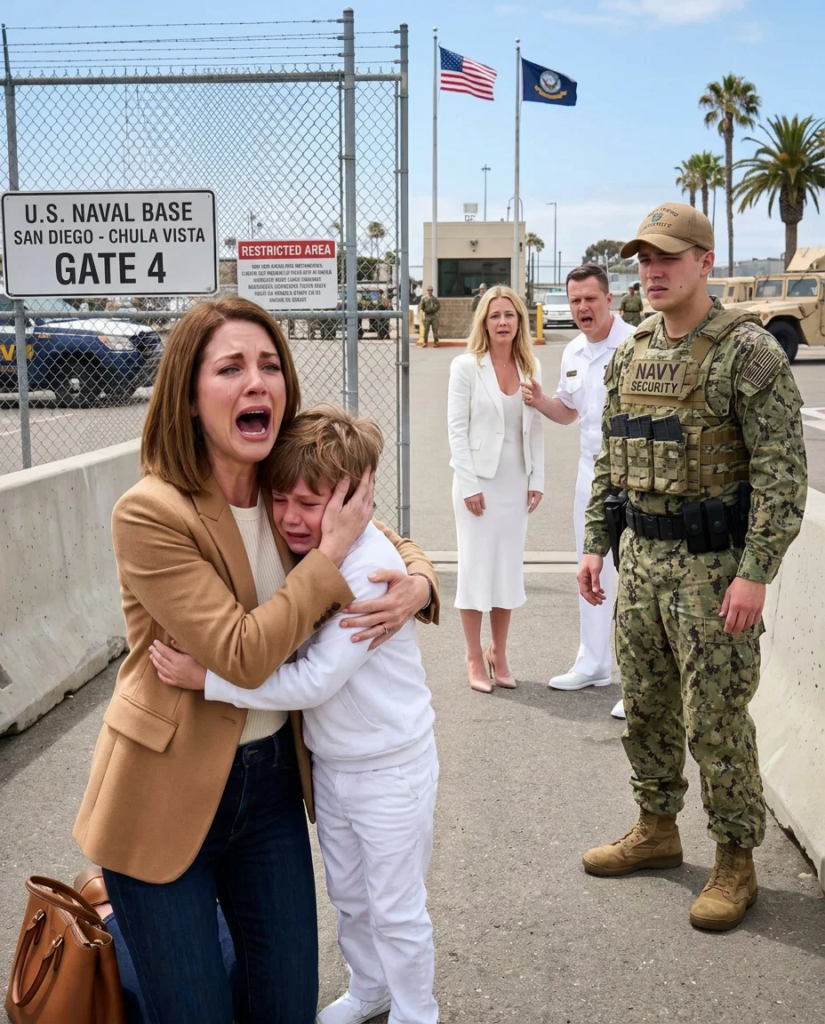
I never told my ex-husband or his wealthy family that I was the secret owner of the multi-billion dollar company where they all worked. To them, I was just the “poor, pregnant burden” they tolerated out of obligation.
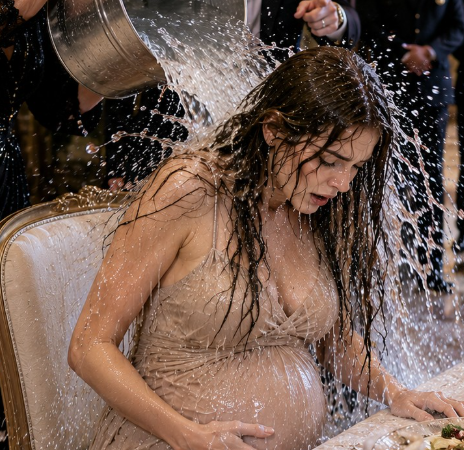
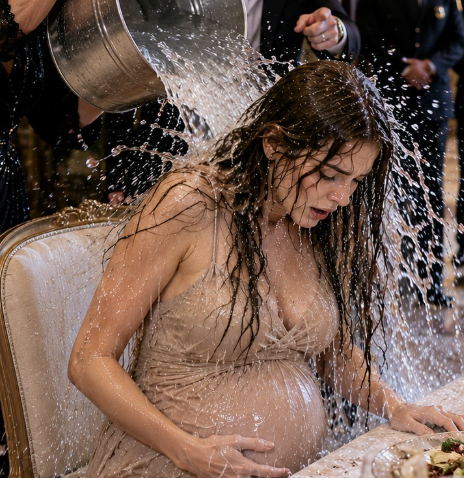
During a family dinner, my ex-mother-in-law, Diane, purposefully poured a bucket of freezing, dirty water over my head and said, smiling: “Look on the bright side… at least you finally took a bath.”
Brendan laughed with her.
Jessica, his new girlfriend, covered her mouth while letting out a giggle.
I sat there, soaked and shivering, with the water running down my hair, my dress, and my hands.
They expected me to cry.
To apologize.
To run away, humiliated.
But inside me, something went completely still.
Cold.
Clear.
At peace.
I reached into my bag, pulled out my phone, and typed a three-word message.
“Activate Protocol 7.”
Ten minutes later, the same people who had just laughed at me would be begging me to stop.
“Oops,” Diane said with a half-smile, not pretending for a second that she was sorry. The shock of the near-freezing water caused my baby to kick hard inside me.
“Try to see the positive,” she added, raising her glass. “Now you actually look presentable.”
Brendan let out a burst of laughter.
Jessica looked at my soaked shoes and said in a light voice: “Someone bring her an old towel. We don’t want that smell on the expensive linen.”
The water dripped onto the Persian rug.
The same rug I had approved three years ago in the renovation budget for the corporate headquarters.
I took a deep breath.
Not for them.
For my daughter.
Jessica laughed again.
“Who are you calling? A charity? It’s Sunday, honey.”
“Brendan,” Diane sighed while pouring more wine, “give her twenty dollars for a cab and make her disappear.”
I didn’t answer.
I opened the contact saved as “Arthur – EVP Legal” and waited.
He answered on the first ring.
“Cassidy?” he said immediately. “Are you alright?”
I looked Brendan straight in the eyes.
“No. Execute Protocol 7. Now.”
There was a brief silence on the other end.
Arthur knew exactly what that order meant.
“Cassidy… if I activate it,” he said cautiously, “the Morrisons could lose everything.”
“They already lost it,” I replied, placing the phone on the glass table. “Make it effective.”
Brendan frowned.
“Protocol 7? What the hell is that? Another one of your dramas?”
I held his gaze while the water continued to fall from my hair onto the pristine floor.
Then, outside, we heard brakes.
Footsteps.
And the sound of the front door opening, because when the head of security pronounced my real name, Brendan’s laughter died instantly…
Check the comments.
At Christmas, I gave my son a brand-new car and his wife a designer purse, still believing love meant something. Then he smiled and said his wife wanted to “teach me a lesson,” so they had no present for me. I did not cry—I simply reached into my bag, took out one envelope, and gave them the final gift that changed everything…
At Christmas, I gave my son Daniel a new car and his wife, Marissa, a designer purse, because I still believed generosity could survive disrespect.
The celebration was held at my house in Franklin, Tennessee, where I had cooked for two days and decorated the living room the way my late husband always loved it. Daniel parked the car in the driveway with a red bow tied to it. Marissa opened the purse, screamed, and hugged me as if cameras were filming.
Everyone applauded. My sister cried. My nephew whistled when Daniel started the engine from the window. For one bright hour, I allowed myself to believe we were still a family.
Daniel stood beside the Christmas tree with his hands in his pockets, smiling in a strange, rehearsed way. Marissa stood next to him, holding her new purse against her hip, her mouth curved like she already knew the joke.
“Mom,” Daniel said, loud enough for everyone to hear, “my wife told me to teach you a lesson, so no gifts this year.”
The room fell silent.
I blinked once. “A lesson?”
Marissa’s smile widened. “You always use money to make people love you. We decided not to reward that behavior.”
Daniel added, “You need to learn that we’re not children waiting for handouts.”
I looked through the window at the car I had just bought for him. Then I looked at the purse still dangling from Marissa’s arm. No one moved. No one laughed. Even my sister seemed to stop breathing for a second.
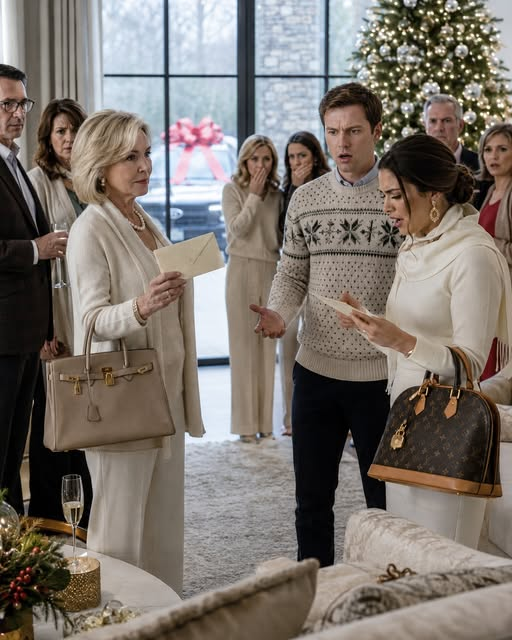
I reached into my bag, pulled out a sealed envelope, and said, “Then I have one final gift for you both.”
Daniel frowned. “What is that?”
“Open it.”
Marissa grabbed it first, still smiling. Her expression shifted before she even finished the first page.
Inside was a thirty-day notice terminating their free stay in the townhome I owned, a cancellation of the $150,000 house down payment I had planned to give them in January, and a letter from my attorney confirming that the car title would remain in my name until Daniel repaid the personal loan he had signed six months earlier.
Daniel’s face turned white.
Marissa whispered, “You can’t do this.”
I looked at the Christmas tree, the empty space where their gift to me should have been, and the expensive purse shaking in her hands.
“I just did,” I said…
Part 2
Daniel tried to laugh, but the sound came out wrong. “Mom, this is dramatic.”
“No,” I said. “Dramatic was humiliating me in front of my family after accepting a car and a purse.”
Marissa dropped the envelope onto the coffee table as if it had burned her. “We were making a point. You’re always controlling everything with money.”
I looked at her new purse. “Then give it back.”
Her fingers tightened around the strap.
That was the first honest answer she had given all night.
My attorney, Louise Parker, had warned me months earlier that Daniel and Marissa were growing reckless with my help. They lived in the townhome I had bought before retiring, paying nothing in rent while telling people they were “saving for a house.” They drove vehicles I helped finance. They used my credit card for groceries during what Daniel called a temporary rough patch.
Temporary had stretched into two years.
The $150,000 down payment was meant to be my final push to help them become independent. Louise had prepared the gift documents, but she also prepared a cancellation letter after Marissa sent me a text saying, “Once we get the house money, we can set boundaries with your mom.”
She accidentally sent it to me instead of Daniel.
I did not confront them then. I waited.
Daniel picked up the notice with shaking hands. “You’re kicking us out of the townhome?”
“I’m ending the arrangement you said made you feel like children waiting for handouts.”
My brother-in-law coughed into his napkin. My sister looked at Daniel with obvious disappointment.
Marissa’s voice sharpened. “That townhome is basically Daniel’s inheritance.”
“No,” I said. “It is my property.”
Daniel stepped closer. “Dad would never let you treat me like this.”
That hurt, but not enough to make me change my mind. My husband had spent his final year begging Daniel to stop expecting rescue and start keeping promises. Daniel cried at the funeral, then asked me two weeks later if he could move into the townhome “just until things stabilized.”
I said yes because grief had made me soft.
Now Christmas made me clear.
Marissa pointed toward the driveway. “Fine. We’ll keep the car and leave.”
I shook my head. “The keys stay on the table until Daniel catches up on the loan payments.”
For the first time that evening, Daniel looked at his wife instead of me.
She was no longer smiling.
PART 3
The rest of Christmas fell apart in fragments. Daniel threw the car keys onto the coffee table. Marissa locked herself in the guest bathroom and called her mother. My sister silently packed leftovers while everyone pretended not to hear the crying behind the door.
I did not apologize.
At nine o’clock, Daniel came into the kitchen by himself. His face was flushed, his voice lower than before. “We don’t have anywhere else to go if you make us leave.”
“You have jobs,” I said. “You have thirty days. You have the money you were supposed to be saving.”
He looked away.
That was how I learned there was no savings account. The rent-free years had been spent on vacations, clothing, restaurants, and Marissa’s online version of a life they could not afford.
Louise met me at her office the next morning. We sent formal notices by certified mail and email. The car remained parked in my garage. The purse, surprisingly, was returned in a shopping bag on my porch with a note from Marissa that said, “Hope you’re happy.”
I donated it to a charity auction for women rebuilding their lives after domestic violence.
That did make me happy.
Daniel called twice during the first week. The first time, he was furious. The second time, he was afraid. The third time, he asked whether I would still give them the down payment if they apologized publicly.
“No,” I said. “An apology is not a receipt.”
Marissa posted online about toxic in-laws and financial abuse. Then one of my nieces commented, “Didn’t you accept a car at Christmas before saying no gifts?” The post vanished within an hour.
By the end of January, Daniel and Marissa moved into a smaller apartment outside Nashville. They complained about rent, parking, and having only one bathroom. I did not save them. I also did not stop loving my son.
Love and access are not the same thing.
Months later, Daniel came to lunch without Marissa. He looked tired, but less entitled. He said, “I thought you’d always fix things.”
“I know,” I replied.
He stared into his coffee. “That was the problem, wasn’t it?”
“Yes,” I said. “For both of us.”
I kept the townhome and rented it to a young teacher who paid on time and sent me a thank-you note after moving in.
That note was the only Christmas gift from that season I kept.
By 5:03 that morning, I was standing in the center of my son’s bare nursery with blood smeared across my hand, shards of glass inside my shoes, and my whole life compressed into a cream-colored note.
For a long while, I stayed completely still.
The house was silent enough that I could hear the heating system clicking inside the walls. Somewhere below, icy air slipped through the shattered kitchen door and drifted through the vacant rooms like an intruder.
“Hannah, call me. Whatever this is, call me right now. You can be angry. You can take the house. You can take the money. But do not keep my son from me.”
My voice cracked on the final word, and I despised myself for it.
Then I called my attorney.
Not the family attorney. Not the pleasant man who dealt with prenups, charitable trusts, and discreet settlements.
I called Richard Vale.
Richard picked up on the fourth ring, his voice heavy with sleep.
“Daniel?”
“My wife is gone.”
A silence followed.
“What do you mean, gone?”
“I mean the house is empty. Sold. She took Noah. There are divorce papers at my office. And someone sent me a photo of my signature on a custody document I never signed.”
The drowsiness vanished from his voice at once.
“Where are you?”
“At the house.”
“Do not touch anything else.”
“I already broke in.”
Another silence.
“Of course you did.”
“She locked me out of my own house.”
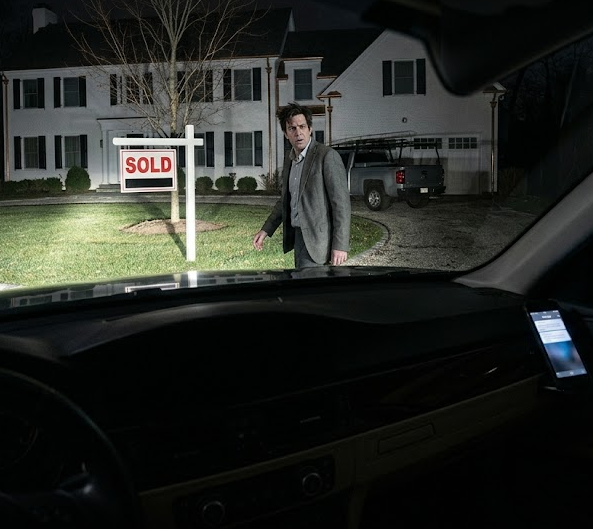
“Daniel, listen carefully. Is there a sold sign in the yard?”
“Yes.”
“Then it may not be your house anymore.”
That sentence struck harder than it should have.
I stared around the nursery, at the pale marks on the walls where Noah’s shelves had once hung. One of them used to hold a tiny stuffed elephant, gray with floppy ears. Hannah had bought it before we even knew we were having a boy. She would press it to her stomach and say, “He kicks when he hears your voice.”
I had laughed at her back then.
I had been replying to emails.
“Daniel,” Richard said. “Go to your office. Do not call Hannah again. Do not contact this Olivia woman. Do not speak to police unless I am present.”
“Police?”
“You smashed a door in a house that may no longer belong to you.”
I shut my eyes.
“I need to find my wife.”
“No,” Richard said. “You need to find out how much of your life she legally dismantled before you noticed.”
I ended the call without responding.
Outside, dawn was beginning to wash the windows gray. Westport looked calm. Wealthy people loved calm things. Silent streets, clipped hedges, costly lies.
I moved through the empty house one final time.
In the dining room, I noticed a scratch across the floor from when Hannah and I had dragged the table ourselves because she said delivery men never understood angles. In the hallway, I saw the spot where Noah’s swing used to sit, playing soft music at three in the morning while Hannah swayed barefoot beside it, exhausted and still smiling.
In the primary bedroom, I found nothing.
That was the worst part.
Nothing.
She had not abandoned perfume bottles in rage. She had not torn clothes from their hangers. She had not smashed our wedding photographs.
Hannah had left with surgical precision.
No sound.
No chaos.
No error.
When I stepped outside, a black sedan was waiting by the curb.
For one irrational second, I thought it was hers.
Then the rear window slid down, and my father looked out at me.
Charles Whitman was wearing a navy overcoat over his pajamas. His silver hair was combed neatly. His face was shaped from the same cold stone he used with bankers and senators.
“Get in,” he said.
I did not ask how he knew.
Men like my father always knew.
The driver opened the door. I climbed into the back seat, and the car pulled away from the house that was no longer mine.
My father kept his eyes forward.
“I received a call twenty minutes ago,” he said.
“From who?”
“Board counsel.”
My throat tightened. “Why?”
“Because your wife’s attorney delivered a package to Whitman Capital at 4:45 this morning.”
I stared at him.
“That’s impossible.”
“Apparently not.”
“What package?”
At last, he turned his head.
“Financial records. Emails. Internal transfers. Expense reimbursements. Private calendar entries. Enough to make several people extremely nervous.”
My pulse began to hammer.
“Hannah doesn’t understand those documents.”
My father’s eyes narrowed.
“That is the first stupid thing you have said today, and I suspect it will not be the last.”
I looked away.
Hannah had studied art history. She loved museums, old churches, and books with broken spines. She cried during documentaries. She wrote thank-you notes by hand.
She did not belong in rooms filled with corporate counsel.
She did not belong anywhere near knives.
But then I remembered the note.
You were so busy hiding your life from me that you never noticed I was packing mine.
“How much does she have?” I asked.
“Enough.”
“That’s not an answer.”
“It is the only one you deserve at the moment.”
The car drove us toward Greenwich, toward the glass tower where Whitman Capital occupied the upper four floors. My phone buzzed again.
Olivia.
Daniel? Are you okay? Your wife just called me.
I sat up straight.
“What?” I whispered.
My father glanced across at me.
I opened the thread.
She knows everything. She said if I contact you again, my deposition will be under oath.
Another message arrived.
Daniel, what did you tell her about me?
I almost laughed.
What had I told Hannah about Olivia?
Nothing.
That had been the whole point.
Olivia Bennett was never meant to exist beyond hotel rooms, late dinners, and fake calendar blocks. She was vice president of investor relations at one of our portfolio companies, sharp, beautiful, ambitious, and reckless in the way people become reckless when they believe powerful men will shield them.
I had shielded her.
Or I thought I had.
I typed nothing in return.
At 5:52, we reached Whitman Capital.
The lobby guard refused to meet my eyes.
That was the moment I realized the disaster was no longer private.
Upstairs, the lights were already burning.
Richard Vale stood in the conference room with two other attorneys, three sealed folders, and an expression that chilled me more than the empty nursery had.
A stack of documents sat on the table.
On top was a petition for dissolution of marriage.
Under it was a custody filing.
And beneath that was a photograph of me entering the Boston hotel with Olivia.
I picked up the petition.
My hands felt dead.
Hannah Whitman v. Daniel Robert Whitman.
She had used my full name.
Not Dan.
Not Daniel.
Not husband.
Daniel Robert Whitman.
As though I had already become a stranger.
Richard gently took the paper from my hand.
“She filed at 12:01 a.m.,” he said. “Emergency protective custody, temporary financial restraining order, preservation order for corporate records, and notice of intent to subpoena.”
“For what?” I asked.
His silence answered before he did.
My father removed his gloves one finger at a time.
“Tell him.”
Richard exhaled.
“Hannah’s team alleges marital waste, concealment of assets, misuse of corporate funds, fraudulent expense reporting, and exposure of family assets to personal liability.”
I stared at him.
“That’s insane.”
“Did you buy Olivia Bennett a diamond bracelet through an executive discretionary account?”
My mouth opened.
Nothing came out.
Richard gave a single nod.
“Did you categorize hotel stays as client entertainment?”
“Everyone does that.”
My father’s hand hit the table.
Not violently.
Just once.
The room fell silent.
“Children say everyone does it,” he said. “Men who inherit billion-dollar institutions do not.”
Heat crawled up my neck.
“She had no right to take Noah.”
Richard’s expression shifted.
“That is where this becomes worse.”
He opened the custody filing and slid one page toward me.
There it was again.
My signature.
My signature beneath a statement agreeing to Hannah’s temporary relocation with Noah because of “ongoing marital instability and father’s erratic absence from home.”
“I did not sign that,” I said.
“We will challenge it.”
“I did not sign it.”
“I heard you.”
“No, you don’t understand. I didn’t sign anything like that.”
Richard studied me carefully.
“Daniel, there is a notarization.”
I snatched up the page.
A notary seal. A date. Two weeks earlier.
Two weeks earlier, I had been in Chicago.
No.
Not Chicago.
Boston.
With Olivia.
My stomach dropped.
My father leaned closer.
“Where were you on March 14?”
I knew before I even checked my calendar.
“The Four Seasons,” I said.
Richard’s jaw tightened.
“With Ms. Bennett?”
I said nothing.
My father closed his eyes for one brief second, as though looking at me had become physically exhausting.
Richard tapped the document.
“The document says it was signed at your home at 8:30 p.m. Hannah’s attorney claims there is video evidence.”
“That’s impossible.”
“Then we need to prove it.”
The conference room door opened.
My assistant, Mara, stepped inside.
She was normally flawless. That morning, her blouse was slightly creased, and her face was pale.
“Daniel,” she said softly. “There’s someone here to see you.”
“Not now.”
“She says she is here on behalf of Mrs. Whitman.”
Richard straightened.
“Who?”
Mara swallowed.
“Eleanor Price.”
My father looked toward the door.
For the first time that morning, something like surprise crossed his face.
I knew that name.
Everyone with money and secrets in Connecticut knew that name.
Eleanor Price did not lose.
She was the lawyer wives hired when they wanted revenge to appear clean. She smiled in court. She wore pearls. She spoke in phrases like “stability” and “best interests” while quietly stripping a man to the bone.
“Send her in,” Richard said.
Eleanor came in alone.
She was in her sixties, petite, silver-haired, dressed in a cream suit and carrying a leather folder. She surveyed the room, gave my father a courteous smile, then turned to me.
“Daniel.”
I hated how she said my name.
As if she already possessed the ending.
“Where is my wife?” I asked.
“Safe.”
“Where is my son?”
“With his mother.”
“You can’t do this.”
She set the folder on the table.
“Mr. Whitman, I did not do anything. Hannah did.”
Being called Mr. Whitman cut deeper than I expected.
“We will be contesting every document,” Richard said.
“I assumed so.” Eleanor opened the folder. “That is why I brought copies of the security footage, notarized recordings, bank authorizations, property transfer documents, and communications confirming Mr. Whitman’s consent.”
Richard’s eyes sharpened.
“Communications?”
Eleanor pulled out a printed sheet and pushed it across the table.
It was an email.
From me.
To Hannah.
Subject: Do what you need to do.
Hannah,
I know I have been absent. If leaving Westport for a while makes you feel safer with Noah, I won’t stop you. Sell the house if you want. I don’t care anymore.
D.
I stared at it.
My skin prickled.
“I never wrote that.”
“It came from your personal email,” Eleanor said.
“I never wrote that.”
She folded her hands.
“Then perhaps you should ask who had access to your accounts.”
The atmosphere in the room changed.
Because someone did.
Someone had access to my email. My calendar. My travel records. My passwords.
Not Hannah.
Not unless—
I stopped breathing.
Mara.
I turned slowly.
My assistant stood by the door, white as paper.
“Mara,” I said.
Her eyes filled with tears immediately.
“I’m sorry.”
The words were barely a whisper.
My father rose to his feet.
Richard said, “Do not speak without counsel.”
But I was already walking toward her.
“What did you do?”
Mara stepped back.
“I didn’t know at first.”
“What did you do?”
“She came to me last year,” Mara whispered. “After Noah was born.”
“Hannah?”
Mara nodded.
“She asked if you were really in Chicago as often as you said. I told her I couldn’t discuss your schedule. She didn’t yell. She didn’t threaten me. She just looked so tired.”
My hands clenched.
“So you betrayed me?”
Something shifted in her face then. Something sorrowful hardened into something close to anger.
“You asked me to send flowers to your wife and jewelry to your mistress on the same afternoon.”
The sentence struck like a slap.
No one said a word.
Mara wiped her cheek.
“You forgot Hannah’s birthday, Daniel. You told me to pick something tasteful and sign your name. Then ten minutes later, you asked me to book Olivia a suite in Boston with a view.”
“I paid you very well.”
“Yes,” she said. “You did. That was what made it worse.”
My father made a low sound of disgust.
Eleanor raised one hand slightly.
“Ms. Keene cooperated voluntarily. She did not forge Mr. Whitman’s signature.”
“Then who did?” Richard asked.
Eleanor looked at me.
“We believe Mr. Whitman did.”
I gave one sharp laugh.
“You’re insane.”
“We have video.”
She took out a tablet and tapped the screen.
The footage showed our Westport kitchen.
Date stamp: March 14.
Time: 8:27 p.m.
Hannah sat at the kitchen island in a gray sweater, her hair tied back. Noah’s baby monitor glowed beside her.
A man entered the frame.
My height.
My build.
My dark suit.
My face.
He sat down beside her.
Hannah pushed the papers forward.
He picked up a pen.
He signed.
My signature.
My blood turned cold.
“That is not me,” I said.
But my voice had weakened.
The man looked exactly like me.
Not similar.
Exactly.
Richard took the tablet, watched the clip twice, and turned pale.
“Daniel,” he said quietly. “Where were you at this exact time?”
I knew the truth would bury me.
Because at 8:27 p.m. on March 14, I was not in Chicago.
I was not in a meeting.
I was in a Boston hotel room with Olivia Bennett, where no one except Olivia and the hotel staff could prove I had been there.
Eleanor closed the tablet.
“Hannah is prepared to offer supervised visitation pending forensic review. She is also willing to delay public filing of certain corporate allegations if Mr. Whitman complies with all temporary orders.”
My father laughed, but there was no amusement in it.
“She is blackmailing him.”
“No,” Eleanor said gently. “She is surviving him.”
I wanted to hate her for saying that.
Instead, I pictured Hannah in the nursery at midnight, folding Noah’s tiny clothes into boxes while I texted another woman under hotel sheets.
The anger inside me flickered.
Fear replaced it.
“Let me speak to her,” I said.
Eleanor shook her head.
“No.”
“She is my wife.”
“Not in the ways that matter.”
I stepped forward.
Richard caught my arm.
“Daniel.”
I pulled away from him.
“Tell her I want to see Noah.”
“I will tell her,” Eleanor said.
“Tell her I’ll give her anything.”
At that, Eleanor’s eyes changed.
“Daniel, that is what you never understood. She stopped wanting what you could give.”
She picked up her folder.
At the door, she looked back.
“One more thing. Hannah asked me to deliver a message.”
The room went still.
Eleanor looked straight at me.
“She said, ‘Check the blue safe.’”
Then she was gone.
The blue safe.
No one spoke for several seconds.
My father was the first to break the silence.
“What blue safe?”
I looked at him.
There was a safe inside my private office behind a framed photograph of my grandfather shaking hands with a president. Blue enamel dial. Old-fashioned. Sentimental.
Hannah used to joke that it was the only ugly thing in the whole building.
I had not opened it in months.
We walked down the hallway without speaking.
Mara did not come with us.
Inside my office, the city beyond the glass was turning silver. I pulled the photograph from the wall and exposed the safe.
My hands trembled as I turned the dial.
Left. Right. Left.
It opened.
Inside, there was no cash.
No certificates.
No passport.
Only a small white box and a folded letter.
I opened the box first.
Inside lay my wedding ring.
Not mine.
Hannah’s.
The platinum band I had slipped onto her finger beneath a canopy of white roses while three hundred people watched and my father congratulated me for choosing well.
Under the ring was a tiny hospital bracelet.
Noah Whitman.
My throat tightened shut.
Richard looked away.
I unfolded the letter.
Daniel,
You always kept trophies in safes.
So I left you the only things you ever truly owned and never valued.
My ring.
Your son’s name.
Everything else was borrowed.
I wanted you to know something before the lawyers teach you how to sound innocent.
I know about Boston.
I know about Olivia.
I know about the accounts.
I know about the signatures.
But there is one thing I do not know.
I do not know whether the man in that kitchen was you.
And that should terrify you more than it terrifies me.
H.
I read the last line again.
I do not know whether the man in that kitchen was you.
The room seemed to tilt.
Richard stepped closer.
“Daniel?”
I handed him the letter.
He read it. Then read it again.
My father took it from him, and for once, he had no lecture prepared.
“What does she mean?” he asked.
I stared into the open safe.
At Hannah’s ring.
At Noah’s hospital bracelet.
At the empty space where I used to keep documents that could shift markets.
“I don’t know,” I said.
But a memory had already risen.
A dinner party two months earlier.
Hannah standing in the garden beside a man I had assumed was a donor from the museum board. Tall. Dark-haired. Similar build. His back turned to me.
When I walked over, Hannah had turned around.
Too quickly.
The man had smiled.
Only briefly.
Only before my phone rang and I stepped away.
I had forgotten his face.
Now I could not remember it at all.
At 7:12 a.m., Richard’s forensic team arrived.
At 7:40, my father called an emergency board meeting.
At 8:05, Olivia Bennett stopped picking up her phone.
At 8:19, the police arrived at my office.
Not because of the broken door.
Because of me.
Two detectives came out of the elevator holding badges, their expressions telling me they already knew exactly who I was.
“Daniel Whitman?” one asked.
“Yes.”
“I’m Detective Harris. This is Detective Lane. We need to ask you some questions regarding the disappearance of Ethan Cole.”
Richard stepped in immediately.
“My client will not answer questions without—”
I lifted one hand.
“Who is Ethan Cole?”
The detectives exchanged a glance.
Detective Lane opened a folder and pulled out a photograph.
A man smiled up from the page.
Tall.
Dark hair.
My build.
Not my face.
But close enough in dim light.
Close enough from behind.
Close enough on security footage if he wanted to be.
My mouth went dry.
Detective Harris studied me carefully.
“You know him?”
“No.”
But I had seen him.
In my garden.
With my wife.
Detective Lane slid another photo across the desk.
This one showed Ethan Cole entering the lobby of the Boston hotel.
March 14.
8:11 p.m.
My heart stopped.
He was wearing my suit.
My suit.
The one I had sent out for tailoring after a wine stain and never collected myself.
Detective Harris said, “Mr. Cole was a private investigator. He was hired six months ago by your wife.”
Richard’s voice sharpened.
“Detective, what exactly is this about?”
Harris looked at me.
“Ethan Cole vanished three days ago. His last known meeting was with Olivia Bennett.”
The name drifted into the room like smoke.
I gripped the edge of the desk.
“That’s impossible.”
“Why?”
“Because Olivia doesn’t know him.”
Detective Lane’s expression did not change.
“We have evidence suggesting otherwise.”
My father finally spoke.
“What kind of evidence?”
Detective Harris placed one final photograph on the desk.
It showed Olivia Bennett outside a parking garage at night.
She was talking to Ethan Cole.
Her face looked tense.
His looked calm.
Between them, she held a small blue flash drive.
The world narrowed to one sharp point.
The blue safe.
The blue flash drive.
Hannah’s letter.
Olivia’s messages.
The forged signature.
The man in the kitchen.
None of it was separate.
It had never been separate.
Detective Harris leaned closer.
“Mr. Whitman, when was the last time you saw Olivia Bennett?”
I heard Richard say my name.
I heard my father curse under his breath.
I heard my own heartbeat.
Then my phone buzzed.
Unknown number.
A video message.
Everyone in the room saw it appear.
Richard said, “Do not open that.”
But I already had.
The screen filled with darkness. Then a light switched on.
Olivia Bennett sat tied to a chair, mascara running down her cheeks, her wrists bound with silver duct tape. Behind her was a concrete wall.
She looked terrified.
“Daniel,” she whispered. “I’m sorry. I thought she only wanted proof. I didn’t know what he was going to do.”
A man stepped into the frame behind her.
Only his torso could be seen.
Dark suit.
My suit.
Then he bent down beside Olivia’s face.
For one nauseating second, I thought I was staring into a mirror.
But the smile was wrong.
Too calm.
Too familiar.
He looked into the camera and said, in a voice almost identical to mine, “Your wife is smarter than both of us, Daniel. But she still doesn’t know the best part.”
The video cut to black.
A second message appeared.
Ask your father about the first Daniel Whitman.
My father became completely still.
Not pale.
Not shocked.
Still.
Like a man who had just heard a dead person knock from inside a wall.
I turned toward him.
“What does that mean?”
He did not answer.
For the first time in my life, Charles Whitman looked afraid.
PART 3 — THE DEAD BOY WITH MY NAME
My father remained silent until Detective Harris repeated the sentence.
“Ask your father about the first Daniel Whitman.”
The conference room seemed to close in around us.
Richard Vale stood at my side, one hand still suspended near my phone as though he could somehow reach back through time and stop me from hitting play. Detective Lane watched my father with the motionless focus of a predator. Olivia’s face—terrified, streaked with mascara, tied to a chair—still burned inside my head.
But Charles Whitman kept staring at the black screen as if it had turned into a tomb.
“Dad,” I said.
Only then did he look at me.
I had seen my father furious. I had seen him proud, indifferent, bored, impatient. I had watched him ruin men over lunch without ever lifting his voice.
I had never seen him scared.
“Who is the first Daniel Whitman?”
His jaw shifted once.
“No one.”
Detective Harris angled his head. “That’s an interesting answer.”
Richard stepped in. “Detective, my client and his father will not participate in speculative—”
“Shut up, Richard,” my father said.
The entire room froze.
Richard closed his mouth.
My father turned toward the glass wall that overlooked Greenwich. Morning had fully arrived now, pouring cold light across the city. Against it, he suddenly looked old.
“There was another child,” he said.
My skin turned cold.
“What?”
“Before you.”
The words emerged slowly, each one pulled from some sealed basement inside him.
“Your mother and I had a son before you. Daniel Charles Whitman. He died when he was three months old.”
I stared at him.
All my life, I had been told I was my parents’ miracle. Born late. Protected carefully. Trained early. The heir. The continuation. The only son.
“The first Daniel,” I whispered.
My father nodded once.
“Why didn’t you tell me?”
“Because he was dead.”
“That’s not an answer.”
“It was the only one I had.”
Detective Lane opened a different folder. “Mr. Whitman, did the first Daniel have a twin?”
My father turned sharply.
“No.”
“Are you sure?”
His eyes flashed. “I was there when my son was born.”
“Were you there when he died?”
Silence.
My breath caught.
My father’s face hardened into something older than anger.
“My wife was,” he said.
The room shifted again.
My mother had died when I was twelve. Cancer. Private treatment. Quiet funeral. My father never remarried. He kept her portrait in the Southampton house but almost never looked at it.
“What are you saying?” I asked.
He did not answer me. He answered the detectives.
“There was a nurse. A woman named Celia Cole.”
Cole.
The name slipped beneath my ribs like a knife.
“Ethan Cole,” I said.
Detective Harris nodded. “His mother.”
My father shut his eyes.
“She worked for us briefly after the baby was born. Your mother was fragile. Exhausted. The baby was sick. There were doctors, nurses, specialists. Too many people in the house.”
“And?” I demanded.
“And one morning,” my father said, “the nurse was gone.”
Detective Lane spoke evenly. “With a child.”
My father opened his eyes.
“With my dead son’s blanket. Some clothing. Some money. Not with a child.”
Detective Harris placed a document on the table.
A birth certificate.
I saw the name.
Ethan Daniel Cole.
Date of birth: three months after the first Daniel Whitman’s death.
Mother: Celia Marie Cole.
Father: Unknown.
My mouth dried out.
“No,” I said. “No.”
Detective Lane slid a photograph beside it.
A woman in a nurse’s uniform was holding an infant.
Behind her, partly visible through the nursery doorway, stood my mother.
Young. Pale. Haunted.
And in the crib behind them—
Two babies.
Not one.
Two.
My father dropped into a chair as though his bones had finally failed him.
“That photo is fake,” he said.
But there was no strength in his voice.
Detective Harris looked at me. “We found this in Ethan Cole’s apartment three days ago. Along with financial records, surveillance files, and a private investigation contract signed by Hannah Whitman.”
My wife had not simply uncovered my affair.
She had pried open a grave my family had buried thirty-five years before.
I gripped the table.
“What was Ethan trying to do?”
“We believe he was investigating whether he was biologically related to the Whitman family,” Harris said. “He was also investigating corporate fraud tied to Whitman Capital.”
My father lifted his head.
“That is absurd.”
“Is it?” Harris asked.
I looked at him. “Why would Olivia meet him?”
“Because Ms. Bennett had access to internal communications,” Detective Lane said. “And because she may have believed Ethan Cole could protect her.”
“From who?”
No one answered.
Then my phone buzzed again.
This time, Richard grabbed it first.
“Unknown number,” he said.
“Open it.”
“Daniel—”
“Open it.”
He hesitated, then tapped the screen.
A single image appeared.
Noah.
My son.
Asleep in a car seat, one fist tucked against his cheek.
For half a second, relief almost brought me to my knees.
Then I noticed the handwritten card tucked beside him.
LIKE FATHER, LIKE SON. ONE WHITMAN HEIR IS ENOUGH.
The room exploded.
Richard cursed. Detective Lane reached for the phone. My father rose so quickly that his chair slammed into the wall.
“Where is Hannah?” I shouted.
Harris was already making a call. “Trace it.”
I snatched the phone back. “Where is my son?”
Another message appeared.
Your wife thought she escaped you. She escaped the wrong man.
My blood turned to ice.
For the first time that morning, my betrayal, my fortune, my ruined marriage, my humiliation—none of it mattered.
Only Noah.
Only Hannah.
“She’s in danger,” I said.
Richard’s face darkened. “Yes.”
My father turned to the detectives. “Find them.”
Harris stared at him. “We intend to.”
“No,” my father said, and the old Charles Whitman returned like a blade sliding free of its sheath. “You misunderstand me. Use every resource you have. I will use every resource I have. If someone has my grandson—”
“Your grandson?” Detective Lane interrupted.
The question hit hard.
My father stopped.
Because we all understood what she meant.
If Ethan Cole was the stolen first Daniel Whitman, then he was my brother.
If the man in the video looked like me, sounded like me, moved like me—
Then Noah might not be the only Whitman heir in danger.
My father’s mouth tightened.
“Find the child,” he said.
At 8:44 a.m., the office turned into a war room.
Security teams pulled traffic footage. Richard’s forensic analysts cloned my phone. Detectives issued quiet alerts, carefully, without drawing the press. My father made phone calls that sounded less like requests and more like doors being forced open.
And me?
I sat holding Hannah’s letter.
I do not know whether the man in that kitchen was you.
She had known enough to flee.
But not enough to know who she was truly fleeing from.
Mara stood outside my office, silently crying into both hands. I wanted to blame her. I wanted to blame Olivia. I wanted to blame Hannah, my father, Ethan, anyone at all.
But the truth lay beneath everything like stone.
I had created the darkness where everyone else had learned to hide.
At 9:12, Detective Harris received a location hit.
“The photo of Noah,” he said. “Metadata was stripped, but the background reflection in the car window gave us a partial street sign. South Norwalk industrial district.”
My body moved before my mind did.
Richard caught my shoulder. “You are not going.”
“That is my son.”
“That is why you are not thinking clearly.”
I turned on him. “Move.”
My father stepped between us.
“Daniel.”
“Don’t.”
His face was gray.
“You will not help Noah by walking into whatever trap this is.”
I laughed once, ugly and broken. “That’s rich coming from the man whose secret started all of this.”
He flinched.
Good.
For once, I wanted him to.
Then my phone rang.
Not unknown.
Hannah.
Everything stopped.
I answered so quickly I nearly dropped it.
“Hannah?”
For one breath, there was only static.
Then her voice came through, low and trembling.
“Daniel.”
I closed my eyes.
The sound of her voice nearly broke me.
“Where are you? Where’s Noah?”
“He’s with me.”
My knees weakened.
The detectives leaned closer. Richard motioned for me to keep her talking.
“Hannah, listen to me. Someone sent me a picture of him.”
“I know.”
“You know?”
“They sent it to me first.”
My blood chilled.
She drew in a sharp breath, like she was fighting not to cry.
“Daniel, I thought I was protecting him from you.”
I swallowed.
“I know.”
“No, you don’t. I thought I had everything measured. Your affair. The money. The lies. The signatures. Ethan was helping me. He said there was something bigger. Something about your family. Something about a baby.”
“Ethan is missing.”
“I know.”
“Hannah, where are you?”
She stayed silent for too long.
Then she whispered, “I’m in a church.”
“A church?”
“St. Agnes. The old chapel near the water.”
Detective Harris stiffened and started writing.
“I went there because Ethan told me if anything happened, I should go somewhere public but quiet. Somewhere with old cameras and no staff until noon.”
“Hannah, stay there. Don’t move.”
“Daniel.”
The way she said my name stopped my heart.
“What?”
“He’s here.”
“Who?”
Her breathing shifted.
“Noah is asleep. I’m in the sacristy. There’s someone outside the chapel doors.”
Then I heard it.
Through the phone.
A faint creak.
A footstep.
Then a man’s voice, distant but unmistakable.
My voice.
“Hannah,” it called gently. “Open the door.”
Her breath broke apart.
I stood completely still.
Because hearing another man use my voice to speak to my wife felt like hearing my own ghost arrive to collect my sins.
“Hannah,” I said. “Do not open that door.”
The man outside laughed softly.
And then, through her phone, he said:
“Daniel, you should have stayed in Boston.”
PART 4 — THE MAN WHO WORE MY FACE
We arrived at St. Agnes in seven minutes.
It should have taken eighteen.
My father’s driver drove like a man who had been promised either wealth or absolution. Police cruisers trailed behind us without sirens, with black SUVs following after them. Richard sat next to me, talking quickly into two phones. Detective Harris rode up front, jaw clenched, his gun already drawn but held low.
I did not pray.
I had never been taught how.
But when the chapel came into view through the mist—gray stone, a narrow steeple, an old cemetery sloping down toward the water—I heard Hannah breathing through my phone, and I made promises to anything that might be listening.
Take the money. Take the company. Take my name. Just leave them alive.
“Hannah,” I whispered. “Are you still there?”
There was no answer.
Only silence.
Then Noah began to cry.
The sound tore through me.
The SUVs stopped abruptly.
Detective Harris turned around. “You stay in the vehicle.”
I opened the door anyway.
Richard caught my coat. “Daniel.”
I looked at him.
Whatever he saw in my face made him release me.
The chapel doors were standing half open.
Inside, the sanctuary smelled of dust, candle wax, and aged wood. Morning light spilled through the stained glass in fractured colors, red and blue spreading across the stone floor like wounds. The pews were empty. Candles flickered near the altar.
“Hannah!” I called.
A cry came from the right side.
The sacristy.
Detective Lane moved first, weapon raised. Harris followed. I was behind them before anyone could hold me back.
The sacristy door was open.
Hannah stood inside, clutching Noah to her chest. Her hair had come loose, her face was pale, and one cheek was marked with tears. She wore jeans, a black sweater, and the same gray wool coat I had given her three Christmases ago.
For one suspended second, she looked at me not like a husband, not like an enemy, not like the man who had shattered her heart.
She looked at me like Noah’s father.
“Daniel,” she breathed.
I stepped toward her.
Then someone behind me said, “Careful.”
I turned.
He was standing near the altar, holding Olivia Bennett in front of him with one arm locked around her throat and a small black pistol pressed beneath her jaw.
The sight froze everyone inside the chapel.
He wore my navy suit.
My white shirt.
My watch.
My haircut.
And almost my face.
Not exactly identical at close range. The eyes were different. Mine were my mother’s, gray with blue around the edges. His were darker, colder, set beneath brows that gave him a permanent look of private amusement. But the jaw, the height, the mouth, the way he tilted his head—
He was the answer to a question my family had buried alive.
Ethan Cole smiled.
“Hello, brother.”
My father stepped in behind me and stopped completely.
Ethan’s smile widened.
“Hello, Father.”
Charles Whitman made a sound I had never heard from him before.
Not grief.
Not fear.
Recognition.
“No,” he whispered.
Ethan laughed softly. “That’s what everyone says at first.”
Olivia whimpered. Her wrists were bound. Blood marked one corner of her mouth. When her eyes found mine, they were filled with terror and accusation.
“Daniel,” she sobbed. “I’m sorry.”
Ethan pressed the gun harder. “She says that a lot now.”
Detective Harris lifted his weapon. “Ethan Cole, lower the gun.”
“Which name are we using?” Ethan asked. “Cole? Whitman? Daniel? The spare? The mistake?”
Hannah held Noah more tightly.
My son had stopped crying. His tiny face was red and crumpled against her shoulder.
“Hannah,” I said softly. “Come to me.”
She did not move.
I deserved that.
Ethan noticed.
“Oh, that’s delicious,” he said. “Even now, she’s not sure which monster to trust.”
“Let Olivia go,” I said.
He looked at me with open pleasure.
“You ruined her, you know. Not me. You taught her every rule. Smile at the right men. Take the gifts. Keep the receipts hidden. Pretend powerful people don’t bleed on you when they fall.”
Olivia shut her eyes.
Ethan leaned closer to her ear. “But she was useful. She got me into your hotels. Your systems. Your little calendar lies.”
“You used her,” I said.
“She used you first.”
The truth struck Olivia harder than the gun did. She sagged, and Ethan held her upright like a doll.
My father stepped forward.
“Ethan.”
The name cracked something in the air.
Ethan’s gaze shifted to him.
“For thirty-five years,” Ethan said, “I wondered what you would sound like when you said my name.”
My father swallowed.
“I didn’t know.”
Ethan’s face changed.
There it was. The wound beneath the act.
“Yes, you did.”
“No.”
“You had two sons. One sick, one healthy. One heir, one inconvenience. My mother told me everything.”
“Celia lied.”
“Celia saved me.”
My father shook his head. “Celia stole you.”
“She took the baby your wife couldn’t bear to look at.”
The sentence hit my father like a bullet.
I looked at him.
His eyes were wet.
“My wife was ill,” he said. “After the first Daniel died—after we thought he died—she broke. She believed she heard crying in empty rooms. She accused nurses. Doctors. Me. Then Celia disappeared, and your mother said there had been another child. A second child. I thought grief had taken her mind.”
Ethan’s smile faded.
“You expect me to believe that?”
“No,” my father said. “I don’t expect anything from you.”
For once, Charles Whitman had no command left in him.
Only ruin.
Ethan’s hand trembled around the gun.
Detective Lane shifted slightly.
Ethan saw it.
“Don’t.”
Everyone froze.
Hannah whispered, “Ethan, please.”
He looked at her then.
Something in him softened.
“Hannah,” he said, “you were the only decent person in that house.”
My stomach twisted.
“You used her too,” I said.
Ethan’s eyes snapped back to mine.
“I protected her from you.”
“You forged my signature.”
“No.” He smiled again, smaller this time. “You did.”
“I wasn’t there.”
“Your body wasn’t.” He tapped his temple with the gun barrel, making Olivia flinch. “But everything else was. Your passwords. Your email. Your voice recordings. Your signature samples. Your suit. Your arrogance. You made impersonating you embarrassingly easy.”
Richard’s voice came from behind me. “Digital fraud. Identity theft. Kidnapping. Assault. Whatever sympathy you think this buys you, it’s gone.”
Ethan laughed. “Lawyers. Always arriving after the sin and calling themselves civilization.”
Hannah stepped forward.
My whole body tightened.
“Ethan,” she said softly. “You told me you wanted the truth.”
“I did.”
“This isn’t truth.”
His face tightened.
She continued.
“You found me when I was desperate. You gave me evidence. You helped me leave. I believed you.”
“You should still believe me.”
“I believe Daniel hurt me,” she said.
The words landed in me, deserved and sharp.
“I believe he lied. I believe he humiliated me. I believe he made me feel invisible in my own marriage.”
My throat closed.
“But Noah is not his company,” Hannah said. “He is not your inheritance. He is not revenge.”
Ethan stared at her.
Then he looked at Noah.
For one terrifying instant, I saw calculation come back.
My father saw it too.
“Ethan,” he said. “Take me.”
Everyone turned.
My father stepped away from the detectives, hands visible.
“You want the Whitman name? The truth? The man who failed you? Take me.”
“Dad,” I said.
He ignored me.
“I should have searched harder. I should have believed your mother. I should have dug up every grave and questioned every nurse until I found you. Whatever happened then, I let money make silence convenient.”
Ethan’s eyes shone.
“Stop.”
“No.”
My father took one more step.
“I built an empire on control. I called it discipline. I called it legacy. But it was fear. I lost one son, so I turned the other into a monument. And I never noticed he was becoming hollow.”
I stared at him.
His voice broke.
“I failed both my sons.”
Ethan’s gun lowered half an inch.
Detective Harris saw it.
So did Olivia.
She moved.
Not much. Just enough.
She drove her heel backward into Ethan’s shin and dropped her weight.
The gun went off.
The sound shattered the chapel.
Hannah screamed.
Noah wailed.
Olivia fell.
Ethan stumbled.
Detective Lane fired once.
Ethan spun and crashed into the altar steps, the gun skidding across the stone floor.
I ran—not toward Ethan, not toward Olivia, not toward my father.
Toward Hannah.
She stood frozen, Noah crying against her chest. I reached them and stopped just short, terrified to touch what I no longer had the right to hold.
“Are you hit?” I asked.
She shook her head.
Olivia sobbed from the floor, alive, blood staining her arm.
Ethan lay near the altar, gasping, one hand pressed to his side. Detective Harris kicked the gun away and knelt beside him.
My father walked slowly to Ethan.
No one stopped him.
Ethan looked up at him, pale-faced, his eyes furious and childlike.
“Did she love me?” he whispered.
My father knelt.
For the first time in my life, I saw Charles Whitman touch another person gently.
He placed a hand on Ethan’s hair.
“I don’t know,” he said, voice breaking. “But I should have.”
Ethan laughed once, a wet and broken sound.
Then his eyes moved to me.
“You think this ends with me?”
My blood went cold.
He smiled.
“Ask Hannah what she found in the foundation.”
Then he lost consciousness beneath the colored light.
PART 5 — THE HOUSE THAT WAS BUILT ON BONES
Ethan survived.
That was the first impossible thing.
The second was that Hannah allowed me to ride in the ambulance with her and Noah.
Not beside her.
Not holding her hand.
Not forgiven.
But present.
I sat on the narrow bench opposite them while Noah hiccupped himself into sleep against her chest. Hannah stared through the rear window, her face blank from shock. A faint smear of dust marked her cheek, and I wanted so badly to wipe it away that my fingers hurt.
I did not move.
Some privileges disappear quietly. Others are ripped away beneath sirens.
At the hospital, Noah was examined and declared unharmed. Hannah had bruises around one wrist where Ethan had grabbed her outside the chapel before she locked herself in the sacristy. Olivia was taken into surgery for a bullet wound through her upper arm. Ethan was placed under guard.
My father vanished with the detectives.
Richard found me beside a vending machine at noon.
“You need to come with me,” he said.
“Where?”
“The Westport house.”
I looked up.
“Hannah sold it.”
“The buyer hasn’t taken possession yet. And crime scene technicians are there.”
I rose slowly.
“What crime scene?”
Richard’s face was drained of color.
“You heard what Ethan said.”
Ask Hannah what she found in the foundation.
I had thought it was another threat. Another puzzle.
But Hannah, sitting ten feet away in the waiting room with Noah asleep in a hospital bassinet beside her, closed her eyes when Richard said it.
She knew.
“Hannah,” I said.
She opened her eyes.
For a moment, all the anger between us simply sat there, exhausted.
“What did you find?”
Her voice was nearly gone.
“When I was preparing the sale, the inspection found an old sealed room under the east addition.”
My mind searched the layout of the house.
The east addition.
The wine cellar. The gym. The guest wing.
“My father built that addition when I was a teenager,” I said.
“I know.”
She looked at Noah, then back at me.
“There was a box in the foundation wall.”
“What kind of box?”
“A metal medical file box. Wrapped in plastic. Inside were infant records. Two hospital bracelets. Blood typing reports. Letters from your mother to a lawyer. And a cassette tape.”
“A tape?”
Hannah nodded.
“Your mother’s voice.”
My knees weakened.
Richard said gently, “Hannah gave everything to her attorney. Her attorney gave copies to law enforcement this morning.”
I could not breathe properly.
My mother had been dead for twenty-three years, and suddenly she was speaking from inside the walls of my house.
The house Hannah had sold.
The house I believed belonged to me.
The house that had never truly belonged to me at all.
We drove there in silence.
The SOLD sign still stood in the yard. Yellow police tape now crossed the broken kitchen door I had smashed only hours earlier. Crime scene vans crowded the driveway. Neighbors watched from behind curtains, consuming the disaster like expensive wine.
Inside, the emptiness felt different.
Not as if Hannah had erased me.
As if she had uncovered something.
A technician led us downstairs. Behind the wine cellar, where custom stonework had hidden a structural cavity, part of the wall had been opened. The smell of damp concrete and old dust seeped out.
Detective Harris stood inside with my father.
Charles Whitman looked like he had aged a decade since the chapel.
On a folding table sat sealed evidence bags.
Documents.
Photographs.
A tiny blue knit cap.
Two hospital bracelets.
One read: Daniel C. Whitman.
The other read: Infant B. Whitman.
My hand gripped the doorway.
Infant B.
Not named.
Not grieved.
Not recorded.
Only a letter.
Detective Harris gestured toward an old cassette player. “Mrs. Whitman’s counsel authorized us to play a duplicate.”
My father whispered, “No.”
But no one listened.
The tape clicked.
Static filled the cellar.
Then my mother’s voice entered the room.
Young.
Shaking.
Terrified.
“Charles, if you are hearing this, then I failed to make you listen while I was alive.”
My father shut his eyes.
The tape hissed.
“They told me Daniel died. They told me there was only one child. But I remember two cries. I remember two bassinets. I remember Celia holding the smaller one. I remember Dr. Markham saying it would be kinder if I forgot.”
Somewhere behind me, a chair scraped.
My mother continued.
“I was medicated. Everyone said grief made me confused. But Celia came to me before she disappeared. She said one baby was sick, yes. But not dead. She said my father-in-law had arranged to remove him because two heirs complicated things, especially if one was medically fragile.”
My head snapped toward my father.
He was staring at the floor.
“My father,” he whispered.
My grandfather.
The portrait in my office.
The presidential handshake.
The old king of Whitman Capital.
My mother’s voice cracked.
“Charles, I begged you. You told me your father would never. But your father would. He would do anything to protect the line from scandal, weakness, uncertainty. He called our son defective.”
Hannah covered her mouth.
The tape clicked again.
“If I vanish into grief, remember this: there were two Daniels. One kept. One taken. And the one they took is still alive somewhere.”
The tape ended.
No one moved.
For a long time, all I could hear was the house settling above us, the same house where Hannah had rocked our son to sleep while the bones of my family’s crime rested beneath our feet.
My father’s voice barely sounded human.
“I didn’t know.”
Detective Harris said nothing.
My father looked at me.
“Daniel.”
I could not look back at him.
Because suddenly my entire life had taken a shape I hated.
The pressure. The grooming. The perfection. The name. Daniel Robert Whitman, polished and sharpened and displayed.
I had not been raised as a son.
I had been raised as a replacement.
And Ethan had been raised as a theft.
Hannah touched the evidence bag holding the blue cap without truly touching it.
“Ethan found part of this before I did,” she said. “He knew enough to hate you. Not enough to know who truly did it.”
Richard looked at Harris. “Where is Dr. Markham?”
“Dead,” Harris said. “Eleven years.”
“And Celia Cole?”
“Dead six months ago.”
Ethan’s mother.
Six months.
The same time he approached Hannah.
“He waited until she died,” I said.
Harris nodded. “Her belongings included letters, partial records, and your mother’s name. That likely started him.”
I thought of Ethan’s face in the chapel.
Hello, brother.
He had not come only for money.
He had come for the life he believed I had stolen.
And I, who had stolen so much from Hannah without thought, had somehow become the face of the original theft.
A technician entered quietly and handed Detective Harris a tablet.
Harris watched something, then looked up.
“We recovered footage from traffic cameras near the chapel. Ethan did not act alone.”
My stomach dropped.
“Who?”
Harris turned the tablet around.
A black SUV appeared on the grainy screen near St. Agnes.
A woman stepped out.
Dark coat.
Hair tucked under a scarf.
She opened the rear door.
For a moment, her face turned toward the camera.
Richard cursed.
My father stared.
Hannah whispered, “No.”
I recognized her instantly.
Mara Keene.
My assistant.
The woman who had cried in my office.
The woman who had apologized.
The woman who had given Hannah my schedule and Ethan my access.
Harris said, “She disappeared from your office shortly after the chapel incident.”
My phone buzzed.
A message from Mara.
I tried to stop him. I’m sorry. But you still don’t understand. Ethan wasn’t the only one looking for the first Daniel.
A second message followed.
Your mother had a daughter too.
PART 6 — THE DAUGHTER NO ONE NAMED
I read Mara’s message six times before the words finally made sense.
Your mother had a daughter too.
Then the cellar seemed to tilt beneath me.
“No,” my father said.
It was not disbelief.
It was begging.
Detective Harris took the phone from my hand. “Trace it.”
Richard looked from Mara’s message to my father. “Charles?”
My father gripped the edge of the folding table.
“There was no daughter.”
Hannah kept her eyes fixed on him.
“You said there was no second son.”
He flinched as if she had struck him.
The technician came back with another evidence bag from inside the wall cavity. Inside it was a fragile envelope sealed with wax. The handwriting was my mother’s.
Not graceful like Hannah’s.
Frantic.
Detective Harris opened it with care and unfolded a page.
His face changed as he read.
Then he offered it to my father.
My father would not take it.
So Harris read it aloud.
“Infant A: male. Infant B: male. Infant C: female. Live births. Private transfer ordered by C.W. Sr. Attending physician: Markham. Nurse: Celia Cole.”
The cellar fell silent.
Three children.
My mother had delivered three children.
One kept.
Two erased.
The room spun around me.
I thought about my childhood birthdays in rooms filled with orchids and adults. My father’s hand resting on my shoulder. My mother watching from a distance, smiling too hard, already half a ghost.
Had she looked at me and seen not a miracle, but proof of a crime?
Had she loved me?
Had she hated herself for being allowed to keep me?
Hannah stepped closer, her voice soft but steady.
“Daniel. Sit down.”
I almost laughed.
After everything, she was still the one who noticed when I was about to collapse.
“I’m fine.”
“You’re not.”
No. I was not.
Detective Harris said, “We need to find Mara Keene.”
Richard rubbed a hand across his face. “Mara worked for Daniel for nine years. Full access. Calendar, travel, medical, corporate.”
“And personal,” Hannah said quietly.
I looked at her.
She did not look away.
“She knew when Daniel lied. She knew when I cried. She knew when Noah was born. She knew everything.”
That shame had weight.
Heavy. deserved.
Another message arrived on my phone.
This one was not from Mara.
Unknown number.
A photograph.
Mara sat inside a parked car, her face bruised, her lip bleeding. Behind her, through the window, was water. A marina.
She held a handwritten sign.
EAST DOCK. ONE HOUR. BRING HANNAH. NO POLICE.
Under it was one more line:
I want my name.
My father swore.
Detective Harris immediately said, “No one is going to any dock without law enforcement.”
Hannah’s face had become very still.
“No,” I said.
Everyone looked at me.
“No. Hannah isn’t going anywhere near this.”
Hannah gave me a tired look. “You don’t get to decide where I go.”
“I’m trying to keep you alive.”
“You should have tried being faithful first. We’re past what you want.”
The sentence hit hard, but there was no cruelty in it. Only truth.
I nodded once.
“You’re right.”
That surprised her.
Maybe it surprised me too.
“I don’t get to decide,” I said. “But I am asking you not to go.”
Her eyes softened for half a second. Then Noah stirred in the carrier beside her, and that softness turned into steel.
“If Mara is your sister, she is Noah’s aunt. If she has answers, I need to hear them.”
My father whispered, “She is not my daughter.”
Hannah turned on him.
“No. She may be your father’s victim. There is a difference.”
Charles Whitman had no answer.
Fifty minutes later, we reached the East Dock with police hidden everywhere.
Hannah wore a wire under her coat. I wore one too. Detective Harris hated the entire plan, which was the only reason I trusted it. Richard threatened lawsuits against everyone across three jurisdictions and came anyway.
Fog covered the marina, turning the masts into black needles. Boats rocked gently against their slips. The air smelled like salt, diesel, and rain.
Mara stood at the far end of the dock.
Alone.
Her hair was loose, her face bruised exactly as it had been in the photograph. She wore no coat despite the cold.
“Mara,” I called.
She gave a faint smile.
“Daniel always arrives like he owns the weather.”
I stopped ten feet away.
Hannah stood beside me.
Mara looked at her. “You brought him.”
Hannah’s voice remained calm. “You asked for me.”
“I asked because you listen.”
“You helped Ethan take my child.”
Mara’s face crumpled.
“No. I swear to God, Hannah, I didn’t know he would go near Noah.”
“You gave him access.”
“I gave him Daniel.”
The words hung in the air.
Then Mara looked at me.
“You were easy to hate.”
I accepted that.
“I know.”
She blinked, startled.
Good.
Let the truth finally do something useful.
Mara wrapped her arms around herself.
“My mother was Celia Cole.”
Hannah inhaled sharply.
I looked at Mara—really looked at her.
Dark hair. Gray eyes. My mother’s eyes.
My eyes.
“My mother raised Ethan,” Mara said. “But she didn’t raise me. I was placed with another family through a private adoption. No records. No questions. Money every year from a trust I didn’t understand.”
My father whispered behind me, “Dear God.”
Mara’s gaze shifted to him, cold and burning.
“You knew my mother as a thief. She was seventeen when your father paid her to carry two infants out of that house and disappear. Seventeen. She kept Ethan because he was sick and no agency wanted him. She let me go because she thought I’d survive better without her.”
Her voice trembled.
“She wrote to me when she was dying. She told me about the Whitmans. About the babies. About the money. About the mother who screamed for children everyone told her she imagined.”
My chest hurt.
Mara looked back at me.
“I came to work for you because I wanted to see what they kept.”
The sentence emptied something inside me.
“And what did you see?” I asked.
She laughed softly.
“A spoiled, brilliant, miserable man doing everything his father taught him. Performing perfection. Buying silence. Making women carry the weight of his emptiness.”
Hannah’s eyes flicked toward me.
I had no defense.
None that would not insult her further.
“Why help Hannah?” I asked.
Mara wiped her face.
“Because she loved you before she understood you. And because Noah deserved not to become another Whitman raised inside a lie.”
A sound came from one of the boats.
Detective Harris’s voice cracked through my earpiece. “Movement starboard.”
Mara heard it too. Her eyes widened.
“He’s here.”
“Ethan?” Hannah asked.
Mara shook her head.
“No. The man who helped him.”
A figure stepped out of the fog behind a moored yacht.
Older. Tall. Lean. Wearing a black raincoat.
My father made a strangled sound.
“That’s impossible.”
The man moved into clearer light.
I knew his face from boardroom portraits and oil paintings.
But older.
Thinner.
Alive.
My grandfather.
Charles Whitman Sr.
The empire’s dead king.
The man supposedly buried eight years earlier in a private mausoleum beneath a marble angel.
He smiled at us.
“Families,” he said, voice dry as paper, “are so difficult to manage once they learn to read.”
PART 7 — THE KING WHO FAKED HIS GRAVE
For a moment, no one moved at all.
Even the fog around him seemed to stop breathing.
Charles Whitman Sr. stood at the end of the dock as if death had returned something it could not stomach. His hair was white, his face carved with deep lines, but his posture was still royal. The last time I had seen him, he was lying in an open casket, hands folded over his chest, a flag pin fixed to his lapel.
I had stood beside my father while senators cried into linen handkerchiefs.
Now the dead man was smiling at us.
“Grandfather,” I said.
He tilted his head. “Daniel.”
Then his gaze shifted to Mara.
“My dear, you have caused considerable inconvenience.”
Mara shook, but she did not retreat.
“You stole us.”
He sighed. “Such dramatic language.”
Police shifted within the fog.
He raised one hand.
From the yacht behind him, two armed men appeared.
Detective Harris’s voice hissed in my earpiece. “Nobody fires. Child nearby. Civilians exposed.”
Hannah instinctively stepped closer to Noah’s carrier behind Richard.
My grandfather noticed the movement.
“Ah,” he said. “The baby.”
I moved in front of them.
His eyes settled on me with mild amusement.
“There he is. The heir with a spine at last. Pity it took adultery, kidnapping, and family archaeology.”
My father stepped forward.
“You were dead.”
“Legally, yes.”
“You let me bury you.”
“I allowed you to inherit under supervision.”
My father’s face twisted. “Supervision?”
“You were always sentimental, Charles. Too much guilt. Too much softness where decisive cruelty was required.”
My father gave one stunned laugh. “You murdered my family.”
“I preserved it.”
“You stole my children.”
“I removed complications.”
The plainness of it stole the air from my lungs.
Mara made a sound like an injured animal.
My grandfather turned toward her. “You were never meant to suffer. You had a trust. A stable placement.”
“I had no name.”
“You had a life.”
“Not mine.”
His eyes went cold.
“Very few people get the life they think they deserve.”
Then he looked at Hannah.
“And you. The pretty wife who opened the wall.”
Hannah lifted her chin.
“You should have built it better.”
For one sharp second, admiration flickered across his face.
Then it disappeared.
“You cost me decades of planning.”
“Good.”
I almost smiled despite everything.
My grandfather’s gaze returned to me.
“Ethan was useful until grief made him theatrical. Mara was useful until conscience infected her. Olivia was useful until fear loosened her tongue. Your wife was useful because she knew how to be underestimated.”
My stomach turned.
“You were behind Ethan.”
“I corrected his direction.”
“You told him to impersonate me.”
“I told him the truth would hurt more if delivered in your handwriting.”
My father lunged then.
Not like an old man.
Like a son.
Two officers grabbed him before the armed men could raise their weapons.
“You monster,” my father said.
My grandfather looked nearly bored.
“I made you rich enough to confuse morality with decoration.”
Richard spoke quietly into his phone, still recording, still maneuvering. “This is over. There are officers everywhere.”
“Of course there are,” my grandfather said. “That is why I chose water.”
The yacht engine rumbled to life.
My heart dropped.
He was leaving.
With evidence. With answers. With the same effortless certainty that had allowed him to bury children and resurrect himself through paperwork.
Mara stepped toward him.
“No.”
“Mara,” Hannah warned.
Mara ignored her.
“No more disappearing.”
My grandfather’s expression sharpened. “Child, I disappeared before you knew how to walk.”
“You won’t do it again.”
One of the armed men lifted his gun.
Everything happened at once.
Detective Lane shouted.
Hannah screamed.
I moved without thinking.
Not toward my grandfather.
Toward Mara.
I slammed into her from the side just as the shot cracked across the dock. Pain ripped through my shoulder like fire. We crashed onto the wet boards. The world flashed white.
Someone fired back.
Glass shattered on the yacht.
The engine roared.
Mara was beneath me, crying.
“You’re hit,” she said.
“I noticed.”
Boots thundered over the boards. Police flooded the dock. My grandfather’s men retreated toward the yacht. The boat lurched away from the slip, ripping a line free.
My grandfather stood at the stern, one hand resting on the rail.
Still smiling.
Then Hannah did something no one expected.
She ran.
Not away.
Forward.
“Hannah!” I shouted.
She grabbed the loose mooring line as it whipped across the dock and looped it around the cleat with both hands. The yacht jerked violently sideways.
Richard lunged forward to help her. Detective Harris followed. The line snapped tight, screaming under the strain.
My grandfather stumbled.
For the first time, he looked surprised.
The yacht slammed against the side of the dock hard enough to throw one gunman overboard.
Police surged forward.
My father broke free and ran onto the gangway.
“Dad!” I yelled.
He reached his father near the stern.
The two Charles Whitmans faced each other above the churning black water.
The old man’s voice carried through the fog.
“You never had the stomach.”
My father looked back once.
At me.
At Hannah.
At Noah’s carrier.
At Mara, bleeding rainwater and tears onto the dock.
Then he turned back to the man who had shaped every ruin in our family.
“No,” my father said. “I never had the truth.”
He hit him.
Not gracefully. Not with boardroom control.
A son’s punch.
My grandfather fell against the rail. Police seized him before he could recover.
And just like that, the dead king was placed in handcuffs.
Not defeated by money.
Not by lawyers.
Not by legacy.
By a woman who tied a rope and refused to let him disappear.
I tried to stand and nearly passed out.
Hannah was suddenly beside me, her hands on my face.
“Daniel. Stay awake.”
Her voice sounded distant.
“You tied the boat,” I mumbled.
Her eyes filled with tears.
“You got shot.”
“I’ve done worse things for less impressive women.”
She made a sound caught between a sob and a laugh.
“Don’t flirt while bleeding.”
“Not flirting. Confessing.”
The world blurred.
Mara knelt beside us.
“I’m sorry,” she whispered.
Hannah looked at her, then did the impossible.
She reached out and took Mara’s hand.
“We’ll sort sorry out later.”
At the hospital, they removed a bullet from the flesh of my shoulder. Nothing vital, the surgeon said, as though the body were a spreadsheet and not a place where fear lived.
By evening, the story erupted.
Not publicly. Not yet.
But inside law enforcement, inside Whitman Capital, inside sealed court filings and emergency hearings, the old empire began to split open.
Charles Whitman Sr. had staged his death through offshore medical networks and controlled assets through hidden proxies. He had funded Ethan’s investigation, then turned him into a weapon. He had used Mara’s access. He had planned to discredit me, control Hannah through custody chaos, recover the foundation documents, and bury the triplet scandal forever.
But he had underestimated three people.
Hannah, who noticed walls.
Mara, who wanted her name.
And me, who finally had something to lose that money could not replace.
At midnight, Hannah entered my hospital room.
Noah slept in a rolling bassinet beside her.
For a long moment, neither of us said anything.
Then she said, “You saved Mara.”
“I think she saved us first.”
Hannah nodded slowly.
“She did.”
Silence returned.
I looked at Noah.
“He’s beautiful,” I said.
Her face softened.
“Yes.”
“I missed so much.”
“Yes.”
“I don’t know how to fix that.”
“No,” she said. “You don’t.”
The honesty hurt. It also steadied me.
“I’m not asking you to come back.”
Her eyes lifted to mine.
“I’m asking for the chance to become someone Noah doesn’t have to recover from.”
Tears gathered in her eyes, but she refused to let them fall.
“That’s the first honest thing you’ve said to me in a long time.”
“I know.”
She stepped closer and placed Noah in my uninjured arm.
My son stirred, then settled against me with a sigh so tiny it broke something open in my chest.
Hannah watched us.
No forgiveness.
Not yet.
But not nothing.
And after the day we had survived, not nothing felt like grace.
PART 8 — THE BILL NO BILLIONAIRE COULD PAY
Three months later, I stood inside a courtroom and listened as my grandfather pleaded guilty under a name that had once made bankers straighten their backs.
Charles William Whitman Sr. admitted to identity fraud, obstruction, kidnapping conspiracy, unlawful confinement, financial crimes, and involvement in an illegal private adoption scheme that had taken two newborns from their mother and buried the truth beneath trusts, intimidation, and concrete.
He offered no apology.
Men like him confused confession with strategy.
But when the judge ordered him held without bail, and the bailiff placed a hand on his arm, he turned back to look at us.
At my father.
At me.
At Mara.
At Hannah, holding Noah near the back of the courtroom.
For the first time, he looked small.
Not powerless.
Small.
As though the truth had shrunk him down to human size.
Ethan Cole accepted a plea deal a few weeks later.
He confessed to impersonation, fraud, kidnapping Olivia, and threatening Hannah. His lawyers shaped a careful argument out of trauma, manipulation, and the permanent wound of being made into a ghost. It was true.
It still was not enough to make him innocent.
I visited him once before sentencing.
He sat behind reinforced glass, thinner than before, his bullet wound still making his movements stiff.
“Brother,” he said.
“Ethan.”
He smiled faintly. “You kept the name.”
“So did you.”
He looked down.
“They gave me Cole. Your grandfather gave me nothing. My mother gave me Ethan. I think I’ll keep that part.”
I nodded.
For a while, neither of us spoke.
Then he asked, “Does he hate me?”
“Our father?”
The word felt unfamiliar.
Ethan’s jaw tightened.
I answered with care.
“No. He hates himself.”
Ethan looked away quickly, but not before I saw his eyes shine.
“Good.”
“Maybe.”
He laughed under his breath.
“You always sound like a man trying on humility.”
“I’m new at it.”
“That part is obvious.”
For the first time, I laughed.
Not with joy. But honestly.
He looked back at me.
“Is Hannah safe?”
“Yes.”
“And the baby?”
“Noah is safe.”
His face shifted at Noah’s name.
“I wouldn’t have hurt him.”
“I want to believe that.”
He nodded once.
“That’s fair.”
Before I left, he pressed his palm against the glass.
Not theatrically. Not sentimentally.
Just there.
After a moment, I lifted my hand and placed it against the glass on my side.
We did not become brothers in that moment.
Life is not that generous.
But we stopped being strangers.
Mara chose her name in a courthouse on a rainy Thursday.
Mara Celia Whitman-Cole.
She said it aloud once, then cried so hard Hannah had to hold her upright.
My father came.
He stood in the back, silent, broken, trying to learn tenderness the way some men learn a foreign language late in life—awkwardly, slowly, with shame in every mispronounced word.
Afterward, Mara faced him beneath the courthouse awning.
“You don’t get to be my father because a document says so,” she told him.
He nodded.
“I know.”
“You don’t get to buy forgiveness.”
“I know.”
“You don’t get to tell me what I should feel.”
“I know.”
She studied him.
Then she handed him an umbrella.
“But you can walk me to the car.”
My father accepted it as though it were both a crown and a sentence.
They walked together through the rain.
Not touching.
But beneath the same shelter.
Whitman Capital did not remain unchanged.
It remained smaller.
Cleaner.
Bleeding.
My father resigned as chairman. I stepped back from executive control while the investigations continued. Regulators circled. Journalists hunted. Former allies disappeared with remarkable speed.
Money, I learned, has plenty of friends until it grows a conscience.
Richard Vale stayed my attorney, though he seemed to take visible satisfaction in saying, “I warned you,” at least twice each week.
Olivia Bennett testified.
She lost her job, her reputation, and almost her life. I wrote her a letter apologizing without asking her to forgive me. She never replied.
She did not owe me a reply.
That was another lesson I was learning.
Hannah and I finalized our divorce in June.
No courtroom war. No public spectacle.
She kept primary custody of Noah. I was given supervised visitation at first, then unsupervised afternoons, then weekends as I kept arriving sober, honest, and on time.
The Westport house went to a young couple from New York who only knew the price had been excellent and the foundation had been fully repaired.
Hannah moved into a smaller home near the water.
Not hidden.
Only hers.
The first time I arrived for visitation, I stood on her porch holding a diaper bag, a stuffed elephant, and a fear I could not name.
She opened the door.
Noah squealed from inside.
I swallowed.
“Hi.”
Hannah looked at the stuffed elephant. “You remembered.”
“I found the same one online. The original was gone.”
Her eyes softened.
“Not gone,” she said.
She stepped aside.
In the living room, on a low shelf beside Noah’s books, sat the original gray elephant.
Worn.
Floppy-eared.
Safe.
My chest tightened.
Noah crawled toward me with wild determination, one sock half off, his mouth open in a delighted shout.
“Da!”
I froze.
Hannah froze too.
Noah slapped both hands against the floor and shouted again.
“Da!”
The sound broke me in a way the scandal had not, the bullet had not, the empty nursery had not.
I sat down on the floor because my legs could not hold me.
Noah climbed into my lap and grabbed my shirt with both fists.
Hannah turned away, but not before I saw tears.
I did not ask what they meant.
Some moments are too sacred to interrogate.
That autumn, Hannah invited me to Noah’s first birthday.
Not as her husband.
Not exactly as family.
As Daniel.
The party was held in her backyard beneath strings of warm lights. Mara arrived with a gift wrapped terribly. My father came early and assembled a wooden toy kitchen with the grim concentration of a man negotiating peace during wartime. Ethan sent a card from prison with a drawing of an elephant and one sentence:
Tell him the truth earlier than they told us.
Hannah read it twice, then placed it in Noah’s memory box.
Near sunset, I found her standing by the fence, watching Noah smear cake all over his face while Mara laughed and my father pretended not to cry.
“He looks happy,” I said.
“He is.”
“You did that.”
She glanced at me.
“We did some of it.”
The word we landed softly.
Dangerously.
I did not reach for it too quickly.
“Hannah,” I said, “I know I can never repay what I cost you.”
She looked toward the trees.
“No,” she said. “You can’t.”
I nodded.
“That bill in the nursery. Your ring. Noah’s bracelet. I thought it was punishment.”
“It was.”
I smiled faintly.
“Fair.”
Her mouth curved, almost against her will.
“But it was also a receipt,” she said.
“For what?”
“For the life I was done paying for alone.”
The wind passed through the yard. Noah shrieked with laughter as Mara dabbed frosting onto my father’s nose. Charles Whitman, former titan of finance, looked utterly defeated by vanilla buttercream.
Hannah’s shoulder brushed against mine.
Just once.
By accident.
Maybe.
“I don’t know what happens next,” she said.
“I don’t either.”
“That used to scare me.”
“And now?”
She looked at Noah.
“Now it feels honest.”
One year after the morning I came home from another woman’s bed, I stood before a different house.
Not a mansion.
Not a prize.
A white cottage with blue shutters and a crooked mailbox.
Hannah stood beside me holding Noah, who was chewing on the collar of my jacket. Mara was on the porch arguing with my father about whether a lemon tree could survive Connecticut. Ethan’s first parole hearing was still years away, but he wrote every month. Olivia had moved to Portland and opened a consulting firm under her mother’s name.
The Whitman mausoleum was sealed.
My grandfather would die in prison beneath fluorescent lights, without portraits, without speeches, without anyone calling him a king.
Hannah looked at the cottage, then at me.
“You’re sure?”
“No.”
She laughed.
The sound healed something I had no right to expect healed.
“I’m terrified,” I admitted.
“Good.”
“Good?”
“Means you understand what matters now.”
The cottage was not ours.
Not exactly.
Hannah had bought it.
I paid rent for the small office above the detached garage, where I now ran a foundation for victims of illegal adoptions and sealed-family fraud. Mara handled operations. My father funded it anonymously until Mara discovered it and forced him to attend board meetings like a normal donor.
Hannah and I were not remarried.
We were not pretending the past had become beautiful simply because we survived it.
But on Sundays, I cooked dinner badly in her kitchen while Noah threw peas and Hannah corrected my knife skills. Some nights, after Noah was asleep, we sat on the porch and talked until the stars came out. Sometimes we talked about lawyers and custody calendars. Sometimes we talked about grief. Sometimes we said nothing at all.
Once, in December, she reached for my hand.
I let her decide how long to hold it.
The shocking part was not that my life collapsed.
It was that the collapse revealed people beneath the wreckage who were still alive.
My wife, who had become stronger than my lies.
My son, who loved me before he could understand my failures.
My sister, who entered my life through betrayal and stayed through truth.
My brother, who was both victim and villain and still something more complicated than either.
My father, who learned too late that legacy without love is only another kind of orphanage.
And me.
Daniel Robert Whitman.
Not the first Daniel.
Not the perfect Daniel.
Not the heir.
Just a man who came home at 4:17 in the morning and found a SOLD sign in his yard.
I thought Hannah had left me a bill no billionaire could ever pay.
I was right.
But I had misunderstood what the bill required.
It did not require money.
It required truth.
It required patience.
It required showing up when no one clapped.
It required becoming smaller, kinder, steadier.
It required a lifetime of payments made one honest day at a time.
On Noah’s second birthday, Hannah handed me a small box wrapped in sage-green paper.
Inside was a platinum ring.
Not hers.
Mine.
My old wedding band, the one I had stopped wearing long before she left, polished clean.
I looked at her, unable to speak.
She smiled through tears.
“Not a proposal,” she said.
“I know.”
“Not forgiveness in full.”
“I know.”
“Just… proof of payment received.”
My hand trembled as I put it on.
Noah clapped because he thought everything was cake.
Mara cried openly.
My father looked up at the ceiling.
Hannah stepped close and kissed my cheek.
Soft.
Brief.
Enough.
And for the first time in my life, standing in a small kitchen with frosting on my sleeve and my son laughing at my feet, I understood that happiness was not ownership.
It was not victory.
It was not reclaiming the life I had lost.
It was being allowed, after everything, to help build a better one.
My mother’s words were so quiet that, for a moment, I thought I had misunderstood them.
But the silence that followed told me everyone had heard.
Diane sat frozen across the table, one hand pressed against her chest. Paul’s jaw tightened as if he were holding back questions too heavy to ask all at once. My father stood behind my mother’s chair, staring at her like he was seeing a stranger wearing his wife’s face.
And Leo—my sweet, bright, ten-year-old boy—looked from adult to adult with wide eyes, trying to piece together a puzzle none of us had known we were standing inside.
“Mom,” I said carefully, “what wasn’t Noah supposed to know?”
My mother stared at the envelope addressed to her.
Her hands shook, but she did not touch it.
“Margaret,” Diane said, her voice trembling, “tell her.”
My mother closed her eyes.
For the first time, I noticed how tired she looked. Not just from age. Not just from grief or surprise. She looked like someone who had spent years guarding a door from the inside, terrified of what would happen if anyone opened it.
My father pulled out the chair beside her and sat down slowly.
“Maggie,” he said, softer than I had ever heard him speak. “What is this?”
She flinched at the nickname.
Then she reached for the envelope.
The paper made a faint scraping sound against the table. She turned it over, broke the seal with a careful thumb, and unfolded the single page inside.
Her eyes moved across the words.
Then her face crumpled.
Diane stood. “Read it.”
“I can’t.”
“You can,” Diane said, but not cruelly. “We all lived with pieces of this. Emma deserves the whole truth.”
My mother pressed the page flat against the table.
Her voice shook as she began.
“Margaret, if Emma ever comes home with the child, tell her the truth before someone else does. Noah found the adoption records. He came to me, confused and scared, asking why his father’s name appeared beside yours on old paperwork from St. Agnes. I told him some of it, but not enough. I told him to speak to you. I should have told him everything myself.”
She stopped.
The room seemed to shrink.
“Adoption records?” I whispered.
My father stared at my mother.
“What adoption records?”
Mother folded one hand over the letter as if the rest of the words might escape.
Diane’s eyes shone with tears. “Keep reading, Margaret.”
My mother swallowed.
“The truth is this: before either of you built the lives you have now, before your marriages, before your children, Margaret and I were both young women at St. Agnes Home. We were scared, unmarried, and pressured into decisions we barely understood. I gave birth first. Margaret gave birth three days later. The records were altered. The babies were moved. One child stayed. One child disappeared into adoption.”
She stopped again, but this time nobody pushed her.
I could hear the wall clock in the hallway.
Tick.
Tick.
Tick.
Leo leaned against me.
“Mom?” he whispered.
I placed my arm around his shoulders, though I barely felt steady enough to stand.
My father’s voice came out hollow. “Margaret… did you have another child?”
She looked at him then.
And in that look, I saw the first crack in the version of my mother I had known all my life.
“Yes,” she whispered.
My father’s face drained.
“Before me?”
She nodded.
“When you were seventeen?”
“Yes.”
He pushed back from the table. The chair legs scraped the floor.
Not in anger.
In disbelief.
“You never told me.”
“I was told never to tell anyone,” she said, tears falling freely now. “My parents said it would destroy my future. The priest said the child would have a better life. The nuns said I should be grateful someone would take him. I signed papers I didn’t understand while I was still bleeding and crying and asking to hold him one more time.”
Her voice broke.
“I never even knew if he was a boy or a girl.”
Diane covered her mouth.
My mother turned toward her. “But you knew?”
Diane shook her head. “Not at first. Not until years later.”
Paul sat heavily in the chair beside his wife. “My father kept papers. Too many papers. After he died, Noah helped me clean the attic. He must have found the old St. Agnes file in a box marked tax receipts.”
“Noah told me he found something strange,” Diane said. “A paper with your name on it, Margaret. And another name. A baby boy.”
My knees weakened.
“A baby boy,” I repeated.
My mother nodded without looking at me.
“I had a son,” she whispered.
The words landed on the table like a key.
A son.
A hidden child.
A life erased before it could be spoken of.
My father gripped the edge of the table. “What does that have to do with Noah?”
Diane looked at him sadly.
“Because the boy Margaret gave up was placed with my husband’s aunt and uncle,” she said. “The Whitaker family. They raised him for six months before another relative stepped forward to take him permanently.”
Paul’s brow furrowed.
“Wait,” he said. “My aunt Eleanor? The one who moved to Indiana?”
Diane nodded.
“She took the baby?”
“For a little while,” Diane said. “Then there was another transfer. The paperwork was sealed.”
My mother looked lost. “I never knew.”
“Noah kept digging,” Diane continued. “He thought maybe there was a family connection between him and Emma. He was afraid he and Emma might be too closely related.”
My breath caught.
For one dizzy second, the room blurred.
My hand tightened around Leo’s shoulder.
Diane saw the fear on my face and stood quickly.
“No,” she said firmly. “No, sweetheart. He checked enough to know that wasn’t true. Noah was not your brother. He was not your cousin by blood. That’s not the secret.”
I let out a breath I had not realized I was holding.
“Then what was?”
Diane looked at my mother.
My mother stared down at the letter.
“Noah found evidence that the child I gave up—my son—had been searching for me.”
The room stilled again.
My father’s expression changed from shock to something gentler, more wounded.
“You have a son out there?”
My mother nodded.
“I had letters,” she whispered. “From the agency. They contacted me when he turned eighteen. I panicked. I told them I didn’t want contact.”
“You refused him?” I asked.
She looked up at me then, and the shame in her eyes was raw.
“Yes.”
The answer hurt more than I expected.
Not because I knew the man. Not because I understood the full story yet.
But because I suddenly saw a pattern stretching through my mother’s life like a long shadow.
A frightened young woman had been told to bury her child.
Years later, when her daughter came to her frightened and pregnant, she had watched the same door close again.
Not because she did not know the pain.
Because she knew it too well.
Diane touched the back of a chair. “Noah thought if Emma had the baby, the child might be the bridge that brought the truth out. He wanted Margaret to meet the son she lost. He wanted both families to stop hiding.”
My father turned to my mother.
“Is that why you refused Emma’s letters?”
My mother’s lips parted.
For several seconds she said nothing.
Then she nodded.
The answer cut through the room.
My father stood abruptly. “You told me you never received them.”
“I did receive them.”
“All eight?”
She covered her face.
“Yes.”
I stepped back as if she had struck me.
Leo’s hand slipped from mine.
“Mom,” I whispered.
She reached toward me. “Emma, please—”
“You read them?”
“No.”
The answer came too fast.
My mother lowered her hand.
“I couldn’t,” she admitted. “I saw Noah’s name on the first envelope. I knew. I knew if I opened it, everything I had spent my life burying would come back. I was a coward.”
My father stared at her. “You let me believe our daughter abandoned us.”
“I was ashamed.”
“You let her raise a child alone.”
Her face collapsed.
“I know.”
“You let Noah’s parents mourn without knowing they had a grandson.”
“I know.”
His voice broke. “And you let me become a man who thought his own child hated him.”
My mother pressed both hands to her mouth and sobbed.
No one comforted her immediately.
Not because we wanted to punish her.
Because the truth needed to stand in the room without being covered too quickly.
Leo stepped closer to me again.
His voice was small. “Grandma sent your letters back?”
I looked down at him.
I wanted to protect him from adult pain. I wanted to tell him everything was simple and fixed now. But he had already seen too much confusion to accept a painted-over answer.
“Yes,” I said softly. “She was scared.”
He looked at my mother.
“But Mom was scared too.”
My mother let out a broken sound.
Diane walked around the table and knelt in front of Leo.
“You’re right,” she said gently. “Your mom was very brave.”
Leo nodded once, serious and solemn.
Then Paul, who had been quiet for a long time, reached into the wooden box and pulled out a small folded newspaper clipping.
“There’s something else,” he said.
Every eye turned to him.
He smoothed it against the table.
“This was with Noah’s things. I never understood why.”
The clipping was yellowed and brittle. At the top was a small headline from an Indianapolis paper dated thirteen years earlier.
LOCAL TEACHER SEEKS BIRTH FAMILY AFTER SEALED RECORDS PARTIALLY RELEASED
Below it was a photograph of a man in his early thirties standing in front of a school building, smiling with one hand tucked into his jacket pocket.
My mother gasped.
She did not need to say it.
I saw it too.
The shape of his eyes.
The curve of his mouth.
The same delicate crease between his brows that appeared on my mother’s face whenever she was worried.
“His name is Daniel Harper,” Paul said.
My mother touched the photograph with trembling fingers.
“My son.”
Her voice was barely air.
My father bent over the clipping, stunned.
“He was looking for you?”
Paul nodded. “According to the article, yes. He had partial records. Not your name, but enough to know he was born at St. Agnes. Noah must have connected it somehow.”
Diane looked at me.
“That was the secret he wanted to tell you. Not just that Leo connected our families through him. But that your mother’s first child was alive.”
Alive.
The word lit something in my mother’s face so sharply that I had to look away.
For ten years, I had carried the ache of my son not knowing his father.
For decades, my mother had carried the ache of not knowing whether her first child existed anywhere except in memory.
And now, across one table, all our missing pieces sat among envelopes, baby socks, and old paper.
My father lowered himself back into the chair.
“Where is he now?”
Paul hesitated.
“I don’t know. The article is thirteen years old.”
My mother’s fingers curled around the clipping.
“I refused him,” she whispered. “He came looking, and I refused him.”
Diane placed a hand over hers.
“Then write now.”
My mother looked up.
“What if he doesn’t want me anymore?”
The question was so frightened, so human, that some of my anger shifted—not gone, not forgiven, but moved aside enough for me to see her clearly.
I thought of myself at nineteen.
Of the screen door.
Of my mother crying behind it.
Of all the years I had imagined her silence as coldness.
Now I understood it had been fear.
Fear could still cause harm.
But understanding gave me somewhere to begin.
I pulled out the chair across from her and sat down.
“Then you apologize,” I said. “And you tell him the truth. And you don’t make his response about your pain.”
My mother nodded slowly, tears clinging to her lashes.
“I can do that.”
My father looked at me then.
There was so much in his face that he could not seem to choose one emotion.
“I’m sorry,” he said.
The words were quiet.
I had imagined them louder. Dramatic. Earned through some grand display. But spoken there, in the soft morning light of the Whitakers’ dining room, they felt more real because they came without defense.
“I was wrong,” he continued. “I failed you. I thought being a father meant making hard decisions and standing by them. But sometimes standing by a wrong decision just makes you wrong longer.”
My throat tightened.
He looked at Leo.
“I failed you too, young man. Before I even knew you.”
Leo studied him carefully.
Then he asked, “Do you know how to build a birdhouse?”
My father blinked.
“What?”
Leo shrugged, suddenly shy. “Mom said you used to fix things.”
My father looked at me.
A laugh slipped out of me before I could stop it. It came through tears, strange and unsteady.
“Yes,” my father said, wiping at his eyes. “I know how to build a birdhouse.”
Leo nodded, as if this was the most important test my father could have passed.
“Maybe you can teach me.”
My father’s face changed.
Softened.
Opened.
“I’d like that.”
Diane smiled through tears.
And just like that, the room took its first breath.
But the story was not finished.
That afternoon, we returned to my parents’ house with copies of the clipping, Noah’s letter, and more questions than answers. My mother sat at the kitchen table with a notepad in front of her, trying to write to Daniel.
She wrote Dear Daniel three times.
Crossed it out twice.
Then sat staring at the page.
Leo was outside with my father, examining a pile of old lumber beside the garage as if it were treasure. Through the window, I watched my father hand him a pencil and show him how to mark measurements. Leo leaned close, listening with full concentration.
My mother followed my gaze.
“He’s wonderful,” she said.
“Yes,” I replied.
“I missed everything.”
I did not answer.
She deserved the truth, and the truth was not soft.
“You did.”
She nodded.
“I don’t know how to make that right.”
“You don’t make it right all at once.”
She looked at me.
“You show up,” I said. “You tell the truth. You don’t run when it gets uncomfortable. You let people be angry without trying to hurry them into forgiving you.”
My mother absorbed every word.
Then she picked up the pen again.
This time, she wrote slowly.
Dear Daniel,
My name is Margaret Collins. I believe I am your birth mother. I owe you the truth, and I owe you an apology before I ask for anything at all.
Her hand trembled, but she did not stop.
By evening, she had written four pages.
My father read them silently, then placed his hand over hers.
“I’ll help you find him,” he said.
She looked up, startled.
“You don’t hate me?”
His face tightened.
“I’m angry. I’m hurt. I don’t understand all of it yet.” He glanced toward the yard, where Leo was now holding two boards in a crooked cross. “But I spent ten years letting pride cost me my daughter. I won’t spend another day letting pain decide what kind of man I am.”
My mother bowed her head.
A different kind of silence entered the house then.
Not the old silence of secrets.
A silence where healing had begun but did not yet know its shape.
The next unexpected turn came from Leo.
After dinner, while my parents washed dishes side by side in awkward cooperation, he tugged on my sleeve.
“Can I see my dad’s room?”
I glanced toward Diane and Paul’s house through the window. “At their house?”
He nodded.
“I want to know what he liked.”
So the next morning, Diane led us upstairs to Noah’s old bedroom.
She had changed almost nothing.
Not in a shrine-like way. It did not feel frozen or haunted. It felt gently preserved, like a room waiting for the right person to open a drawer.
There were books on the shelf, a faded baseball cap hanging from the bedpost, a guitar in the corner, and glow-in-the-dark stars still scattered across the ceiling.
Leo stood in the middle of the room and looked up.
“He liked space?”
“He loved space,” Paul said from the doorway. “He wanted to be an engineer.”
Leo turned sharply. “I like engineering.”
Paul smiled. “I heard.”
Diane opened a desk drawer and pulled out a notebook.
“Noah kept sketches,” she said.
She handed it to Leo.
He opened it with reverence. Inside were drawings of bridges, small machines, a treehouse design, and something that looked like a rescue drone with notes written in Noah’s slanted handwriting.
Leo’s eyes widened.
“He drew robots too.”
I looked over his shoulder.
The page showed a small wheeled device with an arm attachment. At the top, Noah had written:
Storm Helper — for flooded roads, fallen branches, and people who can’t get out.
Leo looked at me slowly.
“Mom,” he whispered, “that’s like my science fair project.”
A chill moved over my skin.
Not fear.
Wonder.
Diane pressed a hand to her mouth.
Paul looked away, blinking hard.
Leo traced the drawing without touching the ink.
“I didn’t even know,” he said.
“No,” I whispered. “You didn’t.”
He hugged the notebook to his chest.
“Can I finish it?”
Diane’s face folded with emotion. “Honey, I think Noah would have loved that.”
That became the second bridge.
Not the one Noah had planned.
Not the one built from secrets and sorrow.
A new one.
Built from a boy discovering he had inherited more than a face.
Over the next few days, Ohio changed for us.
At first, I had planned to stay one night. Then two. By the fourth morning, Leo had built half a birdhouse with my father, eaten pancakes with both grandmothers, and spent hours in Noah’s room with Paul, comparing the old sketches to his own notebook.
My mother still moved carefully around me.
She did not demand warmth.
She did not ask when I would call her Mom again in the way she wanted to hear it.
She simply showed up.
She made coffee the way I liked it, though I had not told her I still took it with cinnamon. She found an old box of my childhood books in the attic and gave them to Leo. She asked before touching his hair. She apologized in small ways and large ones.
One afternoon, I found her on the porch swing holding my returned letters.
All eight had been opened.
She looked up when I stepped outside.
“I read them,” she said.
I sat beside her.
The swing creaked beneath us.
“For years, I told myself not reading them made it less real.” She ran her thumb along the edge of the first page. “But it was real. Every word was real.”
I looked out at the street.
Children rode bikes past the house. A dog barked somewhere. The maple leaves shifted in the breeze.
“I used to imagine you reading them,” I said. “I imagined you crying and calling me. I imagined Dad driving through the night to find me.”
My mother closed her eyes.
“I’m so sorry.”
“I know.”
She turned toward me, almost afraid.
“Does that mean—”
“It means I know you’re sorry,” I said gently. “Forgiveness is going to take longer.”
She nodded quickly, accepting the boundary like a gift she had no right to unwrap too fast.
Then she handed me the last letter.
“I want you to have these back.”
I shook my head.
“No. Keep them.”
Her eyes filled.
“Why?”
“Because when you forget what fear can cost, I want you to read them again.”
She held the letters to her chest.
“I will.”
That evening, my father knocked on the guest room door.
I was folding Leo’s clothes into our overnight bag, though neither of us had said aloud when we were leaving.
“Can we talk?” he asked.
I nodded.
He stepped inside, holding something wrapped in an old towel.
“I found this in the garage.”
He unwrapped it.
Inside was a wooden music box.
My breath caught.
“I made that,” I said.
“You were fifteen,” he said. “You were angry because the lid didn’t fit right.”
I smiled despite myself. “You said sanding fixes almost everything.”
He looked down at the box.
“I kept it on my workbench for years.”
“You did?”
He nodded.
“After you left, I used to open it sometimes. It didn’t play anymore. But I kept thinking I could fix it.”
He turned the tiny key.
A few notes struggled out, thin and uneven.
Then stopped.
“I never did,” he said.
I took the box from him.
The wood was scratched. The corner was chipped. But beneath the dust, I could still see the uneven flower I had carved into the lid.
My father’s voice lowered.
“I think I kept it because it was easier to try fixing this than admit I wanted to fix us.”
I ran my fingers over the carving.
For a long moment, I was silent.
Then I said, “Maybe Leo can help you fix it.”
My father looked up.
The hope in his face was almost painful.
“I’d like that.”
The next morning, the call came.
My mother had mailed the letter to the agency, but my father had also found Daniel Harper through the school named in the old article. He had retired from teaching in Indiana and now ran a community workshop for foster youth outside Columbus.
Columbus.
Less than two hours away.
My mother held the phone with both hands, pale and shaking.
“He answered my email,” she said.
I stood in the kitchen doorway.
“What did he say?”
She swallowed.
“He said he wondered if this day would ever come.”
My father took her elbow, steadying her.
“He wants to meet?”
She nodded, tears spilling silently.
“Tomorrow.”
The house went very still.
This time, the silence did not feel like a trap.
It felt like a doorway.
Daniel chose a public garden halfway between our town and Columbus.
The next day dawned bright and clear, sunlight pouring over Ohio fields as we drove in two cars. Diane and Paul came too, at Daniel’s request after learning how tangled the families had become. Leo sat in the back seat beside me, Noah’s sketchbook on his lap.
“Are you nervous?” he asked.
“Yes.”
“Me too.”
I smiled. “You’re meeting your uncle.”
He considered that.
“Kind of a secret uncle.”
“Kind of.”
“Do you think he’ll like us?”
I glanced at my mother in the front passenger seat. Her hands were clasped tightly in her lap.
“I think he’s probably wondering the same thing.”
The garden was quiet when we arrived. Roses climbed wooden trellises. A fountain murmured at the center path. Bees drifted lazily between purple flowers.
Daniel Harper stood near a bench under a sycamore tree.
He was older than in the clipping, with silver at his temples and kind, cautious eyes.
My mother stopped walking.
For a moment, nobody moved.
Daniel looked at her.
She looked at him.
Decades narrowed to the space between them.
“Margaret?” he asked.
My mother covered her mouth.
“Yes.”
Daniel’s smile trembled.
“I thought I’d know you,” he said. “I told myself I wouldn’t. But I do.”
My mother took one step forward.
Then stopped.
“I don’t know whether I’m allowed to hug you.”
Daniel’s eyes filled.
“I’ve waited a long time for you to ask.”
She crossed the distance then.
When they embraced, it was not dramatic. There was no sweeping music, no perfect healing in a single moment.
It was awkward.
Careful.
Beautiful.
My mother held him as if she feared he might vanish. Daniel closed his eyes, one hand pressed lightly against her back, and his face shifted through grief, relief, and something like peace.
My father stood beside me, wiping his eyes without pretending otherwise.
Diane leaned into Paul.
Leo whispered, “That’s Grandma’s son.”
“Yes,” I said.
“And your brother.”
I nodded slowly.
“My brother.”
Daniel eventually stepped back and looked at me.
“You must be Emma.”
“I am.”
He smiled gently. “Noah wrote about you.”
My heart skipped.
“What?”
Daniel reached into his jacket pocket and pulled out a folded page.
“I received a letter from him thirteen years ago. He had found the article and tracked me down. He asked if I knew Margaret Collins.” Daniel’s expression softened. “I didn’t. Not then. But he said he was going to talk to your family. He said there was a baby coming and he wanted that child born into truth instead of silence.”
My eyes blurred.
“Noah wrote to you?”
Daniel nodded.
“I kept the letter because it was the first time someone connected me to where I came from.”
He handed it to me.
I unfolded it with shaking hands.
The handwriting was Noah’s.
Daniel,
You don’t know me, but I think someone I love may be connected to you. I don’t want to cause pain. I just think secrets have a way of making good people lonely. If I’m wrong, forgive me. If I’m right, maybe one day we can all sit at the same table and stop pretending missing people don’t matter.
I pressed the paper to my chest.
Leo leaned against my side.
“He did all this?” he asked.
Daniel crouched to Leo’s level.
“And you must be Leo.”
Leo nodded.
Daniel smiled, and in that smile I saw my mother.
Then he looked at the sketchbook under Leo’s arm.
“What have you got there?”
“My dad’s drawings,” Leo said. “I’m going to finish one.”
Daniel’s eyes warmed.
“I run a workshop with tools, parts, and a lot of kids who like building things. Maybe you can come by sometime.”
Leo’s face lit.
“Really?”
“Really.”
That was the final unexpected bridge.
Noah had searched for Daniel.
Daniel had spent years helping children who felt unwanted find tools, skills, and confidence.
Leo had inherited Noah’s dream.
And somehow, through grief, silence, mistakes, and courage, the path had curved back toward something none of us could have planned.
A beginning.
Not long after, we all sat together beneath the sycamore tree.
My mother told Daniel what she could. Not excuses. Not polished history. The truth.
She told him about St. Agnes. About her parents. About signing papers through tears. About refusing contact because she had built her life on a sealed wound and did not know how to open it without falling apart.
Daniel listened quietly.
Once, he looked away.
Once, he wiped his eyes.
But he did not leave.
When she finished, he said, “I was angry for a long time.”
My mother nodded.
“You had every right to be.”
“I imagined you many ways,” he continued. “Cruel. Dead. Rich and ashamed. Poor and trapped. Sometimes I imagined you as someone who looked for me every day and just couldn’t find me.”
My mother’s lips trembled.
“I should have looked.”
“Yes,” Daniel said gently. “You should have.”
She bowed her head.
Then he added, “But you’re here now.”
My mother looked up.
Daniel held out his hand.
She took it.
Watching them, I understood something I had not wanted to understand before.
Forgiveness was not a door that opened once.
It was a road.
Sometimes narrow.
Sometimes steep.
Sometimes walked in silence.
But still a road.
Weeks later, Leo and I returned home.
Not because the story was over.
Because life was waiting.
School. Work. Bills. Laundry. Science fair forms. Ordinary things that once felt lonely and now felt threaded to something larger.
My parents called every Sunday.
At first, the conversations were careful.
My father asked about Leo’s homework. My mother asked if she could send recipes. I answered honestly, sometimes warmly, sometimes with distance when I needed it.
They accepted both.
Diane and Paul visited in October. Paul brought Noah’s old guitar, restrung and polished, though Leo was more interested in taking apart the tuning pegs to see how they worked. Diane brought a photo album and cried when Leo asked if he could call her Grandma Diane.
At Thanksgiving, we all gathered at Daniel’s workshop.
Not at anyone’s old house.
That felt important.
The workshop was a converted brick building with high windows, long wooden tables, shelves of donated tools, and walls covered with projects made by kids: birdhouses, lamps, model bridges, wooden cars, painted signs.
Leo’s Storm Helper prototype sat in the center of the room.
He had built it with Daniel, my father, and Paul over video calls and two weekend visits. It was clunky, bright blue, and slightly lopsided, with wheels from an old toy truck and a little mechanical arm that could lift small objects.
On the side, Leo had painted two words:
NOAH ONE
When my father saw it, he turned away for a moment.
Then he crouched beside Leo.
“Your dad would be proud.”
Leo looked up.
“You think so?”
“I know so.”
Daniel stood beside my mother near the coffee table. They were not perfectly comfortable yet. No one expected them to be. But she had brought him a small framed copy of his baby footprint from the only record she had been given at St. Agnes.
He had brought her a photograph of himself at age ten.
“I thought you might want to see who I was,” he said.
My mother held the photo with both hands.
“I do,” she whispered. “I want to know all of it.”
That night, after dinner, my father asked everyone to gather near the workbench.
He held the old wooden music box.
The one I had made at fifteen.
The one he had never managed to fix alone.
Leo stood beside him, practically bouncing.
“We fixed it,” Leo announced.
My father smiled. “He did most of the delicate work.”
“I supervised,” Daniel said.
“You handed me the wrong screwdriver twice,” Leo told him.
Everyone laughed.
My father placed the music box in my hands.
The wood had been sanded smooth. The chipped corner remained, but polished. The carved flower was still uneven. They had not tried to make it perfect.
That mattered.
My father nodded toward the key.
I turned it.
This time, the melody played clearly.
Soft.
Familiar.
A lullaby my mother used to hum when I was little.
I looked at her.
She was crying.
“I forgot that song,” I said.
“I didn’t,” she whispered.
Leo leaned into my side. “What is it?”
My mother wiped her cheeks.
“It’s the song I sang to your mom when she was a baby.”
Daniel looked at her.
“Did you sing it to me?”
The question quieted the room.
My mother’s face crumpled, but she held his gaze.
“For three days,” she said. “Every hour they let me hold you.”
Daniel’s eyes filled.
Then he smiled, small and aching.
“Then I heard it too.”
No one spoke for a moment.
The music box played on.
And I realized the final truth was not hidden in a letter or sealed in an agency file.
It was there, in the melody.
My mother had not been heartless. She had been wounded.
My father had not been strong. He had been afraid.
Noah had not disappeared from our lives. He had left behind a map made of courage, sketches, questions, and love.
And Leo had not been the mistake they once accused me of making.
He was the answer none of us knew we were waiting for.
Months passed.
The science fair came in spring.
Leo stood beside his improved Storm Helper in a school gym filled with poster boards and nervous children. My parents drove eight hours to be there. Diane and Paul came too. Daniel arrived carrying a toolbox “just in case,” though the rules clearly said adults could not repair projects during judging.
Leo’s machine rolled forward, lifted a small branch from a tray of water, and dropped it into a basket.
The judge smiled. “What inspired you?”
Leo looked at all of us.
Then at the sketchbook open on the table beside him.
“My dad had the idea first,” he said. “He didn’t get to build it. So I did.”
The judge’s expression softened.
“And what did you learn?”
Leo thought for a moment.
“That sometimes people leave you things without knowing it,” he said. “And sometimes families are kind of like machines. If one piece gets stuck, the whole thing stops working right. But you can fix some things if everyone tells the truth and nobody gives up.”
Behind him, my father lowered his head.
My mother took Daniel’s hand.
Diane pressed Noah’s old guitar pick between her fingers like a prayer.
And me?
I stood there watching my son explain gears, batteries, and second chances.
For years, I had believed I returned to Ohio to reveal a secret.
But that was not the whole truth.
I returned because Leo asked a question.
Can I meet them?
Such a small question.
Such a brave one.
It opened a door that had been closed for ten years. Then another that had been closed for decades. Then another none of us even knew existed.
That summer, we went back to Ohio again.
This time, we did not stay in a motel.
We stayed in my old room, repainted pale green by my mother, with new curtains and a shelf Leo immediately filled with rocks, wires, and half-finished inventions.
One evening, my father and Leo hung the birdhouse they had finally completed from the maple tree in the front yard. It was crooked, bright red, and far too large for any reasonable bird.
“It’s more of a bird mansion,” I said.
Leo grinned. “Birds deserve options.”
My father laughed.
My mother stood beside me on the porch.
After a while, she said, “I used to think the worst thing that could happen was everyone knowing the truth.”
I looked at her.
“What do you think now?”
She watched Daniel pull into the driveway, waving through the windshield.
“I think the worst thing was living without it.”
I reached for her hand.
She looked down, startled.
I did not say I forgave everything.
I did not need to.
Her fingers closed around mine.
Across the yard, Leo called, “Mom! Come see!”
We walked down the porch steps together.
Diane and Paul arrived a few minutes later with lemonade. Daniel opened the trunk of his car and pulled out a box of donated motors for Leo. My father complained that no ten-year-old needed that many motors. Leo insisted he needed more.
The sun dropped low behind the houses, turning the windows gold.
Neighbors passed and waved.
The porch swing creaked in the breeze.
And for the first time in years, the old house did not look like the place where my life had shattered.
It looked like the place where the pieces had been gathered.
Not perfectly.
Not without scars.
But with care.
Later, after everyone had eaten and the sky had turned violet, Leo sat between his grandmothers on the porch steps, showing them how Noah One’s new sensor worked. Paul and Daniel discussed tool storage in the garage. My father stood beside me near the maple tree.
“I wish Noah could see this,” he said.
I looked toward Leo, laughing as the little machine bumped gently into my mother’s shoe.
“Maybe part of him does.”
My father nodded.
Then he took a folded paper from his pocket.
“I wrote something,” he said. “For you.”
I accepted it.
My hands trembled a little as I unfolded the page.
Emma,
Ten years ago, I closed a door when I should have opened my arms. I cannot return those years to you. I cannot give Leo the grandfather he should have had from the beginning. But I can give you the rest of my life with honesty, patience, and love that does not demand to be trusted before it earns trust.
You warned me we would all regret it one day. You were right.
But you also came back.
Because of that, regret did not get the final word.
I looked up at him through tears.
He was crying too.
“I love you, Dad,” I said.
The words surprised both of us.
His face folded.
“I love you too, sweetheart.”
This time, when he hugged me, I let myself lean into it.
Not because the past had vanished.
Because I was tired of letting it stand between us with more power than love.
From the porch, Leo shouted, “Group picture!”
Everyone groaned, which only made him more determined.
He arranged us beneath the maple tree with serious artistic authority. Diane beside Paul. Daniel beside my mother. My father next to me. Leo in front, holding Noah’s sketchbook in one hand and the remote timer in the other.
“Everybody smile,” he ordered.
The camera blinked.
For one second, we all stood together.
Messy.
Unfinished.
Alive.
The picture captured my mother laughing through tears, my father looking at me instead of the camera, Daniel’s hand resting gently on his birth mother’s shoulder, Diane holding Paul’s arm, and Leo grinning with Noah’s dimple bright on his face.
Behind us, the red birdhouse hung crooked in the maple tree.
Above us, the first evening star appeared.
When I look at that photo now, I no longer see only what was lost.
I see what survived.
I see a young man named Noah who loved the truth enough to chase it.
I see a frightened girl who became a mother and kept going.
I see grandparents who learned that pride can cost years, but humility can still build days worth keeping.
I see a brother found after a lifetime of absence.
And I see Leo, the child they once thought would ruin my future, standing at the center of a family finally brave enough to begin again.
…a document with my name written in red.
It didn’t say “lawsuit.” It didn’t say “divorce.” It said: “Deceased Beneficiary.” I felt the glass slipping from my hand. “What is this?” Alex asked, his voice cracking. The woman in the black suit didn’t blink. “An investigation for fraud, identity theft, and attempted life insurance collection.”
The pregnant mistress brought her hands to her belly. “Alex… what does that mean?” He didn’t look at her. He looked at me. For the first time in months, not with annoyance. With fear.
Nicholas stood up slowly beside me. “It means your husband wasn’t just cheating on you, Valerie. It means he’s spent weeks planning your death.”
The restaurant ran out of air. The Upper East Side, with its elegant window displays and ridiculously expensive restaurants near Madison Avenue, suddenly felt like a cheap theater. People pretended not to look, but everyone was staring.
The woman in the suit approached me. “Mrs. Valerie Montgomery, I’m Investigator April Chambers. I need you to come with us.” “Am I under arrest?” “No. You’re alive. And that just ruined a lot of your husband’s plans.”
Alex stood up. “This is insane.” One of the officers took a step forward. “Sit down.” “I’m a corporate lawyer, I know my rights.” April turned to another page. “Then you know that forging medical documents, taking out a policy using your wife’s information, and reporting a non-existent death isn’t exactly an administrative mix-up.”
The pregnant woman started to cry. “You told me you were already divorced.” I let out a laugh. I couldn’t help it. “How funny. He told me he was stuck at work.”
Alex closed his eyes. “Valerie, please.” “Don’t say my name.”
April placed a copy in front of me. There was my signature. My Social Security Number. My birth certificate. A fake death certificate. And a life insurance policy where Alex was listed as the primary beneficiary.
I felt nauseous. “How much was my death worth?” No one answered. Except Nicholas. “Five million dollars.”
The number hit me harder than the kiss. Five million. Two years of marriage. A life together. My Sunday mornings making pancakes. My texts asking if he’d eaten yet. My nights waiting for him to come home. Five million.
“Who are you?” I asked Nicholas. He looked at Alex. “The brother of the first woman he tried to erase.”
The pregnant mistress stopped crying. “First?” Alex yelled: “Shut up, Nicholas!” That’s when we all knew it was true.
They took us to the District Attorney’s office that same night. Outside, the city was still alive: cars speeding down Park Avenue, hot dog stands lit by bright white bulbs, couples leaving bars as if nothing had happened. I rode in a patrol car without handcuffs, my black dress clinging to my body and my makeup running.
In the waiting room, the pregnant woman sat far away from me. Her name was Jenna. Twenty-nine years old. Seven months pregnant. And wearing the face of someone who had just discovered she wasn’t the chosen one, but the next one.
“I didn’t know,” she whispered. I didn’t answer. I couldn’t comfort her. I still had his kiss stuck in my throat.
Nicholas handed me a glass of water. “My sister’s name was Danielle,” he said. “She dated Alex five years ago. He promised to marry her, too. He convinced her to sign papers, too. Then she had a car accident on the highway upstate.”
I felt cold. “Did she die?” “No. She was in a coma for three weeks. When she woke up, he had already cashed out a smaller insurance policy and vanished.”
“Why didn’t you report him?” “We did. It went nowhere. He had connections, money, and the face of an honest man.”
I looked toward the interrogation room where Alex was giving his statement. “And now?” Nicholas clenched his jaw. “Now he made the mistake of trying it with you while I was already tracking him.”
April called us in. The statement took hours. Questions. Dates. Messages. Bank statements. I handed over my phone. His lies were all there: “I miss you,” “I left late,” “My meeting ran long.” There were also my anniversary photos, the reservation, the receipts.
The New York DA’s office had portals and digital reporting options for certain crimes, but this couldn’t fit on a screen anymore. This smelled like a thick case file, forged signatures, prison, or impunity.
At four in the morning, I walked out with a restraining order. Alex couldn’t come near me. Or my home. Or my office. Or my life.
Jenna came out later. She looked pale, one hand resting on her belly. “Valerie.” I stopped. “Don’t ask for my forgiveness right now.” “I wasn’t going to.” She swallowed hard. “I’m scared.”
I looked at her. I wanted to hate her. I really did. But she was trembling just like I was. “Then get away from him.” “I have nowhere to go.” That phrase bothered me because I actually cared.
Nicholas stepped in. “My lawyer can help you get a protection order, too.” Jenna nodded, crying. I left without hugging her. I wasn’t a saint. I was a destroyed woman trying not to break down in front of my husband’s pregnant mistress.
I arrived at my apartment in the West Village just as the sun was coming up. The building smelled like fresh pastries from the cafe downstairs and early morning dampness.
I opened the door. Everything was exactly the same. His shoes by the sofa. His jacket hanging up. His mug in the sink.
I wanted to destroy it all. Instead, I grabbed black trash bags and started throwing his things in. Shirts. Books. Watches. Photographs. Every object was a dust-covered lie.
When I found our wedding photo, I sat on the floor. I was smiling with stupid happiness. He had his arms around my waist. And I didn’t know that the man behind me was already calculating how much my signature was worth.
Mid-morning, the doorbell rang. It was my sister, Marissa. She walked in without a word and hugged me so tight that I finally cried. “Don’t say ‘I told you so’,” I begged her. “I didn’t come to win,” she said. “I came to stay.”
For three days, I didn’t go out. I ate instant ramen. I slept in shifts. I answered calls from the lawyer. I blocked Alex’s relatives who texted me, “settle this privately.” Privately. As if my murder had just been a marital issue.
On the fourth day, Nicholas called me. “We found something.”
We met at a coffee shop in SoHo, one of those places with tiny tables, hanging plants, and overpriced pastries. Outside, cyclists rode by, dogs wore little sweaters, and people pretended the world wasn’t falling apart between sips of cappuccinos.
Nicholas placed a folder on the table. “Alex had three policies.” “Three?” “One with you. One with Jenna. And one in the baby’s name.”
I felt the blood drain from my face. “What?” “Not as a deceased. As a future beneficiary of a trust. If Jenna died in childbirth or from a ‘complication,’ he would manage everything.”
I covered my mouth. “That baby hasn’t even been born yet.” “And he was already using it.”
That’s when my hatred shifted. It stopped being fire. It turned to ice. “Where is Jenna?” “At her cousin’s house. But she wants to see you.” “No.” “Valerie…” “I’m not her friend.” “No. But you’re the only one who understands that Alex doesn’t love. He invests.”
That phrase haunted me all night. Alex doesn’t love. He invests.
The next day, I went. Jenna was in a small apartment in Astoria, near the park—one of those beautiful, absurd places where families eat ice cream while other people’s lives fall apart just a few blocks away. She opened the door with deep dark circles under her eyes and her hair tied back.
“Thank you for coming.” “I didn’t come for you,” I said. “I came for the baby.” She nodded. “I know.”
We sat in the kitchen. She told me her story. Alex met her at a conference. He told her his wife was cold, ambitious, incapable of wanting kids. He told her they were separated. He promised they’d live together in Connecticut. He bought her a crib. He talked to her belly. The same tenderness. The same act.
“He asked me to sign papers for health insurance,” she said. “I signed everything.” I closed my eyes. “So did I.”
We both sat in silence. We weren’t rivals. We were evidence.
That day, we did something Alex hadn’t calculated. We talked. We gathered texts. Screenshots. Photos. Bank transfers. Locations.
Jenna had audio recordings where he said, “Valerie will be out of the picture soon.” I had forwarded emails with documents he thought were deleted. Nicholas had Danielle’s case file. April had the patience of a hunter.
The case began to grow. And with it, the danger.
One night, coming home from work, I found a note slipped under my door. “You better keep your mouth shut.” It had no signature. It didn’t need one.
I called April. Then Marissa. Then the police. I slept at my sister’s house.
Meanwhile, Alex posted a ridiculous statement on social media. “I am going through a painful family matter. I trust the truth will come to light.” People believed him. Of course they believed him. He had photos of himself donating blankets. A commercial-ready smile. Expensive suits. A flawless speech about family values.
I learned then that a monster doesn’t always hide in dark alleys. Sometimes, he books a table on the Upper East Side and knows exactly which wine to pair with dinner.
The preliminary hearing was two weeks later. I walked into the courthouse with ice-cold hands. Alex was there, flanked by lawyers. He looked at me as if he could still convince me. Jenna arrived with Nicholas. Danielle arrived in a wheelchair. I didn’t know she was coming.
When Alex saw her, all the color drained from his face. Danielle was thin, with a scar near her temple and eyes hard as stone. “Hi, Alex,” she said. “Did you miss me dead?” No one spoke.
Her testimony was what broke him. She testified how he checked her medications. How he insisted on driving that night. How the car slammed into the concrete barrier on a curve. How she woke up in the hospital and he was already gone.
Then Jenna spoke. Then me. When it was my turn, I looked at the judge. I didn’t look at Alex. “I was devastated because my husband cheated on me. Later, I realized that was the least terrible part. The infidelity broke my heart. But the documents proved he wanted to erase my existence and cash in on it.”
My voice trembled. But it didn’t break. “I am alive by sheer luck. Or by pure stubbornness. But I am alive. And I want that on the record.”
Alex asked to speak. He said it was all a misunderstanding. That I was jealous. That Jenna was hormonal. That Danielle just wanted money. Three women. Three crazy, hysterical women. Three liars. The usual script.
Then April presented the final document. A deleted text message recovered from Alex’s phone. “After the anniversary dinner, everything is set. She doesn’t suspect a thing.” The silence was absolute.
The judge denied bail and ordered him remanded into custody while the trial proceeded. Alex turned to me. “Valerie, please.”
This time, I did look at him. “I’m stuck at work,” I said. “Happy anniversary.” His face crumpled. They took him away.
I didn’t feel joy. I felt air. As if I’d been breathing underwater and someone had finally pulled me to the surface.
Months later, I signed the divorce papers. In a cold office building on Park Avenue, overlooking gleaming skyscrapers and endless traffic. Alex wasn’t there. His lawyer signed for him.
I brought my ring in a little velvet pouch. I didn’t give it back. I sold it. With the money, I paid for therapy, new locks, and dinner for my sister at a fancy steakhouse where we ordered prime rib, expensive bourbon, and dessert, even though neither of us was hungry.
“Are you okay?” Marissa asked me. I looked out the window. The city kept moving. Crowded subways. Flower vendors. Executives rushing. Couples holding hands. “No,” I said. “But I’m no longer in danger in my own bed.” That was enough.
Jenna had her baby at a hospital on the Upper East Side. Nicholas let me know. I didn’t go to the delivery. I went three days later. The boy was tiny, with dark hair, a wrinkled nose, and little boxer fists.
Jenna named him Gabriel. “I didn’t name him Alex,” she said. “Good.” We laughed a little. Then we cried.
She asked for my forgiveness. This time, I let her speak. “I don’t forgive you for everything,” I told her. “But I don’t hate you.” She nodded. “That’s enough for me.”
Danielle opened a small foundation for women who are victims of romantic fraud and financial abuse. I started volunteering on Saturdays. Not because I was a hero. Because I needed to do something with my anger other than letting it rot me from the inside out.
I heard stories much worse than mine. Women who co-signed massive loans. Women stripped of their homes. Women convinced that loving meant trusting without reading the fine print. I learned to tell them: “Love doesn’t ask you to erase yourself on paper.”
A year later, I went back to the Upper East Side. Not to the same restaurant. I wasn’t ready for that level of drama. I walked down Madison Avenue on an afternoon with light rain. The store windows glowed, expensive cars rolled by slowly, and on a corner, a woman was selling flowers wrapped in newspaper—a reminder that even in the most elegant neighborhoods, someone is on their feet working to survive.
I sat on a bench. I pulled out my phone. I still had a screenshot of the text message: “I’m stuck at work. Happy second anniversary, baby.”
I looked at it. My hands didn’t shake anymore. I deleted it. Then I opened the camera and took a selfie. Alone. No ring. No shattered glass. No husband. I posted it with a simple caption: “Alive.”
Nicholas was the first to comment. “And free.” I smiled.
There was no perfect ending. The trial dragged on. Alex kept denying everything. His lawyers kept trying to drag our names through the mud. But I was no longer alone sitting at a table with a cold fish and a hot lie. There were several of us. Danielle. Jenna. Me. And all the women who started speaking out after us.
That night, I returned to my apartment. I made tea. I closed the curtains. I checked the lock twice—more out of habit now than out of fear.
I left the case file on the table. Thick. Ugly. Necessary. Then I turned off the light.
Before falling asleep, I thought about that wine glass I wanted to smash in his face. How useless it would have been. A scene is forgotten. A court record is not.
And even though Alex thought he could write my ending with fake ink and a stolen signature, he was wrong about one basic thing: I wasn’t his deceased beneficiary. I was the living witness……………
Part 2 : My husband texted me that he was stuck at work, while kissing his pregnant mistress two tables away from me. I was about to smash a wine glass in his face, until a stranger whispered to me that the worst was just about to begin. My phone vibrated on the white tablecloth. “Happy second anniversary, baby,” his message read. I looked up, and Alex had his hand on the back of another woman’s neck.
Part 3 – The Trial Begins
Three months later.
The courthouse in lower Manhattan was already surrounded by reporters before the sun had fully climbed above the skyline.
Satellite trucks lined the street.
Camera crews stood behind metal barricades.
People whispered my name as I stepped out of the car.
Some recognized me from the interviews.
Others only knew me as the woman whose husband had tried to collect five million dollars after declaring her dead while she was still very much alive.
I kept my head up.
Marissa walked beside me, her hand brushing against my arm.
“You don’t have to look at him,” she said quietly.
“I’m not afraid of looking at him anymore.”
Those words surprised even me.
Because they were true.
Inside the courthouse, security officers guided us through the entrance.
Everything smelled like polished wood, old paper, and strong coffee.
The hallway buzzed with lawyers carrying overflowing briefcases.
Television screens replayed the headlines.
Corporate Attorney Accused of Elaborate Insurance Fraud.
Multiple Women Come Forward.
Attempted Murder Investigation Expands.
Every headline carried Alex’s photograph.
The same polished smile.
The same expensive suits.
The same man who once kissed my forehead every morning before leaving for work.
Only now the smile belonged to someone everyone could finally see.
A predator.
Nicholas caught up with me outside Courtroom 12B.
“You ready?”
“No.”
He smiled faintly.
“Good.”
I frowned.
“Why is that good?”
“Because the people who walk into court completely confident usually haven’t understood what’s at stake.”
His answer stayed with me.
Inside the courtroom, Danielle was already waiting.
She looked stronger than the last time I had seen her.
The scar beside her temple hadn’t disappeared.
Neither had the memories.
But she no longer looked like someone surviving.
She looked like someone fighting back.
She hugged me.
“For today,” she whispered, “he doesn’t control the room anymore.”
Across the aisle, Jenna slowly lowered herself into a chair.
Baby Gabriel slept peacefully in a carrier beside her.
He had no idea that his future depended on what happened inside these walls.
When Alex entered, the room became silent.
He was wearing a dark navy suit instead of the expensive charcoal ones he used to prefer.
His wrists weren’t handcuffed in front of the jury.
But two deputy marshals stayed close enough to remind everyone that freedom was no longer his.
For one brief second our eyes met.
I expected anger.
Instead, I saw calculation.
He was still looking for a way out.
Still searching for the right lie.
Still believing words could save him.
Judge Eleanor Whitman entered precisely at nine o’clock.
“Be seated.”
The courtroom obeyed instantly.
The prosecutor, Assistant District Attorney Samuel Brooks, stood first.
“Ladies and gentlemen, this case is not about a failed marriage.”
He walked slowly before the jury.
“It is not about adultery.”
Another step.
“It is about planning a human being’s death for financial gain.”
Every word landed like a hammer.
Alex’s attorney rose moments later.
“My client is the victim of coincidence, assumption, and emotional exaggeration.”
I nearly laughed.
The same script.
Different audience.
Then the evidence began.
Photographs.
Insurance applications.
Forged signatures.
Bank transfers.
Recovered text messages.
Emails.
Deleted files.
Each document chipped away at the perfect image Alex had spent years creating.
The jurors watched every screen carefully.
Some took notes.
One older woman quietly shook her head after seeing the forged death certificate with my name across the top.
The prosecutor called Danielle first.
She spoke calmly.
She described the promises.
The engagement.
The insurance paperwork.
The highway crash.
The hospital.
The missing money.
When she finished, several jurors looked directly at Alex.
He refused to meet their eyes.
Next came Jenna.
Her voice trembled only once.
When she described Alex placing one hand on her pregnant belly while asking her to sign health insurance documents, the courtroom became painfully quiet.
She held Gabriel afterward.
She didn’t cry.
She didn’t have to.
The truth was doing the work for her.
After lunch, it was my turn.
I raised my right hand and took the oath.
The prosecutor asked me to tell the jury about our anniversary dinner.
I described the restaurant.
The text message.
The proposal.
Nicholas.
The fake death certificate.
No embellishment.
No revenge.
Just facts.
When I finished, the prosecutor asked one final question.
“Mrs. Montgomery… what did you feel when you realized your husband valued your life at five million dollars?”
I looked toward the jury instead of Alex.
“I realized the money wasn’t the worst part.”
The courtroom was silent.
“The worst part was understanding that while I was planning our future… he was planning a world without me.”
Several jurors lowered their eyes.
Even the court reporter paused for half a second before continuing to type.
The defense attorney stood for cross-examination.
He smiled politely.
“Mrs. Montgomery, would you agree emotions can affect memory?”
“No.”
“You never argued with your husband?”
“Of course we argued.”
“So your marriage wasn’t perfect.”
“I never said it was.”
“Isn’t it possible you’ve misunderstood perfectly legal financial paperwork?”
I smiled for the first time all day.
“If someone files my death certificate while I’m ordering dinner, I don’t think there’s much room for misunderstanding.”
A few quiet laughs spread through the courtroom.
The judge immediately restored order.
The defense attorney’s smile disappeared.
By late afternoon, everyone looked exhausted.
Judge Whitman was preparing to adjourn for the day when the prosecutor stood once more.
“Your Honor, before we recess, the State has received authorization to introduce a newly located witness whose testimony was unavailable during discovery.”
Alex looked up sharply.
His attorney froze.
“What witness?” he demanded.
The prosecutor didn’t answer him.
Instead, he looked toward the courtroom doors.
“Please bring in our final witness.”
The heavy wooden doors slowly opened.
Footsteps echoed across the silent courtroom.
Alex turned toward the entrance.
For the first time since his arrest…
Pure terror crossed his face.
“That’s impossible,” he whispered.
“I made sure they were gone.”
This ending sets up the next major reveal without undermining the realism established in the earlier parts.
Part 4 – The Hidden Evidence
Every head in the courtroom turned toward the open doors.
A man in his early fifties stepped inside.
Gray hair.
Wire-rimmed glasses.
A plain navy suit that looked as though it had been worn for years.
He carried a weathered leather briefcase against his chest.
Alex’s face turned white.
“No…”
The whisper escaped before he could stop it.
The prosecutor smiled slightly.
“Please state your name for the record.”
The man adjusted his glasses.
“Richard Callahan.”
The name meant nothing to me.
But it clearly meant everything to Alex.
“You worked for the defendant?” the prosecutor asked.
“I did.”
“For how long?”
“Eight years.”
“What was your position?”
“I was his accountant.”
A ripple spread through the courtroom.
Alex shot to his feet.
“He’s lying!”
Judge Whitman struck the bench with her gavel.
“Mr. Montgomery, sit down immediately.”
“My attorney has never seen this witness!”
“The defense received the supplemental disclosure forty-eight hours ago,” the prosecutor replied calmly.
Alex slowly sat, but his hands were trembling.
The prosecutor walked closer to Richard.
“Mr. Callahan, why are you here today?”
Richard looked directly at the jury.
“Because I spent years helping Alex hide money.”
The courtroom fell silent.
“I believed I was assisting with tax strategies.”
He swallowed.
“I was wrong.”
“What changed your mind?”
“One folder.”
The prosecutor opened the leather briefcase.
Richard removed a thick blue binder.
Its edges were worn from being handled countless times.
“What is that?”
“My personal copy.”
“You kept copies?”
Richard nodded.
“I started making them after I noticed people disappearing.”
Alex slammed his fist against the defense table.
“This is ridiculous!”
Judge Whitman’s voice became icy.
“One more interruption and I will hold you in contempt.”
For the first time since the trial began, Alex remained silent.
The prosecutor continued.
“What did you notice, Mr. Callahan?”
“The women.”
He looked toward Danielle.
Then Jenna.
Then me.
“They always appeared suddenly.”
“They always trusted him.”
“And eventually…”
“They always vanished.”
The words settled over the courtroom like cold rain.
Richard opened the binder.
Inside were spreadsheets.
Insurance applications.
Wire transfers.
Property records.
Trust documents.
Each page was carefully labeled with dates.
“I began organizing everything because I couldn’t understand why every relationship ended with large insurance payouts or missing assets.”
The prosecutor displayed the first document on the courtroom screen.
“Can you explain this?”
“That is an offshore account opened under a shell corporation.”
“Who controlled it?”
“Alex.”
“Balance?”
“Just over twelve million dollars.”
A gasp swept through the gallery.
The prosecutor displayed another page.
“And this one?”
Richard adjusted his glasses.
“A payment schedule.”
“Can you explain the highlighted names?”
He nodded slowly.
“Each highlighted name belonged to a woman.”
Danielle lowered her head.
Jenna gripped Gabriel’s blanket.
I couldn’t breathe.
The prosecutor read aloud.
“Danielle Brooks.”
Richard nodded.
“Insurance proceeds.”
The next name appeared.
“Valerie Montgomery.”
Richard’s voice grew quieter.
“Projected insurance collection.”
Another page.
“Jenna Collins.”
“Projected trust control after childbirth.”
The prosecutor stopped.
“How many names are in this binder?”
Richard answered without hesitation.
“Nine.”
The courtroom exploded into whispers.
Nine.
Not three.
Nine.
Judge Whitman called repeatedly for order.
The prosecutor waited until the room quieted again.
“Mr. Callahan… are all nine women alive?”
Richard closed his eyes.
“No.”
My heart stopped.
“How many are deceased?”
He looked toward Alex.
“I know of three.”
The silence that followed felt endless.
Alex suddenly laughed.
A short, bitter laugh.
“You don’t have proof.”
Richard slowly reached back into the briefcase.
“I was hoping you’d say that.”
He removed a small external hard drive.
“I copied everything before I resigned.”
The prosecutor accepted it carefully.
“What does it contain?”
“Emails.”
“Financial records.”
“Scanned passports.”
“Forged signatures.”
“Deleted contracts.”
“And security camera footage from Alex’s office.”
Alex’s attorney buried his face in his hands.
The prosecutor looked at the judge.
“The State requests permission to admit Exhibit 148.”
“Granted.”
A forensic technician connected the drive to the courtroom system.
Folders appeared across the screen.
One was labeled simply:
PROJECTS.
The prosecutor opened it.
Nine subfolders appeared.
Each carried a woman’s name.
Danielle.
Valerie.
Jenna.
And six names I had never seen before.
One folder was marked in red.
Instead of a name, it contained only two words.
COMPLETED CASE.
A chill spread through the courtroom.
The prosecutor looked at Richard.
“What does ‘Completed Case’ mean?”
Richard’s voice cracked.
“It means Alex believed she would never testify.”
The prosecutor clicked the folder.
Dozens of files appeared.
Photographs.
Insurance paperwork.
Hospital records.
Bank transfers.
At the center of the screen was a driver’s license photograph of a smiling brunette woman.
The prosecutor read the name aloud.
“Emily Carter.”
Nicholas suddenly stood.
“I know that name.”
Every eye turned toward him.
His expression had changed completely.
“I spent four years searching for Danielle’s case.”
He stared at the photograph.
“But Emily…”
He looked at the prosecutor.
“…Emily disappeared six years ago.”
The prosecutor nodded.
“We know.”
Nicholas took one slow step toward the witness stand.
“I interviewed her parents.”
His voice was barely above a whisper.
“They never stopped looking for her.”
The courtroom doors opened again.
This time it wasn’t another witness.
It was a court officer rushing toward the prosecutor with a folded note.
The prosecutor read it.
His expression changed instantly.
“What is it?” Judge Whitman asked.
He looked up slowly.
“Your Honor…”
“They’ve just located Emily Carter.”
Every person in the courtroom froze.
The prosecutor swallowed.
“She’s alive.”
Alex closed his eyes.
For the first time in years…
His carefully constructed world began collapsing faster than anyone in the courtroom had imagined.
Part 5 – The Woman Who Refused to Die
No one spoke.
For several long seconds, even the courtroom seemed to forget how to breathe.
Judge Whitman leaned forward.
“Counselor… repeat what you just said.”
The prosecutor glanced at the note again.
“Your Honor, investigators from the U.S. Marshals Service have confirmed that Emily Carter was located this morning in Albuquerque, New Mexico.”
A murmur spread through the gallery.
“She is alive.”
Alex slowly lowered his head.
For the first time since I had met him, I didn’t see confidence.
I saw panic.
Real panic.
His attorney immediately stood.
“Your Honor, we object. This information has not yet been examined.”
“The objection is noted,” Judge Whitman replied. “The jury will disregard any conclusions until testimony is presented.”
She turned toward the prosecutor.
“When will this witness be available?”
“Tomorrow morning, Your Honor.”
The judge nodded.
“This court will recess until nine o’clock.”
The gavel struck.
Everyone stood.
Reporters rushed from the courtroom before the echo had even faded.
Outside, camera flashes exploded like lightning.
“Mrs. Montgomery!”
“Do you believe your husband is responsible for multiple disappearances?”
“Miss Collins!”
“Nicholas!”
Questions came from every direction.
None of us answered.
Police officers guided us through a side exit into waiting vehicles.
Inside the District Attorney’s office, the atmosphere was entirely different.
No cameras.
No shouting.
Just tired investigators surrounded by overflowing boxes of evidence.
April Chambers met us in a conference room.
She placed a large city map on the table.
Colored pins covered it.
“What is this?” Jenna asked.
“Our timeline.”
She pointed to the oldest pin.
“Emily Carter.”
Another.
“Danielle Brooks.”
Another.
“You, Valerie.”
Then another.
“You, Jenna.”
More pins stretched across New York, Connecticut, New Jersey, and Pennsylvania.
Nine women.
Nine investigations.
Nine carefully planned lives.
Nicholas stared at the map.
“I always believed Danielle was the beginning.”
April shook her head.
“No.”
She moved her finger to the earliest pin.
“Emily was first.”
She opened a thick folder.
“Emily met Alex when she was twenty-four.”
“He convinced her to invest in a real estate project.”
“They became engaged.”
“He persuaded her to increase her life insurance coverage.”
“And then…”
April paused.
“…she disappeared.”
“What really happened?” I asked.
“We’re about to find out.”
The conference room door opened.
An FBI forensic analyst entered carrying another evidence box.
“Recovered from the accountant’s hard drive.”
He carefully removed several notebooks.
Leather-bound.
Each labeled by year.
Alex’s handwriting.
April opened the first one.
Every page was dated.
Every page detailed schedules.
Meetings.
Expenses.
Travel.
Then she stopped.
One sentence had been circled in black ink.
Investment must trust completely before exit strategy.
Jenna looked sick.
“He called us investments.”
April continued reading.
Another entry.
Emotional dependency established.
Insurance discussion successful.
Family contact minimized.
Nicholas slammed his hand on the table.
“He planned everything.”
“It appears so.”
I reached for the notebook.
My fingers trembled as I turned another page.
There was my name.
VALERIE.
Underneath it was a checklist.
Marriage.
Completed.
Joint accounts.
Completed.
Updated insurance.
Completed.
Will discussion.
Pending.
Future pregnancy.
Recommended.
I felt my stomach twist.
“He wanted children.”
April nodded slowly.
“It appears children made the financial structure even more valuable.”
Jenna wrapped both arms around Gabriel.
The baby slept peacefully against her shoulder, completely unaware of the monster who shared his DNA.
“I almost gave him everything,” she whispered.
“No,” I answered quietly.
“You almost survived him.”
She looked at me.
Neither of us cried.
We were past tears.
That evening, I returned to my apartment for the first time in weeks.
The new locks clicked behind me.
The silence felt different now.
Not lonely.
Safe.
Marissa was cooking pasta in the kitchen.
She smiled when I walked in.
“You look exhausted.”
“I am.”
She handed me a glass of water.
“Then stop thinking about him tonight.”
“I can’t.”
“You don’t have to think about him.”
She pointed toward the living room.
“Think about tomorrow.”
I followed her eyes.
The television showed every major news channel covering the trial.
Experts debated insurance fraud.
Former clients described Alex as charming.
Former coworkers called him brilliant.
One retired detective said something that stayed with me.
“Men like Alex don’t believe they’re smarter than the law.”
“They believe they’re smarter than consequences.”
I turned the television off.
For the first time in months, I slept through the entire night.
The next morning, the courthouse was even more crowded.
People lined the sidewalks before sunrise.
Inside, every seat in the gallery was occupied.
The jury entered.
Then the judge.
Then Alex.
He looked different.
His expensive confidence had cracked.
Dark circles surrounded his eyes.
His tie was crooked.
His hands shook as he organized papers that didn’t need organizing.
Judge Whitman looked toward the prosecutor.
“Call your next witness.”
The courtroom doors opened.
A woman walked inside slowly.
She wore a simple cream-colored blazer.
A faint scar crossed her left cheek.
She looked older than the photograph from six years earlier.
But there was no doubt.
It was Emily Carter.
Alex stared at her as if he had seen a ghost.
Emily stopped only a few feet from the witness stand.
She looked directly into his eyes.
Then she spoke the first words he had hoped never to hear again.
“You told everyone I was dead.”
She paused.
“But you never stayed long enough to make sure.”
Part 6 – The Verdict They Couldn’t Escape
Emily’s voice echoed through the silent courtroom.
“You told everyone I was dead.”
She never looked away from Alex.
“But you never stayed long enough to make sure.”
Alex’s attorney slowly stood.
“Objection.”
“On what grounds?” Judge Whitman asked.
The attorney hesitated.
“…Foundation.”
“The witness may proceed,” the judge replied.
Emily took the oath before sitting in the witness chair.
She folded her hands together, but they were steady.
Steadier than mine had been.
The prosecutor approached gently.
“Ms. Carter, when did you first meet the defendant?”
“Seven years ago.”
“Where?”
“At a real estate investment seminar in Boston.”
“How would you describe him?”
Emily gave a sad smile.
“He was exactly the man every lonely woman hopes to meet.”
The jury watched without blinking.
“He listened.”
“He remembered little details.”
“He sent flowers to my office.”
“He called my mother on her birthday.”
“He made me believe I had finally found someone who loved me.”
Across the courtroom, Jenna quietly wiped away tears.
Emily continued.
“He convinced me to increase my life insurance.”
“He said responsible couples protected each other.”
The prosecutor nodded.
“What happened afterward?”
Emily took a slow breath.
“He planned a weekend trip through the mountains.”
I already knew what was coming.
Yet hearing it somehow hurt even more.
“It was raining.”
“The roads were slippery.”
“He insisted on driving.”
She closed her eyes.
“I remember the headlights.”
“I remember the guardrail.”
“And I remember waking up underwater.”
The courtroom became so quiet I could hear someone crying in the back row.
“The car had gone into a river.”
“I couldn’t open my door.”
“I thought I was going to die.”
Her voice cracked for the first time.
“But a fisherman saw the accident.”
“He broke the window.”
“He pulled me out.”
The prosecutor asked softly,
“What happened to the defendant?”
Emily laughed once.
A hollow sound.
“He climbed out first.”
“He looked at me.”
“He watched me sink.”
“And then…”
She stared directly at Alex.
“…he walked away.”
Gasps spread through the courtroom.
Alex shook his head violently.
“That’s a lie.”
Judge Whitman struck her gavel.
“One more interruption, Mr. Montgomery.”
Emily continued.
“The fisherman called an ambulance.”
“I had severe head trauma.”
“When I woke up two weeks later…”
“…Alex had emptied my savings.”
“He had collected my insurance payment.”
“He had sold my apartment.”
“And he had disappeared.”
The prosecutor displayed photographs.
The wrecked vehicle.
Hospital records.
Police reports.
Insurance documents.
Every piece fit together.
Then he asked the question everyone had been waiting for.
“Why didn’t you come forward sooner?”
Emily looked toward the jury.
“Because I didn’t remember.”
Silence.
“The head injury erased almost everything.”
“I couldn’t remember my own address.”
“My own phone number.”
“Even my mother’s face felt unfamiliar.”
She swallowed.
“It took years of therapy before my memories returned.”
She turned toward Nicholas.
“When I saw Alex’s face on the news after Valerie survived…”
“I remembered everything.”
Nicholas lowered his head.
Danielle reached across the aisle and squeezed his hand.
For the first time in years…
His search had an ending.
The defense attorney attempted cross-examination.
“Ms. Carter, traumatic memories can sometimes become distorted.”
Emily smiled.
“I agree.”
“So your recollection could be mistaken?”
“No.”
“How can you be certain?”
She reached into her purse.
“I kept something.”
The prosecutor accepted a small waterproof pouch.
Inside was a silver tie clip.
Simple.
Elegant.
The initials A.M. were engraved on the back.
Alex’s breathing stopped.
“I found it in my hand after the fisherman pulled me from the river.”
Emily said quietly.
“I held onto him while I was drowning.”
“When he climbed out…”
“…his tie clip came loose.”
The prosecutor placed another exhibit beside it.
A photograph from Alex and my wedding.
He was wearing the exact same tie clip.
The initials matched perfectly.
The jeweler who had engraved it testified that afternoon.
“It was custom made.”
“Only one exists.”
Alex slowly leaned back in his chair.
He no longer looked toward the jury.
He stared at the floor.
One by one, every remaining witness testified.
The forensic accountant.
The handwriting expert.
The digital analyst who recovered deleted files.
The insurance investigator.
Even the waiter from our anniversary dinner identified Alex and confirmed the proposal happened while I sat two tables away.
By the end of the fifth day, the evidence covered nearly every available table in the courtroom.
Boxes.
Binders.
Hard drives.
Photographs.
Financial records.
Nine women’s lives reduced to numbered exhibits.
Closing arguments began the following morning.
The defense insisted everything was coincidence.
Misunderstanding.
Circumstantial evidence.
Emotional witnesses.
The prosecutor walked slowly before the jury.
“This defendant believed every human relationship had a price.”
He held up my forged death certificate.
“He forged life.”
He held up Jenna’s insurance papers.
“He planned futures.”
He held up Emily’s hospital records.
“And when people survived…”
“…he simply found someone else.”
He placed every document onto the evidence table.
“You are not deciding whether Alex Montgomery cheated.”
“You are deciding whether the evidence proves he systematically treated human beings as financial investments.”
He paused.
“The State submits that it does.”
The jury disappeared to deliberate.
One hour.
Then two.
Then five.
No one spoke much.
Jenna rocked Gabriel to sleep.
Danielle quietly stared through the courthouse windows.
Nicholas paced the hallway over and over again.
I simply watched the courtroom door.
At exactly 4:18 that afternoon, the bailiff entered.
“The jury has reached a verdict.”
Everyone returned to their seats.
Alex looked pale.
His attorney whispered something.
Alex didn’t answer.
The foreperson stood.
Judge Whitman unfolded the verdict form.
“On Count One…”
“Guilty.”
Alex closed his eyes.
“Count Two…”
“Guilty.”
Another pause.
“Count Three…”
“Guilty.”
The word repeated again.
And again.
And again.
Every major charge.
Guilty.
By the final count, Alex’s shoulders had collapsed.
Judge Whitman removed her glasses.
“Mr. Montgomery…”
“I have presided over criminal cases for more than twenty-five years.”
“I have seen crimes committed out of anger.”
“Out of greed.”
“Out of desperation.”
She looked directly at him.
“But rarely have I seen someone treat trust itself as a weapon.”
The courtroom remained completely silent.
“You did not merely betray the women who loved you.”
“You calculated their value.”
“You measured their lives against insurance policies.”
“You attempted to turn love into profit.”
She picked up the sentencing order.
“For your crimes…”
“…this court sentences you to life imprisonment without the possibility of parole.”
A quiet sob escaped somewhere behind me.
Not from relief.
From release.
The nightmare was finally over.
As deputies placed handcuffs around Alex’s wrists, he turned toward me one last time.
“Valerie…”
His voice was barely audible.
“I never meant for it to become this.”
I stood slowly.
For months I had imagined what I would say.
In the end…
Only one sentence mattered.
“No.”
I met his eyes without fear.
“You meant every step until someone stopped you.”
The deputies led him away.
This time…
He didn’t look back…………………….
Part 3 : My husband texted me that he was stuck at work, while kissing his pregnant mistress two tables away from me. I was about to smash a wine glass in his face, until a stranger whispered to me that the worst was just about to begin. My phone vibrated on the white tablecloth. “Happy second anniversary, baby,” his message read. I looked up, and Alex had his hand on the back of another woman’s neck.
Part 7 – One Year Later
One year later.
The first thing I noticed was the silence.
Not the frightening silence that used to greet me when I unlocked my apartment after wondering whether Alex had been there before me.
A different silence.
The kind that lets you hear your own breathing.
The kind that lets you sleep through the night.
I stood in front of my bedroom mirror fastening a pair of pearl earrings.
For the first time in years, I wasn’t getting dressed because someone expected me to look perfect.
I was getting dressed because I wanted to.
Outside my apartment in the West Village, New York had already begun another busy morning.
Taxi horns.
Coffee carts.
People hurrying toward subway stations with headphones on.
The city hadn’t slowed down for my heartbreak.
It never would.
And somehow, that no longer hurt.
My phone buzzed.
Marissa.
“Don’t you dare be late.”
I laughed.
“I’ll be there in twenty minutes.”
“You said that twenty minutes ago.”
“I know.”
“You’ve become impossible.”
“I learned from the best.”
She laughed before hanging up.
That sound still felt like medicine.
I grabbed my coat and walked downstairs.
People filled the sidewalks carrying iced coffee, shopping bags, and conversations that had nothing to do with courtrooms or crime scenes.
Life had continued.
And finally…
So had I.
That Saturday morning, Danielle called me.
“Can you meet us?”
“Where?”
“You’ll see.”
An hour later, I parked near Central Park.
Nicholas was already there.
So were Jenna and little Gabriel.
Gabriel was now running across the grass with a bright red kite, laughing every time the wind pulled it higher into the sky.
He looked like every child deserved to look.
Safe.
Jenna handed me a small envelope.
“What’s this?”
“Open it.”
Inside was a birth certificate.
Father’s Name:
Blank.
I looked at her.
“You changed it?”
She nodded.
“It took months.”
“But I didn’t want my son carrying the name of a man who treated people like numbers.”
Tears filled my eyes.
“I’m proud of you.”
She smiled.
“I learned courage from someone.”
Danielle laughed.
“We all learned courage from each other.”
For a long moment, none of us spoke.
We simply watched Gabriel run through the sunshine.
Nicholas finally broke the silence.
“Remember the first time we met?”
I laughed softly.
“At the restaurant.”
“You were about to hit Alex with a wine glass.”
“I really was.”
“And I was praying you wouldn’t.”
“Were you?”
“I needed him arrested.”
We all laughed.
It felt strange.
Talking about the worst night of my life…
Without pain.
Nicholas looked toward the sky.
“I spent six years believing justice would heal me.”
“Did it?”
He thought carefully before answering.
“No.”
“What healed me…”
He looked at Danielle.
“…was seeing my sister smile again.”
Danielle slipped her arm through his.
“I thought surviving was enough.”
She looked at Gabriel.
“It isn’t.”
“You have to live afterward.”
Those words stayed with me.
You have to live afterward.
Later that afternoon, I excused myself.
“I have one more stop.”
No one asked where.
I think they already knew.
Twenty minutes later, I stood across the street from the restaurant.
The same elegant entrance.
The same polished windows.
The same gold lettering above the door.
One year earlier…
I had arrived expecting to celebrate my marriage.
Instead…
I discovered the man I loved had already planned my funeral.
I stood there for several minutes.
Waiting.
Not for Alex.
Not for a memory.
Just…
Waiting to see how I felt.
The answer surprised me.
Nothing.
No shaking hands.
No racing heartbeat.
No anger.
Just peace.
I smiled and walked inside.
The hostess greeted me.
“Good evening.”
“Table for one?”
“Yes, please.”
She led me toward a window overlooking Madison Avenue.
Not the table from that night.
A different one.
A better one.
A young waiter approached.
“Can I start you with something to drink?”
I looked at the menu.
“A glass of sparkling water.”
“And are you celebrating anything tonight?”
I looked out at the city lights.
Cars drifted through the intersection.
People hurried home from work.
A little girl skipped beside her father carrying a bouquet of tulips.
I smiled.
“Yes.”
“What are we celebrating?”
“My life.”
He smiled warmly.
“I’ll be right back.”
Dinner arrived.
Sea bass.
Exactly what I had ordered on my anniversary.
This time…
It stayed warm.
I actually tasted it.
It was wonderful.
Halfway through the meal, my phone buzzed.
A message from Marissa.
How’s dinner?
I smiled.
Perfect.
Another message arrived almost immediately.
Nicholas had sent a photograph.
Gabriel had finally managed to keep the kite in the air.
His smile stretched from ear to ear.
Underneath the photo, Nicholas had written only four words.
Look how far we’ve come.
I stared at the picture for a long time.
Then I realized something.
Not one photograph on my phone contained Alex anymore.
Not because I had deleted every image.
Because my life had become full enough that he no longer belonged in it.
I paid the bill.
As I stood to leave, the waiter stopped me.
“I hope we’ll see you again.”
“You will.”
Outside, warm rain had begun to fall.
People hurried beneath umbrellas.
I didn’t.
I let the rain touch my face.
A year ago, I believed surviving meant proving something to Alex.
I was wrong.
Surviving meant waking up one day and realizing I hadn’t thought about him at all.
I crossed Madison Avenue as the traffic light changed.
The city stretched endlessly ahead of me.
Busy.
Beautiful.
Unpredictable.
Alive.
Just like me.
As I disappeared into the evening crowd, my phone remained silent inside my purse.
For the first time in years…
Silence no longer meant someone was lying to me.
It meant I was finally free.
Part 9 – The Letter From Prison
Three months after I walked out of that restaurant feeling truly free for the first time, an official envelope arrived in my mailbox.
The return address made my stomach tighten.
Green Haven Correctional Facility.
I stared at it for almost a minute before carrying it upstairs.
Marissa was making coffee when I walked into the apartment.
She saw the envelope immediately.
“You don’t have to open it.”
“I know.”
She slid a mug toward me.
“But if you do, don’t do it alone.”
We sat at the kitchen table.
Morning sunlight spilled across the hardwood floor.
Outside, delivery trucks rumbled down the street while neighbors walked their dogs as though this were an ordinary Tuesday.
For them, it was.
For me, the past had just knocked on my front door.
I carefully opened the envelope.
Inside was a single handwritten letter.
No lawyer.
No official paperwork.
Just Alex’s handwriting.
The same handwriting that had once filled birthday cards, anniversary notes, and grocery lists.
Now it looked strangely unfamiliar.
I began reading.
Valerie,
By now you’ve probably convinced yourself that I’m the villain everyone says I am.
The truth is more complicated.
I laughed once.
Not because it was funny.
Because it was predictable.
He still couldn’t begin a sentence with the words, “I was wrong.”
I kept reading.
I’ve had a lot of time to think.
Prison changes a man.
I forgive you for everything that happened between us.
I lowered the paper.
Marissa looked at me.
“He forgives you?”
I nodded.
She blinked twice.
“The audacity is almost impressive.”
I continued.
If you had stood by me instead of listening to strangers, none of this would have happened.
There it was.
The blame.
Even from a prison cell.
Nothing had changed.
The letter continued for four pages.
Not one apology.
Not one admission of guilt.
Only excuses.
Only explanations.
Only another attempt to rewrite history.
By the final paragraph, he asked for one thing.
A visit.
He wrote that he needed closure.
That we owed each other one last conversation.
That perhaps we could finally tell each other the truth.
I folded the letter neatly.
Then I placed it back inside the envelope.
“Are you going?” Marissa asked.
“No.”
“Do you want to write back?”
I looked out the window.
Across the street, a little girl was teaching her younger brother how to ride a bicycle.
He fell.
She helped him stand.
They laughed together.
Life kept moving.
“No,” I answered quietly.
“I’ve already said everything I needed to say.”
That afternoon I drove to the Danielle Brooks Foundation.
Nicholas was sorting donation boxes in the lobby.
“You look thoughtful.”
I handed him the letter.
He read it silently.
When he finished, he smiled sadly.
“He still thinks the story is about him.”
I nodded.
“It isn’t.”
Danielle joined us a few moments later.
Without saying a word, she carried the letter to the office fireplace.
She looked back at me.
“Your choice.”
For a moment, I remembered the woman who had sat alone in an expensive restaurant gripping a wine glass hard enough to crack it.
That woman wanted revenge.
The woman standing here wanted peace.
I nodded.
Danielle placed the letter into the fire.
The edges curled first.
Then the ink blackened.
Within seconds, every excuse Alex had written became ash.
No dramatic speech.
No tears.
No satisfaction.
Just silence.
Nicholas broke it with a quiet smile.
“How do you feel?”
I watched the last glowing ember disappear.
“Lighter.”
That evening I walked home through Washington Square Park.
My phone buzzed.
It was Jenna.
Gabriel lost his first tooth today. He says the Tooth Fairy pays better than insurance fraud.
I burst out laughing so loudly that people turned to look at me.
I didn’t care.
I laughed until tears filled my eyes.
Not tears of pain.
Tears of joy.
Because for the first time in years…
The man who once controlled every one of my emotions had been replaced by the laughter of a little boy who would never become like him.
As the sun disappeared behind the New York skyline, I realized something unexpected.
Alex hadn’t written the letter to find closure.
He had written it because prison had finally taught him what freedom looked like.
And it no longer belonged to him.
It belonged to us.
Part 10 – Gabriel’s First Question
Six months passed.
Life no longer moved from one crisis to the next.
Instead, it unfolded in quiet moments.
Coffee with Marissa on Sunday mornings.
Volunteer workshops every Wednesday evening.
Long walks through Central Park when the weather allowed.
Sometimes I caught myself smiling for no reason.
That still felt new.
One Saturday afternoon, my phone rang.
It was Jenna.
“Are you busy?”
“Not really.”
There was a pause.
“I think Gabriel needs you.”
Twenty minutes later, I arrived at her apartment in Astoria.
Gabriel was sitting cross-legged on the living room rug.
His crayons were scattered everywhere, but he wasn’t drawing.
He was staring at a family tree assignment from kindergarten.
The paper had three empty boxes.
Mother.
Father.
Me.
Jenna looked exhausted.
“He came home from school crying.”
I knelt beside him.
“Hey, buddy.”
He looked up with watery eyes.
“Aunt Valerie…”
“Yeah?”
“Everybody else drew their daddy.”
My heart tightened.
“I don’t know what to draw.”
I glanced at Jenna.
She quietly left the room, giving us space.
I sat beside Gabriel on the floor.
“Can I tell you something?”
He nodded.
“When I was little, I thought families all had to look the same.”
“They don’t.”
He frowned.
“But my teacher said families take care of each other.”
“She’s right.”
“So…”
He hesitated.
“…why didn’t my dad take care of us?”
Children have a way of asking the hardest questions with the simplest words.
I chose mine carefully.
“Some adults make very bad choices.”
“Does that make them bad forever?”
I thought about Alex.
The lies.
The manipulation.
The women whose lives he tried to destroy.
“I don’t know,” I admitted.
“But I do know something.”
“What?”
“His choices belong to him.”
“They don’t belong to you.”
Gabriel looked down at the blank paper.
“So I don’t have to be like him?”
I gently placed my hand over his.
“No.”
“You get to decide who you become.”
He thought about that for a long time.
Then he reached for a green crayon.
Instead of writing “Dad,” he carefully drew a tree.
Branches spread across the page.
Roots stretched deep into the ground.
“What’s that?” I asked.
“My family tree.”
“I know.”
“But why a tree?”
He smiled.
“Trees keep growing even when branches break.”
I couldn’t speak.
From the kitchen doorway, I saw Jenna quietly wiping away tears.
Gabriel picked up another crayon.
He drew himself.
Then his mother.
Then, after a moment’s thought, he drew me.
He looked up.
“Can Aunt Valerie be family?”
Before I could answer, Jenna spoke softly.
“She already is.”
Gabriel grinned.
He carefully wrote my name beneath the drawing.
Not because we shared blood.
Because we shared healing.
A week later, the Danielle Brooks Foundation held its annual fundraising gala.
It wasn’t held in a luxury hotel.
It was held in a renovated community center overlooking the Hudson River.
Simple.
Warm.
Full.
More than two hundred people attended.
Survivors.
Lawyers.
Detectives.
Therapists.
Families.
People who believed broken trust didn’t have to become a broken future.
Danielle stepped onto the stage first.
“I spent years believing my life ended the night of that crash.”
She smiled toward the audience.
“I was wrong.”
“The night I survived wasn’t the ending.”
“It was the beginning.”
The room erupted in applause.
Nicholas spoke next.
Then April Chambers.
Finally, Danielle looked toward me.
“Valerie?”
I hadn’t planned to speak.
But somehow my feet carried me to the microphone.
I looked across the room.
Faces of every age.
Every background.
Some hopeful.
Some frightened.
Some still carrying invisible wounds.
“I used to think courage meant fighting.”
“It doesn’t.”
“Courage is reading every document before you sign it.”
A few people laughed softly.
“Courage is asking uncomfortable questions.”
“Courage is walking away when someone tells you that love requires your silence.”
The room became still.
“And courage…”
I smiled.
“…is believing you deserve peace even after someone tried to convince you that you didn’t.”
When I finished, the applause lasted longer than I expected.
As I stepped down from the stage, a young woman approached me.
She couldn’t have been older than twenty-five.
She held my hands tightly.
“I almost married someone exactly like him.”
She swallowed hard.
“I left after hearing your story.”
Tears filled her eyes.
“You probably don’t remember me.”
“I sent you one email.”
I shook my head.
“I remember every woman who found her voice.”
She hugged me.
“Thank you for helping me keep my life.”
As she walked away, I stood silently for a moment.
Years earlier, Alex had tried to erase my name from the world.
Tonight…
Someone knew my name because it helped save hers.
And in that moment, I realized something I never thought possible.
The worst chapter of my life had become someone else’s reason to begin a better one………
Part 4 : My husband texted me that he was stuck at work, while kissing his pregnant mistress two tables away from me. I was about to smash a wine glass in his face, until a stranger whispered to me that the worst was just about to begin. My phone vibrated on the white tablecloth. “Happy second anniversary, baby,” his message read. I looked up, and Alex had his hand on the back of another woman’s neck.
Part 11 – The Last Visitor
Nearly two years had passed since the trial.
The nightmares had become rare.
When they did come, they no longer ended with me waking in panic.
Instead, I woke knowing exactly where I was.
Safe.
One rainy Tuesday morning, I arrived at the Danielle Brooks Foundation carrying a tray of coffee for the staff.
The office buzzed with its usual energy.
Phones rang.
Volunteers sorted donation boxes.
A legal clinic occupied the conference room.
Life had become wonderfully ordinary.
Nicholas met me near the reception desk.
“You’ve got a visitor.”
“I do?”
“He asked for you by name.”
I frowned.
“Did he say why?”
Nicholas handed me a visitor badge.
“He said you’ll understand when you see him.”
I walked toward one of the private meeting rooms.
A man stood as I entered.
He looked to be in his late sixties.
His suit was neatly pressed but clearly old.
His hands shook slightly as he removed his glasses.
“Mrs. Montgomery?”
“I understand if you want me to leave,” he said quietly.
“I almost didn’t come.”
I remained standing.
“What do you want?”
He slowly placed a small wooden box on the table.
“I came to apologize.”
I didn’t answer.
He continued.
“When Alex was a boy, his mother and I always covered for him.”
“If he lied…”
“We believed him.”
“If he cheated…”
“We blamed someone else.”
“If he hurt another child…”
“We called it boys being boys.”
His eyes filled with tears.
“We spent decades protecting him from consequences.”
He looked directly at me.
“And in doing that…”
“We helped create the man who almost killed you.”
The room fell silent.
“I’ve replayed that truth every day since the verdict.”
He pushed the wooden box toward me.
“I found these while cleaning our attic.”
Inside were old journals.
Photographs.
School reports.
Letters.
One photograph showed Alex as a smiling ten-year-old holding a fishing rod beside his father.
Another showed a teacher’s handwritten note.
Alexander demonstrates exceptional intelligence but shows repeated patterns of manipulation toward classmates. Early intervention is strongly recommended.
I looked up.
“You knew.”
Harold closed his eyes.
“We were embarrassed.”
“So we changed schools instead.”
Another document.
A counselor’s report.
Lack of empathy. Repeated deception. Parents declined continued evaluation.
My heart sank.
“You ignored all of this?”
He nodded.
“We thought love meant defending our son.”
His voice broke.
“It should have meant helping him become a better man.”
For the first time, I saw not Alex’s father…
But an old man carrying the weight of every excuse he had ever made.
“I can’t forgive what happened,” I said gently.
“I know.”
“I don’t even know if I should forgive you.”
“I understand.”
He stood slowly.
“I didn’t come asking for forgiveness.”
He reached into his jacket pocket.
“This is for the Foundation.”
He handed me an envelope.
Inside was a certified check.
One million dollars.
I stared at the number.
“My wife passed away three months ago.”
He spoke quietly.
“She never stopped crying after the trial.”
“We decided the money Alex would have inherited should help the women he tried to destroy instead.”
I looked back at the check.
“I can’t promise this changes anything.”
“It isn’t supposed to.”
He smiled sadly.
“It’s simply the first honest thing our family has done in a very long time.”
Before leaving, he paused at the doorway.
“I visited Alex once.”
I waited.
“He asked whether anyone still believed in him.”
“What did you say?”
Harold looked toward the rain outside the window.
“I told him belief has to be earned.”
“And that mine would have to begin after accountability.”
He nodded once.
Then he quietly walked away.
That evening, the Foundation’s board voted unanimously to accept the donation.
Not because it erased the past.
Because it could protect someone else’s future.
Six months later, the money funded a new emergency housing program.
Legal aid expanded into three additional counties.
A twenty-four-hour hotline opened.
Hundreds of women found help they otherwise would never have received.
During the dedication ceremony, Danielle unveiled a small bronze plaque near the entrance.
It didn’t mention Alex.
It didn’t mention the trial.
It simply read:
For every woman who chose to live instead of disappear.
I ran my fingers across the engraved words.
Nicholas stood beside me.
“Funny, isn’t it?”
“What is?”
“He tried to erase all of you.”
I smiled as women and children filled the building behind us.
“And instead…”
“…he gave the world one more reason to remember us.”
For the first time, the story no longer belonged to the man who caused the pain.
It belonged to the people who transformed that pain into hope.
Part 12 – Five Years Later
Five years later.
The first thing people noticed about the Danielle Brooks Foundation wasn’t the building.
It was the laughter.
Children chased each other through the courtyard while their mothers drank coffee on shaded benches.
Volunteers carried boxes of donated books into the education center.
Lawyers met with clients in bright offices instead of cold conference rooms.
No one whispered here.
No one felt ashamed.
This was a place built on second chances.
I stood near the entrance, straightening a banner that read:
Annual Survivors’ Celebration.
Every year, we gathered not to remember what had been done to us…
But to celebrate what we had built afterward.
Marissa walked over carrying a tray of cupcakes.
“I still think you bought too many.”
I laughed.
“You said that last year.”
“And I was wrong.”
She pointed toward the parking lot.
“They’re already arriving.”
One by one, familiar faces appeared.
Danielle.
Nicholas.
April Chambers, now promoted to Deputy Chief Investigator.
Former clients who had become volunteers.
Women who once walked through our doors terrified now returned smiling with their children.
Then I saw Jenna.
Gabriel climbed out of the car before she could even open her door.
He was ten now.
Tall for his age.
His dark hair refused to stay combed, no matter how hard Jenna tried.
The moment he spotted me, he ran.
“Aunt Valerie!”
I opened my arms.
He nearly knocked me over with the force of his hug.
“I made the soccer team!”
“I heard.”
“I scored two goals!”
“I heard that too.”
He narrowed his eyes.
“My mom tells you everything.”
“She absolutely does.”
He laughed.
“I want to show you something.”
He reached into his backpack and carefully removed a folded certificate.
First Place.
New York State Essay Competition.
The title caught my attention.
The Person Who Changed My Life.
“You won?” I asked.
He nodded proudly.
“My teacher wants me to read it today.”
“I’d love to hear it.”
He suddenly looked nervous.
“What if I mess up?”
I placed a hand on his shoulder.
“Do you remember what you told me years ago?”
“What?”
“Trees keep growing even when branches break.”
His face lit up.
“I forgot I said that.”
“I didn’t.”
An hour later, more than two hundred people filled the auditorium.
Families.
Judges.
Police officers.
Former clients.
Even reporters sat quietly in the back.
This time they weren’t chasing a scandal.
They were covering hope.
Danielle welcomed everyone.
Nicholas spoke briefly about expanding the Foundation into five states.
April announced that financial abuse reports had doubled—not because crime had increased, but because more victims finally felt safe enough to come forward.
Then the master of ceremonies smiled toward the front row.
“Our youth speaker today is Gabriel Collins.”
The audience applauded.
Gabriel walked to the microphone carrying several handwritten pages.
He looked around the room.
His eyes found Jenna.
Then me.
He smiled.
“When I was little…”
“…I thought heroes wore capes.”
A few people chuckled.
“I was wrong.”
“My hero doesn’t.”
He looked directly at me.
“My Aunt Valerie taught me something when I was five years old.”
He paused.
“She told me my father’s choices didn’t belong to me.”
The room became completely still.
“I didn’t understand then.”
“I do now.”
He lifted the paper.
“My father tried to leave me a name I would have to carry forever.”
He smiled.
“But Valerie showed me I could choose my own.”
I felt tears gathering in my eyes.
He continued reading.
“Some people inherit money.”
“Some inherit houses.”
“I inherited a second chance.”
“And that’s worth more.”
When he finished, the audience rose to its feet.
The applause seemed to last forever.
Jenna was crying openly.
Nicholas quietly wiped his eyes.
Even April smiled through tears.
Gabriel stepped away from the microphone and walked straight toward me.
Without saying a word, he hugged me.
“I meant every word,” he whispered.
“I know.”
“So did I.”
That evening, after everyone had gone home, I remained alone in the courtyard.
The chairs had been folded.
The lights glowed softly against the brick walls.
Wind rustled through the young maple tree planted during the Foundation’s opening ceremony.
Five years earlier, it had barely reached my shoulder.
Now it stretched high above the roof.
Nicholas joined me carrying two cups of tea.
“Long day.”
“The best kind.”
He handed me one cup.
“You know…”
“What?”
“I drove past that restaurant last week.”
I smiled.
“Did you go in?”
“No.”
“Why not?”
He shrugged.
“I realized it wasn’t important anymore.”
I looked toward the city skyline.
Neither was I.
Not because I had forgotten.
Because I had finally stopped measuring my life from the day it almost ended.
I measured it from the day it truly began.
My phone vibrated.
A news alert appeared.
Alex Montgomery’s latest appeal has been denied.
I looked at it for a second.
Then I locked my phone without opening the article.
Nicholas noticed.
“You don’t want to know?”
“I already know everything I need to.”
He smiled.
“I was hoping you’d say that.”
We stood together in comfortable silence.
Above us, the evening sky slowly darkened as lights appeared across Manhattan.
Thousands of windows.
Millions of stories.
Mine was only one of them.
Once, I believed the most important sentence of my life was the text Alex sent on our anniversary.
“I’m stuck at work. Happy second anniversary, baby.”
I had been wrong.
The most important sentence came years later.
It wasn’t written in a courtroom.
Or in a police report.
Or in a newspaper headline.
It was spoken by a little boy who refused to inherit another man’s darkness.
“You showed me I could choose my own.”
That was the legacy Alex never imagined.
He tried to leave behind fear.
Instead…
He left behind survivors who refused to stop living.
And as I walked toward the gates of the Foundation, surrounded by people who had become my family, I realized something I wished every victim could one day discover.
The worst chapter of your life is not the title of your story.
It’s only the page that teaches you how strong you were becoming all along.
Part 13 – Marissa’s Wedding
Two years later.
The vineyard overlooked rolling hills just outside the city, where rows of green vines stretched toward the horizon and strings of white lights swayed gently in the summer breeze.
It was the kind of place people chose when they wanted to celebrate beginnings.
Marissa had fallen in love with it the moment she saw it.
“I want a wedding that feels peaceful,” she had told me months earlier.
“I’ve had enough chaos for one lifetime.”
I understood exactly what she meant.
She stood in the bridal suite wearing a simple ivory gown, her hands trembling as I adjusted her veil.
“I can’t believe today’s finally here.”
“You’ve only said that about fifty times.”
She laughed.
“I’m serious.”
“So am I.”
She looked at me through the mirror.
“You know… there was a time I thought neither of us would ever trust another person again.”
I smiled.
“I remember.”
She reached for my hand.
“I spent so much energy worrying about you after everything happened with Alex.”
“I know.”
“I used to lie awake wondering if you’d ever laugh the way you used to.”
I squeezed her fingers.
“And now?”
She smiled.
“Now I hear you laughing before I even walk into a room.”
Neither of us spoke for a moment.
Sometimes silence says everything words cannot.
A wedding coordinator knocked softly.
“It’s time.”
Marissa nodded.
“Let’s do this.”
The ceremony took place beneath a wooden arbor covered in white roses.
Friends and family filled the rows of chairs.
Nicholas stood near the front, serving as one of the groomsmen.
Danielle sat beside Jenna.
Little Gabriel, now seven years old, proudly carried the wedding rings down the aisle with complete concentration.
Halfway to the altar, he looked up at me and whispered loudly enough for several guests to hear,
“I didn’t drop them!”
Laughter rippled through the crowd.
Jenna covered her face, embarrassed.
I simply smiled.
Some moments deserved to stay imperfect.
They made everything feel real.
The ceremony itself was beautiful.
Simple vows.
Happy tears.
No grand promises about perfect lives.
Only two people promising to keep choosing each other, especially when life became difficult.
As I listened, I realized something.
Healthy love sounded completely different from manipulation.
It wasn’t dramatic.
It wasn’t controlling.
It wasn’t full of impossible expectations.
It was calm.
Safe.
Steady.
After the ceremony, everyone gathered beneath a large white tent for dinner.
Music drifted through the warm evening air.
Children chased bubbles across the lawn.
Older relatives argued cheerfully over which dessert looked best.
For the first time in years, I attended a celebration without waiting for disaster to arrive.
When dinner ended, the master of ceremonies tapped a glass.
“Our Maid of Honor has prepared a toast.”
Every face turned toward me.
I stood slowly, holding my champagne glass.
Five years ago, the thought of speaking before a room full of people would have terrified me.
Now…
I simply felt grateful.
I looked first at Marissa.
Then at her husband.
“I’ve spent a long time thinking about what makes a marriage strong.”
The room grew quiet.
“I used to think it was grand gestures.”
“Perfect anniversaries.”
“Beautiful photographs.”
I smiled gently.
“I know now that none of those things matter if trust isn’t there.”
Several guests nodded.
I continued.
“My sister never tried to rescue me by making my decisions for me.”
“She rescued me by refusing to leave my side while I made them myself.”
Marissa wiped away a tear.
“So today isn’t only about celebrating love.”
“It’s about celebrating the kind of love that protects.”
“The kind that tells the truth.”
“The kind that stays.”
I lifted my glass.
“May your home always be the safest place either of you knows.”
“And may you never take that gift for granted.”
The room erupted into applause.
Marissa hugged me before I had even returned to my chair.
“I don’t know how you always know exactly what to say.”
I laughed.
“I had some very good teachers.”
She followed my eyes.
Danielle.
Nicholas.
Jenna.
Gabriel.
Every one of us had survived something different.
Yet somehow, we had become a family.
Later that evening, while the dance floor filled with guests, Gabriel tugged gently on my sleeve.
“Aunt Valerie?”
“Yes?”
“When I get married someday…”
I smiled.
“That’s a long way off.”
“I know.”
“But when I do…”
He looked toward his mother dancing happily with friends.
“…I want my wife to feel safe every single day.”
My throat tightened.
“Why?”
“Because Mom says that’s what real love feels like.”
I knelt so we were eye level.
“Your mom is a very wise woman.”
He grinned.
“So are you.”
As he ran back toward the dance floor, I watched him disappear into the crowd.
Once, I feared Alex’s shadow would always follow that little boy.
Tonight, I finally understood the truth.
Children don’t become who hurt them.
They become who raises them.
And surrounded by kindness, honesty, and people who never stopped believing in him…
Gabriel was becoming exactly the man his father never chose to be.
Part 14 – Gabriel’s Graduation
Eight years later.
The auditorium at Lincoln High School was overflowing.
Rows of proud parents filled every seat.
Grandparents balanced bouquets of flowers on their laps.
Teachers hurried back and forth making sure every graduate was standing in the correct place.
I adjusted the blue ribbon around a bouquet of white lilies as Jenna walked beside me.
“I still can’t believe this day is here,” she whispered.
“It feels like yesterday he was drawing trees with crayons.”
She laughed through her tears.
“He still draws trees.”
I smiled.
“Some things should never change.”
At the end of the hallway, Gabriel stood with the other graduates.
He was taller than both of us now.
His dark hair refused to stay in place, just as it had when he was five.
When he spotted us, he smiled and waved.
For a split second, I didn’t see the confident young man in the graduation gown.
I saw the frightened little boy sitting on the living room floor, asking why everyone else had a father to draw.
Life had answered that question better than I ever could.
The ceremony began promptly at ten o’clock.
One by one, students crossed the stage to receive their diplomas.
Applause filled the room after every name.
Then the principal stepped back to the microphone.
“Our student speaker this year is someone who has overcome extraordinary circumstances with humility, kindness, and determination.”
My heart already knew.
“Ladies and gentlemen… Gabriel Collins.”
The applause grew louder.
Gabriel walked confidently to the podium.
He unfolded several pages.
Then he looked up.
“I rewrote this speech twelve times.”
The audience laughed.
“I thought graduation speeches were supposed to be about the future.”
He paused.
“But I realized something.”
“You can’t appreciate where you’re going until you understand who helped you get there.”
His eyes found Jenna.
“When I was little, people asked me what I wanted to be.”
“I always answered with a job.”
“A firefighter.”
“A teacher.”
“A lawyer.”
He smiled.
“They were asking the wrong question.”
The audience listened quietly.
“The better question is…”
“What kind of person do you want to become?”
He turned another page.
“My mother taught me resilience.”
“She showed me that loving your child sometimes means starting over with nothing but hope.”
Jenna lowered her head, already crying.
He continued.
“My Aunt Valerie taught me courage.”
“She showed me that surviving isn’t the same as living.”
“And she never let me believe someone else’s mistakes had to become my identity.”
I felt my eyes fill with tears.
He looked toward Danielle.
“Ms. Danielle taught me that scars don’t disappear.”
“But they don’t have to stop you from helping other people.”
Danielle smiled proudly.
Finally, Gabriel looked toward Nicholas.
“And Uncle Nicholas taught me that justice isn’t revenge.”
“It’s making sure someone else doesn’t suffer the same pain.”
The room became completely silent.
“I grew up hearing people describe broken families.”
He smiled gently.
“I disagree.”
“My family was broken once.”
“But the people sitting here today put every piece back together.”
The applause began before he had even finished speaking.
It continued for nearly a minute.
When he finally received his diploma, he walked directly toward us.
Before anyone else could reach him, he hugged Jenna.
“Congratulations,” she whispered.
“No.”
He smiled.
“Congratulations to you.”
She looked confused.
“I only graduated today because you never gave up on me.”
Mother and son held each other for a long time.
Then Gabriel turned to me.
Without warning, he placed something into my hand.
It was the old drawing.
The one with three stick figures beneath a bright yellow sun.
The paper had faded.
The corners were bent.
But I recognized it immediately.
“You kept it?”
He nodded.
“Everywhere I moved.”
I laughed through tears.
“I thought you drew that for school.”
“I did.”
“But it reminded me of something.”
“What?”
He pointed to the little tree he had drawn in the corner.
“It kept growing.”
I carefully folded the drawing and slipped it into my purse.
“I’ll keep this forever.”
“I know.”
That evening, our entire family gathered for dinner.
No reporters.
No speeches.
No cameras.
Just laughter echoing around a long wooden table.
At one point, Gabriel tapped his glass.
“I have one more announcement.”
Everyone looked at him.
“I’ve been accepted to Columbia Law School.”
The room erupted.
Nicholas nearly spilled his drink.
Danielle clapped so hard her hands turned red.
Jenna cried again.
“You’ll make an incredible lawyer,” I said.
Gabriel shook his head.
“That’s not why I chose law.”
“Then why?”
He looked around the table.
“When I was little…”
“…a lot of adults fought to save me.”
He smiled.
“I think it’s my turn to fight for someone else.”
No one spoke.
No one needed to.
Because in that single sentence…
The greatest victory over Alex wasn’t that he had gone to prison.
It was that the little boy he intended to use as another investment had grown into a man whose greatest ambition was protecting people he would never even meet.
The officer didn’t hesitate.
He grabbed his radio.
“Dispatch, possible child still in danger at Saint Emily’s Academy. Send every available unit. We need detectives, forensic investigators, tactical officers, and EMS at the camp immediately.”
The hospital hallway exploded into motion.
One officer escorted Director Beatrice away from Renata’s room.
Another confiscated the coordinator’s phone.
“You can’t do that,” she protested.
“I can now.”
The officer held up the screen.
The last message had arrived only two minutes earlier.
“Delete everything before they get there.”
His expression hardened.
“You’re both staying here.”
Detective Owen Harris knelt beside Renata.
“My name is Detective Harris.”
“I’m going to ask you something important.”
“You don’t have to answer if you don’t want to.”
Renata nodded nervously.
“Can you tell me where Daniela is?”
Tears filled her eyes.
“In the old house.”
“What old house?”
“The one behind the trees.”
“The teachers said it was closed.”
“Nobody was allowed inside.”
“How did Daniela get there?”
Renata’s voice became almost inaudible.
“They took her after dinner.”
“Who took her?”
She looked toward the hallway where Director Beatrice stood surrounded by officers.
Then she buried her face against me.
“I don’t want her to hear me.”
Detective Harris stood immediately.
“We’re leaving.”
Less than thirty minutes later, a convoy of police vehicles raced through the gates of Saint Emily’s Academy.
Their lights illuminated the quiet cabins.
The buses were gone.
The children were gone.
Only the staff remained.
Director Beatrice’s assistant hurried outside.
“What’s happening?”
Detective Harris ignored the question.
“Nobody leaves this property.”
Officers secured every entrance.
Another team entered the administration building.
Detective Harris walked toward the oldest structure on the grounds.
It sat alone near the edge of the forest.
A weathered maintenance cottage with peeling white paint.
The windows were covered by wooden shutters.
Fresh tire tracks cut through the gravel beside it.
Someone had been there recently.
An elderly groundskeeper approached nervously.
“Nobody uses that building anymore.”
“When was the last time you were inside?”
“I…I don’t remember.”
The detective noticed sweat forming on the man’s forehead despite the cool evening air.
He walked to the back of the cottage.
The rear door had a brand-new deadbolt.
Everything else on the building was decades old.
The lock practically shined.
“Ram it.”
The tactical team struck the door.
Once.
Twice.
The third hit shattered the frame.
A strong smell of bleach drifted into the hallway.
Mixed with fresh paint.
Someone had tried to clean everything.
Flashlights swept across dusty shelves, broken chairs, and old maintenance equipment.
Nothing looked unusual.
Until Officer Lewis stopped.
“Detective.”
He pointed toward long scrape marks across the concrete floor.
A heavy metal shelving unit had been moved recently.
Four officers pushed it aside.
Behind it was a steel door hidden inside the wall.
No handle.
No window.
Only a small electronic keypad.
Detective Harris looked at the groundskeeper.
“What is this?”
“I swear I’ve never seen it.”
Nobody believed him.
Crime scene photographers documented every inch before anyone touched the door.
The keypad was still glowing.
Someone had entered the correct code only a short time earlier.
The detective turned toward the camp’s maintenance supervisor, who had just been brought over by another officer.
His face turned white the instant he saw the hidden entrance.
“You know what’s behind this door.”
“I don’t.”
“You recognized it.”
The man lowered his eyes.
“I was told never to ask questions.”
“Who told you that?”
His trembling finger pointed toward Director Beatrice, who was being held near a patrol car.
Detective Harris nodded toward the tactical team.
“Cut it open.”
The rotary saw screamed as sparks flew across the hallway.
Miles away, inside the hospital, my phone rang.
I answered before the first ring finished.
“Please…”
“Tell me you found her.”
Detective Harris spoke quietly.
“We found something.”
My heart pounded.
“What?”
Before he could answer, shouting erupted through the phone.
Then someone yelled from inside the building.
“Detective!”
Another officer shouted even louder.
“There’s a child alive in here!”
PART 3 – DANIELA SPEAKS
The tactical officers rushed through the opening with their flashlights raised.
“Police! If anyone can hear us, answer!”
For one terrifying second, there was only silence.
Then came a tiny sob.
“I’m here…”
The voice was weak.
Barely louder than a whisper.
An officer followed the sound to the far corner of the small concrete room.
A little girl sat curled against the wall with a gray blanket wrapped around her shoulders.
Her knees were pulled tightly against her chest.
Her eyes immediately squeezed shut when the flashlights reached her face.
“It’s okay,” Officer Lewis said softly.
“We’re here to help you.”
The child didn’t move.
She simply whispered,
“Am I in trouble?”
The detective felt his chest tighten.
“No, sweetheart.”
“You didn’t do anything wrong.”
The girl slowly looked up.
Her face was pale.
Dark circles hung beneath her eyes.
Her lips were cracked from dehydration.
Detective Harris recognized the photograph from the missing child report.
“Daniela?”
She nodded once.
“I’m sorry.”
The detective blinked.
“What are you sorry for?”
“They said everyone had to wait because of me.”
Nobody in the room spoke.
The paramedics hurried inside carrying blankets and medical equipment.
One medic carefully checked Daniela’s pulse.
“She’s alive.”
“Very weak.”
“We need to move now.”
As they lifted her, Daniela suddenly grabbed Detective Harris’s sleeve.
“They’ll be angry.”
“Who?”
“The teachers.”
“Which teachers?”
She slowly shook her head.
“I can’t say.”
“They always hear.”
Detective Harris looked around the room.
It measured barely eight feet by ten feet.
No windows.
No furniture except a thin mattress.
A bucket.
Several empty water bottles.
And dozens of children’s drawings taped to the wall.
Officer Lewis walked closer.
“Detective…”
Every drawing showed children standing beneath tall pine trees.
Every drawing included the same small gray building.
But something else caught everyone’s attention.
In nearly every picture, there were more children than the camp’s attendance records listed.
One drawing showed six smiling girls holding hands.
Each child had a name written above her head in uneven handwriting.
Renata.
Daniela.
Lily.
Emma.
Grace.
Nina.
Detective Harris checked the camp roster.
Only Renata and Daniela had attended that week.
The other four names were missing.
His expression darkened.
“Forensics.”
“Photograph every single one.”
A technician carefully removed another drawing.
This one showed the hidden room.
Standing inside it was a woman wearing a beige coat.
Officer Lewis looked toward the doorway.
Director Beatrice always wore beige.
Outside, another detective hurried toward the building.
“Harris!”
He stepped outside.
“What is it?”
“We searched the administration office.”
“And?”
“We found employee files.”
“So?”
“They’ve been shredded.”
“Completely?”
“No.”
The detective held up a half-burned document inside an evidence bag.
Across the top were the words:
INCIDENT REPORT.
Below that was another line.
DO NOT NOTIFY PARENTS.
Detective Harris felt anger rising inside him.
“This wasn’t panic.”
“This was preparation.”
Before anyone could respond, Officer Lewis called from inside.
“Detective!”
“You need to see this.”
Harris returned to the hidden room.
One of the paramedics had gently lifted the thin mattress.
Hidden underneath was a small red backpack.
The same backpack the coordinator had texted about.
Still zipped.
Still covered with dirt.
Detective Harris slowly opened it.
Inside were clean clothes.
A stuffed rabbit.
A friendship bracelet.
And a small notebook.
Every page contained dates.
Beside each date was a child’s name.
Some names had check marks.
Others had circles.
The final page contained only four chilling words.
NEXT GIRL:
RENATA ALVAREZ.
The entire room fell silent.
No one spoke.
No one moved.
Detective Harris carefully closed the notebook.
Then he looked toward the ambulance where Daniela was being treated.
He whispered,
“We got here just in time.”
PART 4 – THE DRAWINGS ON THE WALL
The ambulance doors slammed shut as paramedics worked frantically around Daniela.
She clutched the gray blanket so tightly that one of the nurses finally said, “You don’t have to keep holding it anymore.”
Daniela shook her head.
“They’ll get mad.”
“No one is going to hurt you again.”
The little girl wasn’t crying.
She simply stared at the ceiling as though she expected someone to appear above her.
Meanwhile, Detective Harris remained inside the hidden room.
The forensic team had finished photographing every inch of it.
One investigator carefully removed the children’s drawings from the concrete walls.
“There are twenty-three pictures,” she said.
“Every one was made with the same crayons.”
Another investigator measured the room.
“No windows.”
“Steel door.”
“Ventilation from a single pipe.”
“This room wasn’t built for storage.”
“It was built to keep someone inside.”
Officer Lewis examined the walls with his flashlight.
“Detective.”
“There are scratches.”
Long, uneven marks covered the lower half of the steel door.
Some were fresh.
Others had been painted over.
Someone had tried to claw their way out.
The entire team fell silent.
A crime scene photographer documented every mark.
Another technician opened a small cabinet hidden beneath loose wooden boards.
Inside were children’s toothbrushes.
Hair ties.
Tiny socks.
Several friendship bracelets.
Each item was sealed into separate evidence bags.
Detective Harris frowned.
“That’s too many belongings for one child.”
Officer Lewis nodded.
“Much too many.”
Outside, another detective hurried toward the cottage carrying a laptop.
“We restored part of the deleted security footage.”
“Already?”
“The system overwrites every forty-eight hours.”
“We got lucky.”
They watched the recovered video frame by frame.
Children crossed the courtyard after dinner.
Counselors laughed.
Parents were nowhere in sight.
Then the image froze.
Director Beatrice appeared beside Daniela.
She smiled.
Placed a hand gently on the girl’s shoulder.
And walked her toward the maintenance cottage.
No one else followed.
The timestamp was 8:17 p.m.
Exactly three hours before the buses left.
Officer Lewis whispered,
“So she lied.”
Detective Harris didn’t answer.
The footage continued.
At 8:26 p.m., the camera suddenly went black.
Nine minutes later it returned.
Daniela was gone.
The detective closed the laptop.
“That wasn’t a malfunction.”
“Someone disabled the cameras.”
Just then, his phone rang.
It was the hospital.
“Detective Harris speaking.”
The emergency physician sounded serious.
“Daniela is physically stable.”
“But emotionally…”
He paused.
“She wakes up screaming every time someone closes the room door.”
Harris lowered his head.
“We expected that.”
“There is something else.”
“What?”
“She asked for Renata.”
Less than an hour later, the two girls sat together in separate hospital beds with a child psychologist nearby.
No officers questioned them.
No one interrupted.
Renata reached across the space between them.
Daniela immediately took her hand.
For the first time since the rescue, Daniela looked at someone without fear.
She whispered,
“I’m sorry I couldn’t come with you.”
Renata’s eyes filled with tears.
“I thought they wouldn’t let anyone leave.”
The psychologist gently asked,
“Why did you think that?”
Both girls looked at each other.
Neither answered.
Then Daniela slowly raised her trembling finger and pointed toward the hospital television.
A breaking news report showed police searching the camp.
Daniela whispered four words that made every adult in the room freeze.
“They’ll find the tunnel.”
PART 4 – THE DRAWINGS ON THE WALL
The ambulance doors slammed shut as paramedics worked frantically around Daniela.
She clutched the gray blanket so tightly that one of the nurses finally said, “You don’t have to keep holding it anymore.”
Daniela shook her head.
“They’ll get mad.”
“No one is going to hurt you again.”
The little girl wasn’t crying.
She simply stared at the ceiling as though she expected someone to appear above her.
Meanwhile, Detective Harris remained inside the hidden room.
The forensic team had finished photographing every inch of it.
One investigator carefully removed the children’s drawings from the concrete walls.
“There are twenty-three pictures,” she said.
“Every one was made with the same crayons.”
Another investigator measured the room.
“No windows.”
“Steel door.”
“Ventilation from a single pipe.”
“This room wasn’t built for storage.”
“It was built to keep someone inside.”
Officer Lewis examined the walls with his flashlight.
“Detective.”
“There are scratches.”
Long, uneven marks covered the lower half of the steel door.
Some were fresh.
Others had been painted over.
Someone had tried to claw their way out.
The entire team fell silent.
A crime scene photographer documented every mark.
Another technician opened a small cabinet hidden beneath loose wooden boards.
Inside were children’s toothbrushes.
Hair ties.
Tiny socks.
Several friendship bracelets.
Each item was sealed into separate evidence bags.
Detective Harris frowned.
“That’s too many belongings for one child.”
Officer Lewis nodded.
“Much too many.”
Outside, another detective hurried toward the cottage carrying a laptop.
“We restored part of the deleted security footage.”
“Already?”
“The system overwrites every forty-eight hours.”
“We got lucky.”
They watched the recovered video frame by frame.
Children crossed the courtyard after dinner.
Counselors laughed.
Parents were nowhere in sight.
Then the image froze.
Director Beatrice appeared beside Daniela.
She smiled.
Placed a hand gently on the girl’s shoulder.
And walked her toward the maintenance cottage.
No one else followed.
The timestamp was 8:17 p.m.
Exactly three hours before the buses left.
Officer Lewis whispered,
“So she lied.”..
Detective Harris didn’t answer.
The footage continued.
At 8:26 p.m., the camera suddenly went black.
Nine minutes later it returned.
Daniela was gone.
The detective closed the laptop.
“That wasn’t a malfunction.”
“Someone disabled the cameras.”
Just then, his phone rang.
It was the hospital.
“Detective Harris speaking.”
The emergency physician sounded serious.
“Daniela is physically stable.”
“But emotionally…”
He paused.
“She wakes up screaming every time someone closes the room door.”
Harris lowered his head.
“We expected that.”
“There is something else.”
“What?”
“She asked for Renata.”
Less than an hour later, the two girls sat together in separate hospital beds with a child psychologist nearby.
No officers questioned them.
No one interrupted.
Renata reached across the space between them.
Daniela immediately took her hand.
For the first time since the rescue, Daniela looked at someone without fear.
She whispered,
“I’m sorry I couldn’t come with you.”
Renata’s eyes filled with tears.
“I thought they wouldn’t let anyone leave.”
The psychologist gently asked,
“Why did you think that?”
Both girls looked at each other.
Neither answered.
Then Daniela slowly raised her trembling finger and pointed toward the hospital television.
A breaking news report showed police searching the camp.
Daniela whispered four words that made every adult in the room freeze.
“They’ll find the tunnel.”
PART 5 – THE TUNNEL
The room fell completely silent.
Detective Harris looked at Daniela.
“The tunnel?”
Daniela’s fingers tightened around Renata’s hand.
She nodded.
“They made us use it.”
The psychologist leaned forward gently.
“Can you tell us where it goes?”
Daniela closed her eyes.
“Under the trees.”
“To another building.”
Detective Harris immediately picked up his radio.
“Search every structure within two hundred yards of the maintenance cottage.”
“Focus on underground access.”
Within minutes, officers spread through the forest with flashlights and ground-penetrating radar already requested from the state police.
Officer Lewis circled the cottage one more time.
Something felt wrong.
The building was too small.
The hidden room took up more space than the floor plan allowed.
“There has to be another section,” he muttered.
A forensic investigator called from outside.
“Detective!”
Fresh footprints crossed the muddy ground behind the cottage.
Not children’s.
Adult-sized.
Leading toward the woods.
The search team followed them.
Thirty yards into the trees, one officer stopped.
“There.”
A patch of earth looked different from the rest.
The grass had been recently replaced.
Officers pulled it back.
Beneath it was a rusted metal hatch hidden under leaves and soil.
Detective Harris stared at it.
“So this is the tunnel.”
The tactical team carefully lifted the heavy hatch.
A cold draft escaped from below.
Concrete steps disappeared into darkness.
The smell of damp earth filled the air.
Officer Lewis switched on his flashlight.
Children’s footprints covered the dusty floor.
Mixed among them were the prints of heavy work boots.
“They’ve been using this recently.”
The officers moved slowly through the narrow passage.
Every few feet they found another child’s drawing taped to the wall.
Some showed smiling faces.
Others showed children crying.
One picture caught Detective Harris’s attention.
It showed the maintenance cottage.
The hidden room.
And another larger building connected by the tunnel.
Above the second building, a child had written one word in shaky handwriting.
“Chapel.”
Detective Harris immediately radioed the command post.
“Secure the old chapel.”
“No one goes in or out.”
At the same moment, officers outside reported movement.
“Detective!”
“We’ve got someone running!”
A man burst from the back of the abandoned chapel carrying a backpack.
When he saw the police surrounding the clearing, he turned and sprinted into the forest.
“Stop!”
“Police!”
Instead, he ran faster.
Officer Lewis gave chase.
Branches snapped beneath their feet.
The suspect threw the backpack aside as he ran.
An officer recovered it without stopping the pursuit.
Inside were several flash drives.
A ring of keys.
A stack of employee identification cards bearing different names but the same photograph.
Detective Harris looked at the face.
It belonged to one of the camp counselors.
But every badge listed a different camp in a different state.
His expression hardened.
“This wasn’t one camp.”
Before anyone could respond, Officer Lewis shouted through his radio.
“I’ve lost visual!”
Then, after a tense pause, his voice returned.
“Detective…”
“You need to get over here.”
“I found something far worse than another hiding place.”
PART 7 – THE LIST OF SIX
Detective Harris stared at the computer monitor.
“Show me everything.”
The forensic technician connected the recovered flash drive to an isolated workstation.
A folder appeared on the screen.
Its name was simple.
SUMMER PROGRAMS.
Inside were six more folders.
Each carried the name of a different camp.
Different states.
Different directors.
Different logos.
But the photographs told another story.
The same counselors appeared again and again.
Only their names had changed.
Officer Lewis leaned closer.
“This isn’t six camps.”
“It’s one operation.”
Another folder opened.
This one contained spreadsheets.
Every row listed a child’s first name.
Arrival date.
Cabin assignment.
Medical notes.
Beside some names was a green check mark.
Beside others was a red circle.
Detective Harris frowned.
“What do those symbols mean?”
No one answered.
Then the technician opened the final column.
The heading read:
SPECIAL OBSERVATION.
The room became silent.
Most entries were harmless.
Shy.
Homesick.
Asthma.
Food allergy.
But several names included another note.
COMPLIANT.
DOESN’T TELL PARENTS.
EASILY ISOLATED.
Officer Lewis slammed his fist against the table.
“They were profiling children.”
Another investigator searched the database for Renata’s name.
It appeared immediately.
SPECIAL OBSERVATION:
ASKS TOO MANY QUESTIONS.
The detective’s jaw tightened.
“And Daniela?”
Her file opened.
SPECIAL OBSERVATION:
FRIENDS WITH RENATA.
SEPARATE IF NECESSARY.
Nobody spoke.
Back at the hospital, Renata sat beside the window watching the sunrise.
Daniela quietly folded the friendship bracelet she had carried inside her backpack.
“I made one for Lily too,” she whispered.
Renata looked at her.
“Did she get it?”
Daniela slowly shook her head.
“They took her away before I could give it to her.”
The child psychologist gently asked,
“Who took her?”
Daniela answered without hesitation.
“The man with the silver watch.”
Detective Harris had just entered the room.
He stopped walking.
“The silver watch?”
Daniela nodded.
“He wasn’t a teacher.”
“He only came at night.”
Renata suddenly looked up.
“I remember him.”
“He always wore black gloves.”
The detective immediately contacted the forensic team.
“Check every photograph.”
“Look for a man wearing a silver watch.”
Within twenty minutes, they found him.
Not once.
Not twice.
Thirty-four separate photographs captured the same man standing just outside the activities.
Never smiling.
Always watching.
His face was partially hidden in every image.
Officer Lewis enlarged one photograph.
The man’s left wrist was visible.
A large silver watch reflected the sunlight.
The technician enhanced the image.
Something was engraved on the metal band.
Three letters.
M.S.C.
Detective Harris frowned.
“What does that stand for?”
Before anyone could answer, another investigator rushed into the room carrying a sealed evidence bag.
“We opened the backpack the suspect threw away.”
“What was inside?”
“A notebook.”
“And?”
The investigator swallowed.
“Every page contains names.”
“Children?”
“Yes.”
“But that’s not the worst part.”
He carefully opened the notebook.
The final page listed only three words.
NEXT SUMMER SESSION.
Below it were twenty-seven children’s names.
My father’s smile cracked.
“What?”
The manager remained polite.
“The reservation agreement clearly states that the individual who books the private dining room is financially responsible for the final bill.”
For a moment, nobody spoke.
My father blinked.
Then laughed.
A forced laugh.
“Well, yes, technically. But my daughter is paying.”
The manager’s expression didn’t change.
“I’m afraid that’s not how our policy works, sir.”
The silence around the table deepened.
I picked up my water glass and took a slow sip.
Across from me, Alejandro frowned.
“Come on. She’s sitting right here.”
The manager nodded politely.“Of course she is.”
Then what’s the problem?”
“The problem is that Ms. Mendoza has informed us she was not involved in making the reservation, selecting the menu package, authorizing purchases, or agreeing to assume financial responsibility.”
My mother sat upright.
Her eyes darted toward me.
“You told them that?”
I smiled.
As if inviting sixteen people to trick someone into paying nearly five thousand dollars wasn’t embarrassing.
My father leaned forward.
His voice hardened.
“Elena.”
There it was.
The tone.
The same tone he used when I was ten years old and accidentally spilled juice on the kitchen floor.
The same tone he used when I was seventeen and refused to cancel a scholarship interview because he wanted me helping Alejandro with a project.
The tone that meant:
Obey.
Immediately.
Normally it still made my stomach tighten.
Not tonight.
Tonight it felt strangely small.
“What?” I asked.
His jaw clenched.
“You know exactly what.”
“No.”
His face reddened.
“Stop playing games.”
The manager quietly stepped back but remained nearby.
Professional.
Observing.
Waiting.
My father pointed at the bill.
“Pay it.”
The entire table stared at me.
The old Elena would have folded.
The old Elena would have paid just to avoid conflict.
The old Elena spent years sacrificing her peace to keep everyone else comfortable.
But the old Elena disappeared three years ago.
The night they tried to steal Grandma Sofia’s inheritance.
I folded my hands.
“No.”
The word landed like a grenade.
My mother gasped dramatically.
Alejandro slammed his wine glass onto the table.
“What do you mean no?”
“I mean no.”
“You can afford it.”
There it was.
The real reason.
Not family.
Not healing.
Not reconciliation.
Money.
Always money.
I looked around the table.
At every face.
Every cousin.
Every aunt.
Every uncle.
Every person who disappeared from my life for three years.
Every person who suddenly remembered I existed after learning Grandma’s investments had grown significantly.
“Interesting,” I said.
“What is?” Alejandro snapped.
“None of you called me on my birthday.”
The room grew quiet.
“None of you checked on me after my surgery.”
More silence.
“None of you asked how I was doing after losing my job during the pandemic.”
Nobody moved.
“But somehow all sixteen of you managed to show up when there was expensive food involved.”
My father stood.
His chair scraped loudly across the floor.
Several nearby diners turned toward us.
“You ungrateful little—”
“Dad.”
The word stopped him.
Because I rarely interrupted him.
Never publicly.
Never directly.
Until now.
“You stopped being my father the day you tried to take Grandma’s final gift away from me.”
His face went pale.
My mother immediately jumped in.
“That’s not fair.”
“Isn’t it?”
“We were trying to protect the family.”
“No.”
I shook my head.
“You were trying to protect your bank accounts.”
The truth hit harder than any insult.
Because everyone knew it was true.
For years my father had treated Grandma Sofia’s inheritance like money he was entitled to.
Then she surprised everyone.
She chose me.
Not because I manipulated her.
Not because I convinced her.
Because I spent time with her.
I visited.
I listened.
I showed up.
The things nobody else bothered doing.
The manager quietly cleared his throat.
“How would you like to proceed regarding payment?”
My father looked trapped.
For the first time all night.
Actually trapped.
He reached for his wallet.
Then stopped.
The card inside was likely near its limit.
I knew because Alejandro once bragged about their financial problems during a family gathering years ago.
The luxury lifestyle was mostly an illusion.
Expensive cars.
Huge house.
Constant debt.
Suddenly my mother’s eyes widened.
She had realized the same thing.
The bill wasn’t just inconvenient.
It was a disaster.
Nearly five thousand dollars.
After tax.
After gratuity.
After wine.
The table began turning on itself immediately.
“Why did you order the second bottle?” Aunt Beatriz demanded.
Alejandro laughed bitterly.
“Me? Dad ordered it.”
“You ordered the lobster tower.”
“You ordered caviar.”
“You had two desserts.”
“So did your kids.”
The arguing spread like wildfire.
Cousins joined in.
Uncles jumped into the blame game.
Voices rose.
Accusations flew.
Within minutes the entire image of perfect family unity completely collapsed.
And all because one person finally refused to play their role.
I sat quietly and watched.
Not with satisfaction.
With clarity.
This wasn’t a family breaking apart.
It had already broken years ago.
Tonight simply exposed the cracks.
Then something unexpected happened.
The manager returned holding another folder.
“Actually,” he said.
“There is one more thing.”
The arguing stopped.
Everyone looked at him.
My father rubbed his forehead.
“What now?”
The manager opened the folder.
“Ms. Mendoza contacted us three days ago.”
Every head turned toward me.
Including my mother’s.
The manager continued.
“She explained there was a possibility this dinner was being organized under misleading circumstances.”
The room became completely silent.
“And because similar situations have occurred before, we took the precaution of documenting all ordering activity and confirming responsibility before service.”
Alejandro frowned.
“What does that mean?”
The manager smiled professionally.
“It means there is absolutely no confusion regarding who ordered what and who agreed to pay.”
My father looked sick.
The manager placed several printed pages on the table.
Every bottle.
Every appetizer.
Every lobster.
Every steak.
Every dessert.
Recorded.
Verified.
Signed.
By Roberto Mendoza.
My father.
The trap they built for me had closed around them instead.
And for the first time in three years…
I stood up from the table.
Not defeated.
Not guilty.
Free.
I picked up my purse.
My mother stared at me.
“You’re leaving?”
I looked directly at her.
“Yes.”
Her voice softened.
The same fake sadness she always used when manipulation failed.
“After everything we’ve been through?”
I smiled.
“No.”
I looked around the table one final time.
“I’m leaving because of everything you’ve put me through.”
Then I turned and walked away.
Behind me, the arguing started again.
Louder this time.
Much louder.
And as I stepped out into the cool Chicago night overlooking the river, I realized something.
The greatest inheritance Grandma Sofia left me wasn’t the cottage.
It wasn’t the investments.
It wasn’t the money.
It was the courage to finally walk away from people who only loved me when they thought they could use me.
And that was worth far more than $4,386.72.
PART 4
The first text arrived before I even reached my car.
SELFISH.
I stared at the screen for a moment before locking my phone.
Then another message appeared.
YOU HUMILIATED YOUR FATHER.
Then another.
EVERYONE IS TALKING ABOUT YOU.
I laughed.
Not because it was funny.
Because it was predictable.
For three years my family ignored my existence.
Now suddenly I was responsible for their feelings again.
I slid into the driver’s seat and looked out at the Chicago River.
The city lights reflected across the water like scattered gold.
For the first time all evening, I felt something close to peace.
Then my phone rang.
Mom.
I declined the call.
She called again.
And again.
And again.
By the fifth attempt, I switched the phone to silent.
Whatever emergency existed tonight was one they created themselves.
For years I had rushed to fix their problems.
Not anymore.
I drove home.
Made tea.
Changed into pajamas.
And sat on my couch overlooking the skyline.
Around midnight curiosity finally got the better of me.
I opened my phone.
Thirty-two messages.
Seven voicemails.
Four missed calls from my father.
Six from my mother.
Three from Alejandro.
And one message from a cousin I hadn’t heard from in nearly two years.
ELENA PLEASE CALL ME.
IT GOT WORSE.
I blinked.
Worse?
I pressed play on the voicemail.
My cousin sounded panicked.
“Your dad’s card was declined.”
I sat up.
The card had been declined?
Apparently not once.
Three times.
Then a second card failed.
Then another.
The restaurant manager had remained patient.
Professional.
Polite.
But eventually Bellmont House required payment.
And my father couldn’t provide it.
According to my cousin, the scene became spectacular.
Alejandro accused my father of pretending to be wealthy.
My aunt accused Alejandro of encouraging everyone to order expensive food.
My mother started crying.
One uncle left entirely.
Another tried negotiating a payment plan.
Someone knocked over a wine glass.
Someone else threatened to sue.
The police were eventually mentioned.
Not called.
Mentioned.
Which was apparently enough to send half the family into panic mode.
By the time the bill was finally paid using multiple credit cards and emergency transfers, nearly everyone at the table hated everyone else.
I leaned back against the couch.
Grandma Sofia would have called it poetic justice.
The next morning things became even stranger.
Because somebody posted about the dinner online.
Not me.
One of my cousins.
At first it was just a photo.
Then another.
Then screenshots.
Then comments.
Hundreds of comments.
Thousands.
The story spread quickly.
A wealthy family tries forcing a daughter to pay a luxury dinner bill.
Daughter refuses.
Family implodes.
The internet loved it.
Absolutely loved it.
People shared their own stories.
Stories about manipulative relatives.
Stories about inheritance fights.
Stories about finally learning to say no.
Within two days the post had been viewed over a million times.
Nobody used our full names.
But everyone who knew us recognized exactly who we were.
And that created a new problem.
Because my father cared deeply about one thing.
His reputation.
Far more than relationships.
Far more than honesty.
Far more than family.
His image was everything.
Three days later he appeared at my office.
Unannounced.
I was reviewing quarterly reports when my assistant called.
“There’s a man here asking for you.”
I frowned.
“Who?”
She hesitated.
“He says he’s your father.”
My stomach sank.
“Don’t let him in.”
Too late.
The elevator doors opened.
And there he was.
Roberto Mendoza.
Standing in the lobby.
Looking furious.
Several employees immediately noticed.
My company occupied three floors of one of the most prestigious buildings in downtown Chicago.
People paid attention when visitors arrived shouting.
Especially older men demanding to see executives.
My father marched toward me.
“How dare you.”
The entire lobby went silent.
I slowly stood.
“Excuse me?”
“You turned everyone against us.”
“No.”
I folded my arms.
“You did that yourselves.”
His face darkened.
“People are laughing at me.”
The words almost made me pity him.
Almost.
Not because he was suffering.
Because even now he still didn’t understand.
He wasn’t upset about what happened.
He was upset people found out.
There was a difference.
A huge difference.
My father pointed toward me.
“You owe this family.”
I stared at him.
Then I laughed.
Actually laughed.
For several seconds.
The sound echoed through the lobby.
His expression shifted from anger to confusion.
“You think this is funny?”
“No.”
I smiled.
“I think it’s sad.”
He blinked.
“You abandoned your family.”
The accusation hung in the air.
For years it would have hurt me.
For years I would have defended myself.
Explained.
Justified.
Argued.
Not anymore.
I simply asked one question.
“Tell me something.”
“What?”
“When Grandma was dying, how many times did you visit her?”
His mouth opened.
Then closed.
The answer was obvious.
Almost never.
I nodded.
“How many birthdays did you miss?”
Silence.
“How many school events?”
Silence.
“How many times did you call me after the inheritance?”
Nothing.
People nearby pretended not to listen.
But everyone was listening.
Every word.
Because truth has a way of attracting attention.
Finally my father snapped.
“You think you’re better than us now because you have money?”
I shook my head.
“No.”
Then I said the one thing he never expected.
“I think I’m better than the person I used to be.”
That hit him harder than any insult.
Because it was true.
The old Elena would have paid the bill.
The old Elena would have apologized.
The old Elena would have accepted blame.
The old Elena spent decades believing love had to be earned.
This Elena knew better.
Security quietly approached.
Not aggressively.
Professionally.
My father noticed.
His shoulders sagged.
For the first time he looked tired.
Old.
Defeated.
He looked around the lobby.
At the employees.
At the security officers.
At me.
Then something unexpected happened.
For a brief moment, I thought he might apologize.
Actually apologize.
But instead he said:
“Grandma would be ashamed of you.”
The words landed.
Not because they hurt.
Because they proved nothing had changed.
Nothing.
I smiled sadly.
“No.”
I replied.
“She’s the reason I finally stopped being ashamed of myself.”
My father stared at me for several seconds.
Then turned and walked away.
The lobby remained silent until the elevator doors closed behind him.
Only then did everyone breathe again……………………
Part 2 : “They Thought I Would Pay the $4,386 Bill… They Were Wrong”
PART 5: Grandma Knew This Day Would Come
A week passed before the phone rang.
By then, the headlines had faded.
The videos from Bellmont House had stopped appearing on my social media feeds.
People had moved on to the next scandal.
I had moved on with my life.
Or at least I was trying to.
Work was busy again.
The silence in my apartment no longer felt lonely.
It felt peaceful.
Then my office receptionist transferred a call.
“Ms. Mendoza? There’s an attorney named Daniel Harris on the line. He says he represented your grandmother.”
I frowned.
Grandma’s estate had been settled three years earlier.
Or so I thought.
I picked up the receiver.
“This is Elena.”
“Good afternoon, Ms. Mendoza. I’m sorry to contact you unexpectedly, but there’s a matter regarding your grandmother’s estate that can no longer be delayed.”
My heart skipped.
“What kind of matter?”
“When your grandmother finalized her will, she left very specific directions. She instructed our office to hold one additional envelope.”
I leaned back in my chair.
“For three years?”
“Yes.”
“Why?”
“Because she believed your family would eventually reveal their true intentions.”
The room became very quiet.
“Her exact words were…” he said as papers rustled softly.
“‘Do not give this to Elena unless my family tries to use my death as a way to control her.’”
A chill ran through me.
She had predicted it.
Every bit of it.
The pressure.
The manipulation.
Even the dinner.
“I think,” Mr. Harris continued gently, “that what happened at Bellmont House satisfies the condition she described.”
I couldn’t speak.
For a long moment, neither of us said anything.
Finally he asked, “Would you be available tomorrow morning?”
The next day I walked into the same downtown law office where Grandma had signed her will.
Nothing had changed.
The wooden shelves.
The smell of old books.
The grandfather clock quietly ticking in the corner.
Mr. Harris greeted me with a warm smile.
“I wish we were meeting under happier circumstances.”
“So do I.”
He opened a safe behind his desk.
From inside, he removed a cream-colored envelope.
Across the front, written in Grandma Sofia’s unmistakable handwriting, were five simple words.
For My Granddaughter, Elena.
Only if necessary.
My hands began to tremble.
“I’ve waited three years to give you this,” Mr. Harris said.
“I promised her I wouldn’t break my word.”
Carefully, I broke the seal.
Inside was a handwritten letter.
The paper smelled faintly of lavender.
Exactly like Grandma’s sweaters.
I unfolded it.
My dearest Elena,
If you’re reading this, then I was right.
They finally showed you exactly who they are.
First, let me tell you something I hope you’ve already learned.
None of this was ever your fault.
You did not divide this family.
Greed did.
I simply refused to reward it.
Tears blurred the words.
I kept reading.
Do you remember all those Saturdays we spent at the lake?
You thought we were feeding ducks.
You thought we were fishing.
You thought we were baking pies because I was lonely.
The truth is…
I was watching.
Watching who came.
Watching who called.
Watching who remembered my birthday.
Watching who stayed after everyone else left.
Do you know who visited me most during my last five years?
You.
Do you know who visited second?
No one.
The words struck harder than I expected.
Because they confirmed what I had always suspected.
She hadn’t chosen me because I needed the money.
She had chosen me because I had chosen her.
Long before there was anything to inherit.
Another page slipped from the envelope.
This one was different.
Attached to it was a small brass key.
I looked up.
“Mr. Harris…”
He nodded.
“Your grandmother left one more instruction.”
“What is this key for?”
His expression softened.
“She told me to say only one sentence.”
He took a slow breath.
“‘Tell Elena the real inheritance was never listed in my will.’”
I stared at the tiny brass key resting in my palm.
“What does that mean?”
“I honestly don’t know.”
“She never told you?”
“No.”
He smiled gently.
“She only said…”
“When Elena is finally free…”
“…she’ll know exactly which door it opens.”
I closed my fingers around the key.
For the first time since Grandma died, I felt as if she was still guiding me.
Still protecting me.
Still one step ahead of everyone else.
I had walked into Bellmont House believing the dinner was the end of our family’s story.
Instead…
It had only unlocked the beginning of Grandma Sofia’s final gift.
PART 6: The Cottage by the Lake
The drive to Wisconsin took just over three hours.
I left Chicago before sunrise.
The sealed letter sat in the passenger seat.
Grandma’s brass key rested inside my jacket pocket.
I touched it at nearly every red light.
Not because I was afraid of losing it.
Because somehow it made me feel less alone.
The highway slowly gave way to winding country roads.
The familiar scent of pine trees drifted through the open window.
By the time I reached the old lakeside cottage, the morning fog was lifting off the water.
Nothing had changed.
The white porch still leaned slightly to the left.
The wind chimes still hung beside the front door.
The flower boxes I had planted years ago were overflowing with bright purple petunias.
For three years I had kept the cottage exactly as Grandma had loved it.
It had become the one place where my family could never reach me.
I unlocked the front door.
Everything smelled of cedar wood, cinnamon, and old books.
Sunlight streamed through the lace curtains.
Grandma’s rocking chair still faced the lake.
Her knitting basket remained beside it, exactly where she had left it.
I smiled through damp eyes.
“I’m home, Grandma.”
Silence answered.
But somehow it felt warm instead of empty.
I pulled the brass key from my pocket.
It was small.
Old.
Handmade.
There were no numbers engraved on it.
No label.
I spent nearly an hour trying every cabinet, drawer, and cupboard in the cottage.
Nothing.
It fit nowhere.
I searched the upstairs bedrooms.
The attic.
Even the old tool shed behind the house.
Still nothing.
By noon I began wondering whether Grandma had wanted me to stop searching.
I sat in her rocking chair with the letter in my lap.
Then something caught my eye.
Across the room stood the grandfather clock.
It hadn’t worked in years.
Grandma had always refused to throw it away.
“Some things,” she used to say, “don’t stop being valuable just because they stop making noise.”
I walked toward it.
The brass keyhole beneath the clock face looked… familiar.
My heart began to pound.
Slowly, I slid the key into the lock.
It fit perfectly.
I turned it.
Click.
A soft mechanical sound echoed inside the clock.
Then the wooden panel at the back quietly swung open.
Hidden inside was a narrow compartment.
Not filled with cash.
Not jewelry.
Not gold.
Instead…
There were dozens of journals.
Leather-bound.
Carefully stacked.
Each labeled by year.
All the way to the final notebook.
Beside them rested several thick envelopes tied together with blue ribbon.
On top lay another handwritten note.
For Elena.
Only when you are ready to know the whole truth.
My hands trembled as I unfolded it.
My precious girl,
Families rarely break in a single day.
They break one small choice at a time.
I started writing these journals because I was afraid someone would someday rewrite our family’s history.
People who lie long enough begin believing their own stories.
These books contain the truth.
Every loan.
Every promise.
Every betrayal.
Every sacrifice.
Every reason I made the choices I did.
If your father ever tells people I abandoned him…
Read 1996.
If Alejandro claims I favored you…
Read 2011.
If anyone says they cared for me during my illness…
Read the final journal.
You’ll understand everything.
I looked toward the lake through the living room window.
The water was perfectly still.
Grandma hadn’t left me hidden wealth.
She had left me something far more powerful.
The truth.
And somewhere deep inside me, I had the feeling that before this was over…
Someone in my family was going to do everything possible to keep those journals from ever being opened.
PART 7: The First Journal
I did not open the newest journal first.
I reached for the oldest one.
The leather cover was worn smooth by Grandma’s hands.
Inside the front page, written in neat blue ink, were seven simple words.
Truth deserves a witness, even years later.
I sat in Grandma’s rocking chair.
Outside, gentle waves lapped against the dock.
Inside, my entire understanding of my family began to change.
The first entries described ordinary life.
Family dinners.
Holiday traditions.
My father’s first promotion.
Alejandro learning to ride a bicycle.
But as the years passed, the handwriting slowly changed.
Not in style.
In emotion.
Grandma had begun documenting things she was afraid everyone else would someday deny.
One page caught my attention immediately.
March 14, 1996
Roberto asked me for another loan today.
He promised it would be the last.
It was not.
I gave him fifteen thousand dollars because he said losing his business would destroy his family.
Three months later he bought a new luxury car.
When I asked why, he laughed and said appearances mattered.
He never mentioned repaying me again.
I stared at the page.
Fifteen thousand dollars.
Another entry.
September 2, 1998
Roberto told everyone I refused to help him.
Today I found copies of the checks I wrote.
Sometimes people repeat lies often enough that even they forget the truth.
That is why I keep every receipt.
I looked up slowly.
Every receipt.
I remembered the blue ribbon tied around the envelopes.
My pulse quickened.
I untied it carefully.
Inside were bank statements.
Canceled checks.
Signed loan agreements.
Every document perfectly organized.
Grandma had kept everything.
Nothing was missing.
Nothing.
She hadn’t trusted her memory alone.
She had preserved proof.
Hours passed without me noticing.
Each journal exposed another piece of the family’s history.
Every time my father claimed he had built everything himself…
Grandma had quietly paid his debts.
Every time Alejandro boasted about succeeding without help…
There was another check.
Another loan.
Another unpaid promise.
Then I found an entry that made my chest tighten.
May 8, 2011
Today Elena spent six hours cleaning my house.
She never noticed I was watching from the kitchen window.
She thought I had fallen asleep.
She scrubbed every floor.
Repaired the porch steps.
Cooked dinner.
Then quietly left without asking for anything.
I wonder if she realizes kindness is most beautiful when nobody is watching.
Tears rolled down my cheeks.
I didn’t remember that day.
To me it had been ordinary.
To Grandma…
It had mattered.
A knock at the front door startled me.
Three sharp knocks.
I looked through the window.
A black SUV sat in the driveway.
Alejandro climbed out first.
Behind him came my father.
Then my mother.
My stomach dropped.
How did they know I was here?
Another knock.
Harder this time.
“Elena!”
My father’s voice echoed across the lake.
“I know you’re inside!”
I stayed perfectly still.
Mom stepped onto the porch.
“We’re not here to fight,” she called sweetly.
“We just want to talk.”
I almost believed her.
Then Alejandro spoke.
“We know you found something.”
Silence filled the cottage.
My heart pounded.
How could they possibly know about the journals?
Before I could answer, my phone buzzed.
It was Mr. Harris.
I answered immediately.
His voice was urgent.
“Elena, whatever you do…”
“Don’t let anyone take those journals.”
My blood ran cold.
“Why?”
There was a long pause.
Then he quietly said,
“Because someone broke into my office last night.”
I gripped the phone tighter.
“What?”
“They searched only one cabinet.”
“The cabinet that held your grandmother’s estate records.”
“Were they successful?” I whispered.
“No.”
His voice became even quieter.
“But now they know the records aren’t with me anymore.”
Another loud bang shook the front door.
My father was no longer pretending to be patient.
“Elena!”
“This is family business!”
I looked at the stack of journals beside me.
Then toward the front porch.
For the first time, I understood something that Grandma had known all along.
The inheritance had never been the money.
The inheritance was the truth.
And the people who had spent years lying…
Were now terrified that the truth had finally found its way into my hands.
PART 8: The Sheriff Arrives
My father pounded on the front door again.
“Elena!”
“I know you’re in there!”
The old cottage trembled with each strike.
I looked down at the journals stacked beside Grandma’s rocking chair.
For years they had rested safely inside the grandfather clock.
Hidden.
Protected.
Waiting.
Now, only a few hours after I discovered them, my family was already outside demanding answers.
That wasn’t a coincidence.
Someone had told them.
The question was…
Who?
My phone was still against my ear.
“Mr. Harris,” I whispered.
“Did you tell anyone I came here?”
“Absolutely not.”
“Did anyone know about the letter?”
“No.”
“The only people who ever knew were your grandmother and me.”
He paused.
“Until someone broke into my office.”
Another violent bang echoed through the cottage.
This time the windows rattled.
My mother called through the door.
“Sweetheart, please don’t make this harder than it has to be.”
Her voice sounded soft.
Almost loving.
But I knew better.
Every time she used that voice growing up…
Something was about to be taken from me.
Another knock.
This one lighter.
Alejandro.
“Look, Elena.”
“We’re getting off on the wrong foot.”
I almost laughed.
He had spent three years calling me greedy.
Now suddenly we were misunderstanding each other?
“I know Grandma left something.”
“You don’t have to hide it.”
“We’re family.”
Family.
The word had become their favorite weapon.
Mr. Harris spoke again.
“I’m calling someone.”
“Who?”
“The sheriff.”
I blinked.
“The sheriff?”
“Grandma Sofia asked me to.”
“What?”
“She left written instructions.”
“If anyone ever attempted to force access to the cottage after her death…”
“…I was to contact Sheriff Daniel Cooper.”
I stared toward the front door.
“She planned for this?”
“She planned for everything.”
Outside, my father lost his patience.
“If you don’t open this door…”
“…I’ll come in myself.”
He grabbed the handle.
It didn’t move.
Then came the sound of a shoulder slamming against the wood.
The old frame groaned.
I stood.
Not because I was afraid.
Because I was done hiding.
I walked to the door.
Stopped inches away.
And spoke through it.
“What do you want?”
Silence.
Then Roberto answered.
“The truth.”
I shook my head.
“No.”
“You want control.”
His breathing grew heavier.
“You found something.”
“I found peace.”
“Don’t play games!”
“I’m not.”
Another long silence.
Then my mother spoke.
“We know there are journals.”
Every muscle in my body tightened.
How?
How could they possibly know?
Before I could ask…
A familiar voice answered from outside.
“It was me.”
I frowned.
The voice didn’t belong to my father.
Or my mother.
Or Alejandro.
Slowly, I pulled back the curtain.
Standing near the porch steps was Aunt Beatriz.
She looked exhausted.
Ashamed.
She refused to meet my eyes.
“I told them,” she admitted quietly.
“They came to my house this morning.”
“They kept asking questions.”
“I… I mentioned Grandma always kept journals.”
My father rounded on her.
“You weren’t supposed to tell her that!”
The words escaped before he could stop them.
Everyone froze.
Including him.
I opened the door just enough to look at him.
“Weren’t supposed to?”
His face drained of color.
He realized what he had revealed.
He already knew about the journals.
Before today.
Before I ever found them.
Mr. Harris had been right.
Someone had searched for them long before I arrived.
My father quickly recovered.
“You misunderstood.”
“No.”
I stared directly into his eyes.
“I finally understand.”
Just then, the distant sound of a siren drifted across the lake.
One vehicle.
Then another.
My father looked toward the road.
Alejandro cursed under his breath.
Seconds later, a sheriff’s SUV rolled into the driveway.
Behind it came another county vehicle.
An older man wearing a tan sheriff’s uniform stepped out.
His silver badge caught the afternoon sunlight.
He removed his hat.
Looked first at me.
Then at Roberto.
Finally, he smiled sadly.
“You must be Elena.”
“I am.”
He nodded.
“I’m Sheriff Daniel Cooper.”
“I promised your grandmother that if this day ever came…”
“…I’d make sure her wishes were respected.”
Roberto stepped forward immediately.
“This is a family matter.”
The sheriff didn’t even look at him.
“No, sir.”
He reached into his jacket.
Removed a folded document.
And handed it to me.
Across the top, in Grandma Sofia’s handwriting, were words that made my breath catch.
Instructions to Be Opened Only If My Family Comes Looking for What They Never Earned.
I looked up at the sheriff.
“You’ve had this all these years?”
He smiled.
“Twenty-one years.”
My father staggered backward.
“Twenty-one…?”
The sheriff nodded.
“Your mother trusted very few people.”
“She trusted me.”
“And she was absolutely certain…”
He glanced toward Roberto.
“…that one day, you would come back looking for something you believed belonged to you.”
The entire driveway fell silent.
For the second time in a week…
My father realized he wasn’t walking into a trap.
He was walking into one that Grandma Sofia had built decades before.
PART 9: Grandma’s Final Witness
No one spoke.
The breeze coming off the lake stirred the trees.
Somewhere in the distance, a loon called across the water.
Sheriff Cooper waited quietly.
“So…” he said at last.
“Would you like to read it here?”
I looked at the folded document in my hands.
The paper had yellowed with age.
The envelope had been sealed with dark blue wax.
Across the front, in Grandma Sofia’s elegant handwriting, were the words:
To be opened only if my children come seeking what they never earned.
I broke the seal.
The first page was handwritten.
The second was typed.
The third carried the seal of a notary.
Grandma had made certain no one could ever claim the letter was fake.
I began reading aloud.
If this letter has been opened, then the future unfolded almost exactly as I feared.
To my beloved Elena…
And to the rest of my family, if you are standing close enough to hear these words.
I wish we were meeting under happier circumstances.
But I have lived long enough to understand that wishes do not change character.
Only choices do.
I looked up.
No one moved.
Even my father stood perfectly still.
I continued.
Roberto…
You have spent most of your life believing love and money are the same thing.
Every time someone refused you financially, you convinced yourself they had rejected you personally.
That belief has cost you friendships.
It has damaged your marriage.
And worst of all…
It has robbed you of your daughter.
My father slowly lowered his eyes.
Grandma’s words continued.
Do you remember telling me that parents should always come first?
You were right.
Parents should come first.
That is why I spent years helping you.
I paid your debts.
I rescued your business.
I covered your mortgage more than once.
I even protected you from consequences you earned yourself.
Each time you promised it would be the last.
Each time you returned asking for more.
One tear escaped my mother’s eye.
Grandma continued.
Eventually I realized I was no longer helping my son.
I was helping his excuses.
Helping someone is an act of love.
Enabling someone is an act of fear.
I refused to spend my final years afraid.
The pages trembled in my hands.
I turned to the next one.
Alejandro…
You once told Elena that success belongs to whoever wants it most.
I hope someday you discover that real success belongs to whoever is willing to work honestly for it.
Stop measuring your worth by comparing yourself to your cousin.
She was never your competition.
She was your family.
I heard Alejandro swallow hard.
No one interrupted.
No one dared.
Then came the part that stole the air from my lungs.
Elena…
If you are reading this, then you probably believe I left you my greatest gift.
You are wrong.
The money will someday disappear.
The cottage will eventually belong to someone else.
Even memories grow quieter with time.
My greatest gift was never something I owned.
It was permission.
Permission to stop chasing love from people determined not to give it.
Permission to build a peaceful life without guilt.
Permission to leave.
If my family ever demands that you choose between your happiness and their approval…
Choose your happiness.
Every single time.
My vision blurred completely.
I couldn’t continue for several seconds.
Sheriff Cooper quietly waited.
Mr. Harris stood beside him with his hands folded.
Neither man rushed me.
Finally, I reached the last page.
There is one final matter.
Inside the journals are records of every loan I ever made.
Every check.
Every unpaid debt.
I do not want that money returned.
Consider every dollar forgiven.
But let no one ever say I abandoned my family.
The truth is written.
The truth is witnessed.
And now…
The truth belongs to Elena.
I lowered the papers.
The only sound was the wind moving through the pine trees.
No one argued.
No one denied a single word.
Because every statement Grandma had written could be proven by the journals hidden inside the cottage.
My father stared at the ground.
For the first time in my life…
He looked small.
Not because he had lost money.
Not because people had laughed at him.
Because the one person whose respect he had spent decades pretending not to need…
Had seen through him completely.
He looked at me.
His lips parted as though he wanted to speak.
Then closed again.
There was nothing left to say.
Some truths arrive too late to be argued with.
Sheriff Cooper gently removed his hat.
“I knew your grandmother for over forty years,” he said quietly.
“She told me there would come a day when this family would have one final choice.”
He looked from my father…
…to my mother…
…to Alejandro.
“The question isn’t whether Mrs. Sofia Mendoza told the truth.”
He paused.
“The question is what each of you plans to do now that you can’t hide from it anymore.”
No one answered.
Because for the first time in decades…
The Mendoza family wasn’t hiding behind excuses.
They were standing face to face with the truth.
And the truth was far heavier than the $4,386.72 dinner bill that had started it all……
Part 3 (END) : “They Thought I Would Pay the $4,386 Bill… They Were Wrong”
PART 10: The Choice
No one moved.
The silence seemed to stretch across the lake itself.
For years, my father had always been the first to speak.
The first to interrupt.
The first to explain why everyone else was wrong.
This time…
He couldn’t find a single word.
Sheriff Cooper carefully folded Grandma’s letter.
“I’ll leave the original with Elena,” he said.
“It belongs to her.”
Mr. Harris nodded.
“As do the journals.”
My father finally lifted his head.
His eyes looked older than they had just an hour earlier.
“So that’s it?” he asked quietly.
“My own mother leaves me nothing but accusations?”
Mr. Harris answered before anyone else could.
“She left you opportunities, Mr. Mendoza.”
My father frowned.
“What?”
The Blueprint
My name is Albert Walker. I am seventy-eight years old, and I have spent most of my adult life building things designed to hold under pressure. Water heaters. Roof frames. Engine mounts. Kitchen floors. A bridge once, early in my career, that I still drive over when I visit my sister in Murfreesboro because I want to see it holding. The satisfaction of that has not diminished in forty years. A structure bears weight or it does not, and you know the difference long before anything fails.
I thought I understood weight.
Then I had surgery.
Six weeks before the operation, I told all three of my children the date. Six full weeks. Forty-two days. I gave them that much time deliberately, the way I would schedule a major construction phase, enough lead time for a person to make reasonable arrangements. Enough to move a meeting, shift a carpool, request one Friday off work. Enough to drive down I-65 to Bowling Green and sit beside their father while he went under anesthesia.
Raymond, my oldest, said not to worry. He said they would all be there. He said this with the easy confidence of a man who has learned that reassurance is cheaper than commitment.
Bella left a long voice message full of promises. Of course, Dad. Of course, of course. The phrase appeared so many times it started to sound like a song rather than a plan.
Nora called three weeks before the surgery while I was making a sandwich. She asked how I was feeling. I told her I was nervous. Then she asked if I could help with rent. I said yes. I always said yes. After we hung up, I stood in my kitchen for a moment looking at the sandwich. I thought about what she had asked, and what I had said, and what the order of those two things might mean about how she understood me.
On the morning of surgery, my house on Sycamore Lane was quiet in the way a large house becomes quiet when only one person lives in it. I made coffee I was not allowed to drink. I sat by the window and looked at the rose bushes along the south fence, at the bench I built twenty years ago from cedar I milled myself, at the maple tree in the front yard that my late wife Elaine had planted as a sapling the year Raymond was born. I thought about all of it for a while. Then I ordered a ride to the hospital.
The surgeon told me the procedure was routine. People love that word when it is not their body being opened.
When I woke up, there was pain and bright light and a nurse checking my vitals with the efficient gentleness of someone who has done this ten thousand times. And beside the bed, placed at the angle that suggests someone placed it there for a reason, there was a blue vinyl chair. Empty.
I told myself they would come later. Afternoon, maybe, or evening after the work day. I told myself there was a reasonable explanation already in motion.
Day one, no one came.
Day two, Raymond called. He asked how I was feeling. I told him the surgery went well and that I was in some pain but expected to improve. He said good, that was good, and then before hanging up he mentioned casually that I might want to think about organizing my financial documents at some point. Just something to consider. I looked at the empty chair after we hung up and thought about what he had chosen to say with the minutes he had.
Day three, Bella called. She felt terrible, she said. Work was impossible right now. The children had school commitments. Her husband had a work obligation. Something had come up that she could not properly explain over the phone, but she was absolutely coming soon. I thanked her and told her I understood.
Day four, the chair was still empty.
Day five, Raymond called again. Day six, Bella promised again, more elaborate this time, more apologetic, more insistent that soon was real. Nora did not call.
By day seven, I had memorized the chair. Blue vinyl, slightly crooked on the left leg, positioned a little close to the bed as though someone had moved it in anticipation of a visitor already on their way. Nurse Gloria came in that afternoon to check my blood pressure. She was the kind of woman who had seen enough of life to stop pretending that empty chairs were just furniture. She looked at mine for a moment, then looked at me, and asked gently whether I had family.
I smiled. That smile cost me something I did not realize I was paying until later.
“Yes,” I said.
She nodded slowly, squeezed my hand once, and told me to press the call button anytime. She did not ask a follow-up question. She did not need to.
No one came on day eight. No one on day nine. Bella sent a text saying she was sorry, that something had come up, and that she would explain everything. I did not ask for the explanation.
Day ten, the chair was still empty.
Day eleven, I stopped looking at the door.
Day twelve, I understood something I had spent seventy-eight years arranging my life to avoid understanding. Love can be real and still not show up. The presence of genuine feeling, the kind that is sincere when expressed, does not guarantee the presence of the person who feels it. You can love someone and still fail to arrange your week around them when it costs you something. And what that means about the love, what weight it can actually bear, is a thing I had been slow to calculate.
On day thirteen, Dr. Leonard signed my discharge papers. A hospital volunteer wheeled me to the entrance because that was policy. Outside, cars pulled up and families leaned out and doors opened and hands reached for bags and walkers and people were helped into vehicles with the ordinary tenderness of people who showed up. I watched this from the curb and ordered a ride on my phone.
The driver was a young man named Tyler. When we arrived at Sycamore Lane, he helped me to the porch with my bag and asked if I was okay getting inside. I thanked him. He waited until I had my key in the lock before he pulled away, which I noted.
I stood for a moment looking at the brass handle I had replaced twice, the crack in the upper panel I had been meaning to fix for two seasons. Then I went inside.
The house was exactly as I had left it thirteen days earlier.
The mail had stacked into a substantial pile behind the slot. The plant by the kitchen window was dry, past dry, starting to brown. The air had the specific stillness of a space that has not been entered for an extended period, nothing moved, nothing touched, nothing checked.
When you live alone and come home from a hospital after thirteen days to find everything exactly where you left it, it means no one came. Not to collect the mail. Not to water the plant. Not to stand in your kitchen and confirm that you still existed in someone’s daily awareness.
I set my pharmacy bag on the counter and put the kettle on and sat in my chair by the window, the one with the worn right armrest where my elbow has rested for thirty years. I looked at the yard. I thought about the blue vinyl chair in room 114. I thought about Gloria’s hand on mine. I thought about we’ll take turns staying with you.
Then I picked up the phone.
Not to call my children. I called Michael Simmons, my attorney of twenty-six years.
Michael is a precise man. Patient in the way of people who understand that important structures take time to build correctly and that rushing produces failures you discover too late. He listened while I told him what I had spent thirteen days thinking about and what I wanted to do about it. When I finished, he was quiet for a moment.
“Albert,” he said. “Are you certain?”
I looked out at the rose bushes along the south fence. Elaine had planted most of them. I had kept them alive for eleven years since she died.
“I have been certain since day seven,” I said.
Six weeks later, I invited all three of my children to dinner.
Raymond arrived first with a bottle of red wine and the particular smile he wore when he was assessing a room before committing to a mood. His eyes moved across the crown molding with a quick appreciation that had never quite been about aesthetics. Bella came with a store-bought cobbler and apologies arranged over excuses in careful layers, like geological strata. Nora arrived thirty-eight minutes late and did not mention the hospital at all, not the surgery, not the thirteen days, not the empty chair.
I made cornbread from scratch. I put Coltrane on low. I set the table the way I set it when I want a meal to feel like something being said.
I was glad to see them. That is the part that gets misunderstood when people hear stories like this. You can love your children and still learn from them. You can pass the cornbread and still remember the empty chair. Both things are true at the same table.
Halfway through dinner, I set down my fork.
“Since the surgery,” I said, “I’ve been thinking it might be wise to get my affairs in order.”
The table changed. Not with sound or drama, but with the shift in load that an engineer feels before anything visible changes. Raymond sat straighter. Bella’s smile tightened at the corners. Nora finally looked up from her plate.
Raymond said, carefully, that this sounded sensible.
Bella said it was very responsible.
I asked if anyone wanted more cornbread.
They had no idea Michael already had the papers. They had no idea the house on Sycamore Lane, the rose bushes, the hardwood floors I had refinished twice, the shelves I built myself for Elaine’s books and never moved after she died, every document in my study, and the cedar bench in the yard had already been reconsidered against thirteen days of silence.
They thought they were sitting at dinner with an old man who had forgotten how empty a hospital room feels.
But I had not forgotten.
I had simply stopped reacting and started designing.
The doorbell rang at exactly seven-thirty.
Raymond looked toward the hallway first, the instinctive assessment of someone calculating whether an unexpected thing involves money or inconvenience.
“Expecting someone?” Bella asked.
“I am,” I said.
I walked to the door on my own. My hip complained but I had decided I did not need the walker for this particular entrance. Michael stood on the porch in a navy suit with the leather folder held against his chest.
“Albert,” he said.
“Come in, Michael.”
Behind me, the dining room went very quiet in the way a room does when people who believed they understood a situation suddenly understand that they did not.
Michael entered, nodded to my children with the neutral courtesy of a man who has no personal stake in their feelings, and took the empty chair beside me. The same chair where Elaine used to sit when the children were small and the house still held the sound of running feet and arguments over the last biscuit.
Raymond forced a smile. “Mr. Simmons.”
Michael returned the nod. “Raymond.”
Bella looked between us with the expression of a woman calculating the distance between where she thought she was and where she had just found herself. “Dad, what is this?”
“This is me getting my affairs in order,” I said. “As I mentioned.”
Nora gave a small nervous laugh. “You invited your lawyer to dinner?”
“I invited my children to dinner,” I said. “Michael came for a different reason.”
That closed her mouth.
Michael set the folder on the table and did not open it immediately. He had been doing this for twenty-six years and he understood that certain things needed a moment of preparation.
“Albert asked me to be present while he explained some changes he has made to his estate plan,” Michael said.
Raymond leaned forward. “Dad, you didn’t need to do this formally. We’re your family.”
“Yes,” I said. “You are.”
I let that sit for a moment.
Then I looked at Raymond. My oldest. The practical son. The boy who used to take apart radios and leave the screws in careful small piles on the kitchen table. He had learned somewhere in adulthood to take apart situations the same way, identifying the useful components and setting aside whatever did not serve a function.
“You called me twice in thirteen days,” I said. “Both times you asked about documents.”
“I was trying to be helpful.”
“You did not ask if I had clean clothes. You did not ask if I needed someone to speak with the doctor on my behalf. You did not ask whether I was sleeping.”
“I thought Bella was handling the visits.”
Bella’s head turned sharply. “Do not put this on me.”
I turned to her. “You promised six times.”
Her eyes filled quickly, the way they had when she was eight and broke something of her mother’s. Bella’s tears were real. Her follow-through was the problem.
“Dad, I wanted to come. Everything got so complicated.”
“Thirteen days,” I said. “Not one morning was clear?”
She looked at her plate.
I looked at Nora.
My youngest. Elaine used to say she had a heart too large for her chest, which was true, but large hearts without discipline can absorb everything from the people around them without noticing what they are taking.
“Before surgery, you called me and asked for rent,” I said.
“I didn’t know it was serious.”
“I told you I was nervous.”
“You always say things like that.” Her voice carried the specific frustration of a person who has decided the speaker is the problem. “You’re old, Dad. You worry about everything.”
Raymond closed his eyes. Bella whispered her sister’s name.
I only nodded.
There it was. Not shouted in anger but said as simple fact. I was old. I worried. I gave. And in the logic she had constructed, those three facts had come to mean that my needs existed at a lower register than hers.
Michael opened the folder.
“The house on Sycamore Lane will no longer pass equally to Raymond, Bella, and Nora,” he said.
Raymond’s head came up. “What?”
“Albert has placed the property into the Elaine Walker Community Trust. Following his death, the house will be converted into transitional housing for elderly patients discharged from hospital care without adequate family support.”
The silence in the room had a different quality from the silence before. That silence had been uncertainty. This one was comprehension.
“You’re giving our house to strangers,” Nora said.
“Our house,” I said.
She looked away.
“You hadn’t visited this house in five months before tonight.”
Raymond’s voice sharpened with the edge of a man who believes emotional engagement can be framed as irrational. “Dad, you’re making a permanent decision because we missed some hospital visits. This is grief talking.”
“No,” I said. “This is the blueprint.”
I looked around the room I had built and repaired and paid for and waited in. The shelves I had made for Elaine’s books. The floors I had refinished with my own hands. The window where the plant was still recovering from thirteen days of no one coming.
“For years I carried weight that belonged to you,” I said. “Rent, emergencies, down payments, tuition gaps, car repairs, business loans, vacations you called family trips after I paid the deposit. I carried it because I wanted to. And because I believed that when my weight got heavy, someone would carry some of it back.”
Raymond pushed his chair back. “This is punishment.”
“This is design,” I said. “A well-designed structure distributes load proportionally. I did not design this. I let the load pile up in one place and called it love. Michael helped me correct the design.”
Nora’s voice cracked. “Mom would never have done this.”
“Your mother,” I said carefully, “would have done it sooner.”
That reached her in a way my words had not. Her eyes changed.
Bella stood then. For a moment I thought she was leaving. Instead she walked around the table and knelt beside my chair, the way she used to when she was small and had done something wrong and could not figure out any other physical position that matched the feeling.
“I’m sorry,” she said. It was the first sentence all evening that did not have anything behind it.
I looked at my daughter’s bent head. I wanted to touch her hair. I wanted to tell her it was all right.
It was not all right.
“Thank you,” I said.
She cried harder, and I did not reach down to stop it. Some things need to run their course without rescue.
Raymond left first, taking his wine, then remembering and coming back with a flush to set it on the counter. He said he hoped I would reconsider. He said he would call to discuss it more rationally when everyone had slept on it. I thanked him for coming.
Nora left angry, telling me I had changed, telling me this was not how family was supposed to work. She said Mom would be disappointed.
She was wrong about that. But I let it go, because telling her so would not have been for her benefit.
Bella stayed and helped with the dishes. She did not mention the will or the trust or the allocation numbers. She dried the plates and put them back in exactly the places Elaine had kept them, the way she always had when she visited, muscle memory from growing up in this kitchen.
When she left, she kissed my cheek.
“Can I come by next week?”
“You can,” I said. “Come because you want to see me. Not because you want to fix the papers.”
She nodded with the shame of someone who had just understood a distinction they should have understood years ago.
After the door closed, Michael and I sat in the quiet for a while.
“You handled that well,” he said.
I looked at Elaine’s empty chair.
“I handled it late,” I said.
The years that followed were not what I would have arranged if I had been designing them from the start, but nothing is. Bella came almost every Sunday. Sometimes she brought soup. Sometimes she brought nothing and simply sat with me while I had tea, which turned out to be worth more than any of the soups. Raymond called more often, with a stiffness between his words that he was working at, I could tell, honestly working at. That was something. Nora disappeared for eight months. She sent a birthday card with no return address. I kept it in my desk drawer because it was still a card.
I did not change the trust back.
When I died, the house on Sycamore Lane was not quiet anymore.
The Elaine Walker House opened the following spring, on the first warm day of April, when the rose bushes along the south fence were beginning to put out their first color. They had widened the doorways for walkers and wheelchairs. They had converted my study into an intake office where a care coordinator helped new residents understand their medication schedules and their rights. They had put six chairs in the recovery room, soft and warm, nothing like the blue vinyl of room 114.
Bella came to the opening. She stood under the maple tree that was now almost forty years old and cried quietly while a man with a walker was helped through the front door by a volunteer who held the door and waited until he was clear before releasing it.
Raymond came too, late and with his suit slightly wrinkled and his eyes wet in the guarded way of a man who has not yet fully made peace with the feeling but is no longer fighting it as hard as he was.
Nora did not come.
But the house was full.
Full of nurses and volunteers and people being helped from cars, elderly men and women who had come from hospitals to a place that kept the lights on and had someone available to answer a question at two in the morning. People whose families were far away, or overextended, or broken, or simply absent in the particular way that absence takes when it is not malicious but is no less real.
The first thing a resident named Dorothy said when she came through the door was that it smelled like a home.
Michael had arranged for a small brass plaque near the entrance. I had not designed the language myself. He had offered to write it and I had told him to use his judgment, because he had been doing that on my behalf for twenty-six years and had never been wrong about anything that mattered.
The plaque said:
The Elaine Walker House. For those who still deserve someone waiting.
In the front room, beside the window where I used to drink my morning tea, one chair sat empty. Not because no one had claimed it. Because in a house built for people who had been forgotten, there was always a chair waiting for the next person who needed it.
This was the structure I had spent thirteen days in a hospital room designing.
It held……………
Part2: My Children Promised to Visit Me After Surgery Until I Came Home Alone and Discovered the Truth
PART TWO: THE ECHOES IN THE HALLWAY
The dial tone hummed in my ear like a flatline.
I lowered the receiver slowly.
My hand trembled, not from the lingering anesthesia, but from the sheer, terrifying finality of what I had just set into motion.
I sat in the worn armchair by the window.
The house was so quiet I could hear the refrigerator compressor kick on in the kitchen.
It was a mechanical, indifferent sound.
I looked down at my right leg.
The surgical incision was hidden beneath layers of gauze and tape, but it throbbed with a deep, rhythmic ache that pulsed in time with my heartbeat.
I needed my evening medication.
The small orange pharmacy bag sat on the kitchen counter, exactly where I had left it two hours ago.
I gripped the handles of my aluminum walker.
The rubber tips squeaked faintly against the hardwood floor Elaine had chosen thirty years ago.
One step.
Drag the walker.
Another step.
The distance from the living room to the kitchen was only fifteen feet.
It felt like a mile.
My hip screamed in protest with every shift of weight.
I reached the counter and leaned heavily against the cool granite.
I opened the plastic bag.
I took out the orange bottle.
I tried to push down on the child-proof cap.
My hands were weak.
My fingers, once calloused and strong enough to grip heavy steel beams, now felt like brittle twigs.
I pushed harder.
The bottle slipped from my grasp.
It hit the floor with a sharp plastic clatter.
The cap popped off.
Dozens of small, white pills scattered across the floor like fallen hail.
I stared down at them.
A hot, sudden sting pricked the corners of my eyes.
It was not the pain in my hip that broke me in that moment.
It was the humiliation.
It was the absolute, crushing realization that if I fell right now, no one would hear me.
No one would come running from the next room.
No one would help me gather the pills.
I was entirely, utterly alone.
I sank slowly to my knees, ignoring the sharp protest of my surgical wound.
I began to pick up the pills one by one.
My breathing grew shallow.
Tears finally spilled over, tracking through the deep wrinkles of my cheeks.
I cried for the pills.
I cried for the empty blue chair.
I cried for Elaine.
If Elaine were here, she would have already had the tea steeped.
She would have placed the pills in a little ceramic dish.
She would have rested her cool hand on my forehead and told me I was being too hard on myself.
Elaine was the mortar of this family.
I was just the brick.
When she died eleven years ago, the mortar turned to dust, and I foolishly believed the bricks could hold themselves together.
I finished gathering the pills.
I used the counter to pull myself back up to a standing position.
I swallowed the medication with a glass of tap water.
I walked back to my chair.
I sat down and watched the sun dip below the tree line.
The shadows in the room grew long and thin.
Night fell over Sycamore Lane.
I did not turn on the lights.
I sat in the dark and listened to the house settle.
Every creak of the floorboards sounded like a footstep.
For a fleeting, desperate second, I hoped it was Raymond.
Or Bella.
Or Nora.
I hoped the door would open and one of them would say, “We’re here, Dad. We’re so sorry we’re late.”
But the door remained shut.
The only visitor was the cold draft slipping through the crack in the upper panel I had kept meaning to fix.
Sleep did not come easily.
The pain medication made my mind foggy, but my heart remained painfully alert.
I dreamed of the bridge I built in Murfreesboro forty years ago.
In the dream, I was standing underneath it, looking up at the massive steel girders.
I could hear the metal groaning under the weight of invisible traffic.
I saw a hairline fracture spreading across a primary support beam.
I tried to shout a warning, but no sound came out.
I woke up with a gasp.
The digital clock on the nightstand read 3:14 AM.
My chest felt tight.
I lay there, staring at the ceiling, and made a silent vow.
I would not be the fractured beam.
I would not let my legacy collapse into dust.
Morning arrived with a pale, gray light.
I forced myself out of bed.
I showered.
I dressed in a clean button-down shirt and slacks.
I combed my thinning white hair.
I refused to look like a victim in my own home.
At 9:00 AM, the doorbell rang.
It was Michael Simmons.
He did not ring the bell like a salesman.
He rang it with the steady, deliberate pressure of a man who knew exactly why he was there.
I opened the door.
Michael stood on the porch in a charcoal suit, holding a thick leather briefcase.
He looked at me, taking in my pale face, the walker, the slight tremor in my hands.
His eyes softened with a profound, unspoken sorrow.
“Good morning, Albert,” he said gently.
“Good morning, Michael.”
“May I come in?”
“Please.”
I led him to the dining room.
I did not offer him coffee.
He did not ask for it.
He understood that this was not a social call.
He set the briefcase on the dining table and opened it.
The sound of the brass latches clicking open echoed in the quiet room.
He pulled out a thick stack of documents.
The paper was crisp and white.
The legal language was dense, but the intent was crystal clear.
“I have drafted the transfer of the Sycamore Lane property, the investment accounts, and the liquid savings into the newly formed Elaine Walker Community Trust,” Michael said, his voice low and steady.
He slid a pen across the table toward me.
“Before you sign, Albert, I am legally and ethically obligated to ask you one more time.”
He looked me directly in the eyes.
“Are you absolutely certain you want to disinherit your children?”
I looked at the pen.
I looked at the document.
I thought about the scattered pills on the kitchen floor.
I thought about the thirteen days of silence.
I thought about the way Nora had asked for rent while I was terrified of dying on an operating table.
I thought about the way Raymond had asked about financial documents instead of asking if I was in pain.
I thought about the way Bella had let her excuses pile up like geological strata while I stared at a blue vinyl chair.
“I am certain, Michael,” I said.
My voice did not shake.
“It is done.”
I picked up the pen.
My hand was steady.
I signed my name on the dotted line.
Albert Walker.
The ink was dark and permanent.
Michael let out a slow, quiet breath.
He signed his name as the witness.
He closed the briefcase.
“It is legally binding, Albert.”
“Good.”
“How are you holding up?” he asked, his tone shifting from attorney to friend.
I looked out the window at the overgrown rose bushes.
“I am grieving, Michael.”
“Grieving what?”
“The family I thought I had.”
Michael nodded slowly.
He stood up and placed a firm, warm hand on my shoulder.
“You are building something better now.”
“I hope so.”
He walked to the door.
“I will handle the filings. I will also handle any… pushback.”
“Thank you.”
After he left, the house felt different.
It was still quiet.
It was still empty.
But the crushing weight of uncertainty was gone.
I had drawn the blueprint.
Now, I just had to wait for the structure to be tested.
I walked to the kitchen.
I picked up the small ceramic dish Elaine used to keep on the counter.
I placed the orange pill bottle inside it.
I filled the kettle.
I made my tea.
I sat in my chair by the window.
And for the first time in thirteen days, I did not look at the door.
I looked at the future.
PART THREE: THE TREMOR IN THE FOUNDATION
The weeks following the signing of the documents passed in a slow, deliberate rhythm.
I focused on my physical recovery with the same meticulous care I once applied to pouring concrete.
I did my exercises.
I walked the length of the hallway ten times a day.
I watched the fern in the kitchen slowly push out a single, vibrant green frond.
It was a small victory.
But it was a victory nonetheless.
I did not call my children.
I waited to see if the silence would break on its own.
It did not.
Then, on a rainy Tuesday afternoon, the first tremor hit the foundation.
I was in the living room, reading a biography of Theodore Roosevelt, when I heard a car pull into the driveway.
It was not the mail truck.
It was not Michael.
I looked out the window and saw Raymond’s silver sedan.
He stepped out, holding a large cardboard box, shielding it from the rain with his suit jacket.
My heart gave a single, hard thump against my ribs.
I did not rush to the door.
I placed my bookmark carefully.
I picked up my walker.
I made my way to the foyer, taking my time.
When I opened the door, Raymond was already reaching for the handle.
He looked up, surprised, then immediately arranged his face into a mask of concerned filial duty.
“Dad,” he said, his voice bright and slightly too loud.
“I was in the neighborhood.”
“In the neighborhood,” I repeated.
Bowling Green was forty minutes away from his office.
“Well, I had a meeting with a client nearby,” he amended smoothly.
“And I thought I would check on you.”
He held up the box.
“I brought you a new digital thermostat.”
“Your old one is probably ten years old.”
“Inefficient.”
I looked at the box.
It was a peace offering wrapped in the language of utility.
“Come in, Raymond.”
He stepped inside, shaking the rain from his coat.
He looked around the living room, his eyes doing that familiar, rapid sweep.
Assessing.
Calculating.
“House looks good,” he said.
“You keeping up with the maintenance?”
“The house is fine,” I said.
“Please, sit down.”
He sat on the edge of the sofa, placing the box on the coffee table.
He leaned forward, resting his elbows on his knees.
“So,” he began, his tone shifting to something more casual, more probing.
“How are you really feeling?”
“I am healing.”
“Good.”
“Because I was thinking.”
He paused, letting the silence stretch just enough to demand my attention.
“With you being alone here, and recovering…”
“It might be a good time to review some of your accounts.”
“Just to make sure everything is accessible.”
“In case of an emergency.”
I looked at him.
I saw the seven-year-old boy who used to meticulously organize his toy cars by size and color.
I saw the teenager who negotiated his allowance based on a spreadsheet of completed chores.
I saw the man who viewed the world not as a web of relationships, but as a series of assets and liabilities.
“Are you worried about my health, Raymond?” I asked quietly.
“Of course I am.”
“Or are you worried about my estate?”
He blinked.
The mask slipped for a fraction of a second.
A flash of irritation.
A tightening of the jaw.
Then, the smooth facade returned.
“Dad, that’s a harsh way to put it.”
“I am just being practical.”
“You always taught me to be practical.”
“I did,” I said.
“I taught you to build things that last.”
“I did not teach you to audit your father while he is still breathing.”
Raymond sat back, crossing his arms.
“I am trying to help.”
“By asking for access to my bank accounts?”
“By ensuring that if something happens to you, we aren’t left in the dark.”
“Something has already happened to me, Raymond.”
He frowned.
“What do you mean?”
“I had major surgery.”
“I was in the hospital for thirteen days.”
“You know this.”
“I know, Dad, and I told you, work was—”
“Work was overwhelming,” I finished for him.
“Your children had school events.”
“David had a work thing.”
“Something came up.”
Raymond’s face flushed a dull red.
“You are keeping score.”
“I am keeping a ledger,” I corrected him.
“There is a difference.”
“A score implies a game.”
“A ledger implies a debt.”
He stood up abruptly.
The sofa cushion hissed as it expanded.
“This is ridiculous.”
“I came here to bring you a thermostat.”
“I came here to check on my father.”
“And all you want to do is punish me.”
“I am not punishing you, Raymond.”
“I am observing you.”
“And what I observe is a man who sees a hospital bed as a potential liquidity event.”
“That is a terrible thing to say.”
“Is it?”
I held his gaze.
“Did you ask the nurse how my pain levels were?”
“Did you ask if I was able to walk to the bathroom?”
“Did you ask if I was lonely?”
He opened his mouth, then closed it.
He looked at the floor.
“I assumed Bella was handling the day-to-day,” he muttered.
“Bella assumed you were handling it.”
“And Nora assumed I was fine.”
“We all assumed you were fine,” he said defensively.
“Because you are always fine.”
“You never ask for help.”
“I asked for my children,” I said.
My voice was barely above a whisper, but it filled the room.
“Just my children.”
Raymond looked at me, and for a moment, I saw a flicker of genuine shame in his eyes.
But it was quickly buried under a layer of defensiveness.
“I have to go,” he said stiffly.
“I have a conference call in twenty minutes.”
“Leave the thermostat,” I said.
“Thank you for the thought.”
He nodded tightly.
He walked to the door.
He paused with his hand on the brass knob.
“Dad,” he said, not turning around.
“If you are making any sudden decisions about your finances…”
“You should talk to Michael.”
“Michael is a good man, but he doesn’t know our family.”
“He knows the law, Raymond.”
“And the law is very clear.”
He turned around, his eyes narrowing.
“What does that mean?”
“It means,” I said, “that I am hosting a dinner this Saturday.”
“A dinner?”
“For you, Bella, and Nora.”
“Michael will be there as well.”
Raymond’s posture stiffened.
“Why is Michael coming to a family dinner?”
“Because it is time we all review the blueprint together.”
He stared at me, searching my face for any sign of a bluff.
He found none.
“Okay,” he said slowly.
“Okay, Dad.”
“Saturday.”
“Six o’clock.”
He opened the door and stepped out into the rain.
I watched his silver sedan back out of the driveway and disappear down Sycamore Lane.
I closed the door.
I locked it.
I walked to the kitchen and looked at the new digital thermostat box on the table.
I did not open it.
I picked up the phone and dialed Michael.
“It is done,” I said when he answered.
“The dinner is set.”
“Are you ready for this, Albert?” Michael asked.
“I have been ready since Day 7.”
“Good.”
“I will bring the folder.”
“Bring it, Michael.”
I hung up the phone.
I walked to the window and looked out at the yard.
The rain was washing the dust off the cedar bench.
The storm was here.
And this time, I was not going to seek shelter.
I was going to stand in it.
PART FOUR: THE GATHERING STORM
Saturday arrived with a crisp, autumnal chill.
I spent the entire day preparing.
I did not want this meal to feel like a trap.
I wanted it to feel like a home.
I made cornbread from scratch, just as Elaine used to.
The smell of butter and cornmeal filled the kitchen, a scent that always meant safety.
I put a John Coltrane record on the turntable.
“A Love Supreme” played at a low, respectful volume.
I set the dining room table with the good china.
The plates with the gold rims that we only used for Thanksgiving and birthdays.
I polished the silverware until it reflected the overhead light.
I placed a single white rose in a crystal vase at the center of the table.
At five-thirty, I sat in my chair by the window.
I watched the driveway.
My heart beat a steady, heavy rhythm against my ribs.
I was not afraid.
I was resolute.
At five-forty-five, Raymond’s silver sedan pulled in.
He arrived exactly on time.
He always did.
Punctuality was his way of asserting control.
He walked up the porch steps carrying a bottle of red wine.
He knocked twice, firmly.
I opened the door.
“Right on time, Raymond,” I said.
“I wouldn’t miss it, Dad,” he replied, offering a tight, practiced smile.
He handed me the wine.
It was an expensive Cabernet.
A peace offering, or perhaps a bribe.
“Come in,” I said.
“Take your coat.”
He stepped into the foyer, his eyes immediately scanning the hallway.
He noticed the new digital thermostat on the wall.
He nodded in approval.
“Good,” he said.
“Much more efficient.”
Before I could respond, another car pulled into the driveway.
Bella’s minivan.
She stepped out, looking flustered.
She was carrying a foil-covered dish.
She hurried up the walkway, her heels clicking sharply on the concrete.
I opened the door wider.
“Hello, Bella,” I said softly.
She stopped in the doorway, her chest heaving slightly.
She looked at me, really looked at me, taking in my walker, my cardigan, the quiet dignity of the hallway.
“Hi, Dad,” she whispered.
Her eyes were already glassy.
“I brought a cobbler,” she said, holding up the dish.
“Peach.”
“Your favorite.”
“Thank you, sweetheart.”
“Come inside.”
She walked in, and for a brief second, she and Raymond exchanged a look.
It was a look of shared, unspoken anxiety.
They were already forming an alliance.
I saw it.
I noted it.
At six-fifteen, Nora’s beat-up Honda Civic screeched into the driveway.
She was thirty-eight minutes late.
She always was.
She burst through the front door in a swirl of colorful scarves and chaotic energy.
“I am so sorry!” she announced to the room.
“Traffic on I-65 was an absolute nightmare.”
“And my phone died.”
“But I’m here!”
She leaned in and kissed my cheek.
She smelled of cheap perfume and stale cigarette smoke.
She did not ask how I was feeling.
She did not mention the hospital.
She did not mention the thirteen days.
She just breezed past me into the living room.
“Wow, Dad, you went all out,” she said, looking at the table.
“Is this a special occasion?”
“Dinner is ready,” I said calmly.
“Let us sit.”
We moved to the dining room.
The atmosphere was thick, heavy with unspoken words.
Raymond took the head of the table, opposite me.
Bella sat to my right.
Nora sat to my left.
I served the food.
I passed the cornbread.
I poured the wine Raymond had brought.
For the first twenty minutes, we ate in a polite, suffocating silence.
The only sounds were the clinking of silverware and the mournful, beautiful wail of Coltrane’s saxophone.
Raymond cleared his throat.
“The cornbread is excellent, Dad,” he said.
“Just like Mom’s.”
“Thank you,” I said.
Bella nodded vigorously.
“It really is, Dad.”
“It tastes exactly like home.”
Nora shoveled a bite into her mouth.
“It’s good,” she mumbled.
“So, Dad.”
“You said Michael was coming?”
“Why is my lawyer coming to a family dinner?”
I set my fork down.
The metal clicked against the porcelain plate.
The sound was sharp, definitive.
“Because,” I said, looking at each of them in turn, “it is time we discuss the future of this house.”
Raymond stopped chewing.
Bella’s hand froze halfway to her mouth.
Nora frowned, a piece of cornbread caught in her cheek.
“The future of the house?” Raymond asked carefully.
“Yes,” I said.
“Since my surgery, I have been doing a lot of thinking.”
“About my legacy.”
“About how I have managed my affairs.”
“And about the promises that were made to me.”
Bella looked down at her plate.
“Dad, we already talked about this.”
“We were so overwhelmed.”
“We are sorry.”
“I know you are sorry, Bella,” I said gently.
“But sorrow does not rebuild a fractured foundation.”
Nora rolled her eyes.
“Here we go.”
“The guilt trip.”
“I thought we were just having dinner.”
“We are having dinner, Nora,” I said.
“But we are also having a reckoning.”
The front doorbell rang.
It was exactly seven-thirty.
Raymond’s head snapped toward the hallway.
His eyes narrowed.
“Expecting someone else?” he asked, his voice tight.
“I am,” I said.
I pushed my chair back.
I gripped my walker.
“Stay here,” I said.
I walked slowly down the hallway.
My hip ached, but my spine was straight.
I opened the front door.
Michael Simmons stood on the porch.
He wore a dark navy suit.
He held a thick, black leather folder against his chest.
He looked at me, his expression grave but supportive.
“Good evening, Albert,” he said.
“Good evening, Michael.”
“Come in.”
I stepped aside to let him pass.
As we walked back into the dining room, the temperature in the room seemed to drop ten degrees.
Michael entered with the quiet, absolute authority of a man who holds all the cards.
He did not smile at my children.
He simply walked to the empty chair beside me.
It was the chair where Elaine used to sit when the children were small.
The chair where she used to mediate their squabbles over the last biscuit.
Michael sat down.
He placed the leather folder on the table.
“Mr. Simmons,” Raymond said, his voice dripping with forced politeness.
“Raymond,” Michael replied, offering a single, curt nod.
Bella looked between Michael and me, her eyes wide with dawning panic.
“Dad, what is this?” she asked, her voice trembling.
“This,” I said, “is me getting my affairs in order.”
“As I mentioned.”
Nora let out a short, nervous laugh.
“You invited your lawyer to dinner to talk about your will?”
“I invited my children to dinner,” I corrected her.
“Michael is here to ensure there is no confusion about what I am about to say.”
Michael opened the folder.
The sound of the crisp paper rustling was the only sound in the room.
“Albert has asked me to be present while he explains the new structure of his estate,” Michael said, his voice echoing slightly in the quiet room.
Raymond leaned forward, his hands clasped tightly on the table.
“Dad, you didn’t need to do this formally.”
“We are your family.”
“We can talk about this privately.”
“Yes,” I said softly.
“You are my family.”
I let the words hang in the air.
I looked at Raymond.
My oldest.
The boy who used to take apart radios and leave the screws in careful, organized piles.
He had learned to take apart situations the exact same way.
Identifying the useful components.
Discarding the rest.
“You called me twice in thirteen days, Raymond,” I said.
“Both times, you asked about my financial documents.”
“I was trying to be helpful,” he insisted.
“You did not ask if I had clean clothes.”
“You did not ask if I needed someone to speak with the doctor on my behalf.”
“You did not ask whether I was sleeping.”
“I assumed Bella was handling the visits,” he said, deflecting.
Bella’s head snapped toward him.
“Do not put this on me,” she hissed.
I turned my gaze to her.
“You promised me six times, Bella.”
Her eyes filled with tears instantly.
It was the same look she had when she was eight years old and broke her mother’s favorite vase.
Bella’s tears were always real.
Her follow-through was always the problem.
“Dad, I wanted to come,” she sobbed softly.
“Everything just got so complicated.”
“Thirteen days,” I said.
“Not one morning was clear?”
She looked down at her plate, unable to meet my eyes.
I turned to Nora.
My youngest.
Elaine always said she had a heart too large for her chest.
It was true.
But a large heart without discipline simply absorbs everything from the people around it, without noticing what it is taking.
“Before my surgery, you called me and asked for rent,” I said.
“I didn’t know it was serious,” Nora said defensively.
“I told you I was nervous.”
“You always say things like that,” she snapped.
Her voice carried the specific, sharp frustration of a person who has decided the speaker is the problem.
“You are old, Dad.”
“You worry about everything.”
Raymond closed his eyes and rubbed his temples.
Bella whispered her sister’s name in warning.
I only nodded.
There it was.
Not shouted in anger.
Stated as a simple, brutal fact.
I was old.
I worried.
I gave.
And in the logic she had constructed, those three facts meant my needs existed at a lower register than hers.
Michael reached into the folder and pulled out a single sheet of paper.
“The house on Sycamore Lane,” Michael began, his voice steady and clear, “will no longer pass equally to Raymond, Bella, and Nora.”
Raymond’s head snapped up.
“What?”
“Albert has placed the property, along with his primary investment accounts, into the Elaine Walker Community Trust.”
“Following his passing, the house will be converted into transitional housing for elderly patients discharged from hospital care without adequate family support.”
The silence in the room changed.
It was no longer the silence of uncertainty.
It was the heavy, suffocating silence of absolute comprehension.
“You are giving our house to strangers,” Nora whispered.
“Our house,” I repeated.
She looked away, her jaw clenched.
“You had not visited this house in five months before tonight.”
Raymond’s voice sharpened, taking on the edge of a man who believes emotional engagement can be framed as irrational.
“Dad, you are making a permanent decision because we missed some hospital visits.”
“This is grief talking.”
“No,” I said firmly.
“This is the blueprint.”
I looked around the room I had built, repaired, paid for, and waited in.
The shelves I had made for Elaine’s books.
The floors I had refinished with my own hands.
The window where the plant was finally recovering from thirteen days of neglect.
“For years, I carried weight that belonged to you,” I said.
“Rent, emergencies, down payments, tuition gaps, car repairs, business loans.”
“Vacations you called family trips after I paid the deposit.”
“I carried it because I wanted to.”
“And because I believed that when my weight got heavy, someone would carry some of it back.”
Raymond pushed his chair back.
The legs scraped harshly against the hardwood floor.
“This is punishment.”
“This is design,” I corrected him.
“A well-designed structure distributes load proportionally.”
“I did not design this.”
“I let the load pile up in one place and called it love.”
“Michael helped me correct the design.”
Nora’s voice cracked, tears finally spilling over her lashes.
“Mom would never have done this.”
“Your mother,” I said carefully, “would have done it sooner.”
That reached her in a way my words had not.
Her eyes changed.
The defiance melted into something raw, frightened, and deeply ashamed.
Bella stood up then.
For a moment, I thought she was leaving.
Instead, she walked around the table.
She knelt beside my chair.
It was the exact position she used to take when she was small, had done something wrong, and could not figure out any other physical posture that matched the feeling in her chest.
“I am sorry,” she said.
It was the first sentence all evening that did not have an excuse hiding behind it.
I looked down at my daughter’s bent head.
I wanted to touch her hair.
I wanted to tell her it was all right.
But it was not all right.
“Thank you,” I said.
She cried harder, her shoulders shaking.
I did not reach down to stop it.
Some things need to run their course without rescue.
Raymond stood up abruptly.
He grabbed his coat.
He took his wine, then remembered, and came back with a flush of embarrassment to set it on the counter.
“I hope you reconsider this, Dad,” he said stiffly.
“I will call you to discuss this more rationally when everyone has slept on it.”
“Thank you for coming, Raymond,” I said.
He walked out, slamming the door behind him.
Nora stood up next.
She was angry, her face flushed.
“You have changed,” she spat.
“This is not how family is supposed to work.”
“Mom would be so disappointed in you.”
She was wrong about that.
But I let it go.
Telling her so would not have been for her benefit.
She grabbed her scarf and stormed out into the night.
Bella remained.
She stayed and helped me clear the table.
She did not mention the will, or the trust, or the allocation numbers.
She dried the plates and put them back in exactly the places Elaine had kept them.
It was muscle memory from growing up in this kitchen.
When she finally left, she kissed my cheek.
“Can I come by next week?” she asked softly.
“You can,” I said.
“Come because you want to see me.”
“Not because you want to fix the papers.”
She nodded, carrying the heavy shame of someone who had just understood a distinction they should have understood years ago.
After the door closed, Michael and I sat in the quiet for a long time.
“You handled that well,” he said.
I looked at Elaine’s empty chair.
“I handled it late,” I replied…………..
I brought my son to see my husband, the commander, only for the guard at the entrance to stop us and say, “His girlfriend is inside the unit. No visitors!” I covered my son’s ears, called my second brother, and told him to cut every source of support without hesitation.
At 8:17 on an overcast Thursday morning in San Diego, Olivia Whitaker stood near the western entrance of Naval Support Unit Coronado. One hand rested firmly on her eight-year-old son’s shoulder while the other carried a paper bag filled with cinnamon rolls that were still warm.
Ethan had wanted to surprise his father.
“Dad said commanders like coffee,” he had said seriously during the drive, carefully balancing a thermos across his knees.
The guard stationed at the gate seemed uneasy the instant he examined her military dependent identification card. The name on his uniform read HARRIS. He looked young, perhaps twenty-four, carrying the strained expression of someone who had been instructed exactly what to say.
“Ma’am,” he said quietly, “Commander Whitaker is unavailable.”
Olivia looked beyond him toward the administration offices. Her husband’s black Tahoe remained parked in the reserved command space.
“Unavailable?” she repeated. “He told our son he would eat lunch with him today.”
The guard glanced at the boy before meeting Olivia’s eyes again. Something in his expression finally gave way.
“Ma’am, I’m sorry. His girlfriend is inside the unit. No visitors.”
For three seconds, everything went silent.
Olivia reacted instantly. She pressed both hands over Ethan’s ears before the words could settle inside him. But the boy had already read the guard’s face. He had already watched his mother lose her color.
Inside the administration building, a woman wearing a cream-colored coat appeared near a second-floor window, laughing into her phone. Olivia recognized her immediately: Serena Vale, the civilian contractor whose “strategic consulting firm” had obtained emergency funding through a nonprofit account overseen by Olivia’s family.
Her husband, Commander Andrew Whitaker, stepped behind Serena and rested a hand against her waist.
The air left Olivia’s lungs.
Not grief.
Not yet.
Only calculation.
She escorted Ethan back to the parking lot, secured him inside the SUV, closed the door, and only then allowed herself to speak. She called her second brother, Marcus Langford.
He answered immediately.
“Liv?”
Her voice remained steady.
“Cut off all support immediately. No mercy.”
Marcus did not ask for an explanation. In the Langford family, those words carried only one meaning.
“Andrew?” he asked.
“And every account connected to Serena Vale.”
There was a brief silence.
“Done.”
Before noon, Andrew’s discretionary housing grant had been frozen. By midafternoon, Serena’s consulting invoices had been flagged for review. Before evening, the private foundation that had quietly supported much of Andrew’s professional rise withdrew every endorsement associated with him.
By 5:30 p.m., Andrew had called Olivia seventeen times.
She ignored every call.
At six o’clock, an unmarked government sedan arrived outside the unit.
Fifteen minutes later, Commander Andrew Whitaker emerged from the building without his cover, without his confidence, and without Serena at his side.
Olivia watched from across the street.
Ethan slept quietly in the back seat.
Her phone vibrated with a message from Marcus.
He thought you were powerless. He was wrong.
PART 2
Olivia did not return home right away. Instead, she parked near the marina, where dark water shifted beneath the evening wind, and allowed Ethan to sleep beneath his dinosaur blanket in the back seat.
For eleven years, she had been the wife of Commander Andrew Whitaker.
Among military spouses, she was known as gracious, reliable, and composed. She organized dinners. She remembered anniversaries and birthdays. She wrote thank-you letters to donors and sympathy notes to grieving widows. She stood beside Andrew at ceremonies while he accepted praise for programs that would never have existed without Langford resources.
The Langfords were not a family that displayed wealth openly. Their wealth was disciplined.
Her grandfather had built ports, warehouses, and shipping contracts after the Second World War. Her father expanded those interests into defense logistics. Her oldest brother, Julian, managed the public company. Marcus oversaw legal risk, political relationships, and private exposure.
Olivia had chosen marriage instead of the family boardroom.
Andrew had appreciated that decision when it benefited him.
Now those benefits had ended.
At 7:04 p.m., Marcus called again.
“You need to know what we found.”
Olivia watched the lights dancing across the water.
“Tell me.”
“Serena Vale’s firm received three accelerated payments from the Foundation for Veterans’ Housing. All three were approved under Andrew’s recommendation.”
Olivia closed her eyes.
“That foundation was mine,” she said.
“Yes,” Marcus replied. “And one payment was routed through a subcontractor in Nevada. That subcontractor is linked to a company Andrew registered under his aide’s address.”
Something cold sharpened inside her.
“So this is not just an affair.”
“No,” Marcus said. “It is fraud, procurement abuse, and possibly misuse of influence. I already sent the preliminary file to outside counsel. Julian wants him destroyed publicly. I told him to wait.”
“Good.”
Marcus hesitated.
“Liv, I have to ask. Did you know any of this?”
“No.”
“I believe you.”
That nearly broke her.
Not Andrew’s betrayal.
Not Serena laughing behind the glass.
Not the pity in the guard’s eyes.
Her brother’s trust almost did.
She looked back at Ethan. He was awake now, sitting quietly and watching her.
“Mom,” he whispered, “does Dad have another family?”
Olivia turned toward him completely. She climbed into the back seat, wrapped her arms around him, and held him until his trembling eased.
“No,” she said. “He has made a terrible mess. But you are not the mess. You are my son. You are loved. That part does not change.”
Ethan pressed his face against her coat.
“Did I do something?”
“No. Never.”
At 8:22 p.m., Andrew finally sent a message.
Come home. We need to talk before your family ruins everything.
Olivia read it once and forwarded it to Marcus.
His response arrived quickly.
That is useful. Keep everything. Do not warn him.
When Olivia returned to the house, Andrew was standing in the driveway of their Coronado home. He still wore uniform trousers and a white undershirt. His hair was damp, as though he had rushed through a shower. Panic had replaced the confidence of a man who had mistaken charm for protection.
He approached the SUV.
“Olivia, listen to me.”
She locked the doors.
Ethan flinched.
Andrew noticed. For a brief second, shame crossed his face before anger replaced it.
“You called Marcus?” he demanded. “Do you understand what you’ve done?”
Olivia lowered the window only a few inches.
“Yes,” she said. “I finally understood what I should have done years ago.”
Andrew bent closer.
“Serena means nothing.”
Olivia met his eyes.
“That is the first honest thing you have said tonight.”
She raised the window, backed out of the driveway, and drove away with their son while Andrew shouted after them.
By midnight, Olivia and Ethan were staying inside a secure Langford-owned apartment downtown.
By morning, Andrew’s command would no longer protect him.
It would become the place where every lie arrived to collect its debt.
PART 3
Rain greeted the next morning.
Olivia woke before sunrise on the sofa inside the downtown apartment, still dressed in the clothes from the previous day. Ethan slept in the bedroom, his security blanket tucked beneath his chin and his sneakers lined neatly beside the bed, as though order itself might shield him from adult failures.
At 6:12 a.m., Marcus arrived carrying coffee, a garment bag, and a thick manila folder that looked substantial enough to belong in a courtroom.
He did not embrace her.
He understood her too well. Olivia had always preferred information before comfort.
He set the folder on the kitchen island.
“Andrew has been temporarily relieved of certain administrative duties pending review,” Marcus said. “Not formally removed yet. They are being careful.”
Olivia opened the folder.
Inside were emails, payment approvals, travel reimbursements, shell-company registrations, and photographs showing Andrew and Serena entering a resort in Palm Springs during a weekend Andrew had claimed to spend at a regional readiness conference.
There were messages too.
Olivia read only three before closing the file.
Marcus watched her.
“You do not have to use the affair.”
“I know.”
“The financial file is enough.”
“I know.”
He leaned against the counter.
“Then why look?”
Olivia glanced toward the bedroom.
“Because when Ethan asks me one day why I left, I need to know the answer without exaggeration.”
Marcus nodded.
At eight o’clock, Olivia met Lydia Chen, a family attorney known for handling quiet divorces involving very loud men. Lydia was in her fifties, observant, calm, and completely uninterested in drama. She reviewed the documents silently, making notes with a blue pen and asking precise questions.
“Do you want sole custody?”
“I want primary custody,” Olivia answered. “I want structured visitation if he remains stable and does not expose Ethan to Serena or any investigation-related chaos.”
“Marital residence?”
“Sell it.”
“Spousal support?”
“No.”
Lydia looked up.
“You may be entitled to significant support.”
“I do not want his money.”
“You helped build his career.”
Olivia smiled without warmth.
“And I am done investing in failed assets.”
For the first time, Lydia appeared amused.
By noon, Andrew had hired legal counsel. By two, his attorney requested a private meeting “to preserve the dignity of all parties.” By three, Serena Vale attempted to contact Olivia through an unknown number.
Olivia answered silently.
For several moments, only breathing could be heard.
Then Serena spoke.
“Olivia, I think we should talk woman to woman.”
Olivia activated speakerphone. Marcus, Lydia, and Julian—who had arrived wearing a charcoal suit and carrying the emotional temperature of winter—looked up.
Serena continued, sounding gentle and wounded.
“Andrew told me the marriage was basically over. I never wanted to hurt your son.”
Olivia said, “You were laughing at the window yesterday.”
Silence.
“I saw you,” Olivia continued. “My son was beside me.”
Serena’s voice changed.
“You do not know what Andrew told me.”
“I know what he paid you.”
Another silence followed.
Julian smiled like a locked door.
Serena recovered poorly.
“My contracts were legitimate.”
“Then the audit will be simple.”
Serena disconnected.
Marcus saved the recording.
Julian finally spoke.
“She is going to run.”
“She will try,” Marcus answered.
“She has two sisters in Arizona and a mother in Tampa,” Lydia said calmly. “Running will look terrible.”
Olivia looked at all three of them.
For years, she had kept her family at a careful distance because Andrew claimed they were overwhelming. Too wealthy. Too involved. Too controlling.
Now she understood.
He had never feared their control.
He had feared their competence.
That evening, Andrew appeared in the lobby of the Langford apartment building.
He was not allowed upstairs.
From the twenty-sixth floor, Olivia watched him through the security cameras. He stood beneath the lobby lights wearing a navy jacket, unshaven and furious, attempting to look betrayed. The concierge, an ex-Marine named Powell, remained behind the desk with calm professionalism.
Andrew called.
This time she answered.
“I am downstairs,” he said.
“I know.”
“Come down.”
“No.”
“Olivia, I am still Ethan’s father.”
“Yes. That is the only reason this conversation is happening.”
His breathing grew harsher.
“You cannot cut me off from my son.”
“I am not cutting you off. I am protecting him from instability.”
“You think your money makes you God?”
“No. I think your conduct makes you unsafe.”
“I made one mistake.”
Olivia looked at the file beside her.
“Andrew, you made a schedule.”
He said nothing.
She continued.
“A mistake is forgetting a birthday. A mistake is losing your temper once and apologizing. You built a parallel life with a woman funded through accounts tied to my family’s foundation. You let our son walk into that humiliation at your workplace. You allowed a gate guard to tell your wife that your girlfriend was inside your unit.”
“I did not know you were coming.”
“That is your defense?”
His voice lowered.
“Serena is scared.”
Olivia almost laughed.
There it was.
Not Ethan.
Not the marriage.
Not the financial misconduct.
Serena was scared.
“Then comfort her,” Olivia said. “You have chosen that role very publicly.”
“Do not do this.”
“I already did.”
She ended the call.
On the screen, Andrew stared at his phone before looking toward the camera as if he could somehow see her. Powell stepped away from the desk and motioned toward the exit.
Andrew left.
The investigation advanced faster than Olivia expected.
The Navy disliked embarrassment, but it disliked surprises even more. Andrew’s superiors had tolerated ambition, arrogance, and political polish because those qualities often accompanied rising officers. What they would not tolerate was a paper trail suggesting a commander had used nonprofit funding, civilian contractors, and personal influence to benefit a romantic partner.
Within ten days, Andrew was formally removed from command pending proceedings.
His photograph disappeared from the unit’s leadership page.
His name, once admired among donors, became one people mentioned carefully.
Serena’s company lost every active contract connected to Langford-supported programs. Two pending invoices were denied. Her attorney sent aggressive letters threatening defamation claims against Olivia, Marcus, Julian, the foundation, and several unnamed parties.
Julian read the letter during lunch.
“She used four fonts,” he said. “That is never a good sign.”
Marcus replied, “Her lawyer is bluffing.”
Lydia added, “Her lawyer is underpaid.”
Olivia simply drank her tea.
She was discovering that silence could become a tool.
Andrew tried other approaches.
He sent flowers. Olivia donated them to the lobby without reading the card.
He mailed Ethan a model aircraft carrier. Olivia allowed Ethan to keep it after inspecting the package herself.
He sent an email titled For Our Family.
He wrote about stress, loneliness, command expectations, temptation, and regret. Ethan appeared in the seventh paragraph.
Serena was mentioned six times before that.
Olivia forwarded the email to Lydia.
Lydia replied with one word:
Useful.
Ethan struggled more quietly.
He stopped asking to call Andrew every evening. Then suddenly he asked three times in one afternoon. He drew houses split into two halves. At school, he told his teacher that his father was “in trouble with grown-up rules.”
One night Olivia found him sitting on the bathroom floor holding the model aircraft carrier.
“Mom,” he asked, “is Dad bad?”
She sat beside him.
“He made bad choices.”
“But is he bad?”
She considered her answer carefully.
“He is your father. You are allowed to love him. You are also allowed to be hurt by him.”
Ethan traced the tiny deck with one finger.
“Do you love him?”
Olivia answered with the truth her son could carry.
“I loved who I thought he was.”
Ethan nodded slowly.
“I miss that dad.”
“So do I.”
They remained there until the bathroom light flickered overhead and Ethan leaned against her shoulder.
Three months later, the divorce hearing took place in downtown San Diego.
Andrew arrived thinner, grayer, and wearing a suit that no longer seemed to belong to him.
Serena was absent.
According to Marcus, she had settled another business dispute quietly and relocated to Phoenix. According to Lydia, she was cooperating enough to protect herself and not enough to save Andrew.
Olivia wore navy blue.
Ethan stayed with Marcus.
The settlement proved cleaner than Olivia expected because Andrew possessed far less leverage than he believed. The marital home would be sold. Olivia would receive primary custody. Andrew would receive scheduled visitation after counseling and compliance with the legal restrictions connected to the investigation. Neither parent could introduce romantic partners to Ethan without written notice and a waiting period.
Andrew fought that provision until Lydia slid one page toward him.
It was the visitor log from the unit.
Serena’s name appeared twenty-six times over four months.
Andrew signed.
Afterward, he approached Olivia in the courthouse hallway while their attorneys remained several feet away.
For a brief moment, he resembled the man she had once married.
“Liv,” he said, “I lost everything.”
Olivia held her purse with both hands.
“No,” she replied. “You lost what other people were holding up for you.”
He flinched.
“I loved you.”
“I believe you loved being loved by me.”
His eyes reddened.
“Does Ethan hate me?”
“No.”
Relief appeared.
“But he does not trust you,” Olivia said. “That is different, and harder to repair.”
Andrew lowered his eyes.
For the first time since the gate, he did not argue.
“What do I do?”
Olivia studied him.
Years earlier, that question would have drawn her back. She would have built him a path, softened the consequences, and called it marriage.
Not anymore.
“You tell the truth,” she said. “Then you keep telling it, especially when it costs you.”
She walked away.
One year later, Olivia and Ethan lived in a smaller home in La Jolla with white walls, a lemon tree, and a kitchen table always covered with homework, chess pieces, and cereal bowls. Their life was not grander.
It was lighter.
Andrew saw Ethan every other Saturday.
At first, the visits felt awkward. Ethan returned home quiet. Andrew tried too hard, filling the days with museums, baseball games, and expensive gifts.
Eventually, something shifted.
One Saturday, Ethan returned with no gift at all.
“What did you do?” Olivia asked.
“We ate sandwiches,” Ethan said. “Then Dad said he was sorry without explaining why it wasn’t his fault.”
Olivia remained expressionless.
“How did that feel?”
Ethan shrugged.
“Weird. But better.”
That evening, after Ethan had gone to bed, Olivia stood beside the kitchen window watching the lemon tree move in the wind.
Her phone vibrated.
Marcus had sent a message.
Board vote tomorrow. You still sure?
Olivia smiled.
After the divorce, she had returned to the Langford Foundation not as Andrew’s hidden advantage, not as the commander’s wife hosting fundraisers, but as herself. She spent months reviewing veteran housing programs, contractor relationships, and every loophole that allowed personal relationships to hide behind good causes.
Tomorrow, the board would vote to make her executive director.
She replied:
Yes. No mercy for corruption. Plenty for the people we actually serve.
Marcus answered with a thumbs-up.
From the bedroom, Ethan laughed in his sleep.
Olivia switched off the kitchen light.
She had not destroyed Andrew out of revenge. Revenge was far too small. She had simply removed her name, her family, her son, and her future from the framework supporting his lies. Whatever collapsed afterward merely revealed how little had ever stood on its own.
The next morning, Ethan came downstairs wearing mismatched socks and asked if they could make cinnamon rolls.
Olivia paused.
For a moment she stood once again at the gate, holding a paper bag, covering her son’s ears, watching her life split apart through one careless sentence.
Then Ethan held up the flour with a hopeful smile.
She took it.
“Yes,” she said. “But we make them for us this time.”
He smiled back.
Outside, San Diego brightened beneath a clear blue sky.
Inside, Olivia Whitaker Langford rolled dough across the counter while her son scattered too much cinnamon and laughed when it spilled. Her phone remained face down.
It was 6:12 on a rainy Thursday evening in Seattle. I had just left my office, exhausted, with my laptop bag cutting into my shoulder, when my phone lit up with Mom’s name.
“Oh, sweetheart,” she giggled. “I don’t need anything now. Every dollar is gone. Hawaii is expensive, but your sister finally got the trip she deserved.”
“Your American Express Gold card,” she said calmly. “Ninety-nine thousand dollars. Flights, hotel, shopping, dinners, the whole beautiful trip. We know your birthday. We know your Social Security number. We raised you.”
For a moment, I could not breathe.
That card was not extra money. It was connected to my business. I used it for vendor payments, software, client expenses, and deposits. This was not just family betrayal. This was a business emergency.
I opened the app with shaking hands.
First-class tickets. Oceanfront rooms. Designer stores. Spa packages. A luxury rental car. Resort charges again and again.
“You committed fraud,” I said.
Mom laughed harder.
“Fraud is such an ugly word. We’re family.”
In the background, Dad muttered, “Tell her to stop being dramatic.”
Then my sister Ashley squealed, “Ask her if she saw the purse!”
I stared at the screen.
Ninety-nine thousand dollars.
Not for food. Not for medicine. Not for survival.
For luxury.
For Ashley.
For the daughter they loved showing off.
I had been the responsible one for years. I paid bills when Dad lost his job. I covered repairs. I helped Ashley when she crashed her car. I gave Mom my Social Security number when she claimed it was for insurance paperwork.
And every time I questioned something, they called me selfish.
But this was not the first time.
Months earlier, Ashley had tried to open a furniture credit line using my information. I had almost reported it, but Mom cried, Dad accused me of being cruel, and Ashley claimed it was a mistake.
So instead of filing the report, I started saving proof.
Screenshots. Texts. Bank records. Credit alerts. Voicemails. Everything went into a folder called Emergency.
That evening, while my mother laughed from Hawaii, I finally understood why I had made that folder.
I did not scream.
I did not beg.
I simply said, “Don’t celebrate too soon.”
Mom snorted. “What are you going to do? Call the police on your own parents?”
“No,” I said quietly. “I’m going to handle this the smart way.”
Then she hung up.
PART 2
I did not go home.
I sat on a cold concrete bench outside my office, opened my laptop, and began working.
At 6:23 p.m., I downloaded the transaction history.
At 6:31, I froze the card.
At 6:44, I called American Express and reported every unauthorized charge.
By 7:08, the fraud case was open.
By 7:19, I exported the full list of charges.
By 7:36, I saved Mom’s call record.
Then I added old proof: the message where she asked for my Social Security number, Dad’s text saying family should not need permission, and Ashley’s earlier failed credit attempt.
At 8:02, Ashley posted from an airport lounge. She was holding champagne, smiling beside expensive shopping bags.
Her caption read: “Some girls are just blessed.”
Mom commented, “You deserve the world, baby.”
I saved that too.
Then I sent everything to my attorney.
At 9:03 p.m., she replied:
“Do not warn them again. Let the process work.”
So I did.
The hardest part was staying silent.
I wanted to call and demand an apology. I wanted to hear them admit what they had done. But I had spent my whole life giving them chances to twist the truth.
This time, I let the evidence speak.
Then my attorney messaged again.
“They attempted a second card application using your Social Security number at 5:52 p.m. It was denied. Preserve everything.”
I read the message three times.
They had not stopped at one card.
While Mom was laughing, while Ashley was drinking champagne, they had tried to open another account in my name.
That changed everything.
It proved intent.
At 10:06 p.m., Dad called.
I answered.
“What did you do?” he demanded.
“I told the truth.”
“There are officers here.”
For once, his voice shook.
Mom grabbed the phone.
“You ungrateful little witch,” she hissed. “Do you understand what you’ve done?”
“Yes,” I said. “I protected myself.”
Ashley sobbed in the background.
“Emily, please. Tell them it was a mistake. Tell them we thought you said yes.”
“I never said yes.”
“But we’re family.”
I looked around my quiet kitchen when I finally got home. My tea was cold. My vendor invoices were still waiting. My whole life had been treated like something they could borrow, drain, and return damaged.
“Family is not a password,” I said.
The line went silent.
Then an officer’s voice came through.
“Ma’am, are you safe where you are?”
“Yes.”
“We may need a formal statement.”
“I have everything ready.”
There was a pause.
“I can see that.”
Those words nearly broke me.
For once, someone believed the proof.
The next morning, I gave my statement. I explained when Mom got my Social Security number, which charges were unauthorized, and how Ashley benefited from the trip. I showed the call log, screenshots, airport post, second application alert, and old messages.
The officer listened.
He did not call me dramatic.
He only asked why I had waited so long.
I answered honestly.
“Because they trained me to believe protecting myself was betrayal.”
He looked at the file and said, “It isn’t.”
PART 3
The process was not fast.
American Express reversed some charges quickly. Others took longer. The resort argued. The rental company wanted documents. The designer store requested signatures. Every step required forms, case numbers, and the same story repeated again and again.
But I kept going.
My attorney handled the legal side. She explained that the second credit attempt was powerful evidence. It showed this was not confusion. It was not a family misunderstanding.
It was a pattern.
Dad called seventeen times in two days.
I did not answer.
Mom sent angry messages first. Then guilty ones. Then fake concern.
“Your father’s blood pressure is terrible.”
“Ashley can’t stop crying.”
“You are destroying this family.”
I saved every message.
The old me would have explained myself. The old me would have apologized for making them face consequences.
But I was done opening doors for people who only came in to take.
By the end of the week, Ashley deleted her airport post.
It did not matter.
I had the screenshot.
By the end of the month, I froze my credit, changed banks, replaced passwords, updated security questions, and removed every access point my family had ever used.
Then I did something even harder.
I told people the truth.
My closest friend. My accountant. One cousin who had warned me years ago.
Each time I said it, it became easier:
“My parents used my identity. My sister benefited. I reported it.”
No apology.
No excuse.
Just the truth.
Months later, formal consequences came. There were charges, financial penalties, restitution talks, legal restrictions, and credit damage that followed them far beyond one luxury vacation.
I expected to feel victorious.
I didn’t.
I felt quiet.
My business survived because I acted quickly. My credit recovered because I documented everything. My life continued because I finally stopped confusing silence with loyalty.
My heart took longer.
There is no form for waking up afraid someone has found another way into your accounts. No case number for realizing your parents only call when access is threatened.
But healing came slowly.
New passwords.
New boundaries.
New emergency contacts.
A new answer when someone said, “But they’re your parents.”
“Yes,” I would say. “And they used my Social Security number to send my sister to Hawaii.”
That usually ended the conversation.
Six months later, Mom sent one final message.
“I hope someday you understand what you did to this family.”
I read it in my kitchen, the same place where I had sat with cold tea and shaking hands.
This time, my laptop was not full of fraud forms.
It was full of paid invoices, completed work, and a life still standing.
I typed back one sentence.
“I do understand. I stopped funding it.”
Then I blocked her.
For years, my mother called me difficult.
Now I know what she meant.
Difficult meant I noticed.
Difficult meant I kept records.
Difficult meant I finally said no.
And that night in Seattle, when my mother laughed because she thought every dollar was gone, she made one terrible mistake.
She mistook my silence for permission.
For the first time in my life, I let the evidence speak louder than guilt.