Blog

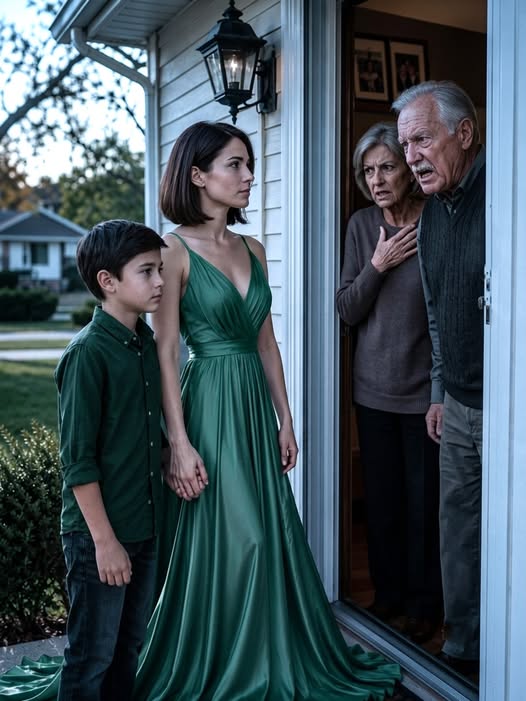
  • I paid $800,000 cash for a garden villa. My MIL moved her entire extended family in, saying, “My son earned this, so it’s my house now.” When they moved my bed to the garden shed, my husband said, “It’s fresh air, stop complaining.” I smiled brightly, “You’re right. Fresh air is great for people who are about to be homeless. Get out before the guards arrive.”

    I paid $800,000 cash for a garden villa. My MIL moved her entire extended family in, saying, “My son earned this, so it’s my house now.” When they moved my bed to the garden shed, my husband said, “It’s fresh air, stop complaining.” I smiled brightly, “You’re right. Fresh air is great for people who are about to be homeless. Get out before the guards arrive.”

    Part I: The Facade of the Thorne King

    “Fresh air is truly magnificent for those on the precipice of vagrancy,” I remarked to my husband, my voice possessing the clinical chill of the Carrara marble countertops he hadn’t contributed a single copper toward.

    I stood upon the emerald expanse of the Hudson Valley Villa, an eight-hundred-thousand-dollar monument to my own endurance. Before me, a private security detail, clad in tactical charcoal, methodically established a perimeter. The sun was dipping below the horizon of the river, painting the stone facade in hues of bruised purple and mocking gold. This house was meant to be my fortress, a silent testament to a decade of eighty-hour work weeks. Instead, it had been transfigured into a theater of betrayal, a place where my sweat was harvested by a clan of high-society parasites who mistook my silence for subservience.

    My name is Sarah Thorne. At thirty-four, I am a senior tech consultant who specialized in rebuilding failing infrastructures. I understood systems—how they functioned, how they crumbled, and how they could be exploited. For ten years, I lived like a ghost, hoarding my earnings and bypassing the hollow lures of consumerism, all for the singular goal of owning my ground. Six months ago, I achieved it. I signed the deed in a quiet law office: Sarah Thorne, Sole Proprietor.

    The rot, however, didn’t begin with a leak in the roof or a crack in the foundation. it began with the fragile, glass-spun ego of Julian Thorne.

    Julian was a man composed of mid-level marketing jargon and expensive tailoring he couldn’t afford. To his mother, Eleanor Thorne, he was a titan of industry, a scion of a legacy that had long since dried up. Julian didn’t possess the spine to tell his mother that his wife’s portfolio dwarfed his own by a factor of ten. Instead, he allowed a toxic narrative to take root—a lie that portrayed him as the conqueror of the real estate market.

    “You’ve restored the family honor, Julian,” Eleanor had purred during our housewarming gala, her eyes roving over the vaulted cedar ceilings with the cold hunger of a landlord. “A manor of this magnitude… it signals to the world that the Thorne men have reclaimed their rightful station. I’ve already informed the cousins in Ohio; we finally have a seat worthy of our name.”

    I waited for the correction. I waited for Julian to stand tall and say, “Mother, Sarah built this. Every stone belongs to her.”

    Instead, he swirled a vintage Bordeaux—a bottle I had curated—and offered a thin, self-satisfied smile. “Indeed, Mother. It’s a victory for the bloodline. We should all bask in it.”

    I felt the first tremor then—not in the earth, but in the structural integrity of my marriage.


    Part II: The Incursion of the Parasites

    “Julian, why are you fueling this delusion?” I demanded later that evening, cornering him in the foyer. The house was finally quiet, save for the hum of the climate control I paid the utility bills for. “I liquidated a decade of stock options for this property. I handled the taxes, the closing costs, and the renovation overhead. Why are you parading it around like a Thorne family inheritance?”

    Julian sighed, a weary, patronizing sound that suggested I was the one being unreasonable. “Sarah, don’t be so gauche. It’s a matter of optics. My mother is from a different era; she needs to believe her son is providing. Why are you so obsessed with ‘mine’ and ‘yours’? We’re a unit, aren’t we? Just let her have this moment. Does it truly diminish you to let her be proud of me?”

    I should have recognized the red flag for what it was—a declaration of war disguised as a plea for harmony. The “moment” Julian spoke of wasn’t a fleeting lapse in judgment; it was the opening of the gates.

    Three weeks later, I returned from a grueling consulting sprint in San Francisco. My mind was still buzzing with server architectures and contract negotiations. As I pulled into my driveway, I found it blocked by three bloated SUVs. The quietude of the Hudson Valley was shattered by the rhythmic thumping of bass and the shrill laughter of strangers.

    Eleanor’s sister, three cousins I had met exactly once, and an aunt with a penchant for Virginia Slims had moved into the guest wing. My sanctuary had been converted into a cut-rate hotel for the entitled.

    “Sarah, darling!” Eleanor called out from the living room, not bothering to rise from the Italian leather sofa. “The cousins decided to stay for the season. We found the guest rooms a bit cramped, so I took the liberty of reorganizing some of your storage. You’re always so buried in your little spreadsheets, I assumed you wouldn’t mind making space for family.”

    I felt a surge of adrenaline, the kind that precedes a system crash. I marched upstairs, my boots echoing like thunder on the mahogany floors. When I reached the master suite, I found the heavy oak doors bolted from the inside.

    When Julian finally emerged, looking disheveled and smelling of cheap gin, I pushed past him. My heart fractured at the sight. My designer wardrobe—pieces I had bought to mark professional milestones—had been shoved into black industrial trash bags and piled like refuse in the hallway. My custom-made bed was gone, replaced by a tangle of sleeping bags and the sticky fingerprints of toddlers.

    “What is the meaning of this, Julian?” I whispered, the rage beginning to crystallize into something cold and sharp.

    “Look, Sarah, the house is at capacity,” Julian said, avoiding my gaze as he balanced a tray of appetizers. “The family has had a rough fiscal year. Eleanor suggested—and after some thought, I agreed—that you’d be far more comfortable in the garden outbuilding. It’s quiet. It’s secluded. You can work on your ‘tech stuff’ without the kids bothering you. Think of it as a boutique retreat. Besides, the fresh air will do you good. Stop being so territorial; it’s incredibly unbecoming.”

    The man I thought was my partner had become a squatter with a wedding band.


    Part III: The Exile and the Encryption

    “Fresh air?” I asked, my voice dropping to a register that should have terrified him.

    “Precisely,” Julian snapped, emboldened by the presence of his clan downstairs. “Go settle in. We’re hosting a grand family banquet tonight, and Eleanor expects you to coordinate the catering arrivals. Try to be a team player for once.”

    I didn’t argue. I didn’t scream. I had learned long ago that in a conflict of power, the one who makes the most noise is usually the one losing. I picked up the heavy trash bags containing my life and walked out of the back entrance, past the infinity pool, and into the ornamental garden shed.

    It was a beautiful structure—cedar-shingled with large windows—but it was a potting shed nonetheless. As the sun set and the main house began to glow with the warmth of a party I wasn’t invited to, I sat on a small wooden bench in the dark. I could hear Eleanor’s triumphant toast echoing from my balcony.

    I pulled out my phone. My thumb hovered over the screen. I wasn’t calling my mother or a friend. I opened a secure, encrypted messaging app and reached out to my estate attorney, a man known in the city as The Liquidator.

    “IDENTIFY PROTOCOL: SCORCHED EARTH,” I typed. “INITIATE THE NUCLEAR OPTION ON THE HUDSON PROPERTY. I WANT A FAST-TRACK DISPOSAL. NO CONTINGENCIES. NO NOTIFICATIONS TO THE RESIDENTS.”

    His reply came thirty seconds later: “CONFIRMED. DOCUMENTS ARRIVING FOR DIGITAL SIGNATURE WITHIN THE HOUR.”

    I leaned back against the rough cedar wall. The Vances—my husband included—viewed me as a source of revenue, a silent engine that kept their fantasies running. They had forgotten that an engine can be turned off.

    They thought they had exiled me to the garden. They didn’t realize they had just put me in the command center.


    Part IV: The Silent Saboteur

    For the next five days, I played the role of the broken woman. I moved with a deliberate slowness, my eyes downcast, a ghost haunting the edges of my own estate. I lived in the shed. I prepped the ingredients for the meals Eleanor demanded. I even endured the indignity of Julian’s “pity,” as he occasionally brought me a lukewarm cup of coffee and told me I was “handling the transition well.”

    “See, Julian?” Eleanor remarked over a breakfast of poached eggs I had prepared. “She simply needed to understand the hierarchy. Some women are built to lead, and others are built to serve the lineage. She’s much more agreeable now that she’s breathing that garden air.”

    Julian chuckled, spreading expensive marmalade on his toast. “I told you, Mother. I have a handle on the situation.”

    They were so intoxicated by their own perceived dominance that they failed to notice the subtle changes. They didn’t notice the small, high-definition microphones hidden in the molding of the dining room. They didn’t notice that I had installed a localized jammer that prevented Julian from accessing our joint brokerage accounts.

    In the quiet of the shed, I listened to the recordings. I heard Julian bragging to his cousin about how he intended to forge my signature on a quit-claim deed to put the house in his name. I heard Eleanor discussing which of my original oil paintings she would sell to fund a winter retreat in the Maldives.

    “Once we have the house legally,” Eleanor whispered on the third night, “we can move her permanently into the shed or just buy her a small condo somewhere far away. She’s served her purpose.”

    I felt no pain hearing these words. I felt only the satisfaction of a technician identifying a bug in the code. I had already finalized the off-market sale of the villa to a private equity firm that specialized in “distressed” luxury assets. They wanted the property for a corporate retreat and were willing to pay a premium for a seventy-two-hour closing.

    On the morning of the sixth day, Eleanor announced the “Grand Thorne Rebirth Party.” She had invited the local elite, the country club set, and everyone she wanted to impress with her son’s “success.”

    “Make sure the champagne is chilled to exactly forty-five degrees, Sarah,” she commanded, not even looking at me as I swept the terrace. “This is Julian’s big night. Try not to look so… bedraggled.”

    I smiled, a thin, predatory expression they mistook for compliance. “Don’t worry, Eleanor. Tonight will be a night no one ever forgets.”


    Part V: The Grand Finale

    The evening was a masterpiece of pretension. The villa was bathed in soft, amber light. String quartets played on the lawn, and Julian stood by the wet bar, holding court. He was telling a local developer about the “struggles of historical restoration” and how he had personally sourced the reclaimed wood for the library.

    He looked every bit the master of the manor. Until the front doors—the massive, custom-built oak doors—were thrown open with a violence that silenced the room.

    I didn’t enter from the kitchen or the garden. I walked through the front entrance, flanked by my attorney and four stoic men from a private security firm. The guests turned, their whispers dying in their throats.

    “Sarah? What is the meaning of this intrusion?” Julian demanded, his face flushing a deep, embarrassed crimson. “We are entertaining guests. Go back to your quarters.”

    I walked into the center of the foyer, my heels clicking like a countdown. “Oh, Julian. I wouldn’t dream of missing this. I wanted to ensure you had a captive audience for your final performance.”

    Eleanor stepped forward, her jewelry rattling with her indignation. “Get these commoners out of this house! Julian, command your wife to behave!”

    “Your house, Eleanor?” I asked, my voice amplified by the perfect acoustics of the hall. “This house was bought with tech consulting fees and stock liquidations. It was bought by Sarah Thorne. Julian hasn’t even paid the cleaning lady in six months.”

    I turned to the crowd, many of whom were already holding up their phones to record the spectacle. “Julian once told me that ‘fresh air is great.’ And he was right. FRESH AIR IS MAGNIFICENT FOR PEOPLE WHO ARE ABOUT TO BE HOMELESS.

    The silence that followed was absolute.

    “As of six o’clock this evening,” my attorney announced, holding up the notarized transfer documents, “this property belongs to the Blackwood Equity Group. The deed is recorded. A permanent restraining order has been issued against Julian and Eleanor Thorne. You have exactly fifteen minutes to clear the premises before you are removed by force for criminal trespassing.”

    “You’re bluffing!” Julian roared, his glass shattering on the floor. “You can’t sell my family home!”

    “It was never your home, Julian,” I said, handing him a single black industrial trash bag. “It was mine. And since you liked the way I packed my clothes, I thought I’d return the favor. Yours and your mother’s belongings are already on the sidewalk. I suggest you hurry. The forecast calls for a heavy downpour.”

    The security team stepped forward, and the “Thorne King” began to crumble.


    Part VI: The Curbside Coronation

    The exit was a study in public degradation.

    Eleanor Thorne, the woman who had spent months lecturing me on “stature,” was escorted out of the villa by two guards while she screamed about her blood pressure and her “rightful place.” Her socialite friends, the very people she sought to impress, watched with a mixture of horror and predatory glee, their cameras capturing every second of her fall.

    The cousins and the aunt, seeing the writing on the wall, didn’t stand by Julian. They immediately began bickering with Eleanor, blaming her for losing their free ride. The “Thorne Unity” vanished the moment the air conditioning was turned off.

    Julian was the last to leave. He sat on the curb, perched on a suitcase that contained his vanity and very little else. He looked up as I walked toward my car, parked at the end of the driveway.

    “Sarah, please,” he stammered, his voice breaking. “We can talk about this. I’ll change. I’ll tell everyone the truth. You can’t just throw family out into the street.”

    I paused, the cool night air feeling like a benediction on my skin. “We weren’t a family, Julian. We were a host and a colony of parasites. I merely decided to stop the blood flow.”

    I didn’t wait for a response. I climbed into my car and drove away, the headlights illuminating the “Thorne King” sitting in the dirt of the Hudson Valley.

    I didn’t go to a hotel. I went to a quiet, private airport where a flight was waiting to take me to a new project in London. I had sold the villa not just for the money, but to excise the memory of their entitlement from the soil. The profit was enough to fund ten more sanctuaries.

    As the plane climbed above the clouds, I looked down at the sprawling lights of New York. I realized that the greatest luxury wasn’t the house—it was the power to walk away from it.


    Part VII: The Sanctuary Project

    Half a year has passed since the night the Thorne dynasty collapsed.

    I now reside in a penthouse in the city—a fortress of glass and steel where the security is absolute and the deed is undisputed. There is no garden shed. There are no uninvited guests. There is only the hum of a life reclaimed.

    Julian is currently sharing a cramped studio with Eleanor. He works two menial jobs to satisfy the creditors who came calling once my bank account was no longer accessible to him. Eleanor spends her days complaining to anyone who will listen, but her audience has dwindled to zero. The “Thorne King” is now a servant to the very mother whose approval he destroyed his life to gain.

    I used a portion of the villa’s sale to establish The Sanctuary Project. It’s a legal and financial foundation dedicated to helping women protect their assets from predatory partners and entitled in-laws. We provide the “Nuclear Option” for those who feel they have no way out.

    Every morning, I sit on my terrace, forty stories above the frantic pulse of the world. I drink a cup of coffee that I earned, in a space that I own, governed by rules that I wrote. On my table sits a small, resilient succulent—the only thing I took from that garden shed in the Hudson Valley. It is thriving in the thin, high air.

    “Fresh air,” I whispered to the horizon this morning as the sun began to burn through the city haze. “It really does perform miracles when you finally have the room to breathe it.”

    I am no longer a tech consultant rebuilding other people’s infrastructures. I am an architect of my own destiny. And my foundation is made of something much stronger than marble.

    If this story of reclamation and standing your ground resonated with you, please like and share this post. Your engagement helps these narratives of empowerment reach those who might be sitting in their own ‘sheds’ right now. What would you have done if you were in Sarah’s position? Join the conversation in the comments below!

  • My twin sister and I were both eight months pregnant. At her baby shower, my cruel mom demanded that I give my $18,000 baby fund to my sister, saying, “She deserves it more than you!” When I firmly refused, saying, “This is for my baby’s future!”, she called me selfish and then suddenly pu//nc/hed me hard in the stomach with full force. My water broke immediately and I blacked out from the pa/i/n, falling backwards into the pool. Dad said, “Let her float there and think about her selfishness!” My sister laughed, “Maybe now she’ll learn to share!” They all just stood there watching me drown while un/cons/cious. Ten minutes later, I woke up on the edge of the pool where a guest had pulled me out. But when I looked at my pregnant belly, I screamed in sh0ck….

    Chapter 1: The Deep End of Blood

    The water was a freezing, suffocating weight, pressing against my lungs with the density of liquid lead. My chest throbbed with a hollow, sickening ache—not merely from the brutal impact of hitting the surface, but from the raw, jagged realization of the betrayal that had sent me falling. It was a betrayal that struck with far more devastating force than my mother’s closed fist against my jaw. I drifted there, suspended in a chlorine-scented purgatory, teetering on the precarious edge of consciousness. Above the surface, muffled by the churning blue, I could hear them.

    They were laughing.

    My own flesh and blood, the people who shared my DNA, had simply turned their backs and left me to sink. I was eight months pregnant.

    When I finally clawed my way to the abrasive concrete edge of the pool ten minutes later, I was a gasping, trembling wreck. I dragged my heavy, saturated body over the lip of the tiles, vomiting pool water and bile onto the pristine patio of The Hawthorne Estate. My belly, swollen with the fragile life of my unborn child, felt unnaturally tight, foreign, and agonizingly hard. I pressed a shaking hand against the damp fabric of my maternity dress and let out a scream that tore at my vocal cords. It wasn’t just physical agony; it was an absolute, terrifying disbelief that tangled with the ice water in my veins. In that shattered, shivering moment, I knew with crystalline certainty that they had finally crossed the point of no return.

    Our family dynamic hadn’t always been a theater of outright cruelty. If I closed my eyes and dug deep enough into my earliest memories, I could recall a time when my twin sister, Evelyn, and I used to huddle under a shared, star-patterned blanket, whispering childish secrets into the late hours of the night. We had been raised in a sprawling suburban house that perpetually smelled of expensive vanilla candles and rigid, suffocating discipline. Back then, I was foolish enough to believe that a mother’s love was an unconditional birthright.

    But the fractures in our foundation had always been there—hairline cracks, subtle, corrosive, and quietly spreading beneath the polished surface. My mother, Eleanor, was a woman who trafficked in favoritism like a Wall Street broker. My father, Arthur, possessed a convenient, cowardly blindness, always finding an excuse to look away when the emotional shrapnel started flying. And Evelyn—my twin, my mirror image, my inescapable shadow—had learned before we even lost our baby teeth exactly how to exploit those parental blind spots.

    I started truly mapping the pathology of our family during our suffocating teenage years. I noticed how my academic successes were always coolly measured, dissected, and never celebrated. My straight-A report cards were merely bargaining chips used to excuse Evelyn’s failures. Eleanor’s sparse praises were always laced with arsenic, delivered through a filter of relentless comparison.

    “You did well on the SATs, Clara,” she would murmur, sipping her evening Chardonnay. “But your sister has the real creative spirit. She deserves more support. You’ve always been the sturdy, independent one.”

    I would swallow the metallic taste of bitterness rising in my throat, stretching my lips into a compliant, tight-lipped smile. Evelyn’s accompanying encouragement was nothing but a grotesque mask. I could always catch the subtle, predatory gleam in her hazel eyes—a quiet, thrilling triumph whenever our mother placed us on the scales and declared me lacking.

    Over the years, I stopped fighting. Instead, I learned to see. I learned to listen. I became a human recording device. Every minor injustice, every intercepted text message, every “borrowed” sum of money that mysteriously vanished into Evelyn’s designer wardrobe. I heard the hushed, conspiratorial plans whispered behind the heavy oak doors of my parents’ study. Every single slight was meticulously cataloged in the vast, echoing library of my mind. The acute pain of not being loved was slowly, agonizingly distilled into cold, clinical observation. Heartbreak hardened into strategy.

    I never retaliated. Not then. I was cultivating something far more dangerous than anger: I was cultivating patience.

    The baby shower was designed to be the grand culmination of everything I had silently endured. It was held on a sweltering July afternoon in the manicured backyard of the family estate. I wore my hard-won independence and my prominent, eight-month belly like a suit of armor. I had built a successful career in forensic accounting, far away from my family’s inherited wealth, and I had saved meticulously for my daughter’s future.

    But Eleanor, practiced in her cruelty and emboldened by an audience of sycophantic family friends, cornered me near the gift table. Her eyes were hard, her voice a low, venomous hiss as she demanded access to the $18,000 education fund I had locked away.

    Evelyn’s boutique is failing, Clara,” my mother demanded, her manicured fingers gripping my forearm like a vice. “She needs an emergency injection of capital. You’re going to transfer that money to her by Monday. She deserves it far more than you do. You’re just sitting at home playing mother.”

    I pulled my arm away, my spine stiffening. “No,” I said firmly, the word echoing strangely in my own ears. “That money is locked in a trust. It is for my baby’s future. Not for Evelyn’s vanity projects.”

    I saw the flash of unhinged fury in Eleanor’s eyes a split second before her arm swung. She didn’t slap me. She punched me, her knuckles colliding with terrifying force directly into my swollen stomach.

    Agony, bright and white-hot, tore through my abdomen like jagged lightning. My knees buckled as my body betrayed me entirely, shutting down in an instinctual wave of shock. I stumbled backward, my heels catching on the slippery perimeter tiles. I felt the awful sensation of gravity seizing me.

    I am falling, I thought, the world tilting violently upward. She actually hit my baby.

    My back slammed against the surface of the deep end, and the freezing water swallowed me whole.

    Chapter 2: The Undertow of Survival

    The shock of the frigid water was an assault on my already traumatized nervous system. I sank like a stone, the heavy fabric of my maternity gown wrapping around my legs like a burial shroud. Bubbles tore past my face, rushing toward the shimmering, distorted light above.

    Through the thick, rushing roar in my ears, my father’s booming voice penetrated the surface tension.

    “Leave her!” Arthur barked, his tone dripping with profound irritation rather than panic. “Let her float there and think about her goddamn selfishness. She’s throwing a tantrum to ruin your sister’s afternoon.”

    Then came Evelyn’s voice, a melodic, high-pitched giggle that mingled with the splashing sounds of the poolside fountain. “Maybe a quick dip will finally teach her how to share,” she mocked.

    They are leaving me down here, my brain registered, the thought moving sluggishly through the oxygen-starved panic. They are going to let us die.

    A primal, violent surge of adrenaline kicked in. I kicked my heavy legs, fighting the drag of the soaked fabric, my lungs burning with the desperate need for air. When I finally broke the surface, gasping violently, the patio was empty. They had gone back inside to cut the cake.

    I dragged myself over the edge, collapsing onto the rough concrete. That was when I felt it—a sudden, terrifying rush of warm fluid pooling between my legs, starkly contrasting with the freezing pool water.

    My water just broke.

    Fear, icy and absolute, paralyzed my chest. But as I lay there, convulsing with the onset of premature contractions, the terror began to mutate. The hot, frantic tears that tracked through the chlorinated water on my face were not tears of sorrow. They were the fiery, burning residue of a newly birthed rage.

    They had severely underestimated the woman they had spent a lifetime trying to diminish. They honestly believed that their casual cruelty and sudden physical force could bend my spine and force me into submission. They had completely misread the profound, terrifying quiet that had been compacting inside me for decades.

    I didn’t scream for help. I dragged my phone from my discarded purse, my fingers leaving wet, bloody streaks across the glass screen, and dialed an ambulance.

    The next forty-eight hours were a blur of sterile hospital lights, frantic nurses, and the terrifying, piercing wail of a premature infant fighting for her first breath in the Neonatal Intensive Care Unit. The moment I held my tiny, fragile daughter—Maya—in my trembling arms, hooked up to a terrifying array of monitors, my resolve solidified into titanium. She was so small, her skin translucent, but she was alive. I had survived. We had survived.

    On the third morning, as I sat exhausted in the hospital recovery chair, my phone vibrated on the plastic tray table. It was a text from Evelyn.

    Mom feels terrible about the ‘accident’ by the pool. But honestly, Clara, you provoked her. Let’s just put this ugly mess behind us. The bank details for my boutique’s account are below. Wire the 18k by noon, or we’re cutting you off completely. Dad’s lawyers are already drafting the estrangement papers.

    I stared at the glowing pixels on the screen. They felt terrible? They were threatening me with lawyers? A cold, breathless laugh scraped its way up my throat, echoing strangely in the quiet hospital room.

    They thought they held the cards. They thought they controlled the narrative. They didn’t realize they had just handed the executioner a signed confession.

    I carefully took a screenshot of the message. I uploaded it to a secure, encrypted cloud drive I had established years ago. Then, I dialed a number I had saved under a false name in my contacts. It was time to stop playing the victim.

    It was time to build a guillotine.

    Chapter 3: Architects of Ruin

    I began my campaign quietly, operating with the meticulous precision of a bomb disposal expert. I knew that the slightest vibration, the tiniest hint of retaliation, would send them scurrying behind their walls of old money and high-priced attorneys. So, I wrapped myself in the illusion of a fragile, broken woman.

    When Eleanor finally deigned to visit the hospital a week later, smelling of gin and expensive perfume, I kept my eyes downcast. I let my voice tremble when I spoke. I allowed them to bask entirely in the glow of their perceived, temporary victory. I agreed to “think about” the money. I played the cowed, traumatized daughter to absolute perfection.

    But behind the heavy, velvet curtains of my feigned submission, I was orchestrating a catastrophic collapse of their entire world.

    My first call had been to Marcus Vance, a ruthlessly efficient litigator known for dismantling corporate frauds, whom I had met through my own forensic accounting firm. I sat in his sleek, glass-walled office three weeks after Maya was born, dropping a heavy, black leather binder onto his mahogany desk.

    “Medical records from the attending emergency physician,” I listed, my voice deadpan as Marcus flipped open the cover. “Confirming blunt force trauma to the abdomen consistent with a closed-fist punch, directly causing premature placental abruption.”

    Marcus raised an eyebrow, his pen pausing. “And the witnesses?”

    “Four caterers,” I replied smoothly. “And my best friend, Sarah, who was hiding in the guest bathroom and heard the entire verbal exchange through the open window before the splash. They’ve all provided sworn, notarized affidavits. They corroborated everything, Marcus. The demand for the money, the refusal, the assault, and the laughter while I was in the water.”

    But the physical assault was only the opening act. As a forensic accountant, I knew that to truly destroy people like my parents, you had to burn down their bank accounts.

    Over the next two months, while my family thought I was paralyzed by postpartum depression and fear, I was digging through the digital dirt. I leveraged my professional access, calling in favors from colleagues who owed me, gathering statements from financial institutions without ever revealing the full scope of my investigation. Every move I made was calculated to the millimeter. Every piece of paper, every digital footprint, every anomalous wire transfer was stored carefully, like a high-caliber bullet sliding into a chamber.

    Patience. Always patience. I knew every single one of their allies. I knew the weak links in their social armor. I knew Arthur’s blind spots—specifically, his habit of signing tax documents without reading the appendices. And I knew Evelyn’s fatal flaw: her insatiable, reckless greed.

    The breakthrough came on a rainy Tuesday in October. I was cross-referencing Evelyn’s boutique tax filings—documents I had “accidentally” retained access to from a year prior when she begged me to fix her bookkeeping—with my parents’ estate ledgers.

    The numbers didn’t just clash; they screamed.

    My parents hadn’t just been asking for my $18,000 to fund a failing dress shop. Evelyn had been systematically siphoning hundreds of thousands of dollars from a charity foundation my father managed, funneling it through the boutique to cover massive, undisclosed gambling debts. And my mother, Eleanor, had discovered it six months ago. Instead of turning Evelyn in, my mother had been actively participating in the cover-up, liquidating family assets to balance the charity’s books before the annual board audit.

    My $18,000 wasn’t an investment. It was an act of absolute desperation to plug a leaking dam that was about to burst and send them all to federal prison.

    I sat back in my desk chair, the blue light of the monitor reflecting in my eyes. The trap was fully constructed. The bait had been taken. Now, I just needed the perfect stage to drop the anvil.

    An hour later, my phone chimed. It was an email from Eleanor.

    Clara. The family is gathering at The Hawthorne Estate this Saturday for a formal reconciliation dinner. Aunt Margaret and Uncle Charles will be there, along with the foundation board members. It’s time to stop this silly silence. Come, bring the baby, and bring your checkbook. We are done waiting.

    I smiled. It was a cold, terrifying expression that didn’t reach my eyes. I packed the thick, damning manila envelopes into my leather satchel. I looked at little Maya, sleeping peacefully in her crib, completely unaware of the war her mother was about to wage.

    “We’re going to a dinner party, little one,” I whispered into the quiet room.

    It was time to serve the main course.

    Chapter 4: The Banquet of Consequences

    The confrontation arrived with the sudden, breathtaking violence of a summer hurricane, though I ensured the atmosphere in the room remained devastatingly calm.

    The grand dining room at The Hawthorne Estate was suffocatingly opulent. Crystal chandeliers cast a warm, golden glow over the long mahogany table. Silverware clinked against fine bone china. My mother, Eleanor, sat at the head of the table, her face a mask of smug, impenetrable satisfaction. She believed she had finally starved me out. Evelyn lounged to her right, preening in her assumed dominance, wearing a diamond necklace I knew for a fact was purchased with embezzled charity funds. My father, Arthur, sat indifferent and confident, swirling an expensive scotch, blissfully unaware of the financial explosive strapped to the underside of his life.

    The extended family—Aunt Margaret, Uncle Charles, and three key members of my father’s charity board—were interspersed among them, brought in by my mother as an audience to witness my final surrender.

    I arrived precisely twenty minutes late.

    I didn’t bring a casserole. I didn’t bring my checkbook. I walked through the heavy double doors carrying nothing but my black leather purse, my sleeping daughter strapped securely to my chest in a baby carrier, and the absolute, unvarnished truth.

    Conversation ground to a halt as my heels clicked against the hardwood floor.

    “Clara,” Eleanor purred, though her eyes were flat and reptilian. “You finally decided to join us. And I assume you’ve brought the transfer confirmation?”

    “I brought something much more valuable,” I replied. My voice was quiet—so controlled and devoid of inflection that it forced everyone in the room to lean forward to hear me. It carried the heavy, restrained fury of a lifetime of subjugation.

    I stepped up to the center of the table. Slowly, deliberately, I unlatched my purse. I pulled out four thick, bound folders and slid them across the polished mahogany. One stopped directly in front of Eleanor. One in front of Arthur. One slid to Evelyn, and the last, the thickest of all, rested in front of the charity board’s chief auditor.

    I watched with the detached fascination of a scientist as their expressions began to shift.

    “What is this nonsense?” Arthur snapped, aggressively flipping open the cover of his folder.

    “That,” I said, my tone eerily pleasant, “is a comprehensive, sixty-page forensic audit of the Hawthorne Charitable Foundation. Complete with signed bank affidavits, IP tracking logs, and a direct paper trail showing exactly how Evelyn has embezzled four hundred and twenty thousand dollars over the last eighteen months.”

    Evelyn’s smug confidence evaporated in real-time. The color violently drained from her face, leaving her looking like a wax corpse. She dropped her fork; it clattered loudly against her plate. “You… you can’t…” she stammered, her eyes darting frantically around the room.

    “And,” I continued, turning my gaze to my mother, whose self-satisfied smile had completely faltered, replaced by a rictus of sheer panic, “it includes the emails and text messages proving that Eleanor knowingly covered up the fraud, liquidated restricted family trust assets to hide it, and attempted to extort eighteen thousand dollars from her pregnant daughter to make a desperate margin call.”

    The silence in the room was absolute. It was the kind of heavy, suffocating silence that precedes an execution. The board members were rapidly flipping through the documents, their faces turning from confusion to profound, unadulterated horror.

    “Do you see this?” I asked softly, sweeping my gaze across my parents and my sister. Every demand they had ever made, every lie they had ever spun, every calculated attack on my self-worth had culminated in this exact moment.

    Eleanor tried to interrupt. She scrambled to her feet, her chair scraping horribly against the floor. “Clara, this is a misunderstanding! You are hysterical! You’re trying to ruin your sister out of jealousy—”

    “I also included the medical records and the police report I filed an hour ago regarding the assault at the baby shower,” I cut her off, my voice slicing through her pathetic charm like a scalpel. “Aggravated battery resulting in premature labor. The warrants for your arrest, Mother, have already been signed by a judge.”

    They tried to justify. They tried to plead. Arthur stood up, his face purple with rage, but before he could take a step toward me, Uncle Charles—a retired state prosecutor—held up a shaking hand, his eyes locked on the documents.

    “Arthur, sit down,” Charles commanded, his voice laced with disgust. “If even a tenth of this is true, you are all going to federal prison.”

    The room had fundamentally changed. The audience my mother had assembled to witness my humiliation was now sitting in stunned, silent judgment as their empire of manipulation and fraud burned to ash before their eyes. Every single step they had taken to control me, to diminish me, to steal from me, had miraculously transformed into the exact evidence that destroyed them.

    I didn’t shout. I didn’t cry. I didn’t offer a single word of pleading or negotiation. I merely stood there, holding my breathing, sleeping child against my heart, and watched as the terrifying reality of their utter failure washed over them. I had taken their cruelty and fed it into a crucible, transforming my pain into power, and their betrayal into an inescapable strategy. They had spent a lifetime teaching me how to calculate cruelty.

    Tonight, they learned that I had perfected it.

    “You little bitch,” Evelyn whispered, tears of terror finally spilling over her cheeks. “You planned all of this.”

    I offered her a cold, empty smile. I turned on my heel, my dress swishing against the floorboards. But before I could reach the heavy oak doors to exit the dining room forever, the heavy, metallic sound of the front estate doors being breached echoed down the grand hallway. Heavy boots marched against the marble foyer. The flashing red and blue lights of three police cruisers painted the dining room windows in chaotic, violent colors.

    They had arrived right on schedule.

    Chapter 5: The Nursery Window

    Months later, the dust had finally settled over the crater that used to be my family.

    I stood in the quiet, dim warmth of Maya’s nursery, holding my baby girl in my arms. She was no longer a fragile, translucent preemie hooked to wires; she was a vibrant, heavy, incredibly warm little life that felt exactly like the first ray of sunlight breaking through after a catastrophic, earth-shattering storm.

    I gently rocked her, listening to her soft, rhythmic breathing. I had survived the deep end. But more importantly, I had conquered it.

    The family that had gleefully tried to drown me in a pool of fear, humiliation, and icy water now faced the crushing, inescapable consequences of every malicious act they had committed. The fallout had been absolute and merciless.

    Eleanor was serving a five-year sentence for aggravated assault and accessory to corporate fraud. Her country club memberships, her manicured lawns, her smug superiority—all traded for a concrete cell and a number on a jumpsuit. Evelyn, the golden child, the master manipulator, had crumbled under the threat of maximum time. She took a plea deal, turning state’s evidence against our father’s foundation, earning herself a three-year sentence in a minimum-security facility and a lifetime ban from ever holding a corporate officer position.

    And Arthur? The father who had told me to float there and think about my selfishness? He was bankrupted by the legal fees and the massive restitution he was forced to pay to the charity he had allowed his daughter to plunder. The Hawthorne Estate had been seized and auctioned off by the federal government. He was living in a rented, one-bedroom apartment on the outskirts of the city, utterly ruined by his own willful blindness.

    Justice hadn’t been loud or dramatic in the end. It had been quiet. It had been precise. And it had been absolute.

    I stepped closer to the nursery window, looking past the sheer curtains and into the pale, lavender light of the early morning. I looked at my own reflection superimposed over the waking city. The woman looking back at me was not the frightened, accommodating girl who used to swallow her bitterness to keep the peace. She was not the desperate, suffocating woman drowning in the deep end.

    I saw a strength in my own eyes that I hadn’t known I possessed until the water closed over my head. I saw a jagged, beautiful resilience born entirely from betrayal.

    As I brushed a soft kiss against Maya’s forehead, I knew, with absolute and final certainty, that nothing in this world—not closed fists, not venomous words, not the crushing neglect of the people who were supposed to love me—could ever pull me under again.

    They had spent my entire life teaching me the bitter cost of weakness. I had paid that tuition in full, using the currency of vigilance, silence, and excruciating patience. And now, the price they had been forced to pay for their cruelty was far, far greater than they could ever afford.

    I didn’t forgive them. Some wounds are not meant to be healed with grace; they are meant to be cauterized with fire. I didn’t forget a single second of it. Instead, I used their weight to anchor myself, pushed off the bottom, and rose to the surface.

    I built a new life, a new legacy, safe and untouchable. And they were left standing in the ruins of their own making, powerless, voiceless, and utterly destroyed, forced to watch as I finally learned how to breathe.

  • My 8-Year-Old Daughter Texted Me, “Dad, Come to My Room. Just You.” What She Whispered Next Changed Our Family Forever

    There are moments in life that divide everything into two parts: before and after.

    For me, it happened on an ordinary Saturday morning.

    The house smelled of fresh coffee. My wife was downstairs humming as she ironed a tiny white recital dress. My eight-year-old daughter, Chloe, was supposed to be getting ready for her spring piano recital.

    It should have been one of those family memories grandparents love to frame in photographs.

    Instead, it became the day I questioned everything I thought I knew.

    While buttoning my shirt, my phone buzzed.

    It was a text from Chloe.

    “Dad, can you help me with my dress zipper? Come to my room. Just you. Close the door.”

    At first glance, it sounded innocent.

    But something didn’t feel right.

    Children have a way of writing that reflects who they are. Chloe usually filled every message with hearts, smiley faces, and words she hadn’t quite learned to spell.

    This message was different.

    Short.

    Careful.

    Almost… rehearsed.

    Without realizing why, my heart began to race.

    A Father’s Instinct

    As I walked down the hallway, my wife called from downstairs.

    “Everything okay up there?”

    “Just helping Chloe,” I answered.

    Even to my own ears, my voice sounded uneasy.

    When I opened my daughter’s bedroom door, I immediately knew something was wrong.

    The recital dress still hung over the chair.

    She wasn’t getting dressed.

    She stood quietly by the window, holding her phone with both hands.

    Her little face looked pale.

    Children usually run toward the people they trust.

    That morning, she looked like she was waiting to find out if she still could.

    “I Lied About the Zipper”

    “Need help?” I asked with a smile I didn’t really feel.

    She slowly shook her head.

    “I lied.”

    Those three words took all the air out of the room.

    “I needed you to come by yourself.”

    Parents know that certain sentences never leave you.

    That was one of them.

    Then she whispered,

    “Dad… I need to show you something.”

    Every Parent’s Worst Fear

    She turned around.

    Slowly lifted the back of her shirt.

    My heart stopped.

    Across her back were several fading bruises.

    Some were older.

    Others looked much newer.

    In that instant, anger rushed through every part of me.

    But then I looked into my daughter’s frightened eyes.

    She wasn’t looking for revenge.

    She wasn’t asking for punishment.

    She was asking one silent question every child deserves an answer to.

    Will you believe me?

    So I swallowed my anger.

    Knelt beside her.

    And gently asked,

    “How long?”

    A tear rolled down her cheek.

    “Since February.”

    Then, almost too quietly to hear, she spoke a name.

    One I never expected.

    The Weight of Trust

    Whether you’re a parent, grandparent, or simply someone who has loved a child deeply, you understand something that cannot be explained.

    Children place enormous trust in the adults around them.

    When they finally gather enough courage to speak about something that has frightened them, they are placing that trust directly into your hands.

    What happens next can shape the rest of their lives.

    Sometimes the hardest part isn’t hearing painful words.

    It’s accepting that they might be true.

    The Lesson Every Family Should Remember

    As we grow older, many of us learn that appearances can be deceiving.

    Good reputations.

    Successful careers.

    Friendly smiles.

    Years of respect.

    None of these should prevent us from listening carefully when a child says they are afraid.

    Children deserve to be heard.

    They deserve to be protected.

    And above all, they deserve adults who choose courage over comfort.

    Because sometimes love isn’t measured by how quickly we find answers.

    It’s measured by whether we’re willing to listen when the truth is difficult.

  • The Key That Stopped an Execution

    The execution chamber wasn’t just quiet—it felt suffocating, like the moment before a storm breaks.

    Uncle Ray stood rigid, but the mask he had worn for years was finally cracking. The confident man who once played the grieving brother now looked drained, his skin dull, his composure slipping.

    “The boy is confused,” Ray snapped, voice shaking. “He’s traumatized. He doesn’t know what he’s saying.”

    But the Warden didn’t even look at him.

    He was staring at the object in his hand—a rusted skeleton key.

    “Hold him,” the Warden ordered.

    Guards moved instantly.

    Ray struggled. “You can’t do this! This is a legal execution!”

    “I have a witness,” the Warden replied calmly. “And now, I have reason to doubt everything.”

    The execution didn’t happen that night.

    It stopped—suspended in a moment that changed everything.

    My mother was taken back to a cell. Not condemned anymore… not free either. Just waiting.

    Matthew and I were brought into a small office.

    He sat there, legs barely touching the floor, hands clenched tight. He looked like a child—but he had carried a secret heavier than most adults could survive.

    “Why didn’t you tell anyone?” I asked him quietly.

    His voice broke.

    “He said he’d hurt you. He said if I talked… you’d disappear too.”

    The room went cold.

    For six years, we had lived with a killer.

    And I never saw it.

    Hours later, they found it.

    The wardrobe in our old house.

    The one no one ever questioned.

    Hidden behind a false panel was everything—documents, a photograph, and a ledger written in my father’s careful handwriting.

    Proof.

    My father hadn’t died by accident.

    He had discovered something.

    Money. Fraud. Names that didn’t belong on paper.

    And one of those names…

    was Ray.

    The last entry in the ledger was dated the night my father died.

    He had written about Ray coming over. About threats disguised as offers. About fear he couldn’t ignore.

    And one line stayed burned into my memory:

    “If anything happens to me… it was him.”

    Ray didn’t just kill him.

    He planned it.

    He knew my mother’s weaknesses—her sleepwalking, her mental health struggles—and turned them into weapons.

    He didn’t just commit murder.

    He built a story the world was ready to believe.

    And we all believed it.

    Even me.

    I saw him one last time before they took him away.

    He sat in a gray room, smaller than I remembered, but still carrying that same bitterness.

    “Why?” I asked.

    He didn’t hesitate.

    “Because your father was in the way.”

    No regret. No shame.

    Just resentment.

    “You all needed someone to blame,” he added. “I just gave you one.”

    I felt anger rise—but it didn’t consume me.

    Because for the first time, I saw him clearly.

    Not as family.

    Not as authority.

    Just as what he really was.

    My mother walked out of prison three days later.

    No cameras. No applause.

    Just silence… and sunlight.

    Matthew ran to her first.

    I followed slower.

    I didn’t know if she could forgive me.

    For doubting her.

    For staying silent.

    For believing the lie.

    “Mom…” I said.

    She looked at me… and reached out anyway.

    “We’re here now,” she whispered.

    And somehow, that was enough to begin again.

    We left that life behind.

    The house. The memories. The shadows.

    Matthew still wakes up some nights, but he’s not afraid to speak anymore.

    My mother is still healing, piece by piece.

    And me?

    I keep the ledger.

    Not as a reminder of what we lost—

    but of what the truth can still save.

    Because lies can survive for years.

    But truth…

    only needs one moment to break everything open.

  • After I gave birth to our triplets, my husband walked into my hospital room with his mistress — who was proudly carrying a Birkin bag.

    By morning, the pain had settled into my bones.

    Not the sharp kind anymore. Not the kind that made my breath catch every time I shifted against the hospital sheets. This was colder. Deeper. A quiet ache that lived behind my ribs and watched everything with clear eyes.

    The boys were sleeping.

    Three tiny faces. Three soft mouths. Three futures Adrian had tried to use as leverage before they had even learned how to cry properly.

    I named them before Adrian could object.

    Leo. Noah. Samuel.

    Their names felt like anchors. Like promises.

    My mother arrived just after sunrise.

    She did not rush into the room with tears. She did not collapse over me or curse Adrian’s name. She walked in wearing a cream wool coat, pearl earrings, and the same expression she used when entering boardrooms full of men who thought she was decorative.

    Controlled.

    Immaculate.

    Dangerous.

    Behind her came my father.

    Jonathan Ashford was not a loud man. He had never needed to be. In my childhood, I had watched bankers, judges, ambassadors, and ministers lower their voices when he entered a room. Not out of fear exactly.

    Out of recognition.

    Some people carried power like a weapon.

    My father carried it like weather.

    He approached the bassinets first.

    For one moment, his face softened completely.

    “My grandsons,” he murmured.

    My mother touched my hair gently. “Evelyn.”

    That one word almost broke me.

    I swallowed the sob that rose in my throat. “He came here with her.”

    “I know,” she said.

    “He tried to make me sign everything.”

    “I know.”

    “He said no one would want me now.”

    My mother’s fingers stilled in my hair.

    My father turned slowly from the bassinets.

    The room changed.

    It was subtle, but I felt it. The air tightened. Even the morning light seemed to pale against the windows.

    “What exactly did he bring you?” my father asked.

    I pointed to the folder on the bedside table.

    He picked it up and read through the pages in silence.

    My mother stood beside him, reading over his shoulder. Neither of them reacted at first. Then my mother gave a small laugh.

    It was not amused.

    It was almost pitying.

    “Oh, Adrian,” she whispered. “You foolish little man.”

    I wiped my eyes. “He said the house is already being transferred to Celeste.”

    My father looked at me over the papers.

    “Did you sign anything?”

    “No.”

    “Good.”

    My mother picked up the property waiver. “This is sloppy.”

    “Sloppy?” I repeated.

    “Insultingly so.” She turned a page. “He assumed fear would do the legal work for him.”

    My father took out his phone and made one call.

    That was all.

    He said, “Mara, activate the family office team. Full review. Adrian Vale. Celeste Monroe. Vale Capital Holdings. Personal accounts. Property transfers. Hospital surveillance. I want everything by noon.”

    Then he hung up.

    I stared at him.

    “Dad.”

    He looked at me gently. “Yes?”

    “What are you going to do?”

    He sat beside my bed, careful not to disturb the IV line. “First, we are going to protect you and the children. Second, we are going to find out exactly how stupid your husband has been.”

    “And third?” I asked.

    My mother smiled.

    “Third,” she said, “we let him find out who he married.”

    I had spent five years hiding the Ashford name.

    Not because I was ashamed of it.

    Because I wanted one thing in my life that had not been purchased, arranged, negotiated, or protected by my parents’ shadow. When I met Adrian, I told him my parents were retired investors. Technically true. I used my grandmother’s maiden name professionally. I signed my prenup through a private attorney. I let him believe I was comfortable, but not powerful.

    I wanted him to love Evelyn.

    Not the daughter of Jonathan and Vivienne Ashford.

    Adrian loved what he thought he could control.

    By noon, my hospital room had turned into a quiet command center.

    A private nurse appeared. Then a security consultant. Then a woman named Mara Devereux, my father’s chief legal strategist, who had silver hair, a black suit, and the expression of a blade.

    She placed a tablet on my lap.

    “Mrs. Vale,” she said.

    “Evelyn,” I corrected softly.

    “Evelyn.” She nodded. “We have preliminary findings.”

    My mother leaned against the windowsill. My father stood near the bassinets.

    Mara tapped the screen.

    “Your marital home was transferred yesterday morning to an LLC created twelve days ago. The LLC is controlled by Celeste Monroe through a nominee director.”

    I felt my stomach drop. “So he really did it.”

    “He attempted to.” Mara’s mouth barely moved. “The property cannot legally be transferred without your consent. The deed was filed using a notarized spousal waiver.”

    “I never signed that.”

    “We know.”

    The room went still.

    Mara slid the tablet toward me. On the screen was a document bearing my name.

    My signature.

    Except it wasn’t mine.

    Not exactly.

    It had the shape of mine, the rhythm, the long loop on the E. But it was too careful. Too clean. Whoever copied it had studied the form, not the hand.

    “He forged it,” I whispered.

    My father’s voice was calm. “That is one word for it.”

    Mara continued. “The notary is employed by a law firm that has done work for Adrian’s company. We are confirming whether the notary witnessed the signature or simply stamped what was placed in front of him.”

    My mother folded her arms. “And the company?”

    Mara’s eyes sharpened. “That is where it becomes interesting.”

    I looked up.

    “Vale Capital Holdings has been under financial stress for at least eighteen months,” Mara said. “Adrian has used marital assets to secure business lines of credit. Some of those assets were not his to pledge.”

    My father’s face did not change.

    But I knew him well enough to see it.

    Anger had arrived. It had merely chosen a chair.

    “Which assets?” he asked.

    Mara looked at him. “The Lakeshore property. Two brokerage accounts. And one trust distribution belonging solely to Evelyn.”

    The room tilted.

    “My trust?” I said.

    My mother crossed to my bed. “He accessed it?”

    “He tried to classify part of it as joint liquidity through a bank officer at Meridian Private,” Mara said. “The attempt appears to have been rejected initially. Then approved three weeks later by a different officer.”

    “My God,” I breathed.

    Mara did not soften. “There is more.”

    Of course there was.

    Cruel men rarely stopped at one crime when the first one worked.

    “Celeste Monroe is not merely his mistress,” Mara said. “She is listed as a consultant for Vale Capital. Over the last year, she received payments totaling approximately eight hundred and seventy thousand dollars.”

    My mother’s eyes narrowed. “For what services?”

    “Brand development. Investor relations. Executive lifestyle advisory.”

    My father laughed once.

    It was the coldest sound I had ever heard from him.

    “She advised him into insolvency,” he said.

    Mara tapped the tablet again. A photograph appeared.

    Celeste stepping out of a boutique with shopping bags. Adrian’s hand at her back. That black Birkin on her arm.

    “The bag?” I asked before I could stop myself.

    Mara glanced at the image. “Purchased three days ago using Vale Capital’s corporate card.”

    I closed my eyes.

    I had been lying in a hospital bed, bringing his sons into the world, while he bought his mistress a trophy with stolen money.

    My mother’s hand found mine.

    “Evelyn,” she said quietly. “Look at me.”

    I opened my eyes.

    “You are not weak because this hurt you,” she said. “You are only dangerous because you survived it.”

    The first petition was filed before I was discharged.

    Emergency injunction.

    Freeze on property transfers.

    Freeze on accounts connected to marital assets.

    Temporary custody order.

    Restraining order preventing Adrian from removing the children from my care or entering the hospital wing.

    Mara moved like a storm in heels.

    By evening, Adrian called me seventeen times.

    I did not answer.

    Then the messages began.

    Evelyn, stop being childish.

    You don’t understand what you’re doing.

    Call me now.

    Your parents can’t help you.

    You’re making this ugly.

    Then, finally:

    You’ll regret this.

    I stared at that last message for a long time.

    My father was standing beside the window.

    “May I?” he asked.

    I handed him the phone.

    He read it. His face remained mild.

    Then he gave it to Mara.

    She smiled.

    “Excellent,” she said. “Threats are useful.”

    The next morning, I left the hospital through a private exit.

    Not because I was hiding.

    Because the press had begun gathering near the front entrance.

    Adrian was not famous in the way actors were famous, but in our city, money had its own gossip columns. Vale Capital sponsored galas, museums, charity auctions, and political dinners. Adrian had cultivated an image for years: brilliant founder, devoted husband, self-made visionary.

    A man like that did not expect his wife to bleed publicly.

    He expected silence.

    My parents brought me and the boys to their estate outside the city.

    Ashford House had once belonged to my grandfather, then my mother restored it after the fire that destroyed the east wing when I was twelve. It stood behind iron gates and miles of old trees, a pale stone mansion with ivy crawling over the library windows and security cameras hidden beneath copper lanterns.

    As we passed through the gates, Noah started crying.

    Then Leo.

    Then Samuel.

    All three at once.

    My mother looked back from the passenger seat. “They have opinions.”

    For the first time in days, I laughed.

    It came out broken, but real.

    Inside, the nursery had already been prepared.

    Three walnut cribs. Three embroidered blankets. A rocking chair by the window. Fresh flowers on the dresser. A silver frame with no photo yet.

    I stood in the doorway, stunned.

    My mother adjusted one tiny blanket with unnecessary precision. “Your father ordered six different crib models before breakfast. This was the least ridiculous.”

    My father, holding Samuel like fragile glass, said, “The German one had better engineering.”

    “It looked like a laboratory incubator,” my mother replied.

    “It had excellent safety ratings.”

    “It had no soul, Jonathan.”

    Samuel yawned.

    My father looked down at him. “He agrees with me.”

    I laughed again, and this time I cried too.

    The next two days passed in fragments.

    Feeding schedules. Pain medication. Legal calls. Soft baby sounds. My mother brushing my hair like I was a child again. My father standing in the hallway at midnight, rocking Noah with a tenderness that made my chest ache.

    Then karma arrived.

    Not as thunder.

    As paperwork.

    At 9:00 a.m. on Thursday, Adrian was served outside Vale Capital headquarters.

    At 9:07, Celeste was served in the lobby of the hotel where she had been staying.

    At 9:15, the emergency injunction froze every account linked to the fraudulent property transfer.

    At 9:40, Meridian Private Bank suspended the officer who had approved the trust-related transaction.

    At 10:05, the notary’s commission was placed under review.

    At 10:30, two members of Adrian’s board requested an immediate audit.

    At 11:12, the first article appeared online.

    VALE CAPITAL CEO ACCUSED OF FORGING WIFE’S SIGNATURE DAYS AFTER TRIPLETS’ BIRTH

    By noon, the story was everywhere.

    I did not watch the coverage at first.

    I was nursing Leo while Noah slept against my thigh and Samuel hiccupped in the bassinet. My body still felt like it belonged to someone else. My hands shook from exhaustion. The world outside the nursery seemed far away and vicious.

    Then my phone buzzed.

    A message from an unknown number.

    You think you won.

    I stared at it.

    Another message appeared.

    You have no idea what I know about your family.

    I showed it to Mara, who had taken over my father’s study with three associates and enough documents to bury a dynasty.

    She read it once.

    “Adrian?” I asked.

    “No,” she said.

    “How can you tell?”

    “Adrian threatens like a man kicking furniture. This is different.”

    The phone buzzed again.

    Ask your father about Black Harbor.

    Mara went completely still.

    I looked at her. “What is Black Harbor?”

    For the first time since I had met her, Mara did not answer immediately.

    She placed the phone facedown on the desk.

    “I need to speak with your father.”

    My blood chilled.

    “Mara.”

    She looked at me then, and behind her controlled expression I saw something I did not like.

    Concern.

    “Evelyn,” she said, “there may be more happening here than Adrian’s affair.”

    My father entered five minutes later.

    My mother came with him.

    Mara handed him the phone.

    He read the message.

    Nothing changed in his face.

    That was how I knew it was bad.

    “What is Black Harbor?” I asked.

    My mother looked at my father.

    He looked at Mara.

    No one looked at me.

    I stood slowly, still weak enough that the room swayed. “I just gave birth. My husband forged my signature, stole from me, humiliated me, and tried to take my children’s home. Do not stand in front of me and decide I’m too fragile for the truth.”

    My father’s expression softened.

    “You are not fragile,” he said.

    “Then answer me.”

    He walked to the fireplace and rested one hand on the mantel.

    “Black Harbor was an investment vehicle,” he said. “Years ago.”

    “How many years?”

    “Twenty-seven.”

    Before I was born.

    “What kind of investment vehicle?”

    My mother spoke this time. “The kind wealthy families used when they wanted distance between their names and their money.”

    I looked between them. “That sounds illegal.”

    “Not necessarily,” my father said.

    “Dad.”

    He exhaled slowly. “Some of the people involved made it illegal.”

    The room seemed to narrow.

    “What does that have to do with Adrian?”

    “We don’t know yet,” Mara said. “But the phrase is not public. Very few people would know to use it.”

    My mother’s mouth tightened. “Celeste might.”

    I turned to her. “Why would Celeste know anything about something from twenty-seven years ago?”

    My mother did not answer.

    My father did.

    “Because Celeste Monroe is not her real name.”

    Silence.

    For a moment, I heard nothing except the faint ticking of the clock on the wall.

    “What?” I whispered.

    Mara opened a file and placed a photograph on the desk.

    It showed a younger woman standing on a dock beside a man in a white linen suit. The picture was grainy, old, probably taken from a newspaper clipping. The woman had dark hair, sharp cheekbones, and a smile like a knife wrapped in silk.

    I knew her face.

    Not exactly.

    But enough.

    Celeste had the same eyes.

    “The woman is Margot Ellery,” Mara said. “Known associate of several investors tied to Black Harbor. She disappeared after the fund collapsed.”

    I stared at the photograph. “And Celeste?”

    “Born Celine Ellery,” Mara said. “Margot’s daughter.”

    The floor disappeared beneath me.

    Adrian’s mistress was not random.

    The Birkin. The affair. The timing. The humiliation. The house.

    None of it had been random.

    My mother’s voice was low. “She came looking for something.”

    “What?”

    My father turned from the fireplace.

    “Revenge,” he said.

    I should have sat down.

    I did not.

    Maybe motherhood had changed the structure of my fear. Maybe exhaustion had burned away the softer parts. Or maybe betrayal, once complete enough, became clarifying.

    “Against you?” I asked.

    “Yes.”

    “And she used Adrian to get to me.”

    “It appears so.”

    I laughed, but there was no humor in it. “So my marriage was a doorway.”

    My mother closed her eyes briefly.

    My father looked older in that moment than I had ever seen him.

    “I am sorry,” he said.

    Those three words did what Adrian’s cruelty had not.

    They split me.

    I gripped the edge of the desk. “Did you know? When I married him, did you know there was any connection?”

    “No,” my father said immediately. “Adrian Vale was vetted. Thoroughly. Celeste was not in his life then, at least not where we could see.”

    “She appeared eighteen months ago,” Mara said. “Right when Vale Capital began struggling.”

    My mother’s gaze sharpened. “She found his weakness.”

    “What weakness?” I asked.

    “All of them,” she said.

    Adrian had always wanted to be richer than he was.

    Not poor. Never poor. But not untouchable. Not old money. Not the kind of wealth that existed behind gates and foundations and private family offices. He hated depending on investors. Hated being denied. Hated entering rooms where my father was treated with quiet reverence and he was treated as ambitious.

    Full – After I gave birth to our triplets, my husband walked into my hospital room with his mistress — who was proudly carrying a Birkin bag.

    Celeste must have seen that hunger immediately.

    She fed it.

    Then she sharpened it.

    The first time Adrian finally called from a number I did not recognize, I answered.

    Mara signaled to record.

    “Evelyn,” he said.

    His voice was different.

    Not smug now.

    Frayed.

    “What do you want, Adrian?”

    “You need to call off your father.”

    “No.”

    “You don’t understand what you’re doing.”

    “You said that already.”

    “This isn’t just divorce anymore.”

    “No,” I said. “It became fraud when you forged my signature.”

    A pause.

    Then his voice lowered. “I didn’t forge anything.”

    “Then your mistress did.”

    “Don’t call her that.”

    I almost smiled. “That is the part that bothers you?”

    He breathed hard into the phone. “You have no idea what kind of people your parents are.”

    I looked through the glass doors of the study.

    My father stood in the hall, holding Samuel against his shoulder. Samuel’s tiny fist was curled against his suit jacket.

    “I know exactly who they are,” I said.

    “No,” Adrian snapped. “You know what they let you know.”

    Mara leaned closer, listening.

    “What did Celeste tell you?” I asked.

    His silence answered too much.

    I continued, “Did she tell you she loved you? That you deserved more? That my family looked down on you? That she could help you take what should have been yours?”

    “Shut up.”

    “She played you.”

    “She gave me the truth.”

    “No,” I said quietly. “She gave you a mirror, and you fell in love with it.”

    His breath hitched.

    For one second, I thought I had reached the part of him that used to bring me coffee in bed. The part that cried when our first pregnancy ended at ten weeks. The part that kissed my forehead and said we would try again when I was ready.

    Then he said, “Those children are still mine.”

    Every trace of softness vanished.

    “My sons,” I said, “are not bargaining chips.”

    “They’re heirs, Evelyn.”

    I froze.

    Mara’s eyes sharpened.

    “What did you say?”

    Adrian seemed to realize his mistake. “I mean they’re my sons.”

    “No. You said heirs.”

    He hung up.

    For a while, no one spoke.

    Then my mother said, “He knows about the Ashford succession structure.”

    My father handed Samuel to the nurse and entered the study.

    “That information is sealed,” he said.

    Mara was already typing. “Celeste again.”

    I wrapped my arms around myself. “What succession structure?”

    My parents looked at me.

    I almost screamed.

    “No more secrets,” I said. “Not one.”

    My father nodded once.

    Then he told me.

    Ashford Global was not merely my father’s company. It was a privately held empire built through shipping, land, infrastructure, and finance. Generations old. Layered through trusts so complex they had their own legal ecosystem. My parents had always kept me distant from the machinery because I hated it, and because after my brother died, they thought they were protecting me.

    But protection, I was learning, could resemble a locked room.

    My sons changed everything.

    Under the Ashford family trust, direct descendants triggered a restructuring clause. Upon the birth of my first child, certain shares moved into a protected generational trust. Upon the birth of male heirs, an old clause from my grandfather’s era activated additional voting rights unless amended within thirty days.

    “Male heirs?” I repeated, disgusted despite everything.

    “My father wrote it,” my dad said. “I have spent years trying to dismantle parts of it.”

    “But it still exists.”

    “Yes.”

    “And because I had sons…”

    “They inherited future control rights,” Mara said. “Not immediate access. Not money Adrian can touch. But influence. Enormous influence.”

    My skin crawled.

    “So when Adrian said my lawyers will bury you…” I whispered.

    “He didn’t just want custody to punish you,” my mother said. “He wanted proximity to the trust.”

    The room spun again.

    Adrian had looked at our sleeping newborns and seen keys.

    Not sons.

    Keys.

    I pressed my palm against my mouth.

    My mother moved toward me, but I stepped back.

    “I need air.”

    I walked out before anyone could stop me.

    The hallway blurred. The stairs blurred. The winter garden blurred. I made it to the glass conservatory and stood among orange trees heavy with fruit, breathing like someone who had run miles.

    A minute later, my father appeared at the doorway.

    He did not come in immediately.

    “May I?” he asked.

    I nodded.

    He approached slowly.

    “When your brother died,” he said, “I made decisions out of grief. I thought if I kept you away from the inheritance, the machinery, the enemies that gather around money, then you could have a life.”

    I looked at him. “I did have a life.”

    “I know.”

    “And it was invaded anyway.”

    His face tightened. “Yes.”

    I turned toward the glass. Outside, the lawns rolled silver beneath winter light.

    “Did Adrian ever love me?”

    My father did not answer quickly.

    That was kindness.

    “I think,” he said, “Adrian loved how he felt beside you until resentment became larger than love.”

    A tear slipped down my cheek.

    “I hate him,” I whispered.

    My father stood beside me. “Good.”

    I looked at him, startled.

    He gave the faintest smile. “For now. Hate has energy. Use it carefully.”

    By evening, the second article dropped.

    Sources close to Vale Capital confirmed an internal investigation into alleged misuse of corporate funds, unauthorized asset pledges, and suspicious payments to consultant Celeste Monroe.

    By midnight, investors were demanding answers.

    By morning, Adrian’s board suspended him pending review.

    Celeste vanished.

    Not metaphorically.

    Actually vanished.

    She checked out of the hotel at 3:18 a.m., left through the service entrance wearing sunglasses and a scarf, and entered a black SUV registered to a shell company.

    But she left something behind.

    A gift.

    It arrived at Ashford House in a white box tied with black ribbon.

    Security intercepted it before it reached the main door. The bomb squad was called. Nothing explosive was found. No powder. No wires. No poison.

    Only a baby rattle.

    Silver.

    Antique.

    Engraved with the Ashford crest.

    My mother saw it and went pale.

    I had never seen Vivienne Ashford go pale.

    My father took one look and closed his eyes.

    “What is it?” I asked.

    Neither answered.

    Mara did.

    “That belonged to your brother.”

    The world stopped.

    My brother, Nathaniel, had died when he was seven and I was four. A boating accident, they told everyone. A storm. A tragic mistake. His body recovered two days later. My parents never spoke of it beyond the simplest facts. His room was closed. His portraits remained, but grief had turned him into a museum piece in our house.

    I looked at the rattle.

    “That was buried with him,” I said.

    My mother covered her mouth.

    My father said nothing.

    Mara’s voice was quiet. “Then someone opened his grave.”

    My knees buckled.

    This time my father caught me.

    For the next hour, Ashford House became something else entirely.

    Security doubled. Gates locked. Former intelligence men appeared as if summoned from the walls. My mother disappeared into her office and began making calls in a voice I had never heard before. Calm, precise, lethal.

    I sat in the nursery with my babies and watched the door.

    Leo woke first.

    Then Noah.

    Then Samuel.

    I held them one by one, pressing my lips against their tiny heads, breathing in milk and warmth and life.

    Someone had touched my dead brother’s grave.

    Someone had sent a message into my home.

    Someone wanted us afraid.

    And for a moment, they succeeded.

    At 2:00 a.m., I found my father alone in the library.

    The fire was low. He stood before the mantel, staring at a portrait of Nathaniel.

    My brother had golden hair, serious eyes, and one hand resting on the shoulder of a brown spaniel long dead.

    “Was it an accident?” I asked.

    My father did not turn.

    “No.”

    The word entered me like ice.

    I gripped the back of a chair. “What?”

    He turned then.

    In the firelight, he looked hollowed out.

    “Nathaniel did not die in an accident,” he said. “He was taken.”

    I could not breathe.

    “For ransom?”

    “At first, we thought so.”

    My mouth went dry. “Who took him?”

    He looked at the portrait again.

    “Margot Ellery.”

    Celeste’s mother.

    The name filled the library like smoke.

    My father continued, each word measured as if speaking too quickly might shatter him.

    “Black Harbor collapsed because Margot and her partners were stealing from it. When I exposed them, she lost everything. Money, access, protection. She blamed me. She took Nathaniel from the marina during a family event.”

    My hand went to my throat.

    “My mother said he drowned.”

    “She believed that was all you should know.”

    “And you?”

    “I agreed.”

    “Why?”

    His face twisted, just once.

    “Because you were four years old. Because you woke every night asking why your brother wasn’t coming home. Because your mother stopped eating. Because I had already failed one child and thought hiding the horror from the other was mercy.”

    The anger rose fast.

    Hot. Wild.

    “You lied to me my entire life.”

    “Yes.”

    “And now her daughter is here?”

    “Yes.”

    “And my children are involved?”

    His silence was answer enough.

    I stepped back.

    “Evelyn,” he said.

    “No.” My voice shook. “No, you do not get to say my name like that. Not tonight.”

    “I know.”

    “What else?”

    He looked at me carefully.

    “What else did you bury with my brother?”

    My father’s expression changed.

    It was slight.

    But I saw it.

    A door closing.

    I laughed once. “There it is.”

    “Evelyn—”

    “No more secrets, you promised.”

    He looked toward the portrait.

    Then toward the fire.

    “When Nathaniel’s body was found, there was an object with him. A small drive. Hidden in the lining of his jacket.”

    “A drive?”

    “Yes.”

    “What was on it?”

    “Records. Names. Accounts. Evidence from Black Harbor. Enough to destroy several people who are still alive and powerful.”

    “Why was it with Nathaniel?”

    “Margot put it there.”

    “Why?”

    “To keep herself alive,” he said. “She knew if she was caught, she needed leverage.”

    I felt sick. “And what happened to it?”

    “I secured it.”

    “Where?”

    His eyes met mine.

    Before he could answer, every light in the library went out.

    The house plunged into darkness.

    For one suspended second, there was only the fire and the sound of my heartbeat.

    Then the security alarm screamed.

    My father grabbed my arm.

    “Nursery,” he said.

    We ran.

    Pain tore through my body with every step. I had no strength, no speed, no breath. But I ran anyway.

    The hallway emergency lights flashed red. Doors opened. Guards shouted. Somewhere downstairs, glass shattered.

    My mother appeared at the top of the stairs in a robe, holding a phone and a small pistol with the calm familiarity of a woman who had never told me she knew how to use one.

    “Vivienne!” my father called.

    “The nursery,” she said. “Go.”

    We reached the nursery door.

    It was open.

    The nurse was on the floor, conscious but dazed, a red mark blooming at her temple.

    The bassinets—

    Empty.

    For one second, my mind refused to understand what my eyes saw.

    Three cribs.

    Three blankets.

    No babies.

    No sound came out of me.

    Then a cry.

    Small.

    Muffled.

    From the wardrobe.

    My father crossed the room and threw open the doors.

    Inside, crouched behind hanging blankets, was Mara Devereux.

    Blood ran down the side of her face.

    In her arms were Leo and Noah.

    Samuel was not there.

    I fell to my knees.

    “Where is he?” I whispered.

    Mara’s eyes were glassy with pain. “I got two.”

    The room tilted violently.

    My mother caught the doorframe.

    My father’s face went white.

    From somewhere outside, beyond the broken glass and screaming alarm, a car engine roared to life.

    I crawled toward Mara, taking Leo and Noah into my arms. They wailed against me, alive, warm, terrified.

    But Samuel’s bassinet stood empty.

    On his tiny pillow lay a folded card.

    My father picked it up with a hand that did not shake.

    I saw the words before he could hide them.

    One heir for one truth.

    Black Harbor opens at dawn.

    PART 3 — THE HEIR TAKEN IN THE DARK

    Samuel was gone.

    For three seconds, the entire world stopped breathing.

    Then I screamed.

    It was not a pretty sound. It was not human. It ripped out of me so violently that Leo and Noah began crying harder in my arms, their tiny bodies trembling against my chest.

    My father held the card in his hand.

    One heir for one truth.
    Black Harbor opens at dawn.

    My mother took one look at the words and went still in a way that terrified me more than panic ever could.

    “Jonathan,” she said.

    My father did not answer. His eyes were fixed on the empty bassinet, on the little blanket where Samuel had been sleeping minutes ago.

    Mara, bleeding from her temple, tried to stand. “There were two of them,” she said hoarsely. “One came through the service stair. The other cut the nursery cameras. I got Leo and Noah into the wardrobe, but Samuel was closest to the window.”

    “The window?” my mother whispered.

    The nursery window was open.

    Cold air moved the curtains like ghostly hands.

    My knees nearly gave out again. “They took my baby through the window?”

    Mara’s face twisted. “I’m sorry.”

    I looked at my father.

    For the first time in my life, Jonathan Ashford looked afraid.

    Not worried. Not angry. Afraid.

    And that broke something in me.

    “No,” I said.

    Everyone turned.

    “No more standing around. No more secrets. No more protecting me from the truth while my child disappears into the night.” My voice shook, but it did not break. “You are going to tell me everything. Now.”

    My father looked at the card again.

    Then he said, “Bring the car.”

    My mother’s head snapped toward him. “Jonathan.”

    “They asked for the truth,” he said. “Then that is what they’ll get.”

    “Who?” I demanded. “Celeste?”

    My father’s jaw tightened. “Celeste is only the hand. Someone else is moving her.”

    Mara pressed a cloth to her bleeding head. “Sir, we cannot take Evelyn into this.”

    I stepped toward her, holding my two sons tighter. “You cannot keep me out of it.”

    “You gave birth days ago,” Mara said.

    “And someone just stole my newborn.”

    The room fell silent.

    My mother came to me and gently lifted Noah from my arm. “Then we go together.”

    Outside, Ashford House burned with alarms and floodlights. Guards ran across the lawn. Dogs barked near the tree line. Somewhere beyond the walls, Samuel was being carried away from me, wrapped in a blanket that still smelled like home.

    END!

  • My daughter called me from a hospital bed—then she whispered, “MOM… PLEASE COME GET ME.” I thought her wealthy in-laws had taken everything from her, until I discovered the secret that changed their future forever…

    Part 1: The Call No Mother Ever Wants to Receive

    The call came just after sunset.

    I had just finished a long day at Fort Liberty and was still wearing my Army dress uniform when my phone rang. The moment I heard my daughter’s voice, I knew something was terribly wrong. Emily wasn’t crying loudly or screaming for help. Instead, her voice sounded weak, broken, and exhausted in a way that chilled me to the bone.

    “Mom… come get me.”

    Those four words were enough.

    Within an hour, I was driving through Charlotte toward Mercy General Hospital. My black uniform jacket was still perfectly pressed, and the ribbons on my chest reflected the fading sunlight. The gold nameplate identified me as Colonel Victoria Hart, but in that moment, military rank meant nothing to me. I wasn’t arriving as an officer. I was arriving as a mother.

    When I entered the emergency department, a nurse stepped forward and attempted to stop me.

    “Ma’am, you can’t go back there—”

    “My daughter,” I replied. “Where is Emily Hart?”

    Something in my expression convinced her not to argue. She immediately pointed me toward the observation wing. I walked down the hallway feeling a knot tighten in my stomach with every step. Years of military service had taught me how to remain calm under pressure, but nothing prepares a parent for the possibility of finding their child hurt.

    I found Emily at the end of the corridor.

    She was lying beneath a thin hospital blanket, curled into herself as though trying to disappear. One side of her face was swollen. Her lip was split. Dark bruises covered her arms, and her expensive white dress was torn and stained. For several seconds, I couldn’t move.

    All I could see was the little girl I had raised.

    I remembered the child who used to call me during overseas deployments simply to tell me about her day. I remembered the colorful drawings she taped to the refrigerator whenever I returned home from military assignments. I remembered her laughter, her kindness, and her endless optimism.

    Now she could barely lift her head.

    “Mom…” she whispered.

    I crossed the room immediately and wrapped my arms around her. The moment I touched her, her body began shaking uncontrollably. She wasn’t acting. She wasn’t exaggerating. She was terrified.

    Then I heard someone laughing behind me.

    “She’s always been dramatic.”

    I turned slowly. Standing in the doorway were Emily’s husband, Ethan Prescott, his mother Margaret Prescott, and Ethan’s older brother Brandon Prescott. They looked exactly like the wealthy elite often portrayed in magazines and business journals. Designer clothing, expensive watches, perfect smiles, and the unmistakable confidence that comes from believing money can solve every problem.

    Margaret Prescott stepped forward first.

    She wore diamonds on her ears and carried herself with the cold confidence of someone accustomed to getting whatever she wanted. Her smile never quite reached her eyes.

    “Colonel Hart,” she said smoothly. “Your daughter had an emotional episode. She fell. Nobody touched her.”

    Before I could respond, Emily grabbed my sleeve.

    “No, Mom,” she whispered. “They locked me in the guest house. They took my phone. They said if I left Ethan, they’d destroy my reputation.”

    Ethan immediately rolled his eyes.

    “She’s exaggerating.”

    Brandon laughed.

    “Some women marry into families they aren’t prepared to handle.”

    The room fell silent.

    Margaret approached until she was standing only a few feet away from me. Her expression remained calm, but her words carried an unmistakable threat.

    “Let’s not make this unpleasant,” she said. “Our family has friends in government, media, and the courts.”

    She leaned closer.

    “Your military rank doesn’t impress us.”

    Brandon smirked from behind her.

    “You should take your daughter home and be grateful we aren’t suing her for defamation.”

    I looked at each of them carefully.

    One face after another.

    Not speaking.

    Not reacting.

    Just observing.

    They mistook my silence for fear.

    That was their first mistake.

    Throughout my military career, I had worked in conflict zones, negotiated with dangerous people, and led operations where lives depended on making the right decisions under pressure. The Prescotts viewed themselves as powerful because they possessed wealth and influence. What they didn’t understand was that truly powerful people rarely advertise their power.

    And wealthy people often become careless when they believe they’re untouchable.

    Margaret moved even closer.

    “You can’t do anything to us,” she whispered.

    That was the moment I smiled.

    Not a friendly smile.

    Not a reassuring one.

    The kind of smile that appears when someone has already made a decision.

    I adjusted the blanket around Emily’s shoulders before looking directly into Margaret’s eyes.

    “You’re right,” I said calmly. “I’m not going to touch anyone.”

    Margaret’s confidence immediately returned.

    She thought she had won.

    Then I finished my sentence.

    “I’m going to bury you beneath mountains of paperwork.”

    For the first time, her smile disappeared.

    Only for a moment.

    But it disappeared.

    Because people who understand real power know something important: victories are rarely won through anger, threats, or violence.

    They are won through evidence.

    And at that moment, I had already begun building my case.


    Part 2: The Investigation Begins

    Margaret Prescott recovered quickly.

    Less than ten seconds after I told her I would bury her family under paperwork, her smile returned. People like Margaret had spent so many years surrounded by privilege that they genuinely believed wealth made them untouchable. In her mind, influence, money, and connections were shields that could protect her family from any consequence.

    “Good luck, Colonel,” she said confidently. “My family spent decades building relationships. You’re not going to destroy that because your daughter is upset.”

    I didn’t respond.

    Instead, I helped Emily out of the hospital and took her home. As we walked away, I heard Brandon laughing behind us.

    “This is going to be fun.”

    At the time, he had no idea how badly he had underestimated me.

    For the next ten days, I did absolutely nothing the Prescotts could see.

    There were no interviews. No public accusations. No social media campaigns. No press conferences. I didn’t threaten them, challenge them, or even acknowledge them publicly. From their perspective, it probably looked as though I had backed down.

    That silence made them comfortable.

    And comfortable people make mistakes.

    While they relaxed, I worked.

    The first thing I did was listen to Emily.

    For hours, I sat with her and allowed her to tell her story without interruption. I didn’t pressure her. I didn’t lead her toward conclusions. I simply listened. The more she spoke, the clearer it became that what happened inside the Prescott family was far worse than I had initially imagined.

    The abuse hadn’t started with violence.

    It had started with control.

    After their wedding, Ethan slowly began isolating her from the people who cared about her. First, he convinced her to leave her job. Then he encouraged her to spend less time with friends. Eventually, he persuaded her to hand over passwords to personal accounts and surrender more and more independence.

    The changes happened gradually enough that she barely noticed them at first.

    By the time she realized what was happening, she was already trapped.

    What followed was a familiar pattern.

    Insults became routine. Humiliation became normal. Control turned into intimidation. Threats became common. Eventually, emotional abuse evolved into physical violence. The process was methodical, calculated, and designed to make Emily believe she had nowhere else to go.

    But one detail in her story immediately caught my attention.

    It wasn’t the violence.

    It was something else entirely.

    “One night,” Emily said quietly, “I overheard a conversation.”

    I looked up.

    “What conversation?”

    She hesitated before answering.

    “Margaret was talking to Ethan. She said the marriage had to last at least one more year.”

    A cold feeling settled in my stomach.

    “Why?”

    Emily shook her head.

    “I don’t know. She just said they couldn’t let me discover the truth yet.”

    The truth.

    Those two words changed everything.

    Until that moment, I believed I was dealing with an abusive family trying to maintain control over a vulnerable woman. But the more I thought about Margaret’s statement, the less sense it made.

    Why insist on keeping Emily in the marriage?

    Why prevent a divorce at all costs?

    Why risk criminal exposure just to keep one woman from leaving?

    The abuse suddenly felt like a symptom rather than the actual problem.

    Something larger was hidden beneath the surface.

    Two weeks later, the pressure began.

    Not publicly.

    My daughter called me from a hospital bed—then she whispered, “MOM… PLEASE COME GET ME.” I thought her wealthy in-laws had taken everything from her, until I discovered the secret that changed their future forever…

    Part 2 of 2

    Quietly.

    A federal audit appeared at one of the Prescott construction companies. Shortly afterward, another review targeted a separate division. Then additional questions emerged regarding permits, contracts, and financial records.

    Nothing criminal had been proven.

    Not yet.

    But the investigations were enough to create discomfort.

    The Prescott family reacted exactly as I expected.

    Ethan repeatedly called Emily.

    She never answered.

    Margaret attempted to contact us dozens of times.

    No response.

    Brandon eventually drove to our home and demanded a meeting. Military security informed him that he was not welcome on the property.

    For the first time, the Prescotts realized something had changed.

    They were no longer controlling the situation.

    Then they made their second major mistake.

    They panicked.

    And panic is dangerous because it causes people to talk.

    A former accountant came forward first. Then a retired attorney. After that, a former housekeeper contacted investigators. One by one, people who had remained silent for years suddenly found the courage to speak.

    Their stories shared common themes.

    Manipulated financial records.

    Suspicious transactions.

    Threats.

    Intimidation.

    Fraud.

    The picture became clearer with every testimony.

    Yet one piece remained missing.

    The most important piece.

    I still didn’t know why Emily mattered.

    Why was Margaret willing to risk everything to keep her inside that marriage?

    Why couldn’t Ethan allow a divorce?

    Why had they worked so hard to control her?

    Until I answered those questions, I knew the investigation was incomplete.

    The breakthrough arrived unexpectedly.

    One afternoon, I received a phone call from an elderly woman.

    Her voice trembled as she spoke.

    “Colonel Hart… I think I know what they’re looking for.”

    Her name was Eleanor Whitmore. She was seventy-eight years old and lived alone on a small property outside Asheville. Something about her tone convinced me to visit immediately.

    When I arrived, Eleanor led me into her home and placed an old wooden box on the table.

    Inside were photographs, letters, legal documents, and a collection of records that appeared decades old. At first, none of it seemed connected to Emily or the Prescott family.

    Then I saw a familiar name.

    Margaret Prescott.

    Except it wasn’t Prescott.

    It was another surname entirely.

    “Who are you?” I asked.

    Tears filled the elderly woman’s eyes.

    “I’m Margaret’s sister.”

    The room suddenly felt much smaller.

    “She told everyone you were dead,” I said.

    Eleanor gave a bitter smile.

    “She tried very hard to make that happen.”

    Over the next hour, Eleanor revealed a story that sounded almost unbelievable.

    Decades earlier, her family had possessed enormous wealth. They owned businesses, commercial properties, investments, and thousands of acres of valuable land. The Whitmore family fortune had been substantial enough to attract attention from powerful people.

    According to Eleanor, Margaret had manipulated legal documents, forged records, and orchestrated a scheme that allowed her to seize control of everything.

    Then she disappeared.

    And left her own sister behind.

    “Why tell me now?” I asked.

    Eleanor looked toward the window.

    “Because I’m dying.”

    Then she handed me a sealed envelope.

    “And because there’s something Margaret never discovered.”

    I opened it.

    Inside was an authenticated DNA report.

    The moment I finished reading it, my heart nearly stopped.

    I read the report once.

    Then again.

    Then a third time.

    Because the truth was almost impossible to believe.

    Suddenly everything made sense.

    The marriage.

    The abuse.

    The control.

    The desperation.

    The reason Margaret had fought so hard to keep Emily trapped.

    The reason Ethan could never be allowed to divorce her.

    The reason the Prescott family seemed terrified of certain secrets becoming public.

    Because the person Margaret believed she controlled wasn’t merely a daughter-in-law.

    She was something far more valuable.

    And three days later, I would force the Prescott family to confront that truth face-to-face.


    Part 3: The Truth That Destroyed an Empire

    Three days later, I invited the Prescott family to a private meeting.

    To my surprise, they accepted almost immediately.

    Desperate people often become cooperative, and by that point, desperation was beginning to seep through the cracks of their carefully crafted image. The audits, investigations, and growing pressure had shaken them more than they wanted anyone to know. For the first time in years, they were operating from a position of fear instead of control.

    The meeting was held in a private conference room downtown.

    Ethan arrived first. He looked exhausted, as though he hadn’t slept properly in weeks. Brandon followed shortly afterward, noticeably less confident than the arrogant man I had encountered at the hospital. Margaret entered last.

    The moment she walked into the room, I could see the strain on her face.

    Years of confidence were beginning to crack.

    I waited until everyone was seated before placing a thick folder on the table.

    Margaret attempted a smile.

    “Have you finally decided to negotiate?”

    “No,” I replied.

    Then I opened the folder.

    The reaction was immediate.

    Margaret’s face drained of color as soon as she saw the contents. She recognized the photographs. She recognized the letters. Most importantly, she recognized the name Eleanor Whitmore.

    For the first time since I’d met her, she looked genuinely frightened.

    “Where did you get those?” she asked.

    “That doesn’t matter.”

    Brandon glanced between us in confusion.

    “What is going on?”

    Margaret remained silent.

    I leaned back in my chair.

    “Thirty years of fraud,” I said calmly. “That’s actually impressive.”

    Ethan stared at me.

    “What do you want?”

    “Nothing.”

    His confusion deepened.

    “Then why are we here?”

    I looked directly at him.

  • My sister laughed outside the courtroom and called me “legally stupid” while her lawyer stood beside her smiling confidently.

    My sister laughed outside the courtroom and called me “legally stupid” while her attorney stood next to her, smiling with total confidence. Then I handed the judge my disciplinary board credentials… and suddenly the lawyer who had spent months threatening me realized he had built his entire case in front of the one person qualified to end his career.

    My sister laughed in the courthouse hallway and said, “You’re legally stupid.”

    Her lawyer smiled right beside her.

    Then Vanessa leaned in close enough for me to smell her expensive perfume and whispered:

    “I’m going to destroy you.”

    I looked past her toward the courtroom doors, the polished marble floors, and the reporters waiting near the elevators because Vanessa had personally invited them.

    Of course she had.

    My sister always needed an audience.

    Vanessa thought courtrooms worked exactly like family dinners:

    The first person to cry won.
    The loudest liar received sympathy.
    And whoever acted most helpless got protected.

    For years, that method had worked perfectly for her.

    When our father d!ed, Vanessa told everyone I “stole” his house because I had moved in during his cancer treatments.

    She conveniently forgot to mention:

    I paid the property taxes.
    Managed his medications.
    And slept beside his oxygen machine for eight exhausting months while she posted vacation photos from Santorini.

    When Dad’s will officially left the house to me and gave Vanessa a large cash inheritance instead, she immediately screamed fraud.

    When probate court upheld the will, she filed a civil lawsuit.

    And when that case started falling apart, she hired Attorney Blake Monroe.

    Silver hair.
    Perfect teeth.
    Tailored suits.

    And a reputation for making honest people look dirty enough to settle quietly.

    Blake sent me threatening letters accusing me of elder coercion.
    Implying I had isolated my father.
    Attaching “witness statements” from caregivers who had never even worked inside our home.

    One notary listed in his evidence packet had an expired license before my father signed anything.

    Still… Vanessa strutted into court that morning dressed as if victory had personally chosen her outfit.

    “You should’ve settled,” she said smugly, folding her arms. “Blake says once the judge sees how confused you are, you’ll be lucky not to lose everything.”

    Beside her, Blake chuckled softly.

    “Ms. Arden,” he said smoothly, “the legal system can feel overwhelming for people without training.”

    I smiled quietly.

    That clearly irritated him.

    Blake mistook my silence for ignorance because I never corrected every false accusation line by line.

    I did not respond emotionally.
    I did not call Vanessa crying.
    I did not beg anyone to stop.

    My sister laughed outside the courtroom and called me “legally stupid” while her lawyer stood beside her smiling confidently.


    Part 2 of 2

    I simply filed my responses carefully, saved every threatening letter, and allowed Blake Monroe to keep decorating his own trap with official letterhead.


    The bailiff finally opened the courtroom doors.


    Blake adjusted his tie with confidence.


    “Ready?” he asked.

    “Yes,” I answered calmly.

    Inside the courtroom, Vanessa sat beside him with a smug smile while reporters filled the back row, whispering excitedly.

    Then the judge entered.

    Everyone stood.

    Before opening arguments even began, I quietly approached the court clerk and handed over a sealed envelope.

    Then I turned toward the bench.

    “Your Honor,” I said clearly, “before these proceedings continue, I need to formally disclose my professional credentials.”

    Vanessa rolled her eyes dramatically.

    I continued.

    “I currently serve on the State Bar Association’s Disciplinary Review Board.”

    Blake Monroe’s pen slipped straight from his hand.

    And hit the table hard enough to sound like a gunshot.

    Part 2:

    The judge looked down at the envelope.

    Vanessa blinked. “What does that mean?”

    Blake knew.

    His face drained of color so fast even Vanessa noticed.

    I turned toward him. “It means I recognized three violations before we even reached discovery.”

    The judge opened the envelope and read silently.

    Inside were Blake’s demand letters, the forged caregiver statements, the expired notary record, and a recording of his private investigator offering my father’s neighbor five thousand dollars to say she saw me “pressure” Dad.

    Vanessa whispered, “Blake?”

    He lifted one hand. “Do not speak.”

    That told the room more than any confession could have.

    I looked at my sister. “You told me you would destroy me. He told me the court would never believe someone like me. What neither of you asked was why Dad trusted me to manage his legal files for fifteen years.”

    The judge’s expression hardened. “Mr. Monroe, did your office submit these witness declarations?”

    Blake stood slowly. “Your Honor, I need time to review the materials.”

    “You filed them,” the judge said. “You had time.”

    Vanessa grabbed his sleeve. “You said they were real.”

    He did not look at her.

    That was the moment she realized she had hired a weapon that might cut her too.

    The judge turned to me. “Ms. Arden, are you requesting referral to disciplinary counsel?”

    “Yes, Your Honor,” I said. “And sanctions for bad-faith litigation.”

    Blake’s voice sharpened. “This is a family dispute, not a professional ethics seminar.”

    “No,” I said. “This is a lawyer using fabricated evidence to frighten a grieving daughter into surrendering property.”

    The courtroom went silent.

    Then the judge looked at Blake and said, “Counsel, I strongly suggest you stop speaking until you have representation of your own.”

    Vanessa’s mouth fell open.

    For the first time in her life, her lawyer was more frightened than she was.

    Part 3:

    The hearing did not last much longer after that.

    Blake tried to withdraw immediately. The judge refused until substitute counsel could be arranged and ordered every original declaration preserved. Vanessa kept whispering that she had not known, but the judge reminded her that false filings carried consequences whether they succeeded or not.

    Then my attorney stood.

    For the record, she submitted Dad’s final video statement.

    His face appeared on the courtroom screen, thinner than I remembered, but his voice was steady.

    “Vanessa,” he said, looking into the camera, “I love you. But love is not ownership. Claire stayed. Claire cared. Claire gets the house because she never treated it like a prize.”

    My sister began to cry.

    Not quietly.

    Not beautifully.

    Like someone whose favorite lie had finally died in public.

    The judge dismissed her emergency petition, froze the disputed filings for investigation, and ordered Vanessa to pay my immediate legal fees pending sanctions. Blake left through a side door with two court officers following him.

    In the hallway, Vanessa grabbed my arm.

    “You set me up,” she hissed.

    I pulled free. “No. You hired a liar and assumed I was too stupid to notice.”

    Her face crumpled. “I’m your sister.”

    “You were my sister when Dad was dying too.”

    That ended whatever apology she had been preparing.

    Three months later, Blake resigned before the disciplinary hearing concluded. The forged statements became part of a criminal investigation into his investigator. Vanessa dropped the case after her own new attorney explained that facts did not get better when screamed louder.

    I kept Dad’s house.

    Not because I won it.

    Because he chose me.

    On the first spring morning after court, I planted lavender beside the front steps where Dad used to sit with coffee. My phone buzzed with another message from Vanessa.

    We need to talk.

    I looked at the house, the flowers, the quiet.

    Then I deleted it.

    Some people only want a conversation after consequences learn their address.

  • My ex-mother-in-law applauded outside the courthouse after the judge finalized our divorce, then led the family off to celebrate my embarrassment. But when they returned to the family home, their laughter stopped—the sheriff was there, their belongings were on the lawn, and the house belonged to me legally.

    Part 1

    We were standing outside the Fulton County courthouse in downtown Atlanta, where the summer heat shimmered above the stone steps, when Patricia Monroe raised both hands and clapped as if her son had just received an award.

    My ex-husband, Grant, stood beside her in his charcoal suit, wearing the satisfied smile of a man who believed he had finally escaped the worst mistake of his life.

    “Well,” Patricia announced loudly, making sure Grant’s sisters and cousins heard every word, “at least our family house is safe now.”

    They all laughed.

    I stood there alone with my purse, my divorce papers, and the final decree still fresh from the clerk’s stamp. My attorney had warned me not to give them a reaction. Patricia wanted tears. Grant wanted me to beg. His family wanted one final scene they could turn into dinner gossip, with me as the bitter ex-wife who had lost everything.

    So I stayed silent.

    Patricia moved closer, her perfume sharp and heavy. “You should be thankful Grant allowed you to stay as long as he did, Allison. Some women simply don’t understand when they’ve been replaced.”

    Grant looked away.

    He did not defend me.

    That silence told me more than eight years of marriage ever had.

    Then Patricia jingled her car keys and said, “Come on, everyone. Lunch is on me. We’re celebrating.”

    They descended the courthouse steps together, laughing, patting Grant’s shoulders, calling him a free man. I watched them climb into two black SUVs and drive toward Buckhead, toward Patricia’s favorite steakhouse, toward the victory they thought was already complete.

    I got into my attorney’s car instead.

    By the time Grant’s family finished their champagne lunch and returned to the Monroe house, the sheriff was already waiting in the driveway.

    Their smiles disappeared before the SUVs even stopped.

    Patricia’s antique chairs, Grant’s golf clubs, his sisters’ suitcases, and boxes of his mother’s china had been placed neatly along the curb beneath blue moving blankets. A deputy stood near the porch. A locksmith was changing the deadbolt. My attorney stood beside me, holding the signed court order.

    Grant jumped out first. “What is this?”

    Patricia stumbled from the SUV, her face twisting in disbelief. “Why are our things outside?”

    The sheriff looked at Grant, then at me.

    “Mr. Monroe,” he said evenly, “this property legally belongs to Ms. Allison Monroe.”

    Grant went pale.

    For a moment, nobody said a word.

    Part 2


    Behind us stood a white brick colonial with black shutters, a wraparound porch, and Patricia’s rose bushes climbing the railing. She called it the Monroe family house because her late husband had once lived there, because her holiday dishes sat in the dining room, because Grant had grown up running through its halls.

    But memories are not deeds.

    My grandmother, Ruth Caldwell, bought that house fourteen years earlier, when I was twenty-three and working two jobs. She had watched my mother lose everything in a cruel divorce, so she told me, “Never live in a place a man can take away from you.”

    She put the house in my name before I ever met Grant.

    When Grant and I married, Patricia moved in for “three weeks” after surgery. Three weeks became six years. Then Grant’s sisters began treating the guest rooms like their own. Patricia changed my kitchen without permission. By the end of the marriage, I was sleeping in the smallest upstairs room while Grant told everyone I was lucky his family tolerated me.

    During the divorce, Grant tried to claim the house as marital property.

    The judge disagreed.

    My attorney presented the deed, purchase records, my grandmother’s trust documents, and proof that every mortgage payment had come from my separate account. After the court confirmed the property was mine, Grant received three notices to remove his relatives and their belongings.

    He ignored them all because Patricia insisted I was bluffing.

    Now Patricia rushed toward the porch, but the deputy calmly stepped in front of her.

    “You can’t do this,” she shouted. “My husband died in that house.”

    I kept my voice steady. “Your husband sold it twelve years before he died. My grandmother bought it from the bank.”

    Grant turned to me, panic finally breaking through his confidence. “Allison, stop. We can talk about this.”

    “You had eighteen months to talk.”

    His sisters stood frozen beside the SUV. One began crying when she saw her designer luggage on the sidewalk. Patricia stared at the boxes, then at the new lock, as if the metal itself had betrayed her.

    My attorney handed Grant another copy of the order. “The court granted possession to Ms. Monroe. The sheriff is here for a civil standby. The lockout is lawful.”

    Grant crushed the paper in his fist.

    Across the street, neighbors had started opening their curtains.

    Patricia lowered her voice. “Allison, don’t embarrass us.”

    I looked at the woman who had applauded outside court.

    “You already did that yourself.”

    Part 3

    Grant tried anger first.

    He stepped toward me, jaw tight. “You’re really going to put my mother on the street?”

    The deputy shifted closer before I could answer.

    I looked past Grant at Patricia. She was no longer clapping, no longer smiling, no longer calling it her family house with pride. She stood in the driveway with one hand pressed to her pearls, staring at the porch as if she could force it to remember her name instead of mine.

    “No,” I said. “I’m putting grown adults outside a house they had no legal right to occupy.”

    Grant’s face flushed. “You know I can fight this.”

    My attorney answered before I could. “He already did.”

    That hurt him more than shouting ever could have.

    Patricia began opening boxes in a panic, digging through china, framed photos, blankets, and silver trays. “Where are my jewelry cases?”

    “In the blue tote,” one of the movers said. “Everything was inventoried.”

    The word “inventoried” seemed to humiliate her more than the eviction itself. Patricia had always believed rules were for people beneath her. Receipts, signatures, notices, judges, deputies — those were problems for other families. Not Monroes.

    Never Monroes.

    Grant’s voice dropped. “Allison, please. Let Mom stay tonight. Just one night.”

    I remembered the night he told me to leave my own bedroom because his mother was “too upset” to hear me cry. I remembered Patricia stuffing my clothes into garbage bags after Grant filed for divorce. I remembered her telling me the court would never believe a quiet woman over a respected family.

    “No,” I said.

    The locksmith placed the new keys in my hand.

    They felt heavier than I expected.

    Grant stared at them in my palm, and for the first time since I had known him, he looked small. Not ruined. Not helpless. Just small — a man who had mistaken kindness for weakness until the law forced him to read my name on paper.

    Patricia finally broke. “Where are we supposed to go?”

    I looked at the two SUVs, the expensive watches, the lunch receipt tucked under Grant’s windshield wiper, and the family who had celebrated my humiliation before dessert.

    “That is no longer my problem.”

    By sunset, the driveway was empty.

    Inside, the house smelled faintly of dust, perfume, and roses. I walked from room to room, opening the windows, letting fresh air move through spaces that had belonged to other people’s voices for far too long.

    In the kitchen, I found one of Patricia’s champagne glasses beside the sink.

    I threw it away, locked the door, and slept in the main bedroom for the first time in six years.

  • Her Family Stole $99000 For Hawaii Until A Knock At The Door Changed Everything

    PART 1

    My parents charged $99,000 to my American Express Gold card so my sister could enjoy a luxury vacation in Hawaii.

    Then my mother called me laughing.

    It was 6:12 on a rainy Thursday evening in Seattle. I had just left my office, exhausted, with my laptop bag cutting into my shoulder, when my phone lit up with Mom’s name.

    I almost ignored it.

    But old habits are hard to break, so I answered.

    She was already laughing.

    “Are you sitting down?” she asked.

    “Mom, I’m leaving work. What do you need?”

    “Oh, sweetheart,” she giggled. “I don’t need anything now. Every dollar is gone. Hawaii is expensive, but your sister finally got the trip she deserved.”

    I stopped walking.

    “What are you talking about?”

    “Your American Express Gold card,” she said calmly. “Ninety-nine thousand dollars. Flights, hotel, shopping, dinners, the whole beautiful trip. We know your birthday. We know your Social Security number. We raised you.”

    For a moment, I could not breathe.

    That card was not extra money. It was connected to my business. I used it for vendor payments, software, client expenses, and deposits. This was not just family betrayal. This was a business emergency.

    I opened the app with shaking hands.

    First-class tickets. Oceanfront rooms. Designer stores. Spa packages. A luxury rental car. Resort charges again and again.

    “You committed fraud,” I said.

    Mom laughed harder.

    “Fraud is such an ugly word. We’re family.”

    In the background, Dad muttered, “Tell her to stop being dramatic.”

    Then my sister Ashley squealed, “Ask her if she saw the purse!”

    I stared at the screen.

    Ninety-nine thousand dollars.

    Not for food. Not for medicine. Not for survival.

    For luxury.

    For Ashley.

    For the daughter they loved showing off.

    I had been the responsible one for years. I paid bills when Dad lost his job. I covered repairs. I helped Ashley when she crashed her car. I gave Mom my Social Security number when she claimed it was for insurance paperwork.

    And every time I questioned something, they called me selfish.

    But this was not the first time.

    Months earlier, Ashley had tried to open a furniture credit line using my information. I had almost reported it, but Mom cried, Dad accused me of being cruel, and Ashley claimed it was a mistake.

    So instead of filing the report, I started saving proof.

    Screenshots. Texts. Bank records. Credit alerts. Voicemails. Everything went into a folder called Emergency.

    That evening, while my mother laughed from Hawaii, I finally understood why I had made that folder.

    I did not scream.

    I did not beg.

    I simply said, “Don’t celebrate too soon.”

    Mom snorted. “What are you going to do? Call the police on your own parents?”

    “No,” I said quietly. “I’m going to handle this the smart way.”

    Then she hung up.

    PART 2

    I did not go home.

    I sat on a cold concrete bench outside my office, opened my laptop, and began working.

    At 6:23 p.m., I downloaded the transaction history.

    At 6:31, I froze the card.

    At 6:44, I called American Express and reported every unauthorized charge.

    By 7:08, the fraud case was open.

    By 7:19, I exported the full list of charges.

    By 7:36, I saved Mom’s call record.

    Then I added old proof: the message where she asked for my Social Security number, Dad’s text saying family should not need permission, and Ashley’s earlier failed credit attempt.

    At 8:02, Ashley posted from an airport lounge. She was holding champagne, smiling beside expensive shopping bags.

    Her caption read: “Some girls are just blessed.”

    Mom commented, “You deserve the world, baby.”

    I saved that too.

    Then I sent everything to my attorney.

    At 9:03 p.m., she replied:

    “Do not warn them again. Let the process work.”

    So I did.

    The hardest part was staying silent.

    I wanted to call and demand an apology. I wanted to hear them admit what they had done. But I had spent my whole life giving them chances to twist the truth.

    This time, I let the evidence speak.

    Then my attorney messaged again.

    “They attempted a second card application using your Social Security number at 5:52 p.m. It was denied. Preserve everything.”

    I read the message three times.

    They had not stopped at one card.

    While Mom was laughing, while Ashley was drinking champagne, they had tried to open another account in my name.

    That changed everything.

    It proved intent.

    At 10:06 p.m., Dad called.

    I answered.

    “What did you do?” he demanded.

    “I told the truth.”

    “There are officers here.”

    For once, his voice shook.

    Mom grabbed the phone.

    “You ungrateful little witch,” she hissed. “Do you understand what you’ve done?”

    “Yes,” I said. “I protected myself.”

    Ashley sobbed in the background.

    “Emily, please. Tell them it was a mistake. Tell them we thought you said yes.”

    “I never said yes.”

    “But we’re family.”

    I looked around my quiet kitchen when I finally got home. My tea was cold. My vendor invoices were still waiting. My whole life had been treated like something they could borrow, drain, and return damaged.

    “Family is not a password,” I said.

    The line went silent.

    Then an officer’s voice came through.

    “Ma’am, are you safe where you are?”

    “Yes.”

    “We may need a formal statement.”

    “I have everything ready.”

    There was a pause.

    “I can see that.”

    Those words nearly broke me.

    For once, someone believed the proof.

    The next morning, I gave my statement. I explained when Mom got my Social Security number, which charges were unauthorized, and how Ashley benefited from the trip. I showed the call log, screenshots, airport post, second application alert, and old messages.

    The officer listened.

    He did not call me dramatic.

    He only asked why I had waited so long.

    I answered honestly.

    “Because they trained me to believe protecting myself was betrayal.”

    He looked at the file and said, “It isn’t.”

    PART 3

    The process was not fast.

    American Express reversed some charges quickly. Others took longer. The resort argued. The rental company wanted documents. The designer store requested signatures. Every step required forms, case numbers, and the same story repeated again and again.

    But I kept going.

    My attorney handled the legal side. She explained that the second credit attempt was powerful evidence. It showed this was not confusion. It was not a family misunderstanding.

    It was a pattern.

    Dad called seventeen times in two days.

    I did not answer.

    Mom sent angry messages first. Then guilty ones. Then fake concern.

    “Your father’s blood pressure is terrible.”

    “Ashley can’t stop crying.”

    “You are destroying this family.”

    I saved every message.

    The old me would have explained myself. The old me would have apologized for making them face consequences.

    But I was done opening doors for people who only came in to take.

    By the end of the week, Ashley deleted her airport post.

    It did not matter.

    I had the screenshot.

    By the end of the month, I froze my credit, changed banks, replaced passwords, updated security questions, and removed every access point my family had ever used.

    Then I did something even harder.

    I told people the truth.

    My closest friend. My accountant. One cousin who had warned me years ago.

    Each time I said it, it became easier:

    “My parents used my identity. My sister benefited. I reported it.”

    No apology.

    No excuse.

    Just the truth.

    Months later, formal consequences came. There were charges, financial penalties, restitution talks, legal restrictions, and credit damage that followed them far beyond one luxury vacation.

    I expected to feel victorious.

    I didn’t.

    I felt quiet.

    My business survived because I acted quickly. My credit recovered because I documented everything. My life continued because I finally stopped confusing silence with loyalty.

    My heart took longer.

    There is no form for waking up afraid someone has found another way into your accounts. No case number for realizing your parents only call when access is threatened.

    But healing came slowly.

    New passwords.

    New boundaries.

    New emergency contacts.

    A new answer when someone said, “But they’re your parents.”

    “Yes,” I would say. “And they used my Social Security number to send my sister to Hawaii.”

    That usually ended the conversation.

    Six months later, Mom sent one final message.

    “I hope someday you understand what you did to this family.”

    I read it in my kitchen, the same place where I had sat with cold tea and shaking hands.

    This time, my laptop was not full of fraud forms.

    It was full of paid invoices, completed work, and a life still standing.

    I typed back one sentence.

    “I do understand. I stopped funding it.”

    Then I blocked her.

    For years, my mother called me difficult.

    Now I know what she meant.

    Difficult meant I noticed.

    Difficult meant I kept records.

    Difficult meant I finally said no.

    And that night in Seattle, when my mother laughed because she thought every dollar was gone, she made one terrible mistake.

    She mistook my silence for permission.

    For the first time in my life, I let the evidence speak louder than guilt.

    PART2: My husband left me, covered in bru!ses and unconscious, outside the emergency room, then told the police that I had at.ta.ck.ed him first

    Determination.

    Olivia Parker arrived before the detectives even completed their first round of interviews.

    She closed the door behind her and placed a briefcase beside my bed.

    “The server captured everything,” she whispered.

    I swallowed painfully.

    “Everything?”

    She nodded.

    “The fake psychiatric reports. Asset transfer paperwork. Emails discussing tonight. Every file.”

    I closed my eyes.

    “The recorder?”

    “Digital forensics has it. Chain of custody is perfect.”

    A weak smile touched my lips.

    “Good.”

    “Lauren?”

    “Yes?”

    “Let them keep talking.”

    Outside, Ryan certainly did.

    Certain I would soon be arrested, he became careless.

    He told detectives I had been hallucinating for months.

    Margaret produced a bottle of psychiatric medication labeled with my name.

    The prescription looked convincing.

    Except for one problem.

    The doctor whose name appeared on the label had retired four years earlier.

    Olivia photographed everything.

    Then Ryan made the mistake that ultimately destroyed him.

    Believing he had already won, he called an emergency meeting with my company’s board of directors.

    He presented forged incompetency paperwork and demanded temporary control of my voting shares.

    According to him, the company needed immediate protection from my poor leadership.

    Olivia placed her phone beside my hospital pillow so I could listen.

    Ryan spoke confidently.

    “My wife is medically unfit. As her husband, I’m the only responsible person available to manage the company.”

    The board chairman, Jonathan Reed, adjusted his glasses.

    “Mr. Vale, are you aware Lauren amended the corporate bylaws six months ago?”

    Ryan hesitated.

    “No.”

    “She wasn’t required to inform you.”

    The silence that followed felt delicious.

    Jonathan continued.

    “Any attempt to gain control through fraud, coercion, or false claims of incapacity immediately suspends the claimant’s access and triggers an independent investigation.”

    Margaret’s voice exploded through the speaker.

    “That’s ridiculous!”

    Jonathan ignored her.

    “Your company credentials have been revoked. Security is preserving your office computer for review.”

    The call ended.

    Ryan disconnected in fury.

    Ten minutes later, he stormed into my hospital room despite warnings from the nurses.

    Margaret followed close behind and shut the door.

    “You think some recording is enough to save you?” Ryan hissed.

    I said nothing.

    “You were unconscious when I found you. Nothing proves I caused those injuries.”

    Margaret leaned close.

    Her expensive perfume nearly made me sick.

    “Withdraw the accusations. Sign over temporary control of the company. We can still convince the court that you need treatment instead of prison.”

    I slowly looked up toward the small camera mounted above the hospital door.

    Then I smiled.

    “You should have checked whether this room records audio.”

    Ryan’s face went white.

    He turned toward the camera.

    The door immediately opened.

    Officer Bennett entered with two detectives.

    “Actually,” he said calmly, “we’re very glad you repeated that threat.”

    Two days later, investigators played the recorder inside an interview room.

    Ryan’s voice came first.

    “Sign the transfer.”

    My voice followed.

    “No.”

    A chair scraped violently.

    A loud impact echoed.

    Then Margaret’s voice.

    “Hold her still. Bruises help us. The police already have the psychiatric file.”

    Ryan laughed.

    PART3: My husband left me, covered in bru!ses and unconscious, outside the emergency room, then told the police that I had at.ta.ck.ed him first

    The sound chilled everyone in the room.

    “Tomorrow she’ll be locked away,” he said. “And the company will belong to us.”

    When the recording ended, nobody spoke.

    There was nothing left to explain.

    Investigators already possessed the forged prescription bottle.

    The threats recorded in the hospital room.

    The copied emails.

    Security footage showing Ryan dragging my unconscious body from his vehicle and abandoning me in the rain outside the emergency entrance.

    Digital investigators also uncovered internet searches from Margaret’s tablet.

    How to fake a psychotic episode.

    How long fingerprints remain visible on skin.

    Whether spouses inherit voting rights after institutionalization.

    Both were arrested before lunch.

    Ryan faced charges including aggravated assault, strangulation, conspiracy, evidence tampering, and attempted financial fraud.

    Margaret was charged with conspiracy, forgery, obstruction, and filing false reports.

    Almost immediately, they began blaming one another.

    Six months later, we met one final time in court.

    I walked into the courtroom without a brace.

    The bruises had faded long ago.

    Only a thin scar remained beneath my collarbone where the recorder had rested against my skin.

    Ryan stared at it throughout the hearing.

    As if that tiny scar had ruined everything.

    His attorney begged for mercy.

    He described Ryan as a frightened husband who had made terrible mistakes while under emotional pressure.

    The judge eventually looked at me.

    “Mrs. Vale, would you like to speak?”

    I stood.

    My hands trembled slightly.

    My voice did not.

    “He didn’t make one mistake,” I said. “He made hundreds.”

    The courtroom fell silent.

    “He forged records. Created lies. Recruited his mother. Studied my finances. Planned where to hit me so strangers would question what they saw. He believed fear would silence me.”

    Ryan lowered his eyes.

    I continued.

    “He was correct about one thing. I was afraid. I carried that recorder because I honestly believed I might not survive.”

    The room remained silent.

    “But fear is not consent. Silence is not weakness. And marriage is not ownership.”

    Margaret suddenly stood.

    “She destroyed our family!”

    The judge immediately ordered her to sit down.

    I looked directly at her.

    “No,” I said quietly. “I stopped you from destroying me.”

    Ryan received fourteen years in prison.

    Margaret received seven.

    Civil judgments and restitution consumed their home, investment accounts, and nearly every asset they had expected to steal from me.

    I finalized my divorce before sentencing ended.

    One year later, I stood on the rooftop of my company’s newly opened trauma-support center as sunlight spread across the skyline.

    The center provided emergency legal assistance, secure shelters, and discreet recording technology for victims trapped in controlling and abusive relationships.

    Dr. Sarah Mitchell attended the opening ceremony.

    Officer Bennett stood nearby.

    Olivia approached carrying a small velvet box.

    Inside rested the recorder.

    Released from evidence.

    I held it gently in my hands.

    For a moment, memories returned.

    The rain.

    The concrete.

    Ryan’s smile.

    The fear.

    Then I placed the recorder inside the center’s first display case.

    Beneath it sat a simple plaque.

    THE TRUTH SURVIVED.

    That evening, I returned home alone.

    I opened every window.

    Fresh air filled the rooms.

    For the first time in years, there were no threats.

    No lies.

    No fear.

    And when I finally closed my eyes and fell asleep, I knew no one would ever take my voice away again.

  • My mother-in-law tried to claim my home as her own. I simply made one decision that changed everything.

    My mother-in-law shouted those words before I had even managed to pull my second suitcase through the doorway.

    For one strange moment, I honestly thought exhaustion had twisted reality. My flight from Portland had been delayed, my neck ached from sleeping upright in a cramped airplane seat, and my garment bag had split open somewhere between baggage claim and the parking garage. It was almost eight o’clock on a rainy Thursday evening in Nashville, and all I wanted was to walk into my own apartment, take off my shoes, drink water from an actual glass, and sleep until morning.

    Instead, Evelyn Whitmore was standing in my living room wearing a satin robe the color of spoiled champagne, her hair wrapped in hot curlers, holding a mug that had belonged to my grandmother.

    My grandmother’s mug.

    White ceramic. Blue violets. A tiny chip on the handle from when I dropped it at twelve years old and cried because I thought I had ruined something precious. Grandma Ruth had laughed, glued the crack, and told me, “Pretty things with chips still hold coffee, Nora. Don’t let anyone tell you otherwise.”

    Now Evelyn’s red lipstick stained the rim.

    She stood there like she owned the place.

    Behind her, my home had been transformed into someone else’s idea of superiority. My family photos were gone. The picture of my parents at Lake Monroe. My sister Sophie laughing with powdered sugar on her nose. The photo of me on the day I closed on the apartment, holding keys in one hand and a cheap grocery-store bouquet in the other. My soft cream pillows had been replaced with stiff embroidered cushions that said Bless This Home and Family Is Everything. A lace cover hung from my dining room chandelier, as if Evelyn had decided even light fixtures needed to be more modest.

    The whole apartment smelled like her perfume—old roses and entitlement.

    I dropped the suitcase handle.

    “Evelyn,” I said.

    “Do not Evelyn me,” she snapped, gripping the mug tighter. “You heard me. Leave. This is my home now.”

    My name is Nora Bennett. I was thirty-one, recently separated from Evelyn’s son, and standing in the foyer of the Nashville apartment I had bought three years before I ever met Blake Whitmore. I bought it with my own money. It was in my name. I renovated it with bonuses from the consulting job Blake loved to mock—right up until those bonuses paid for the floors, the kitchen appliances, the built-in shelves, and the down payment he had never contributed to.

    I had spent six weeks in Portland helping my younger sister recover after emergency surgery.

    Apparently, six weeks was enough time for Blake and Evelyn to turn my absence into an invasion.

    “This is my apartment,” I said.

    Evelyn laughed, slow and theatrical.

    “Oh, sweetheart,” she said, dragging the word out until it became an insult. “You really have no idea what’s going on, do you?”

    I looked past her. My curtains had been tied back with tassels I had never bought. A framed prayer hung where my abstract print used to be. On the coffee table were gossip magazines, a half-eaten lemon cookie, and Blake’s old law school mug, though he had dropped out after one semester and still talked about it like destiny had merely been delayed.

    “Where are my things?” I asked.

    “Stored.”

    “Where?”

    “Somewhere safe.”

    “Evelyn.”

    Her eyes narrowed. “You abandoned this place, Nora. You ran off to Portland, left my son alone, and expected everyone to wait while you played nurse for your sister. Blake made a decision. He decided someone stable should live here.”

    Stable.

    That nearly made me smile.

    Evelyn Whitmore calling herself stable was like a match calling itself a fire safety expert.

    “Blake made a decision about property he doesn’t own,” I said.

    “My son bought this apartment for me,” she said louder. “He signed papers. You have no right to come in here dragging luggage like some cheap tenant. This is a family residence now, and you are no longer part of this family.”

    She stepped closer.

    “You were never good enough for Blake. All those suits, all those spreadsheets, all those little business trips. You thought making money made you a wife. It didn’t. A wife supports her husband. A wife doesn’t humiliate him by acting like she’s the man.”

    There it was.

    The old wound wearing fresh lipstick.

    Blake had said softer versions of the same thing for years. At first, he made jokes. “Nora’s the CFO of our marriage,” he would say when I paid the mortgage. Then came resentment. Then mockery whenever his investment ideas failed and my job kept the lights on. But he never complained when my income paid off his credit card debt. He never mocked my bonuses when they renovated the kitchen he proudly called “our upgrade” in front of friends.

    Evelyn looked me up and down.

    “You’re trash,” she said. “Expensive trash, maybe, but trash all the same.”

    Something inside me went very quiet.

    I had imagined coming home differently. I thought I might cry when I walked into the apartment alone, because even though Blake and I were separated, the place still held memories from before marriage became a negotiation with a man determined to spend my stability while resenting me for having it.

    I had not imagined his mother standing there in my robe, drinking from my grandmother’s mug, calling me trash.

    The funny thing about reaching the end of your patience is that it does not always feel like anger. Sometimes it feels peaceful. A final door closes. You stop searching for hidden kindness in people who have been showing you exactly who they are.

    I set my second suitcase beside the first.

    Then I placed my garment bag carefully across both handles.

    Evelyn smirked, mistaking my calm for defeat.

    “That’s right,” she said. “Take your little bags and go.”

    I reached into my purse, took out my phone, and pressed one button.

    “Building security,” I said calmly when the front desk answered, “this is Nora Bennett in Unit 12B. There is an unauthorized occupant inside my apartment threatening me. Please come up immediately and bring the building manager.”

    Evelyn froze.

    Only for a second.

    But that second told me everything.

    She did not truly believe Blake owned the apartment.

    She had only hoped I would panic before the paperwork appeared.

    I smiled for the first time.

    “You have two minutes,” I told her, “to grab your purse and walk out on your own.”

    She laughed in my face.

    That was her mistake.

    Because less than two minutes later, Evelyn Whitmore was standing in the hallway without my grandmother’s mug, shouting at security, and Blake still had no idea the real disaster had not even started.

    That came next.

    When I opened his file drawer.

    But before I tell you what I found, you need to understand Blake.

    Blake Whitmore did not look like a liar when I met him. That was his gift. He looked like potential. Tall, charming, dark-haired, always quick with a self-deprecating joke, always just underprepared enough to make capable women want to help instead of run.

    We met at a charity finance panel where I was speaking and he was “between ventures.” Later, I learned Blake was always between ventures because ventures tended to end when bills arrived.

    In the beginning, he praised the exact things he later punished me for.

    My discipline. My savings. My work ethic. My independence.

    Especially my apartment.

    I bought Unit 12B when I was twenty-seven. Downtown Nashville, twelfth floor, east-facing windows, two bedrooms, old floors hidden beneath ugly carpet, and a kitchen so outdated the listing photos should have included an apology. It wasn’t glamorous then. But it was mine.

    Every square foot.

    I had saved for years, taken extra projects, skipped vacations, eaten too many sad desk salads, and signed the closing documents with my hand shaking. When the keys landed in my palm, I cried in the elevator like a woman receiving citizenship in her own future.

    Grandma Ruth had left me five thousand dollars when she died. Not enough for a down payment, but enough to cover inspections, fees, and the first contractor deposit. In her will, she wrote, For Nora, who notices things. Use it to build something no one can take from you.

    I framed that line and kept it in my bedroom.

    Blake loved the apartment when he first saw it. He called it “our future” before we were even engaged. I should have noticed that. Men reveal themselves in pronouns. Back then, I mistook it for romance.

    After we married, he moved in with two suitcases, a record player, boxes of business books, and a confidence that filled closets faster than clothes. I added him to the resident access list because he was my husband. I did not add him to the deed. I did not refinance with him. I did not mix ownership because I had been raised by practical women and advised by a terrifying real estate attorney named Morgan Stone.

    “Love your husband,” Morgan told me before the wedding, tapping one red nail against the property acknowledgment Blake had signed. “Do not donate your premarital asset to the marriage because he looks handsome in linen.”

    Blake signed easily. Too easily, maybe. He was generous with signatures when he thought documents were formalities and charm was the real law.

    For the first two years, we were mostly happy.

    Mostly is an important word.

    Mostly happy means the bad parts are still small enough to explain away. Blake’s spending was optimism. His resentment was stress. His mother’s intrusions were love. His habit of joking about my career in public and asking for money in private was insecurity I believed I could soothe.

    Evelyn was a problem from the beginning.

    She never entered my home without inspecting it for weakness. She rearranged flowers, criticized towels, commented on colors, and treated Blake like a misunderstood prince while treating me like a temporary administrator hired to mismanage his comfort.

    At our first Thanksgiving as a married couple, she pulled me aside.

    “Men like Blake need admiration,” she said. “You can’t treat him like a coworker.”

    “I don’t.”

    She smiled sadly. “You do, dear. All these questions about budgets and timelines. You make him feel small.”

    Blake had just used my credit card to pay for a business coach who promised to help him “activate investor consciousness.”

    I didn’t say that.

    I smiled and refilled the gravy boat.

    That was how Evelyn worked. She mistook politeness for weakness, silence for ignorance, patience for permission, and kindness for a door she could eventually move through with luggage.

    The separation began quietly.

    Blake’s latest investment idea involved private real estate syndication, though no real estate appeared in any documents he showed me. He called it “community wealth architecture.” Morgan called it “a fog machine with invoices.” I asked questions. He got defensive. I asked for bank statements. He accused me of not believing in him.

    Then I found a credit card opened in both our names without my knowledge. The signature looked like mine if viewed by someone with poor eyesight.

    That was the first night I slept in the guest room.

    Two months later, Blake moved into a short-term rental “to give us space,” which meant he wanted the apartment’s comfort, my money’s safety, and none of my questions. Morgan drafted a separation agreement. Blake signed a property access acknowledgment confirming he had vacated my premarital apartment and would enter only with written permission.

    “Nora,” he said, rolling his eyes, “you’re so dramatic with paperwork.”

    “Yes,” Morgan replied before I could. “That’s why she still owns her home.”

    A week later, Sophie called from Portland.

    Emergency surgery. Complications. She needed help.

    I left for six weeks.

    Before leaving, I changed the sheets, unplugged appliances, gave a spare key to the building manager Priya for emergency access, and removed Blake from the entry list except by written authorization. Or so I thought.

    Then he and Evelyn started moving.

    Getting Evelyn out should have been harder than it was.

    By the time security arrived, she had tied the satin robe tighter and lifted her chin like she was about to testify in court, though the closest Evelyn had ever come to court was watching daytime television with the volume too high.

    Andre, the first guard, had worked in the building for years. He was kind, broad-shouldered, and rarely surprised. Dana, the younger guard, kept one hand near her radio and her eyes on Evelyn. Behind them came Priya, the building manager, dressed in her usual navy blazer, tablet in hand, calm enough to cool soup.

    “Ms. Bennett,” Priya said. “Are you all right?”

    “Yes.”

    Evelyn made a sharp sound. “She is trespassing.”

    Priya looked at her. “And you are?”

    “I am Evelyn Whitmore. Blake Whitmore’s mother. This is my residence.”

    Priya’s eyebrows rose by exactly one millimeter.

    It was devastating.

    “I see,” she said.

    Evelyn pointed at me. “She left. My son gave me permission to live here. He owns this apartment.”

    “No,” I said. “He doesn’t.”

    Evelyn turned on me. “You don’t know what papers have already been signed.”

    That sentence lodged in my mind.

    What papers have already been signed.

    Interesting.

    Evelyn was not clever enough to lie smoothly. When angry, she leaked truth.

    Priya tapped her tablet. “Unit 12B is owned solely by Nora Bennett, purchased prior to marriage, with no recorded transfer, no co-owner, and no lease or occupancy agreement for you, Mrs. Whitmore.”

    Evelyn’s face reddened. “Blake has rights. This is his marital home.”

    “Blake Whitmore is not listed as an owner, authorized resident, or approved occupant,” Priya said. “And Ms. Bennett has requested removal of an unauthorized person from her property.”

    “I am his mother.”

    Priya did not blink.

    “Mrs. Whitmore, your relationship to a man who does not own this property is irrelevant.”

    I almost applauded.

    Evelyn tried outrage first.

    “This is harassment!”

    “You’re wearing my robe,” I said.

    “It is not your robe.”

    “It is monogrammed with my initials.”

    She looked down.

    N.B.

    She had not noticed.

    That was the problem with people who believe they are entitled to take things. They rarely bother reading the labels.

    Then came tears.

    Evelyn sobbed that she had nowhere to go, that Blake had promised her this, that I was punishing her because my marriage had failed, that women like me were heartless, and that I was embarrassing a mother in front of strangers.

    Priya waited until the performance thinned.

    “Mrs. Whitmore,” she said, “you may collect your purse, phone, medication, and shoes. Any additional belongings can be retrieved later by appointment with Ms. Bennett or through legal counsel. You will not remain in the unit tonight.”

    Evelyn’s eyes hardened.

    “There are papers,” she hissed at me. “Blake will fix this. You have no idea what you’re interfering with.”

    There it was again.

    Not, You have no idea what Blake promised me.

    What you’re interfering with.

    I filed the phrase away.

    Andre and Dana escorted her toward the bedroom, where she had apparently placed two suitcases in my closet after shoving my clothes into garment bags near the laundry room. I did not follow. I did not trust myself around the sight of my dresses treated like abandoned props.

    Five minutes later, Evelyn returned in her own clothes, clutching a designer handbag, phone, and cosmetics case. She had left my grandmother’s mug on the coffee table. Good. If she had tried to carry it out, I might have discovered a temper after all.

    At the door, she turned.

    “You’re trash,” she said again, weaker this time.

    I looked at Andre.

    “Please escort the trash out.”

    Dana coughed into her shoulder.

    Priya’s mouth twitched.

    The elevator doors closed on Evelyn’s fury.

    The moment she was gone, I locked the door and leaned against it.

    Not crying.

    Not shaking.

    Listening.

    The apartment was quiet again, but it was not peaceful. It felt violated. The furniture stood in familiar places but looked ashamed of what had happened around it.

    Priya softened.

    “Nora,” she said, no Ms. Bennett now. “Do you want us to stay while you look around?”

    “Yes.”

    I hated how quickly the answer came.

    We walked room by room.

    In the bedroom, Evelyn had moved into my side of the closet. My shoes were in laundry baskets. Grandma Ruth’s framed line was face down on the dresser. My jewelry box had been opened, though nothing obvious was missing. In the kitchen, she had rearranged my cabinets.

    That nearly broke me.

    Not because cabinet placement matters in some grand moral sense, but because a home is made of small unconscious certainties. The mugs are here. The knives are there. The olive oil is beside the stove. After betrayal, even reaching for a glass and finding plates can feel like the world saying, You were gone too long. Others made decisions.

    Priya photographed everything. Security wrote a report. I changed the locks through the emergency locksmith while Priya stayed as a witness. I revoked every visitor permission connected to Blake and Evelyn.

    Then I made tea in my own kitchen using a mug Evelyn had not touched.

    After Priya left, I stood alone in the living room and looked at what Evelyn had done.

    The lace cover still hung from the chandelier.

    I dragged a chair beneath it, climbed up, pulled it down, and threw it into a trash bag.

    I did not destroy Evelyn’s belongings. Her clothes, makeup, and suitcase contents were photographed, inventoried, packed into clear storage bins, and moved to secure building storage under Priya’s supervision the next morning.

    But the lace cover was mine to throw away because no one could prove ownership of bad taste.

    Then I opened Blake’s file drawer.

    It was in the second bedroom, the room he had called his office. Blake liked expensive pens, leather notebooks, and productivity systems with names that made him feel important. He believed stationery could lend competence by proximity.

    The bottom drawer of the desk was locked.

    Blake never locked anything unless he believed there was still time left to enjoy the lie.

    I took my backup keys from the bedroom safe.

    The third key opened it.

    Inside were folders. Old bills. Investor decks. A half-finished loan application. A copy of our separation agreement with coffee stains on it. And beneath glossy brochures for something called Whitmore Equity Partners was a blue folder labeled:

    Transfer / Mother.

    I stood there for a moment while the apartment seemed to narrow around me.

    Then I opened it.

    The first document was clumsy enough to insult me.

    A “Limited Property Authorization” supposedly signed by me, granting Evelyn Whitmore occupancy rights to Unit 12B as “resident manager” during my “temporary relocation for work and personal reasons.” The signature at the bottom was mine—or rather, stolen from mine. Scanned, lifted, and pasted from an old refinance packet. The ink density was wrong. The angle was slightly off.

    Blake had never understood that signatures are not just shapes. They are pressure, movement, hesitation, rhythm.

    The second document gave Blake authority to communicate with building management, utility companies, and insurers about “family-controlled residential matters.”

    Family-controlled.

    My apartment.

    The third document made me sit down.

    It was a business credit line application.

    Applicant: Blake Whitmore, Whitmore Equity Partners LLC.

    Collateral/asset support: family-controlled residential property, downtown Nashville, estimated value listed higher than market.

    Property contact: Blake Whitmore.

    Secondary authorized resident: Evelyn Whitmore.

    Owner consent documentation: attached.

    Attached.

    My forged signature.

    Blake had not managed to transfer ownership. He was not that skilled. But he had tried to create confusion. Enough to make the apartment appear connected to him and his mother. Enough to support a credit application or investor pitch. Enough to create chaos if I did not catch it quickly.

    That still was not the worst part.

    Behind the application were printed emails to potential investors referencing “secured residential asset backing,” “family-held real estate leverage,” and “temporary capital bridge against downtown property position.”

    Not once did he mention that the property belonged solely to his estranged wife, who had no idea her home was being used to prop up his failing private investment scheme.

    I read every page slowly.

    Not because I needed time to understand.

    Because anger moves fast, and I wanted to be exact.

    This was never about Evelyn needing a place to stay. That was just the performance layer. The real plan was leverage. Move Evelyn in. Establish apparent occupancy. Use forged documents to make the property look jointly controlled. Push the credit line through while I was in Portland. If I discovered it later, Blake could drown me in marital language, domestic confusion, and bureaucratic delays.

    He thought I would spend days arguing with Evelyn.

    He thought I would focus on the insult and miss the structure underneath.

    Blake had always underestimated my profession.

    He forgot consultants are paid to walk into chaos, find the system, and identify where the money is leaking.

    I photographed everything.

    Every page. Every email. The folder label. The locked drawer. The forged signature beside the original signature from my saved refinance packet.

    Then I called Morgan.

    It was almost nine-thirty. She answered on the fourth ring.

    “Nora?”

    “I need your litigation voice.”

    “I have several.”

    “The one that makes men regret paper.”

    “I’m listening.”

    I explained everything.

    Morgan did not interrupt. She listened the way surgeons cut: cleanly, calmly, and with total focus.

    When I finished, she said, “Do not call Blake yet.”

    “I was about to.”

    “I know. That is why I said it. Send me everything first.”

    I did.

    A few minutes later, she called back.

    “Nora,” she said, “this is worse than domestic stupidity.”

    “I know.”

    “This is potential fraud, forgery, unauthorized use of property, bank misrepresentation, possibly securities issues depending on what he told investors. Do you know if any credit line was approved?”

    “Not yet.”

    “Good. We move before he corrects the lie.”

    She told me to preserve originals, write a timeline, send everything by email, and not let Blake inside.

    Then I called him.

    He answered on the second ring, already irritated.

    “Did my mother calm down yet?”

    I almost admired the confidence.

    “No,” I said. “But security did.”

    Silence.

    “What does that mean?”

    “It means your mother is no longer in my apartment. The locks are changed. And I’m holding the fake occupancy papers and your fraudulent credit application.”

    The silence stretched.

    When he spoke again, his voice had changed.

    Not into apology.

    Into fear.

    “Nora,” he said, “don’t overreact.”

    “Too late,” I said. “I’m not reacting anymore. I’m filing.”

    “You went through my drawer?”

    “In my apartment.”

    “That was private.”

    “So was my signature.”

    He inhaled sharply.

    “You don’t understand those documents.”

    “I understand them perfectly.”

    “The lender needed asset context. It wasn’t a lien. It wasn’t a transfer. It was just—”

    “Fraud with formatting?”

    “Stop using that word.”

    “Fraud?”

    “Nora.”

    “Forgery?”

    “Don’t.”

    “Unauthorized property misrepresentation?”

    His breathing changed.

    “Who have you told?”

    There it was.

    Not, I’m sorry.

    Who have you told?

    “My attorney.”

    “The bank is next.”

    “You’ll destroy me.”

    “No, Blake. I’m refusing to protect you from what you did.”

    His voice dropped. “We are still married.”

    “Legally, yes.”

    “That means something.”

    “It means you had even more obligation not to forge my signature.”

    He said nothing.

    “Where are you?” I asked.

    “On my way.”

    “Do not come here.”

    “This is my home.”

    “No,” I said. “It was a place you lived because I allowed it. That permission is revoked.”

    “You can’t lock me out of my marital residence.”

    “You signed a separation and property access acknowledgment confirming you vacated and had no ownership rights. Morgan has it. So do I. So does the building.”

    His silence sharpened.

    He had forgotten that document.

    Men like Blake always forget the documents that work against them.

    “I’ll see you soon,” he said.

    “No,” I replied. “You’ll see security.”

    Then I hung up.

    Blake arrived a little after nine.

    Priya called from the front desk.

    “Nora, Blake Whitmore is in the lobby. Evelyn is with him. He says he’s coming up.”

    “Let him up,” I said. “With security. And please save the hallway camera.”

    “Already done.”

    Before Blake reached the twelfth floor, I put Morgan on speaker. Then I locked the deadbolt, chain, and secondary latch. My suitcases were still near the foyer. The blue folder sat on the entry table. Grandma Ruth’s mug had been washed and placed safely on the top shelf.

    The elevator dinged.

    Footsteps.

    Then Blake knocked.

    Not a normal knock. A restrained pounding.

    “Nora. Open the door.”

    I looked through the peephole.

    Blake stood there in his navy blazer, the one he wore when he wanted to look respectable in a crisis. Evelyn hovered near the elevator, her face blotchy with fury. Andre and Dana stood nearby.

    “No,” I said.

    “You are making this much worse than it needs to be.”

    There it was again.

    Not I forged documents.

    Not I moved my mother into your home.

    Just my reaction.

    “I sent the documents to counsel,” I said through the door. “They are going to the bank’s fraud department and to your employer’s ethics office.”

    His face changed.

    “Why would you do that?”

    Because men like Blake always expect institutions to arrive too late.

    “Because you forged my signature and tried to use my property.”

    “It wasn’t collateralized. It was listed as support.”

    “Explain that to the bank.”

    He stepped closer. “Open the door.”

    “No.”

    Morgan’s voice came from the speaker, calm and lethal.

    “Mr. Whitmore, this is Morgan Stone, counsel for Nora Bennett. You will not attempt entry. You will not contact the bank further. You will not represent any interest in Unit 12B to any lender, investor, insurer, family member, or third party. If you continue, we escalate from civil fraud exposure to criminal referral before midnight.”

    Blake stared at the door.

    “You have your lawyer listening?”

    “Yes,” I said.

    Evelyn found her voice.

    “This is ridiculous! She is his wife!”

    Morgan gave a soft laugh.

    “No, Mrs. Whitmore. She is the sole owner of the apartment you were removed from earlier this evening. Your relationship to her estranged husband does not create property rights. It creates noise.”

    Dana looked down to hide a smile.

    Blake tried again.

    “That apartment is my marital residence.”

    “No,” Morgan replied. “It is her premarital property, solely titled, with documented ownership history, a signed property acknowledgment from you, and a separation agreement confirming you vacated voluntarily.”

    Silence.

    Different this time.

    Broken.

    Because that was the real shock for Blake. Not his mother being removed. Not the locks being changed. Not even the bank report.

    It was realizing that despite all his assumptions, all his posturing, and all his years mocking my caution as anxiety, I had built my life in ways he could not easily take over.

    The home was mine.

    The records were mine.

    The proof was mine.

    Even the timing was mine now.

    Evelyn began crying. “Where are we supposed to go?”

    I looked through the peephole at them both.

    “That,” I said, “is the first practical question either of you should have asked before trying to steal my apartment.”

    Then I walked away from the door.

    Blake stayed in the hallway for eleven more minutes. He knocked softly. He called. He texted.

    Nora, please.

    You don’t understand.

    We need to talk privately.

    My mother is humiliated.

    I was under pressure.

    This could ruin everything.

    He did not write: I’m sorry.

    Not once.

    Eventually, security made them leave.

    Only after the hallway went silent did I sit on the floor and shake.

    That is what people misunderstand. Calm is not the absence of fear. Calm is what you do with fear when there is work to finish.

    I shook for exactly four minutes.

    Then I stood, opened my laptop, and wrote the timeline Morgan requested.

    The next few weeks did not unfold like a movie.

    There was no instant arrest. No dramatic confession. Real accountability moves through emails, certified letters, frozen applications, legal filings, stern phone calls, and people suddenly discovering that paper matters after years of mocking it.

    Morgan moved fast.

    The bank froze Blake’s credit application pending investigation. His employer, a mid-sized investment advisory firm where he had recently been hired, opened an ethics review after receiving the documents and investor emails. Blake left me a voicemail calling it “a misunderstanding meeting.”

    I forwarded it to Morgan.

    She replied with three words:

    Helpful. Keep everything.

    Evelyn sent me a handwritten note two days later.

    Nora,

    I know emotions ran high. I was told by my son that arrangements had been made. If there was confusion, that is between husband and wife. I should not have been embarrassed in front of strangers. A decent woman would have handled this privately.

    Evelyn

    I sent that to Morgan too.

    Helpful, she wrote again.

    I began to appreciate how many people incriminate themselves because they believe manners matter more than accountability.

    Blake tried every door.

    First charm. He left flowers at the concierge desk. I refused delivery.

    Then guilt. “My mother cried all night,” he texted.

    I replied through Morgan.

    Then nostalgia. He emailed a honeymoon photo from Charleston with the message: We were happy once.

    I did not respond.

    Then threats.

    If you ruin my reputation, I will make the divorce hell.

    Morgan replied formally:

    Mr. Whitmore, future threats will be attached as exhibits.

    He stopped threatening in writing after that.

    The apartment took longer to feel like mine again.

    Evelyn lingered in tiny violations. A drawer rearranged. A missing spoon. My linen closet smelling like her sachets. A lamp moved six inches. I spent nights putting things back and realizing I was not just restoring a home. I was proving to myself that I had the right to touch every object in it.

    Sophie came down from Portland as soon as she was cleared to travel.

    She arrived with a cane, a duffel bag, and the expression of a woman ready to commit crimes on my behalf despite recent surgery.

    “I can’t lift anything over ten pounds,” she announced, “but I can supervise vengeance.”

    “No vengeance.”

    “Fine. Strategic restoration.”

    Together, we rebuilt the apartment.

    We replaced the pillows. Rehung the photos. Took down the prayer. Found my abstract print behind the washing machine because Evelyn had apparently disliked it enough to hide it but not destroy it.

    Sophie held it like a rescued pet.

    “Poor thing,” she said. “Kidnapped by beige people.”

    I laughed for the first time since coming home.

    We painted the guest room deep green. Not because it needed paint, but because Blake had spent too many years sitting there pretending to build things while secretly dismantling mine.

    One Saturday, Priya came by with updated access logs and a bottle of wine.

    “I’m off duty,” she said. “This is from me.”

    She had revoked every visitor permission, deactivated Blake’s old keycard, and flagged Evelyn for restricted entry unless accompanied by management and me.

    “You didn’t have to do this personally,” I said.

    Priya looked around my apartment, then back at me.

    “I have worked in buildings like this for twenty years. Men who don’t own units often speak with more confidence than women who do. It annoys me.”

    We opened the wine.

    I decided I liked her very much.

    The divorce filing became official three weeks later.

    Morgan filed for divorce, property protection, attorney’s fees, and preservation of financial records. She attached Blake’s property acknowledgment, the forged documents, the bank application, investor emails, building incident report, and notes from the hallway confrontation.

    Blake’s attorney responded with the expected language.

    Marital misunderstanding.

    No intent to defraud.

    Temporary family housing arrangement.

    Business application not finalized.

    Wife acting vindictively.

    Morgan read the response aloud, then removed her glasses.

    “Do you know what weak men love calling women?”

    “Crazy?”

    “Besides that.”

    “Vindictive?”

    She smiled. “Correct. It means you found the invoice.”

    Discovery did what discovery does.

    It turned over rocks.

    Blake’s business was worse than I imagined. Whitmore Equity Partners was less a company than a collection of confident PDFs. He had taken “consulting retainers” from acquaintances, borrowed from Evelyn’s retirement account, used my apartment’s estimated value in multiple pitch documents, and claimed “access to downtown residential equity” during investor calls.

    He had not secured a lien, thank God.

    But he had created enough representations that several people now wanted answers.

    His employer terminated him within a month for ethics violations tied to outside business activities and misrepresentation of personal assets.

    He blamed me.

    Of course he did.

    “You didn’t have to send it to my job,” he said during mediation.

    We sat in a conference room with bad lighting and a mediator who had clearly seen everything and been impressed by none of it. Blake looked tired. Less polished. His confidence had become something he had to remember to perform.

    “You used my home to support a business lie,” I said.

    “I was trying to fix things.”

    “You were trying to use what I built without asking.”

    “I was under pressure.”

    “So was I. I didn’t forge your signature.”

    The mediator cleared her throat. “Mr. Whitmore, this process will go more smoothly if we avoid minimizing language.”

    Blake looked away.

    That was when I understood he was not truly sorry. He was ashamed of exposure. Afraid of consequences. He missed access. He missed my competence, my home, my reputation, my ability to make chaos manageable. But he did not yet understand that he had violated the most sacred thing I owned: the life I had built before him.

    During a break, Blake approached me near the coffee station.

    “Nora,” he said quietly. “Did you ever love me?”

    Once, I had. Or I had loved who I believed he was. The man who danced with me in our half-renovated kitchen. The man who brought me soup when I was sick. The man who seemed proud of me before my strength became inconvenient.

    “Yes,” I said. “I loved you.”

    His eyes softened, as if he had found a door.

    I closed it.

    “But you loved what my life could do for you more than you loved me.”

    “That isn’t fair.”

    “It is exact.”

    Evelyn’s reckoning came from an unexpected place.

    Blake’s older sister, Grace.

    Grace lived in Charleston, taught high school history, and had mostly kept her distance from family drama. She called me one evening after Morgan sent formal notice about Evelyn’s attempted occupancy.

    “Nora,” she said, “I owe you an apology.”

    “For what?”

    “For believing my mother too quickly. She said Blake bought her a condo and you threw her out because you were bitter. I repeated some of it before asking questions.”

    “Why are you calling now?”

    “Because she asked me to store four boxes of her things from your apartment, and one box had your name on the inventory label. I’m not a lawyer, but I can read.”

    I closed my eyes.

    “She invaded my home.”

    “I know that now,” Grace said. “My mother has been making women pay for her disappointments since before Blake was born. I should have recognized the pattern. I’m sorry.”

    An apology without a request attached is rare.

    “Thank you,” I said.

    “Blake called too. He wants money.”

    “I’m not surprised.”

    “I told him no.”

    That surprised me.

    “He said you ruined him.”

    “What did you say?”

    “That a man ruined by documents should have read them first.”

    I smiled for the first time all day.

    Grace later provided a statement confirming Evelyn had admitted Blake “arranged papers” so she could move in before I came home. Evelyn had apparently said it proudly over tea. People like Evelyn often confess to the wrong audience because they assume loyalty means complicity.

    The divorce finalized nine months after I found her in my robe.

    I kept the apartment. It was never seriously at risk once the records were clear, but hearing the judge confirm it still felt like air returning to a room. Blake accepted responsibility in a civil settlement for attorney’s fees, attempted unauthorized property representation, and financial misstatements. The bank withdrew the application and closed pending business relationships with him. His investors pursued their own remedies. I did not follow every thread. Some consequences were no longer mine to monitor.

    As part of the settlement, Blake signed a permanent acknowledgment that he had no ownership, equity, access, or claim to Unit 12B.

    Morgan called it “the paper version of changing the locks.”

    I framed nothing from the divorce.

    Some victories belong in files, not on walls.

    On the day everything became final, I came home alone.

    The apartment was quiet.

    My apartment.

    The floors gleamed. The green guest room looked beautiful in afternoon light. My photos were back on the console. Grandma Ruth’s mug sat safely on its shelf. My cabinets were arranged by my hand again. The chandelier held only light.

    No lace.

    No dust cover.

    No insult.

    On the island sat a small trash bag.

    Inside were the last remnants of Evelyn: one embroidered pillow, two sachets, a chipped decorative angel, a lace doily from under the guest bed, and a wooden sign that said Home Is Where Mother Is.

    I carried the bag downstairs myself.

    Andre was at the front desk.

    “All done?” he asked.

    “All done.”

    He nodded toward the trash room. “Need help?”

    “No,” I said. “This one’s mine.”

    I took the trash out.

    A few weeks later, Blake asked to meet.

    Morgan advised against it, which meant I considered it carefully before deciding to go. We met in a public café near Centennial Park, crowded enough for safety, quiet enough for final words. Blake looked older. Not dramatically. Consequences rarely make people unrecognizable all at once. They sand off the shine first.

    He stood when I arrived.

    I did not hug him.

    We sat.

    For a while, he stirred coffee without drinking it.

    “My mother is staying with Grace,” he said.

    “Good.”

    “Grace is making her pay rent.”

    “Excellent.”

    His mouth twitched, almost a smile, then faded.

    “I wanted to say I’m sorry.”

    I waited.

    “I’m sorry I forged the documents,” he said. “I’m sorry I moved my mother in. I’m sorry I tried to use the apartment. I’m sorry I made your home feel unsafe.”

    It was better than I expected.

    Not complete.

    But better.

    “I thought,” he continued, “that because we were married, what you had was somehow partly mine to solve my problems with. Even after signing that it wasn’t. I thought the paperwork was just paperwork.”

    “It was protection.”

    “I know that now.”

    “You should have known it then.”

    “Yes.”

    He swallowed.

    “I was jealous of you,” he said.

    That surprised me.

    “Of the apartment?”

    “Of all of it. The apartment. Your career. Your certainty. The way people took you seriously. The way you always had records, plans, backups. I told myself you were cold because it was easier than admitting you were capable in ways I wasn’t.”

    I looked out the window at people crossing the street in the afternoon sun.

    “Your jealousy almost cost me my home.”

    “I know.”

    “No,” I said. “You know it as a consequence. I need you to understand it as a violation.”

    His eyes grew wet.

    “I violated your life.”

    There it was.

    Not enough to undo anything.

    Enough to end honestly.

    “I hope you become someone who never needs to shrink a woman to feel like a man,” I said.

    He looked down.

    “I’m trying.”

    “Then keep trying when it stops getting you sympathy.”

    We parted outside the café. He looked like he wanted to say more.

    I walked away before he could.

    I did not need more.

    That evening, I hosted dinner in Unit 12B.

    Not for Blake. Not for Evelyn. Not for anyone who believed my home was a resource to be reassigned.

    Sophie came. Priya came. Morgan came with a bottle of wine so expensive I accused her of billing me for it. Grace came too, which might sound strange unless you understand that sometimes people connected to your pain also help verify the truth of it. She brought peach cobbler and apologized for being related to Evelyn, which I accepted as both unnecessary and reasonable.

    We ate at my dining table under the chandelier, which held only light.

    No lace.

    No dust cover.

    No insult.

    At one point, Sophie lifted Grandma Ruth’s mug.

    “To pretty things with chips,” she said.

    Everyone raised a glass.

    Later, after they left, I stood by the windows overlooking Nashville. Lights spread across the city like proof of other lives continuing in every direction.

    I thought about how people like Blake and Evelyn do not take your life all at once.

    They move in through assumption first.

    A key.

    A joke.

    A drawer.

    A bill.

    A mother in your robe.

    A signature copied from one page to another.

    They rely on confusion, guilt, and domestic pressure to keep you focused on the insult while they take the structure underneath. They count on decent people choosing explanation over escalation, argument over documentation, being seen as reasonable over being safe.

    But I had been raised by a grandmother who glued chipped mugs and told me not to let anyone question what still held.

    I had built my life carefully.

    And when they tried to take it, I did not scream.

    I did not beg.

    I did not debate ownership with a woman wearing my initials on her robe.

    I called security.

    I called my lawyer.

    I opened the drawer.

    I kept the proof.

    And when Evelyn called me trash, I took the trash out.

    The End.